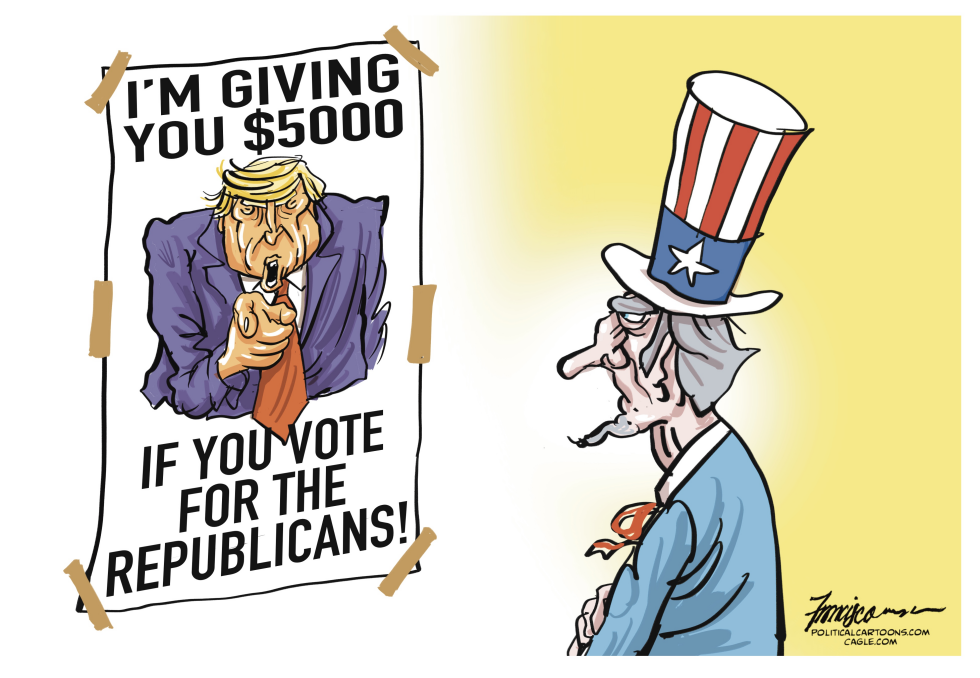
Donald Trump has floated direct cash payments to voters who support Republican candidates. The proposal surfaces weeks before the 2026 midterms and draws immediate scrutiny over its legality and intent. Critics argue the move risks turning elections into auctions. Supporters frame it as economic relief. The cartoon depicts the offer as a blunt transaction that leaves traditional symbols of American integrity uneasy.
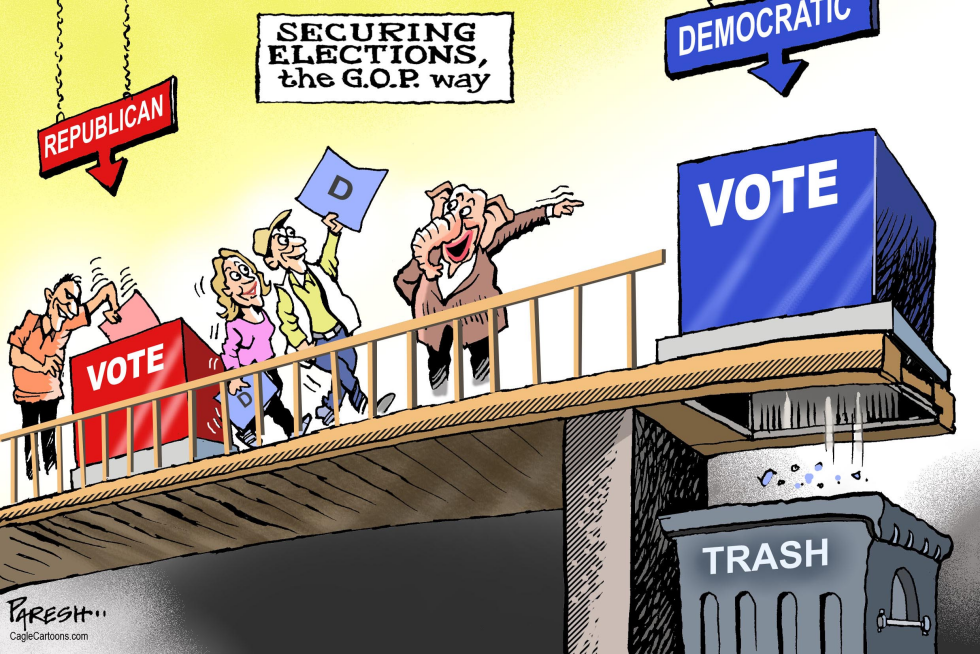
The cartoon depicts Republicans on a platform guiding a large blue vote box labeled Democratic into a trash can below while a red Republican vote box remains on the structure. A sign reads Securing Elections the G.O.P. way. The elephant symbol of the GOP points toward the action as figures including one holding a D flag stand nearby. The image comments on claims of election integrity by showing ballots from one party discarded. This reflects ongoing partisan debates over voting procedures and access as of the 2026 publication date.
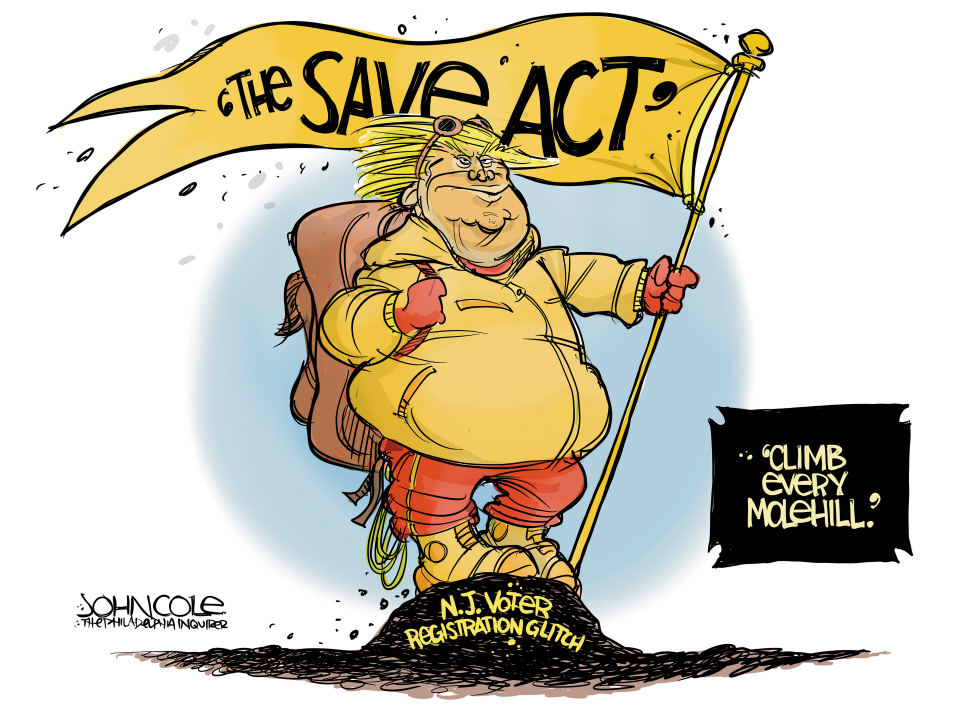
A minor voter registration glitch in New Jersey drew outsized attention from former President Trump and supporters of the SAVE Act in September 2026. The episode highlighted ongoing partisan disputes over election administration and voter ID rules. The cartoon portrays the reaction as an overreaction that turns a small problem into a symbolic crusade, arguing that such emphasis distracts from actual election security needs.
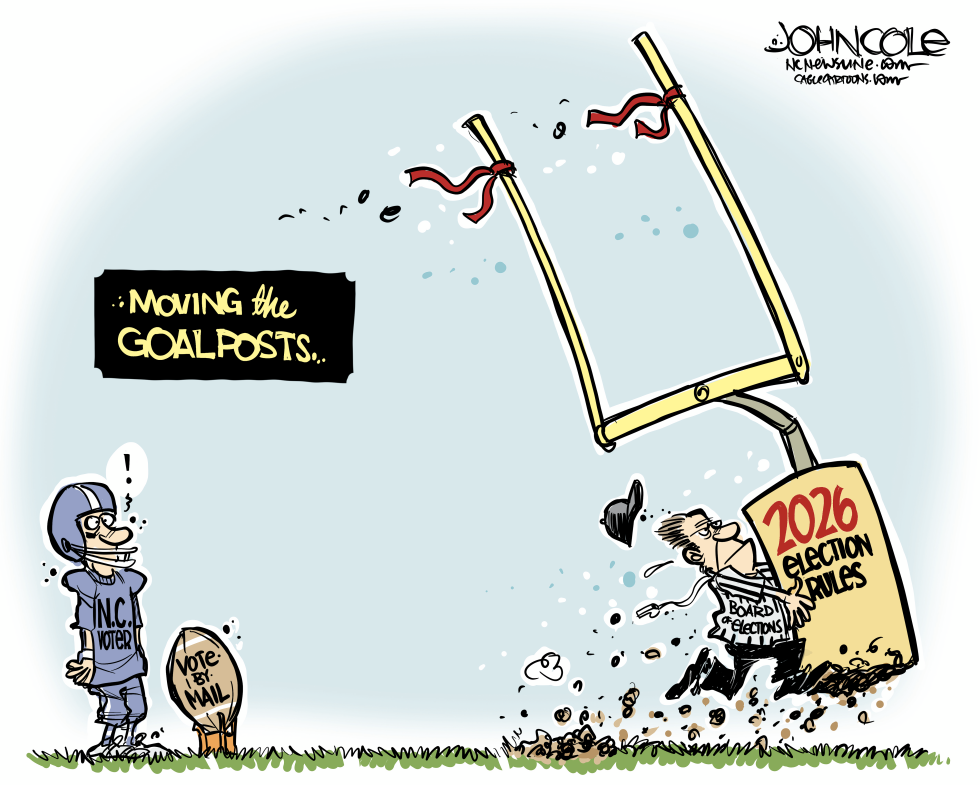
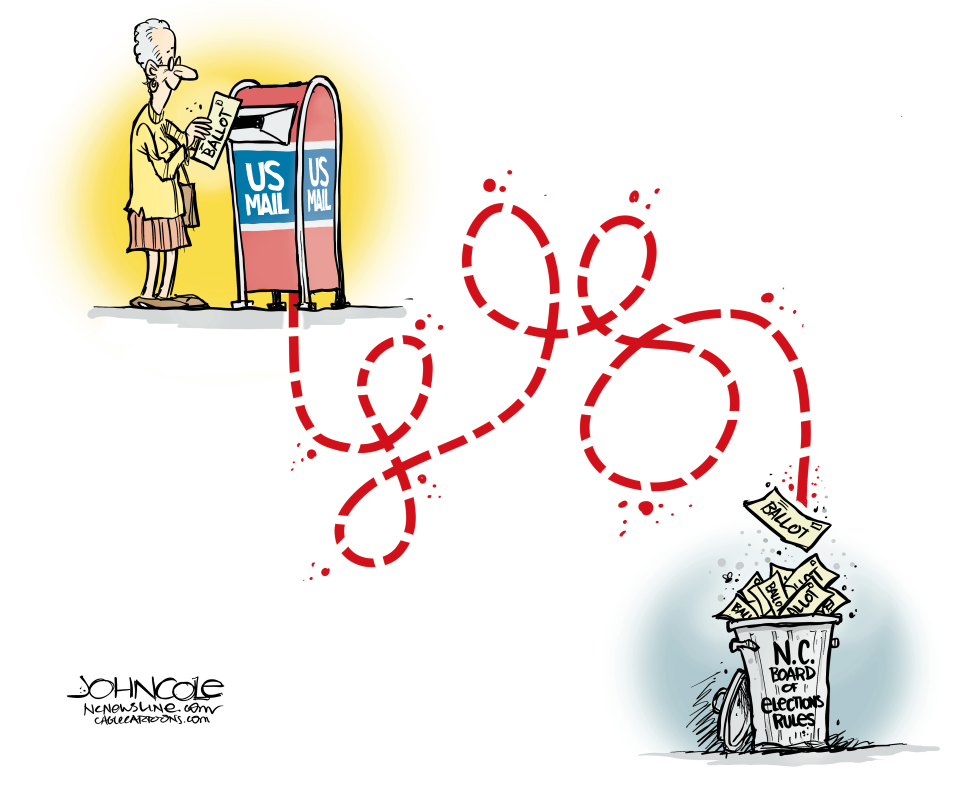
The North Carolina Board of Elections has updated rules governing mail ballots for the 2026 elections, introducing stricter verification and deadline requirements. The changes affect how voters submit ballots and have drawn criticism for complicating access. The move comes amid ongoing debates over election security and participation. Critics argue the adjustments disproportionately impact certain voter groups. The cartoon portrays the board as actively shifting standards to the disadvantage of mail voters.
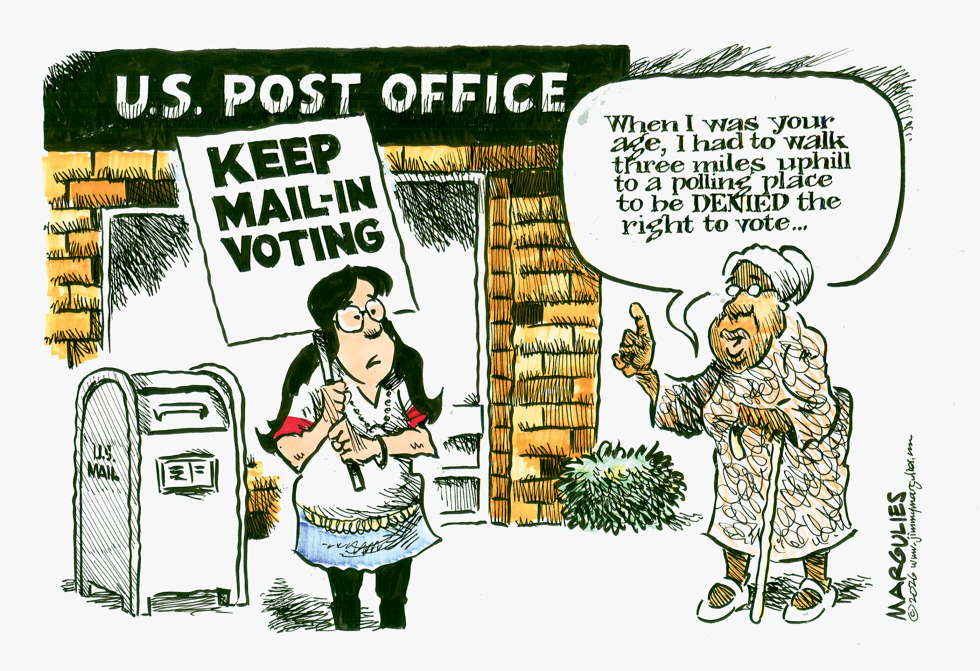
A protest sign at a U.S. Post Office calls for an end to mail-in voting. The cartoon responds to ongoing state-level efforts to restrict mail ballots after expanded use in recent elections. Such limits disproportionately affect older voters and those with mobility issues who previously faced physical barriers at polling places. The piece argues that rolling back mail-in options revives the very obstacles elderly citizens once endured, undermining broader access to the ballot.
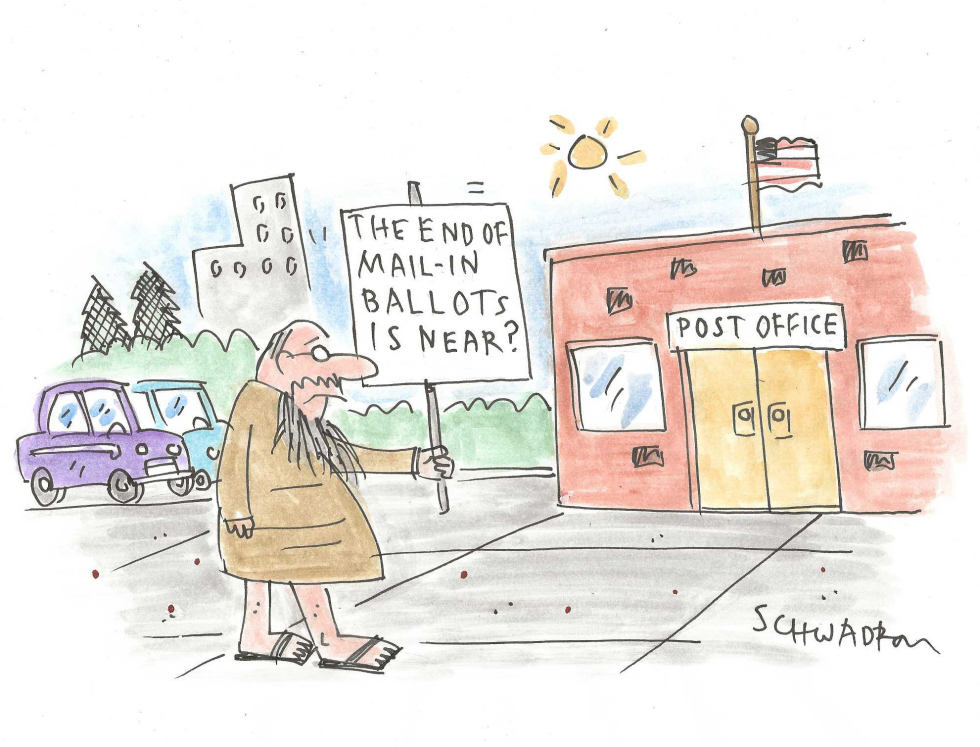
Proposals to restrict or end mail-in ballots have gained traction in several states ahead of upcoming elections, prompting concerns from voting rights advocates about reduced access for elderly, rural, and disabled voters. The post office has long served as a key conduit for absentee ballots. Critics argue the changes prioritize unproven fraud concerns over convenience and turnout. Supporters say tighter rules restore confidence in results. The cartoon frames the debate as an abrupt shift that could sideline a proven voting method.
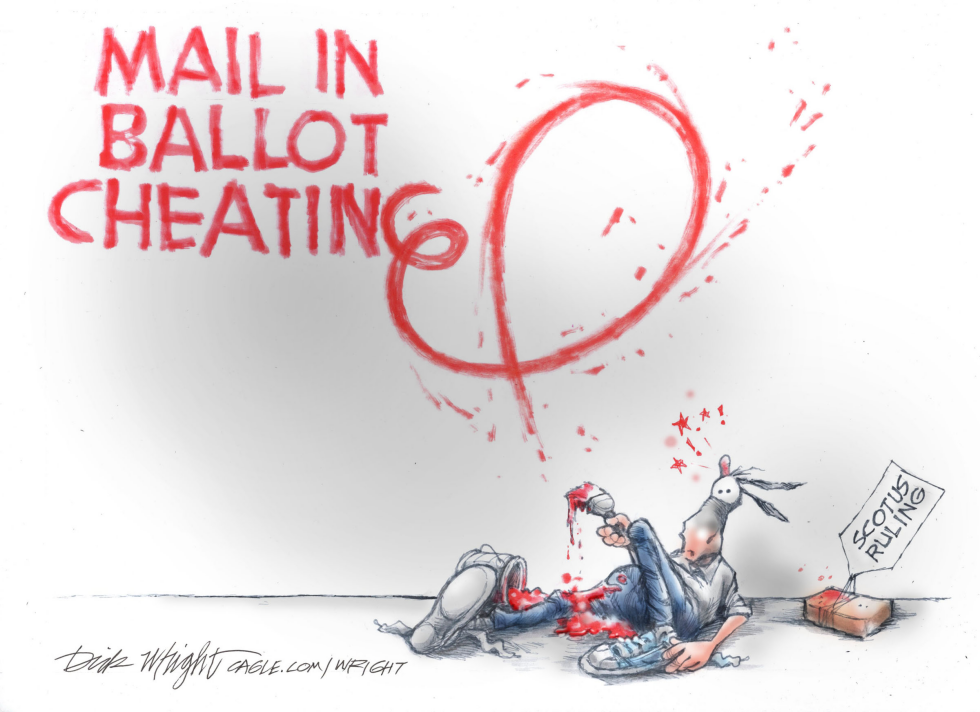
The image depicts the Democratic Party symbol as a donkey lying wounded on the ground with red liquid visible near its body. A large red prohibition symbol covers the words mail in ballot cheating at the top. A sign reading SCOTUS ruling stands nearby next to a box. The composition responds to a Supreme Court decision limiting certain mail-in ballot procedures. The visual argument centers on claims of reduced opportunities for improper voting practices. Publication occurred on August 25 2026. The work uses the party emblem to illustrate the effect of the ruling on one political side. No specific prior case details appear in the image itself.
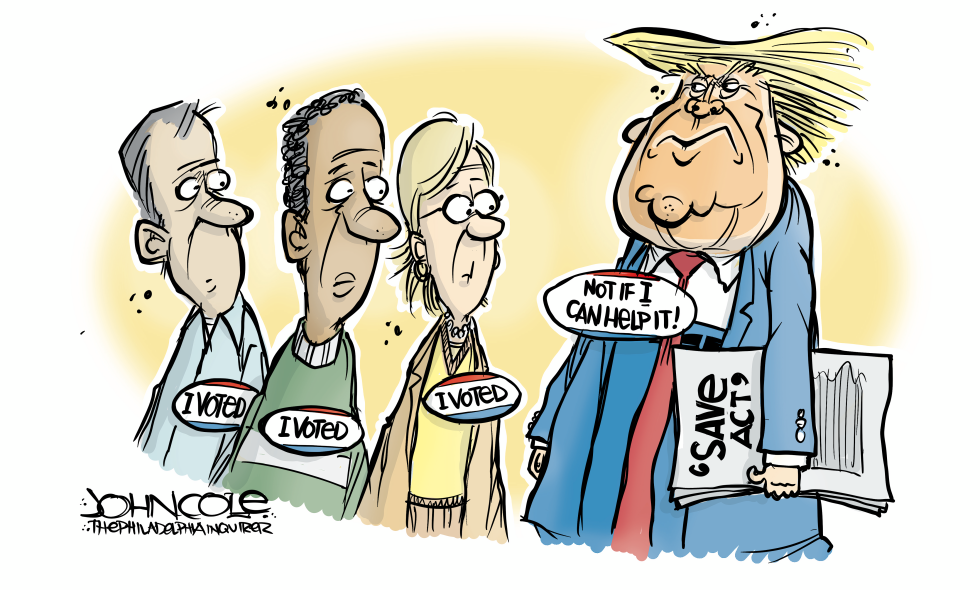
The cartoon shows Donald Trump on the right clutching documents labeled SAVE Act and declaring through a speech bubble, 'NOT IF I CAN HELP IT!' Three voters on the left, an older white man, a Black man and a white woman, each wear prominent I Voted stickers. The composition contrasts the former president's stance against the visible participation of citizens in elections. Published August 16, 2026, the image addresses Trump's resistance to the SAVE Act, a measure aimed at strengthening voter identification requirements. The visual places emphasis on the disconnect between voter engagement and political opposition to related legislation.
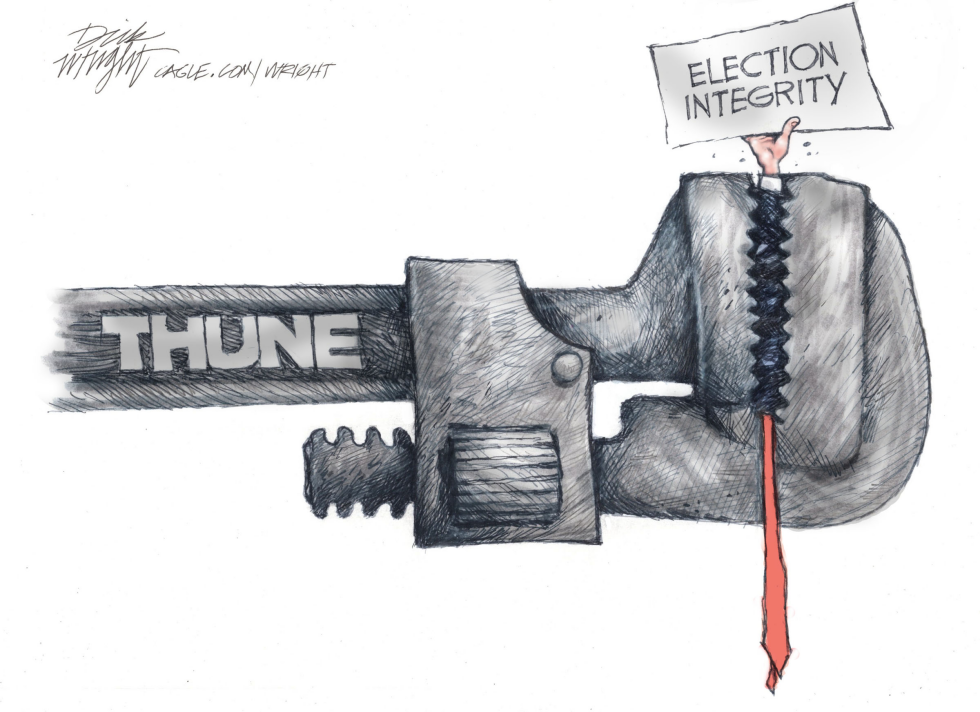
Senate Majority Leader John Thune has placed a procedural hold on the Save America Act, preventing a floor vote on election integrity reforms. The move comes amid ongoing partisan disputes over voting procedures and certification standards. The cartoon portrays Thune as deliberately stalling the measure through institutional leverage.
North Carolina election officials have implemented rules that invalidate or discard large numbers of mail ballots. The changes affect voter access in the state. The editorial criticizes the policy as an unnecessary barrier to participation.
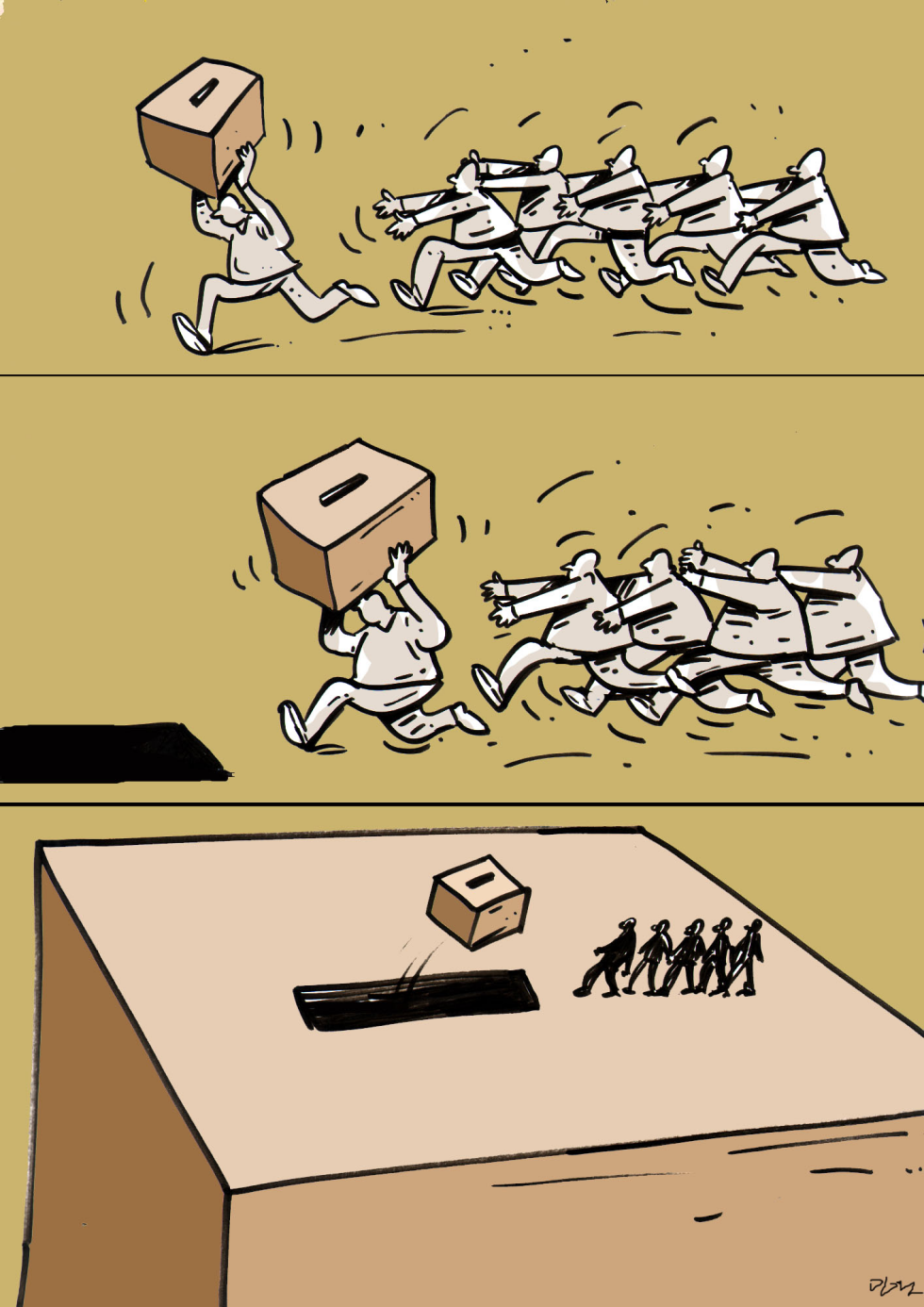
An election official carries a ballot box while pursued by a chain of figures in successive panels. The sequence ends with the box on a voting table beside its slot and the group nearing. The piece highlights concerns over ballot security and potential interference in vote counting during an election cycle.
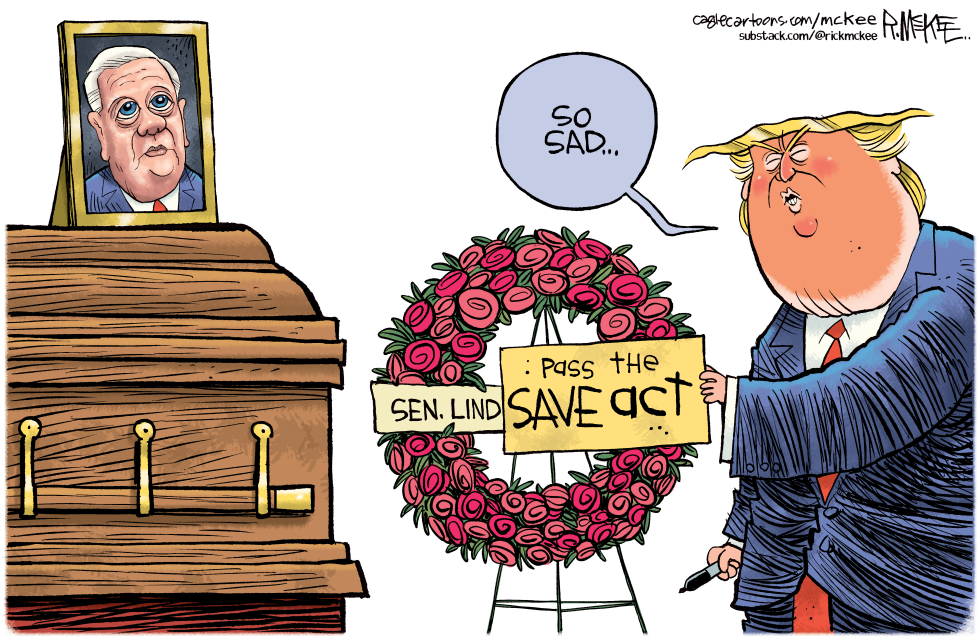
Donald Trump stands beside the casket of Sen. Lind on July 13, 2026, holding a sign urging passage of the SAVE Act. A portrait of the late senator rests atop the wooden coffin while a floral wreath displays the legislative message. Trump remarks that the situation is so sad. The image captures the intersection of a Senate vacancy and ongoing efforts to advance voter eligibility legislation.
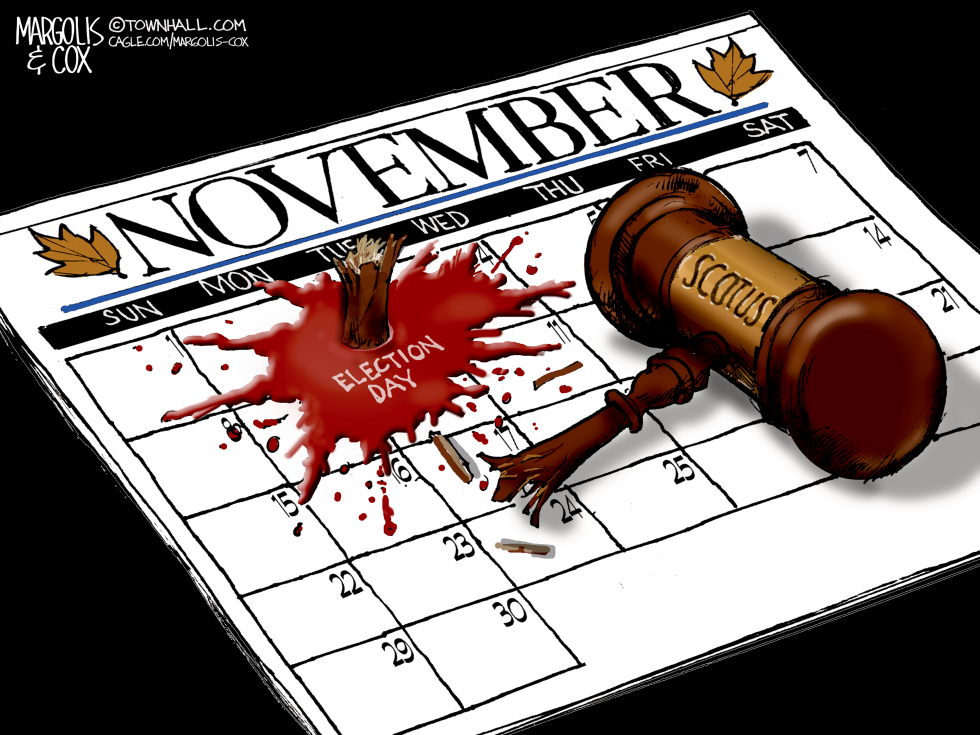
A large wooden gavel labeled SCOTUS rests on a November calendar page, its head crushing the words Election Day in a red splatter resembling blood. The calendar shows days of the week and dates with scattered debris and broken pieces around the impact site. The image appears on July 1, 2026, amid ongoing debates over Supreme Court rulings affecting electoral processes.
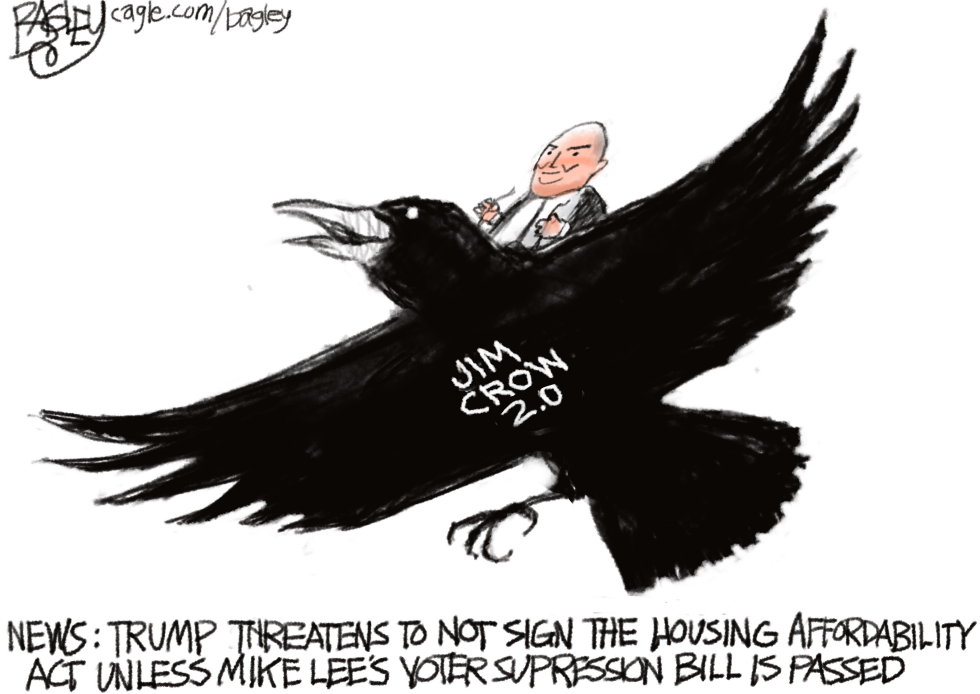
The cartoon shows President Trump riding a large black bird labeled Jim Crow 2.0. The bird carries him across the frame. Bottom text states Trump threatens to withhold signature from the Housing Affordability Act unless Mike Lee's voter suppression bill passes. The image responds to legislative negotiations in late June 2026 where the president linked the two measures. It uses the historical Jim Crow reference to frame the voter bill as restrictive. The visual ties the housing measure directly to the election-related proposal.