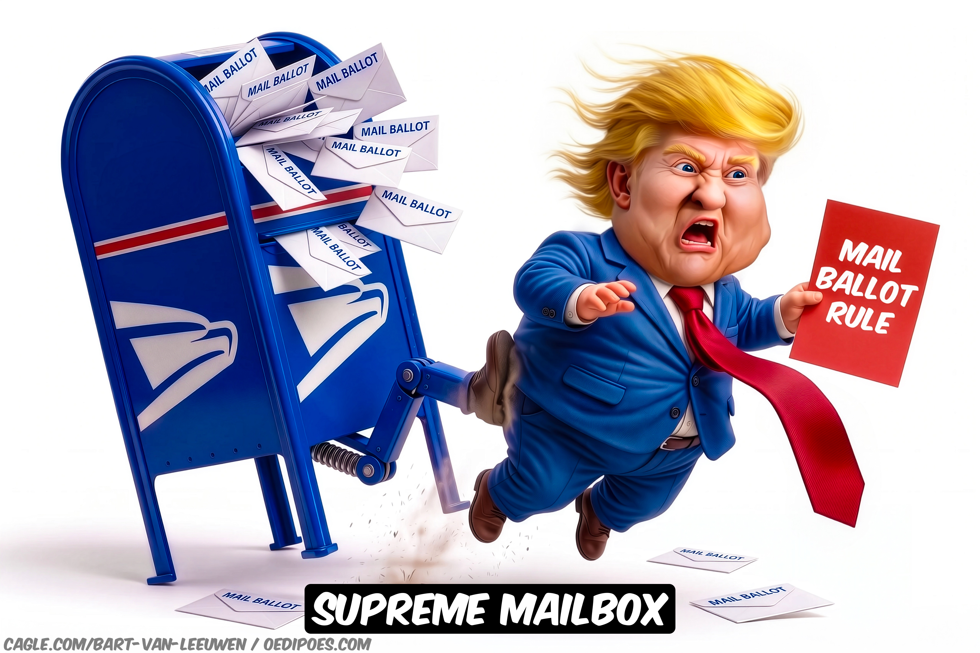
The cartoon shows Donald Trump angrily kicking a USPS mailbox, causing mail ballots to scatter, while clutching a sign labeled MAIL BALLOT RULE. The mailbox is labeled SUPREME MAILBOX at the base. Published on September 16, 2026, the image responds to debates over mail voting procedures and potential Supreme Court involvement in election rules. The visual metaphor illustrates opposition to expanded mail ballot access by depicting physical disruption of the postal system. Trump is caricatured with windblown hair and an open-mouthed expression of rage. Scattered ballots on the ground reinforce the theme of discarded votes. The piece uses the familiar USPS eagle logo and blue mailbox design for immediate recognition.
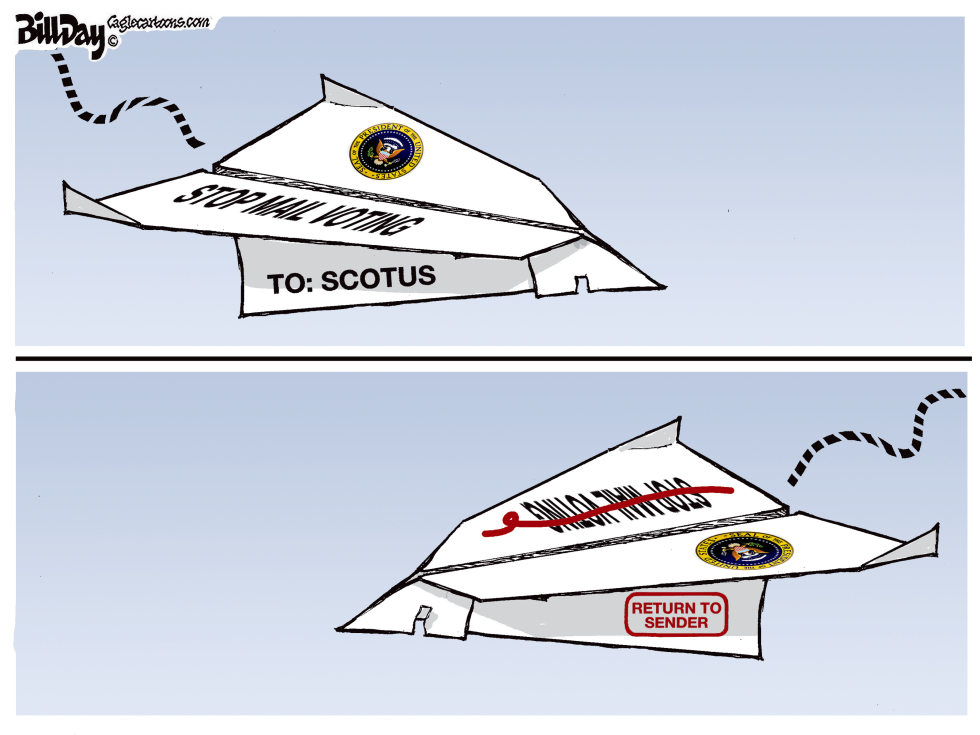
A presidential directive aimed at ending mail-in voting reached the Supreme Court but was promptly returned. The action underscores ongoing disputes over election procedures and access. The cartoon frames the effort as an unsuccessful attempt to restrict voting methods through judicial channels. It highlights institutional pushback against executive intervention in ballot processes. The piece takes the position that such restrictions lack support and are properly rebuffed.
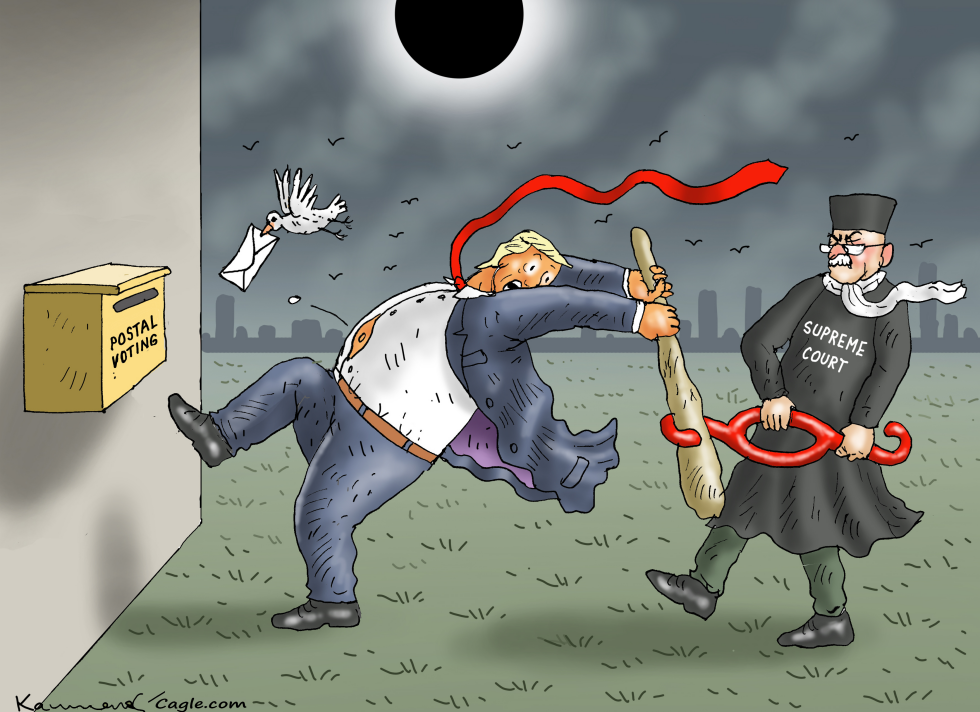
The Supreme Court has moved to restrict efforts by former President Trump to limit or challenge postal voting ahead of the 2026 midterms. The ruling comes as both parties prepare for a high-stakes contest that could determine control of Congress. Trump allies have pushed measures they say protect election integrity while critics see them as attempts to suppress turnout. The decision underscores the court's continuing role in shaping voting rules. The cartoon portrays the court as a necessary check on Trump's aggressive tactics.
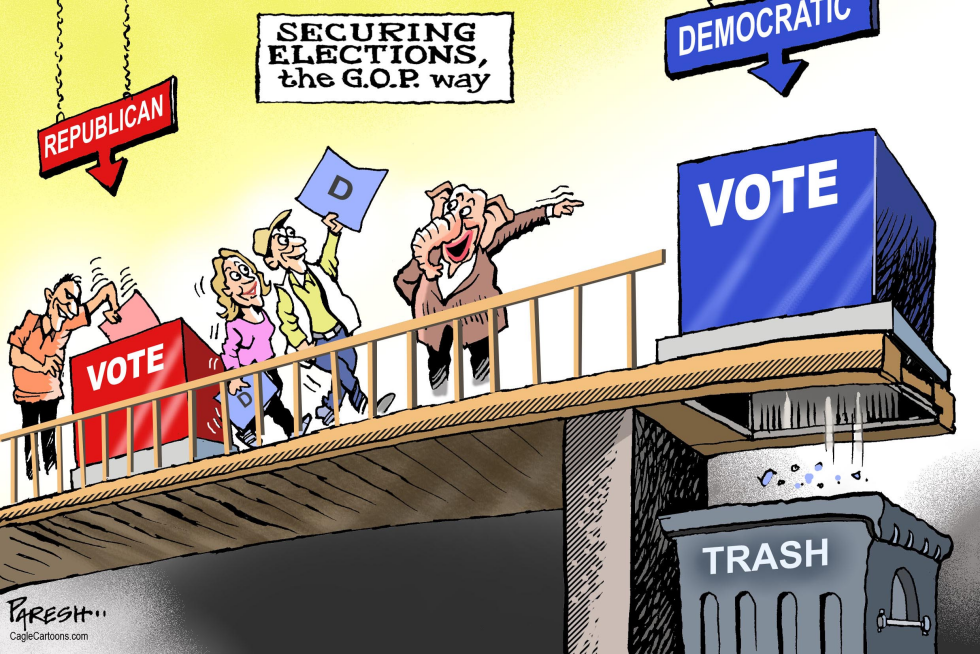
The cartoon depicts Republicans on a platform guiding a large blue vote box labeled Democratic into a trash can below while a red Republican vote box remains on the structure. A sign reads Securing Elections the G.O.P. way. The elephant symbol of the GOP points toward the action as figures including one holding a D flag stand nearby. The image comments on claims of election integrity by showing ballots from one party discarded. This reflects ongoing partisan debates over voting procedures and access as of the 2026 publication date.
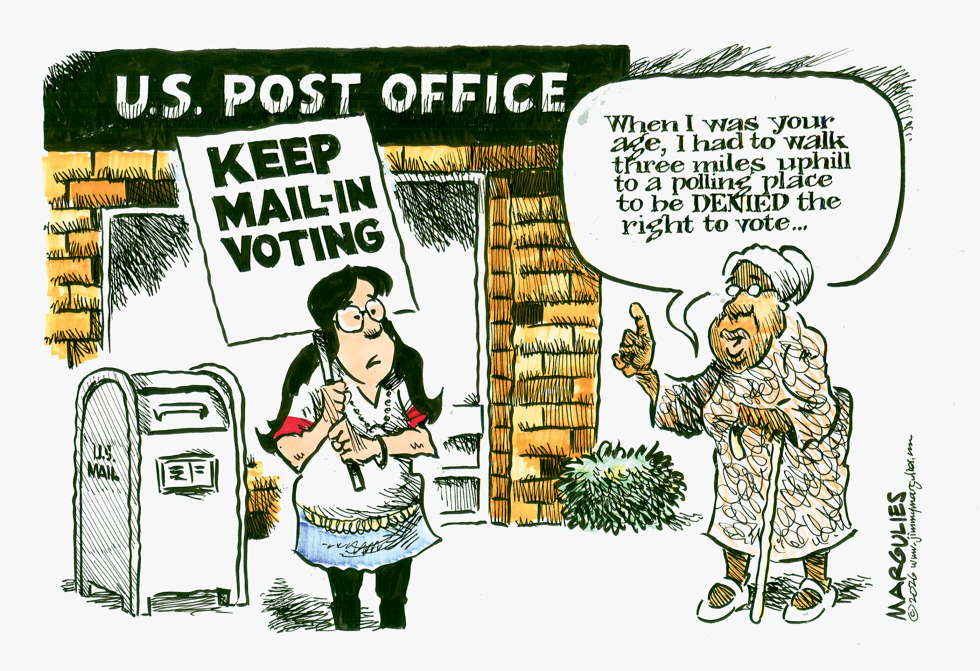
A protest sign at a U.S. Post Office calls for an end to mail-in voting. The cartoon responds to ongoing state-level efforts to restrict mail ballots after expanded use in recent elections. Such limits disproportionately affect older voters and those with mobility issues who previously faced physical barriers at polling places. The piece argues that rolling back mail-in options revives the very obstacles elderly citizens once endured, undermining broader access to the ballot.
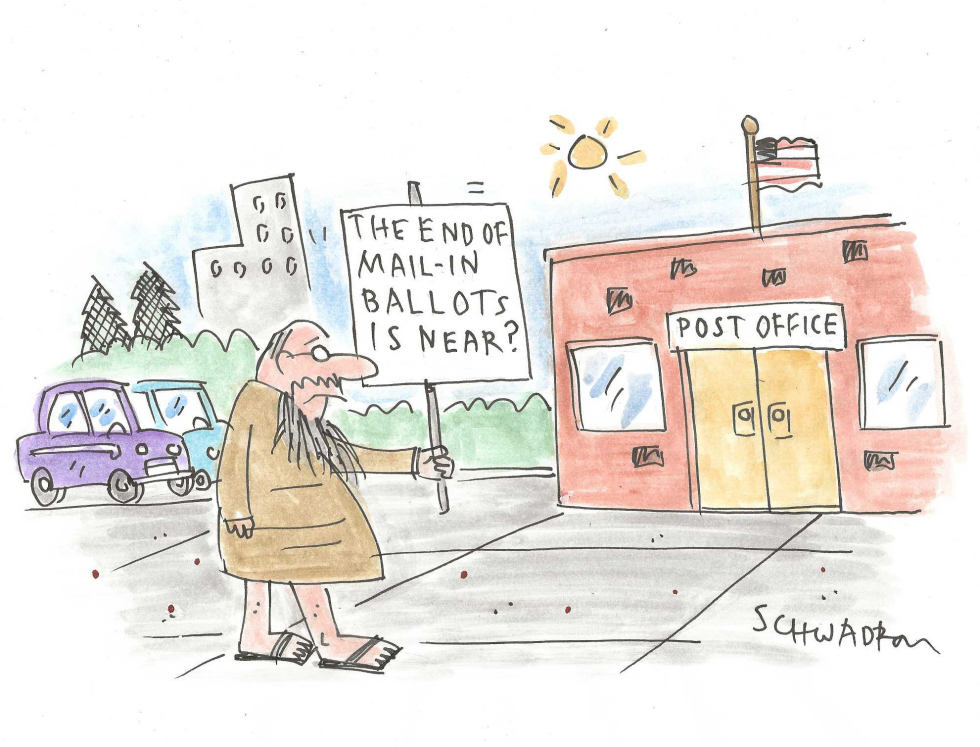
Proposals to restrict or end mail-in ballots have gained traction in several states ahead of upcoming elections, prompting concerns from voting rights advocates about reduced access for elderly, rural, and disabled voters. The post office has long served as a key conduit for absentee ballots. Critics argue the changes prioritize unproven fraud concerns over convenience and turnout. Supporters say tighter rules restore confidence in results. The cartoon frames the debate as an abrupt shift that could sideline a proven voting method.
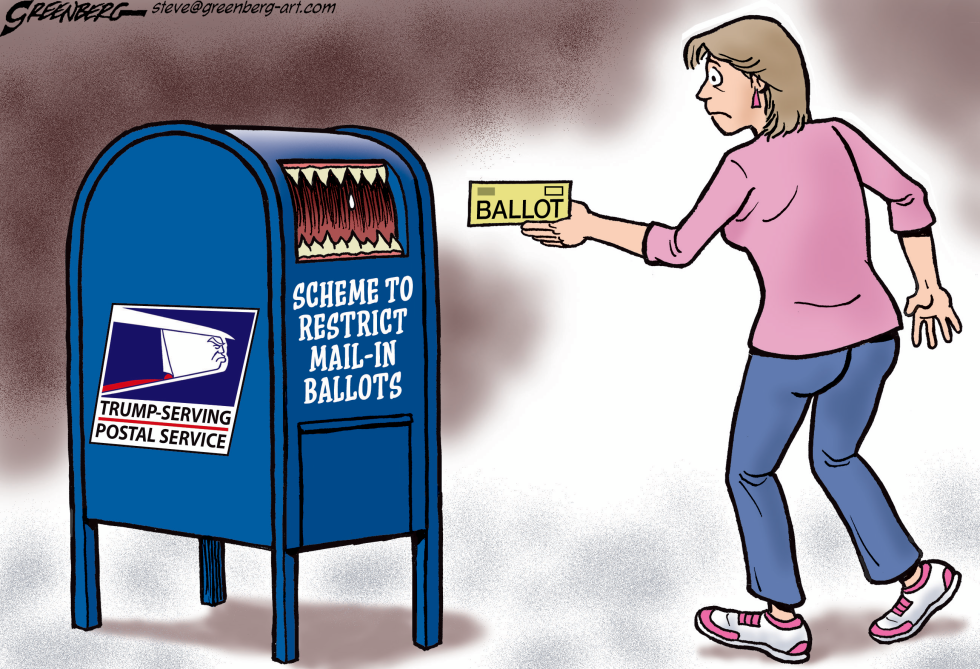
The U.S. Postal Service under Trump influence has implemented measures to restrict mail-in ballots ahead of the 2026 elections. These actions limit voter access through operational changes and heightened scrutiny of mail ballots. The moves raise concerns about equitable participation in elections. Critics argue the changes disproportionately affect certain voter groups and undermine trust in the process. The cartoon portrays the postal service as actively hostile to mail-in voting, framing the restrictions as a deliberate scheme to suppress turnout.
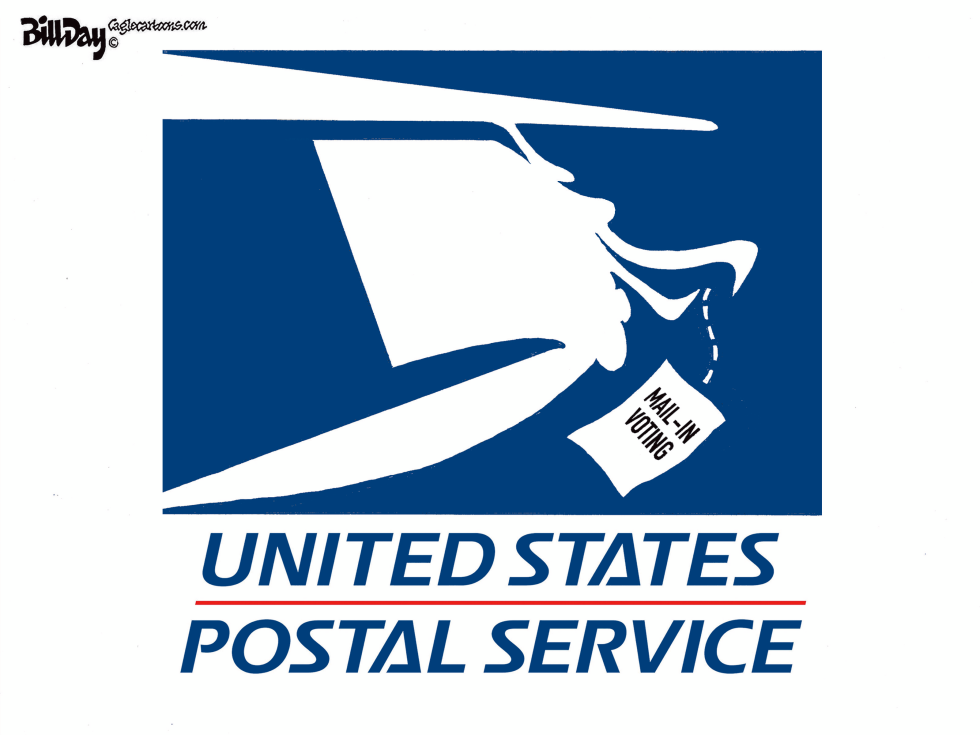
The US Postal Service continues to play a central role in processing and delivering mail-in ballots for federal elections. With voting by mail now a standard option in many states, the agency manages millions of ballots each cycle, raising questions about capacity, security, and timely delivery. The editorial position emphasizes the importance of a reliable postal network to maintain voter access without disruption.
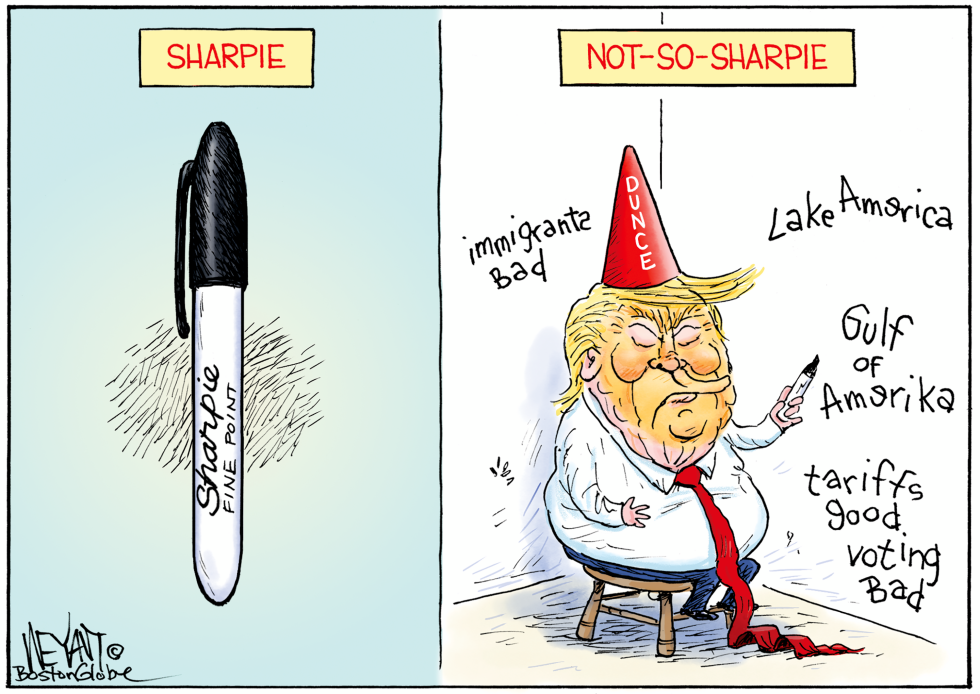
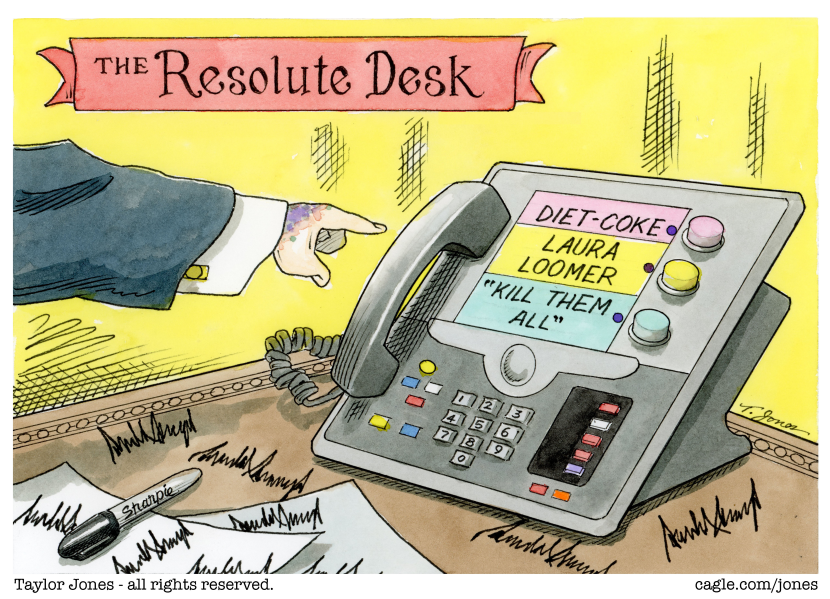
Donald Trump has continued to issue statements on tariffs, immigration enforcement and voting procedures that contain repeated factual inaccuracies. These comments have drawn renewed attention to his approach to governance. The cartoon portrays him as uninformed on these topics through the dunce cap and misspelled labels.
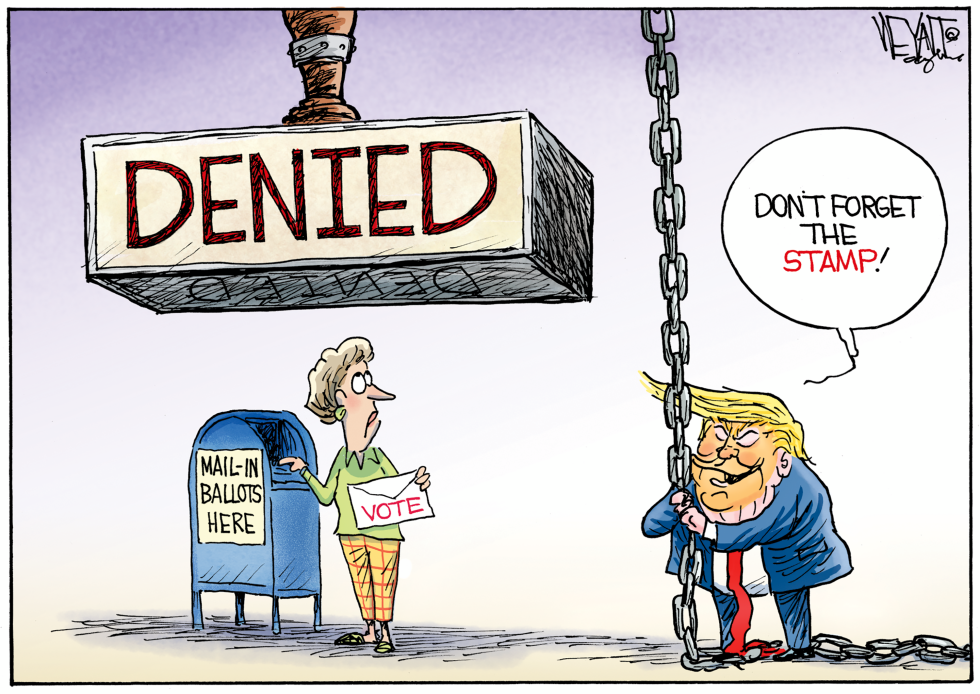
President Trump has directed efforts to deny mail-in ballots in the 2026 election cycle, citing concerns over fraud and integrity. The move affects millions of voters who rely on absentee and mail voting. Critics argue the policy suppresses turnout and favors in-person Republican voters. The cartoon portrays Trump personally enforcing the denial mechanism.
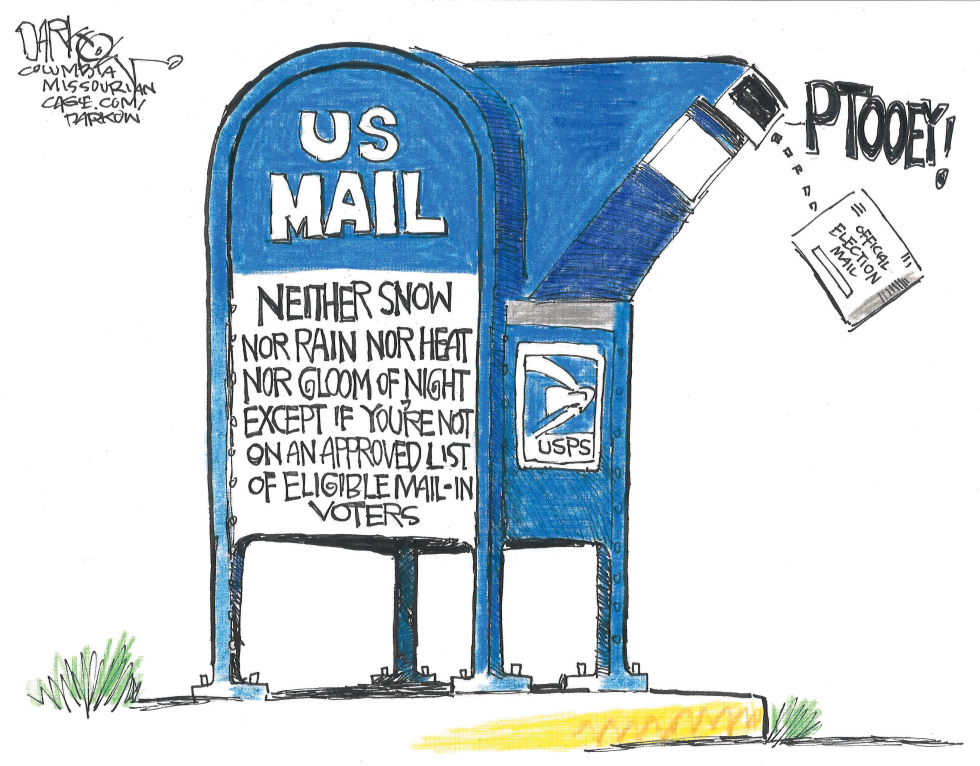
A USPS mailbox rejects mail-in ballots unless the sender appears on an approved list of eligible voters. The action highlights ongoing debates over mail voting security and access ahead of elections. Critics argue such restrictions disproportionately affect certain voter groups and undermine confidence in the postal system. Supporters claim the measures prevent fraud. The cartoon portrays the mailbox as actively enforcing these limits, suggesting institutional barriers to participation.
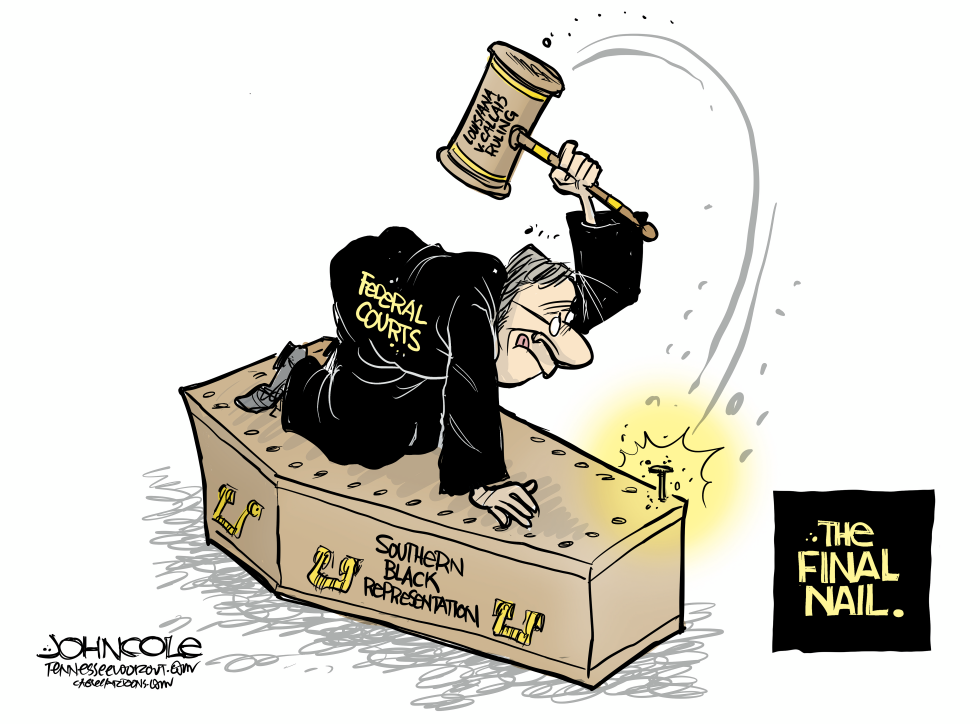
A federal court ruling on Louisiana redistricting has reduced black congressional representation across southern states. The decision follows ongoing litigation over district maps and voting access. It matters because it alters the number of majority-minority seats available in Congress. The piece argues the ruling delivers a decisive setback to those representation gains.
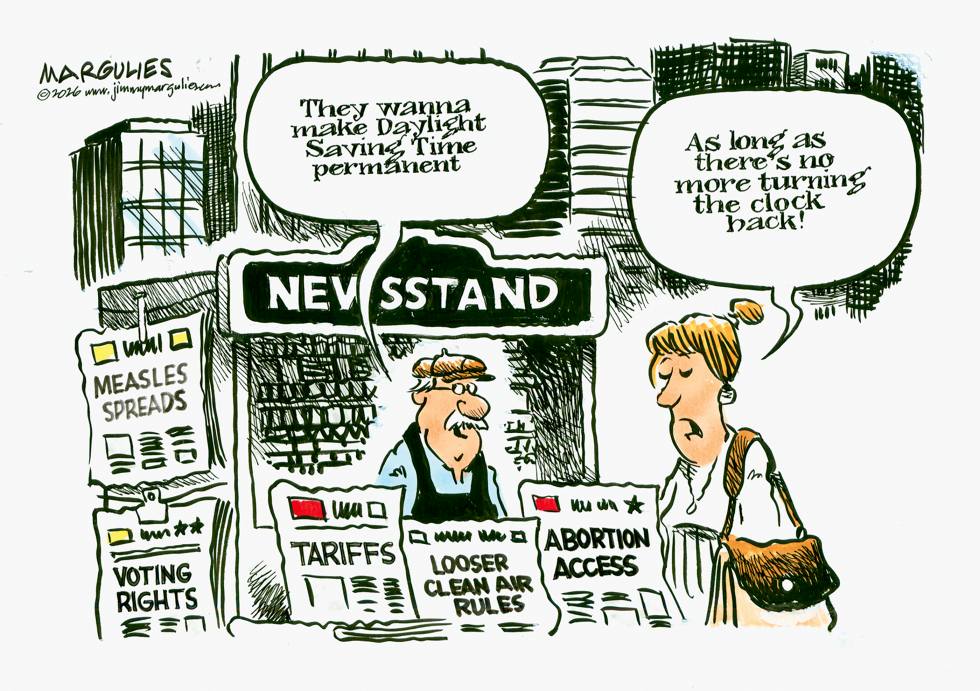
Proposals to make daylight saving time permanent coincide with debates over tariffs, abortion access, voting rights and environmental rules. The cartoon frames these as part of a broader pattern of policy shifts that some view as steps backward.
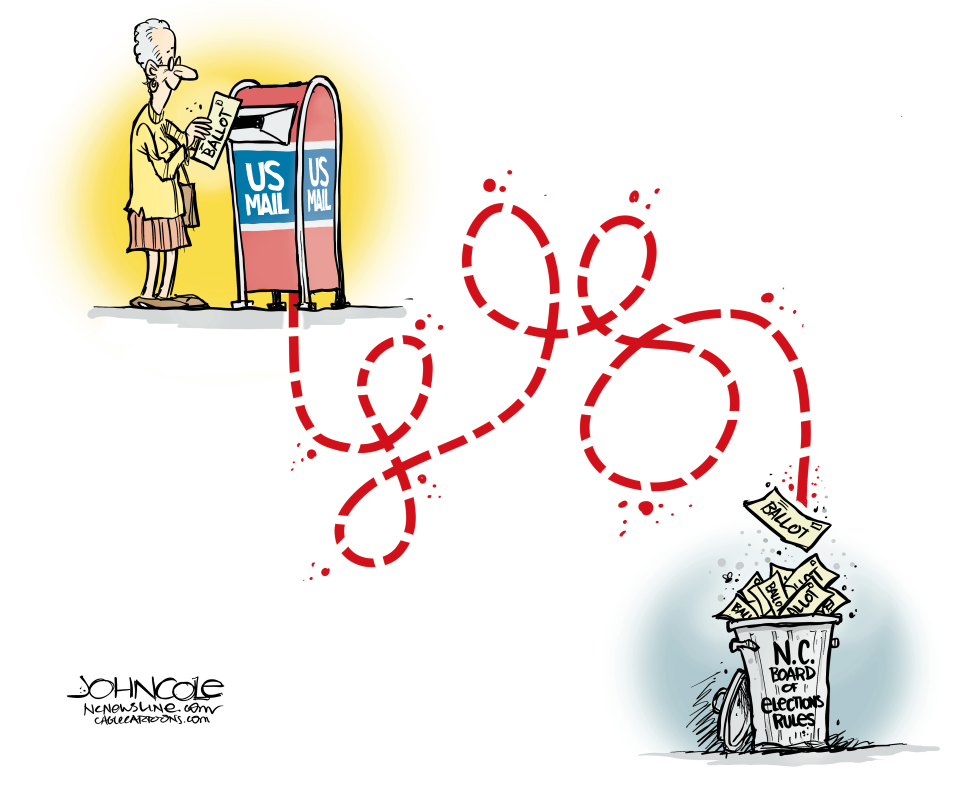
North Carolina election officials have implemented rules that invalidate or discard large numbers of mail ballots. The changes affect voter access in the state. The editorial criticizes the policy as an unnecessary barrier to participation.