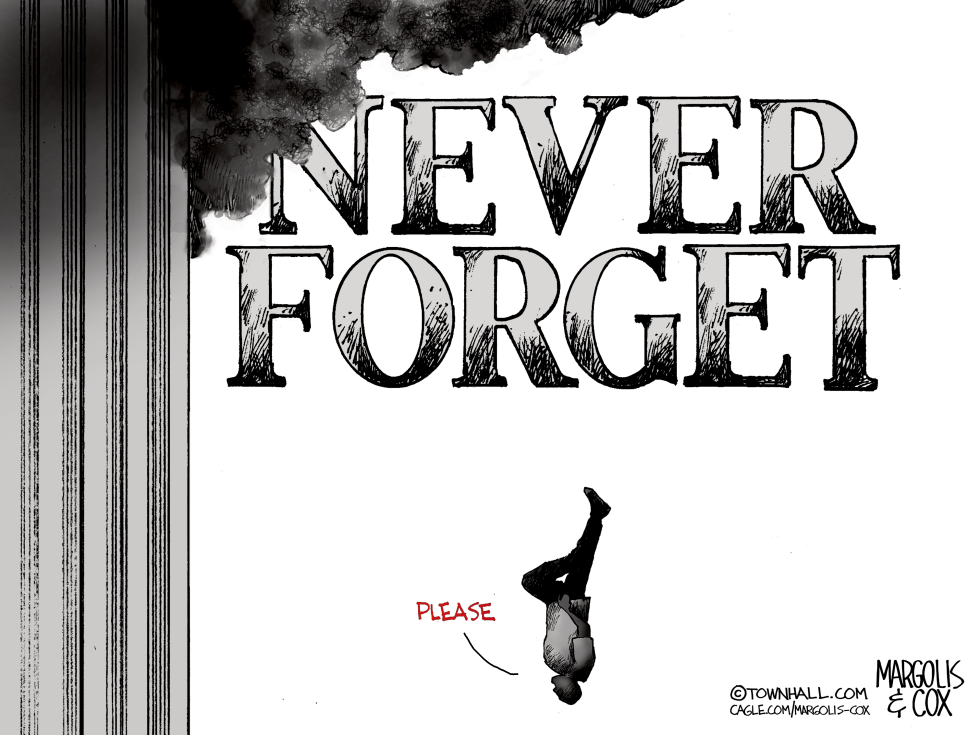
The 25th anniversary of the September 11, 2001 attacks arrives on September 11, 2026. Families and survivors continue to mark the loss of nearly 3,000 people at the World Trade Center, Pentagon and Flight 93. The milestone renews calls to remember the victims and the day's impact on national security and foreign policy. The cartoon underscores the enduring human tragedy through its central image of a falling figure.
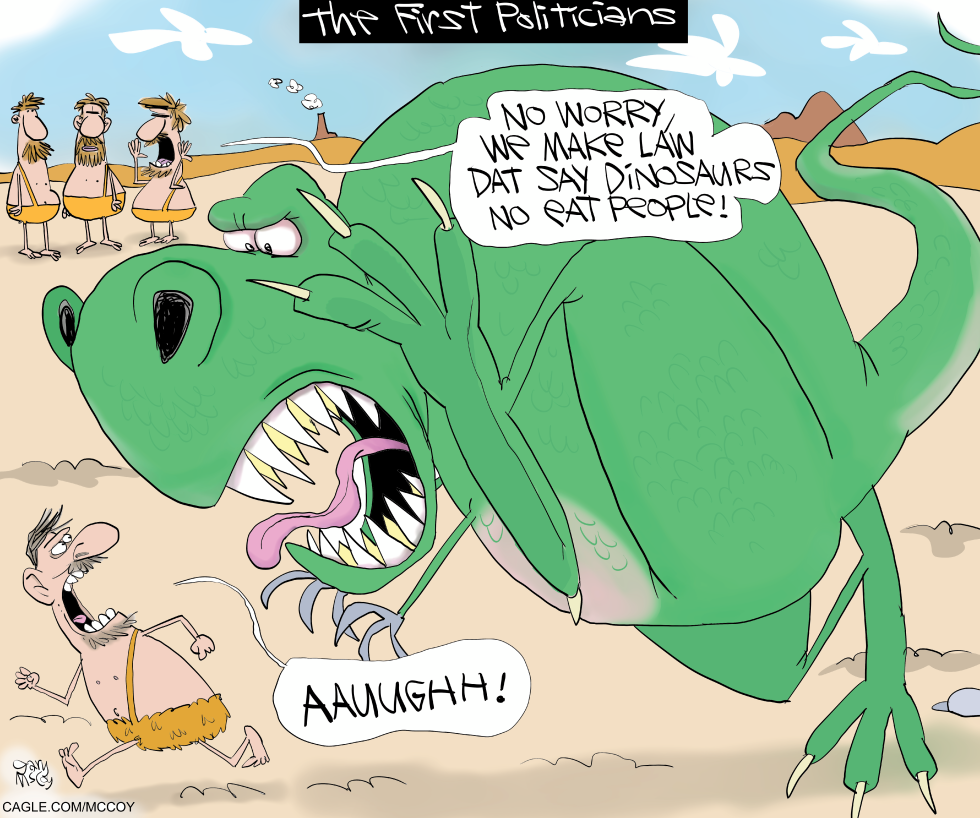
Politicians in prehistoric times promise a law banning dinosaurs from eating people. The pledge comes as a T-Rex looms over a fleeing caveman. The move highlights how leaders often make rules they have no intention of following. The piece takes the position that such assurances are empty and self-serving.
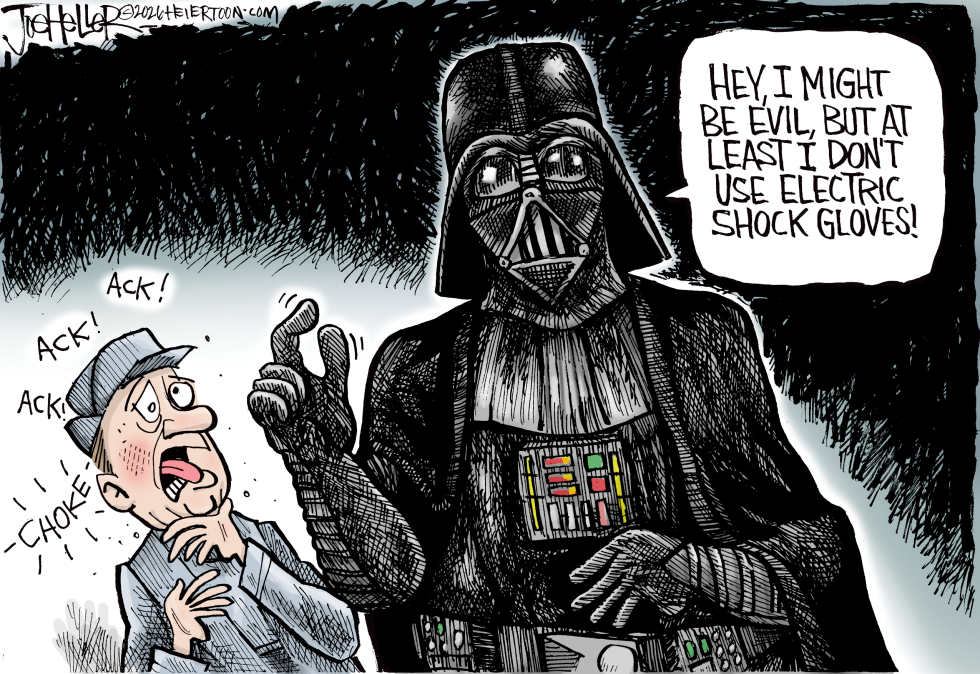
Public discussion continues over the use of electric shock gloves in security and law enforcement settings. Critics argue the devices risk excessive force and injury during confrontations. Darth Vader's stance in the piece frames the tools as crossing a line that even a fictional villain avoids. The editorial position holds that such methods undermine claims of restraint and invite scrutiny on their necessity and oversight.
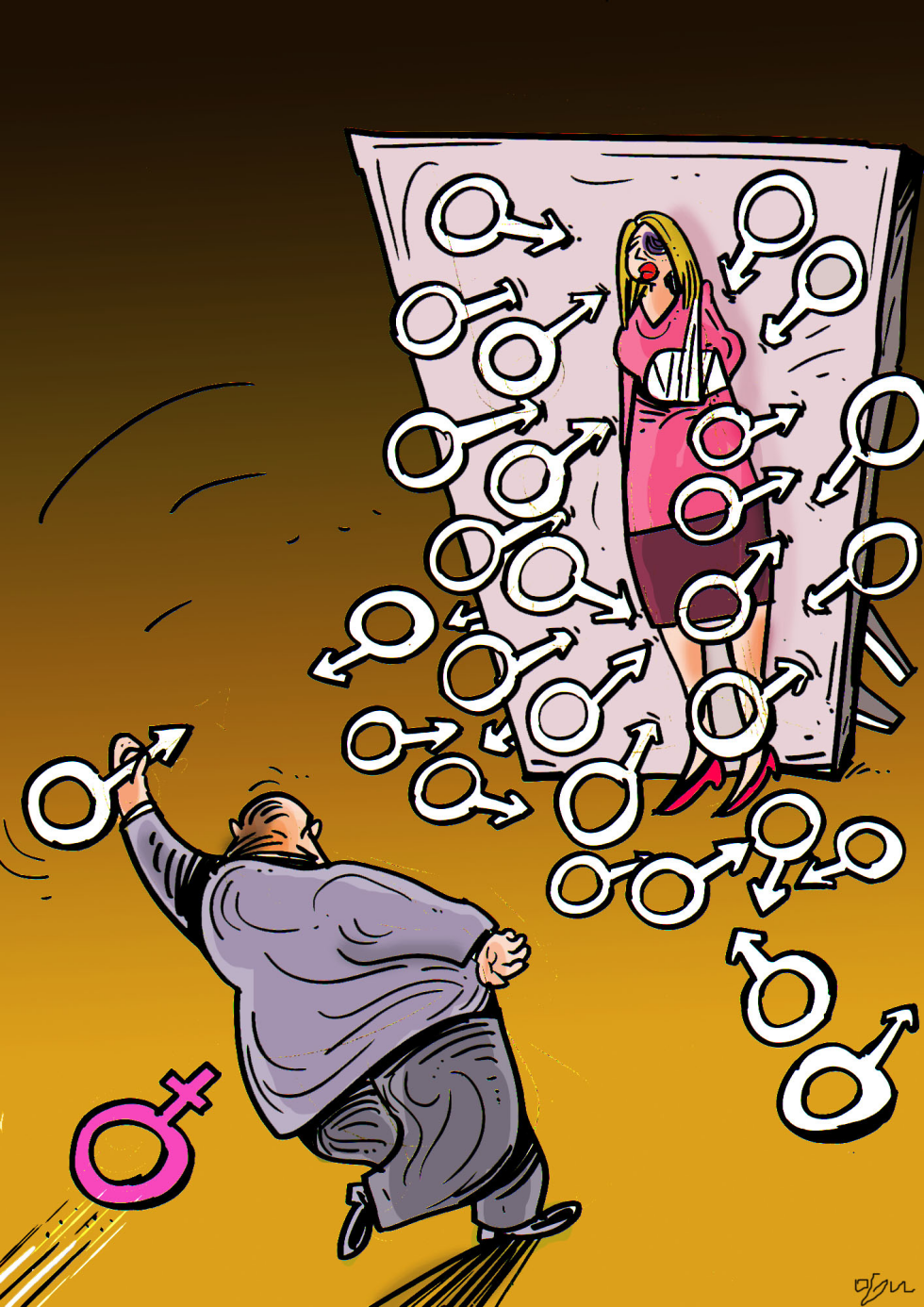
Violence against women remains a persistent social problem, with physical assaults and intimidation continuing in many communities. The piece responds to this ongoing dynamic by showing a male figure directing male symbols at an already injured woman, underscoring the editorial position that such aggression must be confronted directly.
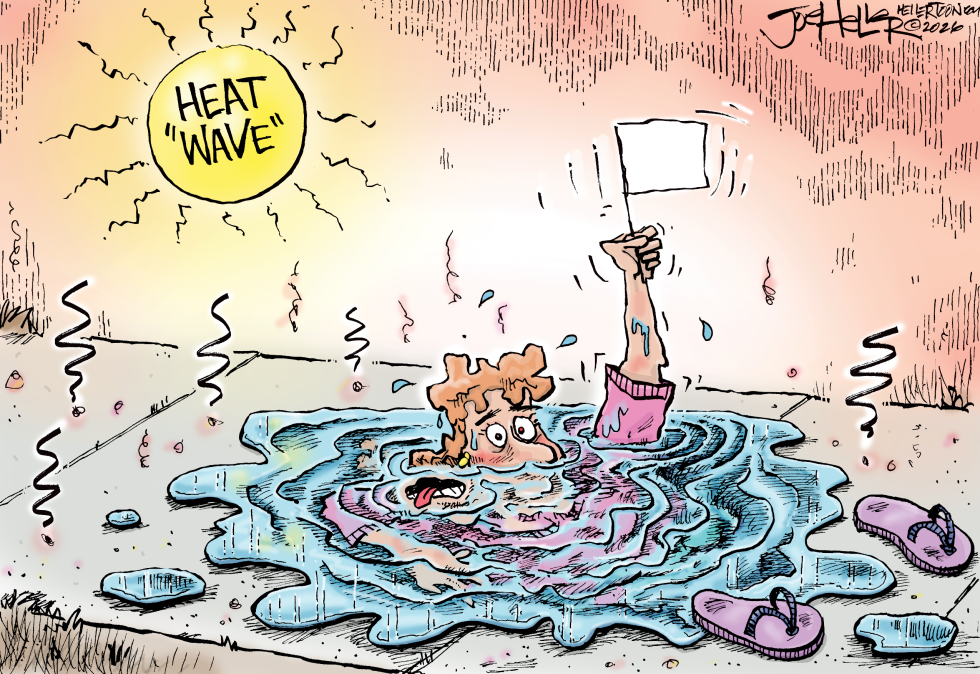
A cartoon published July 13, 2026, depicts a person trapped in a shrinking puddle on cracked pavement, waving a white flag in surrender beneath a sun labeled Heat Wave. The scene captures the overwhelming impact of extreme summer temperatures, with the figure partially submerged and surrounded by discarded flip flops. The image highlights the physical toll of prolonged heat, showing steam and distress as the sun dominates the sky. This visual responds to ongoing heat wave conditions affecting many regions during mid-July.
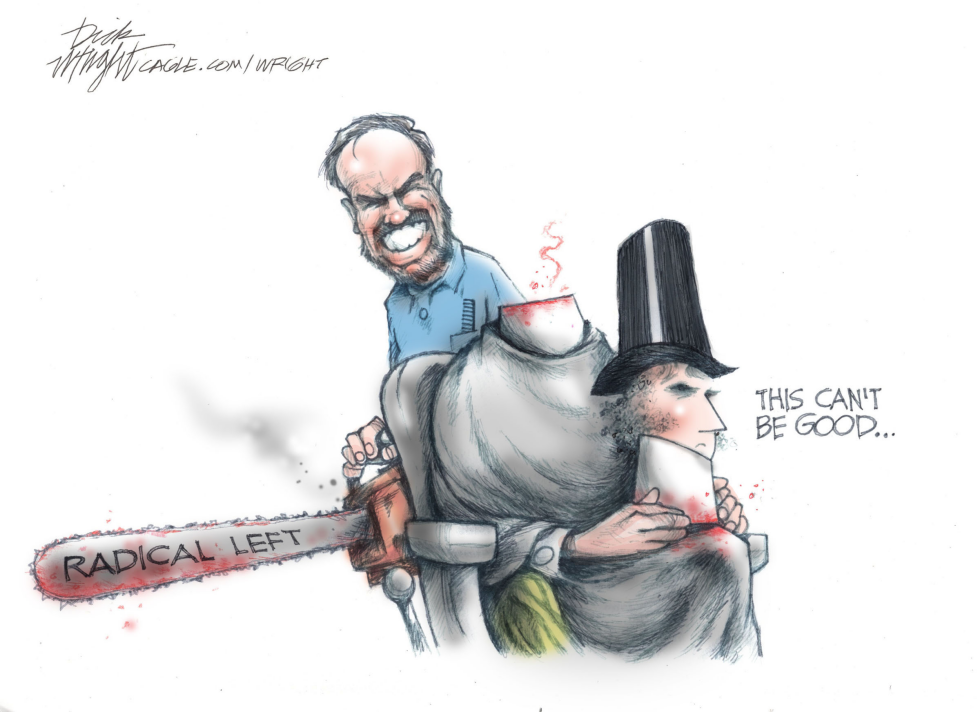
A cartoon published June 25 2026 shows a man labeled radical left operating a chainsaw against a top-hatted figure in formal clothes. Blood appears at the neck cut. The victim holds a document and comments on the situation. The artist Dick Wright signed the work with a cagle.com credit.
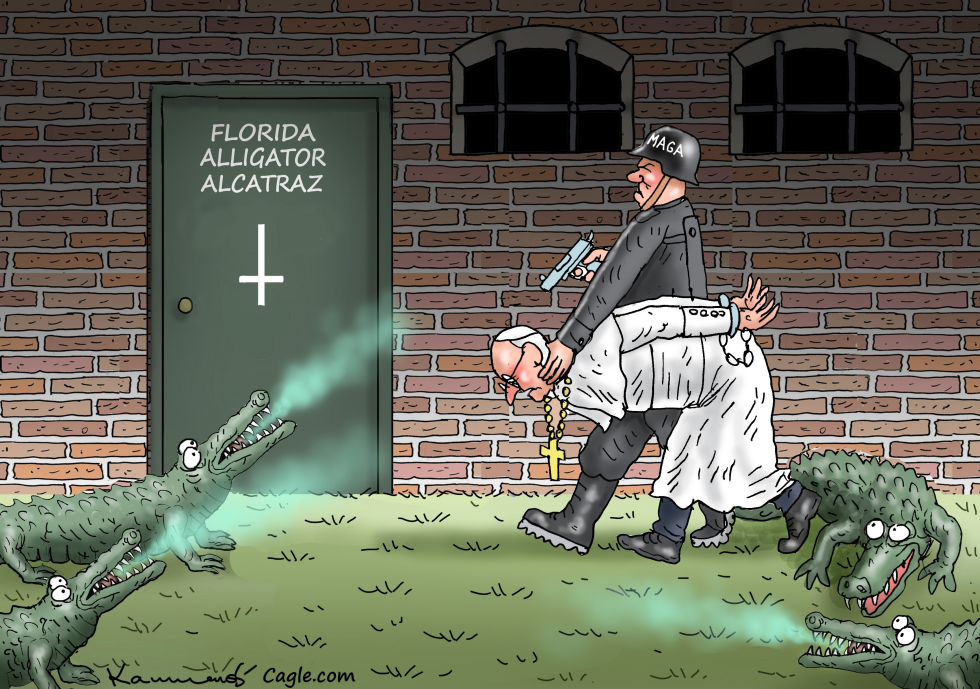
Marian Kamensky's cartoon depicts a fascist scene where a MAGA-helmeted guard, pistol in hand, forces a white-robed Pope caricature with cross necklace into Florida Alligator Alcatraz, marked by an inverted cross on the door. Surrounding alligators with glowing eyes and mist add a surreal, menacing touch to the anti-Christianity theme. The brick wall and barred windows evoke a prison atmosphere, blending Florida's swamp imagery with Alcatraz notoriety. This satire critiques authoritarian politics, highlighting perceived attacks on religious figures amid MAGA influences. The dry humor underscores the absurdity of such a regime, making it sharable for political discourse.
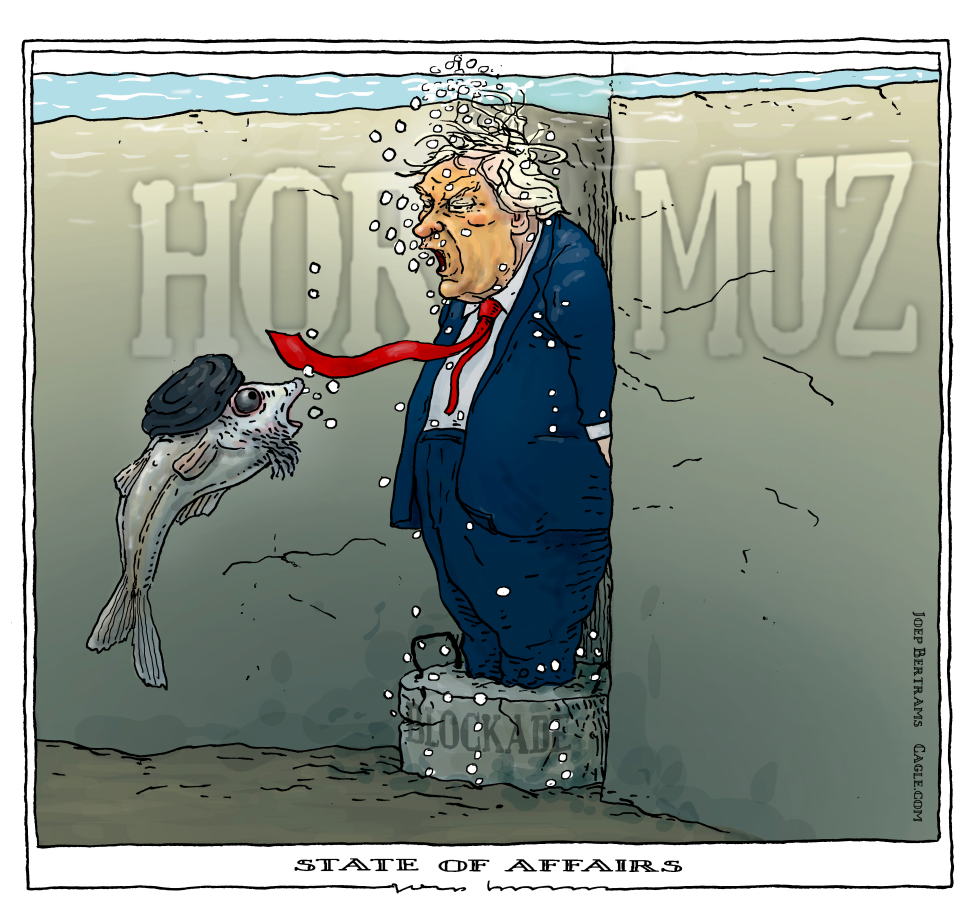
Joep Bertrams captures the Strait of Hormuz tensions with a caricature of Donald Trump sinking in concrete shoes marked blockade, bubbles rising from his open mouth as a fish in a black hat nibbles his red tie. The underwater setting features a cracked wall labeled Hormuz, emphasizing the sunk metaphor for diplomatic failures. Tags like Iran, concrete shoes, and fish highlight the satirical take on US-Iran relations, with the caption State of Affairs underscoring the dire situation. This cartoon from 2026 blends humor and commentary on potential blockades, showing Trump in a blue suit against a murky seabed.
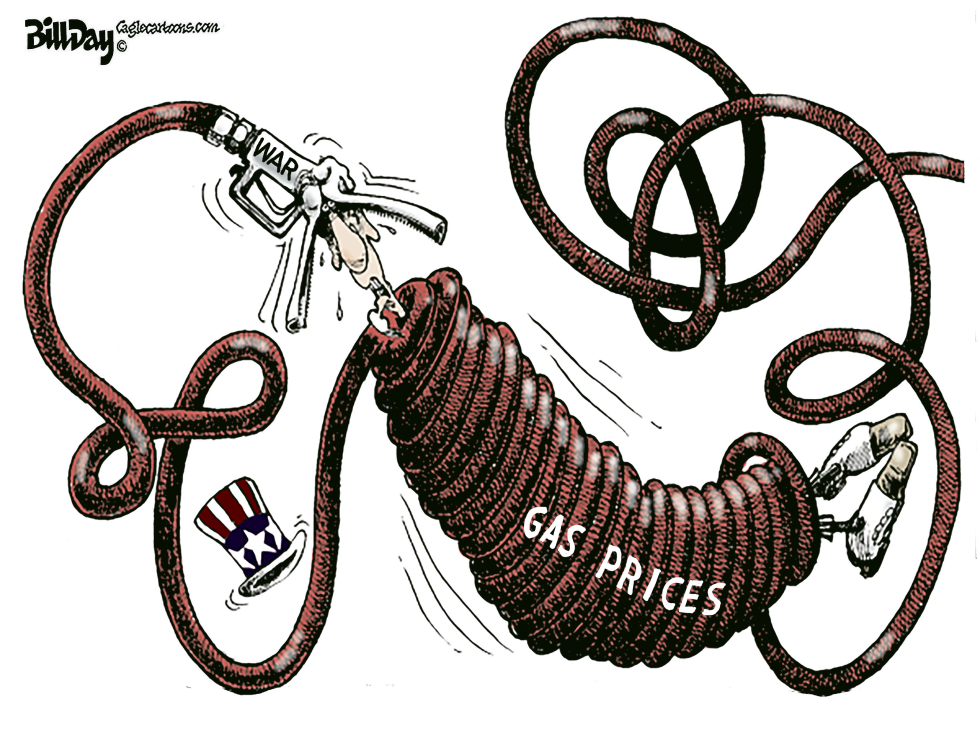
Bill Day's cartoon depicts a gas pump nozzle marked 'WAR' aggressively pumping into a twisted red hose that forms a noose-like figure labeled 'GAS PRICES,' with arms and legs dangling, suggesting strangulation. An Uncle Sam hat adorned with the American flag falls away, emphasizing national impact. This satirical image ties into tags like gas prices, Iran war, gas pump, Strait of Hormuz, and NATO, highlighting how military conflicts drive up fuel costs. The coiled hose resembles a hanged person, underscoring economic peril from oil disruptions. Day's style uses bold lines and clear labels for immediate visual punch, a staple in political cartoons that critique policy fallout.