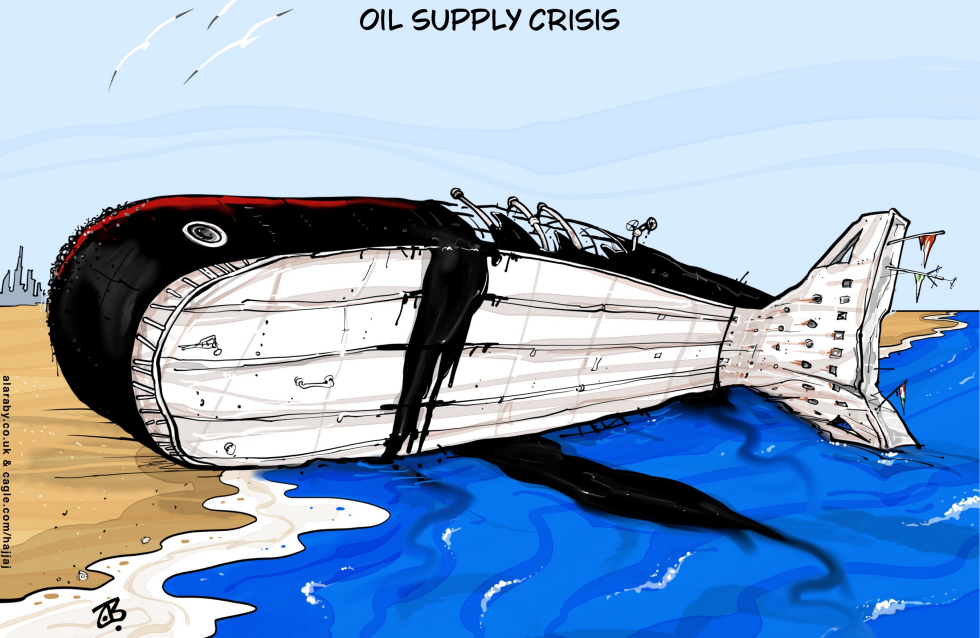
A major oil tanker has run aground, disrupting supply routes and releasing crude into coastal waters. The incident underscores vulnerabilities in global energy transport networks that rely on aging or poorly maintained vessels. Such events can spike fuel prices and trigger immediate cleanup costs for affected regions. The cartoon frames the grounding as a direct cause of the broader supply crisis rather than an isolated accident. It points to systemic weaknesses in oversight and infrastructure that allow one failure to cascade into wider shortages and ecological harm.
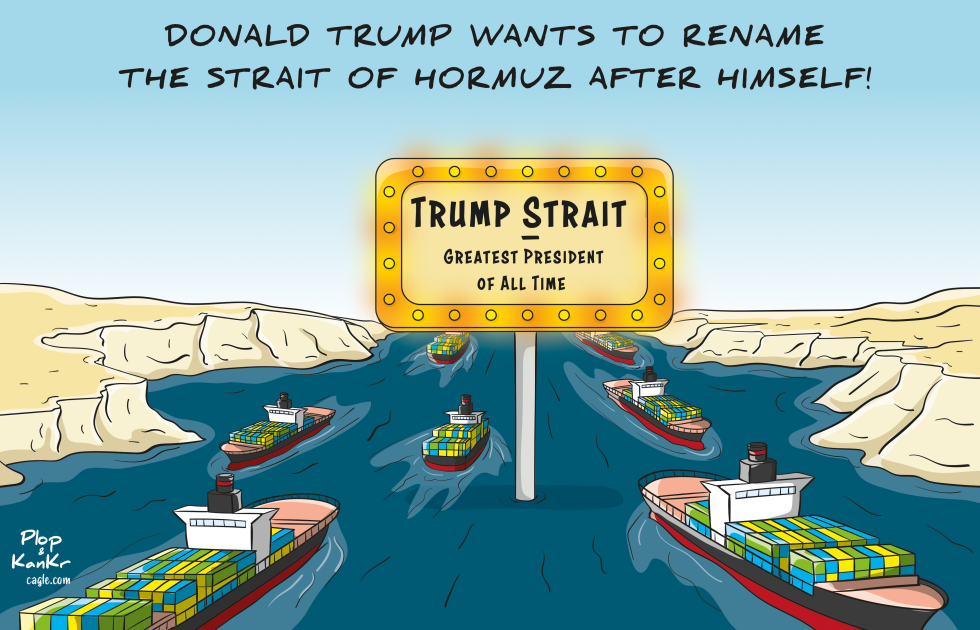
A political cartoon depicts Donald Trump proposing to rename the Strait of Hormuz after himself. The image shows multiple cargo ships navigating the waterway beneath a large glowing sign reading Trump Strait with the subtitle Greatest President of All Time. The top text states Donald Trump wants to rename the Strait of Hormuz after himself. The cartoon uses the visual of a prominent sign overlooking busy shipping lanes to comment on the proposal. It responds to ongoing discussions about international waterways and presidential initiatives in the Middle East region as of the September 2026 publication date.
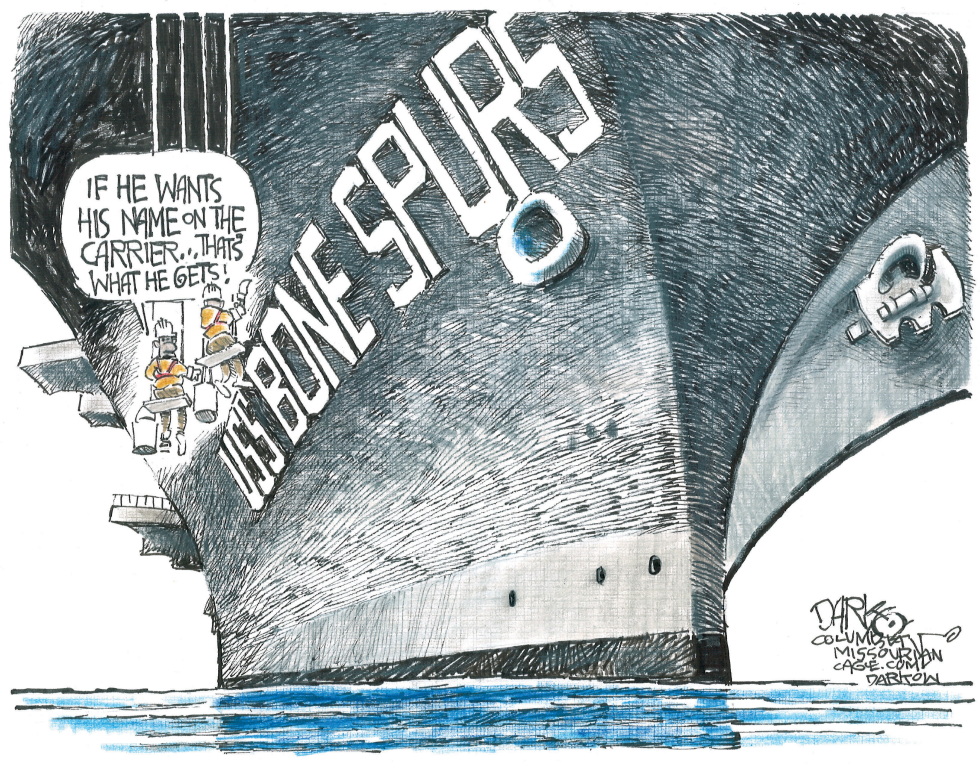
A proposal to rename a U.S. aircraft carrier after Donald Trump has drawn attention to his Vietnam-era draft deferments for bone spurs. The move highlights ongoing debate over military service records of political figures. The piece portrays the renaming as a pointed reminder of those deferments.
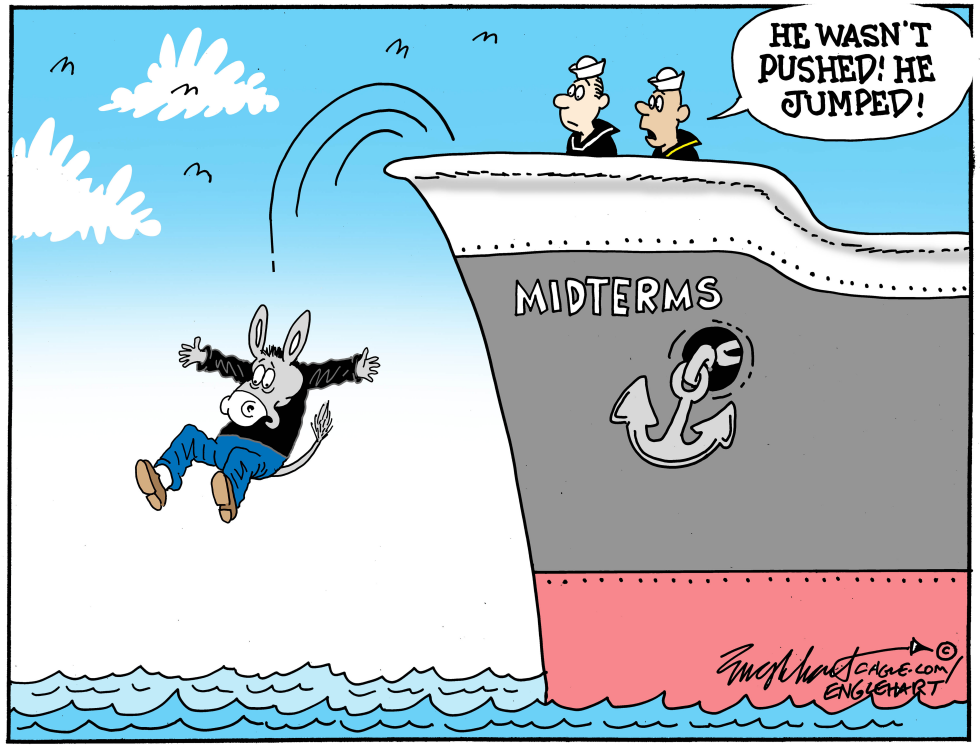
With the 2026 midterm elections approaching, Democratic candidates face headwinds in key races. The party symbol is shown leaping from the midterms vessel into open water. Sailors on deck insist the departure was voluntary. The image captures ongoing Democratic struggles to maintain momentum and voter support in competitive districts. The editorial position frames the move as self-inflicted rather than externally forced.
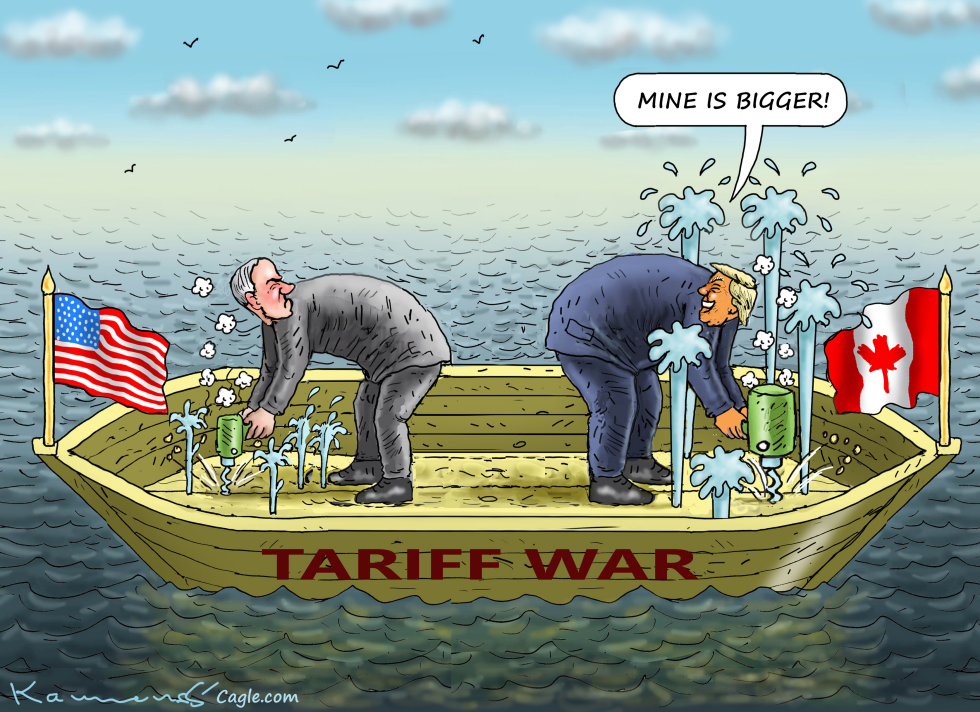
US and Canadian leaders have intensified a tariff dispute through reciprocal trade barriers that threaten cross-border supply chains and consumer prices. The editorial depicts both sides actively undermining their shared economic vessel rather than seeking negotiated relief.
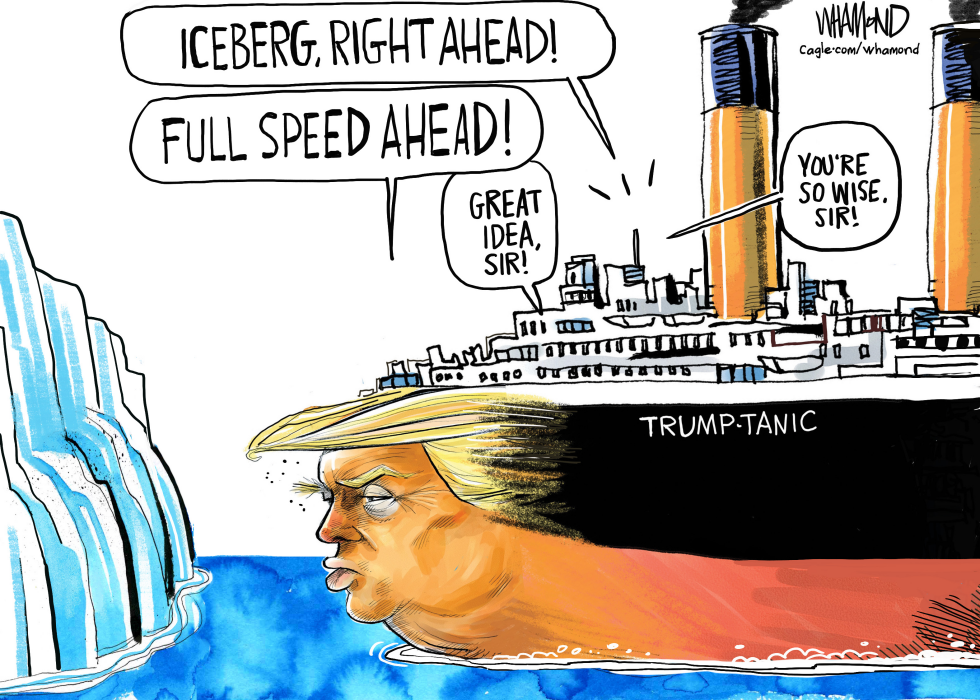
Donald Trump faces mounting leadership challenges in 2026 as critics warn his administration is steering the country toward avoidable crises. The piece portrays him ignoring clear warnings while surrounded by flatterers. It argues that such dynamics risk major political and policy damage.
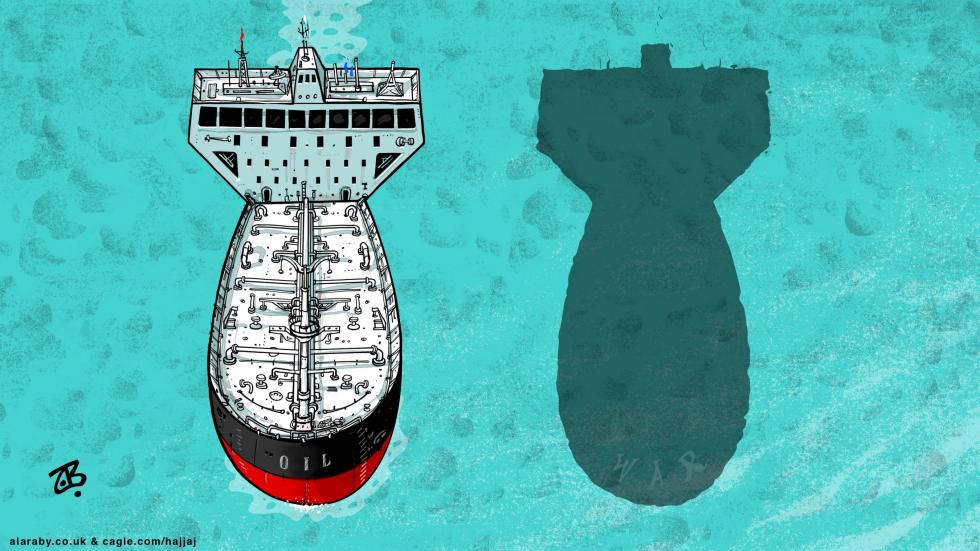
An oil tanker depicted in bomb form with a matching shadow labeled war underscores ongoing links between energy resources and armed conflict. The image responds to persistent tensions in oil-producing regions where shipping routes and resource control intersect with military actions. Such portrayals emphasize how fossil fuel transport remains entangled in geopolitical disputes. The editorial stance critiques the weaponization of energy supplies and the persistent threat of escalation tied to oil interests.
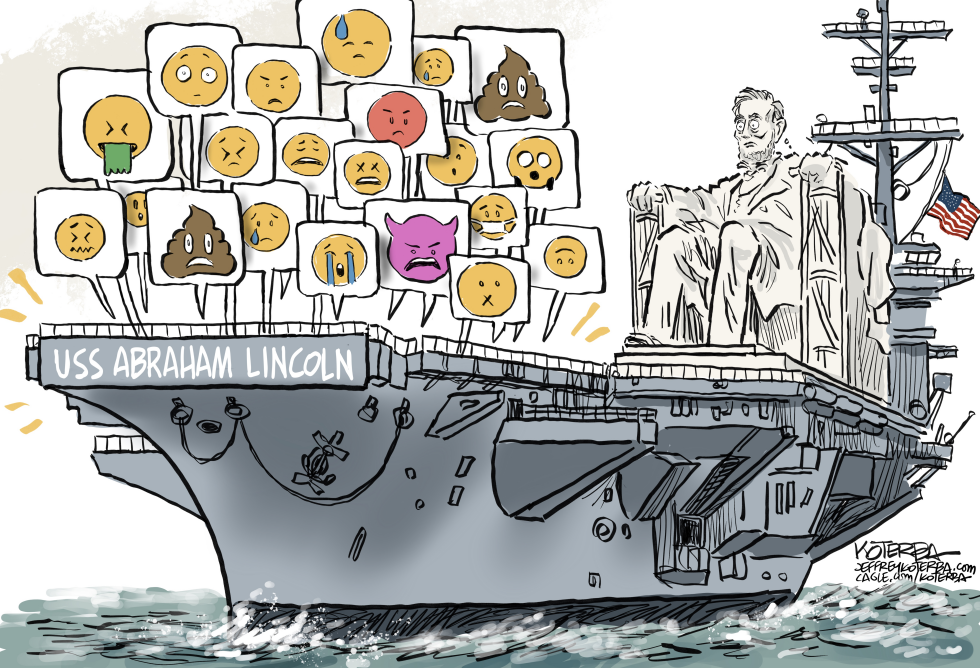
Public reaction to US naval deployments has intensified through social media platforms in recent weeks. Online users have flooded discussions with critical emojis targeting military assets like the USS Abraham Lincoln. The piece portrays this digital deluge as an overwhelming force on longstanding symbols of American leadership and naval power.
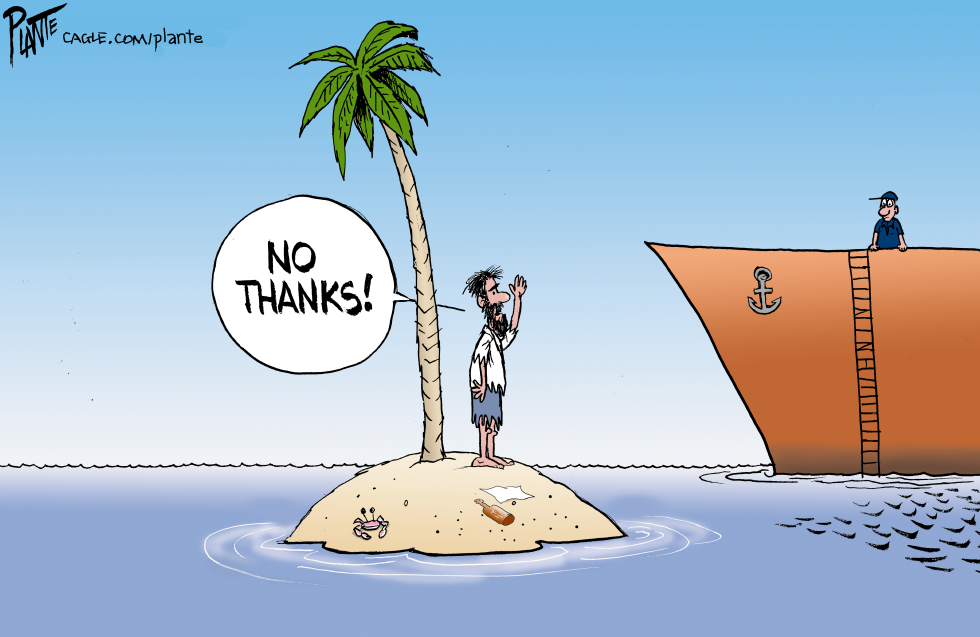
A castaway on a remote island faces an unexpected chance at rescue from a passing vessel. The situation highlights ongoing human tensions between solitude and reintegration into society. The piece takes the position that some individuals genuinely prefer isolation over returning to the outside world.
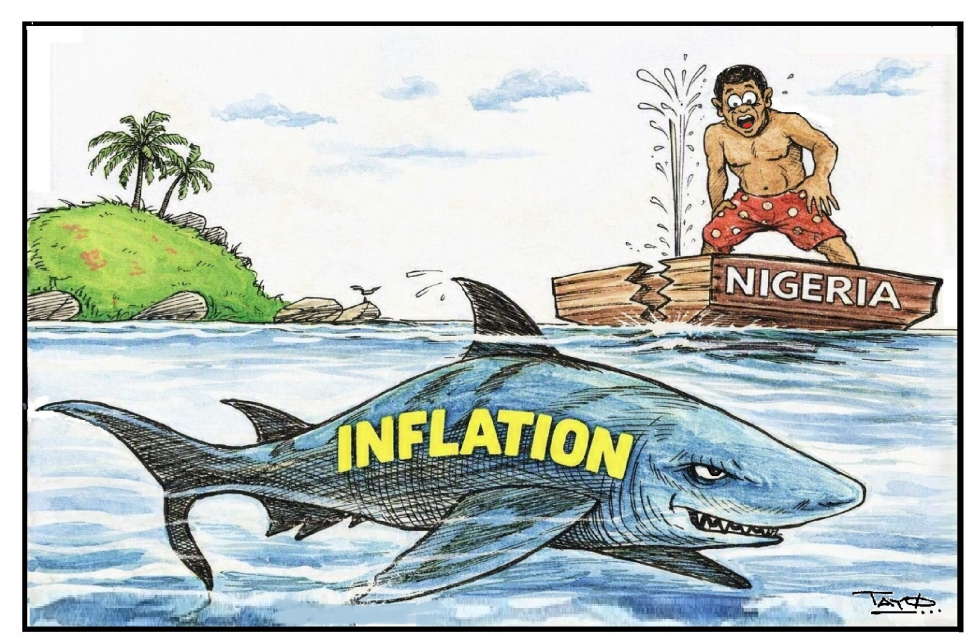
Nigeria continues to contend with sustained inflation and rising living costs. The piece responds to persistent price pressure on households and the strain it places on the wider economy. It presents inflation as a predatory force circling a vessel already taking on water.
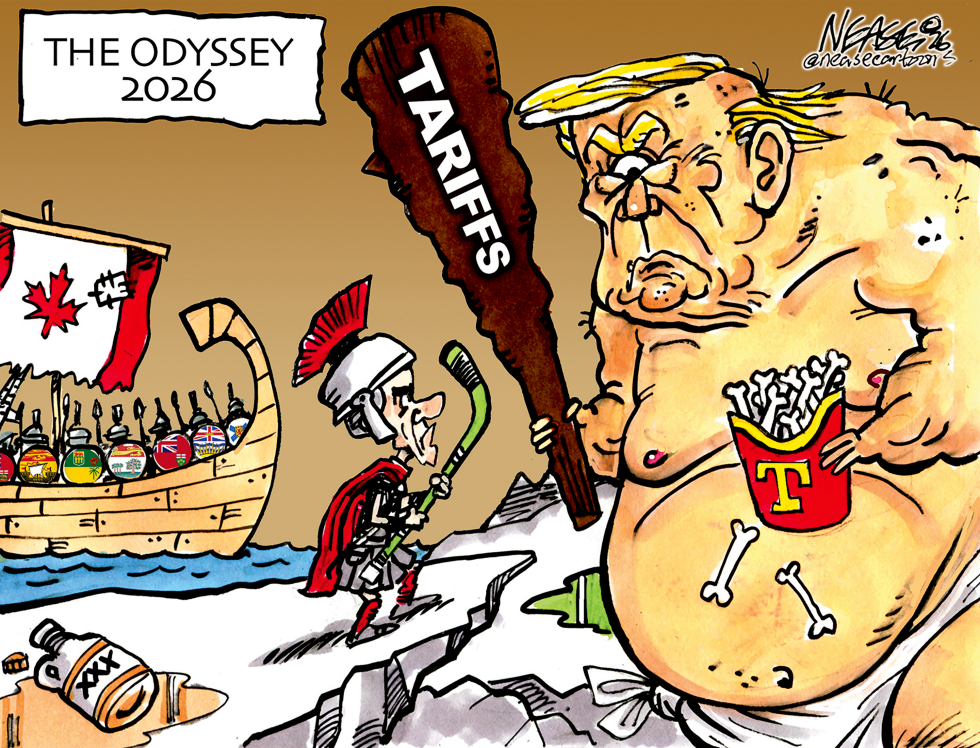
President Trump escalates tariffs on trading partners including Canada in mid-2026. The move targets imports amid ongoing disputes over trade balances and supply chains. Allies respond with coordinated pushback through diplomatic and economic channels. The cartoon casts the confrontation as a one-sided power play by the oversized tariff wielder against smaller coordinated opponents.
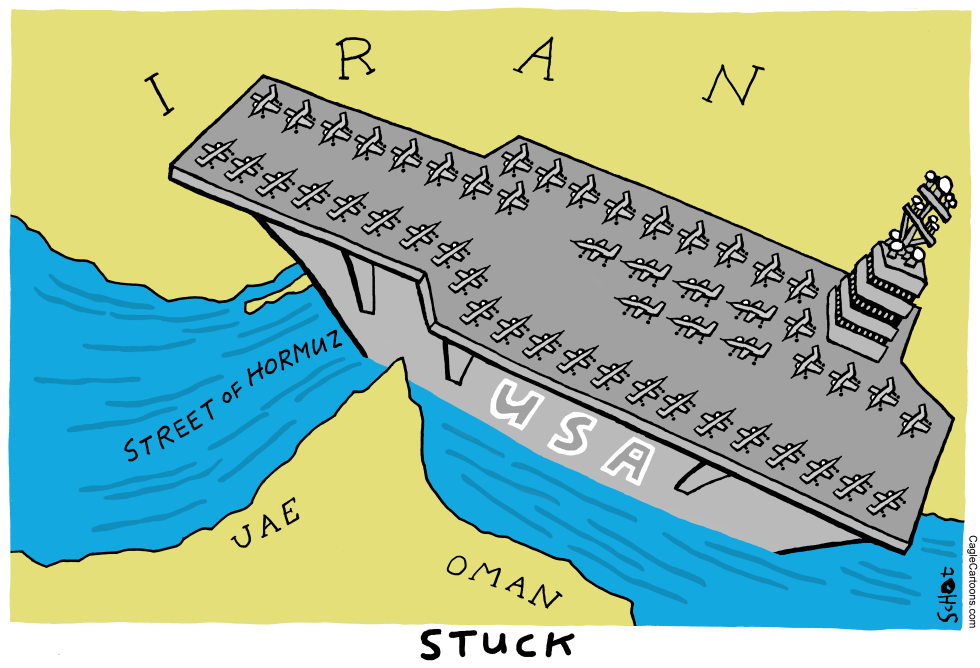
Tensions persist in the Strait of Hormuz where US naval forces maintain a presence amid ongoing disputes with Iran over shipping access and regional influence. The narrow waterway remains a critical chokepoint for global oil transit between the Persian Gulf and open seas. No single triggering incident stands out in the days before July 22 2026 yet the strategic standoff continues. The cartoon frames the US carrier as physically immobilized by the surrounding geography and neighboring states.
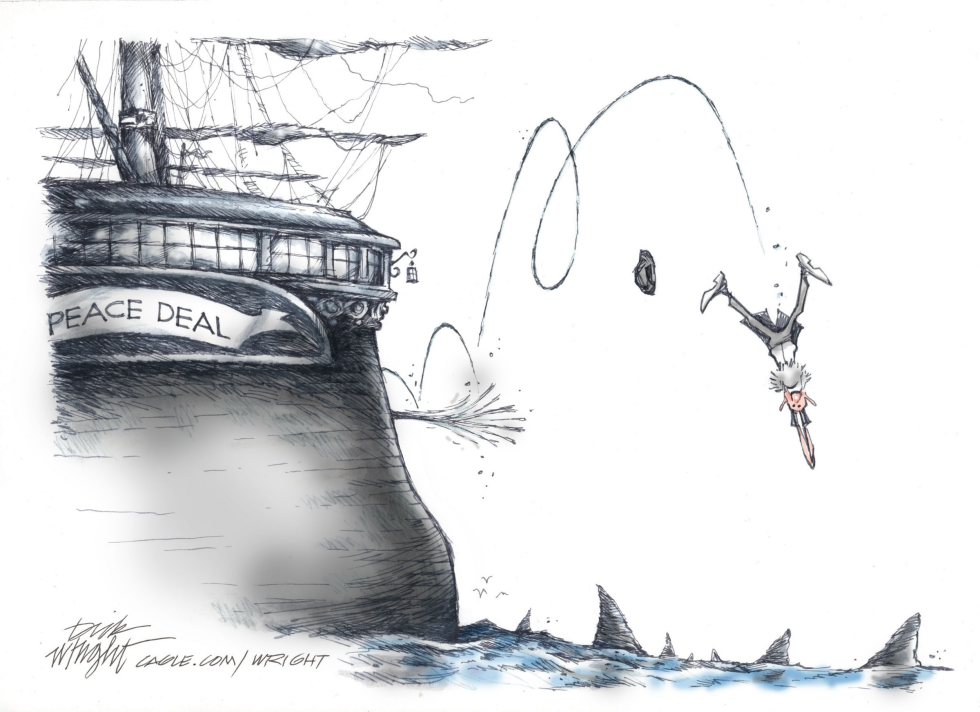
A large vessel labeled Peace Deal lists sharply as a white-haired figure tumbles from its deck into shark-infested waters. The image, dated July 9 2026, shows the person upside down with limbs flailing and a small object falling nearby. Fins break the surface directly beneath the trajectory. The composition emphasizes the abrupt separation from the ship and the immediate threat below. No other text or figures appear on deck.
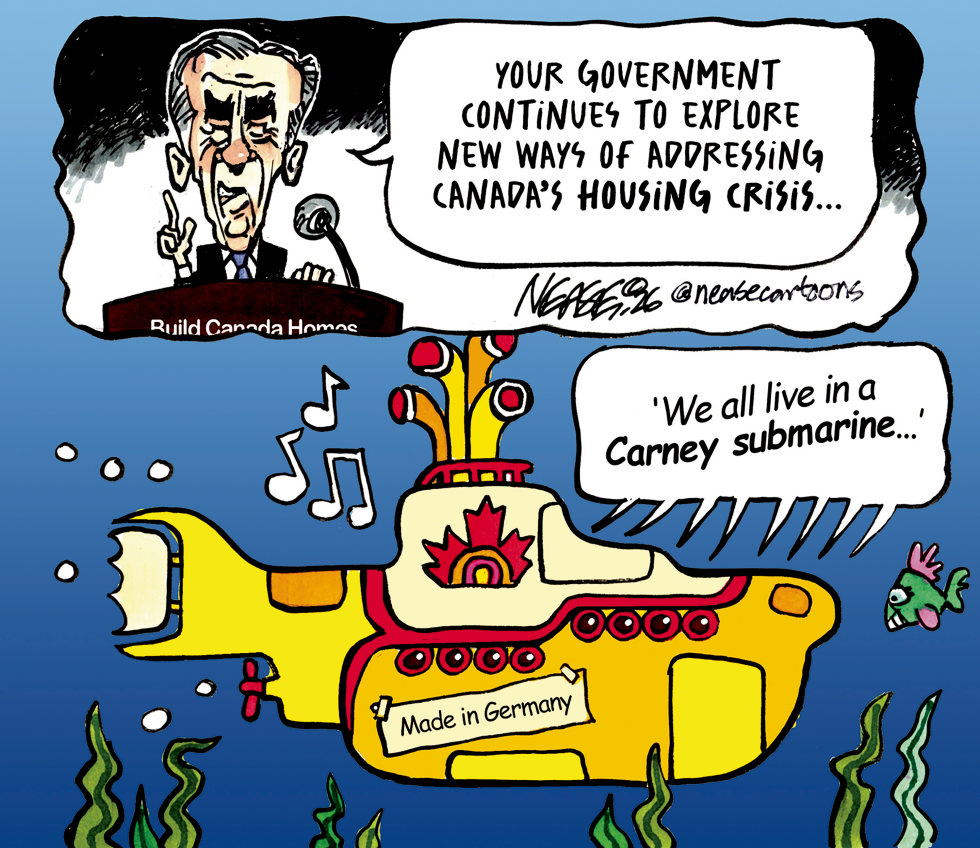
On July 7 2026 Mark Carney speaks from a Build Canada Homes podium about ongoing government efforts to address the national housing crisis. Below the surface a yellow submarine marked Made in Germany and bearing a maple leaf emblem carries the slogan We all live in a Carney submarine. The scene references the Beatles song while depicting policy exploration through underwater imagery with musical notes and a small fish observer.
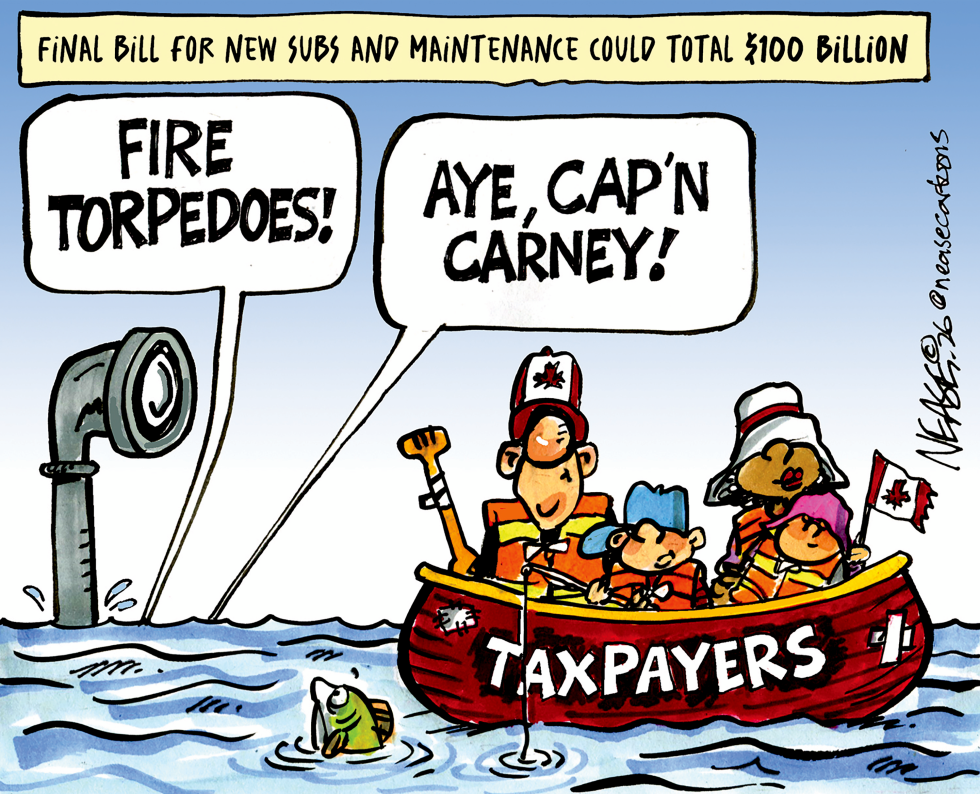
A political cartoon from July 6, 2026, shows a red boat marked TAXPAYERS carrying figures including one identified as Cap'n Carney. Speech bubbles show calls to fire torpedoes and affirm orders. A banner above warns that the final bill for new submarines and maintenance could reach $100 billion. A periscope rises from the water beside the vessel. The image highlights Canadian defense procurement costs borne by the public.