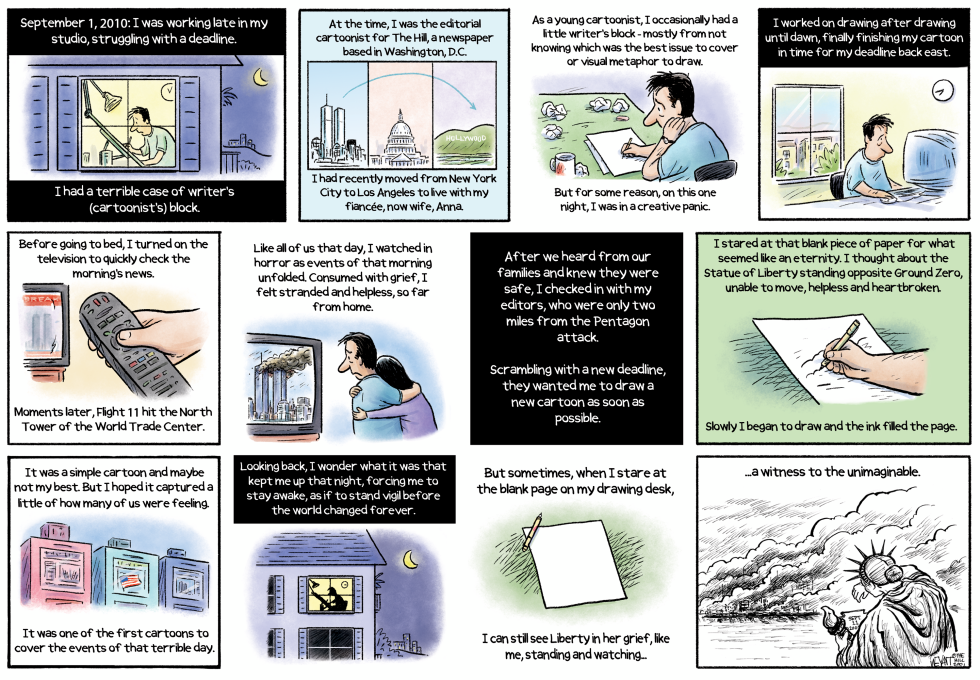
On September 11, 2001, editorial cartoonist Christopher Weyant faced a sudden deadline shift after the attacks on the World Trade Center and Pentagon. Working from Washington, D.C., he checked on family and editors before creating one of the earliest cartoons responding to the events. The piece shows his personal struggle with a blank page that night and the resulting image of the Statue of Liberty standing vigil opposite Ground Zero. The cartoon marks the 25th anniversary by revisiting how the attacks altered the nation and the artist's own sense of purpose.
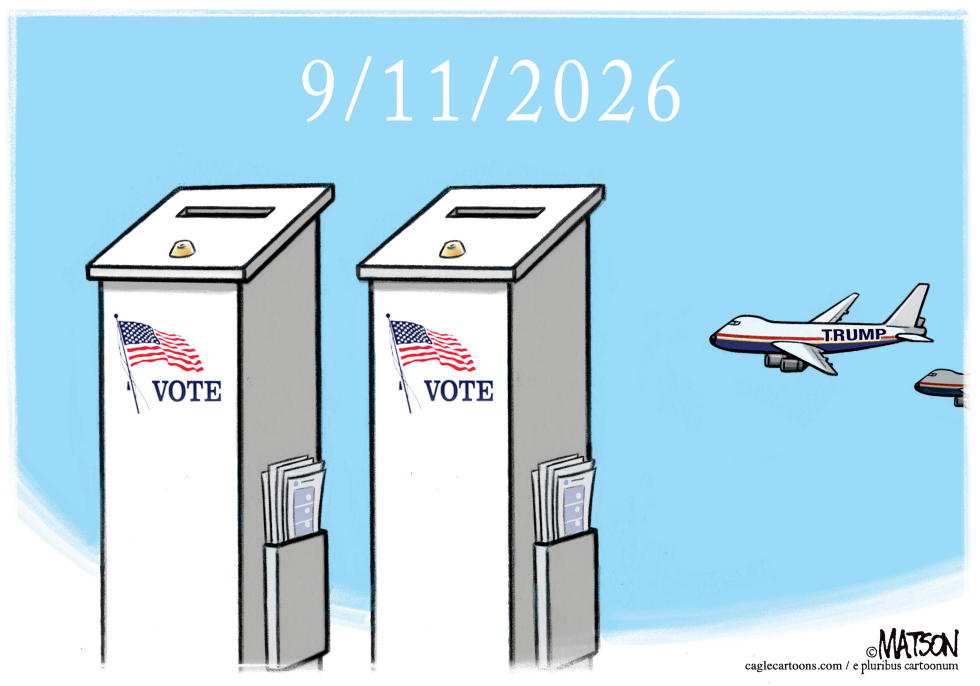
Donald Trump has signaled plans to impose new voting restrictions before the 2026 midterm elections. The moves come as Republicans seek advantages in key races. Critics argue the changes would suppress turnout among Democratic-leaning voters. Supporters claim the steps address fraud concerns. The cartoon frames the timing as an attack on voting access itself.
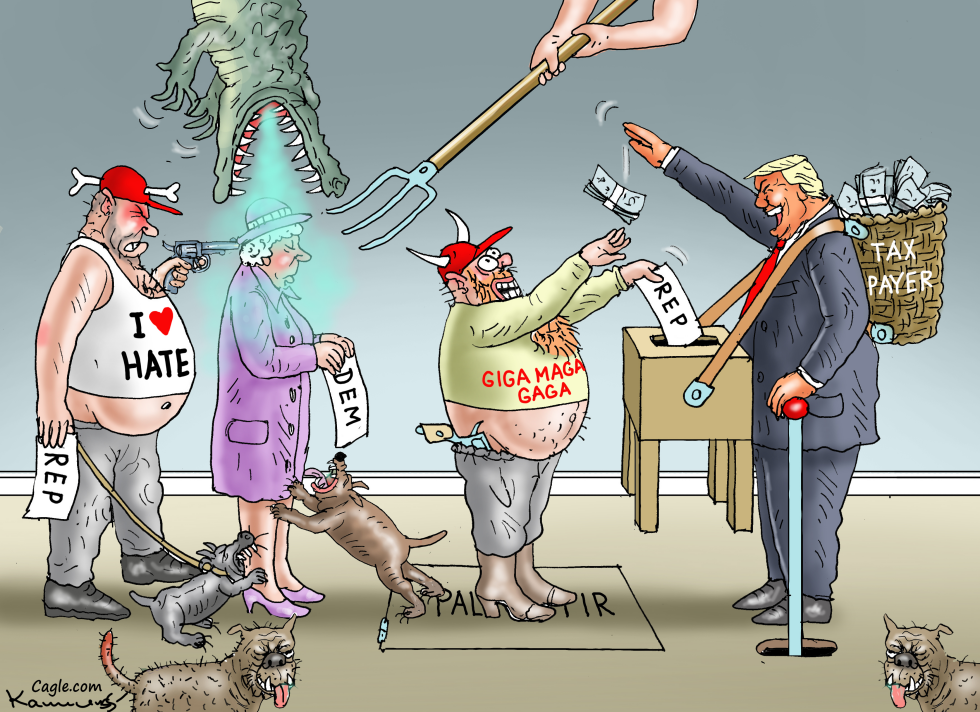
As the 2026 midterm elections approach, former President Trump has positioned himself as a central force in Republican campaigns, directing resources and mobilizing supporters. The cartoon highlights the use of taxpayer money in these efforts and the intense partisan divide, with Democrats portrayed as under attack. It takes the position that such involvement risks undermining fair electoral processes.
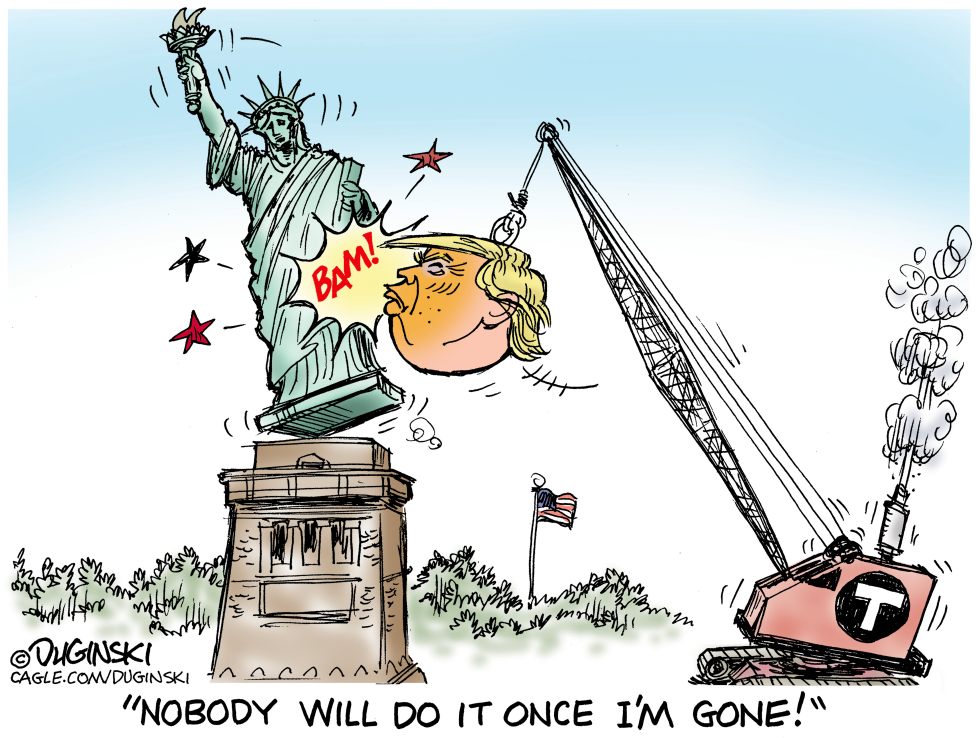
Donald Trump has repeatedly positioned his administration as the primary force reshaping or challenging long-standing U.S. institutions and norms. Critics argue this approach risks permanent erosion of democratic safeguards and public trust. The cartoon presents Trump's own words as an admission that the damage stops only when he leaves office.
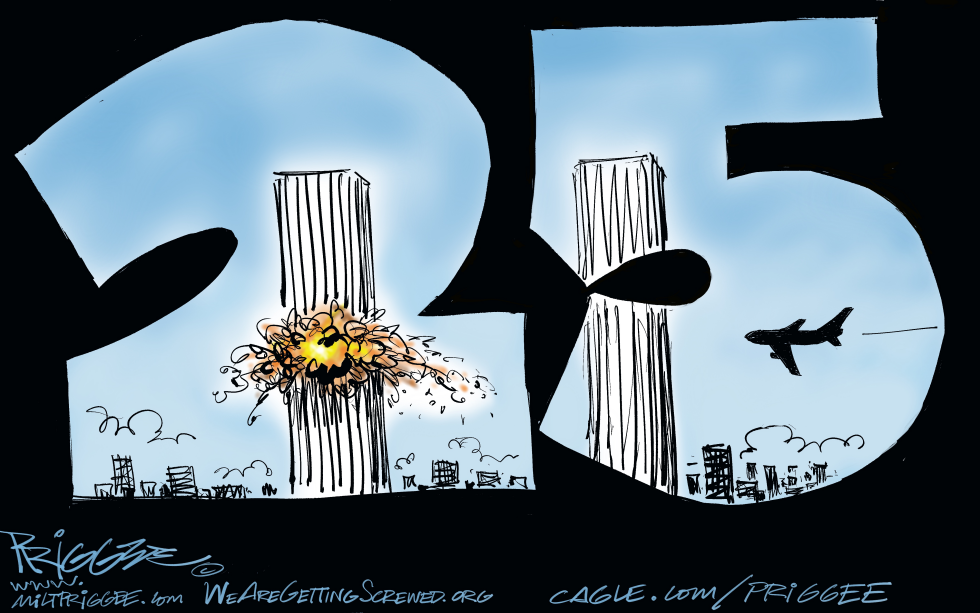
The cartoon commemorates the 25th anniversary of the September 11 attacks by embedding imagery of the Twin Towers and the hijacked plane within the large numerals. It serves as a stark visual reminder of the event's lasting national significance without additional commentary or figures.
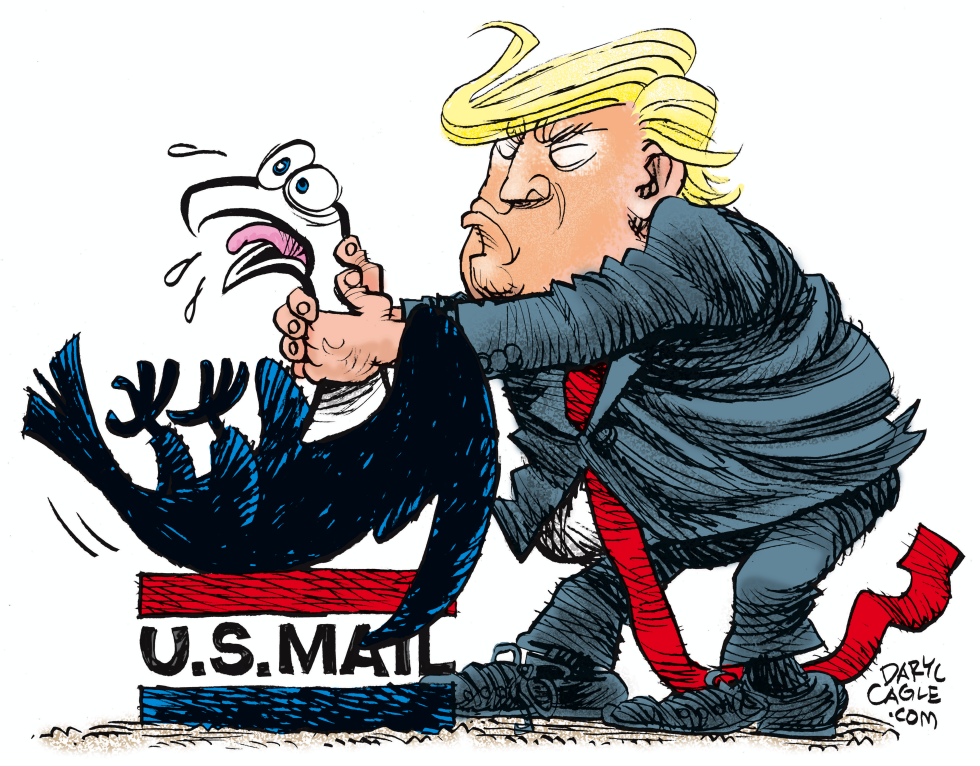
Donald Trump has renewed criticism of the U.S. Postal Service, calling for major operational changes amid reports of delivery slowdowns and budget shortfalls. The agency faces pressure to cut costs while maintaining universal service standards. Lawmakers from both parties have pushed back, arguing that further reductions would harm rural communities and election mail. The editorial takes the position that such attacks weaken a vital public institution without addressing root causes like underfunding and outdated infrastructure.
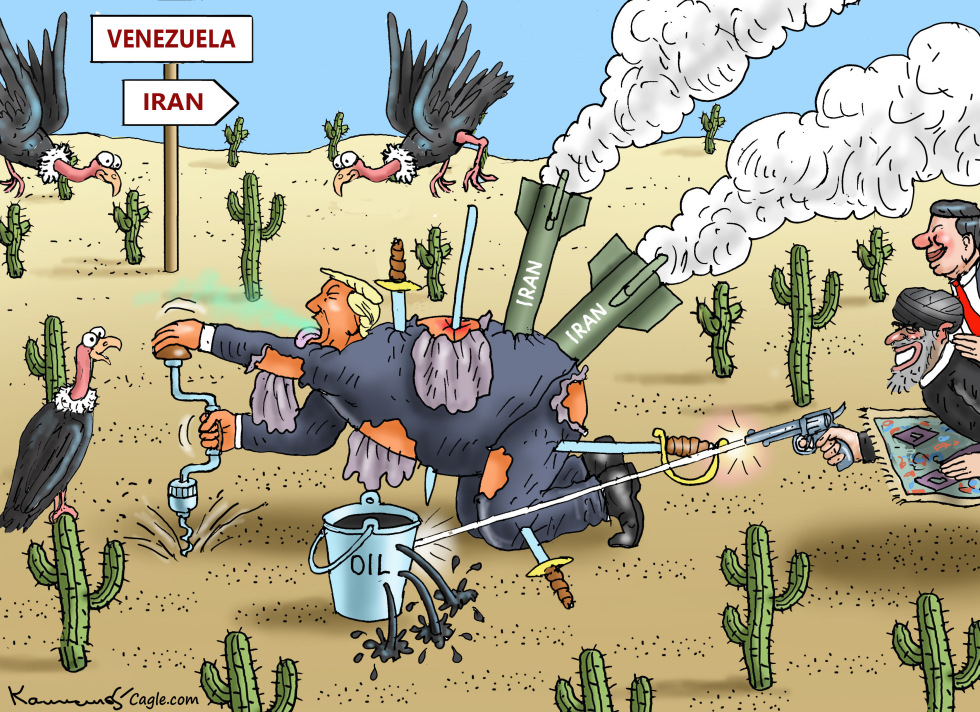
Donald Trump continued efforts to secure oil resources from Venezuela and Iran despite ongoing missile strikes and political pressure from those nations. The moves highlight US energy independence goals amid regional instability. The piece portrays these actions as defiant and opportunistic in the face of direct threats.
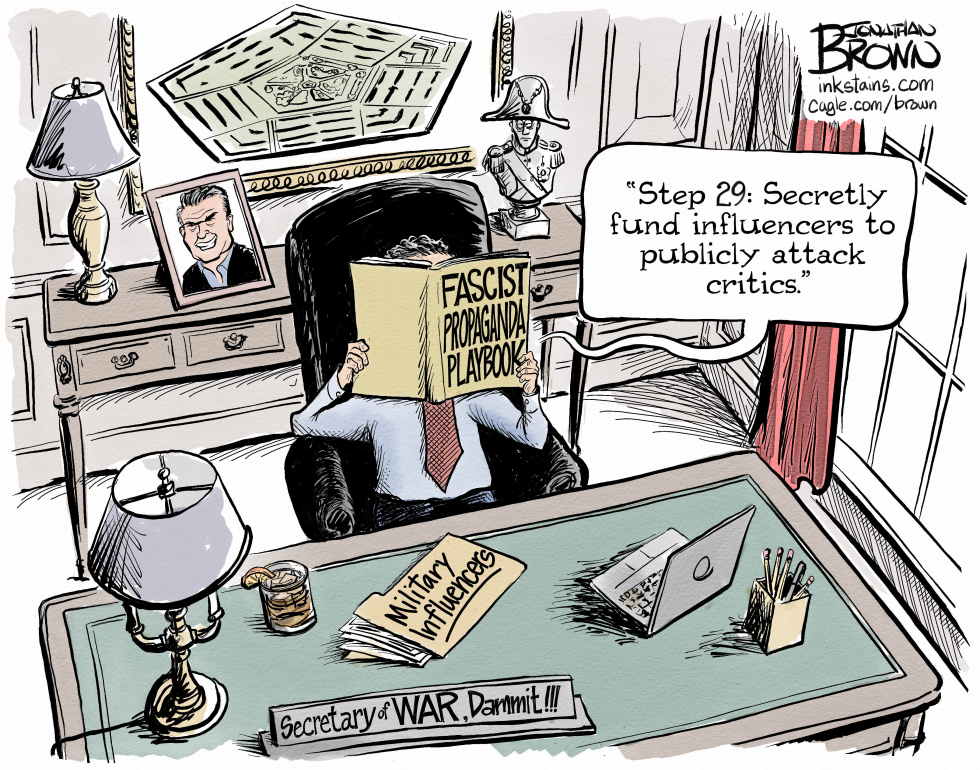
The cartoon shows a government official identified as the Secretary of War seated at a desk while holding open a book labeled Fascist Propaganda Playbook. A speech bubble lists Step 29 about secretly funding influencers to attack critics. Papers on the desk are labeled Military Influencers and a nameplate reads Secretary of WAR, Dammit. The scene includes office items such as lamps, a laptop, and a framed photo. The image responds to concerns over use of military-related influence operations in domestic political disputes.
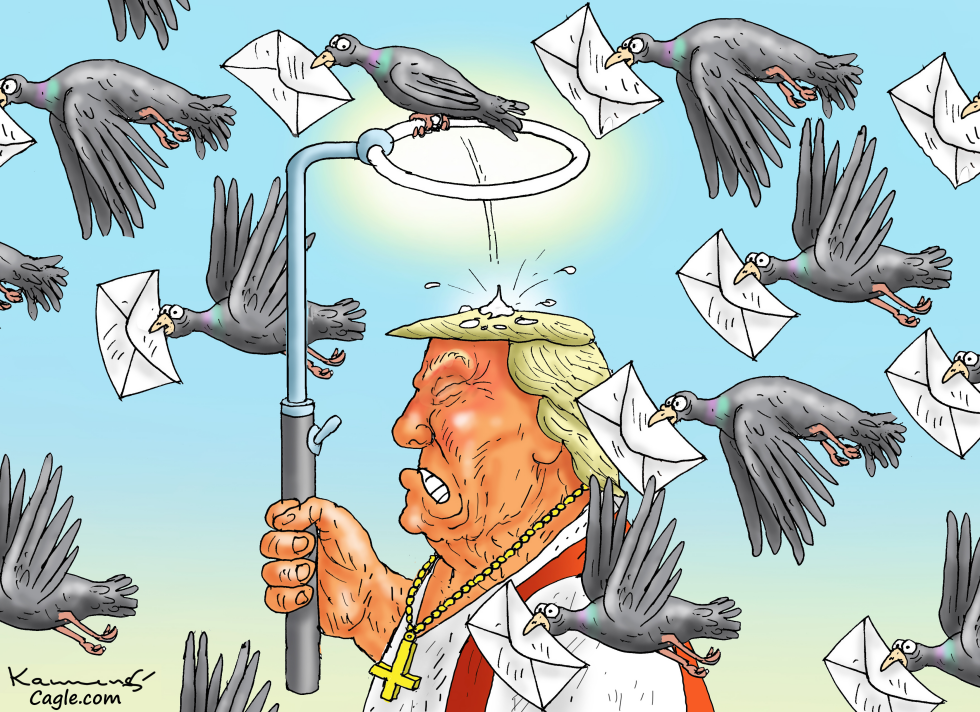
Donald J. Trump continues to draw intense public and political attention in 2026. Recent developments around mail services and communications have placed him at the center of fresh criticism. Observers note the volume of correspondence and commentary directed at him. The editorial position frames these pressures as deserved scrutiny over his conduct and influence.
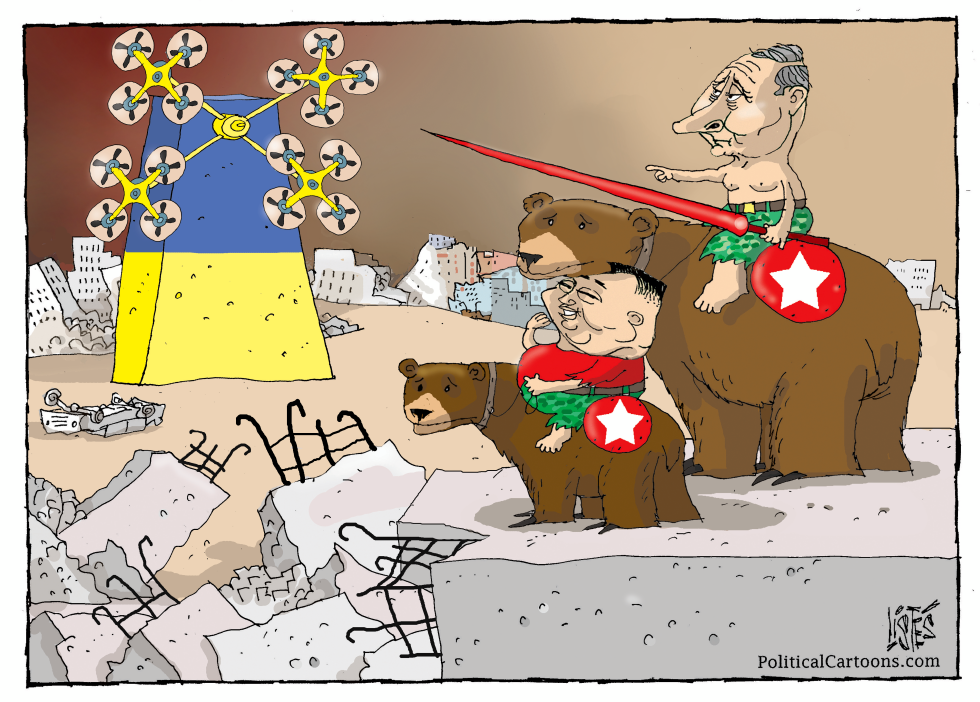
Russian President Vladimir Putin and North Korean leader Kim Jong-un coordinate military support involving drones and personnel in the ongoing Ukraine conflict. The partnership raises concerns over expanded battlefield capabilities and prolonged fighting. The piece portrays their joint advance as a direct strike on Ukrainian infrastructure and sovereignty.
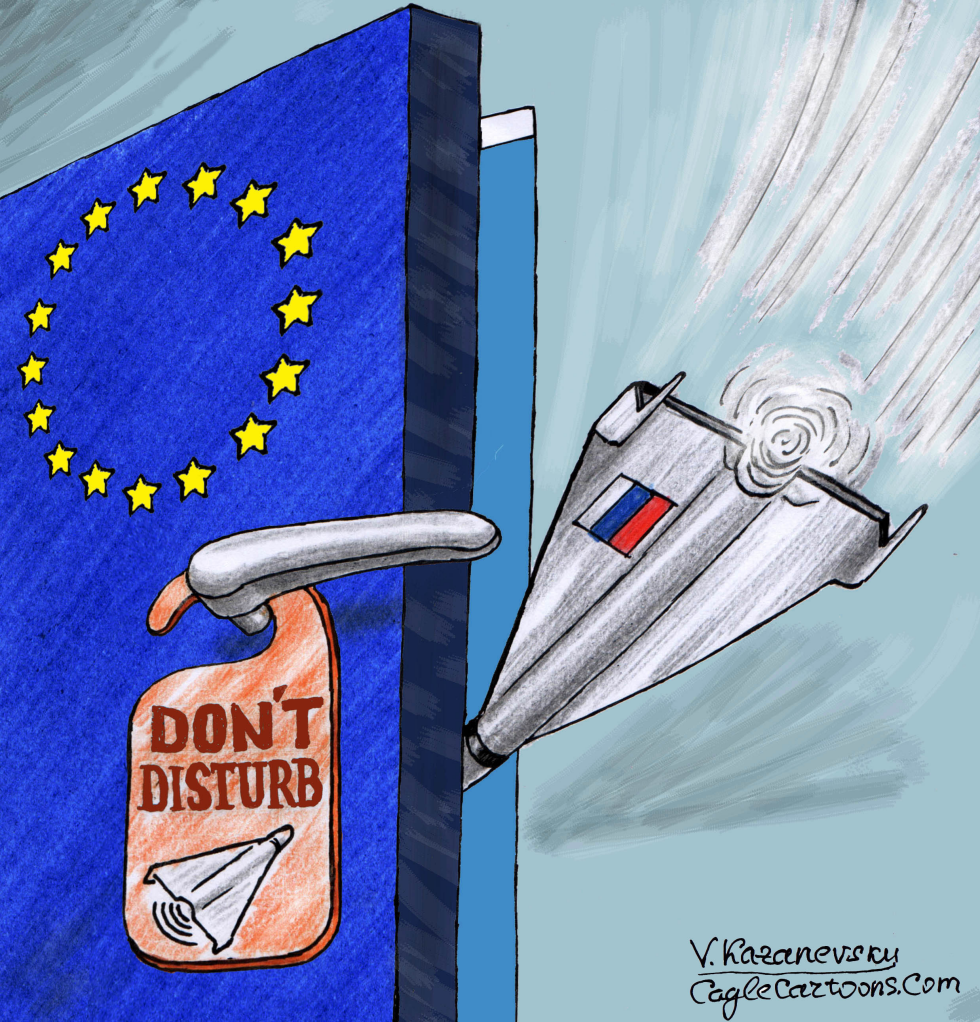
A Russian drone has breached an EU doorway in a symbolic incident highlighting ongoing security concerns from Moscow's actions near European borders. The event underscores vulnerabilities in continental defense amid the protracted Ukraine conflict and repeated airspace violations. The piece argues that EU warnings and isolation measures prove insufficient against persistent Russian incursions.
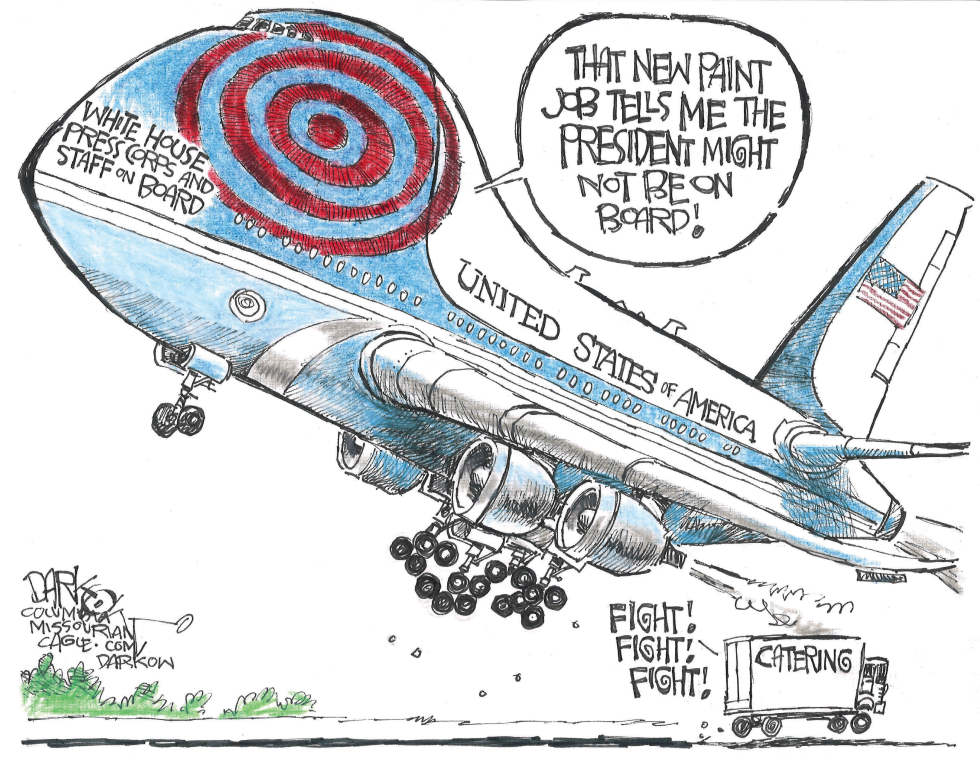
Air Force One appears with a large target painted on its upper fuselage while carrying White House press corps and staff. A nearby catering truck chants fight slogans as the plane descends. The image suggests the president may not be aboard the targeted aircraft. This visual plays on recent tensions surrounding presidential travel and security. The editorial stance highlights perceived risks or distancing from official duties.
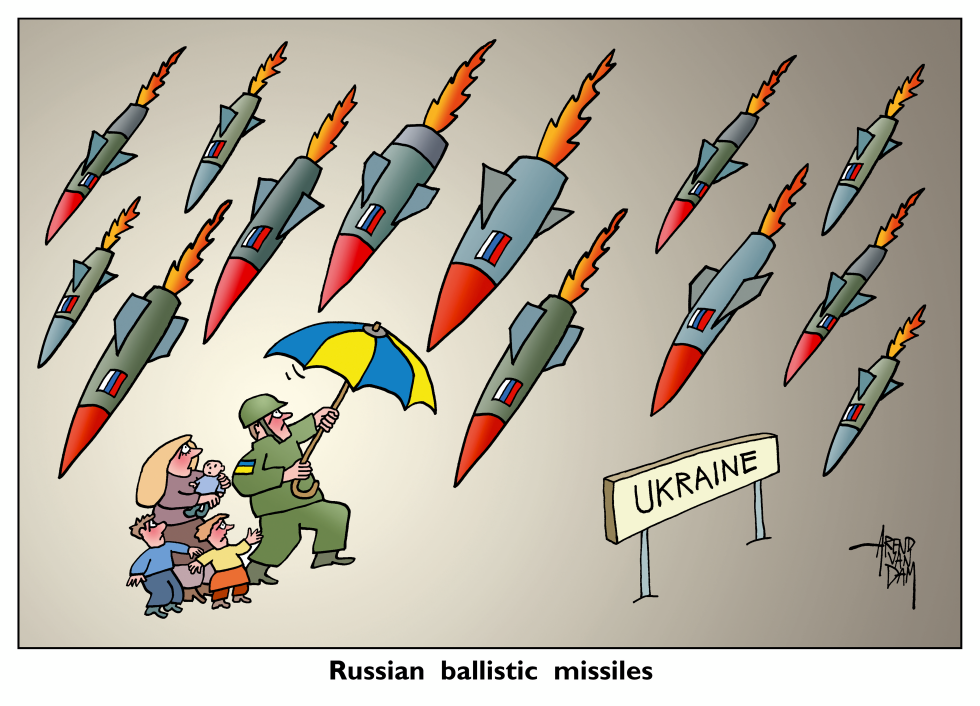
Russian ballistic missile strikes continue to target Ukrainian territory amid the prolonged conflict. A Ukrainian soldier stands at the forefront shielding a family of civilians from the barrage. The attacks underscore the persistent threat to noncombatants and infrastructure. The image frames the soldier's action as a direct barrier between the incoming weapons and those under protection. It emphasizes the role of Ukrainian forces in sustaining civilian safety during sustained aerial assaults.
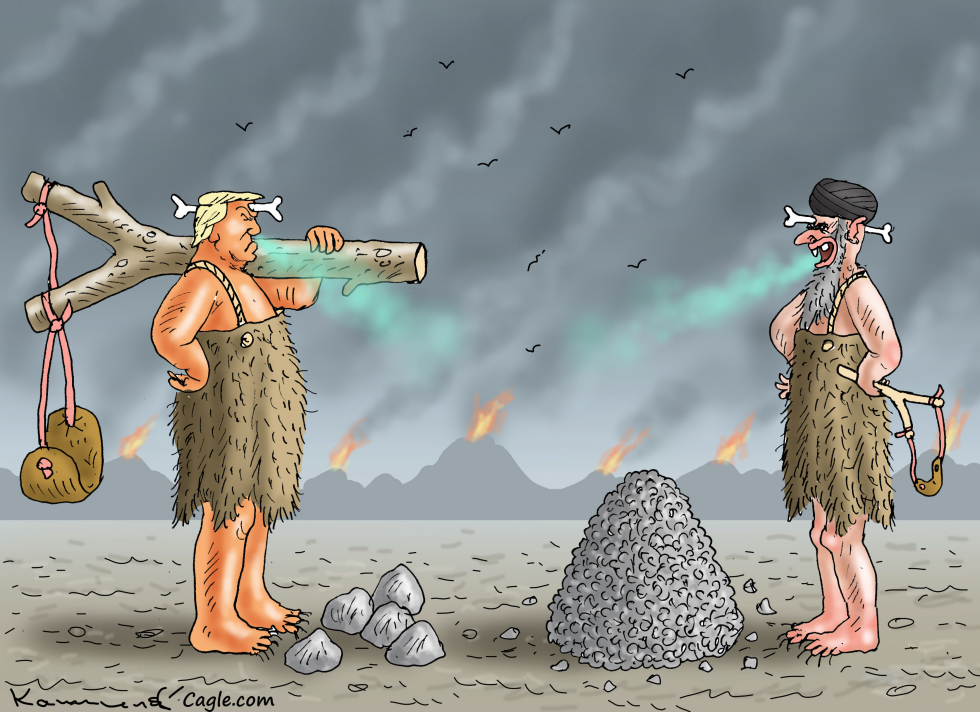
Donald Trump faces a political rival in a heated contest marked by aggressive posturing and primitive tactics. The confrontation underscores deep divisions in leadership style and approach to conflict. The piece portrays these dynamics as regressive and destructive.