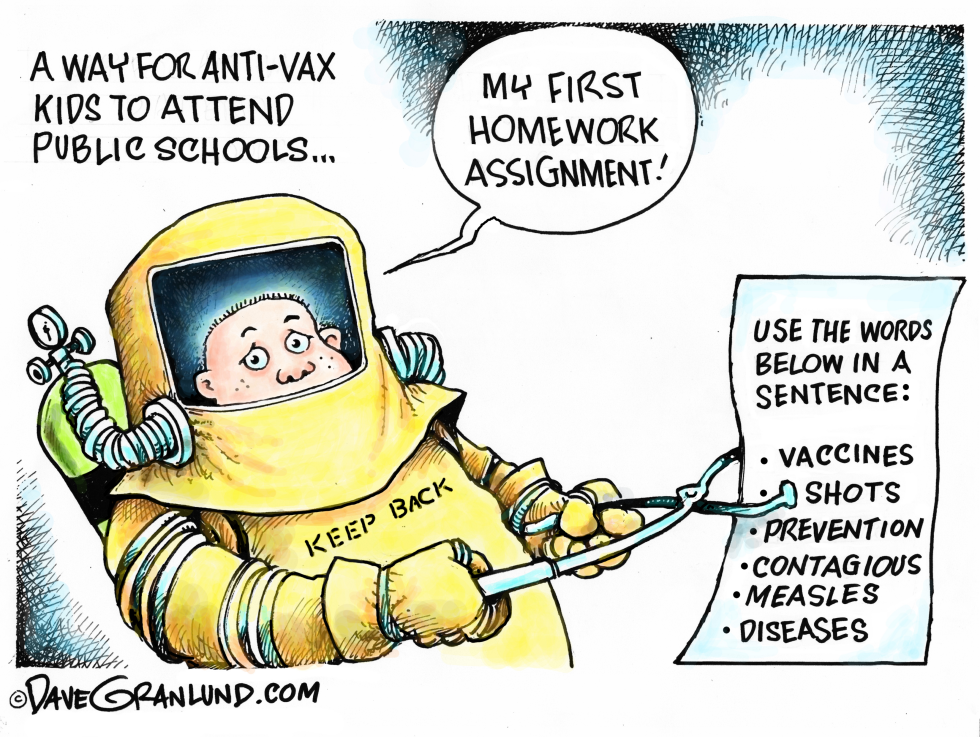
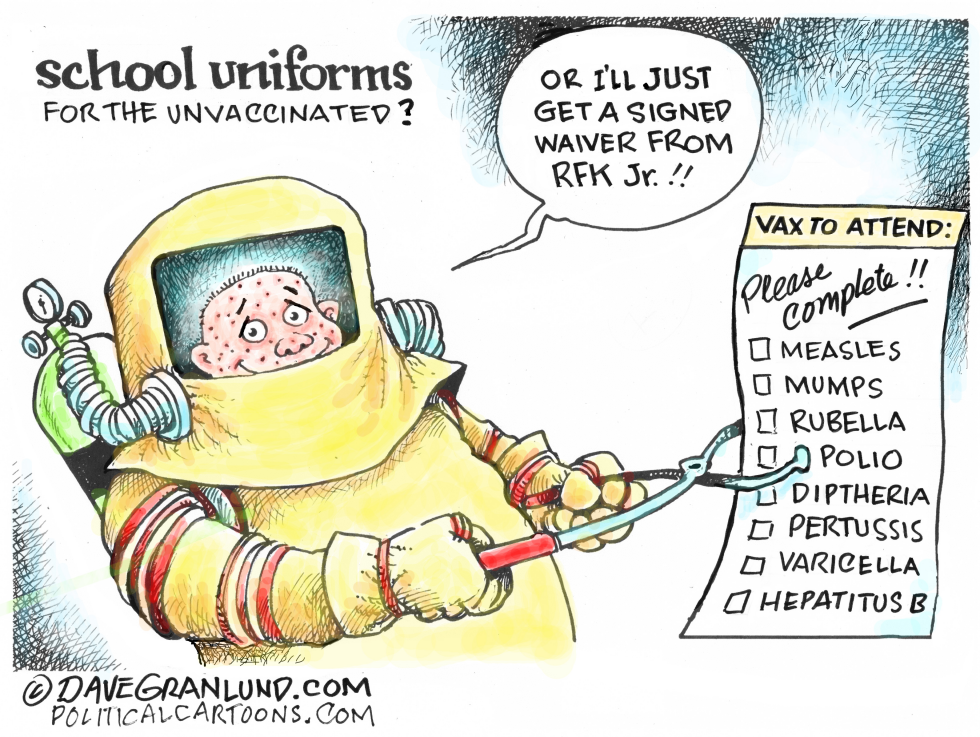
A child dressed in a full hazmat suit holds a homework sheet listing vaccine-related terms. The scene shows the suit labeled keep back and a speech bubble declaring the first assignment. Publication date of August 28 2026 places this amid ongoing debates over school entry rules and disease prevention. The image responds to concerns about measles spread when immunization rates drop. It illustrates how some families seek alternatives to standard requirements while maintaining classroom access. Broader context includes state laws on student vaccinations and recent case reports in multiple districts.
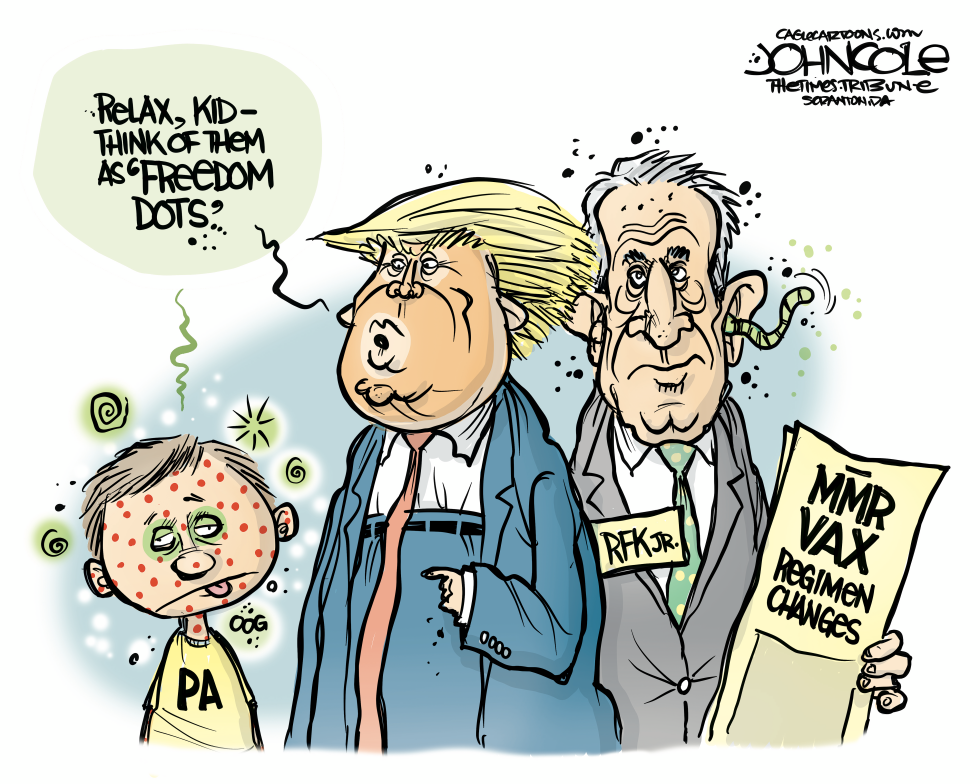
Donald Trump and RFK Jr. drew criticism in mid-August 2026 after Trump referred to measles spots as freedom dots during a Pennsylvania visit. The remarks coincided with proposed changes to MMR vaccine schedules. The piece portrays the comments as dismissive of a child's suffering and questions the administration's public health approach.
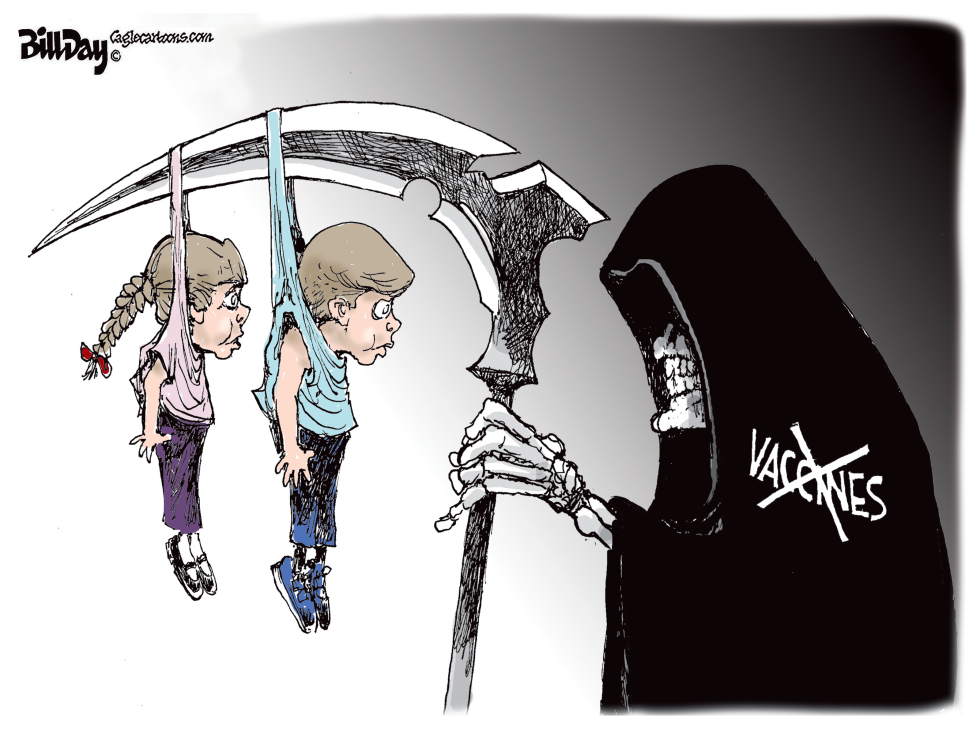
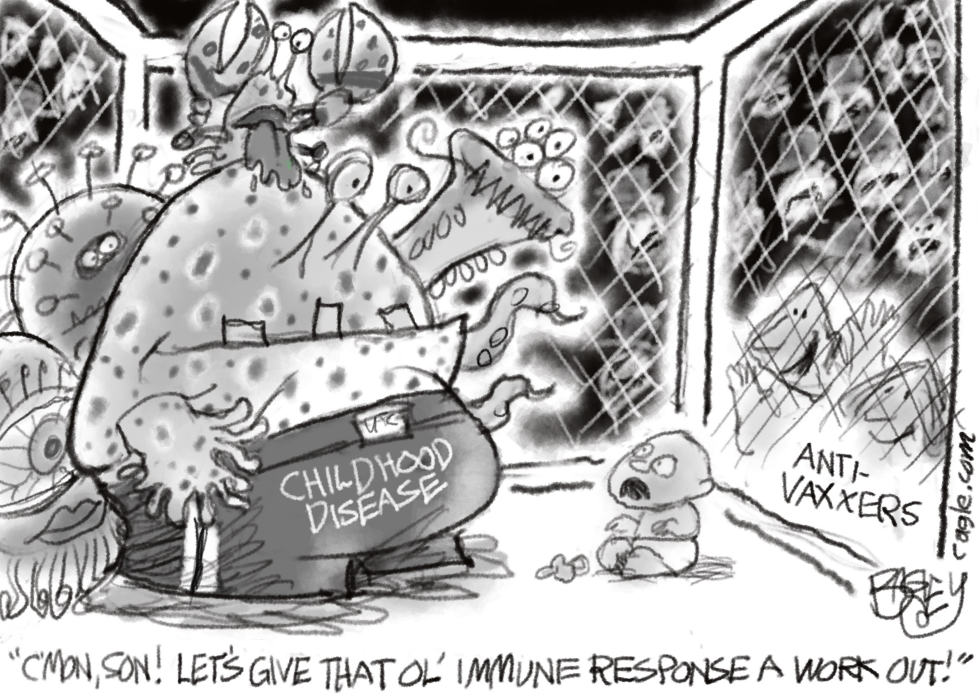
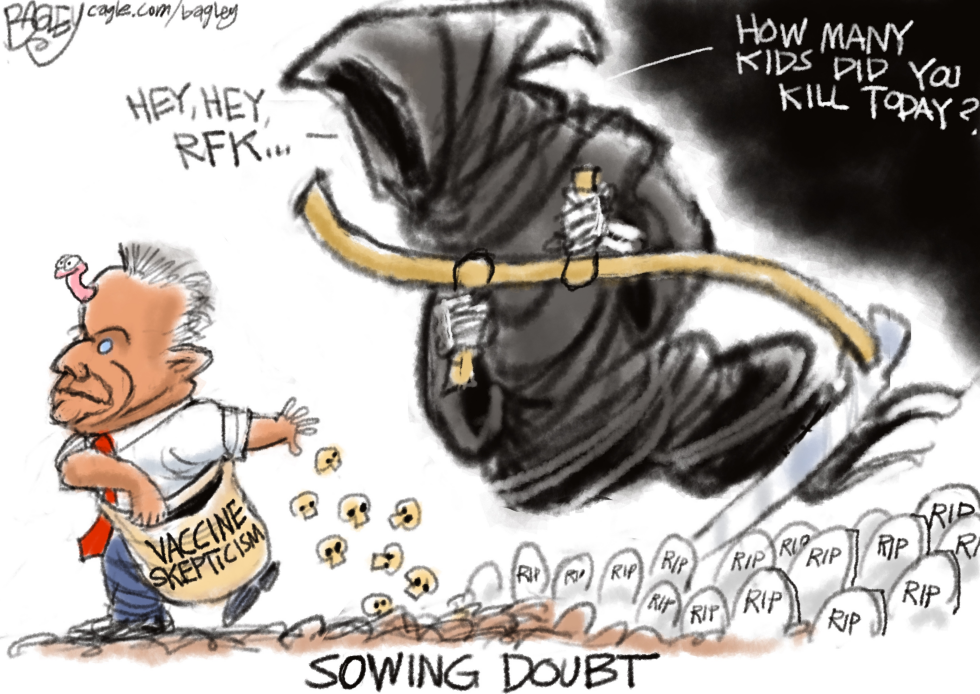
Opposition to routine childhood vaccines continues to surface in public discourse as health officials promote immunization schedules. The debate centers on parental choice versus community protection from preventable diseases. The editorial takes the position that rejecting vaccines endangers children and aligns such views with mortality risks.
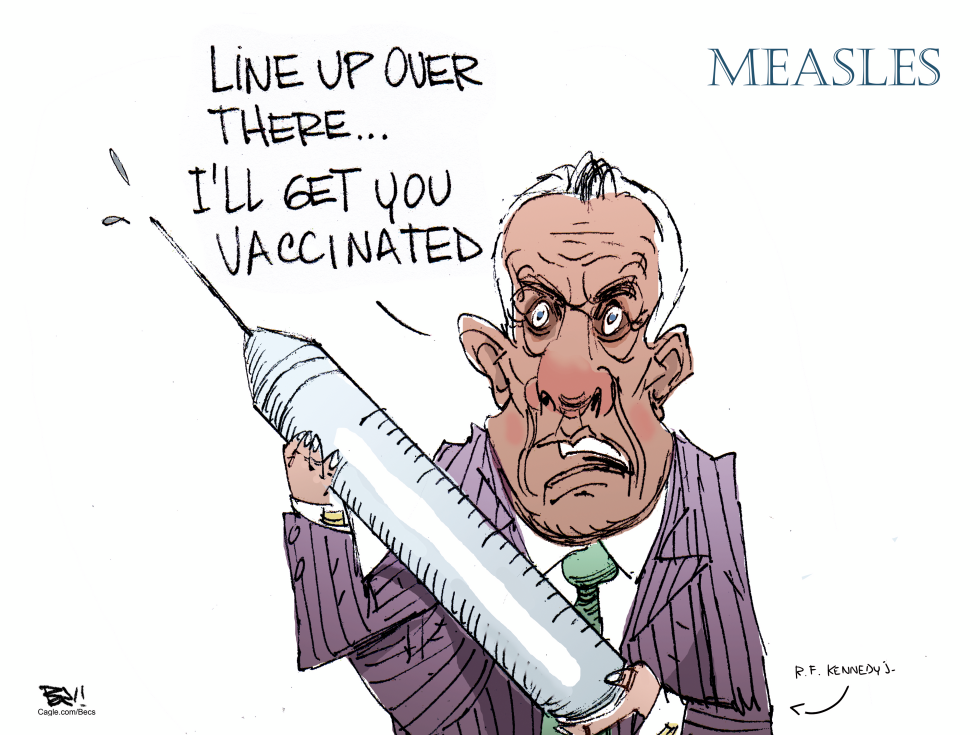
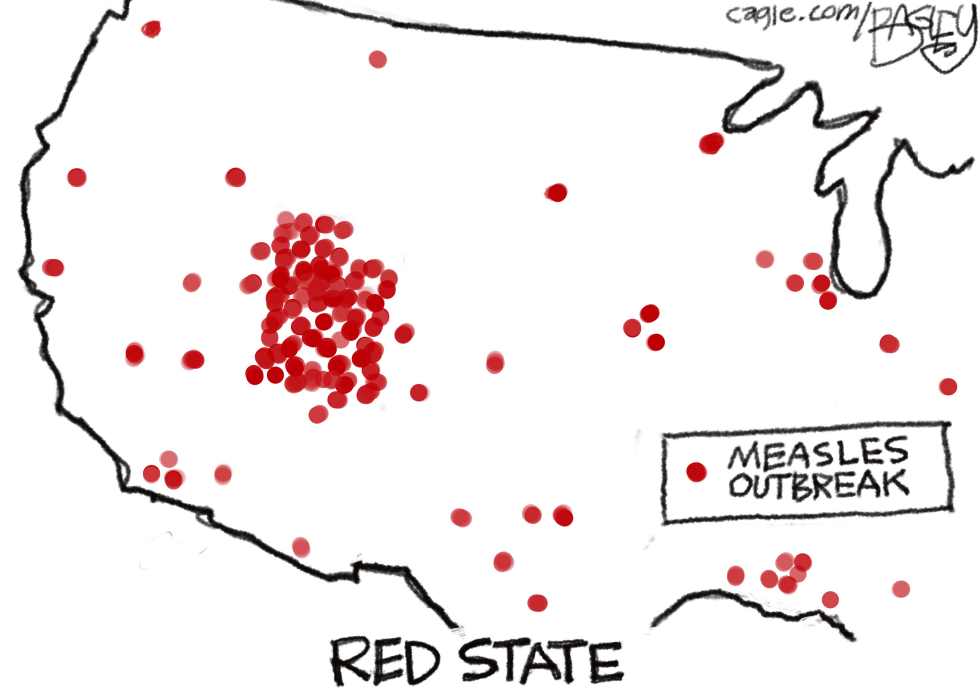
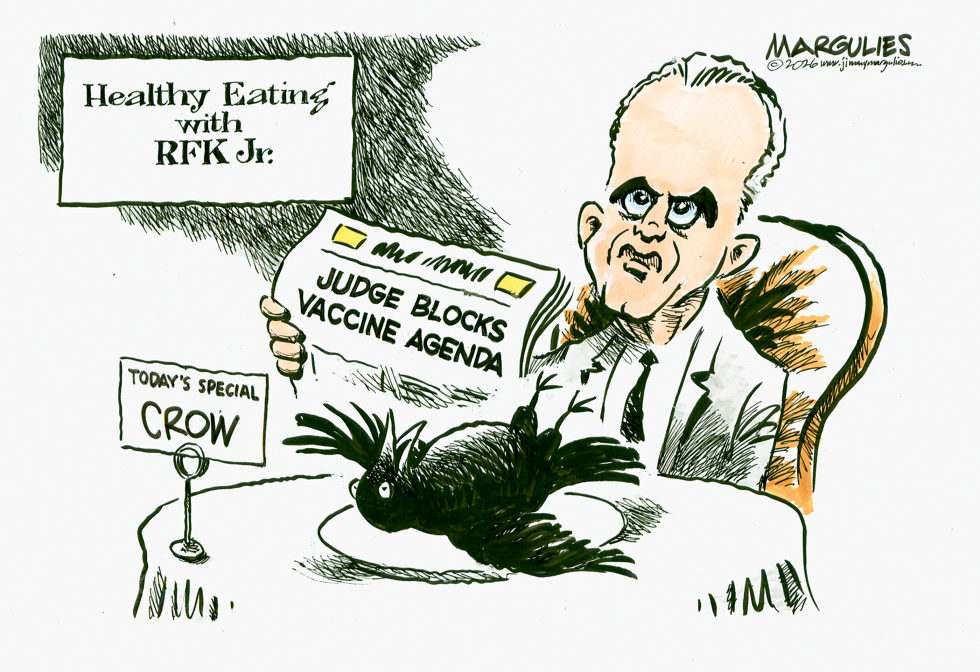
Robert F. Kennedy Jr., serving as a top health official in 2026, faces scrutiny over a sudden push for measles vaccinations. The move comes as cases rise and public skepticism lingers from prior stances. The editorial argues the policy reversal exposes inconsistent leadership on immunization.
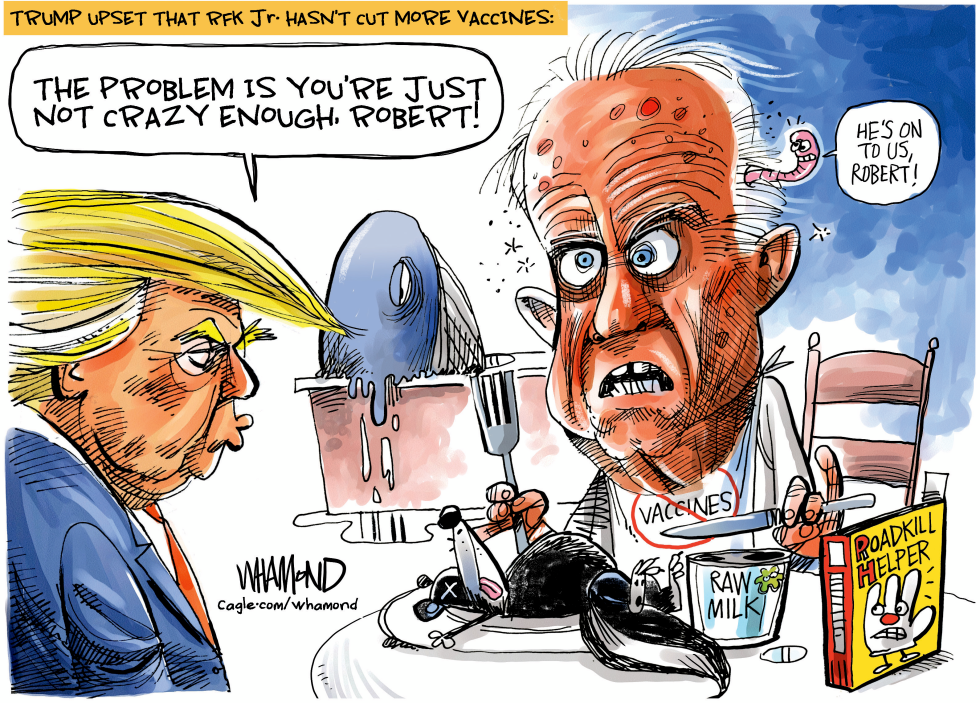
President Trump has expressed frustration with Health Secretary Robert F. Kennedy Jr. over the pace of vaccine policy reductions. The exchange highlights ongoing tensions within the administration regarding public health measures. The piece portrays Trump urging more aggressive action while RFK Jr. appears aligned with unconventional health practices.
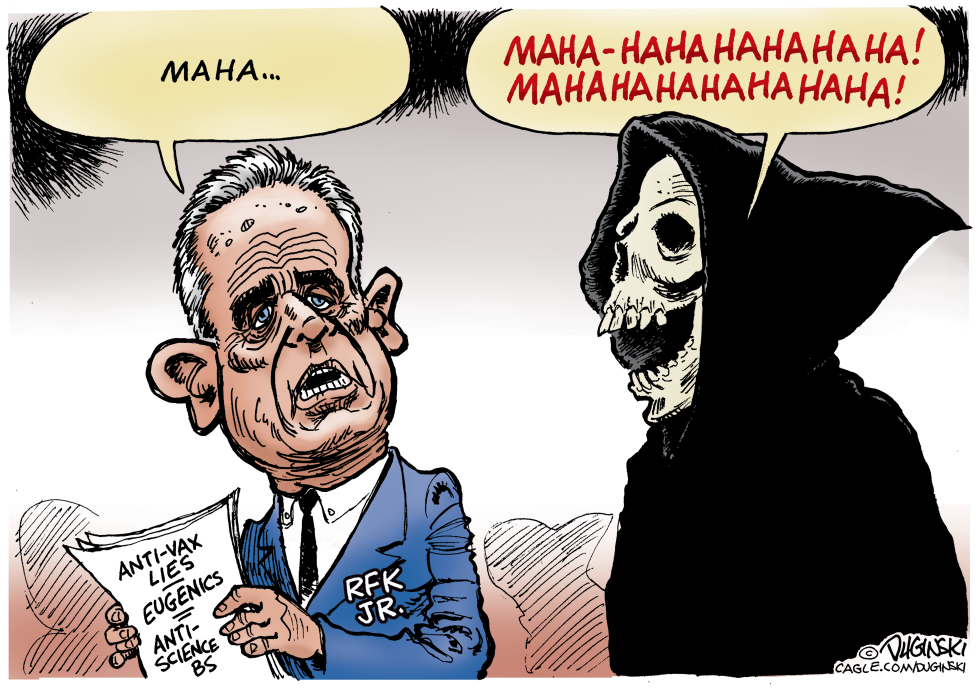
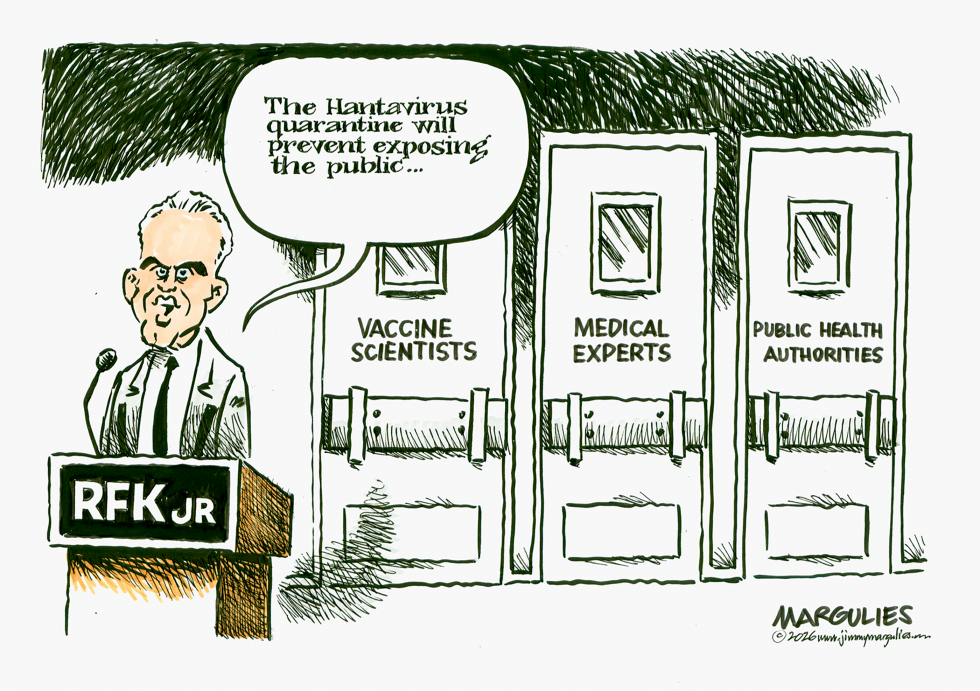
Robert F. Kennedy Jr. continues promoting Make America Healthy Again initiatives tied to his anti-vaccine positions in mid-2026. The approach draws criticism for linking public health measures to eugenics concerns and undermining scientific consensus. The editorial takes the position that such rhetoric risks real harm by eroding trust in established medical guidance.