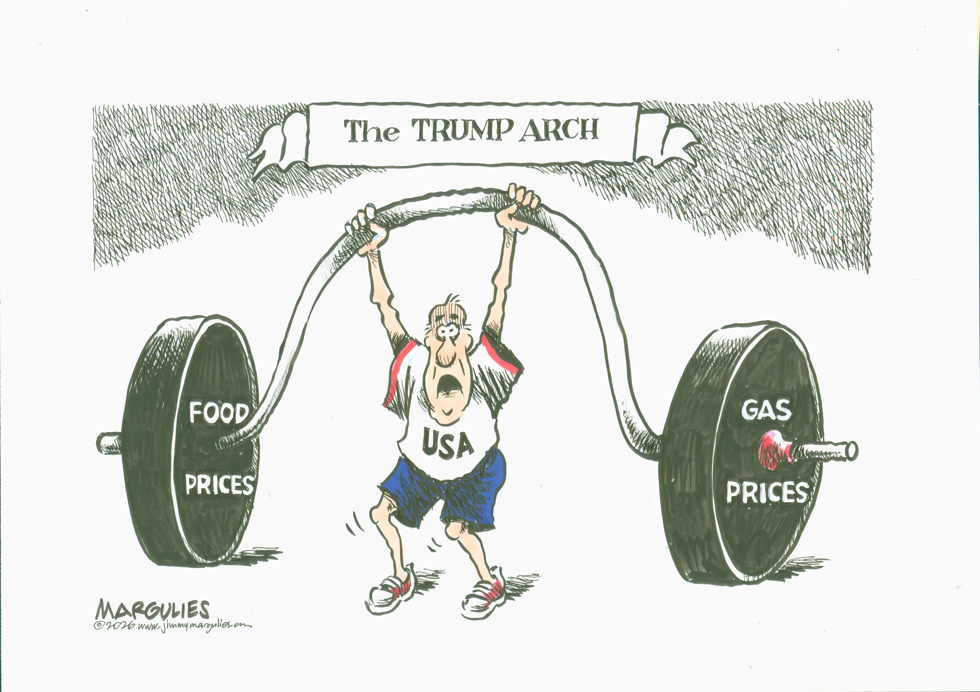
Food and gas prices remain elevated in 2026 under the Trump administration, adding to household costs across the country. The administration's economic approach has not delivered relief on key consumer expenses. Critics argue the policies prioritize other goals over inflation control. The cartoon depicts the USA as overburdened by these dual price burdens. It takes the position that Trump-era governance has left ordinary Americans carrying unsustainable economic weight.
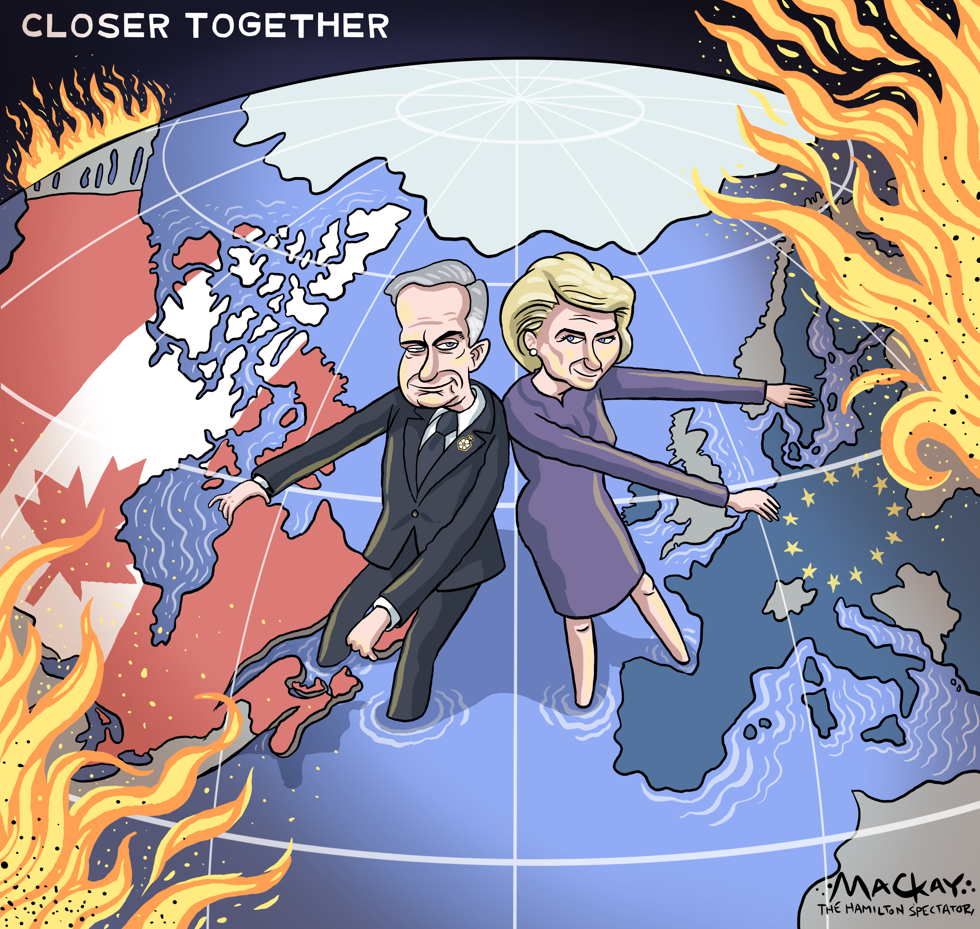
A political cartoon published September 16, 2026, shows a Canadian figure and a European figure positioned on a globe. The Canadian side features red and white maple leaf regions while the European side displays EU stars. Both areas are ringed by flames. The figures extend their arms across the Atlantic, connected by a thin line, beneath the heading Closer Together. The image comments on efforts by Canada and the European Union to draw nearer in response to shared international pressures and instability.
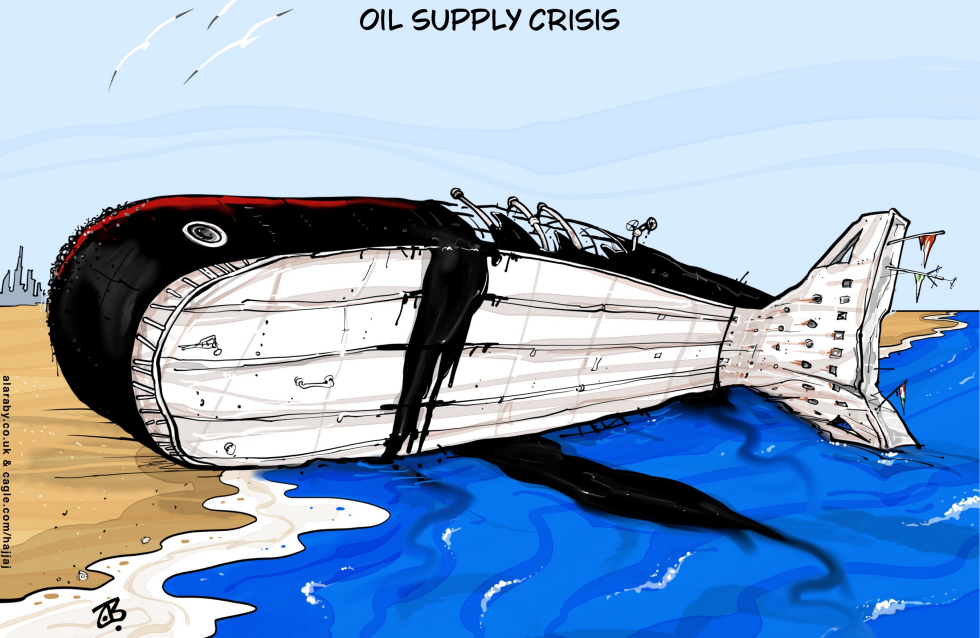
A major oil tanker has run aground, disrupting supply routes and releasing crude into coastal waters. The incident underscores vulnerabilities in global energy transport networks that rely on aging or poorly maintained vessels. Such events can spike fuel prices and trigger immediate cleanup costs for affected regions. The cartoon frames the grounding as a direct cause of the broader supply crisis rather than an isolated accident. It points to systemic weaknesses in oversight and infrastructure that allow one failure to cascade into wider shortages and ecological harm.
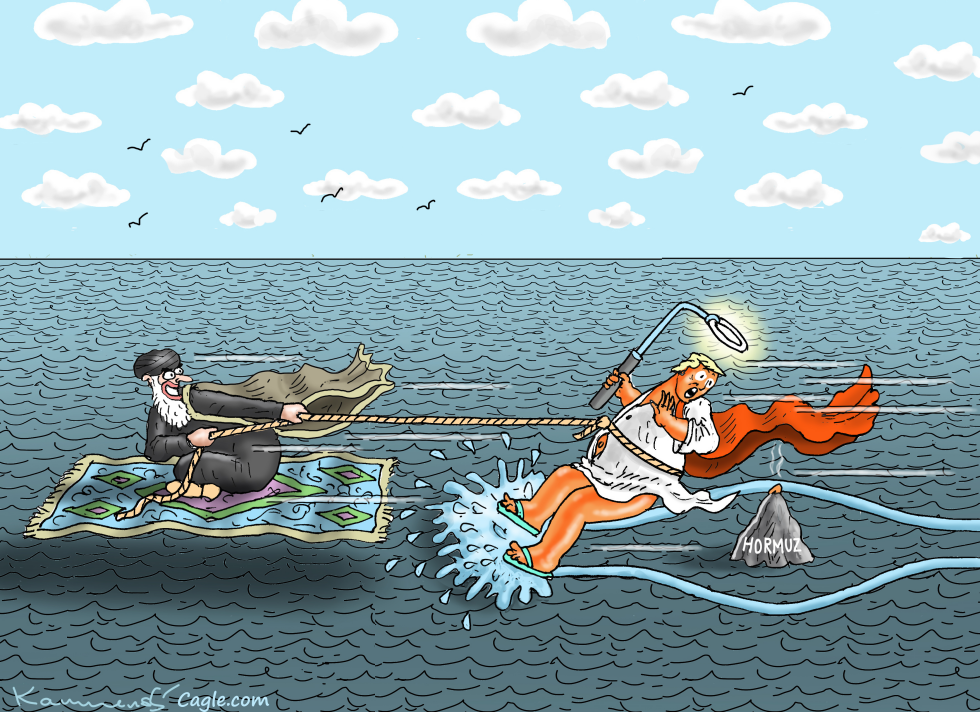
Tensions in the Strait of Hormuz have escalated with threats to shipping lanes critical for global oil supplies. Israeli and U.S. leaders face mounting losses from disruptions. The cartoon argues that involvement risks dragging both into deeper conflict without clear gains.
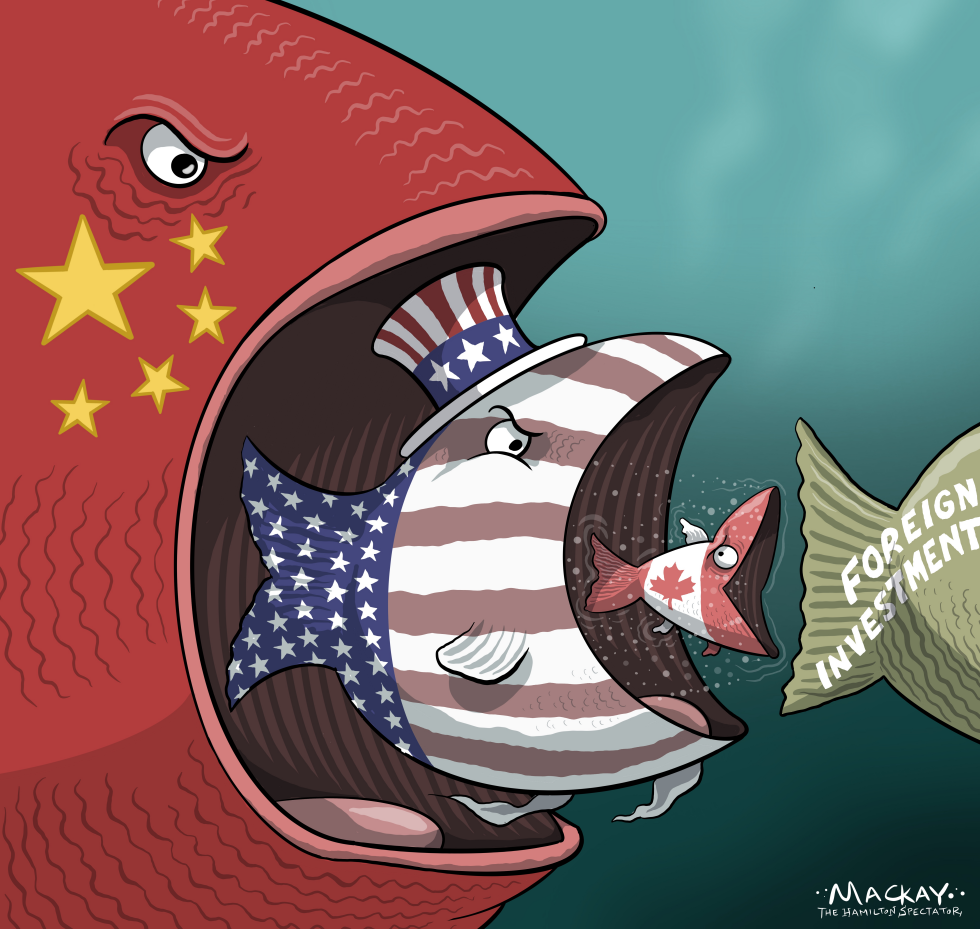
The cartoon depicts a large red fish marked with Chinese stars swallowing a striped American fish wearing a stars-and-stripes hat. The American fish in turn has consumed a smaller Canadian fish bearing a maple leaf. A green tail labeled FOREIGN INVESTMENT trails from the Canadian fish. Published on September 14, 2026, the image illustrates concerns over Chinese economic influence absorbing Canadian foreign investment through American channels. The visual metaphor underscores ongoing tensions in North American economic relations with China.
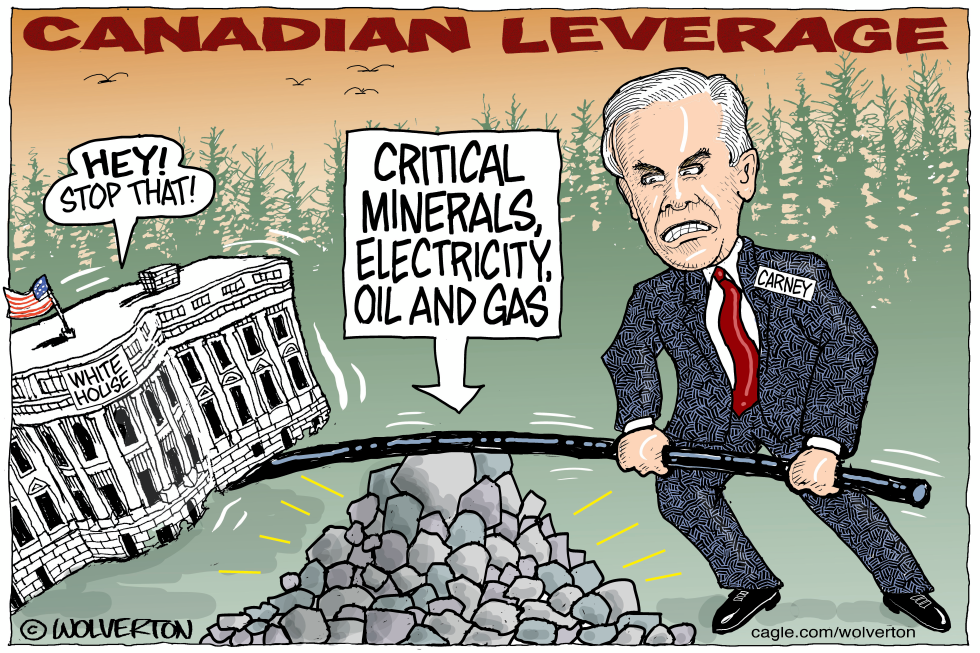
The cartoon depicts former Bank of Canada governor Mark Carney using a pipe labeled critical minerals, electricity, oil and gas as a lever to damage the White House. A speech bubble from the building protests the action. Published on September 12, 2026, the image comments on ongoing Canada-US tensions over resource exports and trade policy. Carney is shown in a suit with a determined expression, standing on rubble. The visual underscores Canada's potential to restrict supplies vital to the American economy. It reflects real-world discussions about critical minerals and energy interdependence between the two nations.
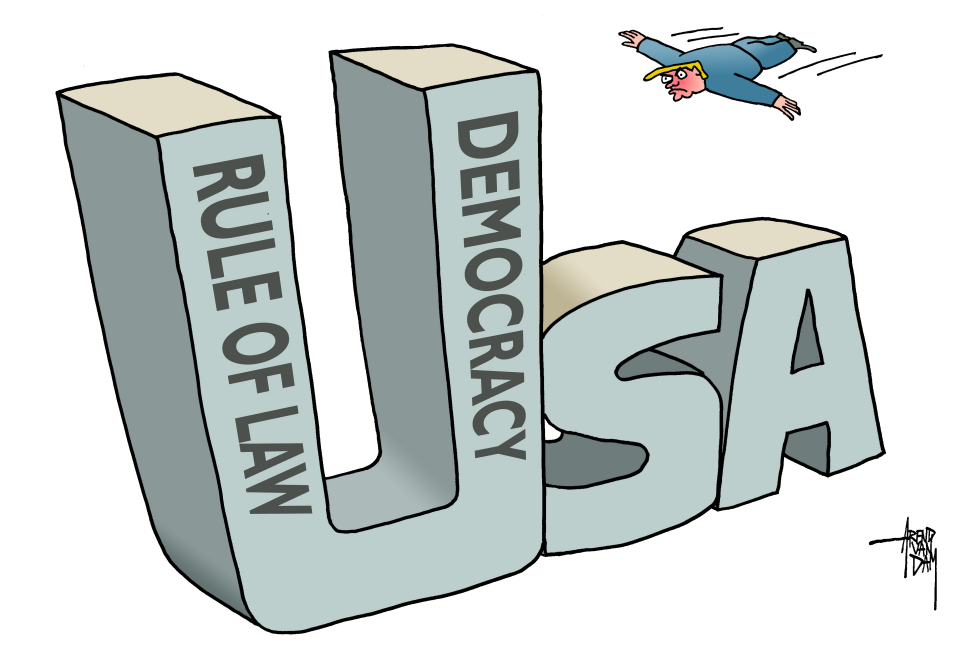
On September 11, 2026, political commentary focused on former President Donald Trump's ongoing conflicts with legal and democratic norms. The cartoon illustrates his ejection from structures labeled rule of law and democracy. This reflects broader concerns over accountability for high office holders. The piece argues that U.S. institutions remain capable of expelling those who undermine core principles.
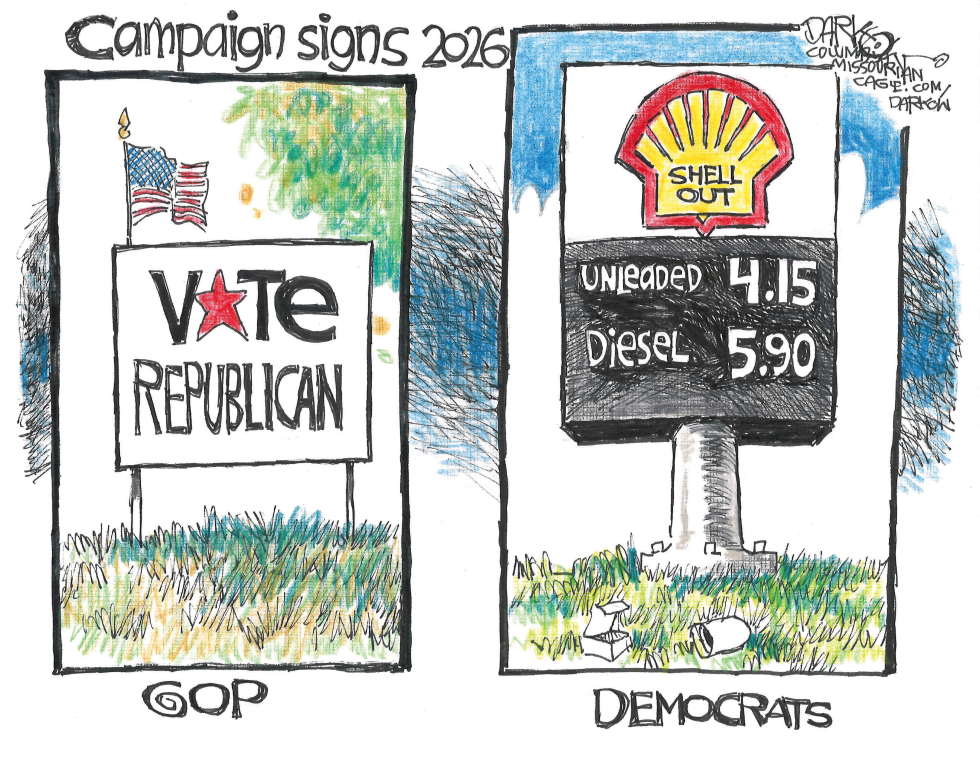
As the 2026 midterm campaigns intensify, Democrats confront voter frustration over elevated gasoline and diesel prices at the pump. The Shell station sign reading Shell Out with unleaded at $4.15 and diesel at $5.90 underscores how economic pressures can overshadow traditional political messaging. Republicans benefit from straightforward campaign signage while Democrats appear tied to the cost increases. The cartoon argues that fuel prices serve as a more potent electoral signal than yard signs for one party.
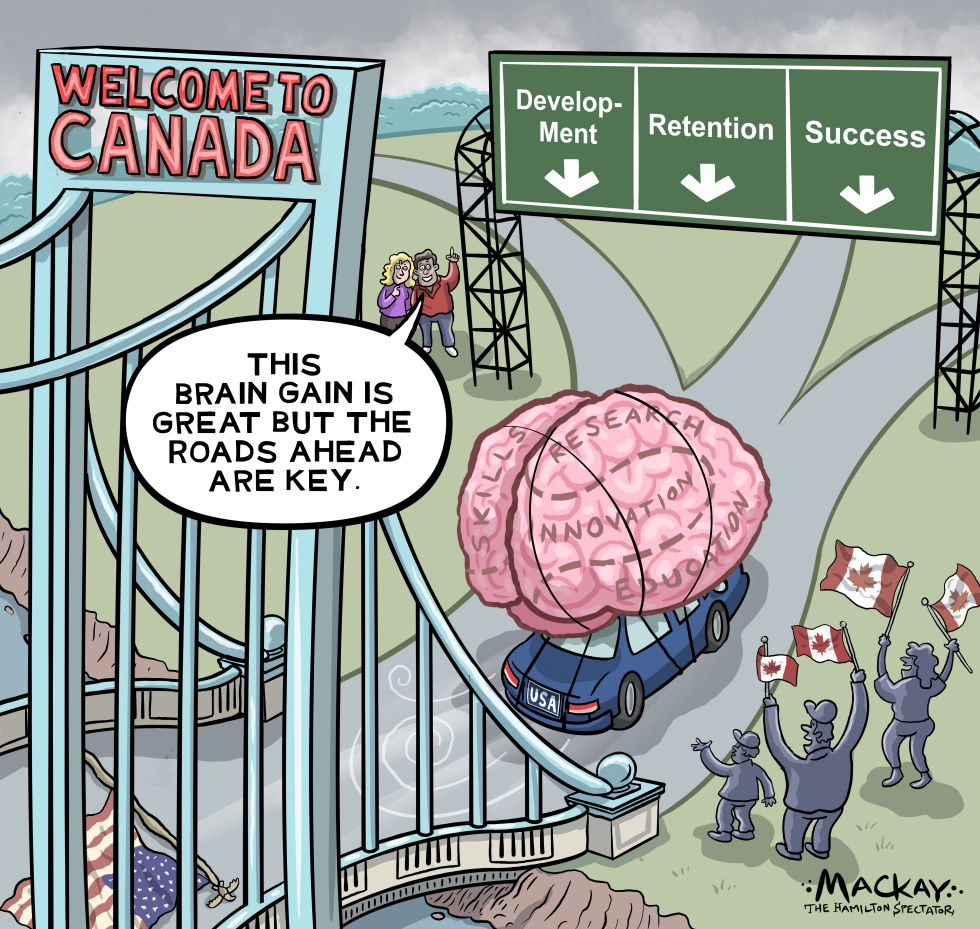
A political cartoon depicts a large brain marked with skills, research, innovation and education riding in a USA-plated car crossing into Canada. Welcoming signs and flag-waving figures greet the arrival while a green highway sign points to development, retention and success. A speech bubble notes that the brain gain is positive but roads ahead remain key. The image responds to ongoing discussions about cross-border talent flows and the practical challenges of integrating skilled immigrants into Canadian systems as of early September 2026.
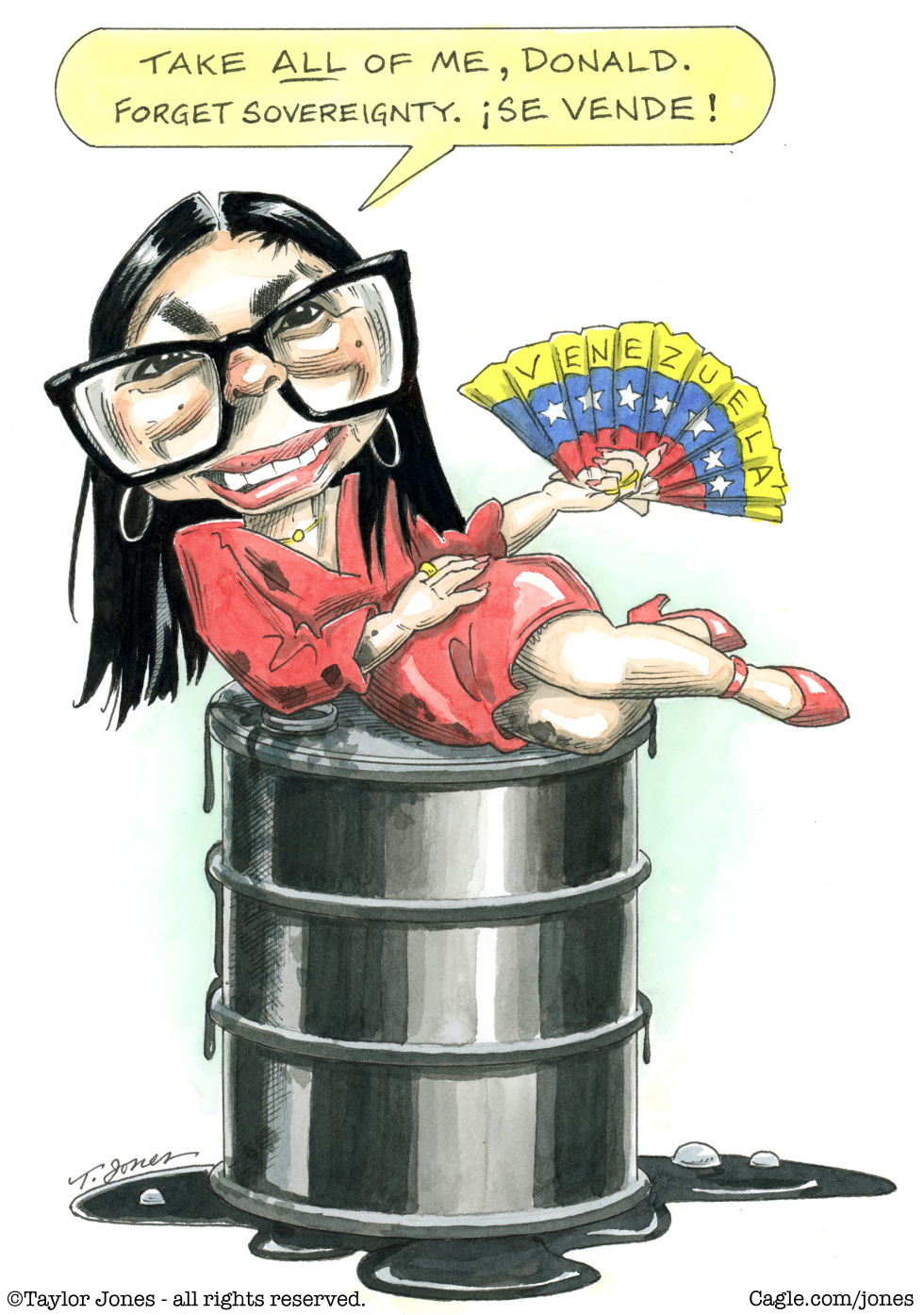
Venezuelan Vice President Delcy Rodriguez has long managed oil sector outreach to foreign powers including the United States. Recent diplomatic signals suggest renewed interest in easing sanctions through resource access. The cartoon frames this outreach as a direct offer to Donald Trump that prioritizes economic deals over national control.
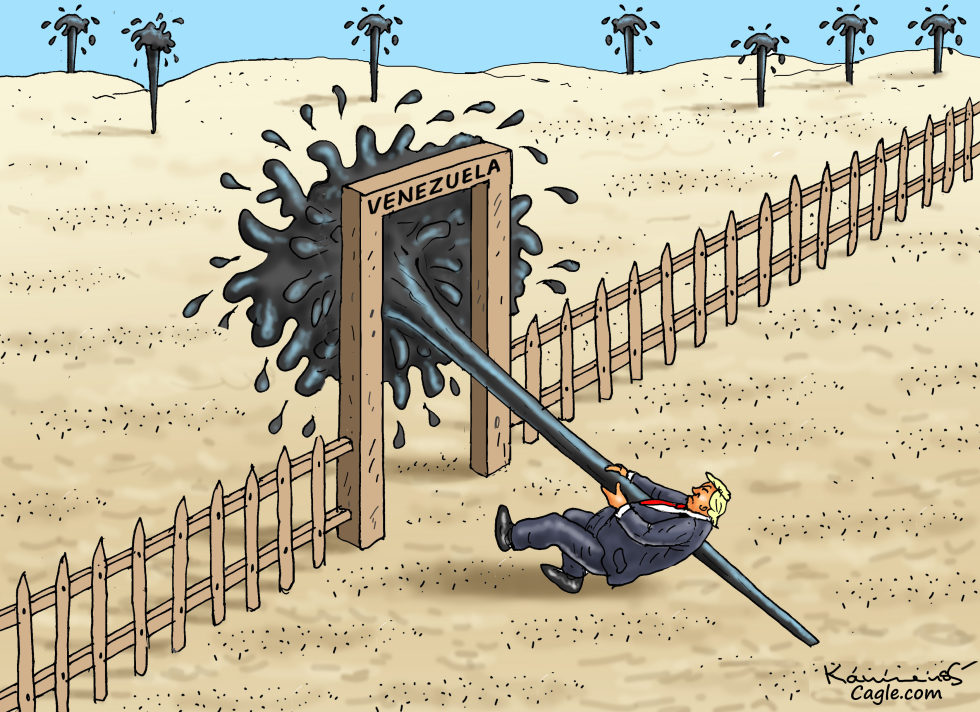
US policy toward Venezuelan oil exports shifted in 2026 as the Trump administration eased certain sanctions. This allowed increased crude shipments to reach American markets. The change raised questions about energy security and relations with Caracas. Critics argued the move undermined prior pressure on the Maduro government. The cartoon depicts the oil surge directly impacting Trump, suggesting the policy backfired on its architect.
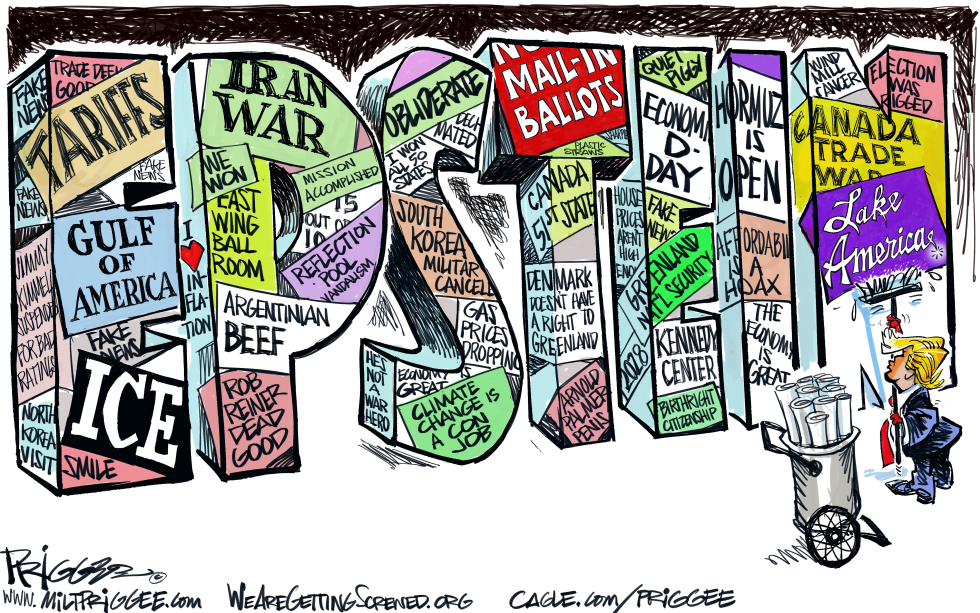
Donald Trump appears in a September 2026 cartoon pushing a cart stacked with signs promoting tariffs, questioning mail-in ballots, and asserting claims about Iran, Canada trade, and domestic issues. The image captures a pattern of public messaging that blends economic nationalism with repeated challenges to established processes. The editorial position frames these statements as a deliberate strategy to keep multiple controversies in motion at once.
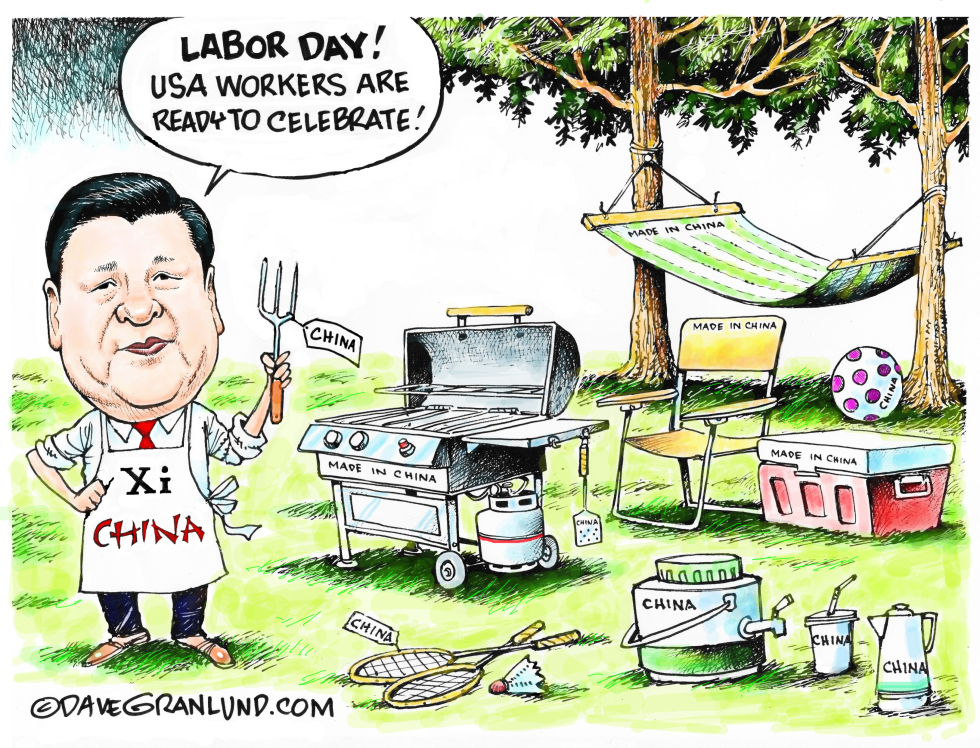
The cartoon shows Chinese President Xi Jinping dressed as a chef at a Labor Day barbecue. All picnic equipment including the grill, hammock, cooler and sports gear carries China labels. A speech bubble announces that US workers are ready to celebrate. The image responds to ongoing concerns about American dependence on Chinese manufacturing ahead of the holiday. It uses the barbecue setting to illustrate how everyday consumer products for US celebrations originate from China.
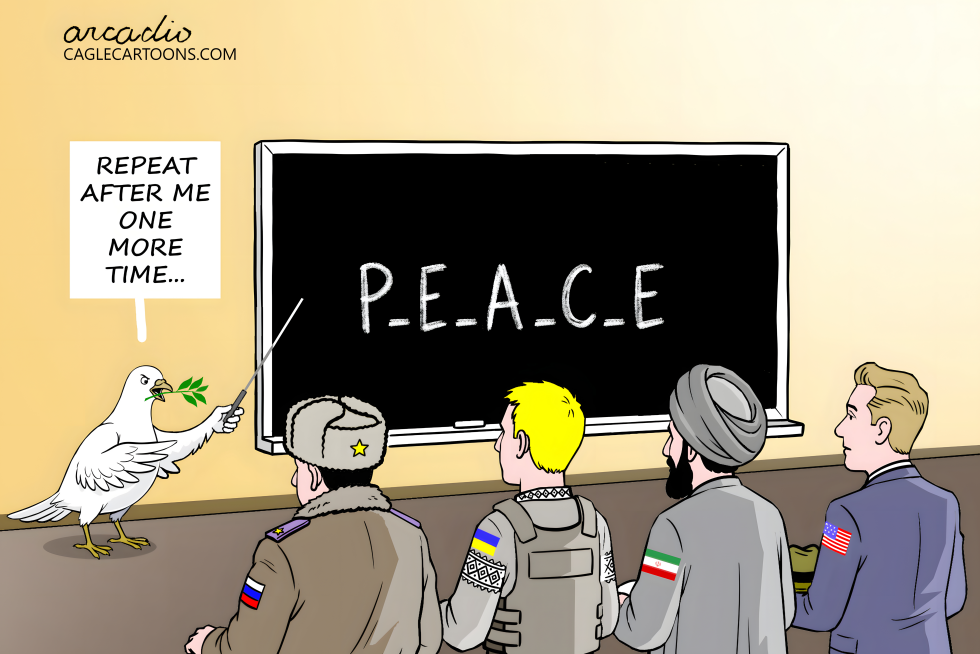
Ongoing tensions in the Russia-Ukraine war continue to draw in Iran and the United States with little progress toward resolution. The four nations remain locked in a cycle of confrontation and limited talks. The cartoon argues that the parties still cannot grasp even the simplest concept of peace despite repeated instruction.
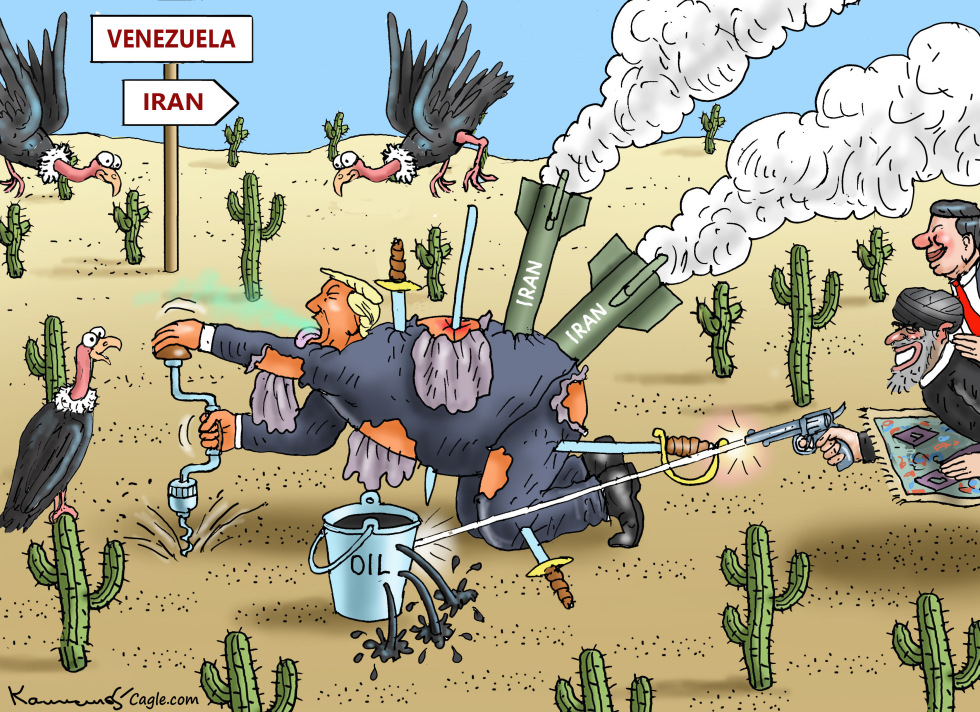
Donald Trump continued efforts to secure oil resources from Venezuela and Iran despite ongoing missile strikes and political pressure from those nations. The moves highlight US energy independence goals amid regional instability. The piece portrays these actions as defiant and opportunistic in the face of direct threats.