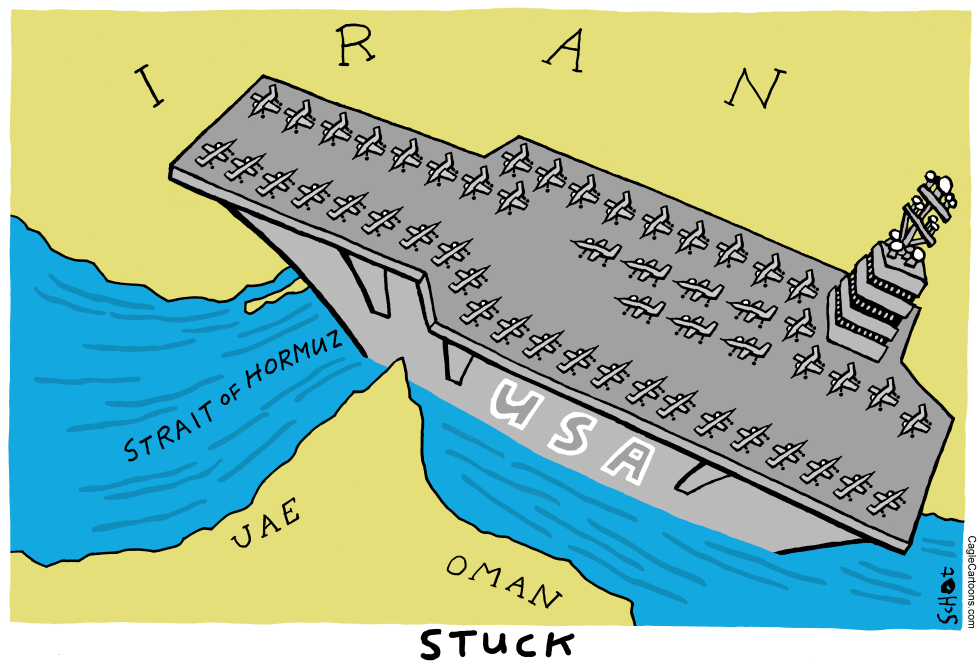
A political cartoon depicts a large US aircraft carrier marked USA jammed in the Strait of Hormuz between land labeled Iran, UAE and Oman. The vessel carries dozens of fighter jets on its deck. The word STUCK appears prominently below the scene. The image responds to persistent concerns over freedom of navigation in the vital oil shipping route. Iran has long threatened to close the strait during conflicts. The cartoon uses the visual of a grounded carrier to illustrate potential US military vulnerability in the narrow passage.
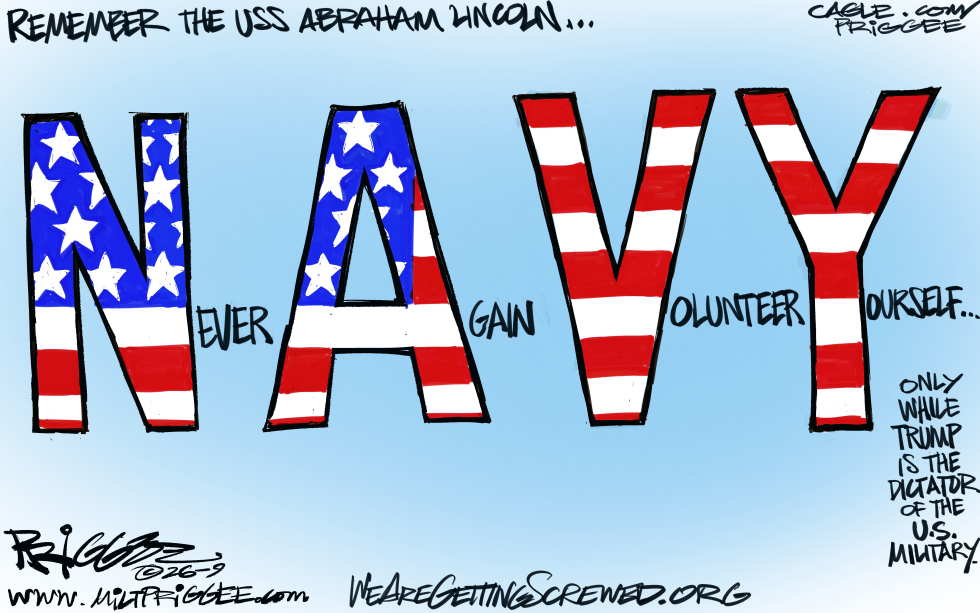
The image reworks the Navy acronym using stars and stripes segments. Inserted words create a full phrase discouraging enlistment. Text at bottom right specifies the condition tied to one individual's role. Top reference recalls a named carrier. Bottom elements include artist credit and website.
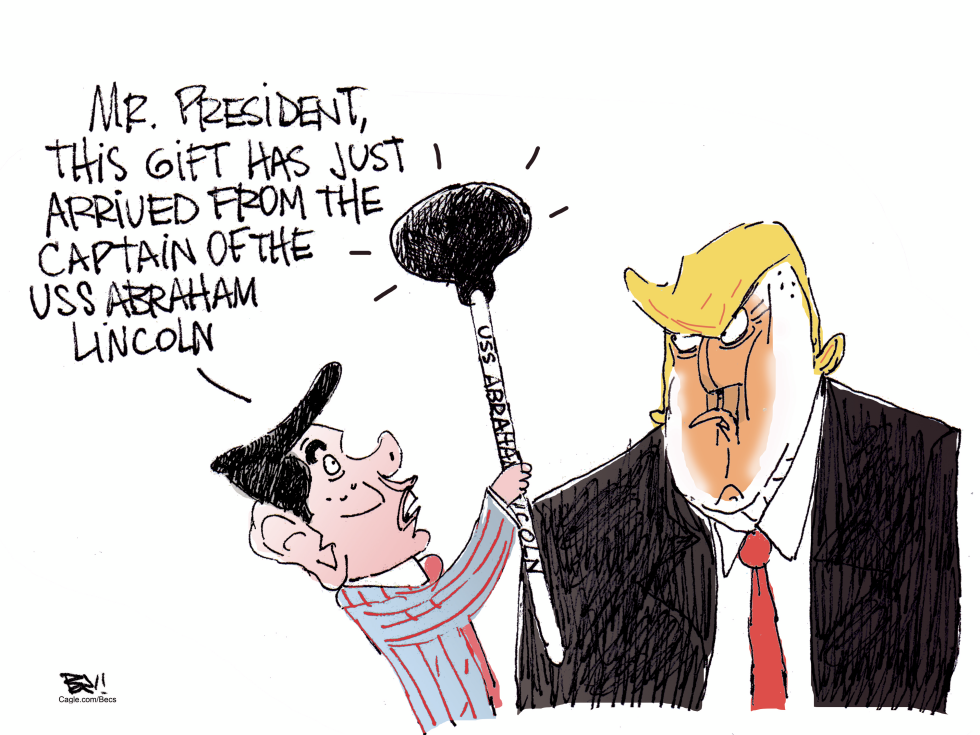
President Trump receives a ceremonial mallet sent by the captain of the USS Abraham Lincoln. The presentation occurs during routine military engagement with the White House. The gift underscores ongoing ties between the administration and naval forces. The editorial highlights the unusual nature of the item and questions its timing and purpose. It suggests the exchange reflects broader patterns in how the president interacts with the armed services.
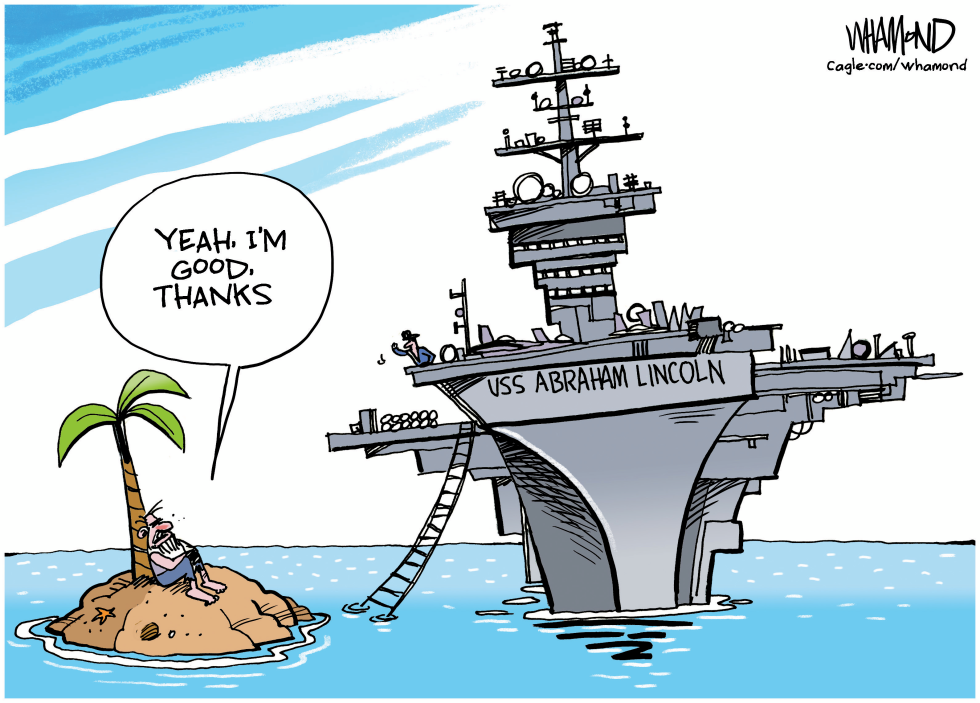
A US Navy aircraft carrier sails past a remote desert island where a lone castaway sits under a palm tree. The ship lowers a ladder in an apparent rescue attempt, yet the stranded figure declines assistance. The scene highlights ongoing debates over US military reach and whether distant outposts or individuals truly seek intervention. The editorial takes the position that such refusals underscore limits to assuming every presence is welcome or needed.
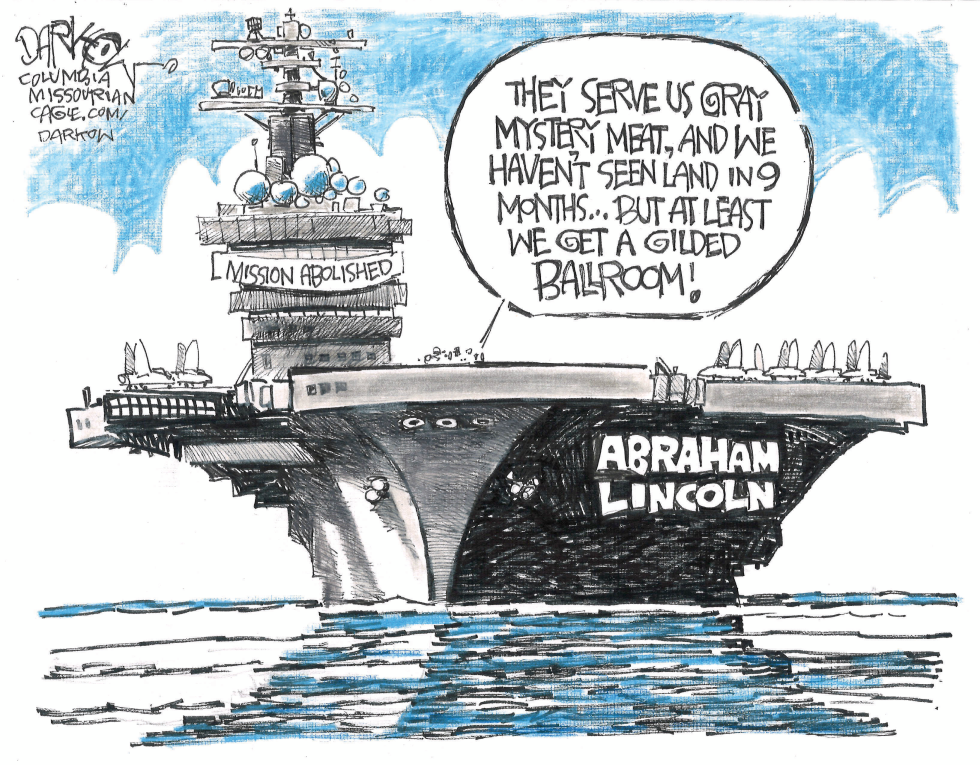
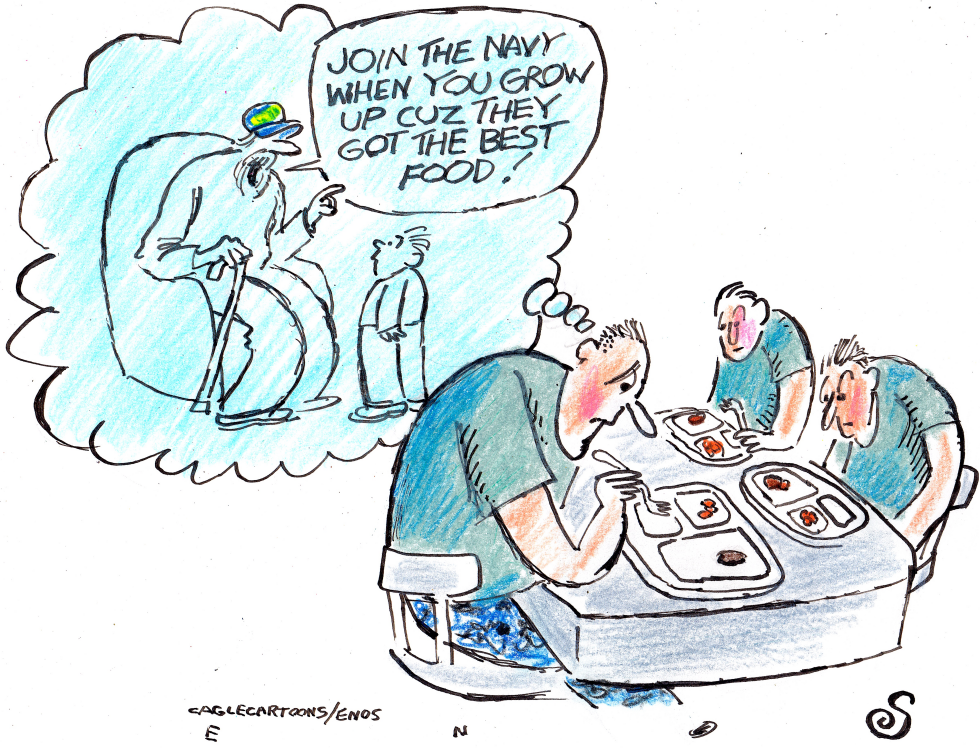
The USS Abraham Lincoln remains on extended deployment with sailors citing ongoing issues with food quality and time at sea. The addition of a gilded ballroom has drawn attention to priorities in naval operations. The piece highlights crew discontent with conditions despite the upgrade.
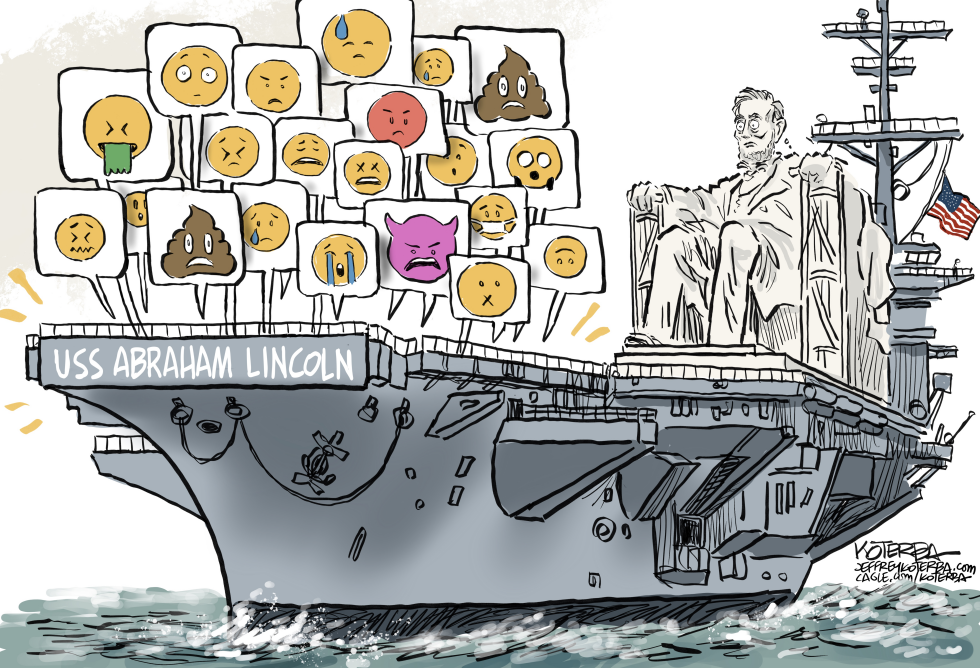
Public reaction to US naval deployments has intensified through social media platforms in recent weeks. Online users have flooded discussions with critical emojis targeting military assets like the USS Abraham Lincoln. The piece portrays this digital deluge as an overwhelming force on longstanding symbols of American leadership and naval power.
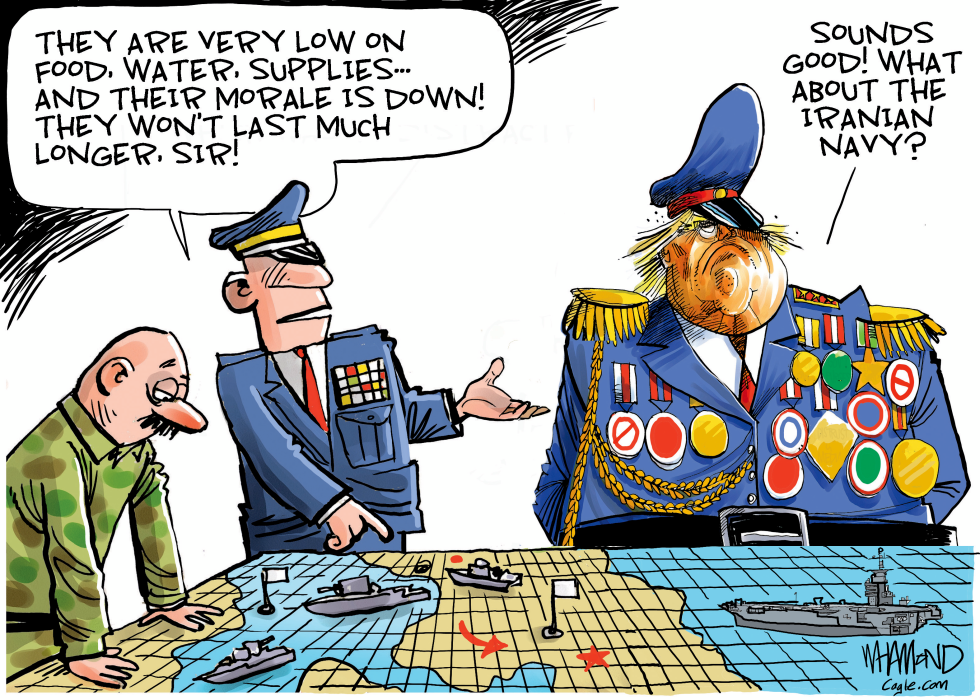
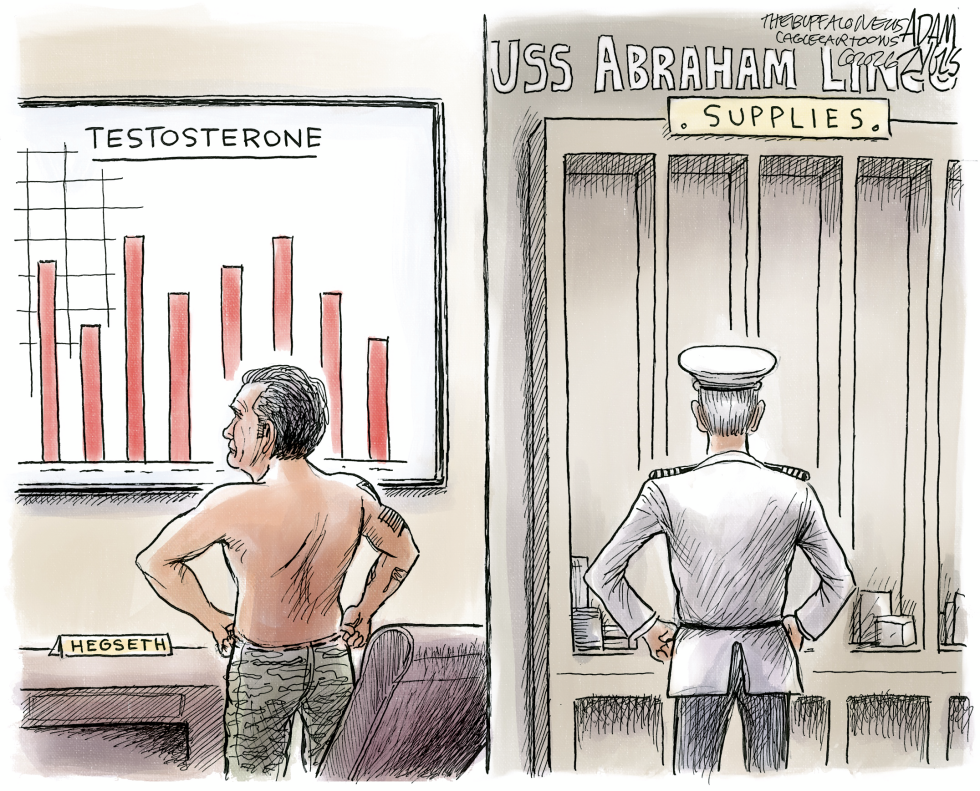
A U.S. Navy carrier faces reported shortages of food, water and supplies along with declining morale in mid-2026. Senior officers brief the president on the situation. The president responds by inquiring about the Iranian Navy instead. The piece portrays the administration as detached from operational readiness concerns in the region.
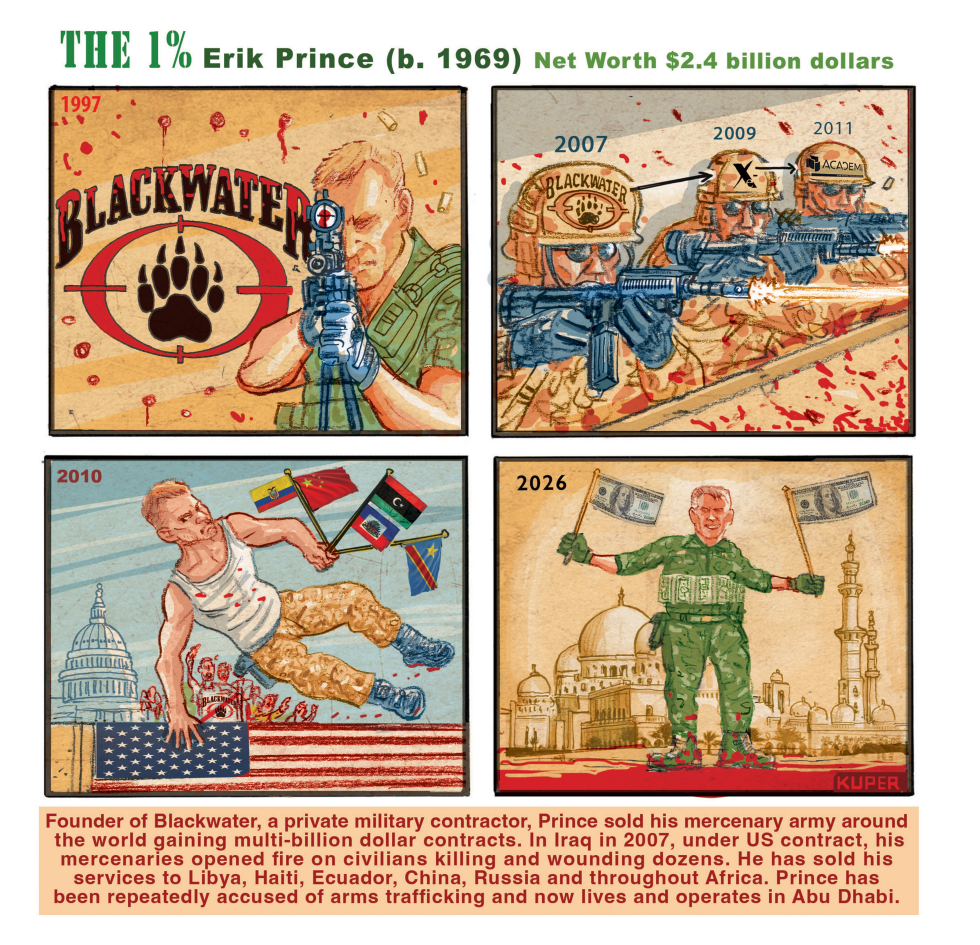
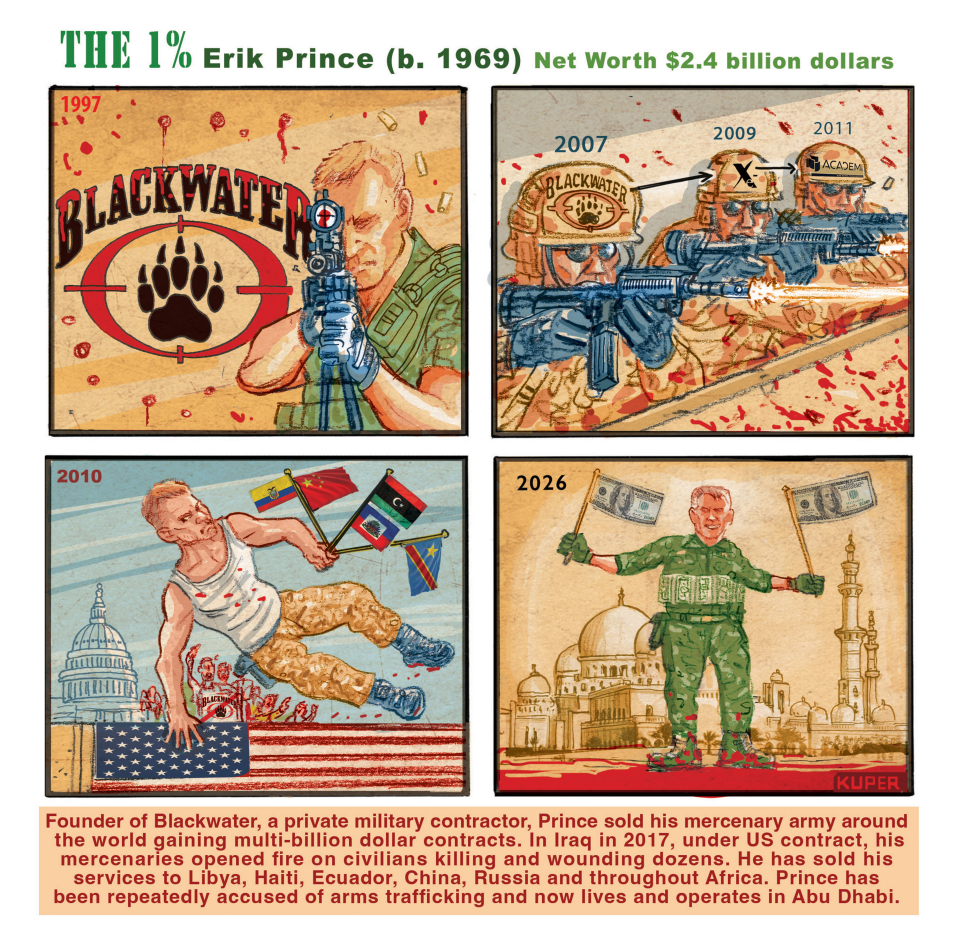
A four-panel illustration tracks Erik Prince from the 1997 launch of Blackwater through 2007 Iraq operations, 2010 foreign flag dealings, and a 2026 portrait of wealth in Abu Dhabi. The sequence highlights repeated accusations of civilian shootings under US contracts and arms trafficking claims while showing rebranding to Academi and continued global sales of paramilitary services.
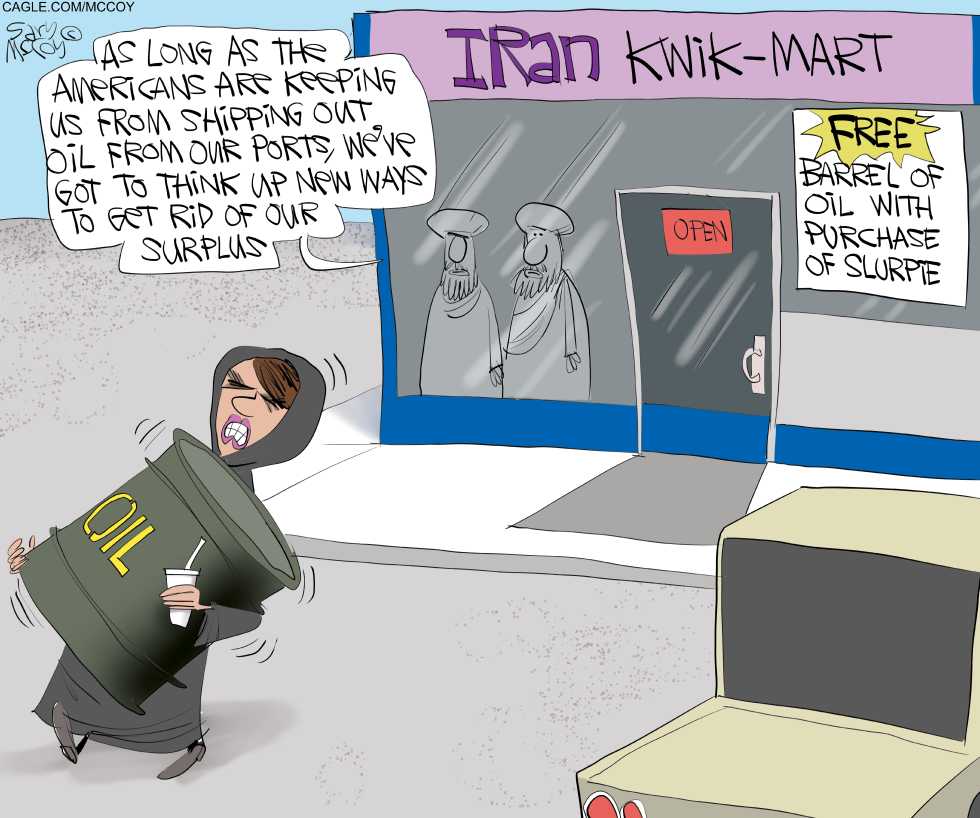
Gary McCoy's cartoon depicts two bearded Iranian clerics inside the Iran Kwik-Mart, promoting a free barrel of oil with Slurpee purchase to handle surplus crude. Outside, a hooded figure dumps an oil barrel into a car trunk, lamenting U.S. blockades on shipping ports. The image ties into Strait of Hormuz tensions, oil prices, Trump-era policies, Iran's Revolutionary Guard, and Middle East conflicts, highlighting ironic solutions to energy surplus amid international sanctions and naval standoffs. Commercial ships and tankers face barriers, forcing creative disposal methods in this dryly humorous take on global oil dynamics.
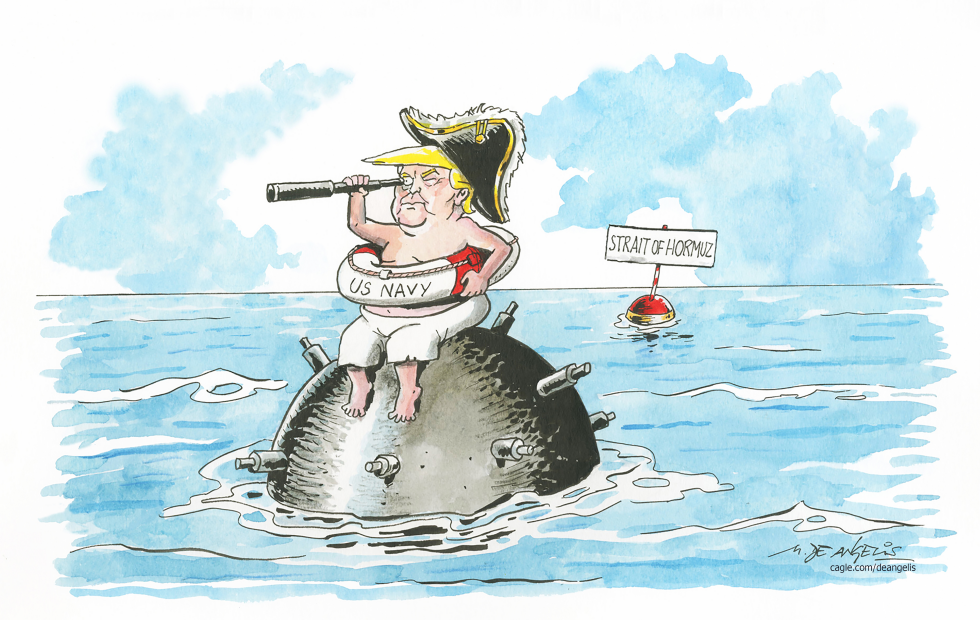
Marco De Angelis draws a caricature resembling Donald Trump, shirtless with a US NAVY life preserver, white shorts, and pirate hat, sitting on a large mine bobbing in blue waters. He holds a telescope to his eye, gazing out, while a small buoy nearby bears a Strait of Hormuz sign. The scene tags USA, IRAN, HORMUZ, NAVY, MINES, OIL, NEGOTIATIONS, FLEET, ALONE, ADMIRAL, MIDDLE EAST, WAR, capturing a sense of solitary watch in troubled seas. The dry humor underscores the absurdity of one man embodying an entire fleet, floating precariously on explosive hardware. Cartoons like this thrive on exaggeration, turning geopolitical standoffs into visual punchlines that newspapers love for their sharability.