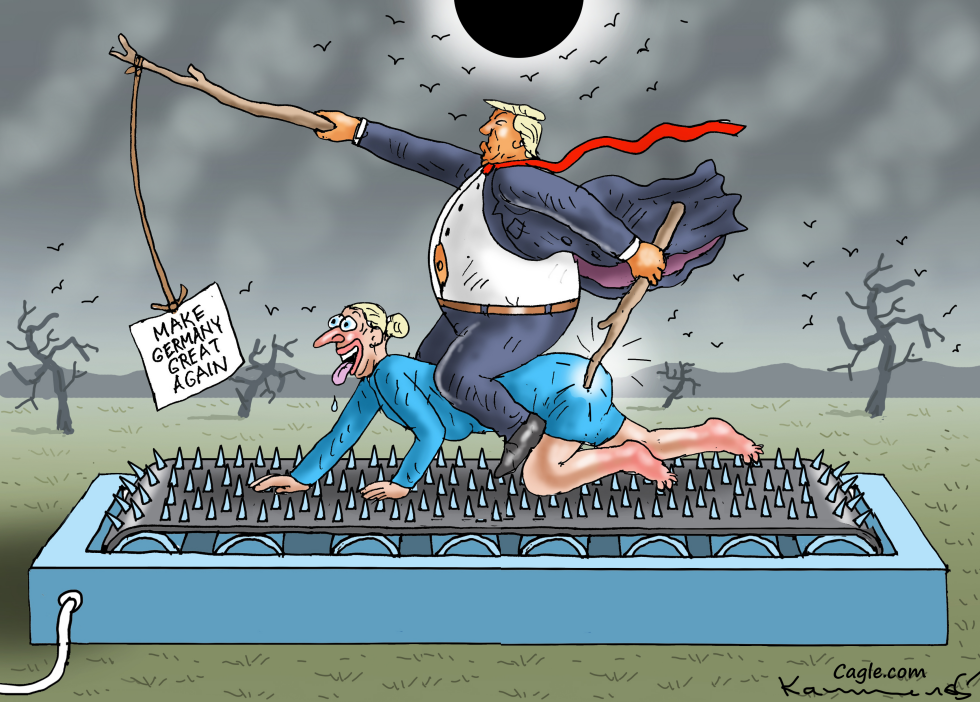
Donald Trump promotes a revival slogan aimed at Germany while Angela Merkel faces the consequences. The effort highlights ongoing tensions in transatlantic relations and questions about external influence on European domestic policy. The piece argues that such interventions impose unnecessary hardship without delivering benefits.
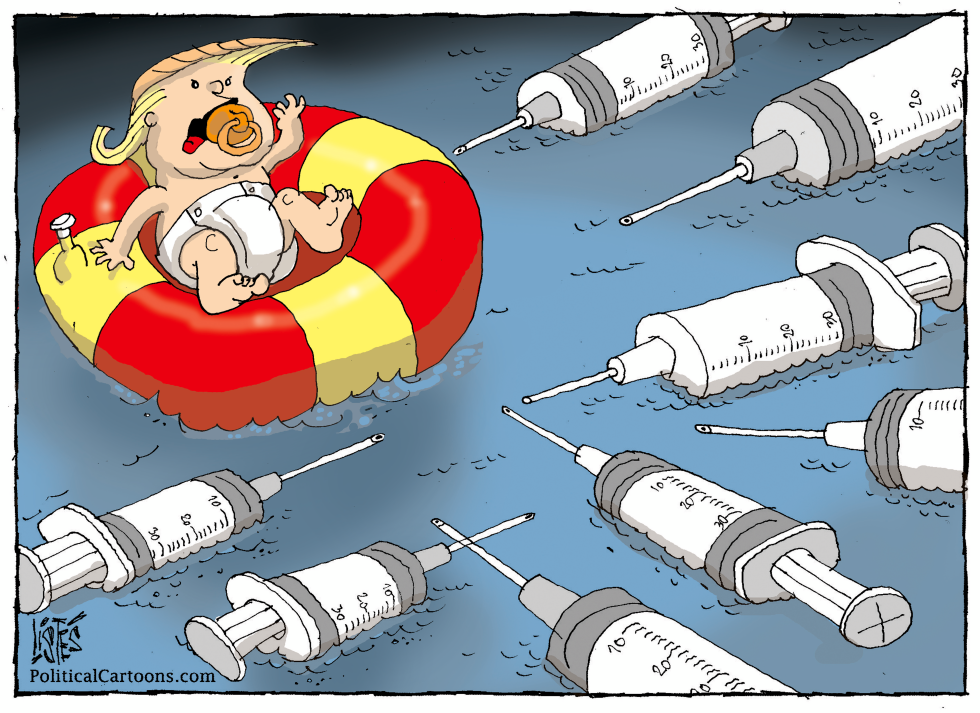
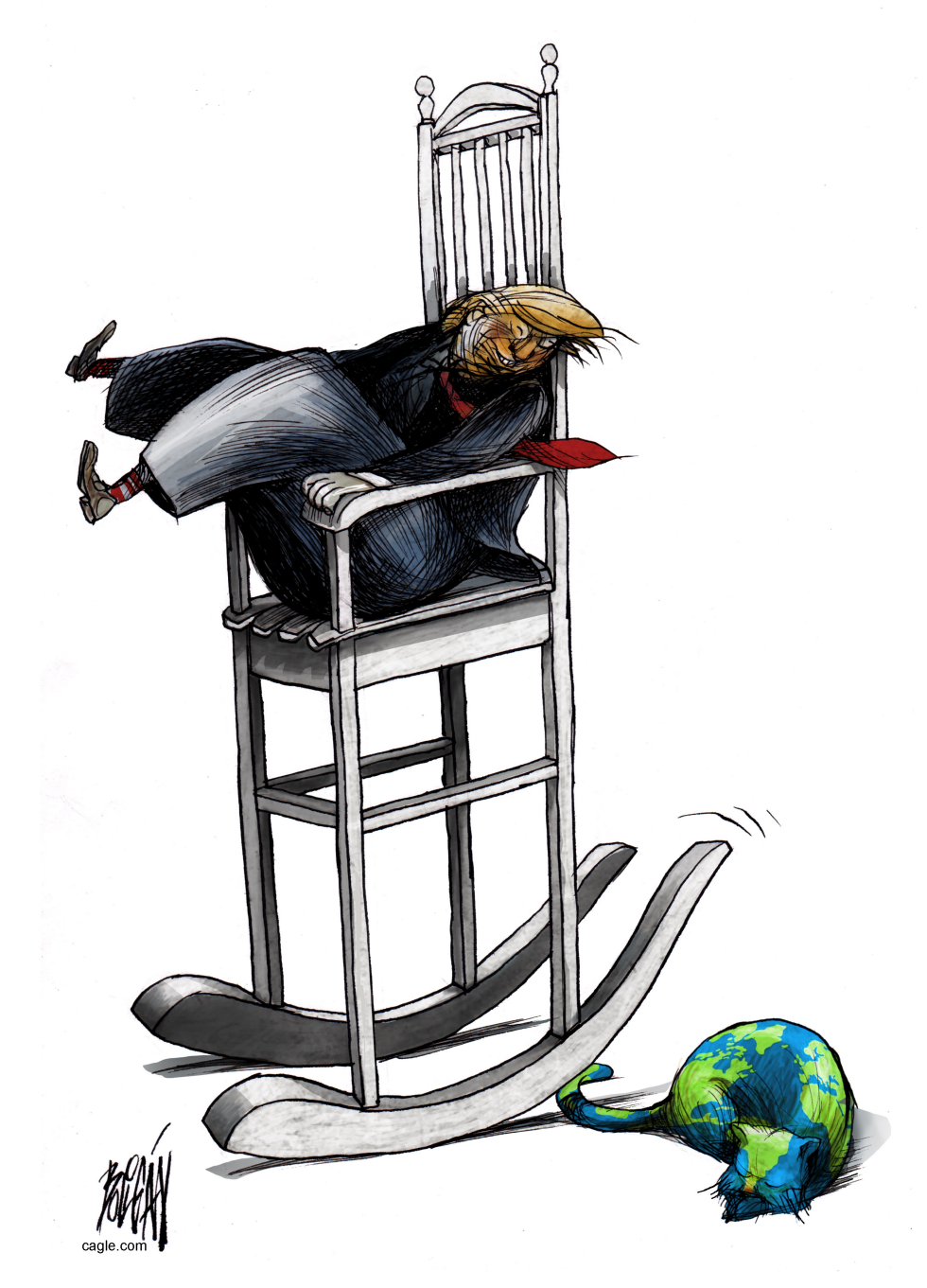
Donald Trump has maintained vocal opposition to certain vaccine mandates and public health measures in recent political discourse. The piece frames this stance through an infant metaphor to underscore perceived vulnerability and fear. It critiques the position as immature amid ongoing public health debates.
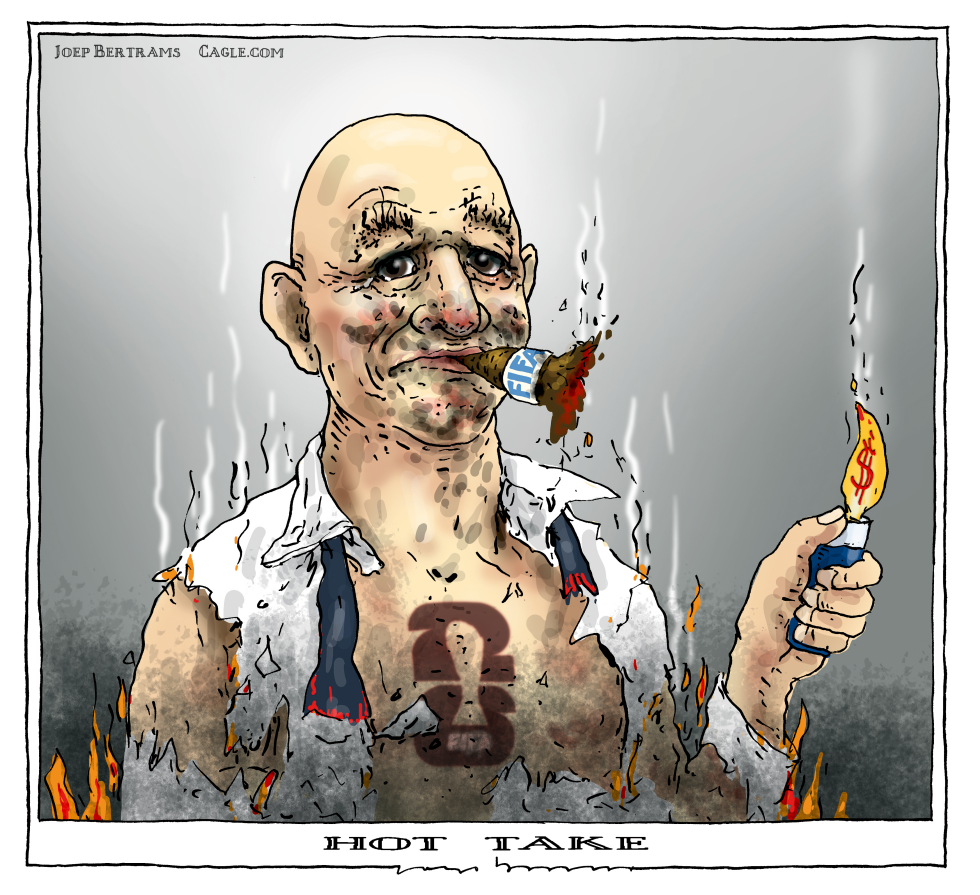
Elon Musk's public commentary on cryptocurrency markets continues to drive price swings and investor attention in 2026. His recent statements coincide with renewed volatility in Bitcoin trading. The editorial takes a critical view of how such high-profile interventions amplify market instability rather than stabilize it.
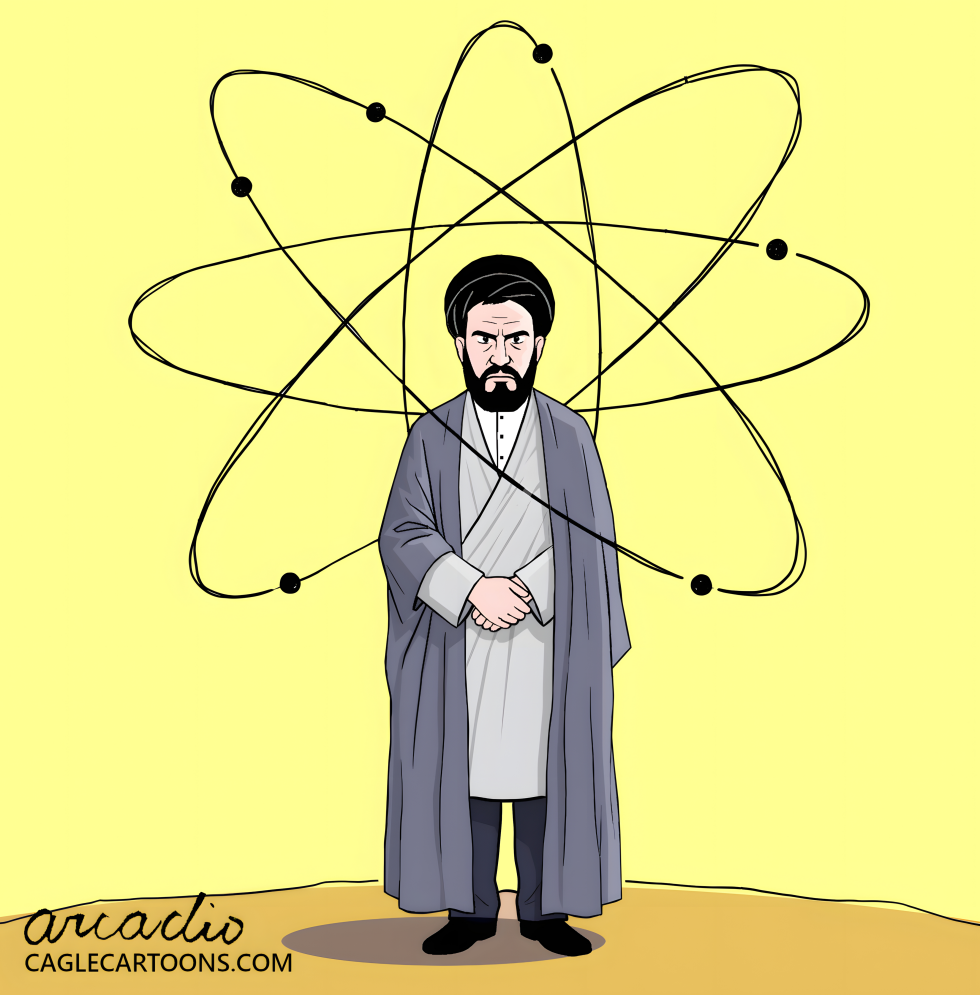
The cartoon shows Iran's supreme leader positioned in front of a large atom symbol. It responds to persistent international concerns over Tehran's nuclear activities as of mid-2026. The visual places the figure directly under the orbiting electrons, underscoring the central role of the nuclear issue in global discussions about the country.
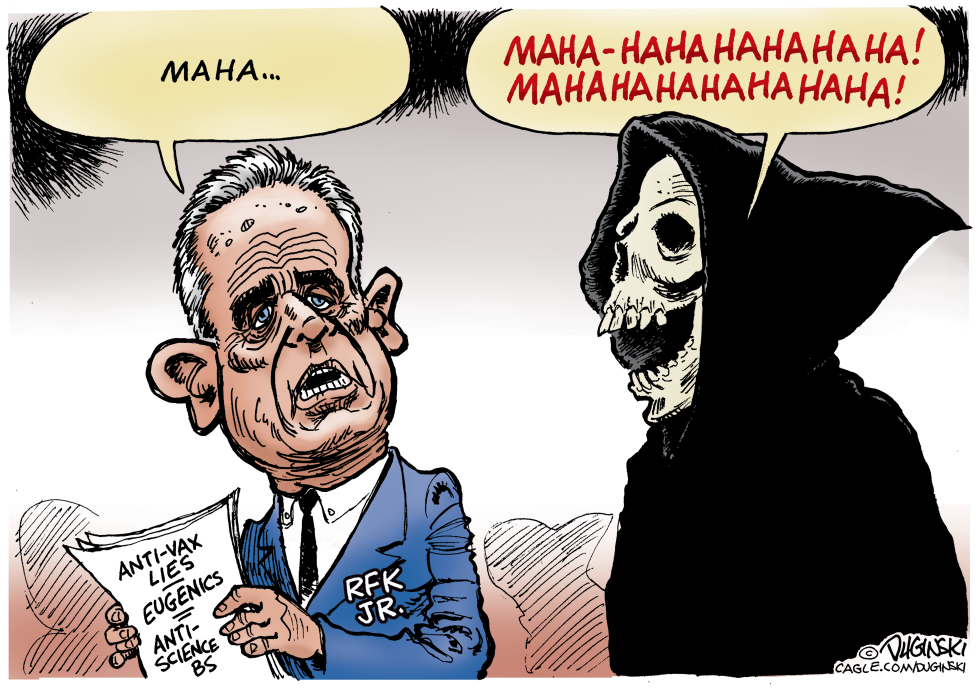
Robert F. Kennedy Jr. continues promoting Make America Healthy Again initiatives tied to his anti-vaccine positions in mid-2026. The approach draws criticism for linking public health measures to eugenics concerns and undermining scientific consensus. The editorial takes the position that such rhetoric risks real harm by eroding trust in established medical guidance.
The image presents Lindsey Graham in an obituary format dated 2026. It lists his birth and death years alongside a quote labeling him a consistent supporter of military engagements. The composition places the figure on the right with text blocks on the left. Publication occurred on July 12 2026. The visual focuses on his senate role and foreign policy positions active in prior years.
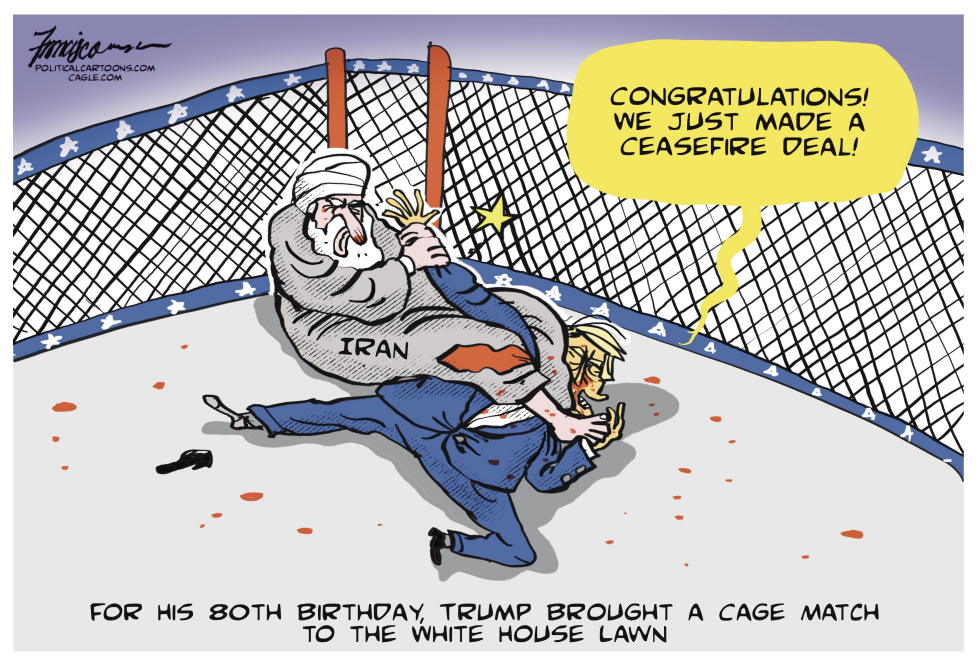
A cage match between the United States and Iran over a potential ceasefire deal has drawn attention amid ongoing Middle East tensions. The confrontation highlights the high stakes of direct engagement between the two nations. The piece portrays the encounter as a chaotic personal brawl rather than a measured diplomatic effort.
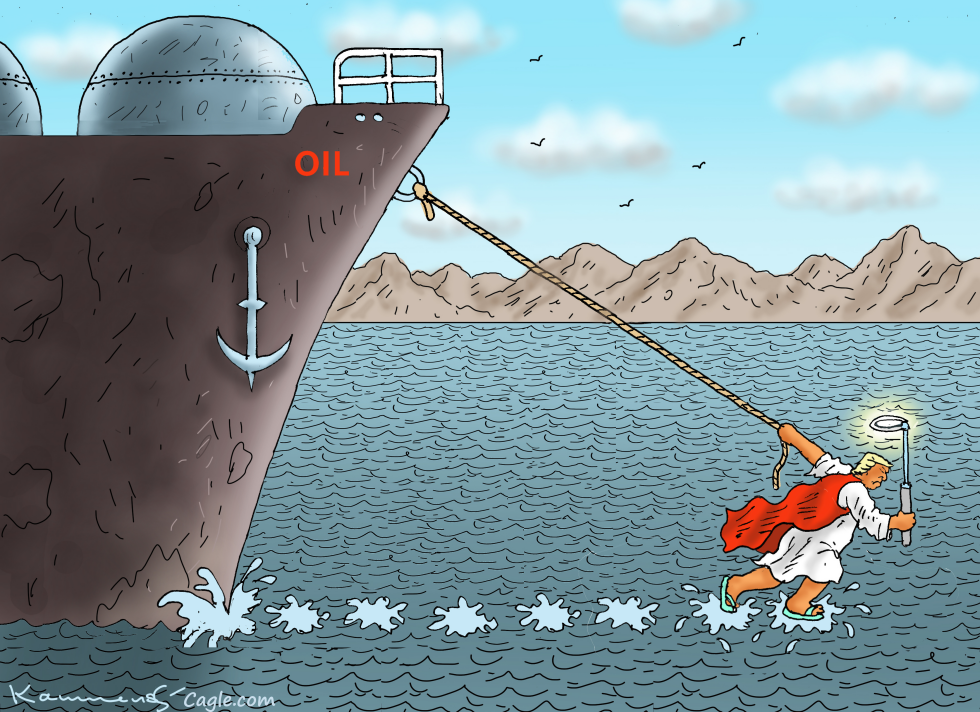
The image depicts a figure dressed in a white robe and red cape, complete with a glowing halo, running across the water while pulling a large oil tanker marked 'OIL' with a rope. He holds a golf club in one hand, splashing water with each step against a backdrop of mountains and a clear sky. This setup draws on tags like Trump, Hormuz, Iran, oil war, MAGA terror, and fascism to satirize political figures intervening in global oil crises. The cartoon's composition emphasizes the absurdity of a divine savior tackling economic and geopolitical issues, with birds flying overhead and distant peaks suggesting a Middle Eastern strait. Kamensky's style brings dry humor to the forefront, poking at notions of messianic leadership in turbulent times.
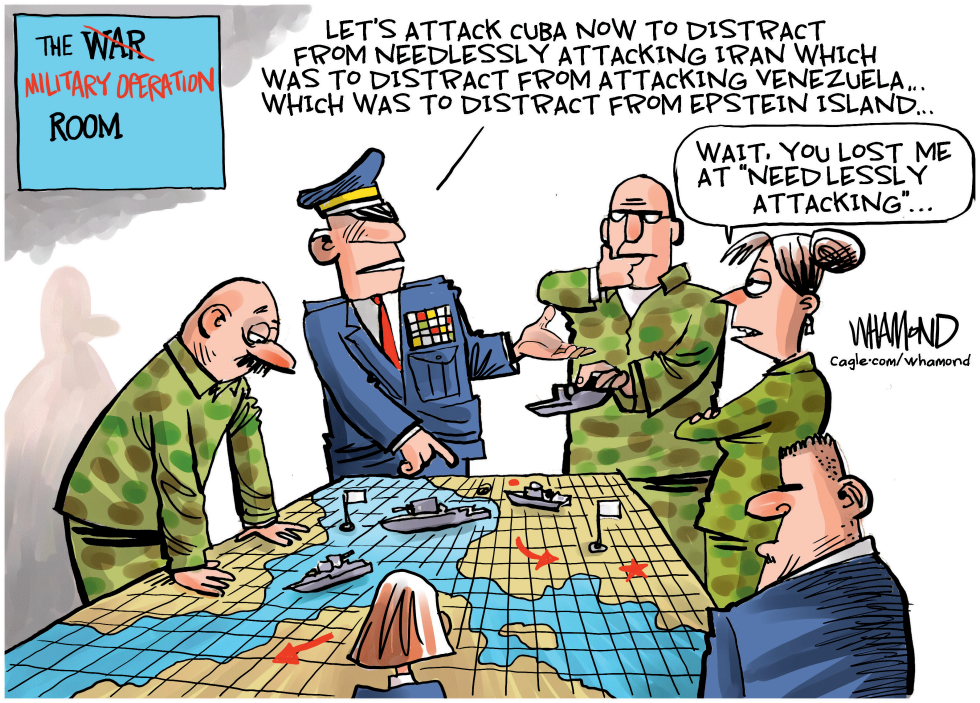
Dave Whamond's political cartoon depicts a group of military officials in a war room, gathered around a map with toy ships, discussing a chain of distractions starting from attacking Cuba to cover needless attacks on Iran, which distracted from Venezuela, looping back to Epstein Island. The scene captures the absurdity with one figure pointing at the map and another expressing confusion over 'needlessly attacking.' This satirical illustration uses dry humor to comment on convoluted military strategies and political diversions, incorporating elements like crossed-out 'War' sign replaced by 'Military Operation Room' for added irony. Tags like political satire, war distractions, foreign policy cartoon, Epstein Island reference, military humor, and endless distraction chain emphasize the cartoon's sharp critique.
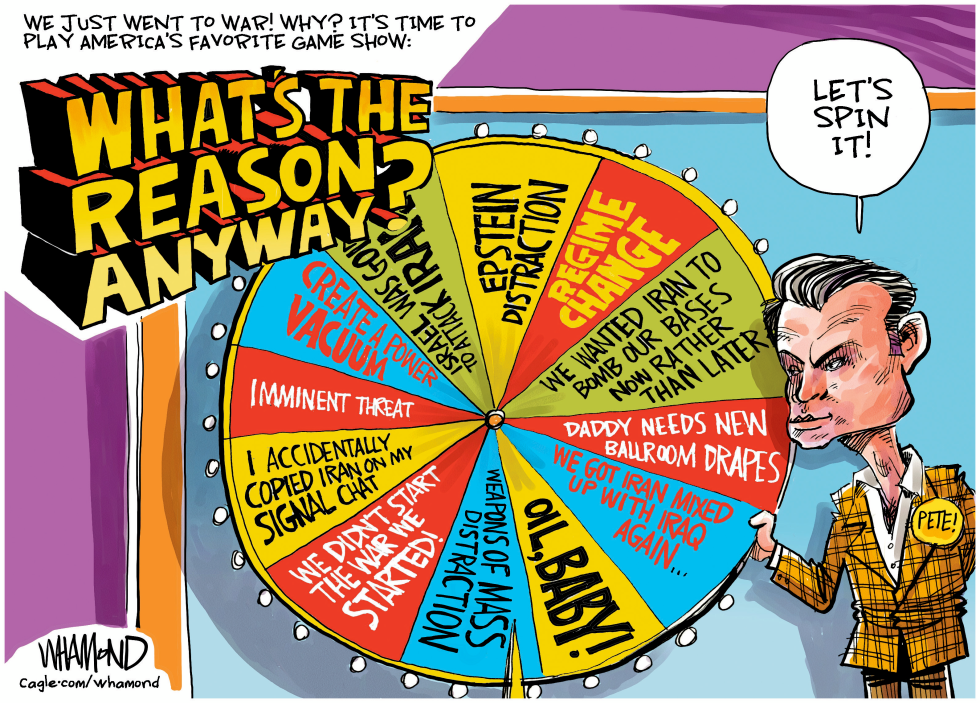
Dive into this biting political cartoon where America's war decisions are reduced to a game show parody wheel, featuring options like 'Imminent Threat,' 'Oil, Baby!,' and 'Regime Change.' The irreverent satire targets US foreign policy, highlighting how military interventions often spin on flimsy pretexts, from accidental escalations to resource grabs. With a host eagerly spinning the wheel, the artwork cleverly critiques the absurdity of war justifications, blending humor with insightful commentary on geopolitical cynicism. Tags like political cartoon, war justifications, and military intervention humor underscore its viral potential in today's polarized discourse.
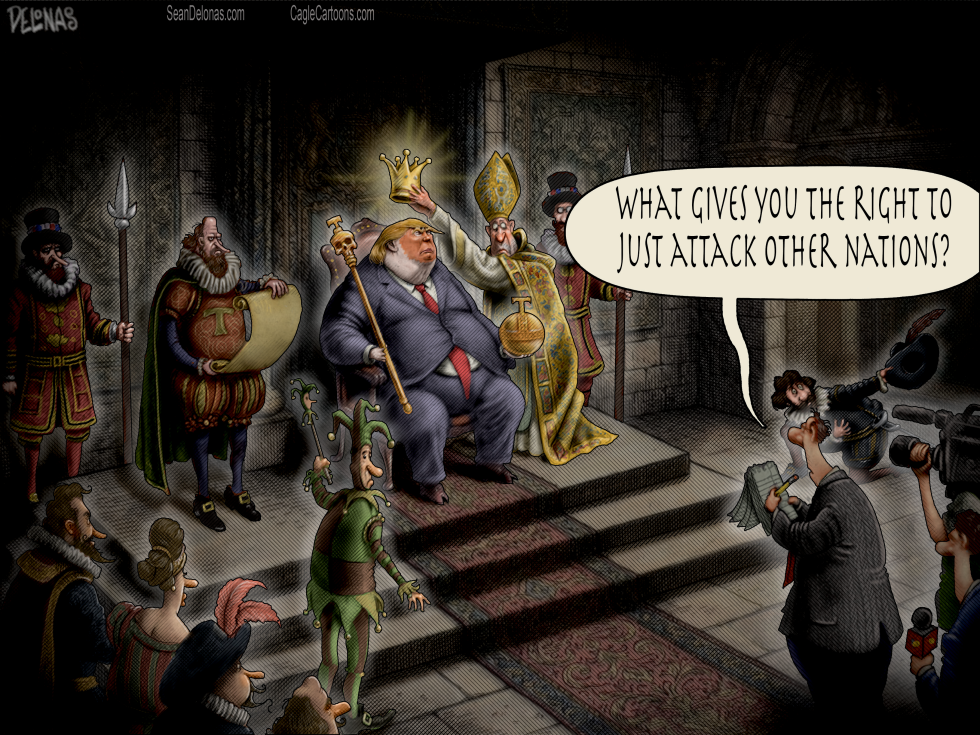
Sean Delonas captures Donald Trump as a rotund king lounging on a throne in a dimly lit castle hall, complete with a bishop crowning him with a glowing crown and a scepter in hand. Surrounded by medieval figures like guards, a jester, and courtiers, Trump faces a modern reporter wielding a microphone and notes, demanding to know what gives him the right to just attack other nations. The cartoon blends historical pomp with contemporary critique, tagging into Trump, wars, Iran, Venezuela, press, king, media, counterterrorism, military, policy, and president themes. The dry humor underscores the absurdity of unchecked power, with the artist's signature style emphasizing exaggerated features and satirical edge.
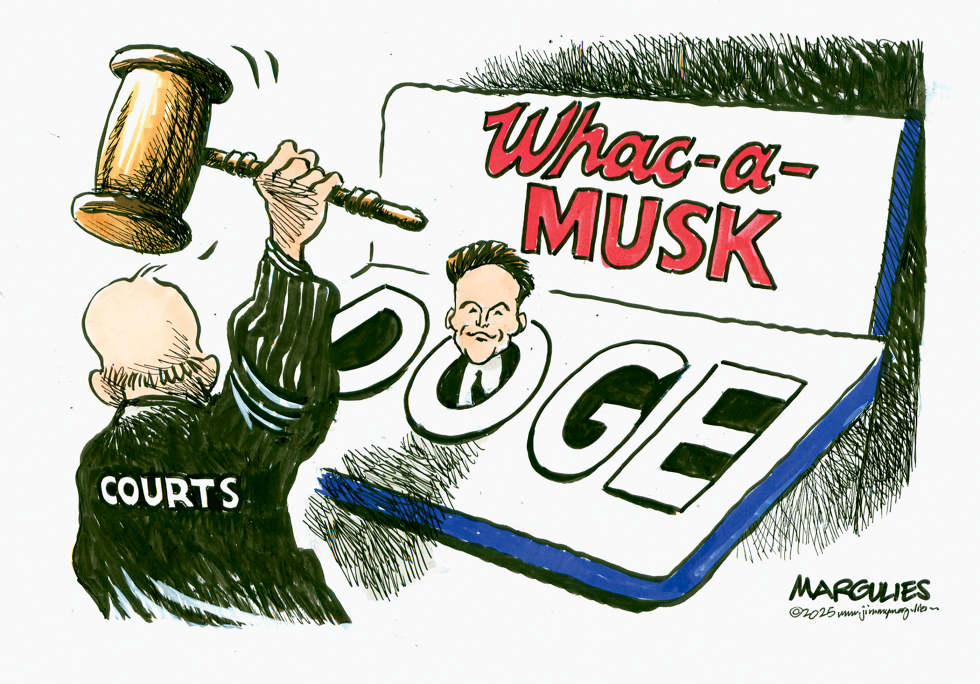
A political cartoon depicts a judge labeled Courts raising a gavel toward a Whac-a-Mole cabinet marked DOGE. Elon Musk's face appears in one hole beneath a Whac-a-MUSK sign. The image comments on legal challenges facing the Department of Government Efficiency in February 2025. Recent court actions have blocked or delayed several Musk-led reviews of federal agencies including IRS data and Social Security systems. The visual frames ongoing disputes between the executive branch efficiency drive and judicial oversight.