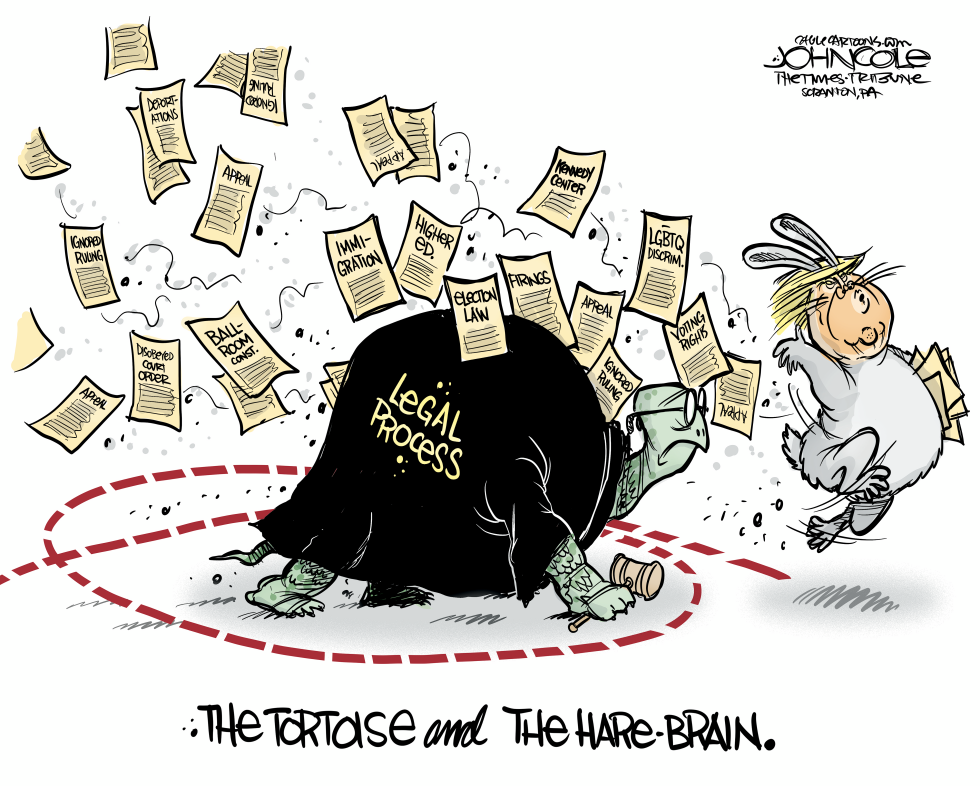
Multiple legal cases involving former President Trump continue through appeals on election law, voting rights, immigration rulings and related matters. The slow pace of the judicial system allows repeated filings and delays. The cartoon argues that this extended process effectively lets Trump run circles around accountability rather than face timely resolution on the merits.
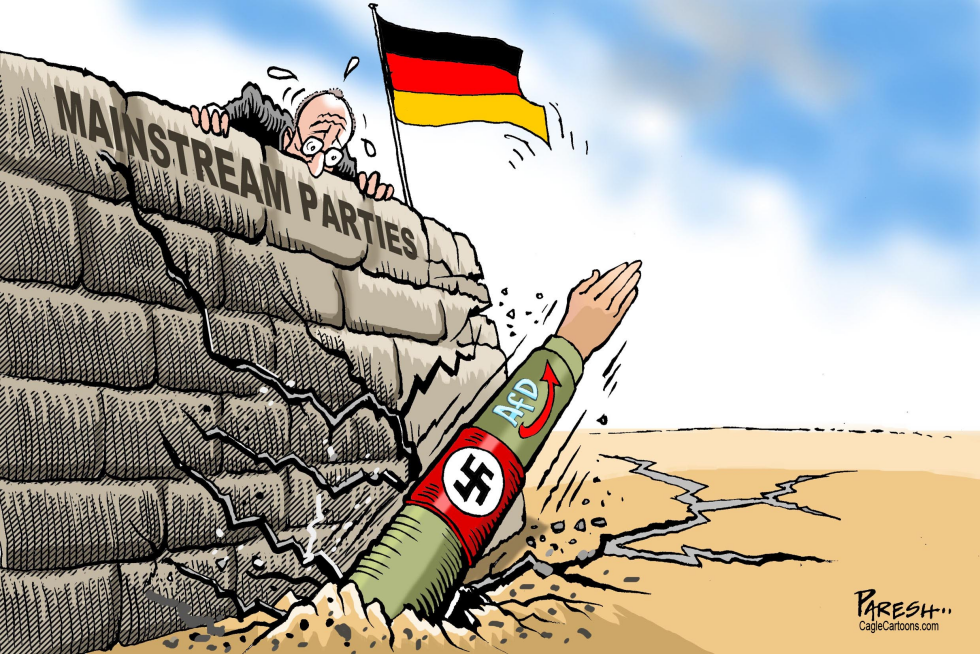
The cartoon depicts Germany's mainstream parties as a fracturing wall under assault from the AfD, portrayed as an extremist force with Nazi imagery. Published on September 10, 2026, it responds to the party's growing electoral strength and its impact on traditional coalitions ahead of key votes. The image shows a distressed mainstream figure atop the wall while the AfD arm breaks through from below, symbolizing how the party's advances erode established political structures. This reflects ongoing concerns about coalition stability and the mainstream's struggle to contain far-right momentum in German politics.
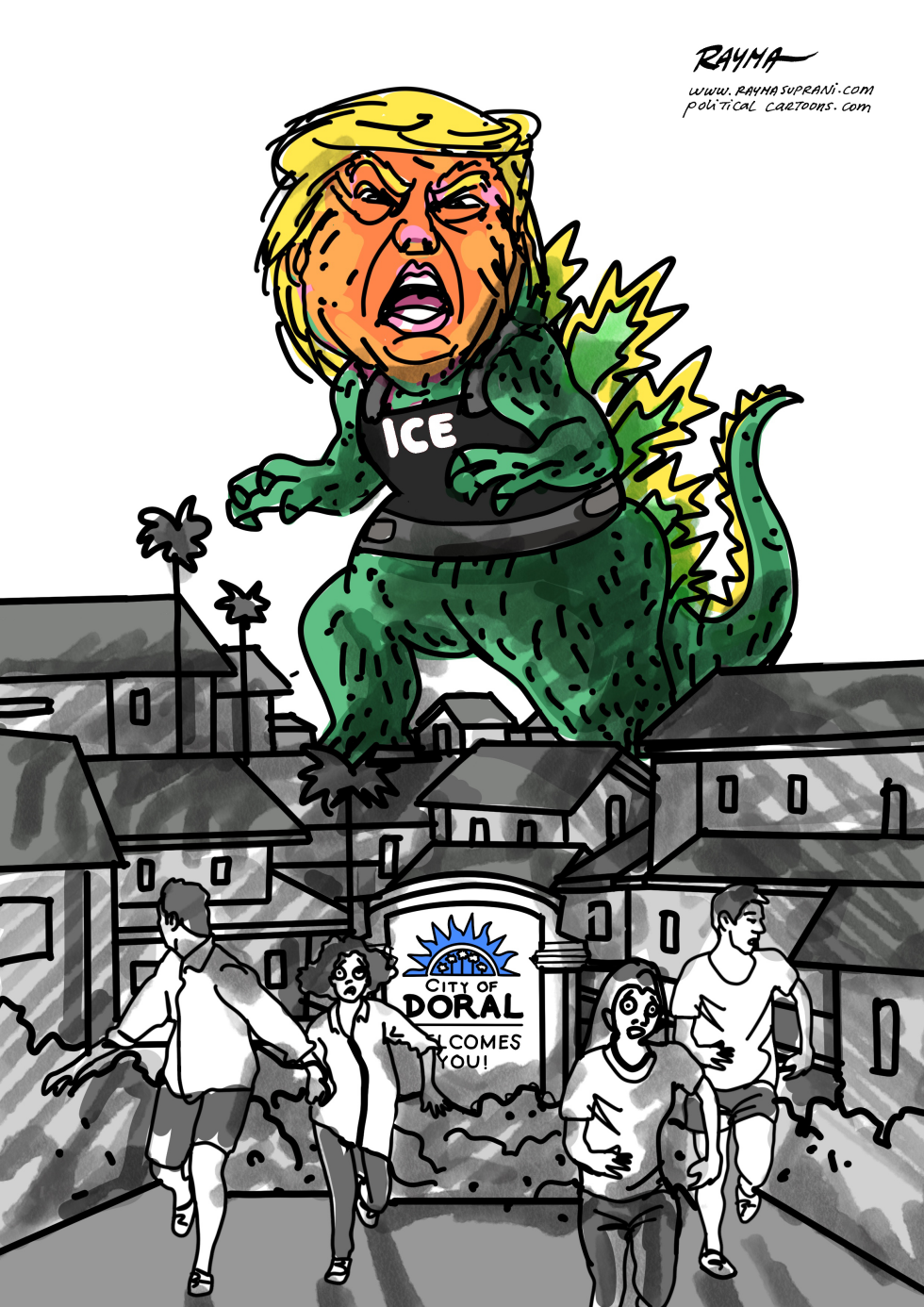
The image shows a large figure resembling Donald Trump dressed as an ICE agent towering over the city of Doral. People run from the scene near a welcome sign. The work addresses immigration enforcement policies active in Florida during 2026.
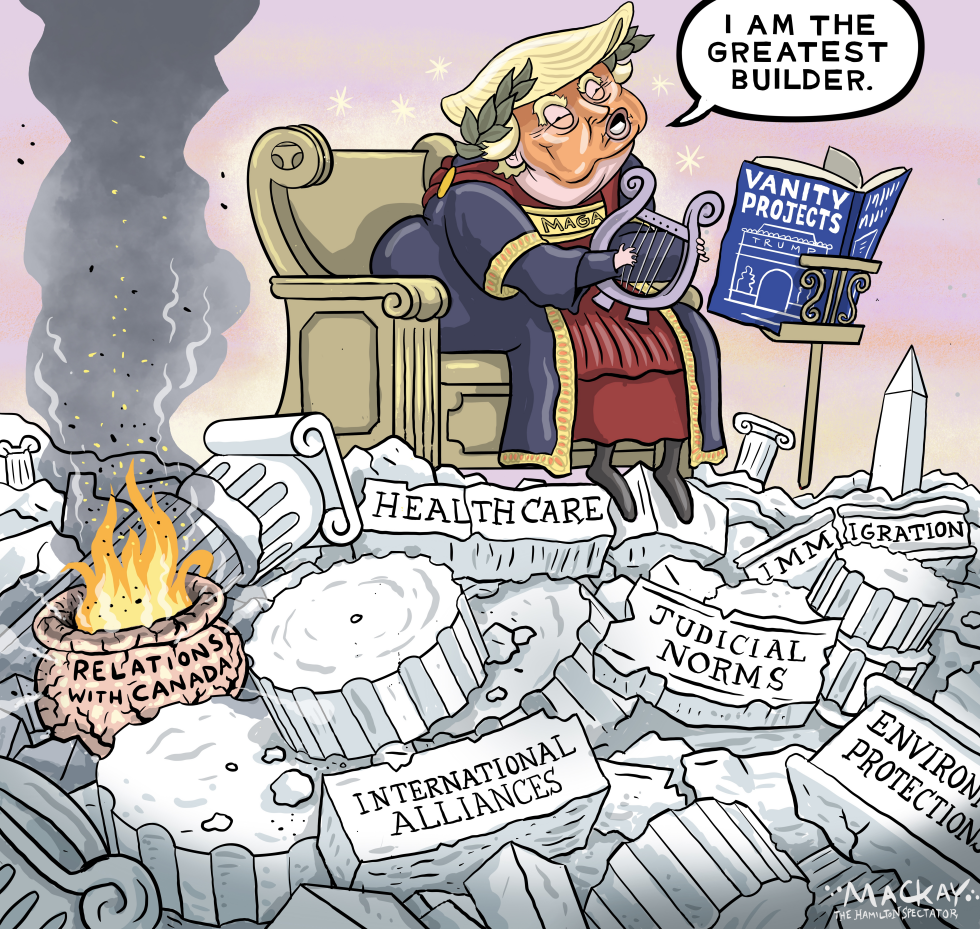
The cartoon shows Donald Trump dressed as a Roman emperor seated on a throne amid rubble labeled with collapsed policy areas including healthcare, immigration, judicial norms, international alliances and environmental protection. A burning basket represents damaged relations with Canada. Trump holds a lyre and a book of vanity projects while declaring himself the greatest builder. The image draws on the Nero fiddling while Rome burns motif to comment on perceived institutional damage during the Trump administration as of the September 2026 publication date.
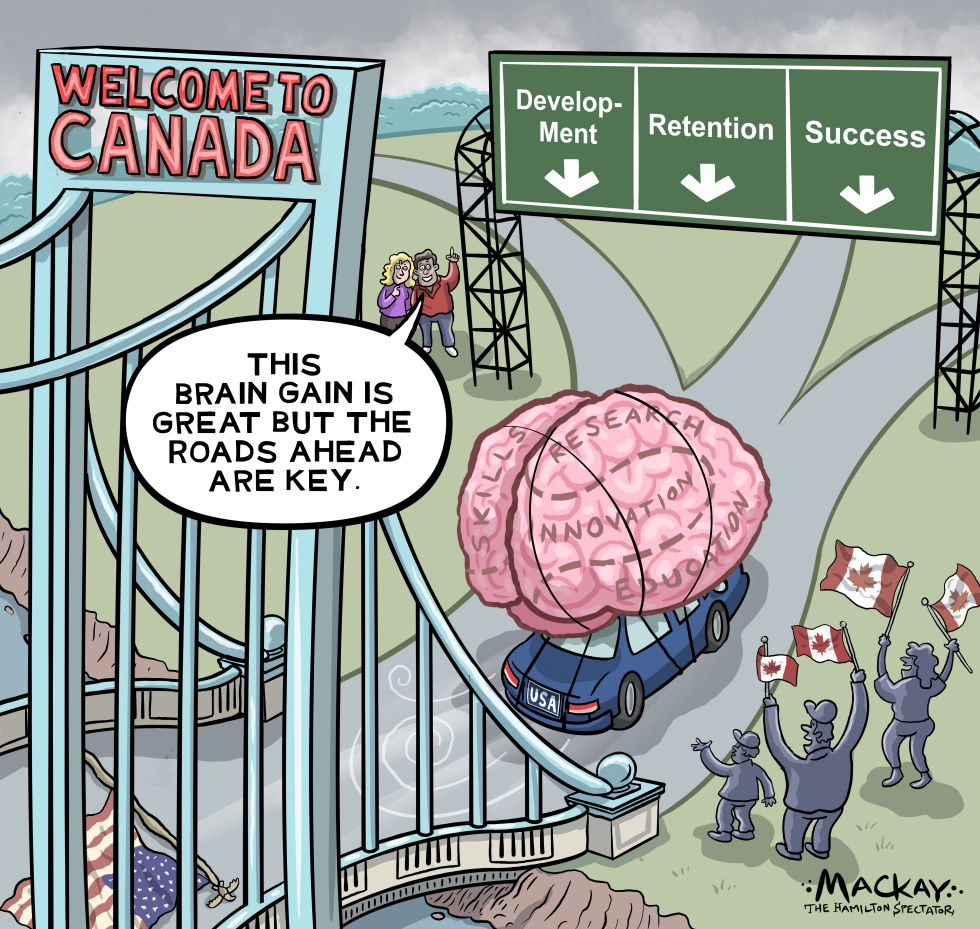
A political cartoon depicts a large brain marked with skills, research, innovation and education riding in a USA-plated car crossing into Canada. Welcoming signs and flag-waving figures greet the arrival while a green highway sign points to development, retention and success. A speech bubble notes that the brain gain is positive but roads ahead remain key. The image responds to ongoing discussions about cross-border talent flows and the practical challenges of integrating skilled immigrants into Canadian systems as of early September 2026.
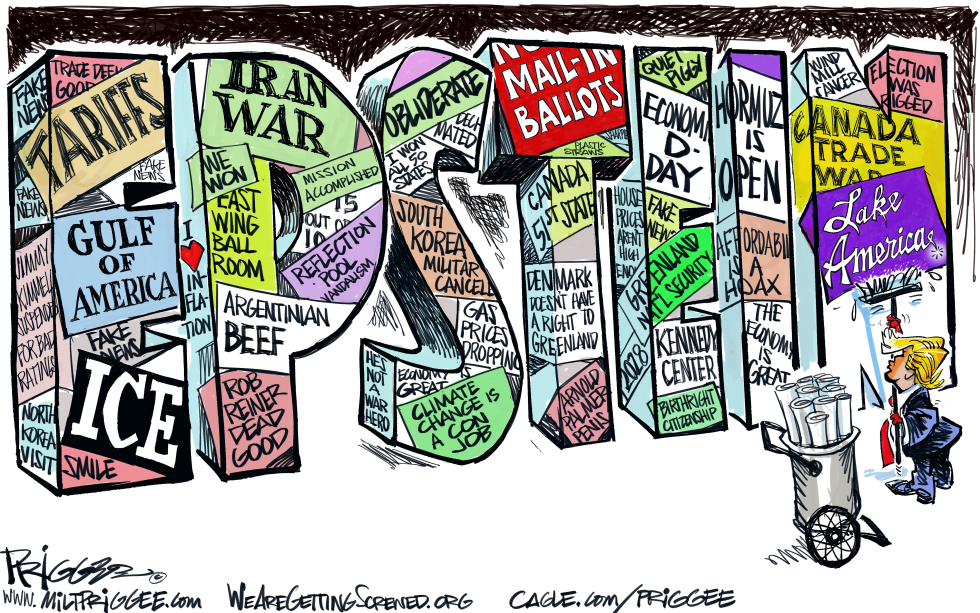
Donald Trump appears in a September 2026 cartoon pushing a cart stacked with signs promoting tariffs, questioning mail-in ballots, and asserting claims about Iran, Canada trade, and domestic issues. The image captures a pattern of public messaging that blends economic nationalism with repeated challenges to established processes. The editorial position frames these statements as a deliberate strategy to keep multiple controversies in motion at once.
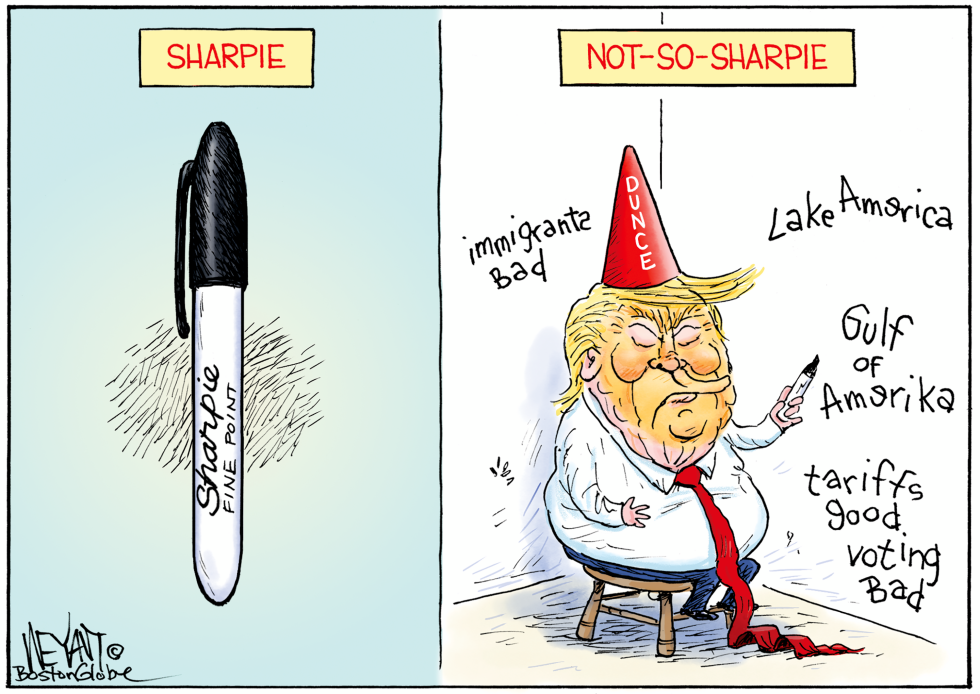
Donald Trump has continued to issue statements on tariffs, immigration enforcement and voting procedures that contain repeated factual inaccuracies. These comments have drawn renewed attention to his approach to governance. The cartoon portrays him as uninformed on these topics through the dunce cap and misspelled labels.
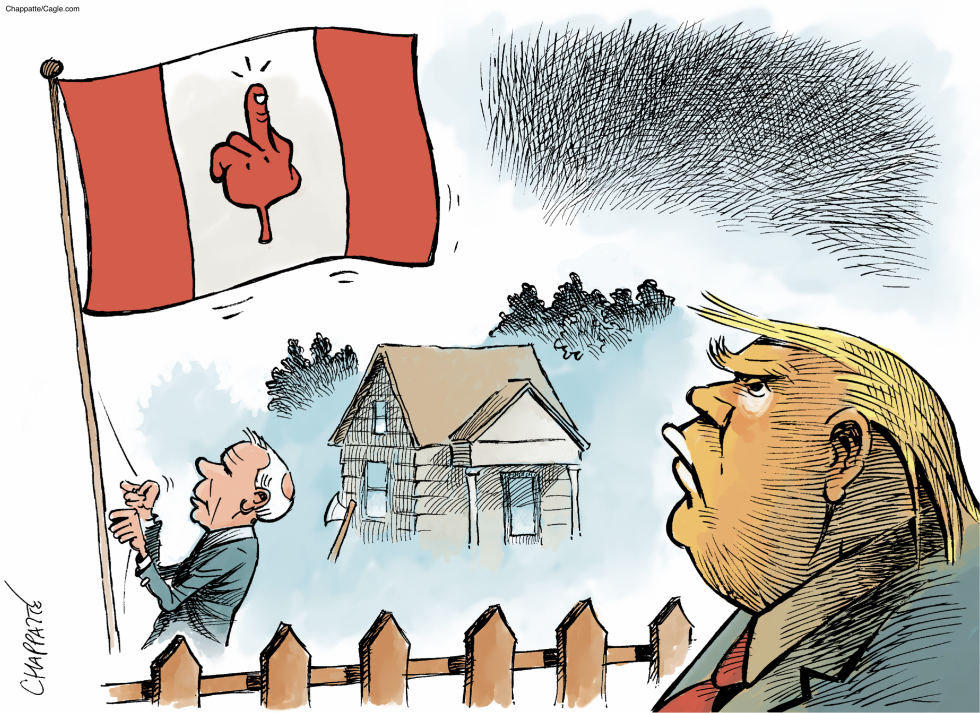
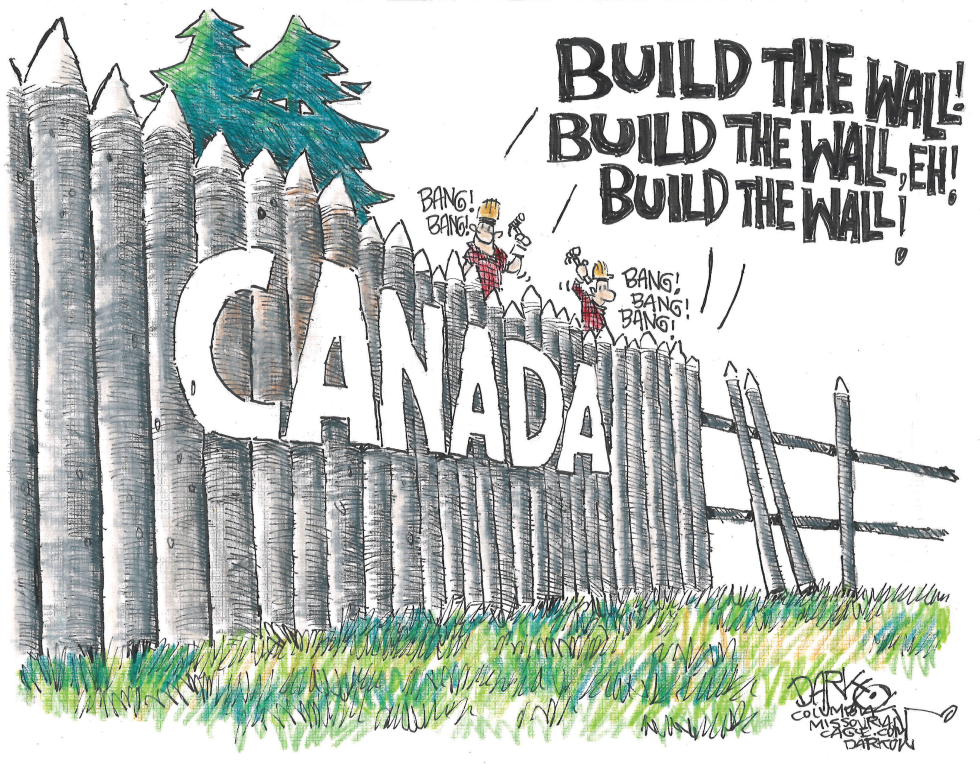
Canada has begun construction of a substantial border barrier along its southern frontier, echoing long-standing calls for stricter immigration controls. Officials cite rising cross-border movements and security concerns as justification for the project. The move marks a notable policy shift for a country historically open to migration. The cartoon portrays this development with pointed irony, highlighting the adoption of aggressive enforcement tactics previously associated with other nations.
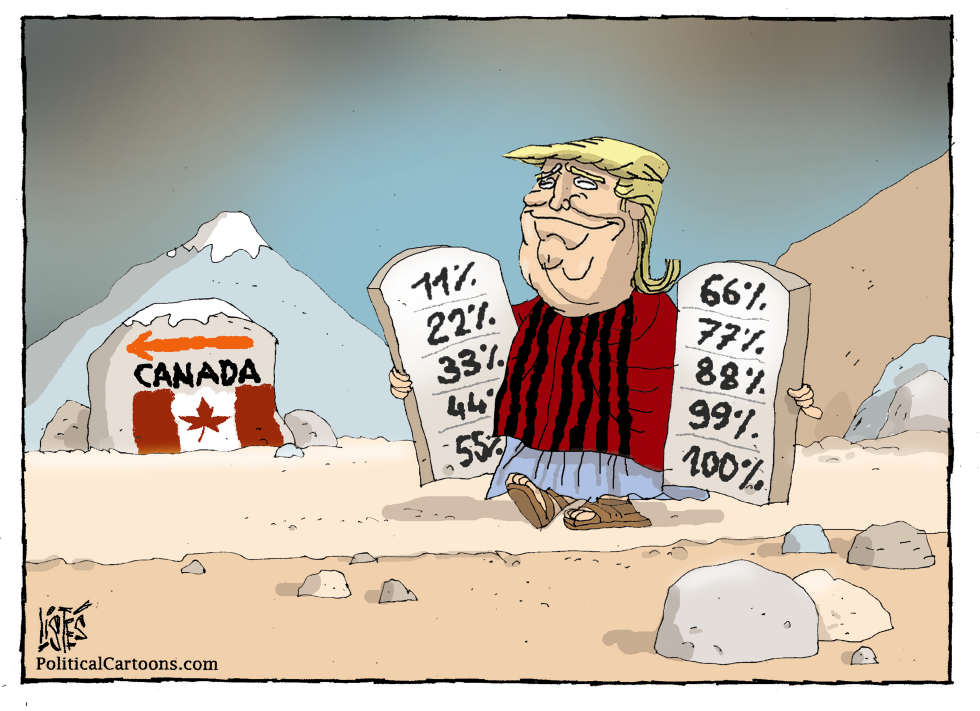
Donald Trump appears in a desert scene holding stone tablets inscribed with rows of percentages while standing near a rock labeled Canada. The image responds to ongoing trade and tariff discussions between the United States and Canada. The editorial position frames the percentages as commandments Trump is delivering in the border region.
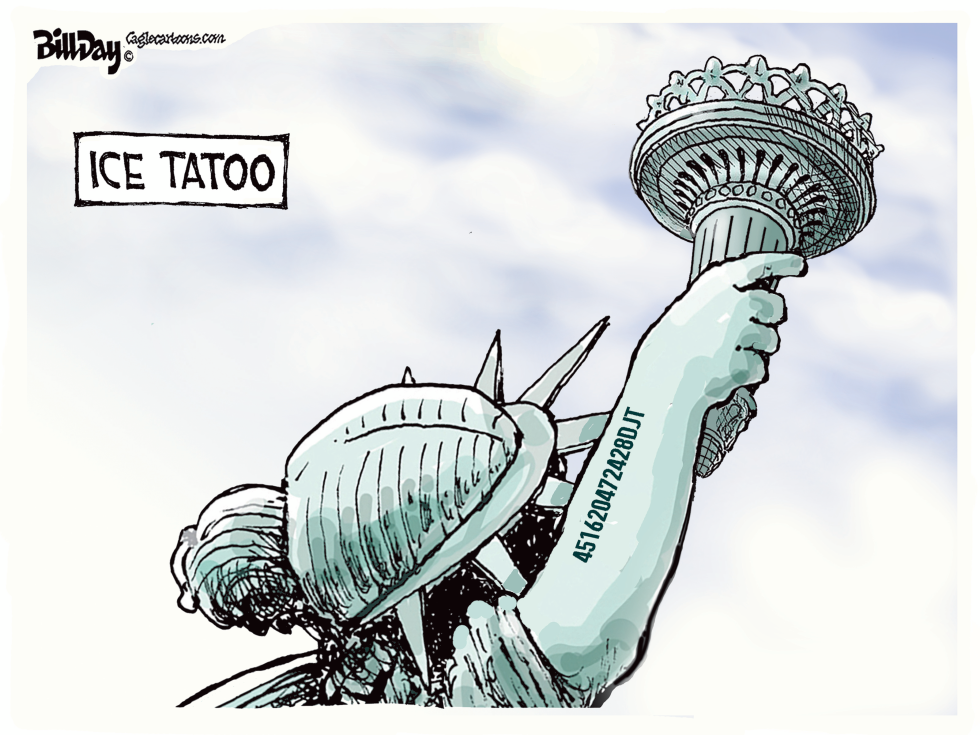
ICE enforcement actions continue to expand in 2026 with new detention and removal priorities. The Statue of Liberty appears marked with a numeric tattoo resembling prisoner identification. The image responds to ongoing border and interior enforcement operations. Critics argue the approach treats immigrants as criminals by default. The piece highlights how such policies clash with traditional symbols of welcome and liberty.
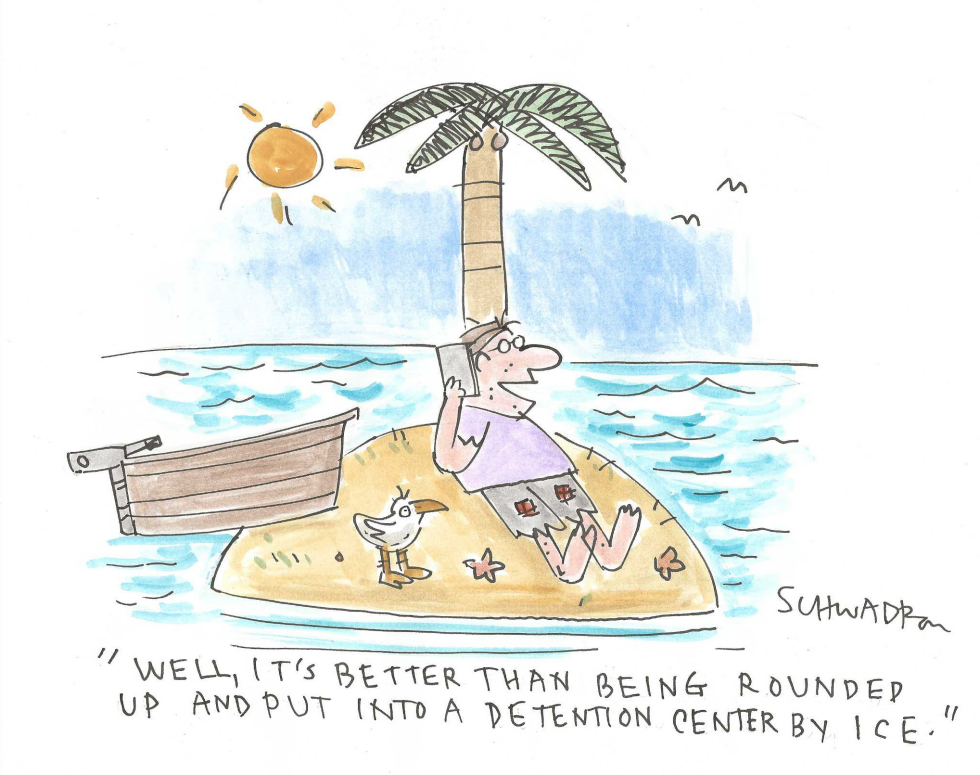
Immigration enforcement through ICE detention centers continues as a central policy tool amid ongoing border security debates. The approach draws criticism for its impact on individuals facing removal proceedings. The piece presents the view that extreme isolation can appear preferable to such facilities.
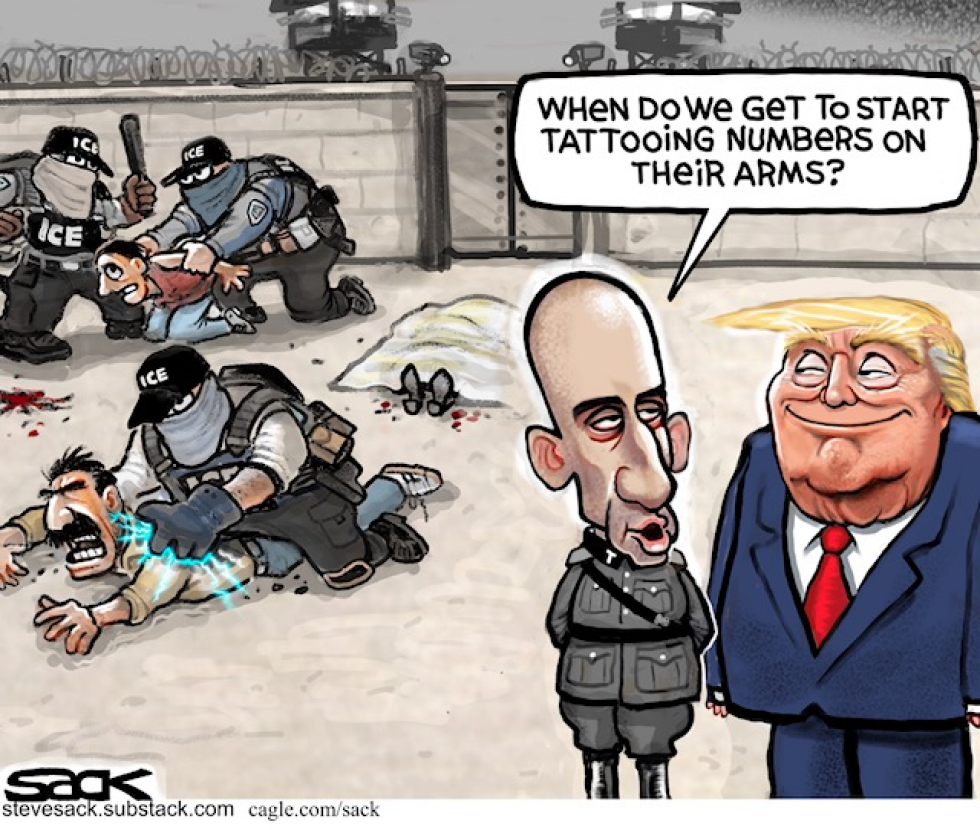
Donald Trump has publicly discussed aggressive measures in immigration detention facilities amid ongoing enforcement operations. The remarks come as ICE conducts arrests and holds individuals at secure sites. Critics argue the approach echoes past abuses. The piece portrays the comments as crossing into prohibited territory by invoking forced numbering.
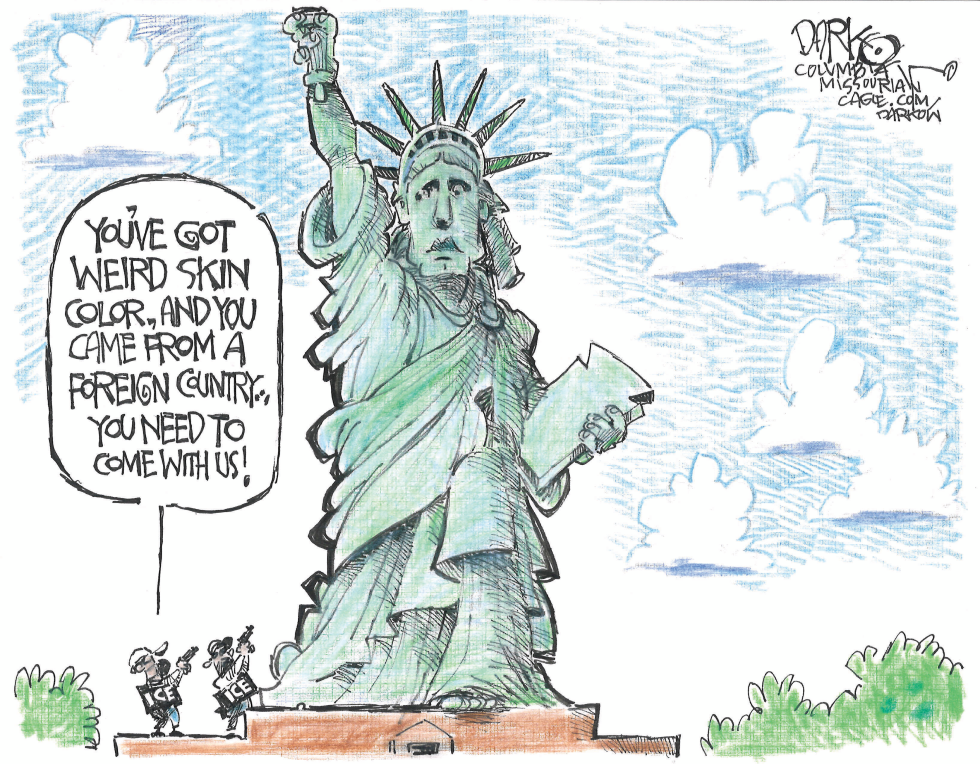
ICE agents have been depicted confronting the Statue of Liberty at its base while citing the monument's skin color and foreign origin as grounds for removal. The action highlights ongoing debates over immigration enforcement priorities and the use of appearance-based criteria in federal operations. The editorial position frames such tactics as inconsistent with the monument's historic role welcoming immigrants.
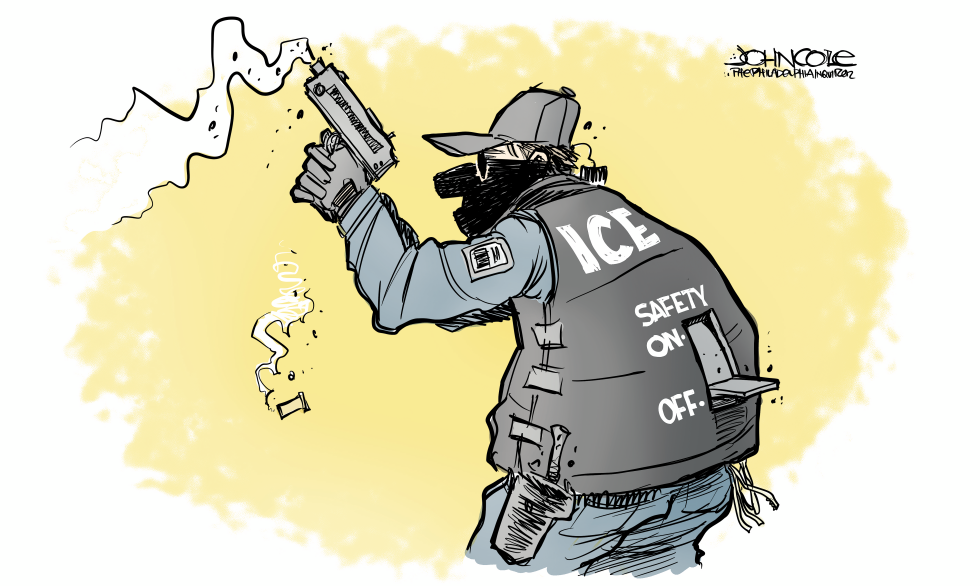
An ICE agent is shown firing a handgun during what appears to be an enforcement action. The vest safety toggle sits in the off position while smoke and a bullet exit the barrel. The image highlights concerns over firearm handling protocols within immigration enforcement operations and questions whether basic safety measures are being followed in the field.