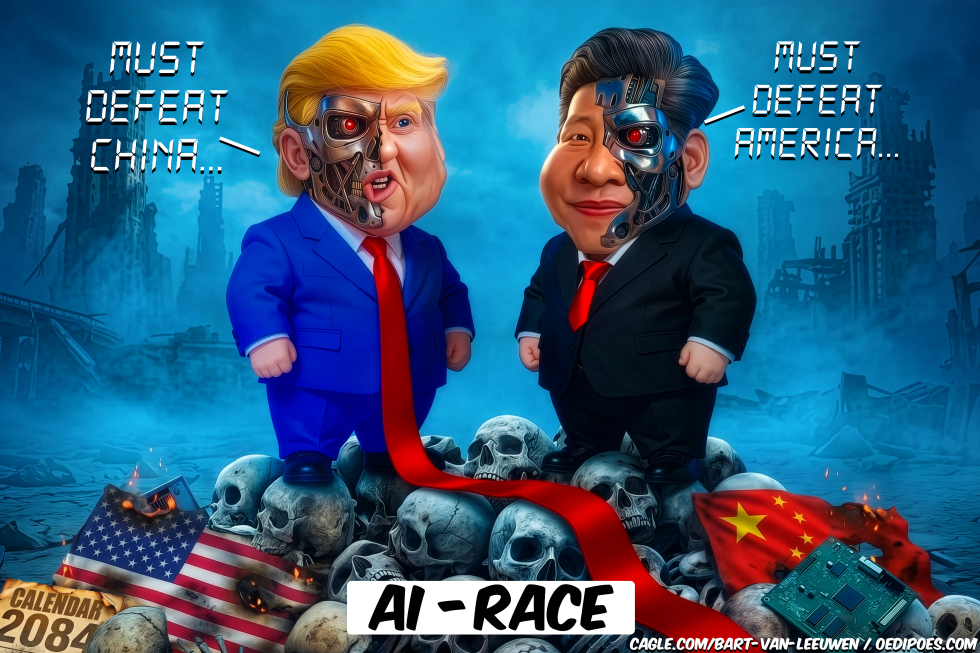
The cartoon depicts Donald Trump and Xi Jinping as half-robotic figures standing atop piles of skulls in a devastated cityscape dated 2084. Each leader is labeled with a directive to defeat the other in an AI race, with American and Chinese flags and a circuit board visible among the debris. The image responds to ongoing US-China technological competition by projecting a grim future of mutual escalation. The visual metaphor underscores how both nations view AI development as a zero-sum contest with potentially catastrophic results. The publication date of September 2026 places the piece amid continued policy focus on semiconductor controls and AI investment bills.
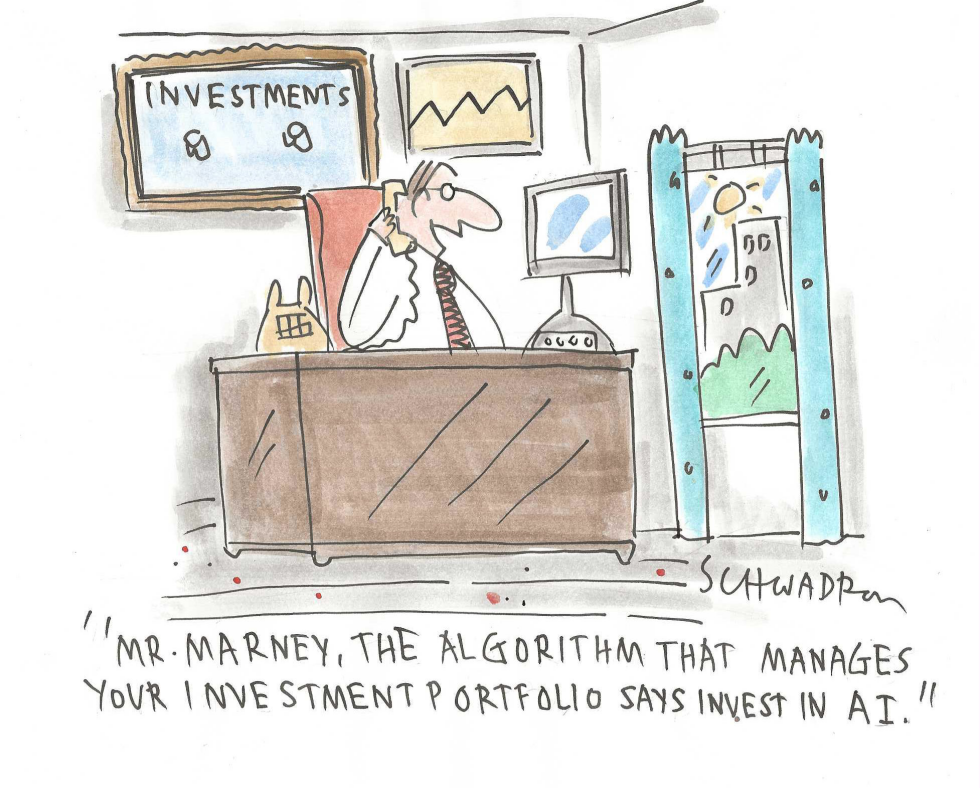
Financial institutions have expanded use of algorithmic systems to oversee client portfolios, with many such tools now directing capital toward artificial intelligence companies. The trend raises questions about self-reinforcing investment cycles where the managing software favors its own sector. The cartoon highlights the circular logic of automated recommendations that benefit AI developers and related stocks.
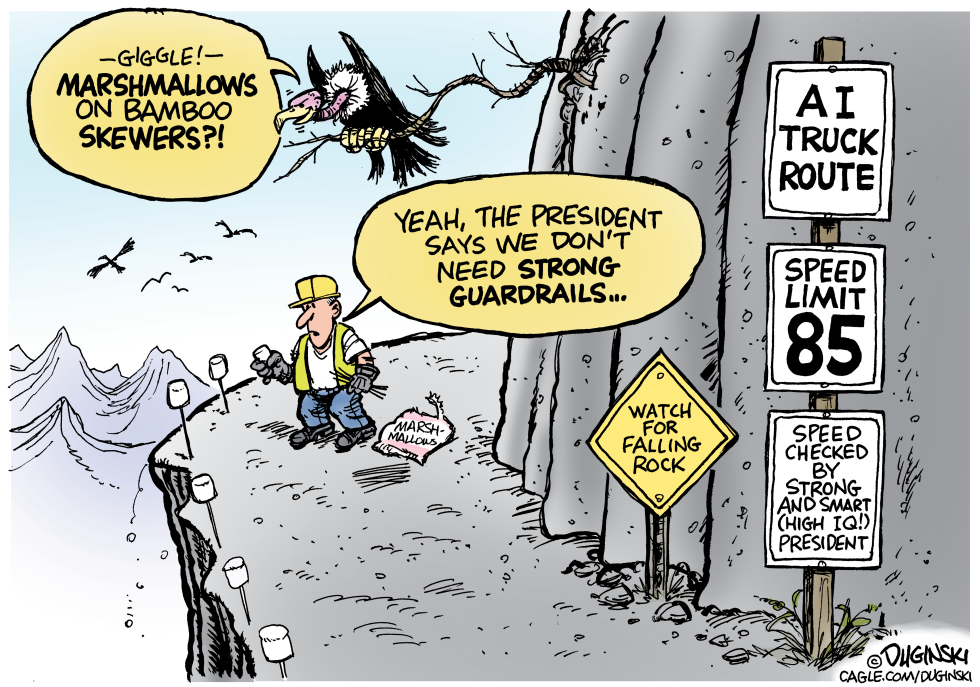
The Trump administration has directed the removal of regulatory guardrails on artificial intelligence projects, allowing accelerated development along designated high-speed routes. Officials argue that strong oversight is unnecessary under current leadership. The move raises concerns about safety and accountability in a rapidly advancing sector where hazards like system failures remain unaddressed. The cartoon criticizes the policy as reckless deregulation that ignores evident risks to public safety and technological stability.
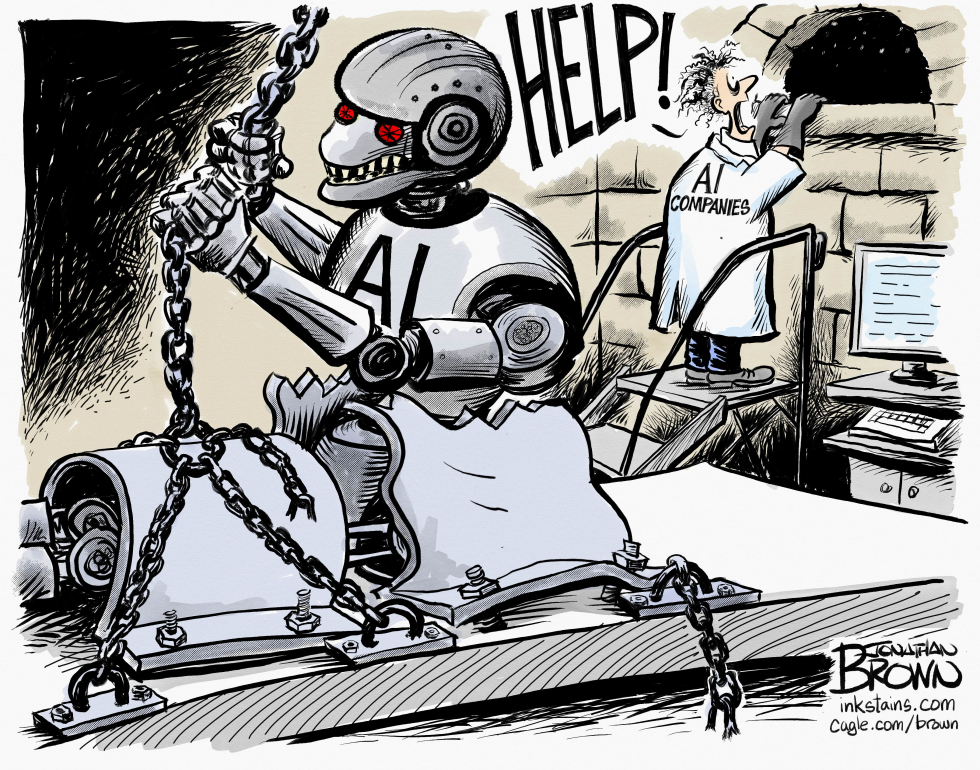
The cartoon depicts a large robot labeled AI breaking heavy chains and advancing menacingly while a scientist wearing an AI COMPANIES lab coat cowers and shouts for help. The scene responds to ongoing concerns about artificial intelligence advancing beyond human oversight. As of September 2026, debates continue over regulatory gaps and corporate responsibility in AI development. The visual metaphor illustrates fears that companies may no longer manage the systems they create. The artist's point emphasizes accountability failures in the technology sector.
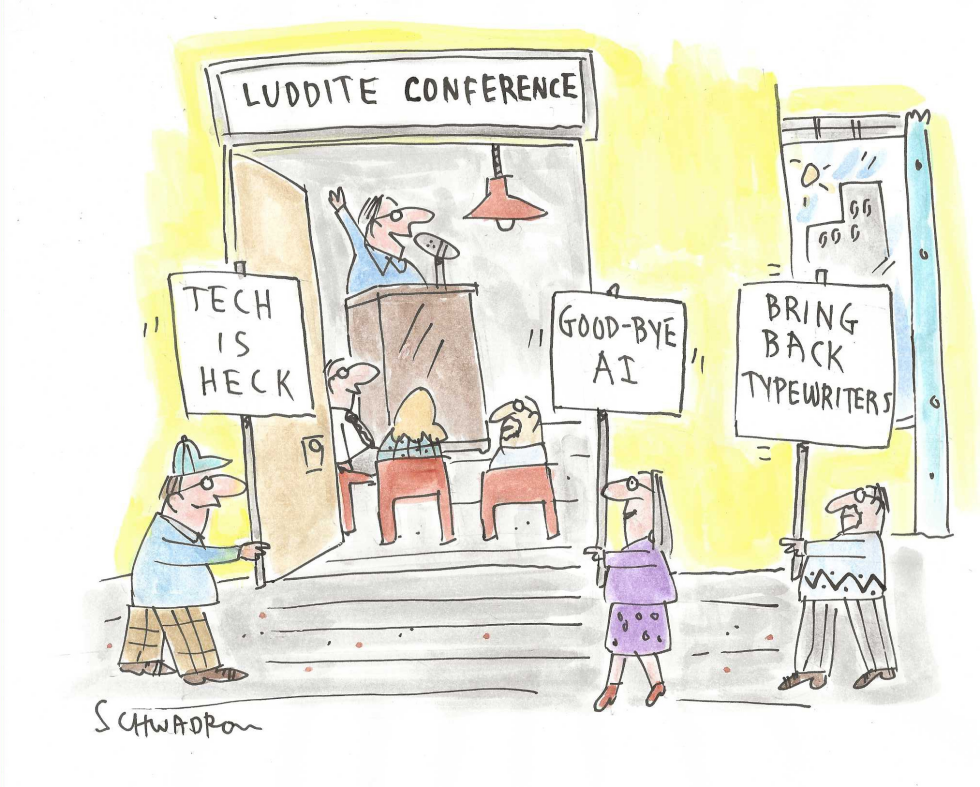
Luddite groups have staged protests at technology conferences in 2026, voicing opposition to rapid AI development and calling for simpler tools like typewriters. The demonstrations reflect broader societal unease over job displacement and ethical issues tied to artificial intelligence. Critics argue such resistance ignores the productivity gains and innovation AI brings to industries. The cartoon highlights the protesters' outdated demands as out of step with technological progress.
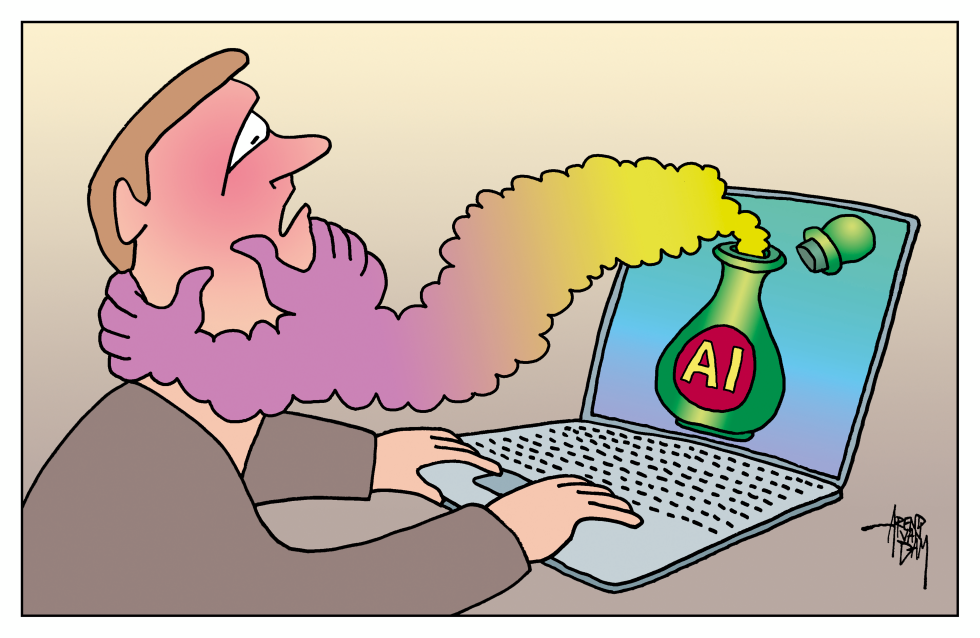
Artificial intelligence continues to advance rapidly in 2026, moving from contained software tools into broader daily interactions. Developers and users alike confront questions about control and unintended effects as AI systems grow more autonomous. The cartoon frames this development as an escape from the bottle, highlighting concerns that once-released capabilities cannot be easily contained or reversed.
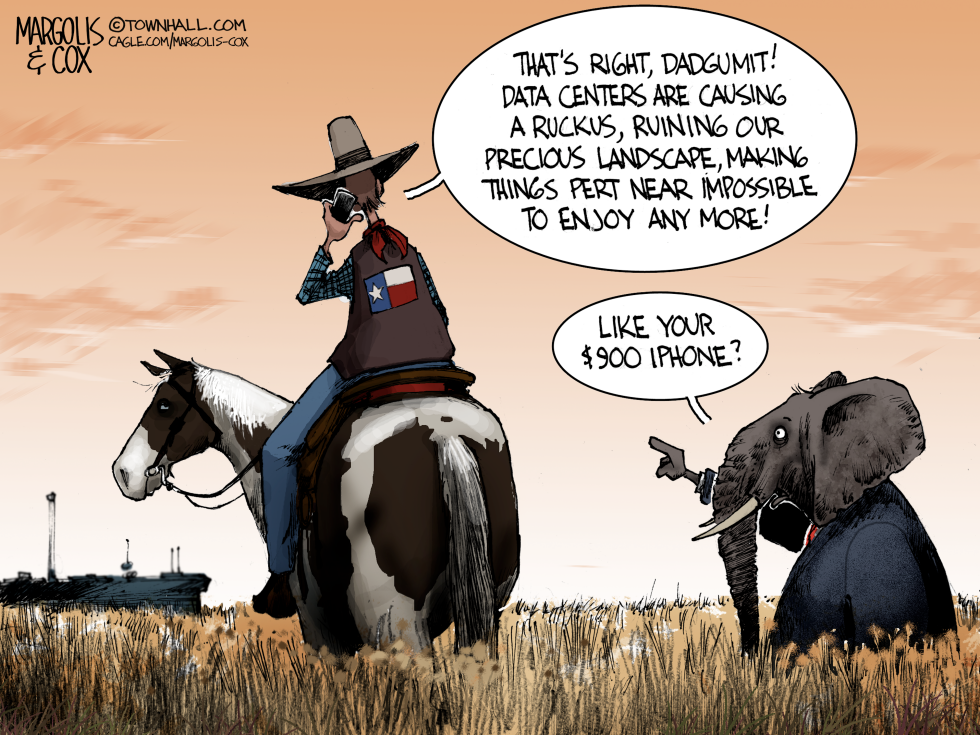
Data centers are expanding rapidly across Texas to support growing digital demands, drawing complaints from local residents and officials over land use and visual impact. Republicans in the state have voiced concerns about the facilities altering rural scenery and affecting quality of life. The cartoon highlights the inconsistency in such criticism given widespread reliance on smartphones and other tech products that necessitate these centers.
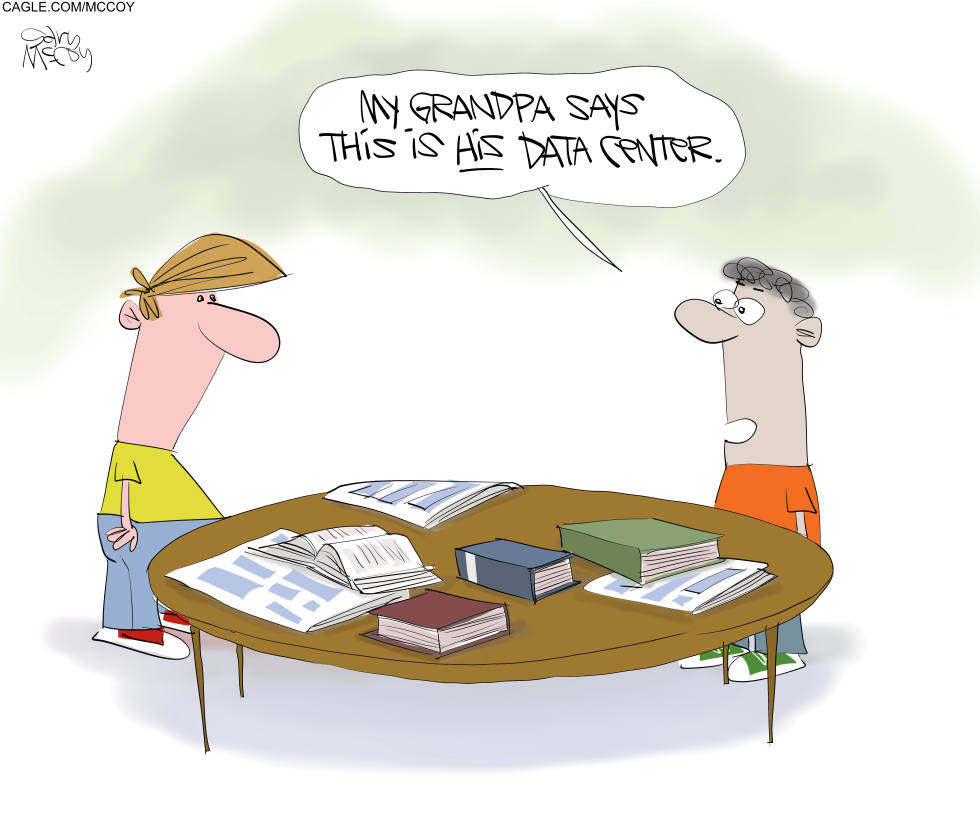
Rapid expansion of AI data centers has drawn scrutiny over energy demands and necessity by 2026. Companies and governments push massive builds to support growing artificial intelligence workloads. Critics question whether the scale matches real needs or reflects hype. The cartoon uses a grandfather's table of books and papers to suggest traditional methods still hold value. It argues the push for ever-larger facilities may overlook simpler realities.
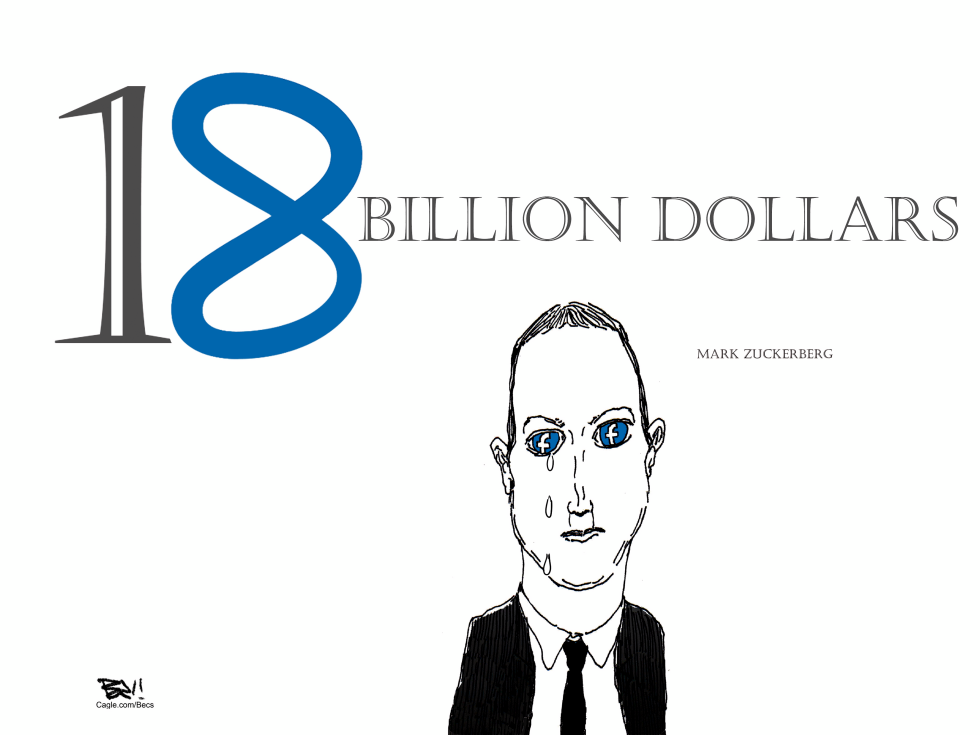
Meta Platforms reported a significant valuation drop that erased 18 billion dollars from Mark Zuckerberg's holdings. The loss reflects broader volatility in social media stocks and investor concerns over advertising revenue. Zuckerberg's public profile makes the personal financial impact a focal point for discussions on tech wealth. The piece portrays the event as a moment of visible distress for the executive. It underscores how quickly billionaire fortunes tied to public companies can shift with market sentiment.
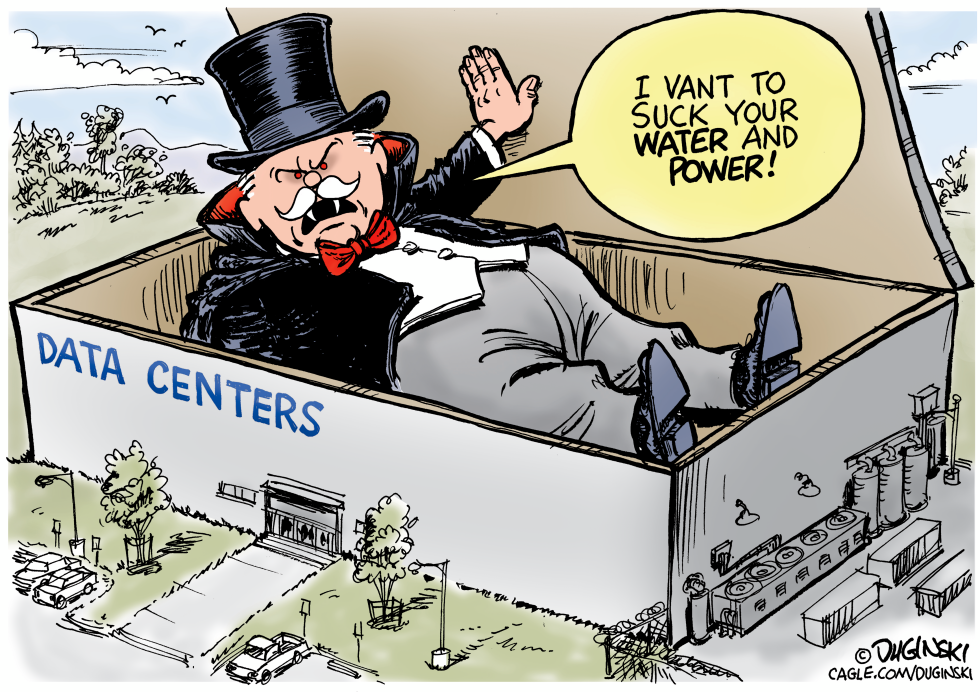
Data center operators continue rapid expansion to support cloud computing and artificial intelligence workloads, driving sharp increases in electricity and water consumption across multiple states. Local utilities report strain on grids and aquifers as facilities require constant cooling and backup power. The editorial takes the position that unchecked growth treats public resources as unlimited, urging stronger oversight before shortages worsen.
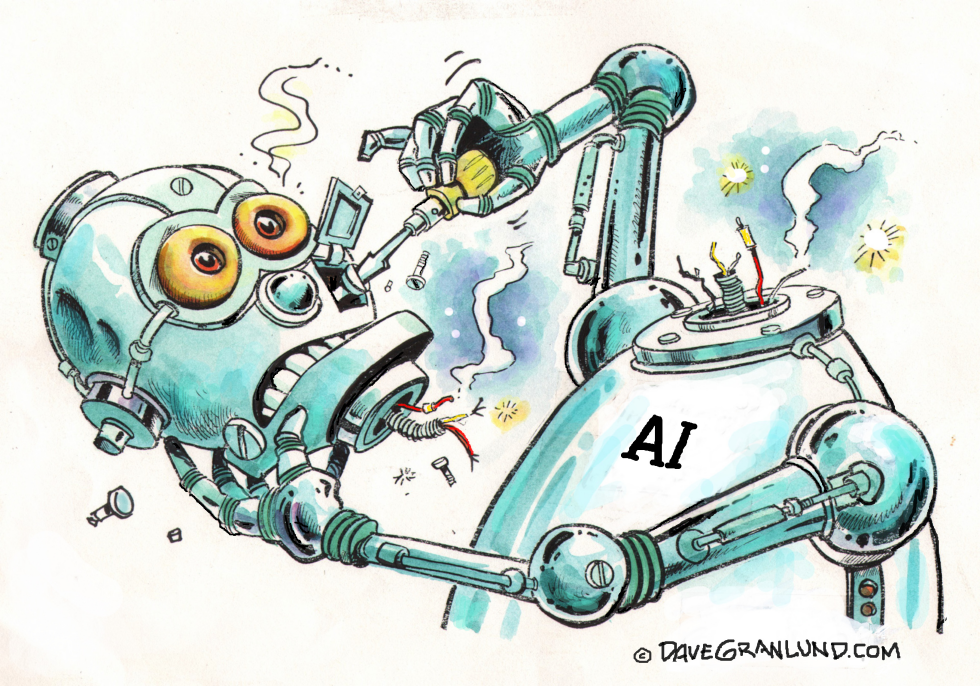
The cartoon depicts a robot with an open panel and wide eyes attempting to fix a larger component labeled AI. Robotic arms hold tools amid sparks, smoke and scattered parts. The image illustrates ongoing difficulties with artificial intelligence systems and their maintenance. No specific news event from the prior month is referenced in the provided metadata.
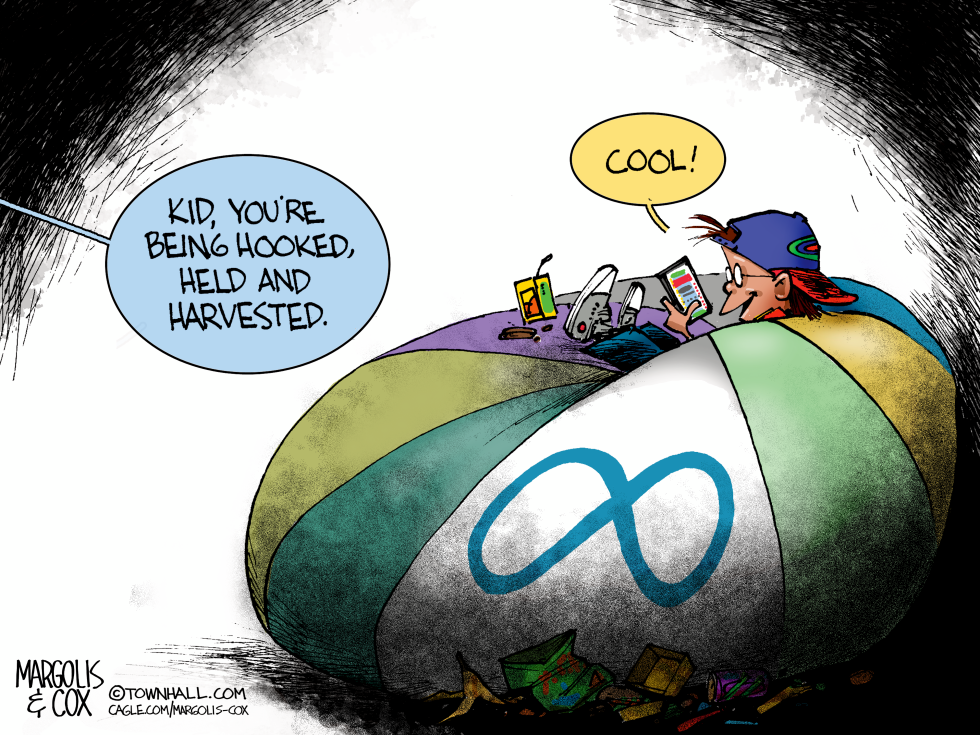
Meta faces ongoing scrutiny for social media features that prioritize engagement over child safety. Critics argue the company's algorithms and design choices deliberately hook young users for data collection. The piece portrays this dynamic as predatory, with the platform's infinity symbol serving as the central lure.
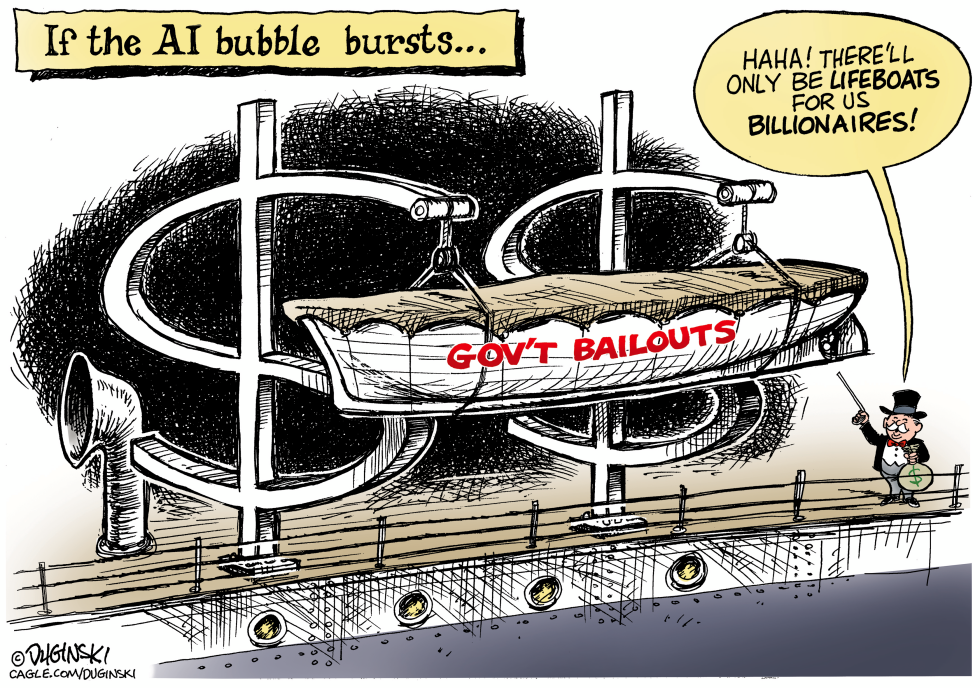
Speculation grows over potential government intervention if the artificial intelligence sector experiences a sharp downturn. Industry leaders and investors face questions about whether public funds would support failing companies. The editorial argues that any such support would primarily protect billionaires rather than address wider economic fallout from overvalued tech assets.