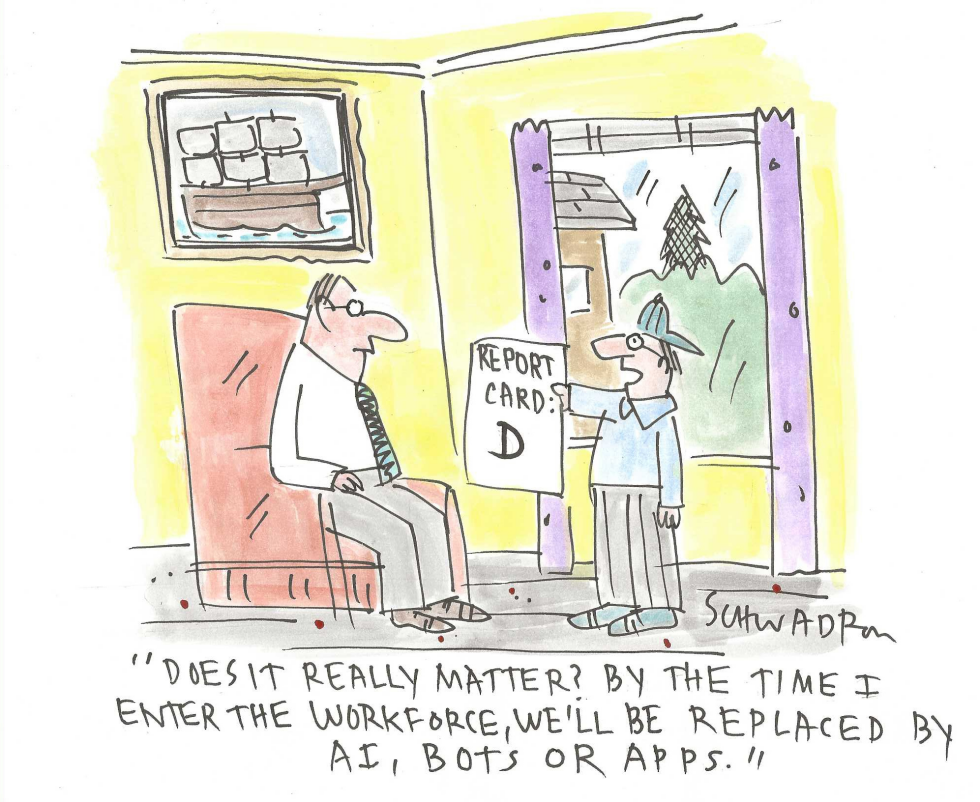
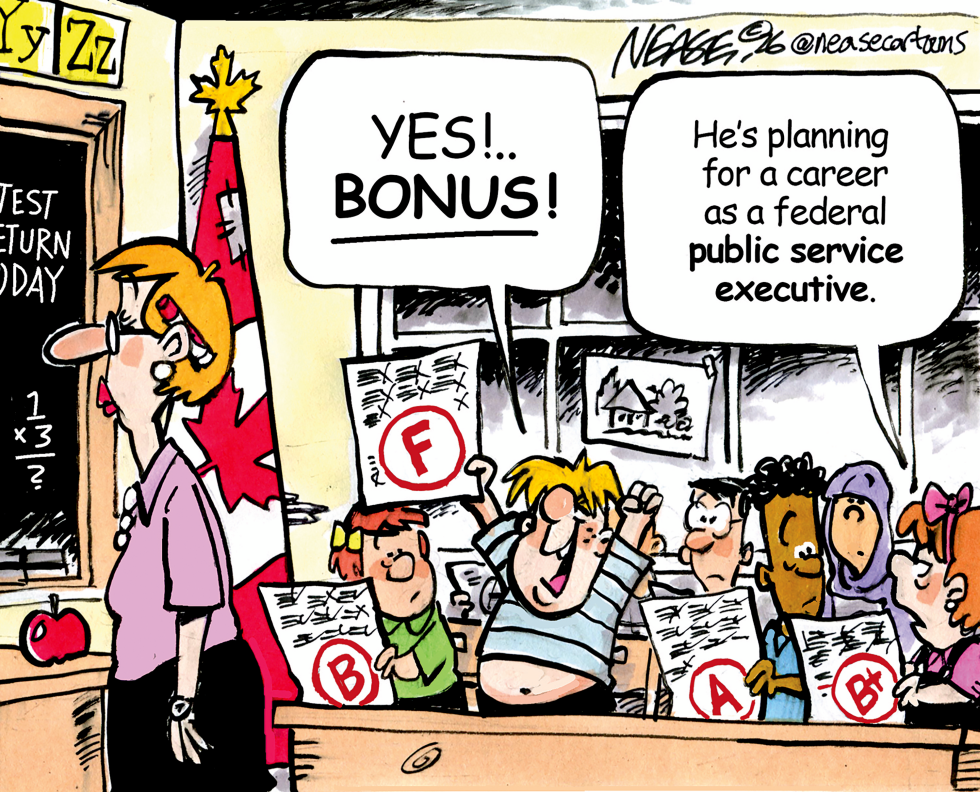
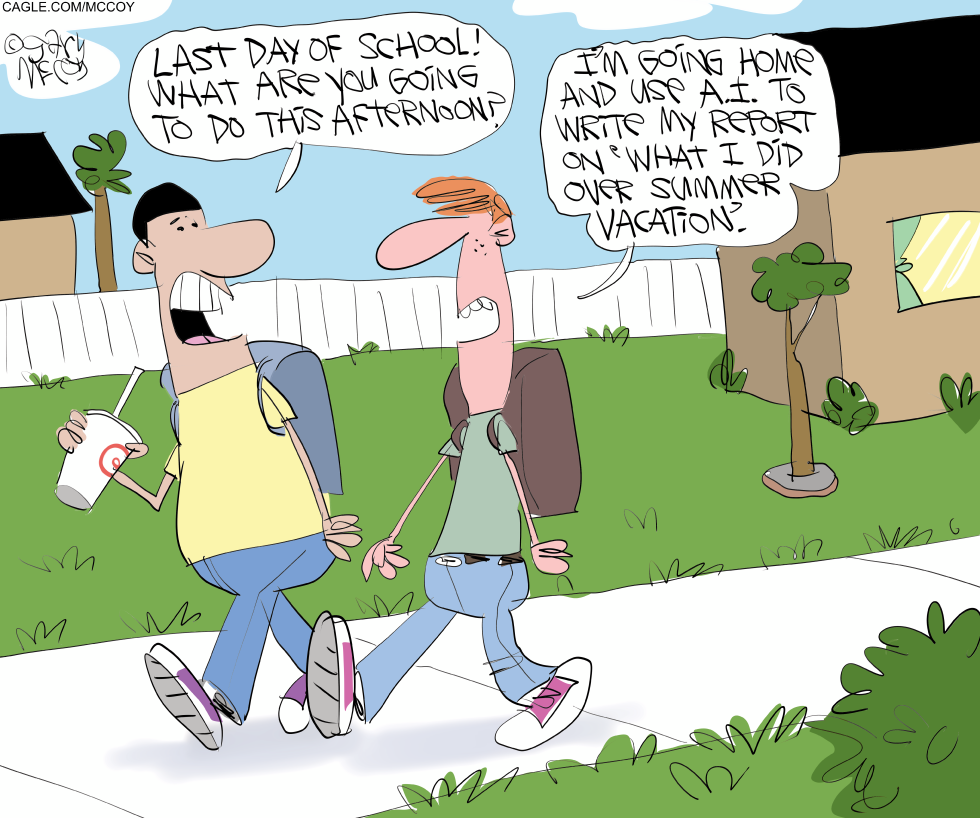
Rising student skepticism about academic effort stems from widespread predictions that AI and automation will eliminate many jobs before today's students graduate. The cartoon responds to this dynamic by showing a student using those forecasts to shrug off a poor grade. It highlights how fears of technological displacement may undermine motivation in schools. The piece suggests such excuses reflect a broader cultural shift where traditional education credentials appear less relevant. The editorial stance questions whether this mindset accelerates the very problems it cites.
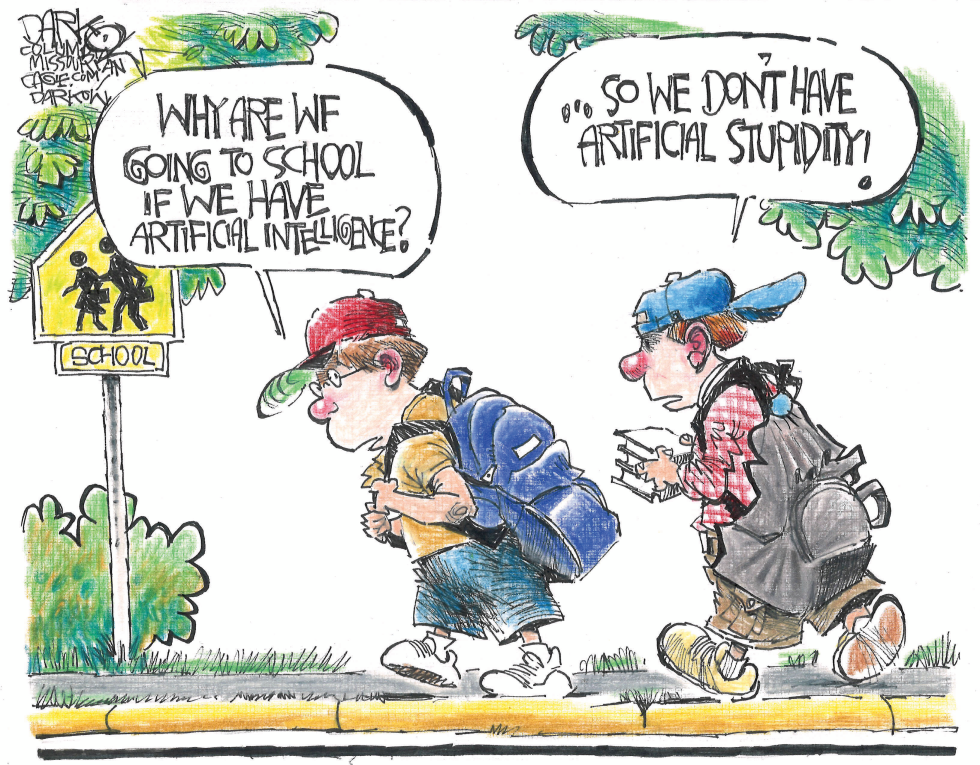
By 2026, rapid advances in artificial intelligence have prompted widespread questions about the ongoing role of traditional schooling. Students and educators alike wonder whether classroom learning retains value when AI tools can supply instant answers and assistance. The debate centers on whether reliance on AI risks producing graduates lacking critical thinking skills. Without structured education, society could face a generation marked by artificial stupidity rather than genuine understanding. The piece argues that schools remain necessary to build real intelligence and avoid that outcome.
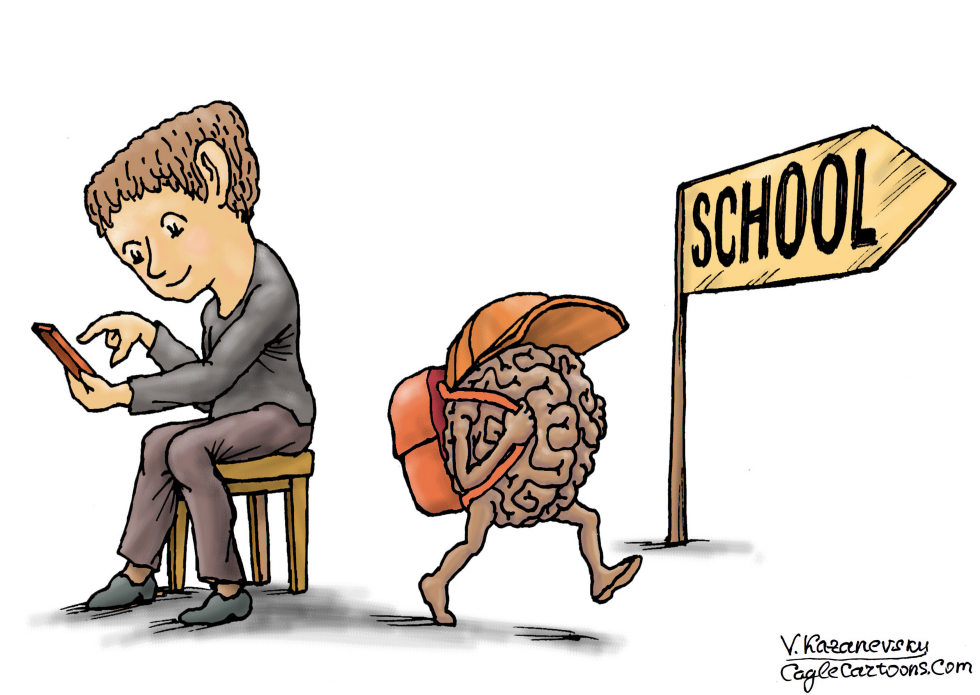
Schools continue to grapple with widespread smartphone use among students that diverts attention from classroom learning. The issue matters because constant device access fragments focus and reduces academic engagement at a critical developmental stage. The piece argues that the brain itself must literally head to school while the distracted student remains behind.
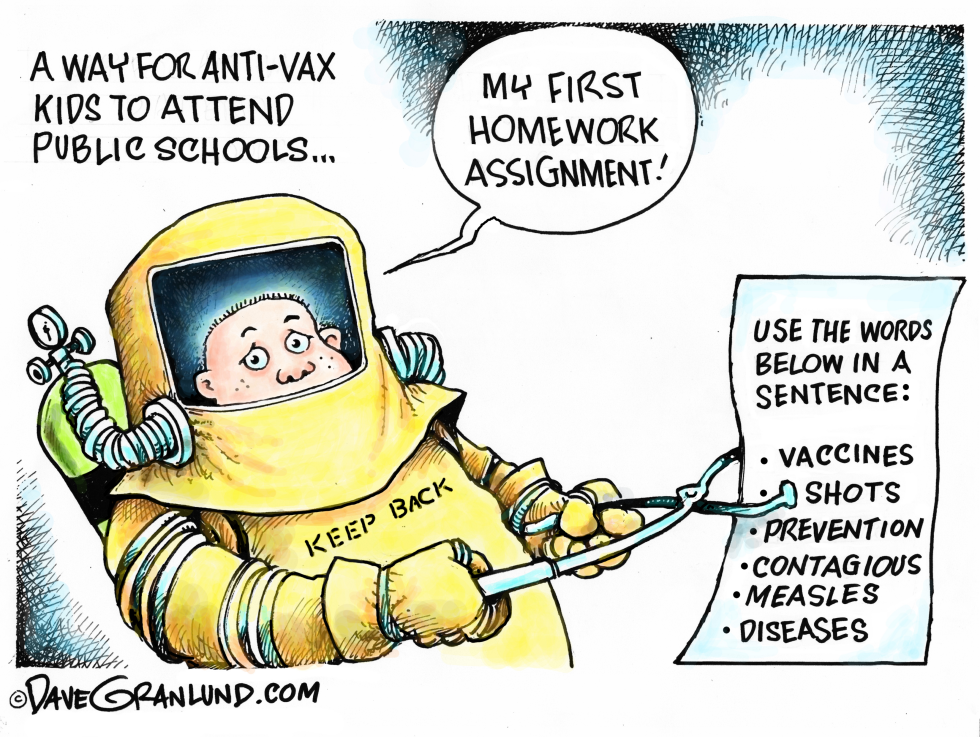
A child dressed in a full hazmat suit holds a homework sheet listing vaccine-related terms. The scene shows the suit labeled keep back and a speech bubble declaring the first assignment. Publication date of August 28 2026 places this amid ongoing debates over school entry rules and disease prevention. The image responds to concerns about measles spread when immunization rates drop. It illustrates how some families seek alternatives to standard requirements while maintaining classroom access. Broader context includes state laws on student vaccinations and recent case reports in multiple districts.
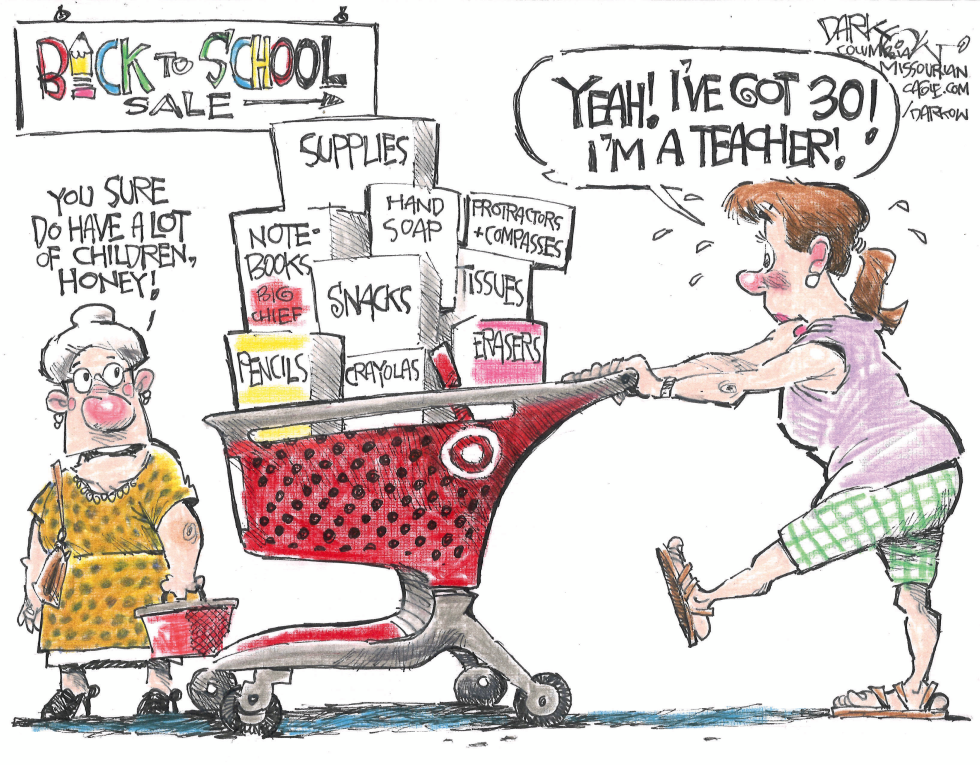
Teachers across the country routinely spend hundreds of dollars of their own money on basic classroom materials each year. With class sizes often reaching thirty students, educators must purchase notebooks, snacks, tissues, hand soap, and other essentials not covered by school budgets. The image captures this annual back-to-school reality as a teacher struggles with an overloaded shopping cart. The editorial position underscores how underfunded public schools force teachers to subsidize their own classrooms.
A Canadian classroom cartoon depicts a failing student celebrating a potential federal public service bonus. The piece critiques how government bureaucracy may reward poor performance through executive incentives rather than merit-based advancement.
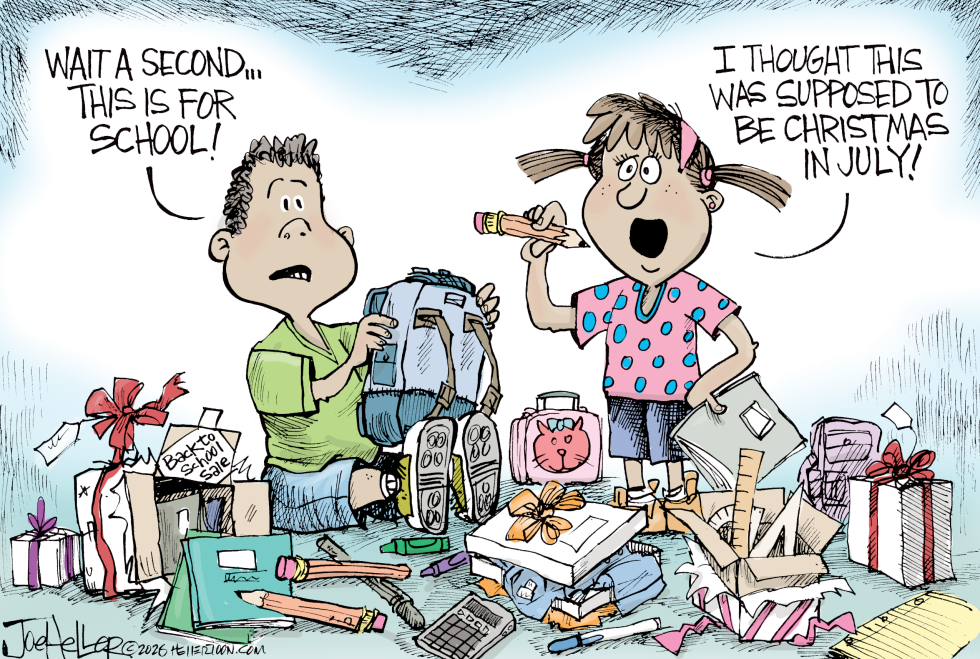
Retailers launched back-to-school promotions in late July, prompting families to stock up on supplies weeks ahead of the academic calendar. The timing overlaps with summer clearance events that mimic holiday marketing tactics. Parents and students face added pressure to buy early amid rising costs for essentials. The piece highlights how commercial calendars compress traditional shopping seasons and shift family routines.
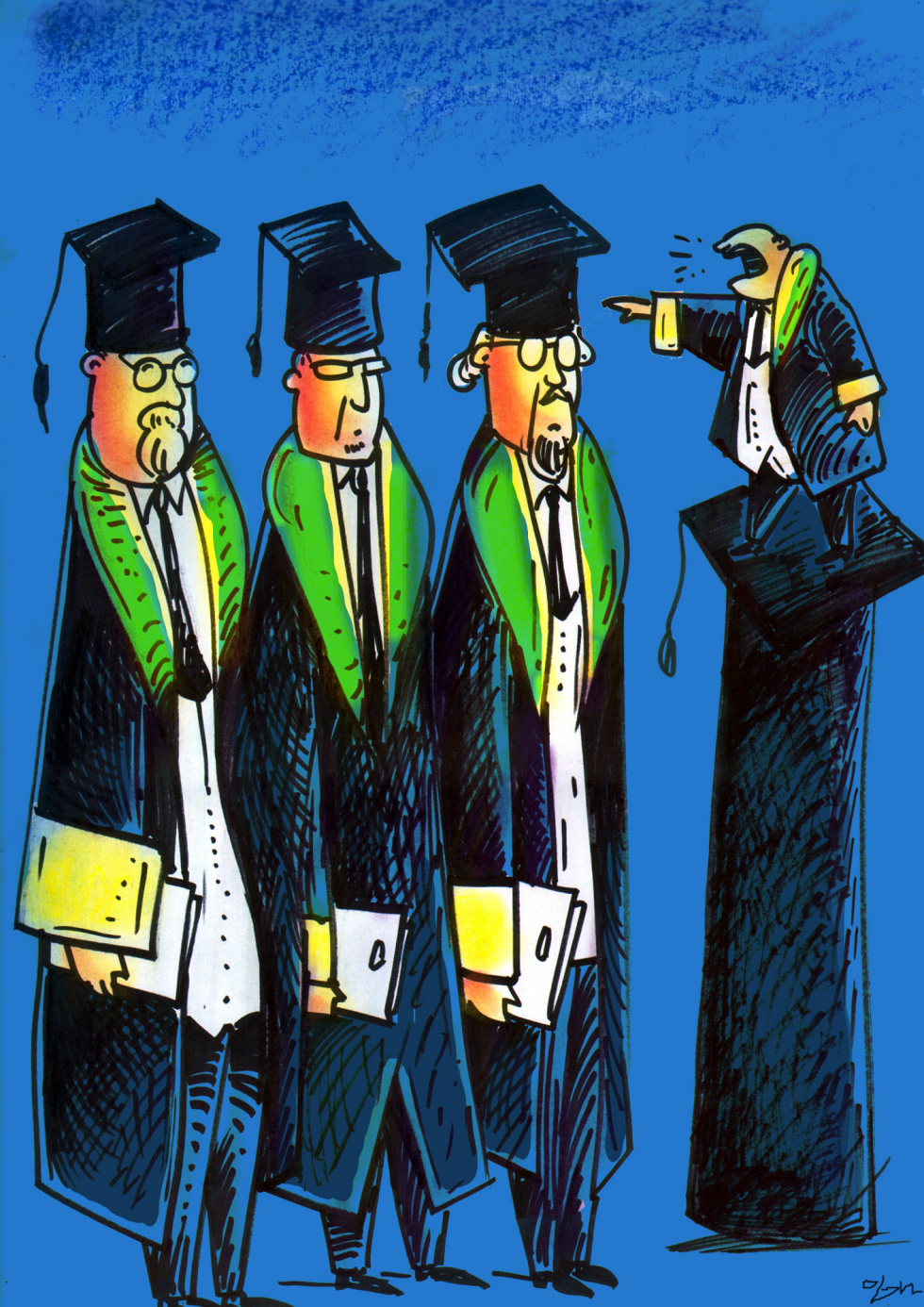
A university ceremony draws attention as an official delivers pointed remarks to administrators in academic attire. The exchange highlights ongoing tensions over leadership accountability and campus governance. The piece portrays the speaker as assertive in pressing the group on their responsibilities.
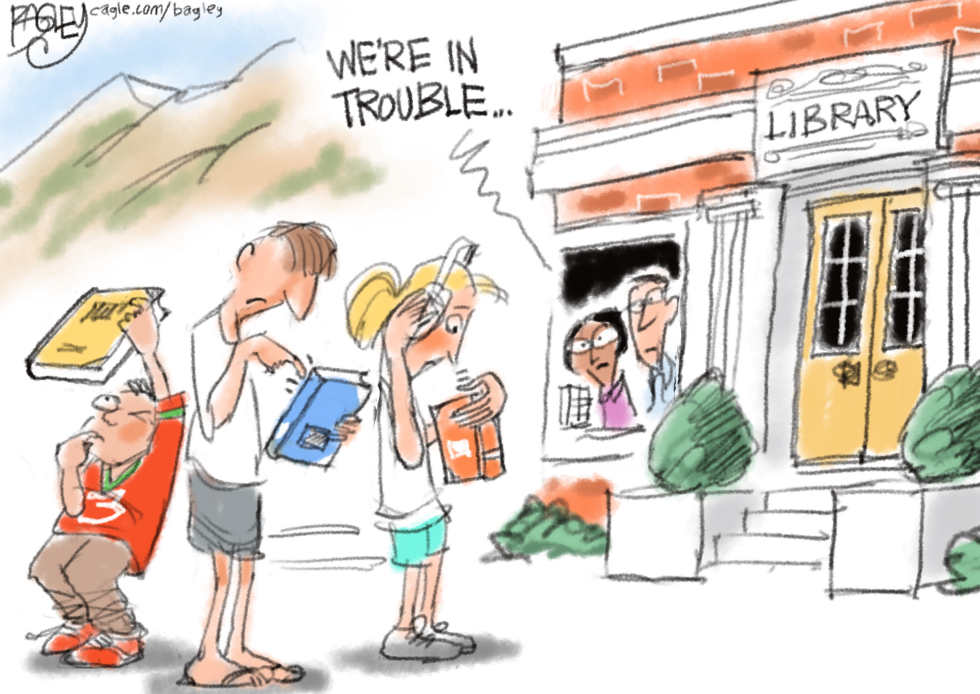
Young library visitors display visible distress while holding books outside a public library building. Staff members inside watch the scene with worried expressions. The piece highlights ongoing tensions around access to reading materials in community spaces.
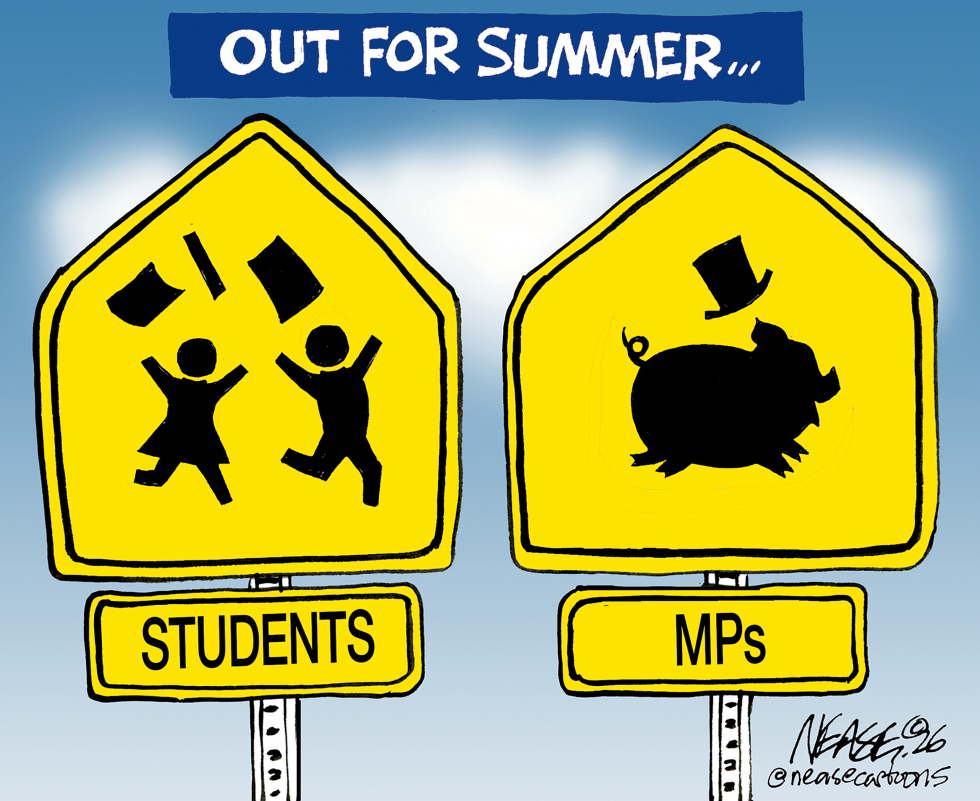
Two yellow diamond-shaped road signs appear against a blue sky. The left sign labeled STUDENTS shows two child silhouettes throwing papers into the air. The right sign labeled MPs displays a black pig silhouette with a top hat flying off. A blue banner above reads OUT FOR SUMMER.... The image is dated June 25 2026 and signed by artist Steve Nease.
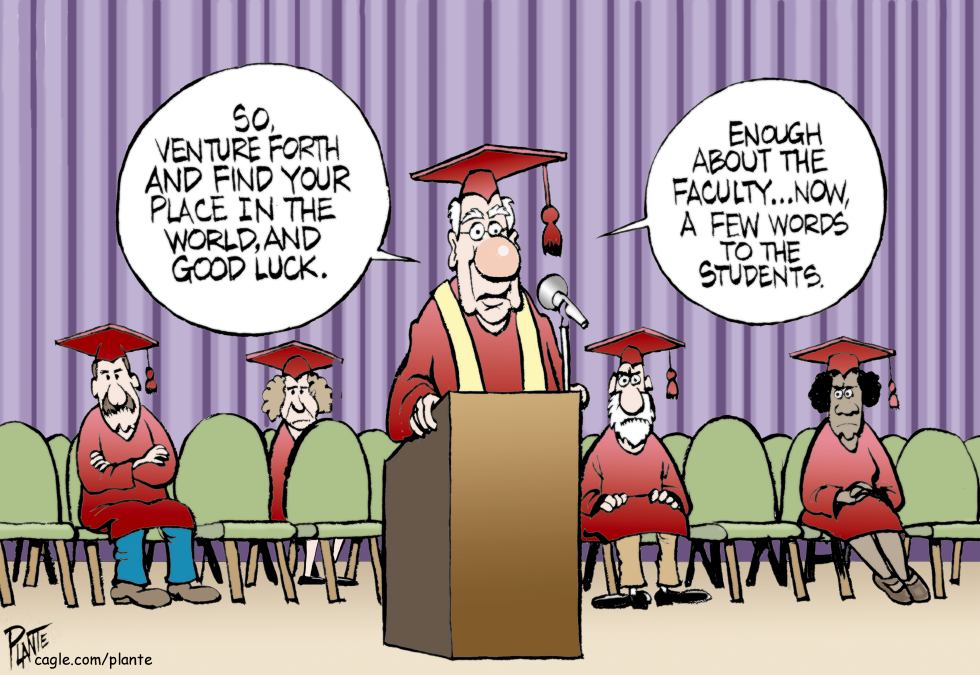
At a 2026 university commencement, the speaker at the podium tells seated faculty members in caps and gowns that discussion of their situation is over before turning to the graduates. The scene reflects ongoing budget pressures on colleges and universities after the pandemic, including professor layoffs and loss of tenure.
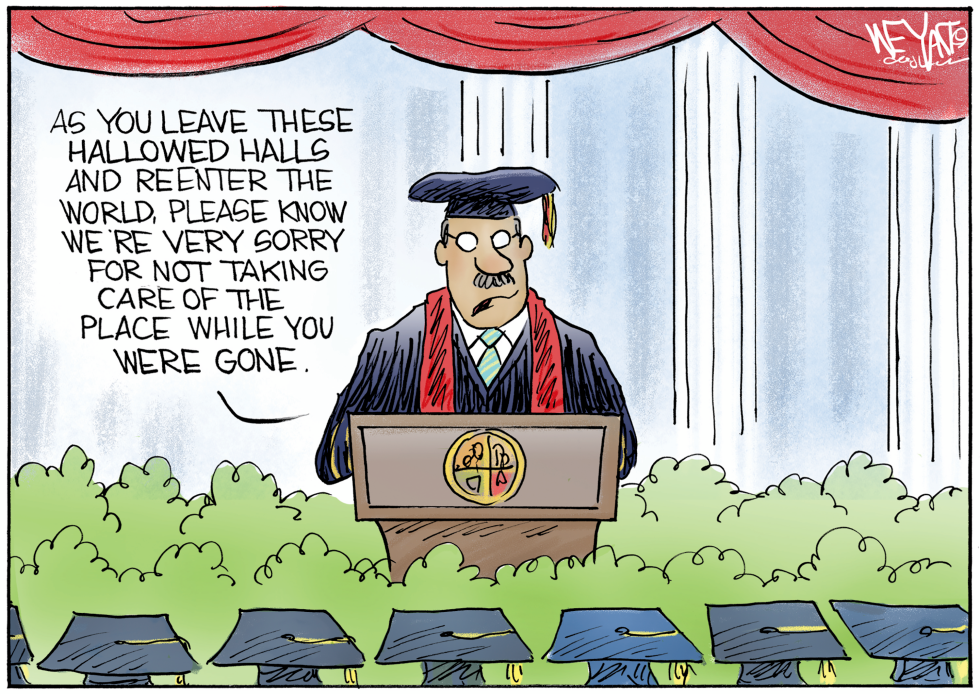
The image shows a graduation stage with red curtains and a speaker at the podium delivering an apology text to graduates whose caps are seen in the front rows. The scene includes a university seal on the podium and a signature in the upper right.
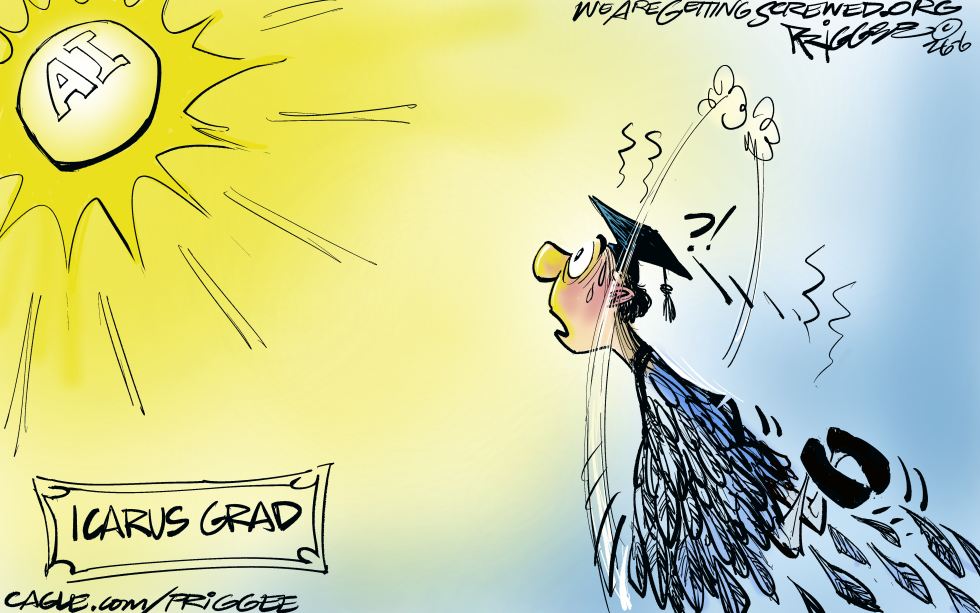
The cartoon depicts a recent college graduate wearing a mortarboard and feathered wings modeled on the Icarus myth. The graduate falls after flying too close to a bright sun labeled AI. Dollar signs and question marks trail behind while the figure looks upward in distress. The image responds to ongoing concerns in 2026 about artificial intelligence displacing entry-level positions traditionally filled by new graduates.