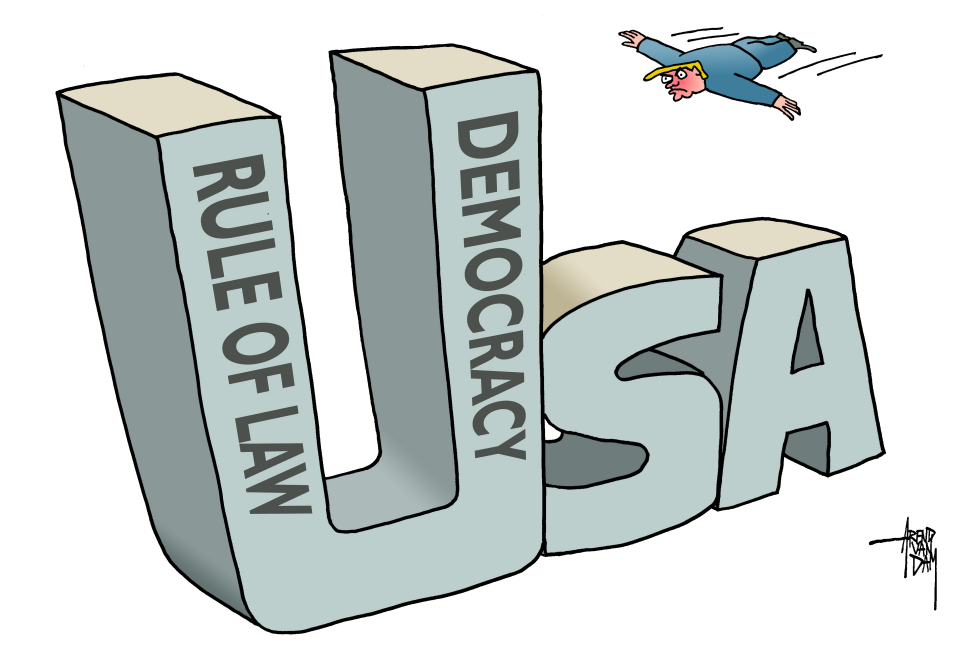
On September 11, 2026, political commentary focused on former President Donald Trump's ongoing conflicts with legal and democratic norms. The cartoon illustrates his ejection from structures labeled rule of law and democracy. This reflects broader concerns over accountability for high office holders. The piece argues that U.S. institutions remain capable of expelling those who undermine core principles.
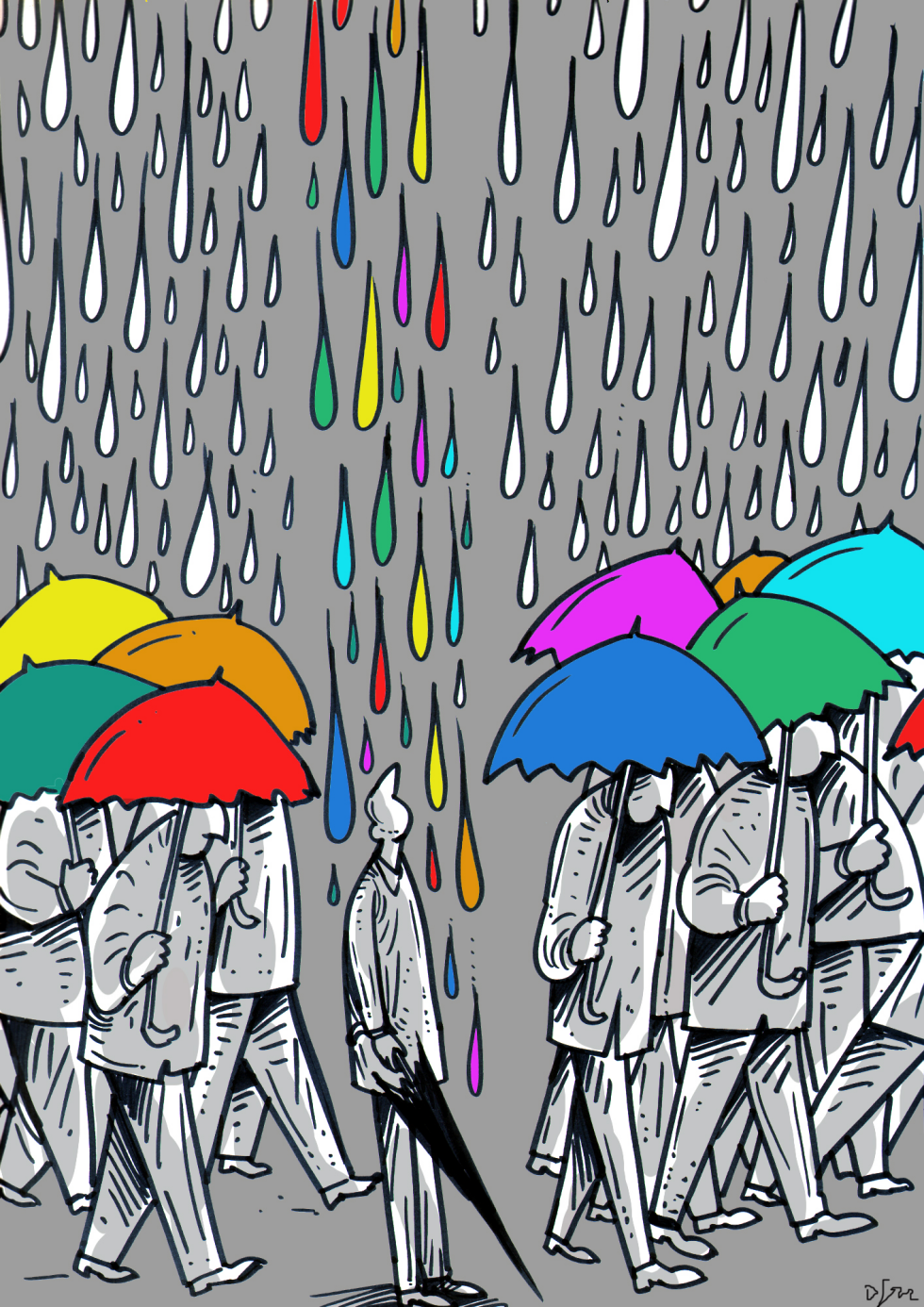
Society often pressures people to conform to norms around them. Maintaining personal identity remains important in such environments. The piece advocates for embracing one's distinct qualities.
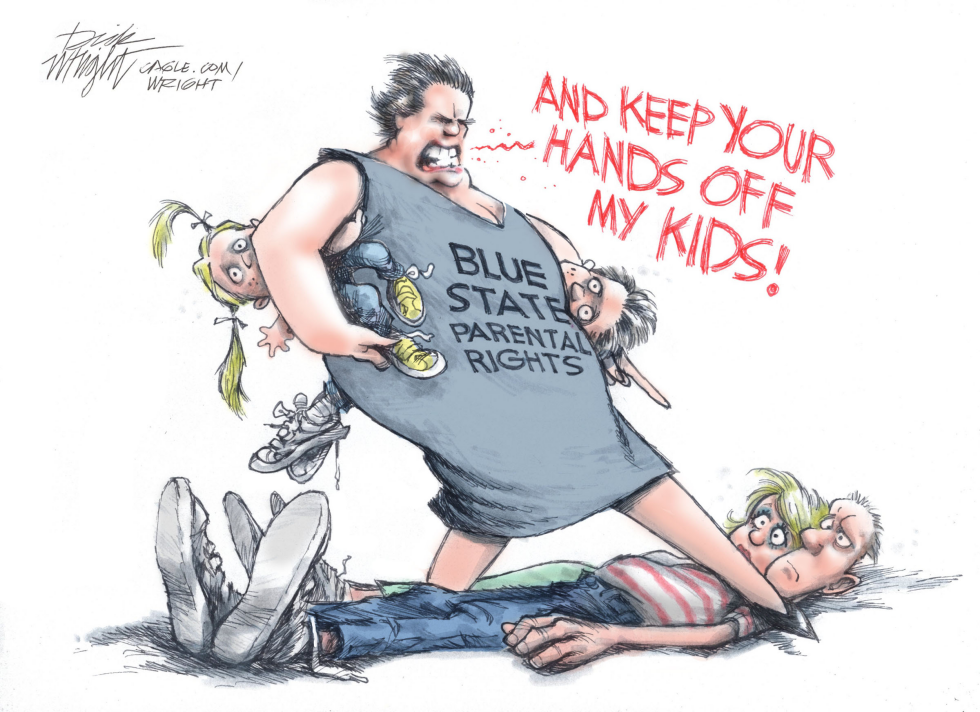
Blue state governments have expanded authority over child welfare and education decisions in recent years, often overriding parental objections on issues like curriculum and medical choices. This has sparked lawsuits and protests from families arguing loss of rights. The cartoon portrays these policies as aggressive state takeover rather than protection, criticizing the shift of power from parents to officials.
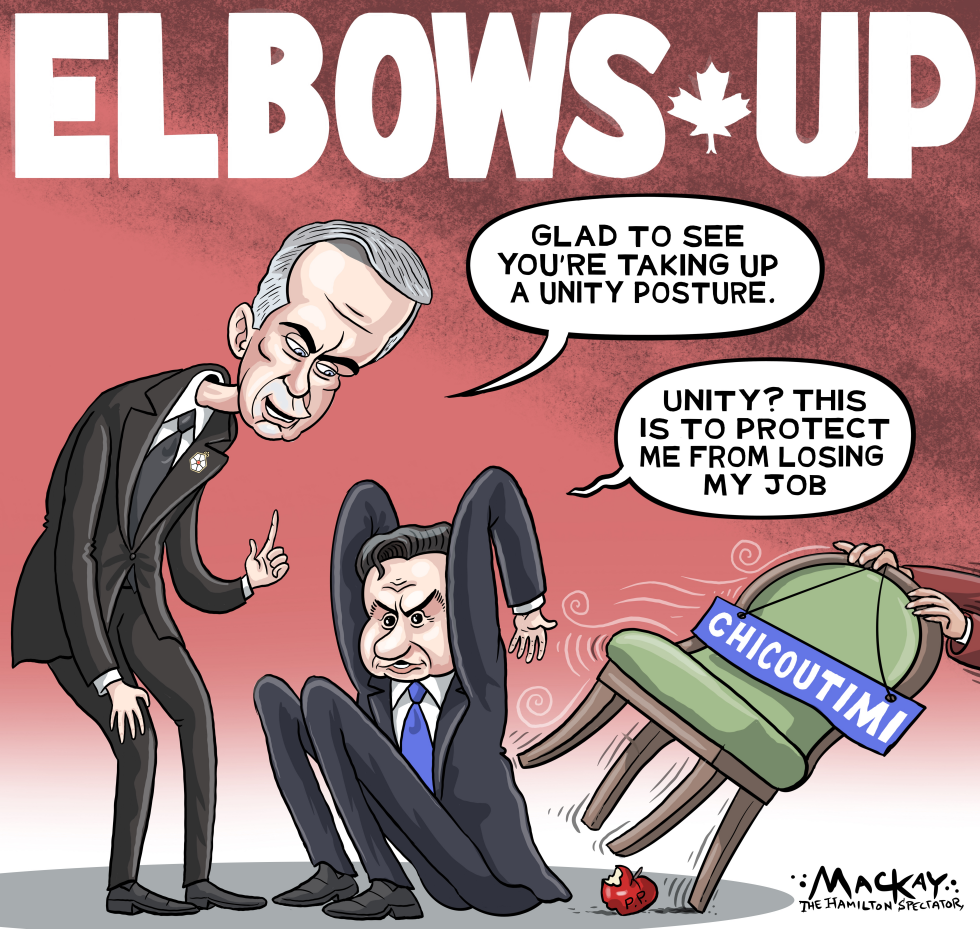
Pierre Poilievre assumes an elbows-up defensive posture in response to mounting leadership questions within the Conservative Party. The visual ties the hockey-derived stance to efforts to retain his position as party leader ahead of future electoral tests. The piece portrays the move as self-preservation rather than genuine unity.
Utah officials directed $60,000 toward measures keeping certain books from children. Firearms remain readily available in the state. The decision highlights priorities in public safety and education policy. The piece criticizes the allocation as misplaced emphasis on censorship instead of addressing gun risks.
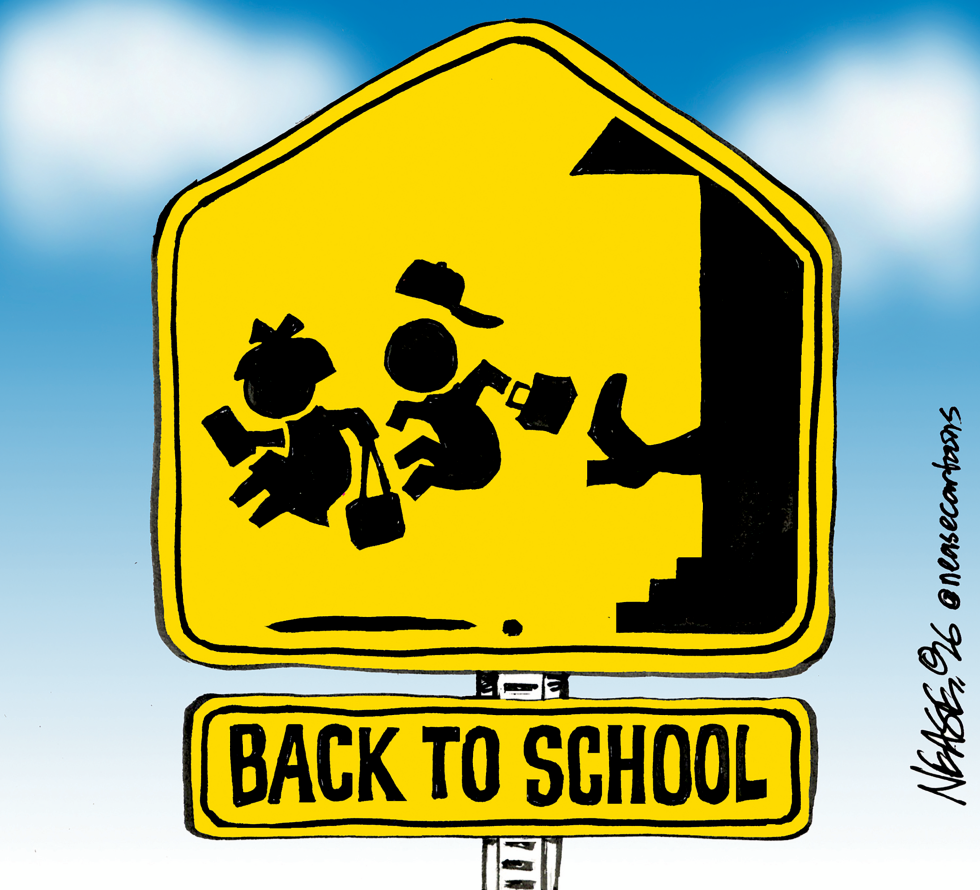
Schools across the country prepare for the fall semester amid ongoing debates over student safety and resource allocation. The modified crossing sign serves as a visual reminder of hazards that accompany the annual back-to-school period. The piece argues that standard precautions remain insufficient without stronger policy support for protection measures.
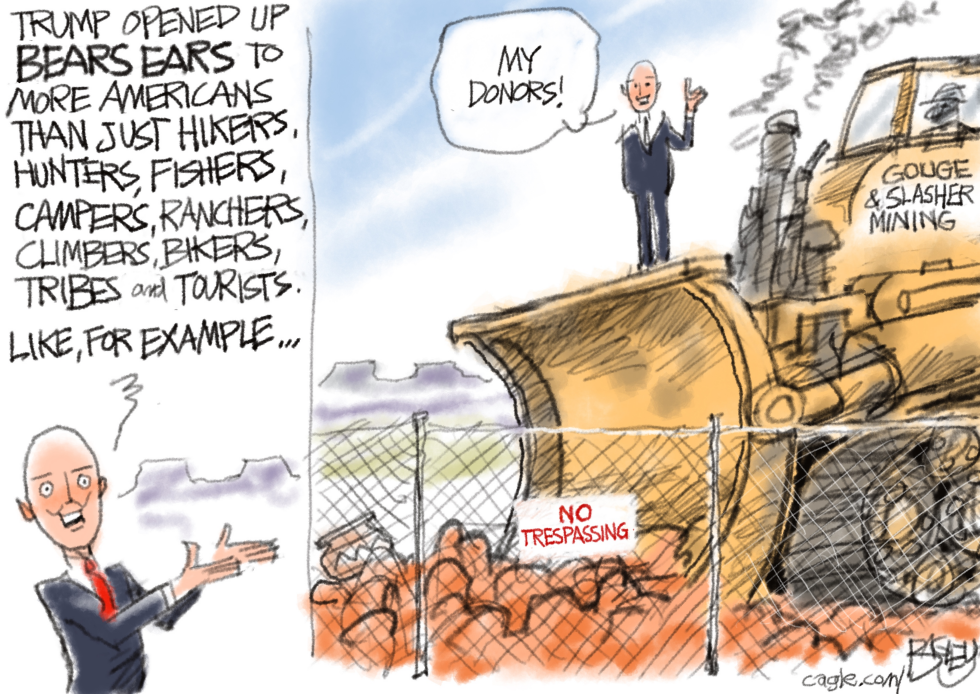
President Trump opened Bears Ears National Monument to expanded mining operations, citing broader public access. The move benefits mining companies and political donors while limiting protections for hikers, tribes and recreational users. The cartoon criticizes the decision as donor-driven favoritism over conservation.
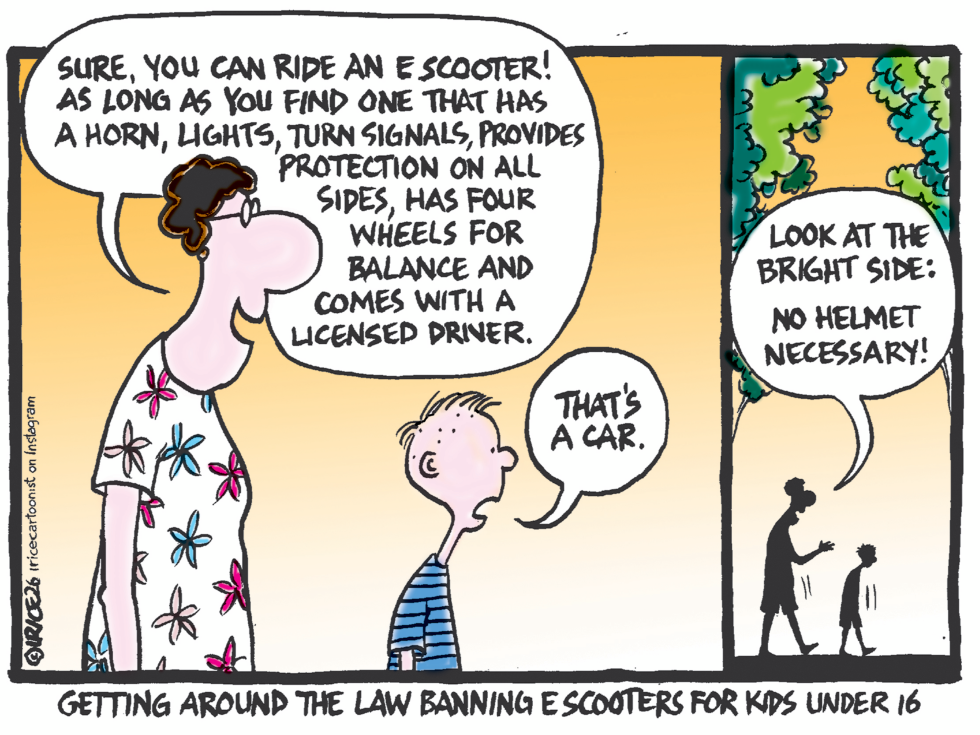
A new law bans e-scooters for children under 16. Parents seek workarounds by reclassifying other vehicles. The cartoon highlights how the rules allow a standard car to qualify while removing helmet requirements.
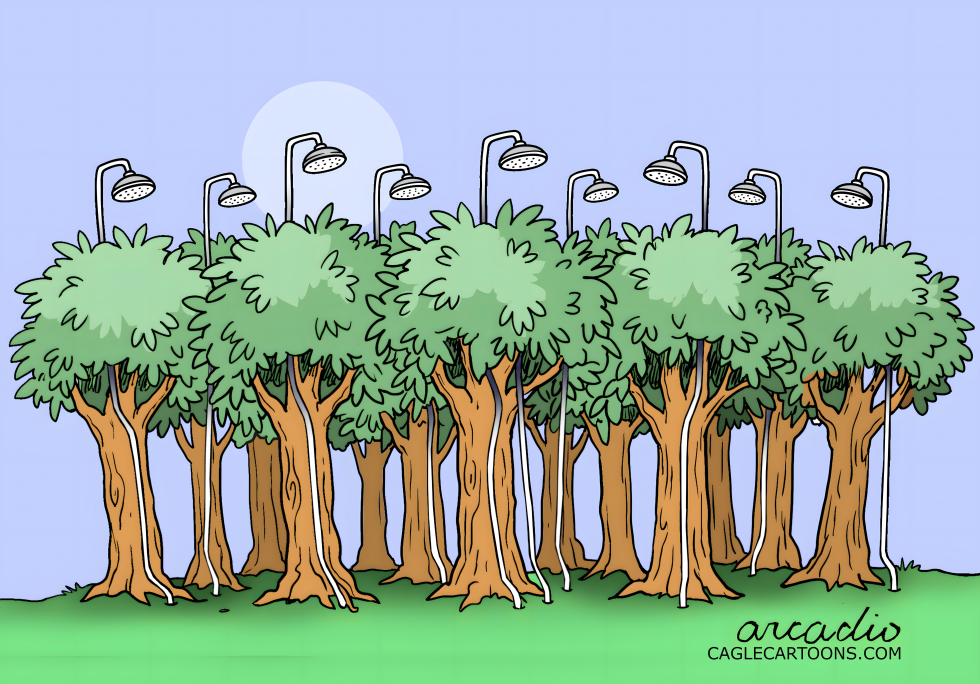
Forests in dry regions face heightened wildfire risks due to prolonged drought and climate patterns. Officials and environmental groups explore supplemental watering techniques to maintain tree moisture and reduce ignition potential. The approach matters because uncontrolled fires destroy habitats, release carbon, and threaten communities. The piece supports proactive hydration strategies as a practical step in broader fire prevention efforts.
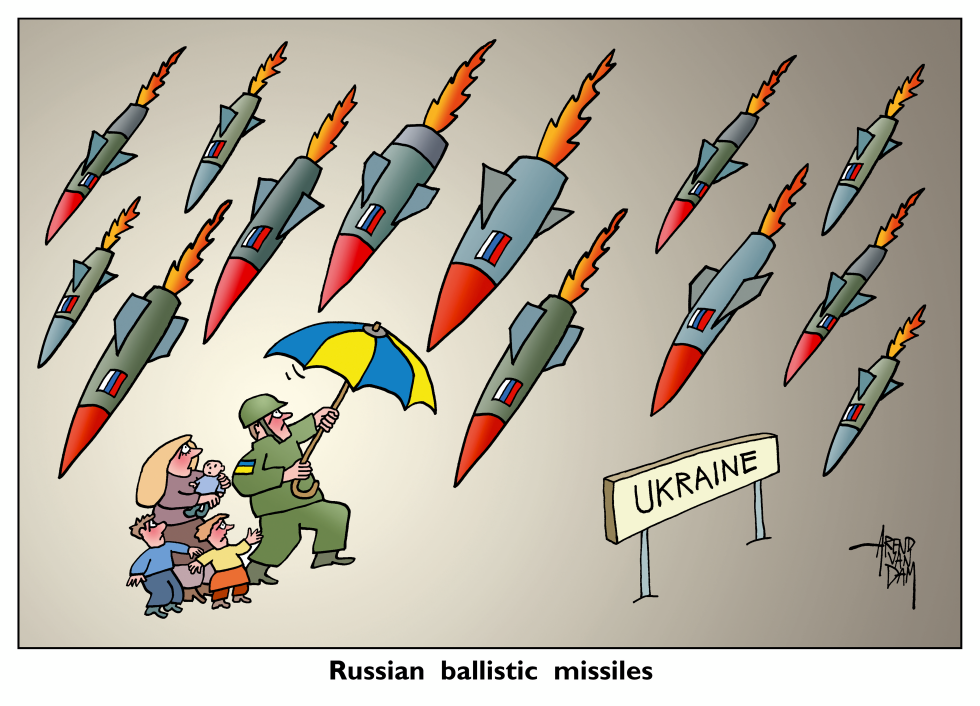
Russian ballistic missile strikes continue to target Ukrainian territory amid the prolonged conflict. A Ukrainian soldier stands at the forefront shielding a family of civilians from the barrage. The attacks underscore the persistent threat to noncombatants and infrastructure. The image frames the soldier's action as a direct barrier between the incoming weapons and those under protection. It emphasizes the role of Ukrainian forces in sustaining civilian safety during sustained aerial assaults.
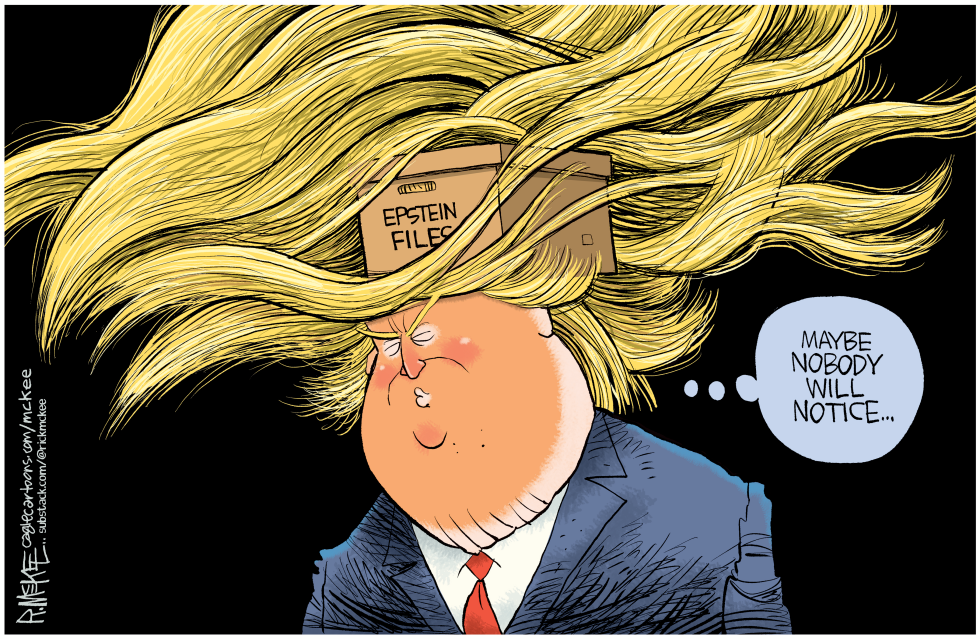
Donald Trump faces renewed public attention over the release of Epstein files detailing past connections. The documents have drawn fresh examination from investigators and media outlets. The editorial takes the position that attempts to downplay or obscure the material only intensify questions about accountability.
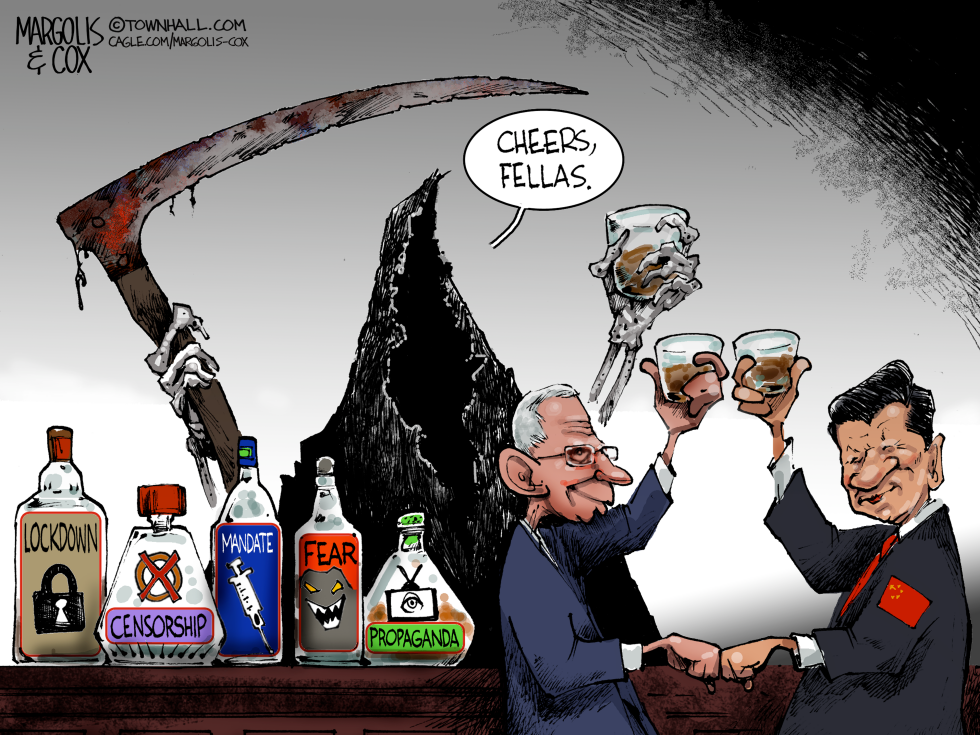
On August 6, 2026, the cartoon responds to lingering debates over COVID-19 policies by depicting former NIAID director Anthony Fauci and Chinese leader Xi Jinping toasting with the Grim Reaper. The image frames pandemic tools as shared instruments of control. The editorial position criticizes both figures for embracing fear-driven measures and information suppression.
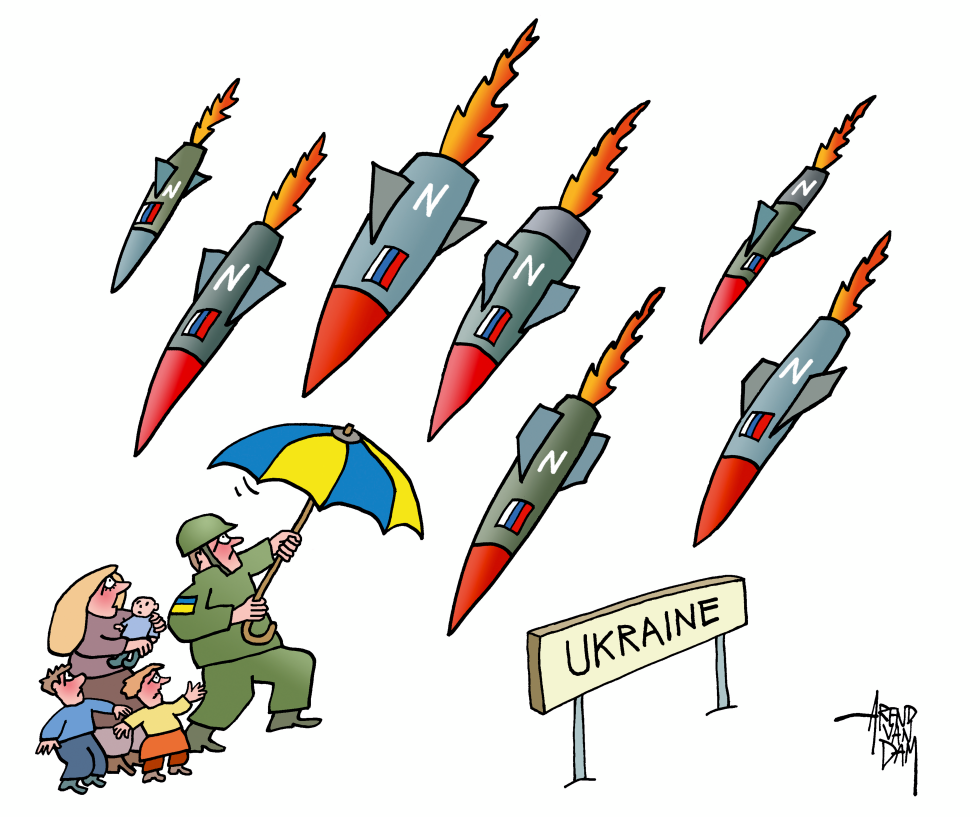
Russia has escalated its campaign against Ukraine with ballistic missiles carrying nuclear markings. The strikes heighten risks to civilian populations already under sustained attack. The editorial argues that such threats underscore the need for stronger defensive measures and international resolve to deter further escalation in the protracted conflict.
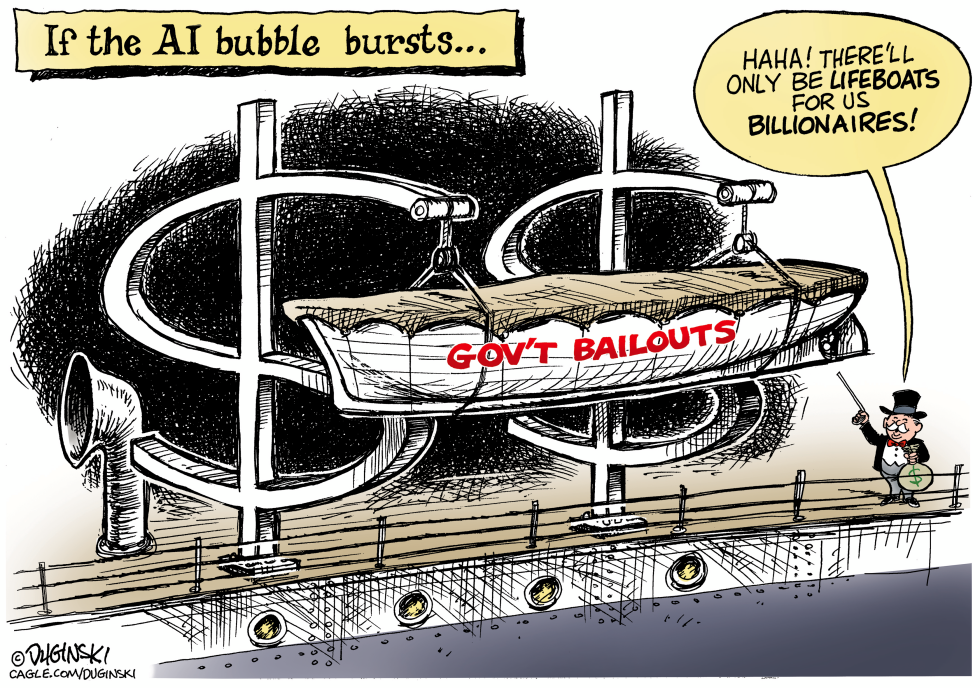
Speculation grows over potential government intervention if the artificial intelligence sector experiences a sharp downturn. Industry leaders and investors face questions about whether public funds would support failing companies. The editorial argues that any such support would primarily protect billionaires rather than address wider economic fallout from overvalued tech assets.
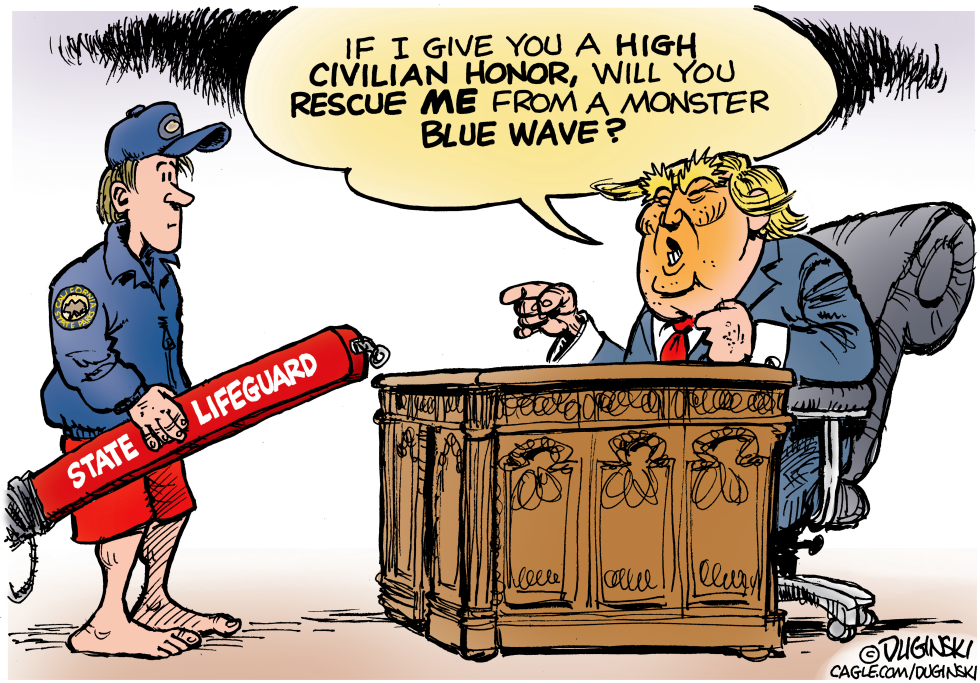
Donald Trump appealed to a California state lifeguard for rescue from an anticipated Democratic electoral surge, offering a high civilian honor in return. The request highlights concerns over midterm or future election outcomes. The piece portrays the overture as a desperate bid for political survival.