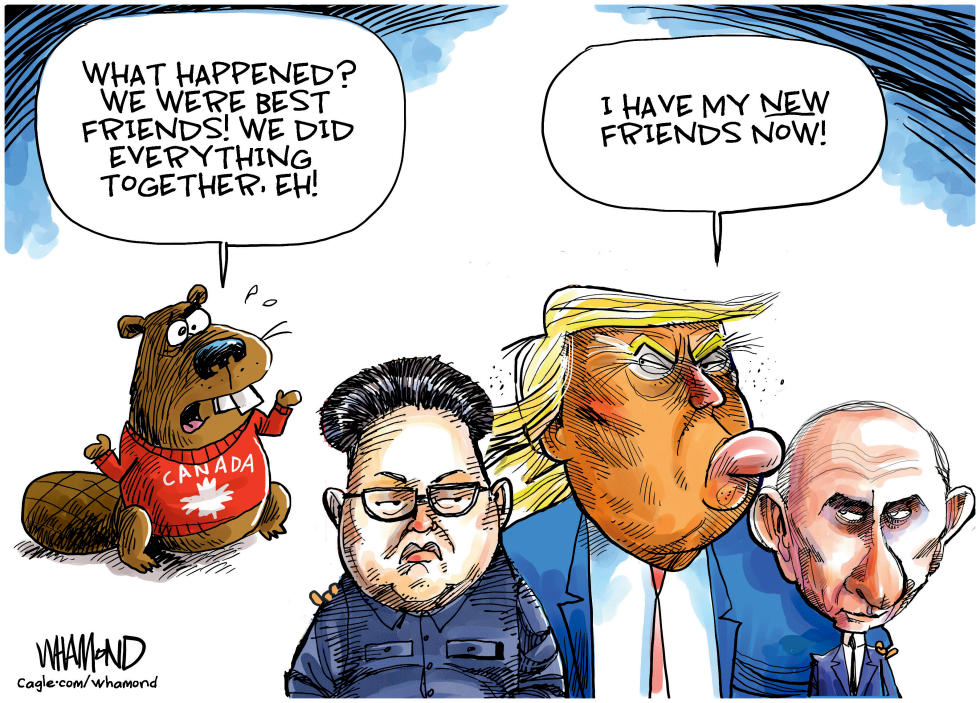
President Trump has redirected diplomatic priorities toward closer ties with Russian President Vladimir Putin and North Korean leader Kim Jong Un. Traditional partners such as Canada now face reduced engagement. The move reflects a broader realignment in U.S. foreign policy that favors authoritarian counterparts over longstanding democratic allies. Observers note the shift carries risks for trade, security cooperation, and international norms. The editorial position criticizes the pivot as shortsighted and damaging to established relationships.
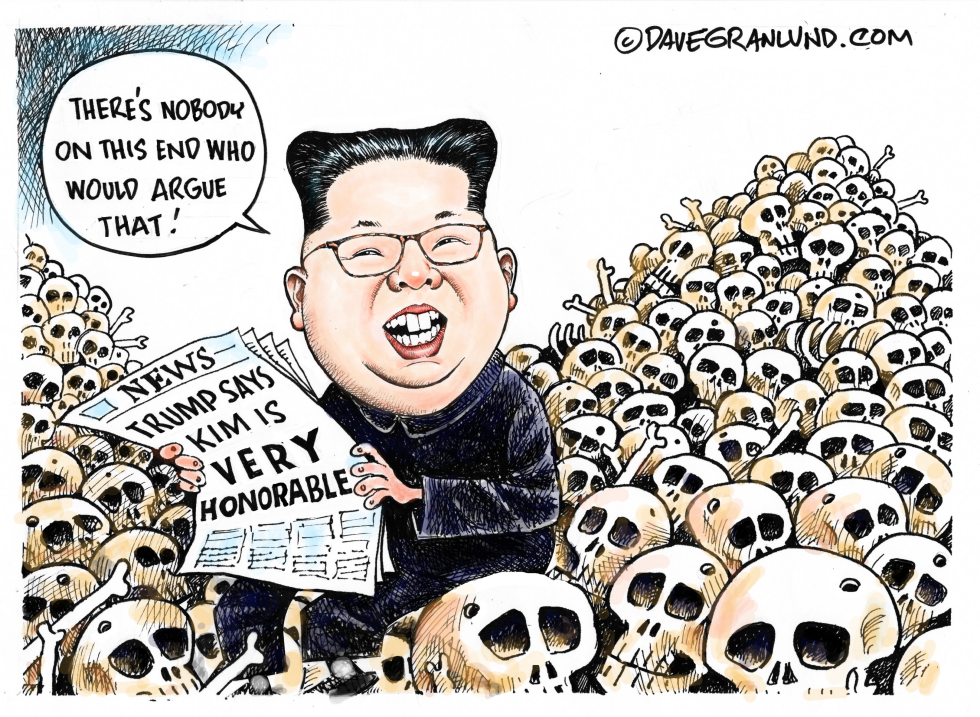
Donald Trump publicly described North Korean leader Kim Jong-un as very honorable. The remark revives questions about U.S. engagement with a regime long accused of severe human rights abuses and internal purges. Critics argue such language undercuts pressure on Pyongyang and signals weakness to allies. Supporters see it as pragmatic diplomacy aimed at reducing nuclear risks. The statement fits a pattern of personal assessments of foreign leaders that have drawn both support and condemnation depending on the political side. The editorial position holds that the praise ignores the human cost inside North Korea and weakens the moral standing of U.S. foreign policy.
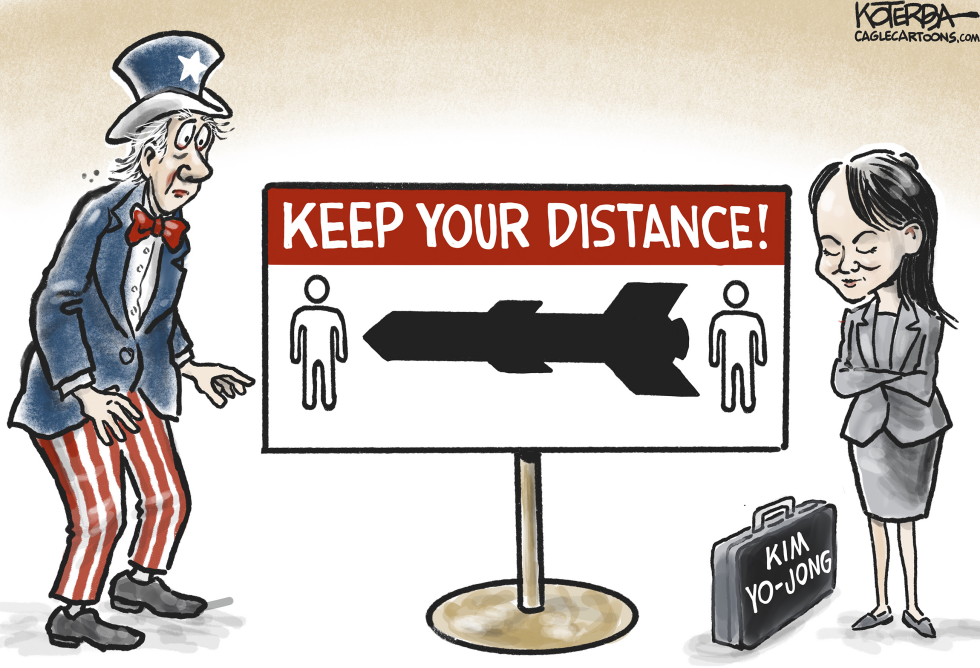
The cartoon shows Uncle Sam confronting a large sign reading KEEP YOUR DISTANCE that features a missile between two stick figures. Kim Yo-Jong stands to the right with a labeled briefcase. The March 2021 image captures North Korea's early message to the new Biden administration amid ongoing missile concerns and diplomatic distance.
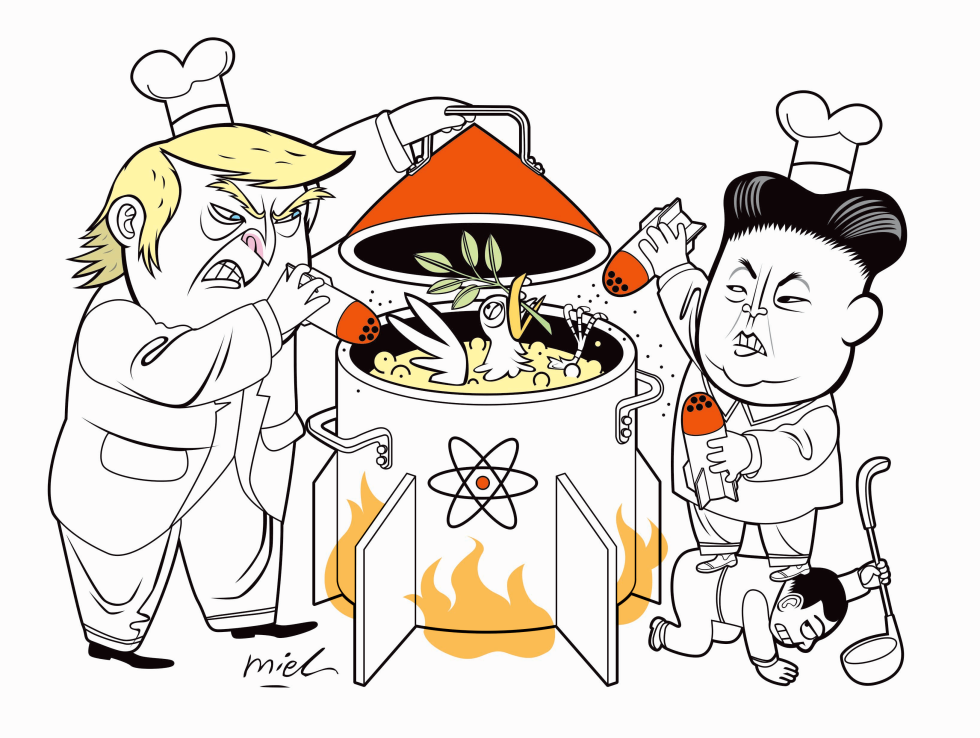
President Donald Trump and North Korean leader Kim Jong Un appear in chef attire beside a large pot bearing an atom symbol and flames. They add bomb-shaped objects while a dove and rabbit sit inside the vessel. A smaller figure lies beneath Kim's feet. The scene coincides with preparations for their June 2018 summit focused on denuclearization.