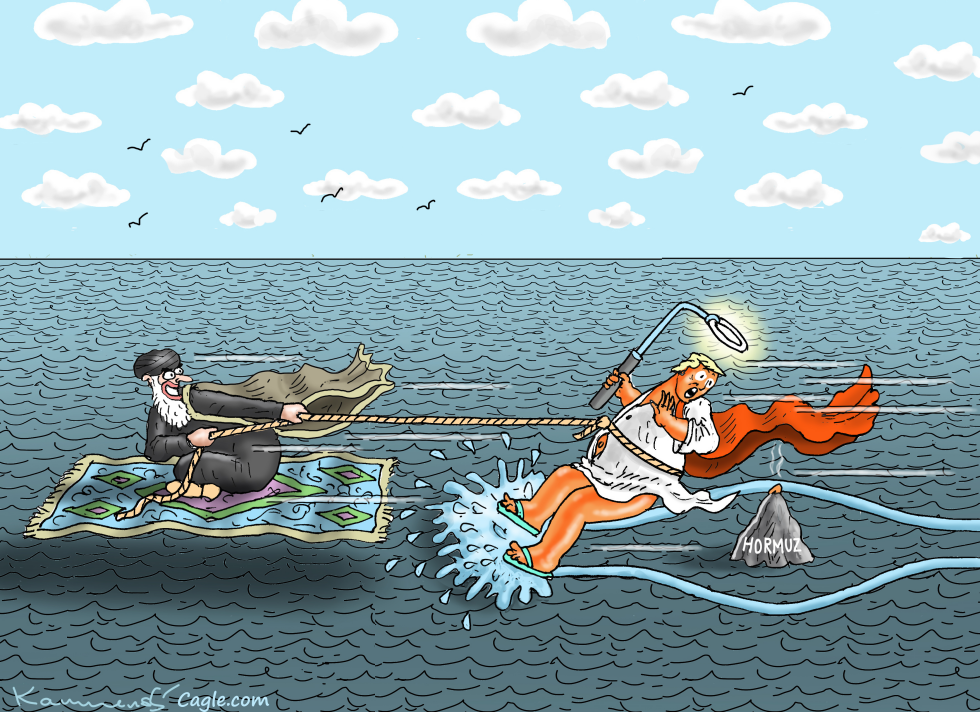
Tensions in the Strait of Hormuz have escalated with threats to shipping lanes critical for global oil supplies. Israeli and U.S. leaders face mounting losses from disruptions. The cartoon argues that involvement risks dragging both into deeper conflict without clear gains.
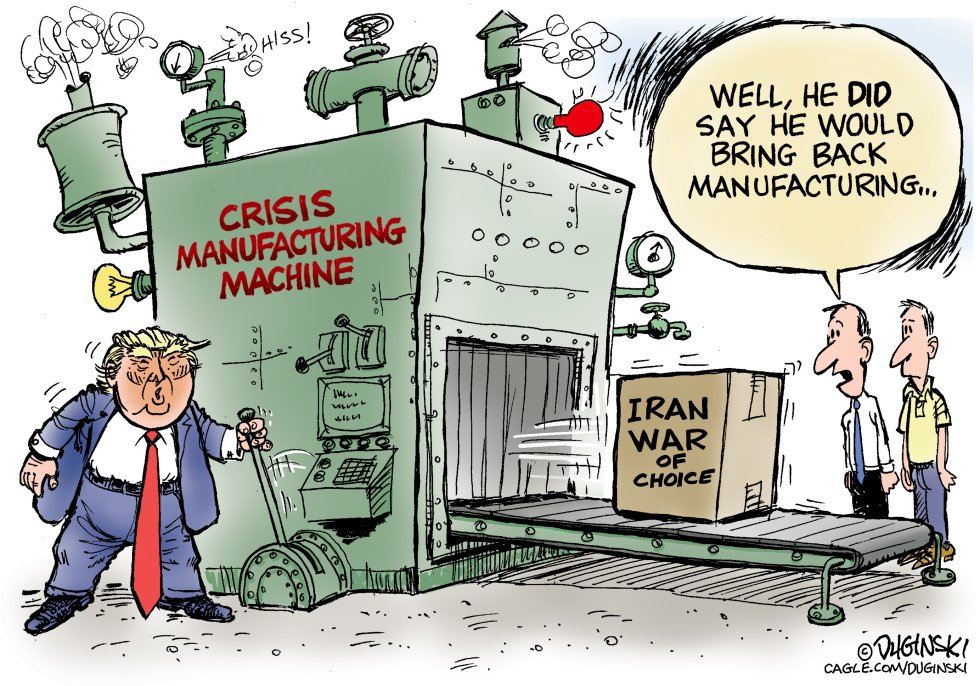
Donald Trump, holding the presidency in 2026, faces renewed scrutiny over foreign policy toward Iran. Recent statements revive campaign pledges to restore domestic manufacturing while tensions with Tehran escalate. The administration\\\'s approach draws criticism for prioritizing confrontation over diplomacy. Observers note the pattern of generating external crises rather than economic gains at home. The cartoon argues that Trump\\\'s actions fulfill a literal version of his manufacturing rhetoric by producing conflict instead of jobs.
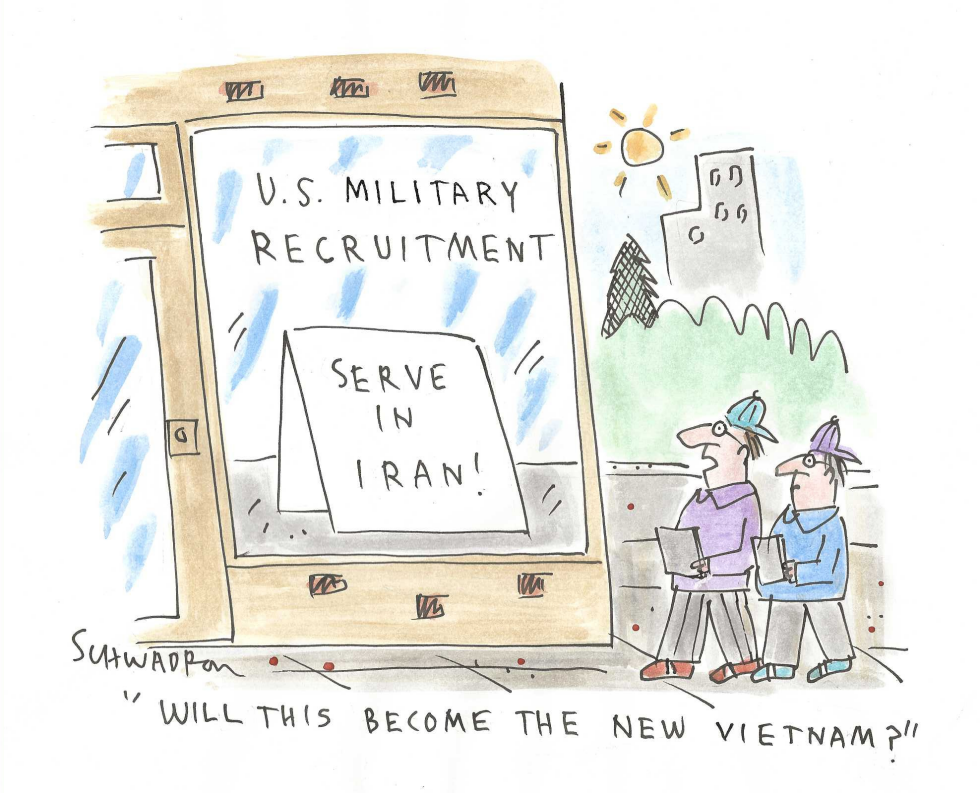
U.S. military recruitment efforts have begun highlighting opportunities to serve in Iran, prompting public questions about potential escalation. The move comes amid ongoing regional tensions and draws direct comparisons to the Vietnam War era. Observers worry the campaign signals a shift toward deeper U.S. military commitments overseas. The editorial takes the position that such recruitment tactics risk repeating past mistakes by underestimating public resistance to prolonged conflicts.
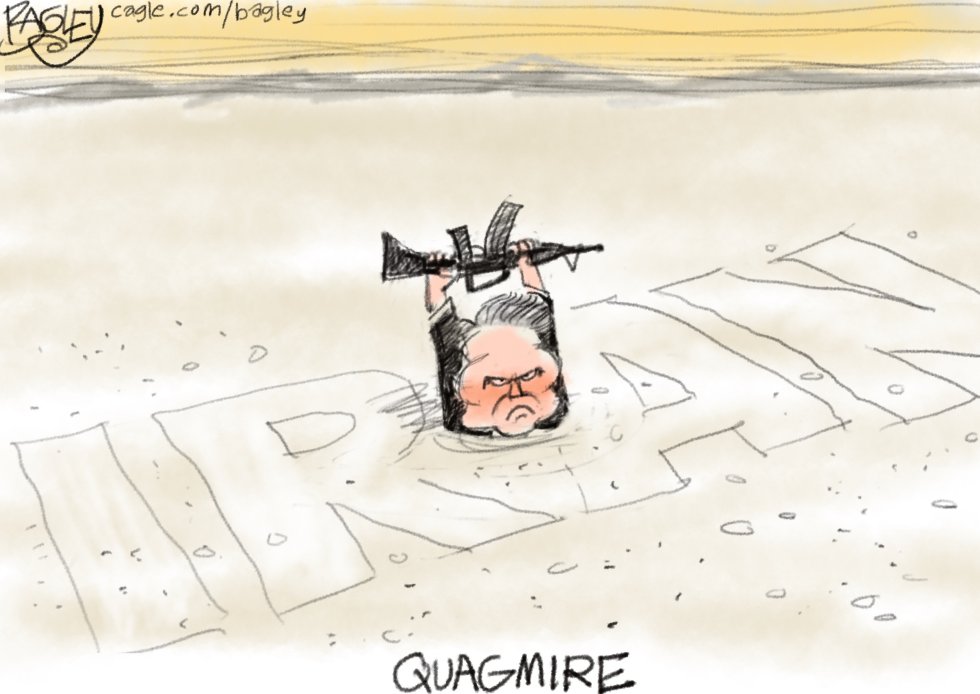
Donald Trump faces mounting difficulties tied to military engagements as of late July 2026. The situation underscores risks of prolonged involvement abroad. The piece portrays these events as a self-inflicted trap that threatens broader stability.
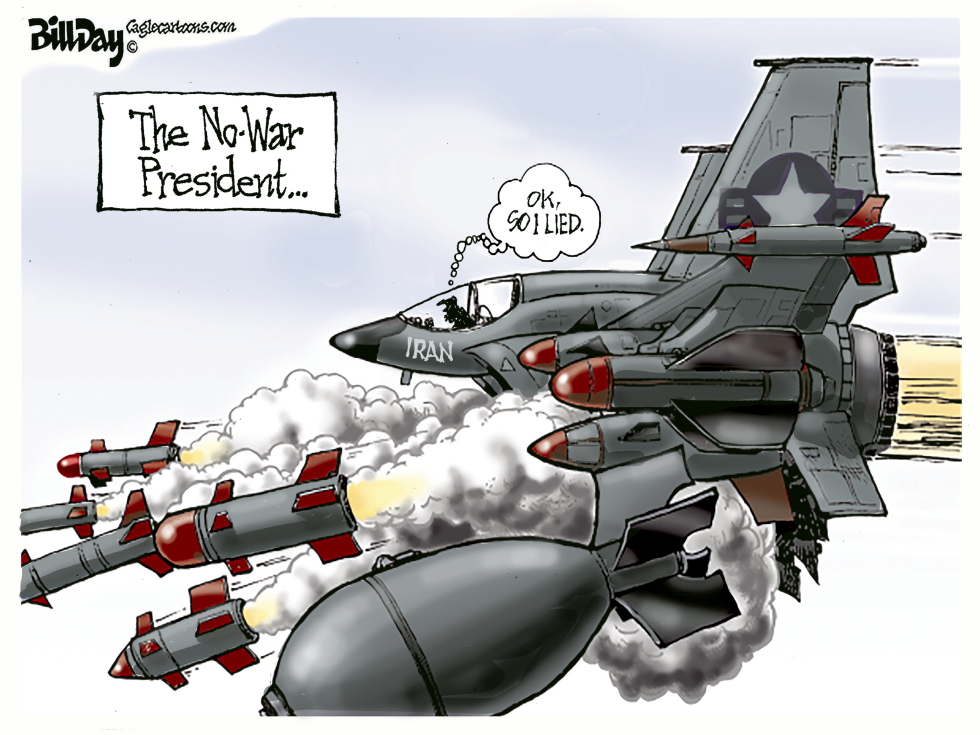
A political cartoon published July 21, 2026, depicts a fighter jet marked Iran launching a barrage of missiles while a speech bubble from the cockpit reads OK, SO I LIED. A sign overhead labels the scene The No-War President. The image responds to recent reports of U.S. military action against Iran that contradict earlier campaign assurances against new conflicts.
The image presents Lindsey Graham in an obituary format dated 2026. It lists his birth and death years alongside a quote labeling him a consistent supporter of military engagements. The composition places the figure on the right with text blocks on the left. Publication occurred on July 12 2026. The visual focuses on his senate role and foreign policy positions active in prior years.
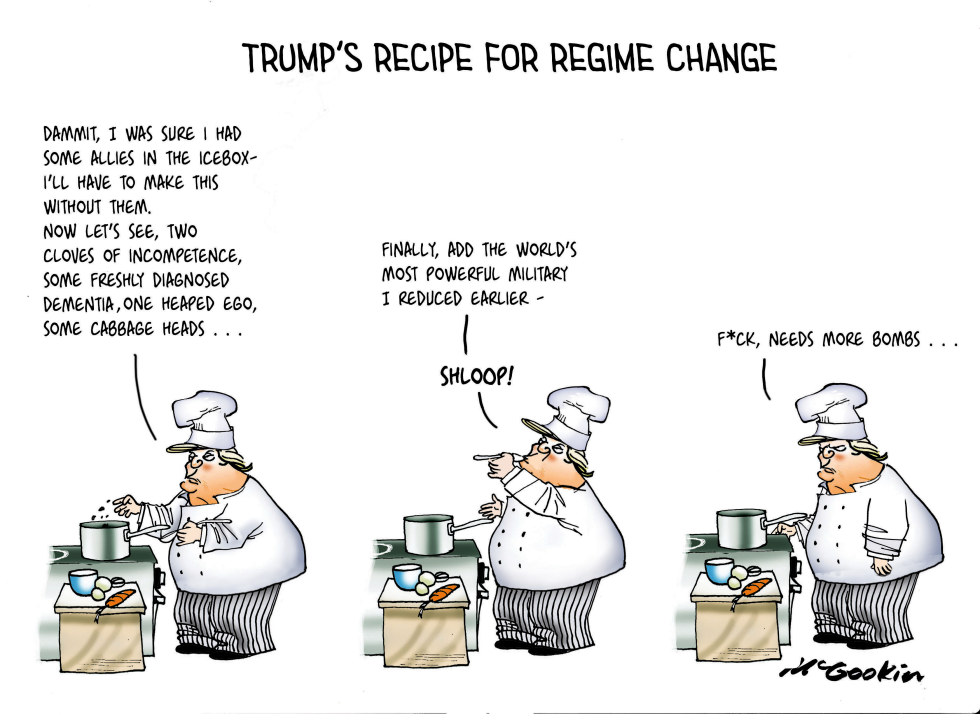
The image shows Donald Trump depicted as a chef preparing a dish labeled regime change. Three panels illustrate adding ingredients like incompetence and dementia then reducing military power before demanding more bombs. The work responds to ongoing tensions involving Iran and regional conflicts as of March 2026.
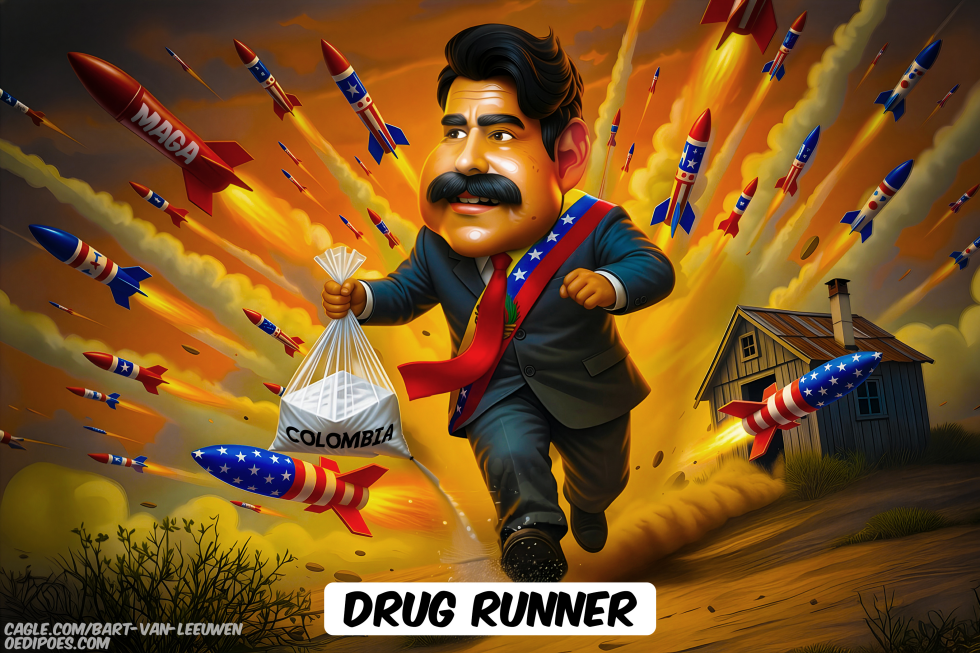
Bart van Leeuwen's cartoon shows a mustachioed man in a suit with a Venezuelan-colored sash sprinting across a dusty landscape. He grips a white bag labeled Colombia, spilling white powder, as missiles decorated with stars, stripes, and MAGA text streak through an orange sky. A small house patterned like the American flag gets hit by a rocket in the background. The bold text Drug Runner labels the scene. This image ties into tags like Nicolás Maduro, Venezuela, tensions, drug runner, regime change, military force, and Caribbean, offering a sharp visual jab at international politics with explosive humor.
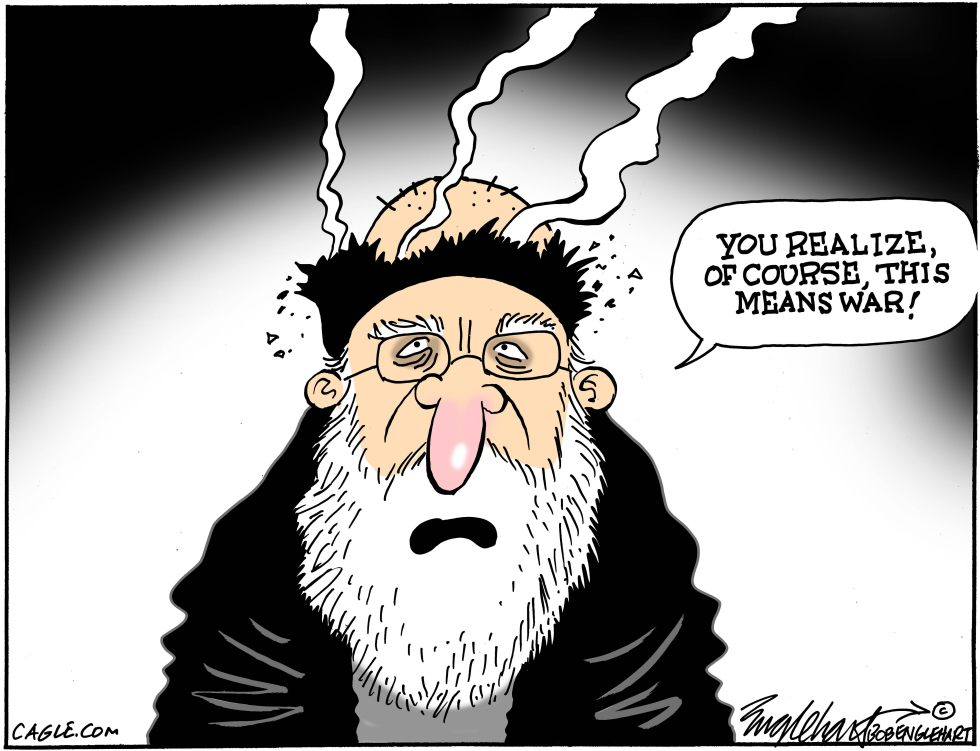
The cartoon depicts Iran's Supreme Leader Ayatollah Ali Khamenei with a smoking head, wide-eyed and open-mouthed, reacting to an off-panel event. A speech bubble has him saying, 'YOU REALIZE, OF COURSE, THIS MEANS WAR!' The June 22, 2025, image responds to reported US strikes on Iranian nuclear facilities ordered by President Trump. It highlights the immediate Iranian leadership reaction and potential for broader conflict involving Israel and regional powers. The visual emphasizes the gravity of military escalation in the Middle East.
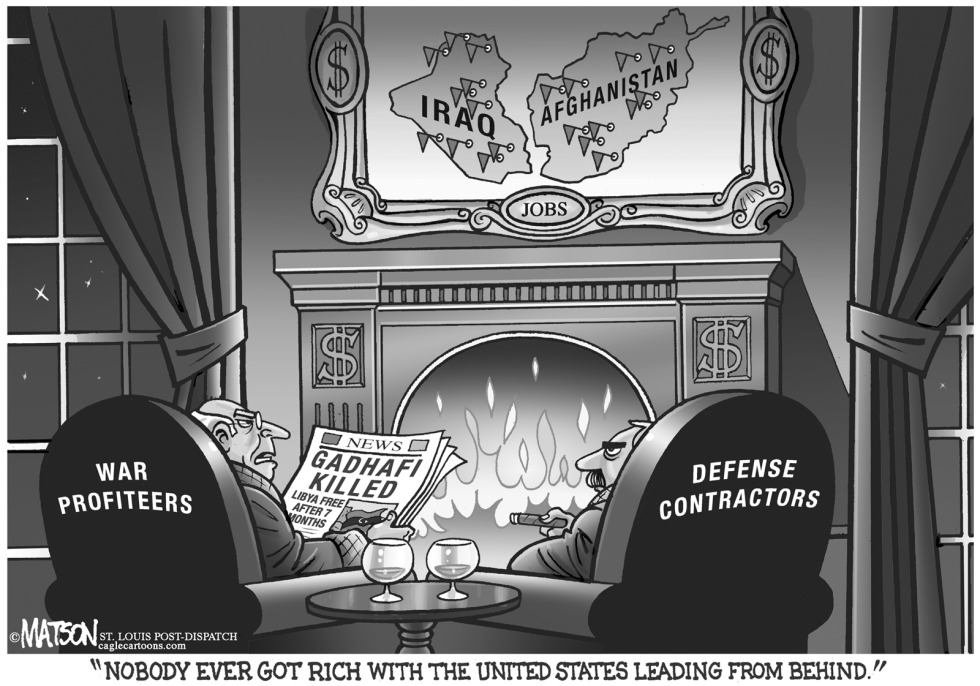
Gaddafi was killed and Libya declared free in October 2011 after seven months of NATO intervention. Defense contractors expressed disappointment that the U.S. approach produced no major reconstruction contracts comparable to those in Iraq and Afghanistan. The cartoon criticizes the limited financial opportunities created by the restrained U.S. role.