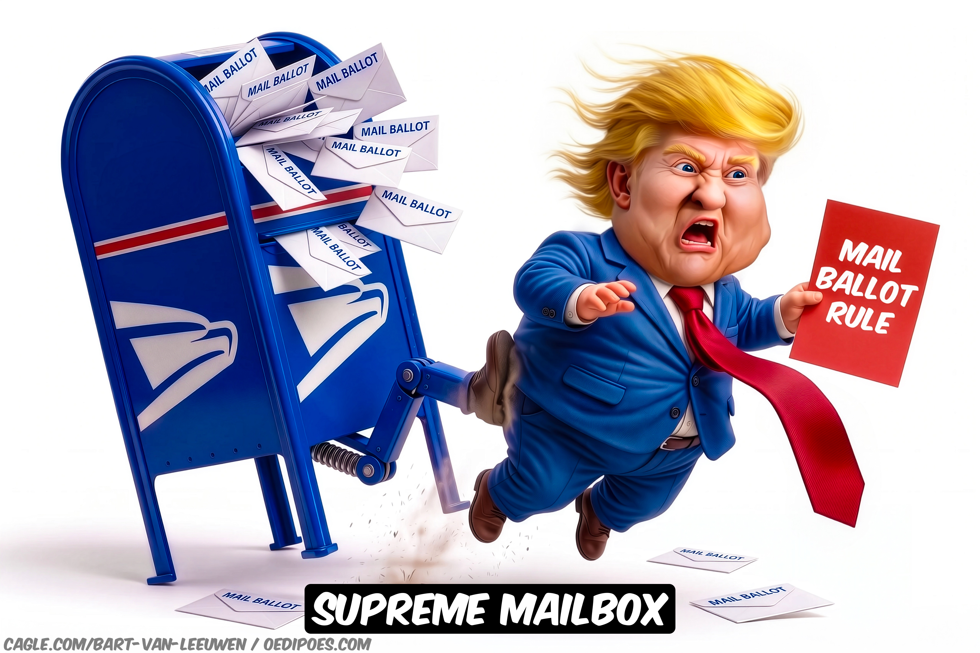
The cartoon shows Donald Trump angrily kicking a USPS mailbox, causing mail ballots to scatter, while clutching a sign labeled MAIL BALLOT RULE. The mailbox is labeled SUPREME MAILBOX at the base. Published on September 16, 2026, the image responds to debates over mail voting procedures and potential Supreme Court involvement in election rules. The visual metaphor illustrates opposition to expanded mail ballot access by depicting physical disruption of the postal system. Trump is caricatured with windblown hair and an open-mouthed expression of rage. Scattered ballots on the ground reinforce the theme of discarded votes. The piece uses the familiar USPS eagle logo and blue mailbox design for immediate recognition.
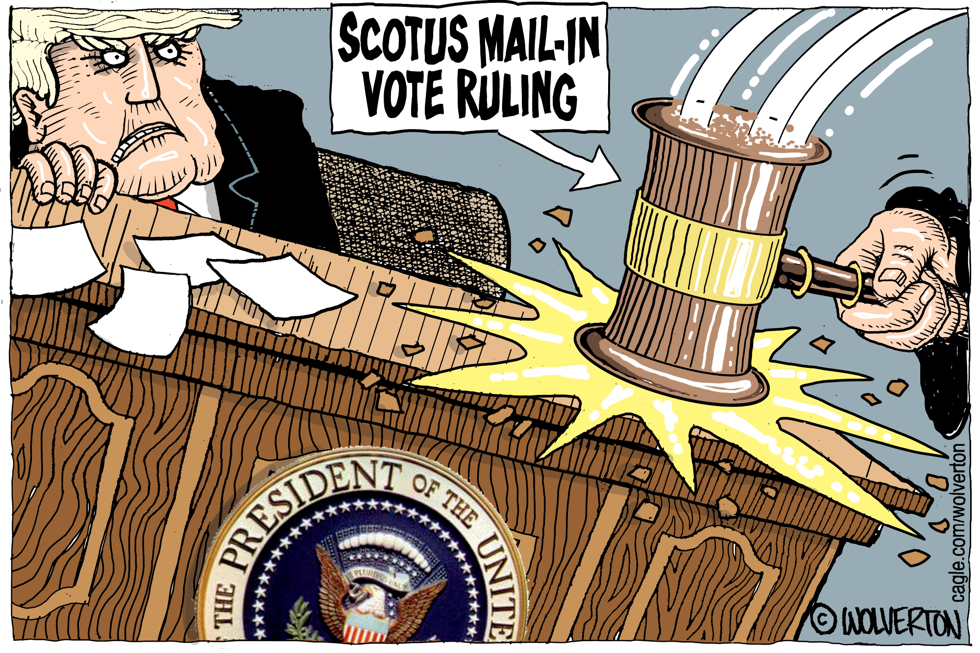
A new Supreme Court ruling on mail-in votes has drawn a sharp reaction from President Donald Trump. The decision appears to restrict certain ballot practices ahead of future elections. In the cartoon, the gavel smashes into the presidential podium where Trump stands, sending papers flying. Trump is depicted with an angry expression, leaning forward as the impact occurs. The image uses the visual of the striking gavel to illustrate the direct effect of the ruling on the administration. The cartoon was published on September 16, 2026, by artist Monte Wolverton.
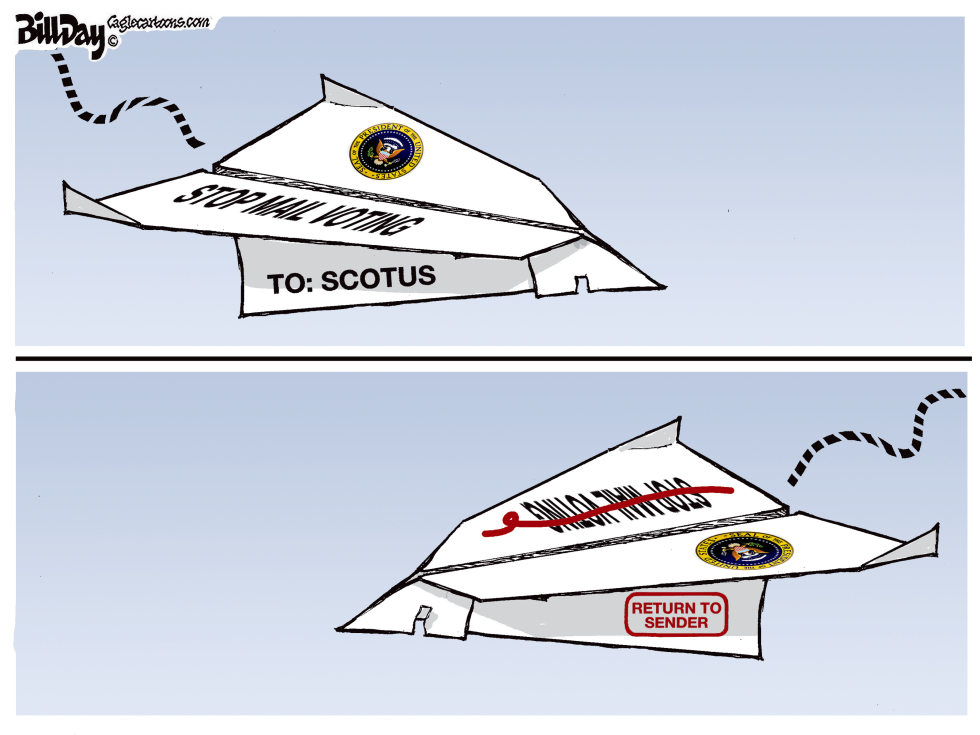
A presidential directive aimed at ending mail-in voting reached the Supreme Court but was promptly returned. The action underscores ongoing disputes over election procedures and access. The cartoon frames the effort as an unsuccessful attempt to restrict voting methods through judicial channels. It highlights institutional pushback against executive intervention in ballot processes. The piece takes the position that such restrictions lack support and are properly rebuffed.
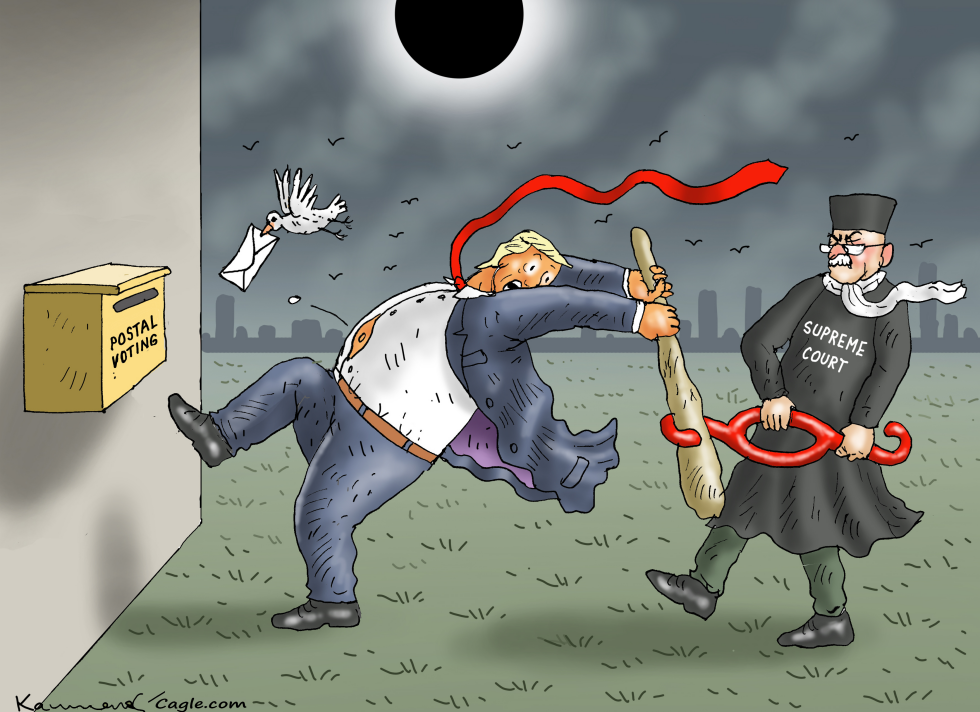
The Supreme Court has moved to restrict efforts by former President Trump to limit or challenge postal voting ahead of the 2026 midterms. The ruling comes as both parties prepare for a high-stakes contest that could determine control of Congress. Trump allies have pushed measures they say protect election integrity while critics see them as attempts to suppress turnout. The decision underscores the court's continuing role in shaping voting rules. The cartoon portrays the court as a necessary check on Trump's aggressive tactics.
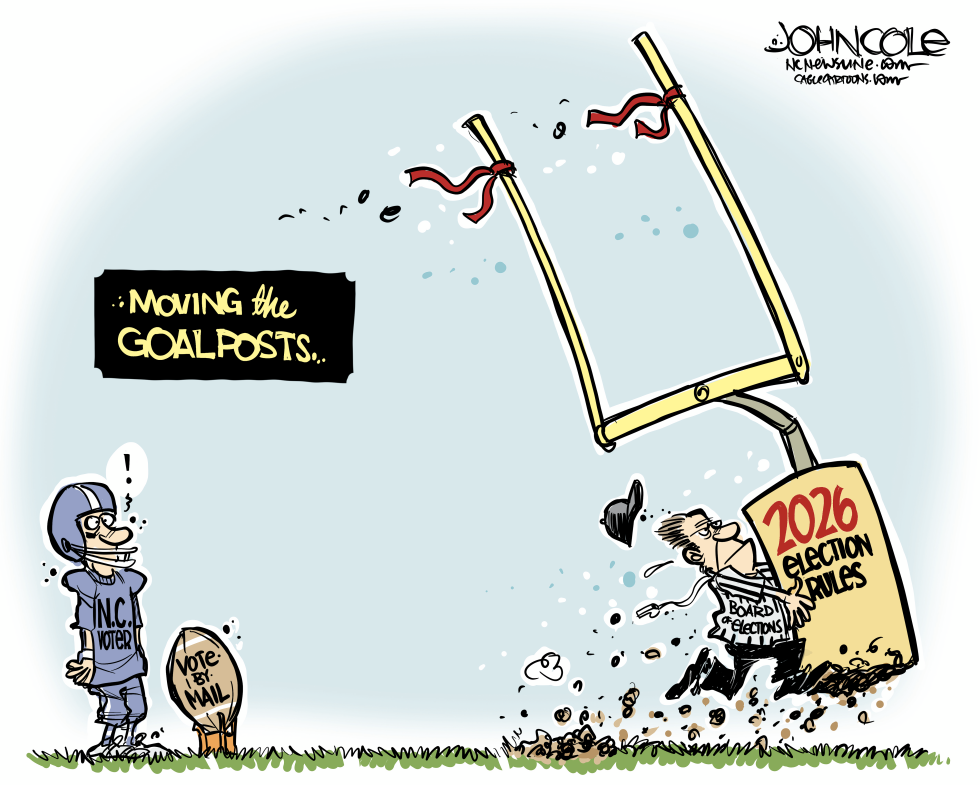
The North Carolina Board of Elections has updated rules governing mail ballots for the 2026 elections, introducing stricter verification and deadline requirements. The changes affect how voters submit ballots and have drawn criticism for complicating access. The move comes amid ongoing debates over election security and participation. Critics argue the adjustments disproportionately impact certain voter groups. The cartoon portrays the board as actively shifting standards to the disadvantage of mail voters.
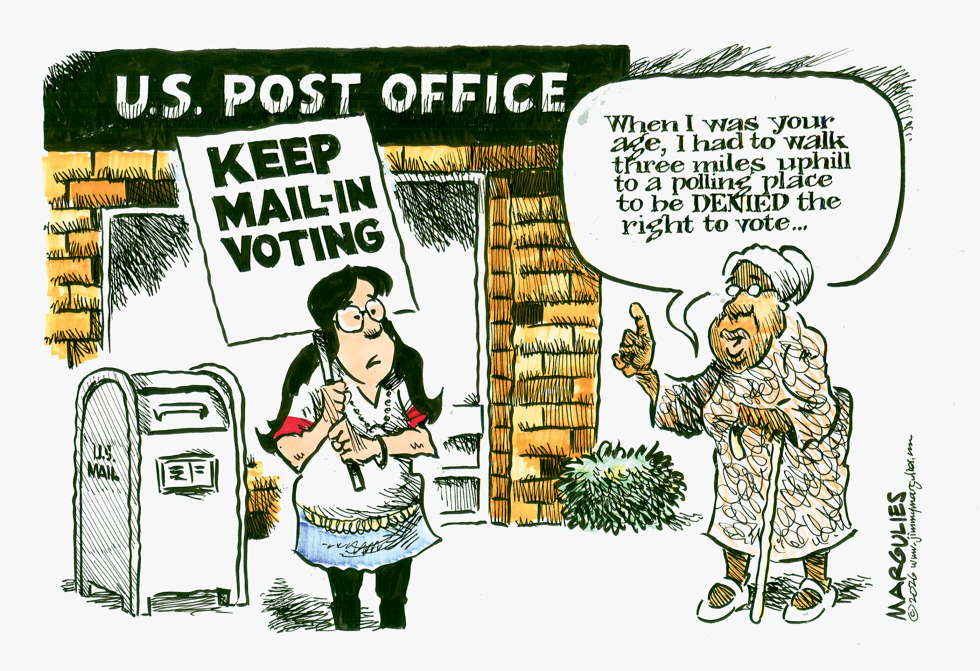
A protest sign at a U.S. Post Office calls for an end to mail-in voting. The cartoon responds to ongoing state-level efforts to restrict mail ballots after expanded use in recent elections. Such limits disproportionately affect older voters and those with mobility issues who previously faced physical barriers at polling places. The piece argues that rolling back mail-in options revives the very obstacles elderly citizens once endured, undermining broader access to the ballot.
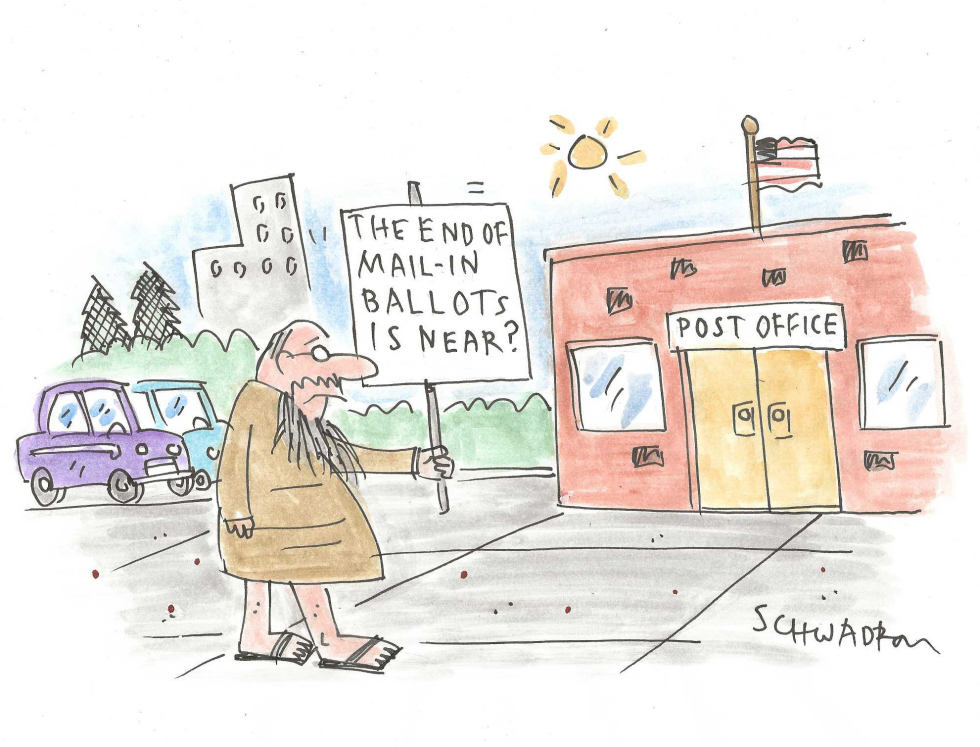
Proposals to restrict or end mail-in ballots have gained traction in several states ahead of upcoming elections, prompting concerns from voting rights advocates about reduced access for elderly, rural, and disabled voters. The post office has long served as a key conduit for absentee ballots. Critics argue the changes prioritize unproven fraud concerns over convenience and turnout. Supporters say tighter rules restore confidence in results. The cartoon frames the debate as an abrupt shift that could sideline a proven voting method.
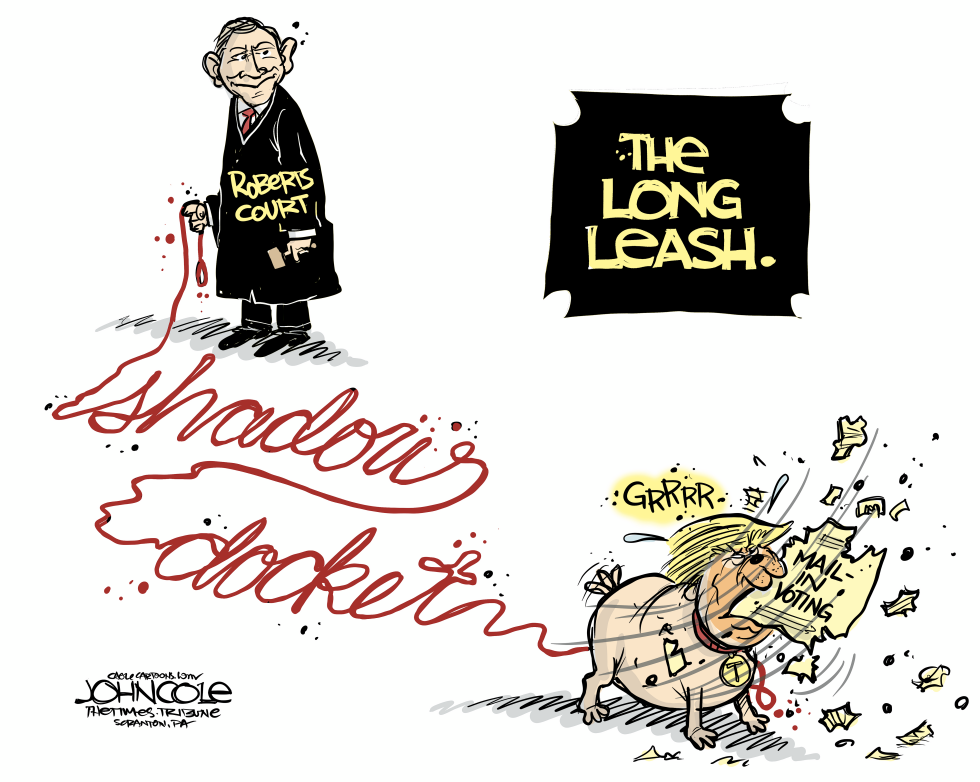
The Supreme Court under Chief Justice John Roberts issued orders limiting former President Donald Trump's administration from advancing certain mail-in voting restrictions through the shadow docket. The rulings underscore the Court's role in checking executive actions on election procedures ahead of future contests. The cartoon portrays the Roberts Court maintaining firm oversight while depicting resistance from Trump-aligned efforts.
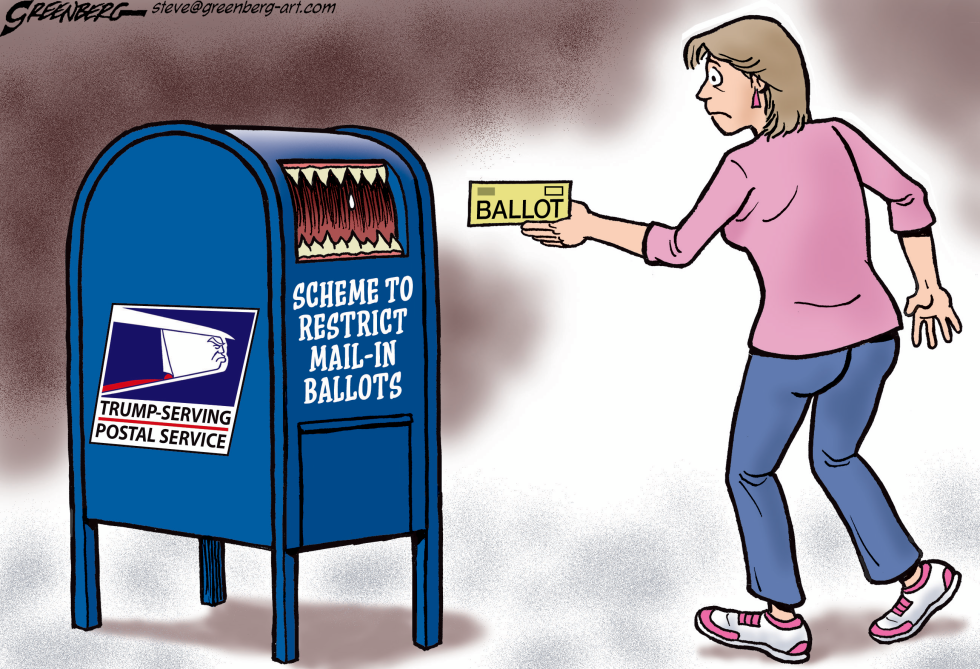
The U.S. Postal Service under Trump influence has implemented measures to restrict mail-in ballots ahead of the 2026 elections. These actions limit voter access through operational changes and heightened scrutiny of mail ballots. The moves raise concerns about equitable participation in elections. Critics argue the changes disproportionately affect certain voter groups and undermine trust in the process. The cartoon portrays the postal service as actively hostile to mail-in voting, framing the restrictions as a deliberate scheme to suppress turnout.
Donald Trump has renewed criticism of the U.S. Postal Service, calling for major operational changes amid reports of delivery slowdowns and budget shortfalls. The agency faces pressure to cut costs while maintaining universal service standards. Lawmakers from both parties have pushed back, arguing that further reductions would harm rural communities and election mail. The editorial takes the position that such attacks weaken a vital public institution without addressing root causes like underfunding and outdated infrastructure.
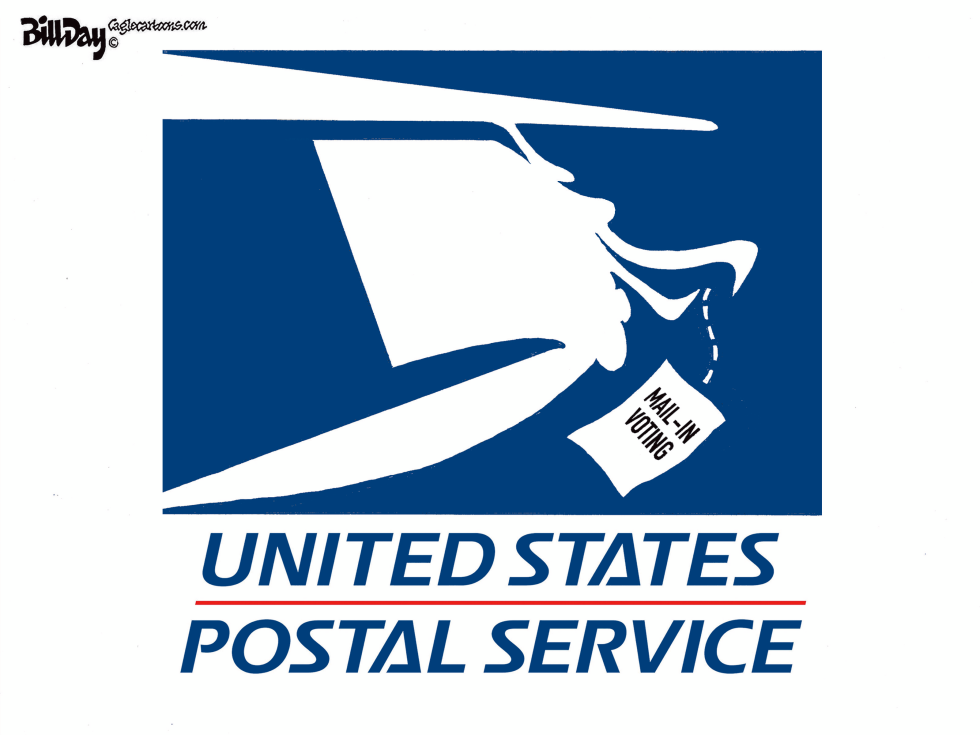
The US Postal Service continues to play a central role in processing and delivering mail-in ballots for federal elections. With voting by mail now a standard option in many states, the agency manages millions of ballots each cycle, raising questions about capacity, security, and timely delivery. The editorial position emphasizes the importance of a reliable postal network to maintain voter access without disruption.
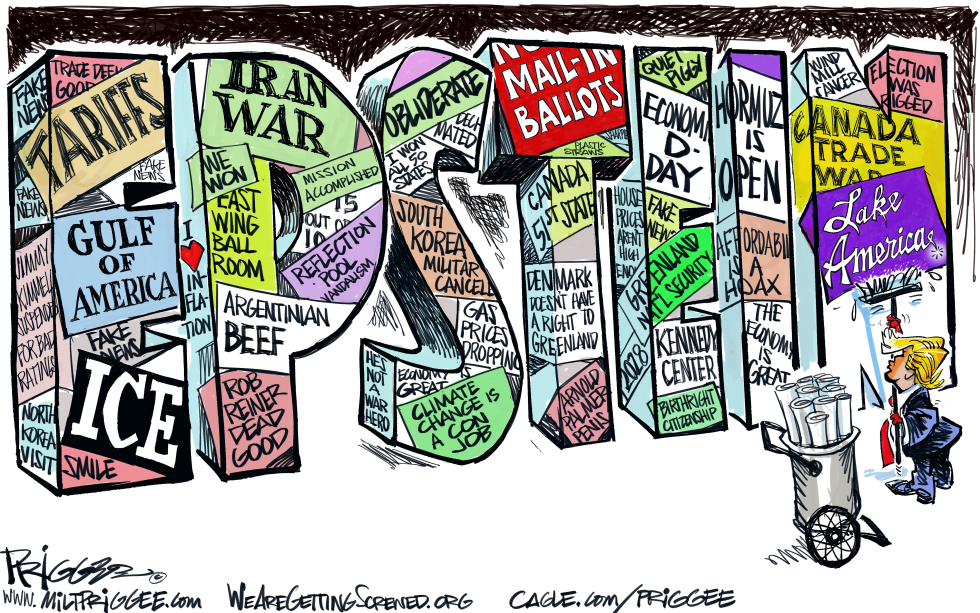
Donald Trump appears in a September 2026 cartoon pushing a cart stacked with signs promoting tariffs, questioning mail-in ballots, and asserting claims about Iran, Canada trade, and domestic issues. The image captures a pattern of public messaging that blends economic nationalism with repeated challenges to established processes. The editorial position frames these statements as a deliberate strategy to keep multiple controversies in motion at once.
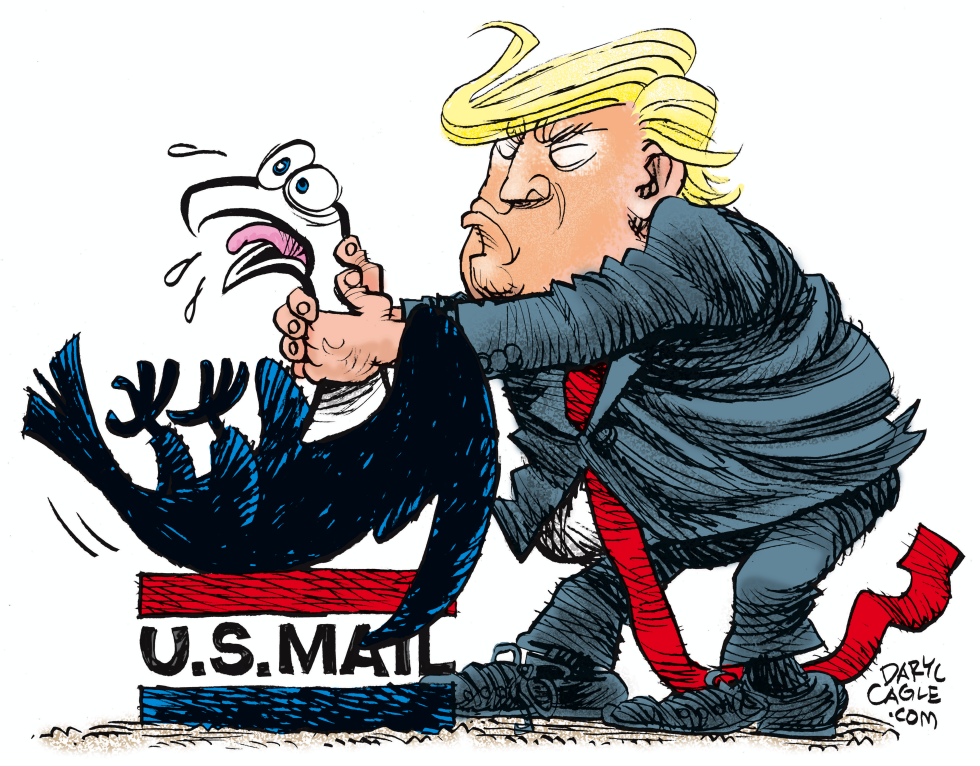
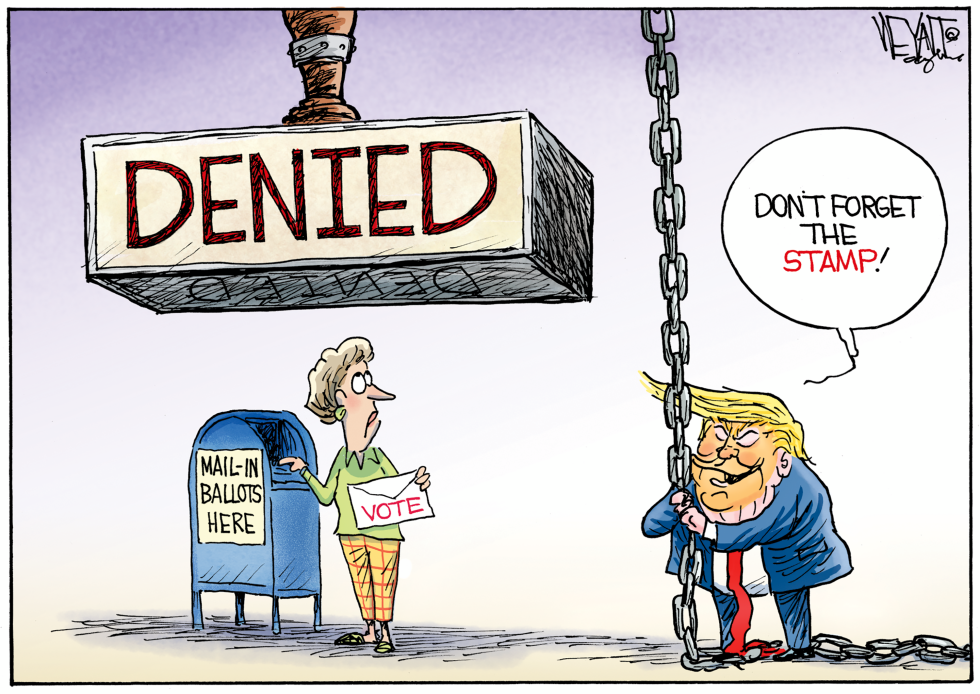
President Trump has directed efforts to deny mail-in ballots in the 2026 election cycle, citing concerns over fraud and integrity. The move affects millions of voters who rely on absentee and mail voting. Critics argue the policy suppresses turnout and favors in-person Republican voters. The cartoon portrays Trump personally enforcing the denial mechanism.
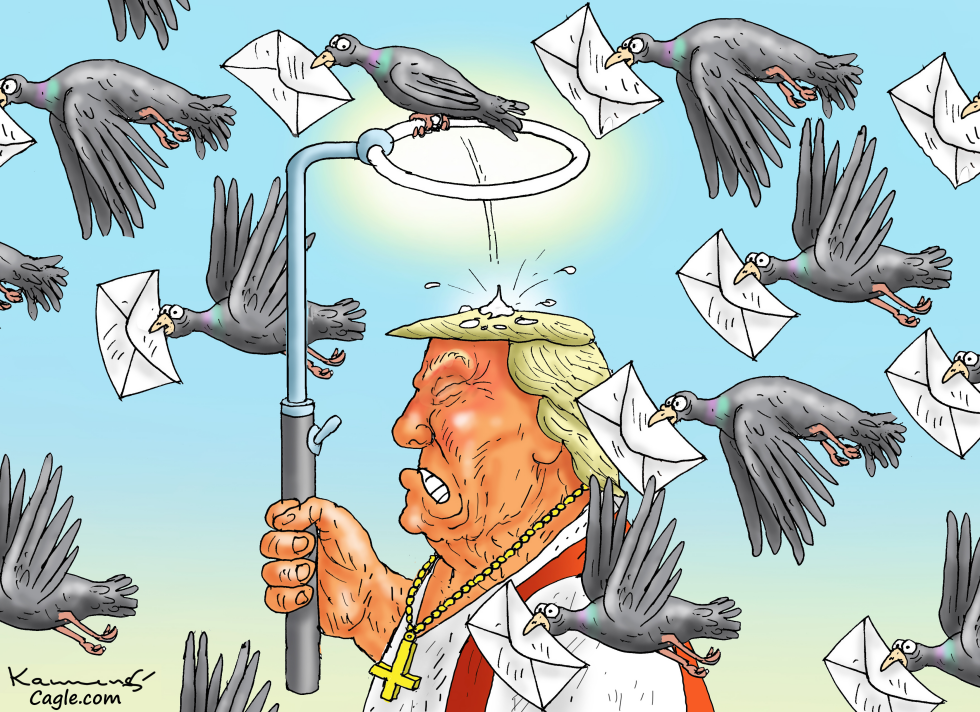
Donald J. Trump continues to draw intense public and political attention in 2026. Recent developments around mail services and communications have placed him at the center of fresh criticism. Observers note the volume of correspondence and commentary directed at him. The editorial position frames these pressures as deserved scrutiny over his conduct and influence.
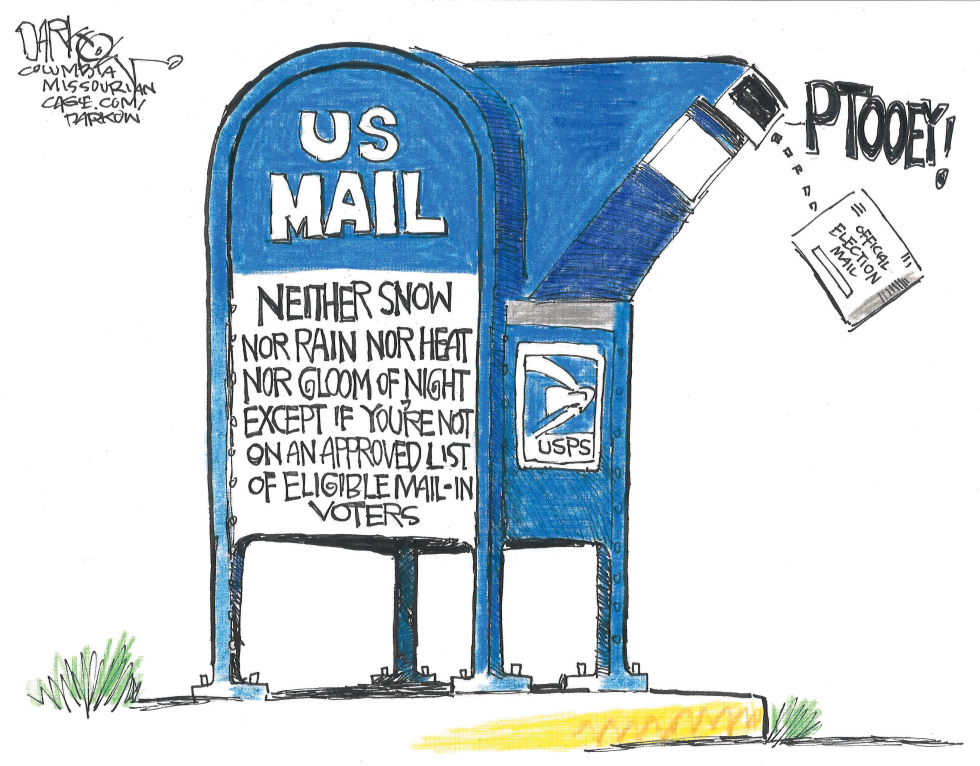
A USPS mailbox rejects mail-in ballots unless the sender appears on an approved list of eligible voters. The action highlights ongoing debates over mail voting security and access ahead of elections. Critics argue such restrictions disproportionately affect certain voter groups and undermine confidence in the postal system. Supporters claim the measures prevent fraud. The cartoon portrays the mailbox as actively enforcing these limits, suggesting institutional barriers to participation.