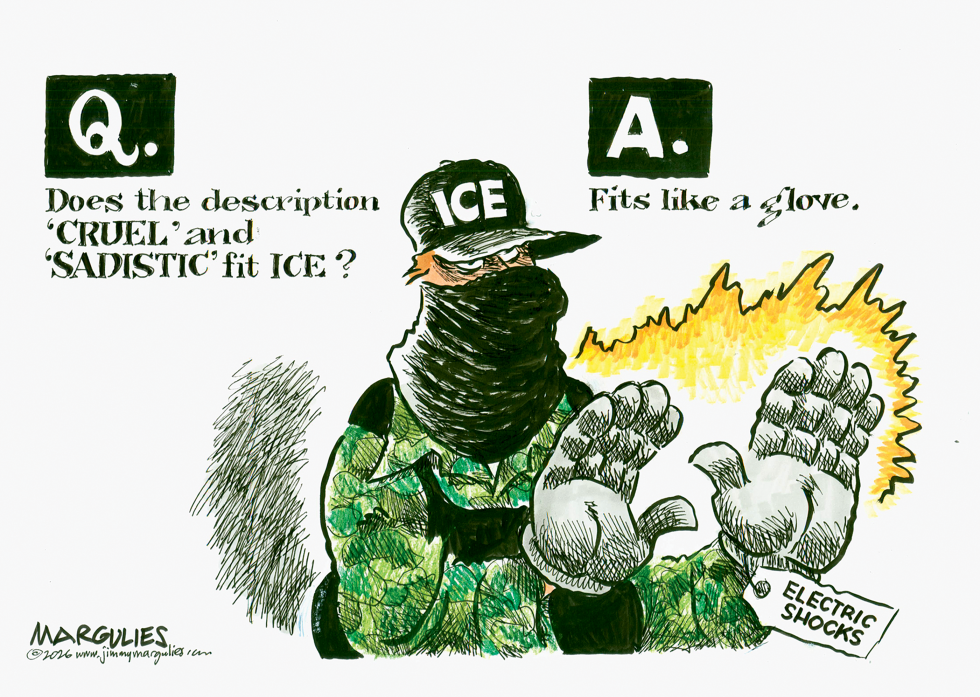
ICE continues immigration enforcement operations amid ongoing debates over agent conduct and use of force. Critics highlight allegations of excessive measures during detentions and removals. The piece argues that labels of cruelty and sadism accurately describe the agency's approach.
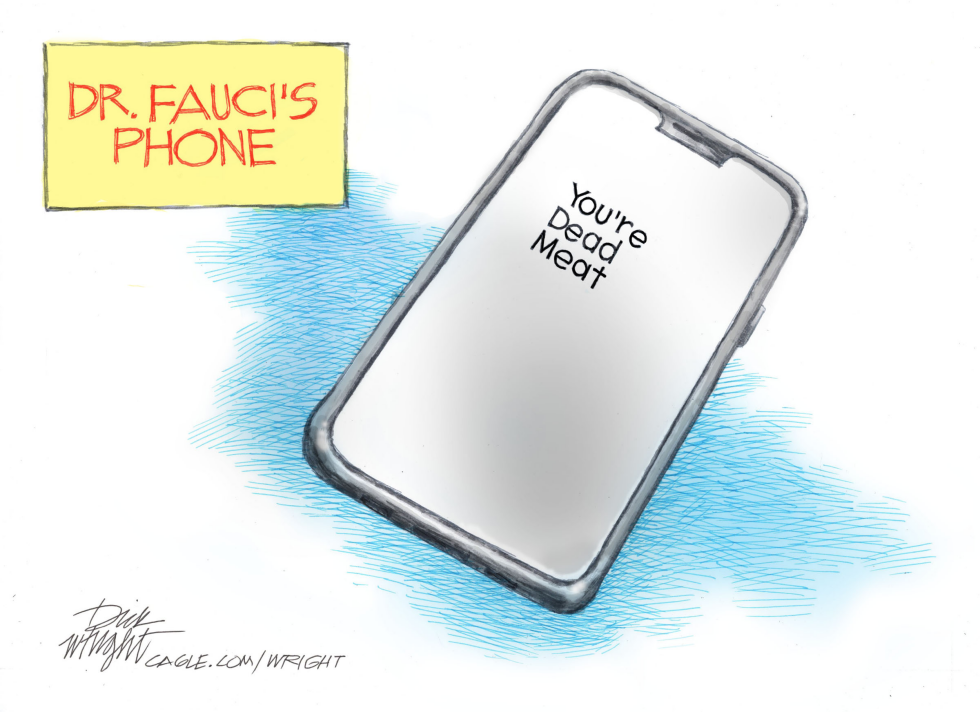
A death threat surfaces on a phone identified as belonging to Dr. Anthony Fauci. The incident underscores persistent security risks faced by high-profile public health figures. Such threats reflect broader tensions over pandemic-era decisions and erode trust in institutions. The piece highlights the personal danger these messages pose and criticizes the climate that encourages them.
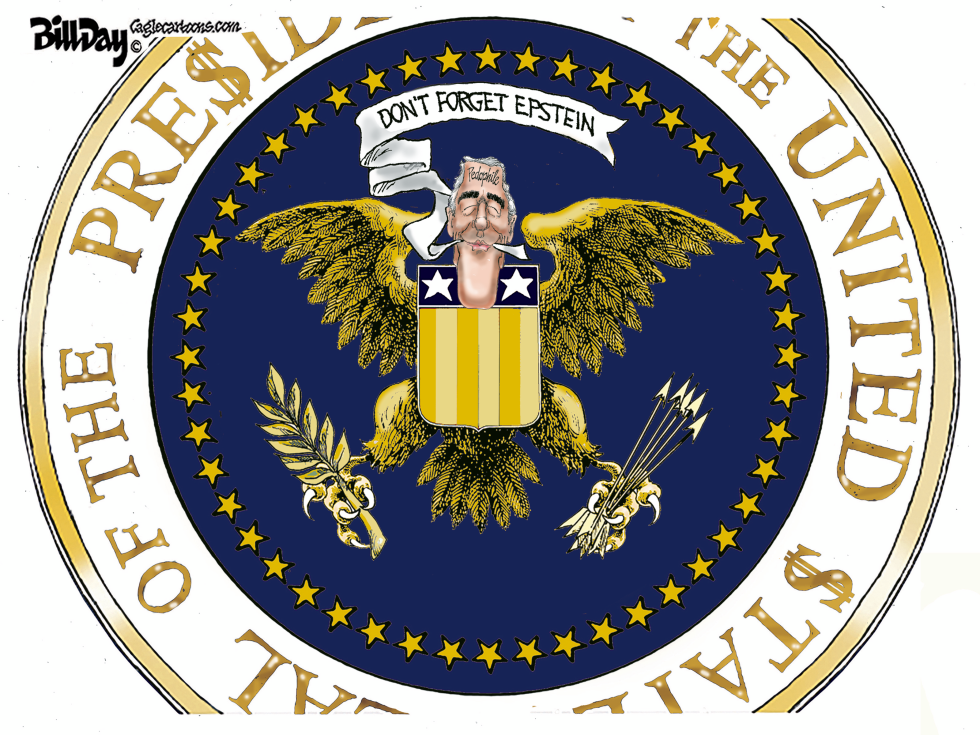
The Epstein scandal continues to generate political scrutiny years after the financier's death. Recent developments keep the case in public view through references to past associations. The piece argues that such connections deserve ongoing attention rather than dismissal.
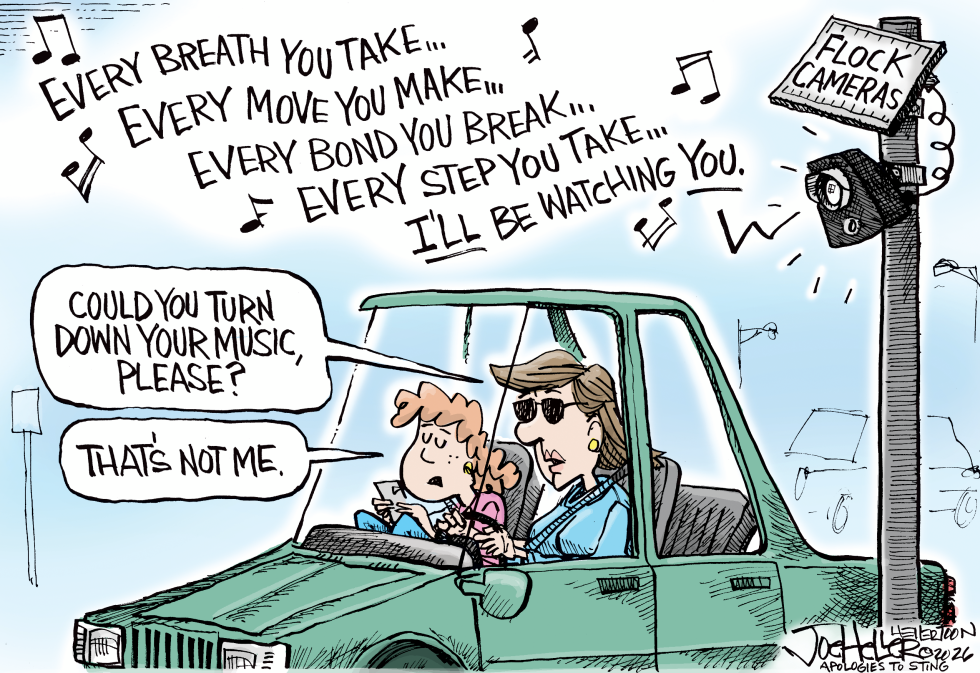
Police departments across the country have expanded use of Flock license-plate readers that capture vehicle movements in real time. The technology raises questions about data retention and warrantless tracking of citizens. The cartoon portrays the cameras as an omnipresent watcher echoing a classic song about surveillance.
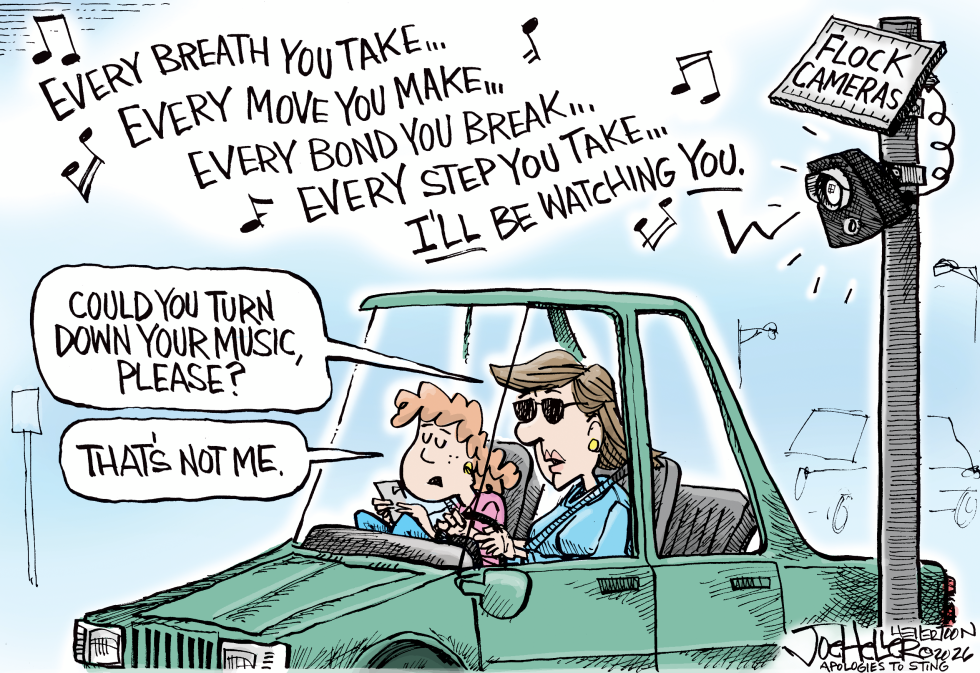
Police departments across the country have expanded use of Flock license plate readers to track vehicles in real time. The technology raises questions about the balance between public safety and individual privacy. The piece argues that such systems create an inescapable watch on everyday movement.
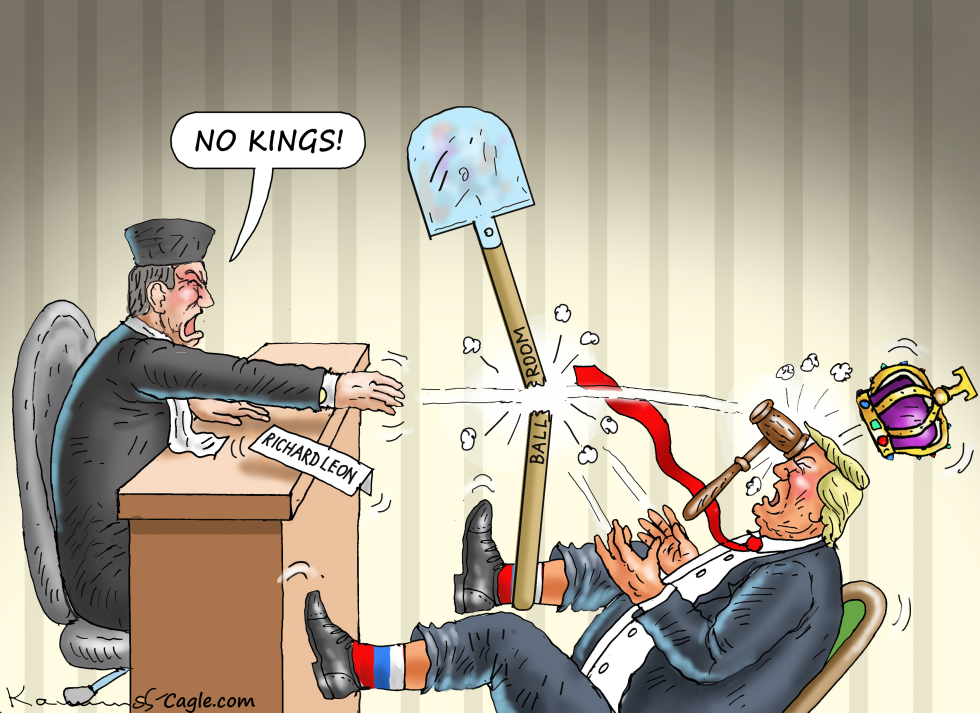
U.S. District Judge Richard Leon issued a ruling rejecting claims of unchecked executive authority. The decision underscores judicial limits on presidential power and draws immediate pushback from the White House. The cartoon portrays the ruling as a direct rebuke to any notion of royal prerogative.
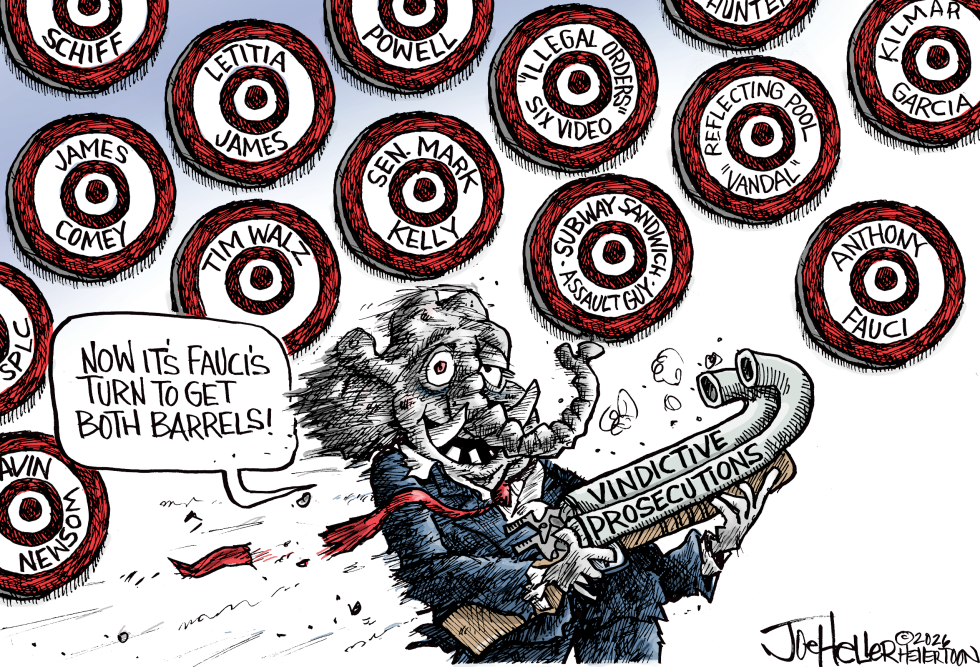
Donald Trump has signaled intent to pursue legal action against Anthony Fauci and other perceived opponents. The move extends a pattern of targeting figures from prior investigations and public disputes. The editorial portrays these actions as personal retribution rather than legitimate accountability.
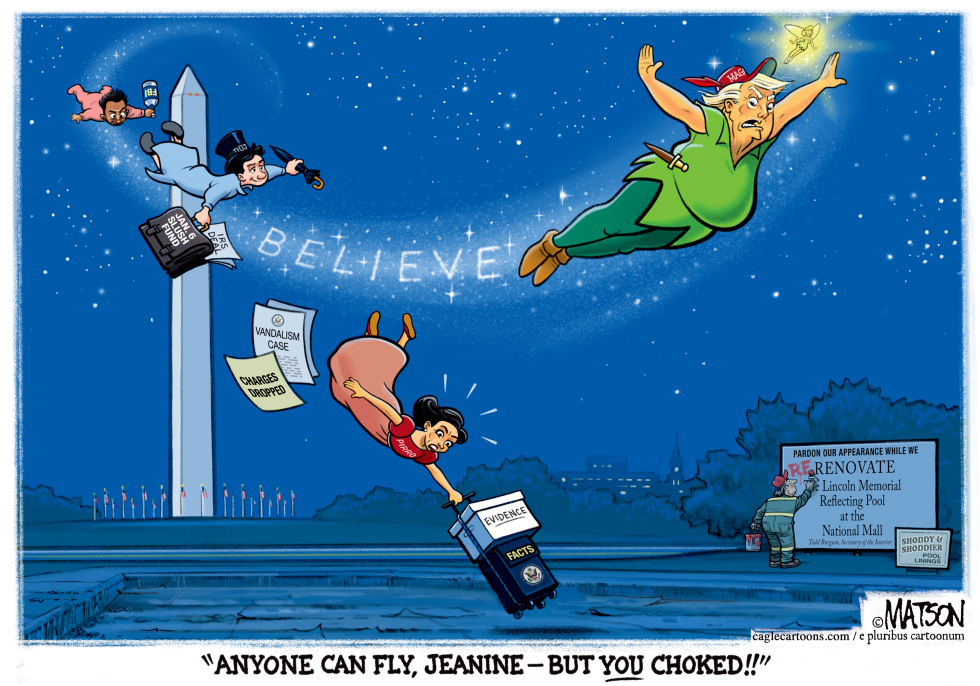
Donald Trump appears in a leadership role with legal cases being dismissed around him in early August 2026. Jeanine Pirro is shown losing grip on an evidence container labeled facts. The scene highlights ongoing questions about accountability and dropped charges in high-profile matters involving the administration.
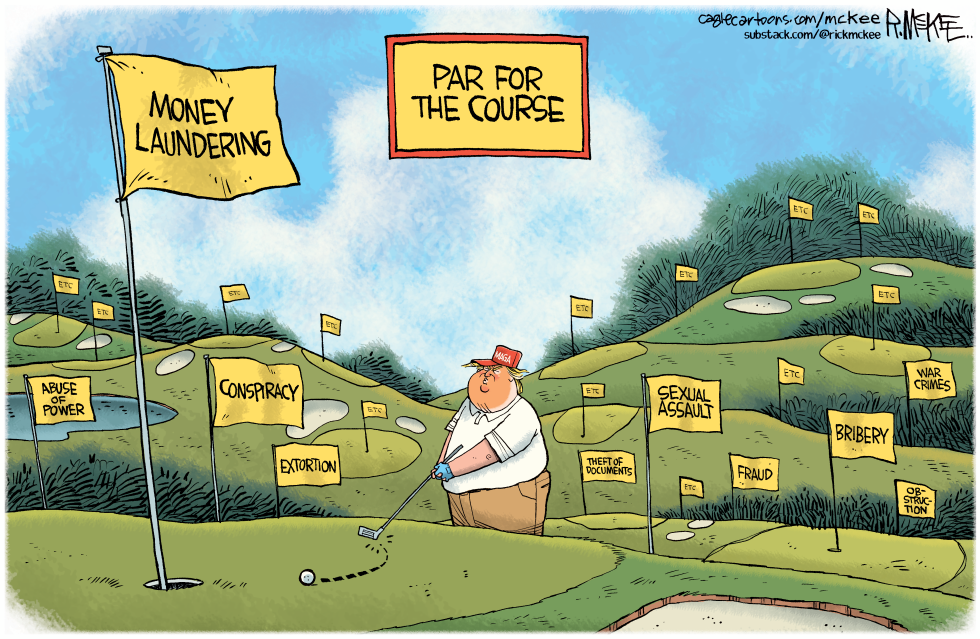
Donald Trump appears on a golf course in an editorial cartoon dated August 6 2026. Multiple yellow flags label alleged offenses including money laundering, conspiracy, extortion, sexual assault, bribery, fraud and obstruction. The piece responds to ongoing legal and political scrutiny of the former president. It frames these issues as routine for Trump through the visual metaphor of a golf course. The editorial position presents the allegations as expected elements of his record.
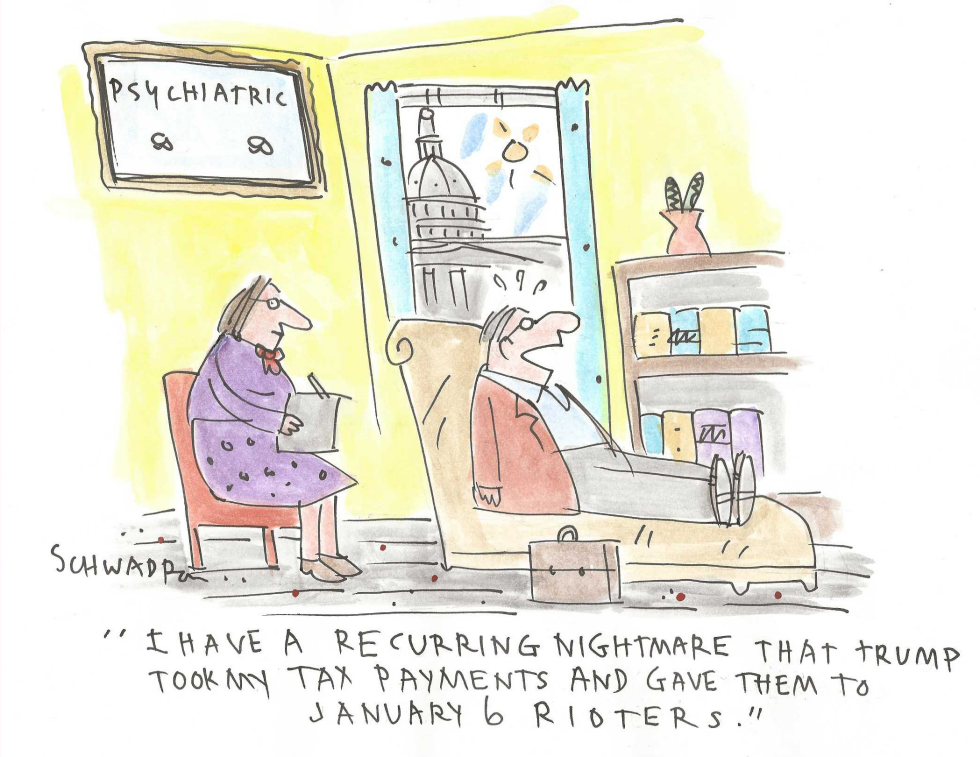
A patient describes a recurring nightmare in which former President Trump diverts tax payments to January 6 rioters. The session reflects persistent public concerns over accountability for the Capitol events and use of public funds. The piece portrays these fears as a continuing source of political unease.
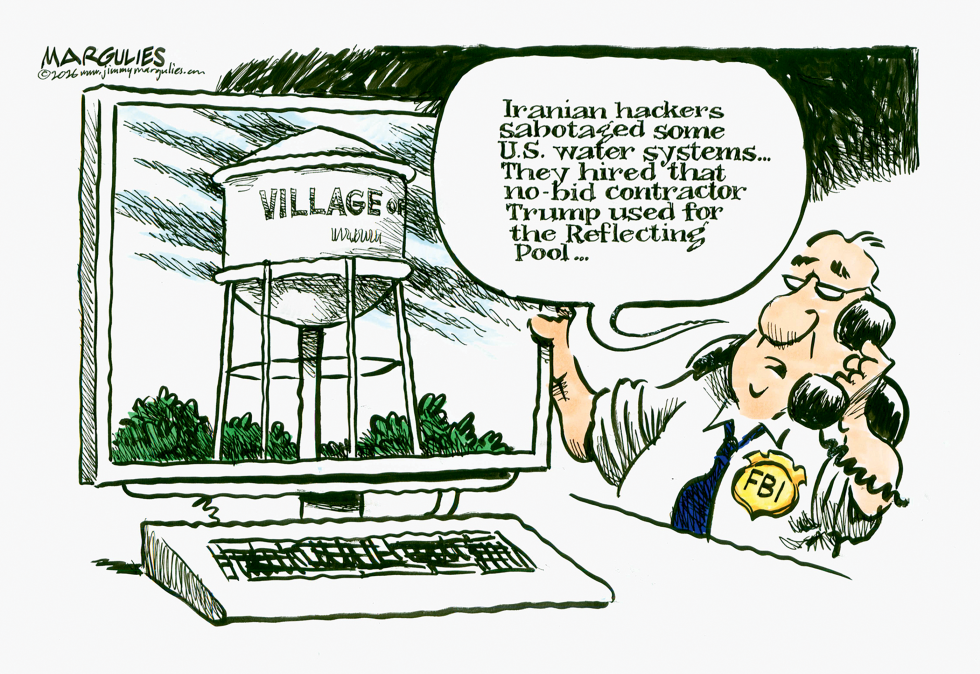
The FBI has attributed recent sabotage of U.S. water systems to Iranian hackers while highlighting their use of a no-bid contractor previously employed by Trump on the Reflecting Pool. The claim surfaces amid ongoing concerns over critical infrastructure vulnerabilities and contractor oversight. This development raises questions about procurement practices and accountability in federal responses to foreign cyber threats. The editorial position criticizes the reliance on such contractors and questions the logic of the blame assignment.
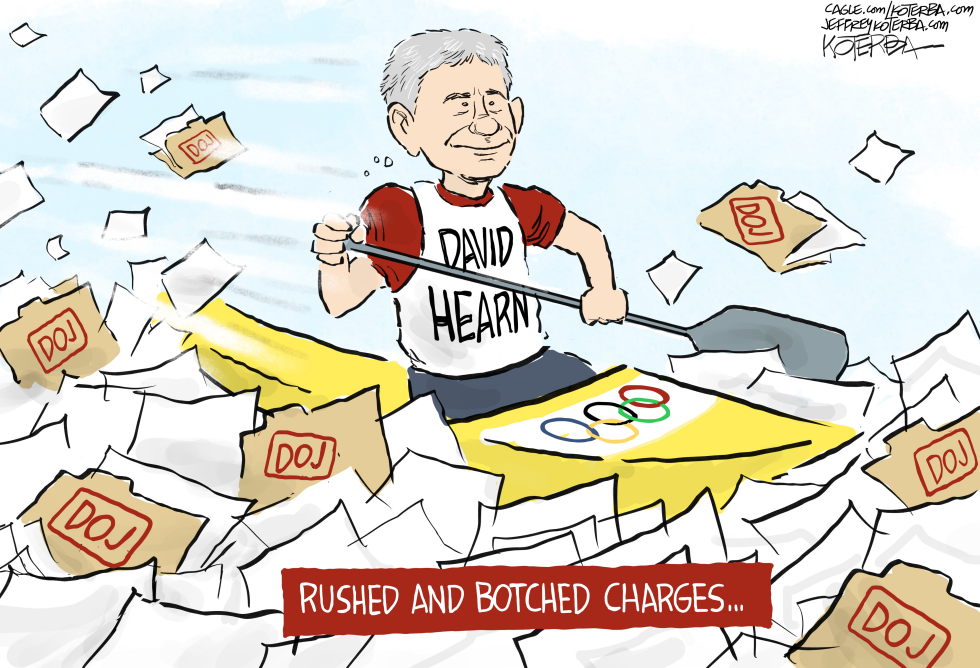
Federal prosecutors face scrutiny over handling of charges against Olympic kayaker David Hearn. The case highlights concerns about timing and preparation of evidence in high-profile sports matters. The editorial takes the position that the effort appears hasty and poorly executed.
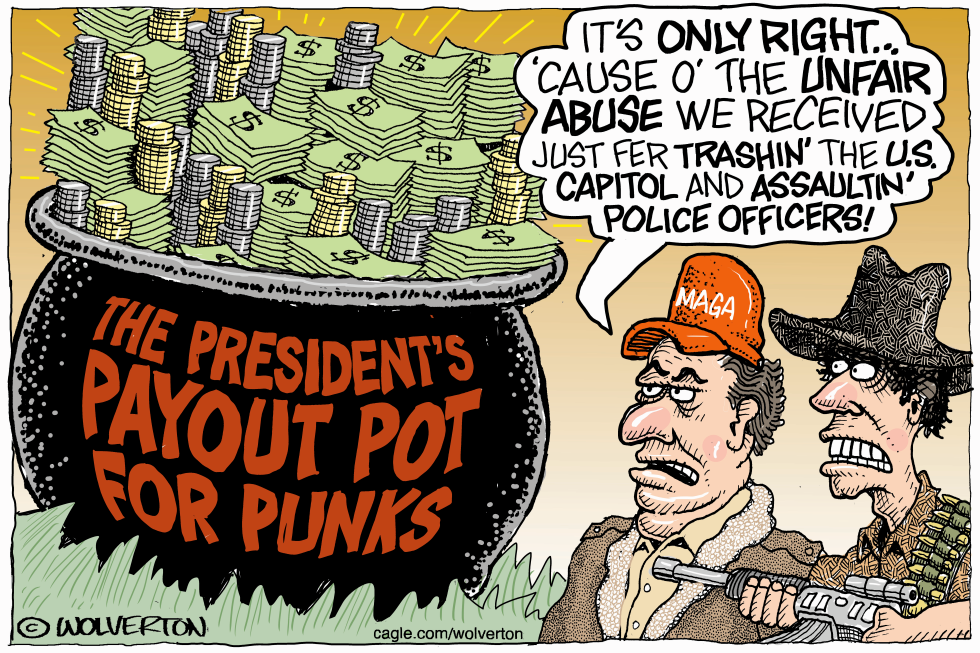
A proposal for compensation to January 6 defendants has drawn sharp criticism from opponents who view it as rewarding those convicted of attacking the Capitol and police. The editorial cartoon portrays the idea as a presidential slush fund for rioters, highlighting the perceived absurdity of compensating participants in the 2021 events.
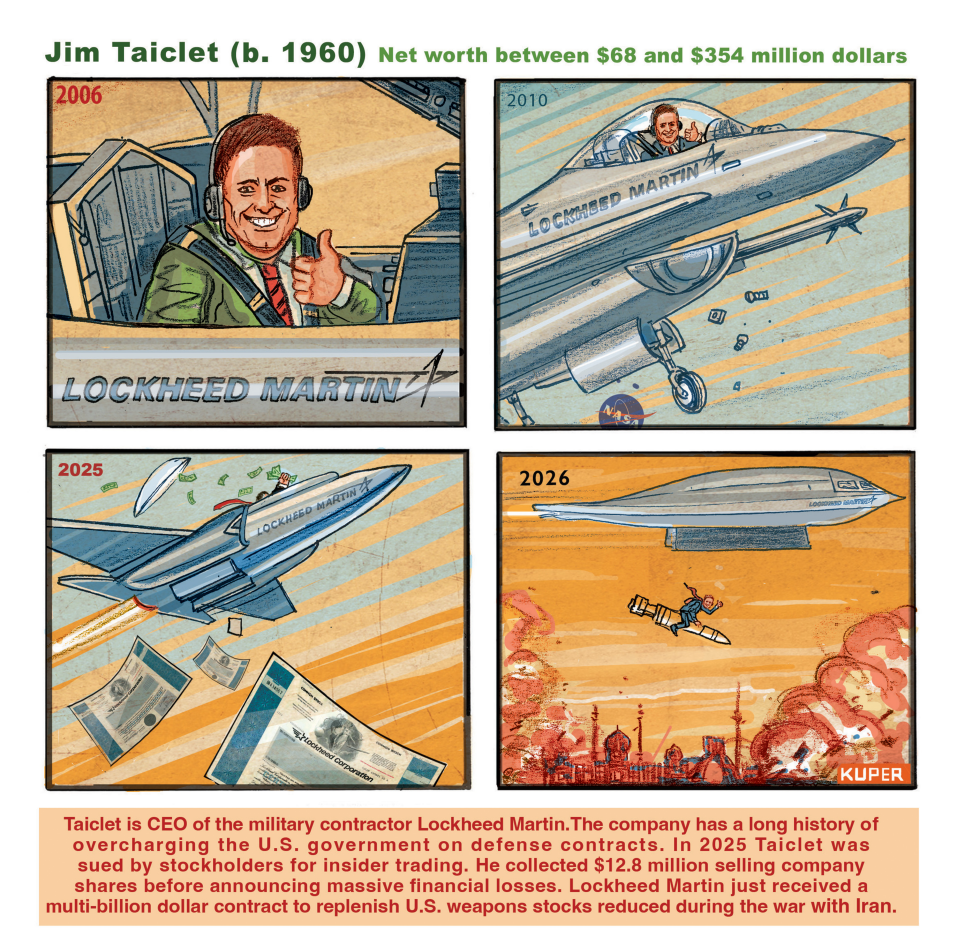
Lockheed Martin CEO Jim Taiclet was sued by stockholders in 2025 for selling $12.8 million in shares before announcing major losses. The company then won a multi-billion contract to replenish weapons depleted in the Iran conflict. The piece criticizes Taiclet and the contractor for insider trading and repeated government overcharging.