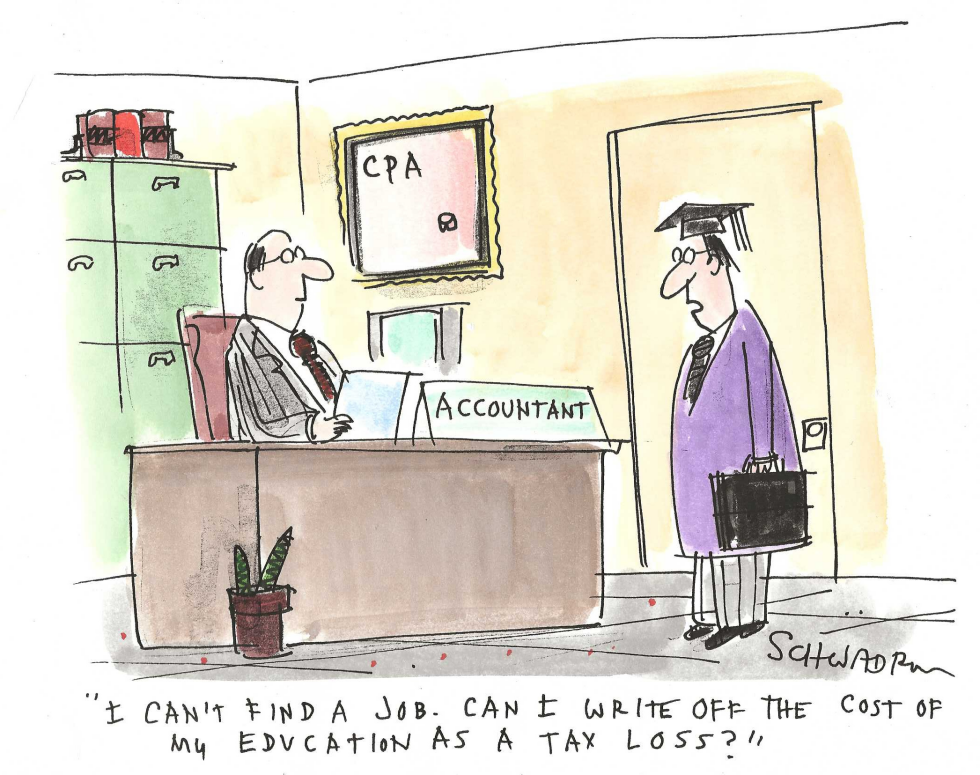
Recent college graduates facing extended unemployment have begun inquiring whether the cost of their degrees can be treated as a tax-deductible loss. Accountants report fielding more such questions as hiring in some sectors remains slow. The inquiry reflects broader frustration with the return on investment for higher education when entry-level positions are scarce. The cartoon captures this practical, if unconventional, approach to offsetting student debt through the tax code. It underscores ongoing debates about the value of degrees and the limits of existing tax relief for education expenses.
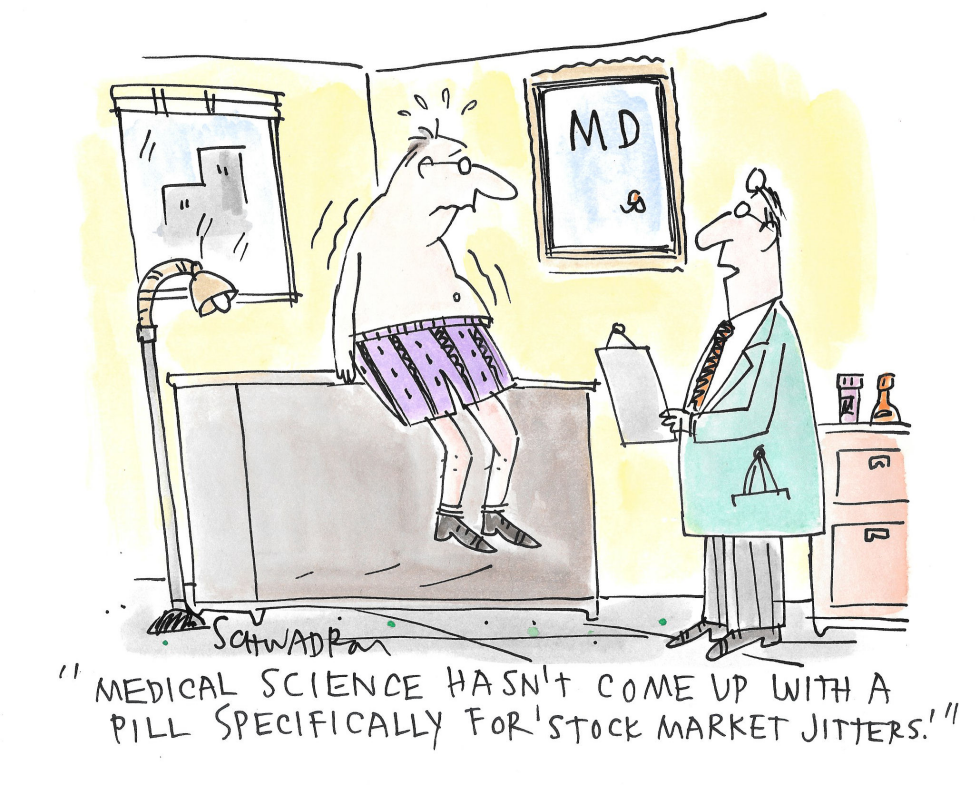
Stock market fluctuations continue to generate widespread investor anxiety amid ongoing economic uncertainty. Market swings tied to interest rates, trade policy, and corporate earnings have left many without clear remedies. The cartoon highlights that medical science offers no specific treatment for this form of financial stress, underscoring the limits of medicine when confronting market-driven worries.
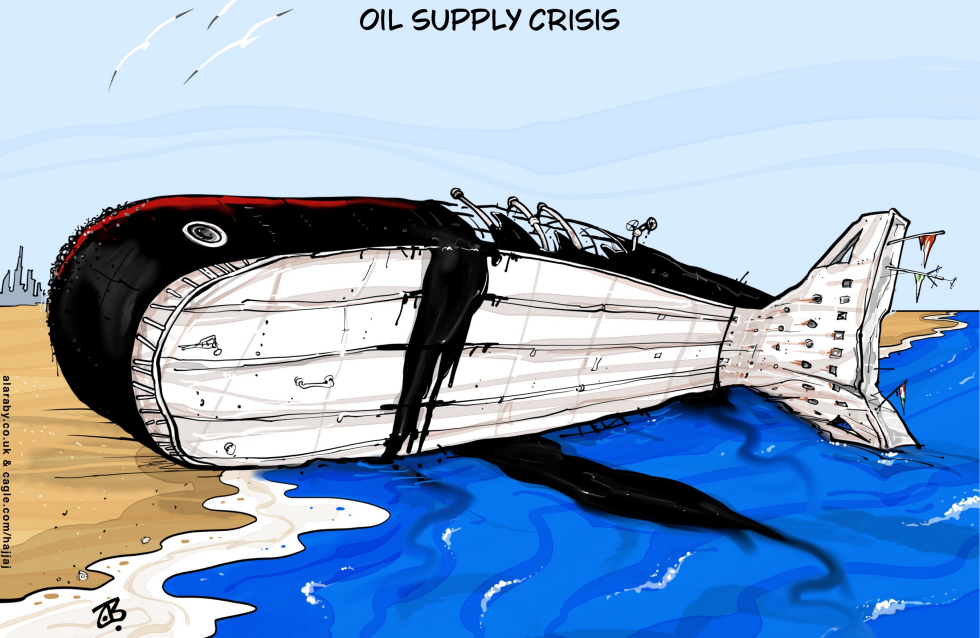
A major oil tanker has run aground, disrupting supply routes and releasing crude into coastal waters. The incident underscores vulnerabilities in global energy transport networks that rely on aging or poorly maintained vessels. Such events can spike fuel prices and trigger immediate cleanup costs for affected regions. The cartoon frames the grounding as a direct cause of the broader supply crisis rather than an isolated accident. It points to systemic weaknesses in oversight and infrastructure that allow one failure to cascade into wider shortages and ecological harm.
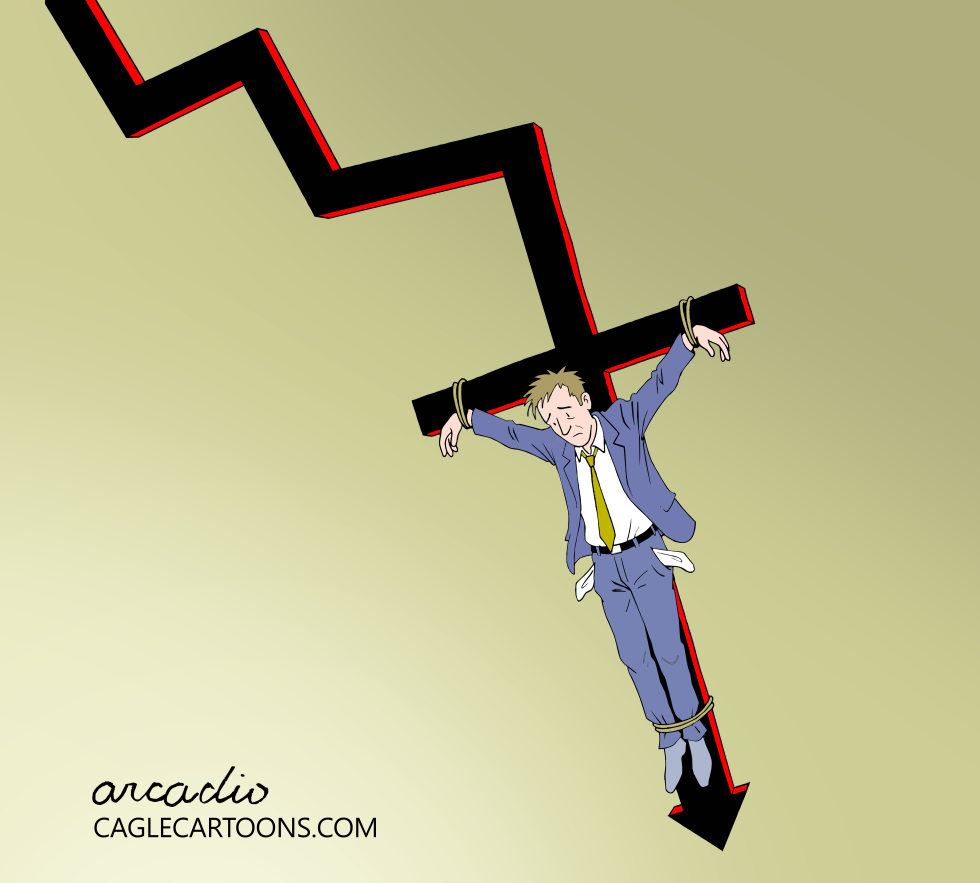
Corporate leaders continue to confront sharp market drops that directly affect company performance and investor confidence. The situation underscores how executives remain closely tied to negative financial trends rather than insulated from them. The piece argues that such binding reflects the reality of accountability in failing markets.
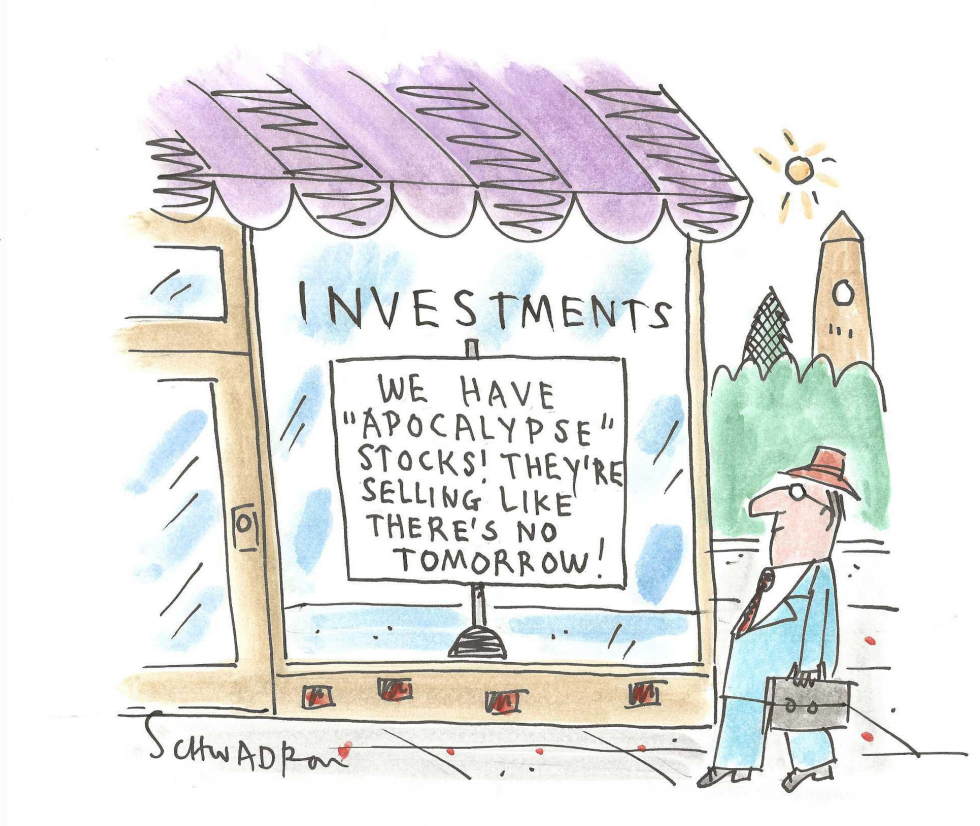
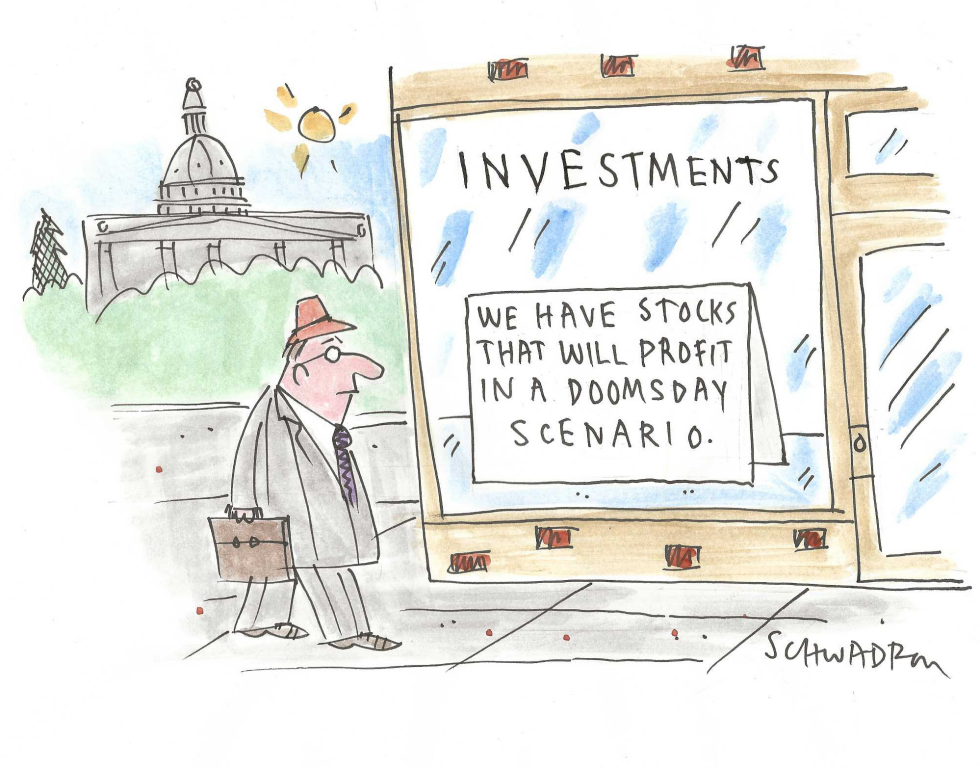
Investor interest in so-called apocalypse stocks has risen as markets reflect broader economic uncertainty. The trend highlights how some traders position for worst-case scenarios in business and finance. The cartoon underscores the ironic appeal of such products, suggesting hype around end-times investing reveals deeper anxieties about stability.
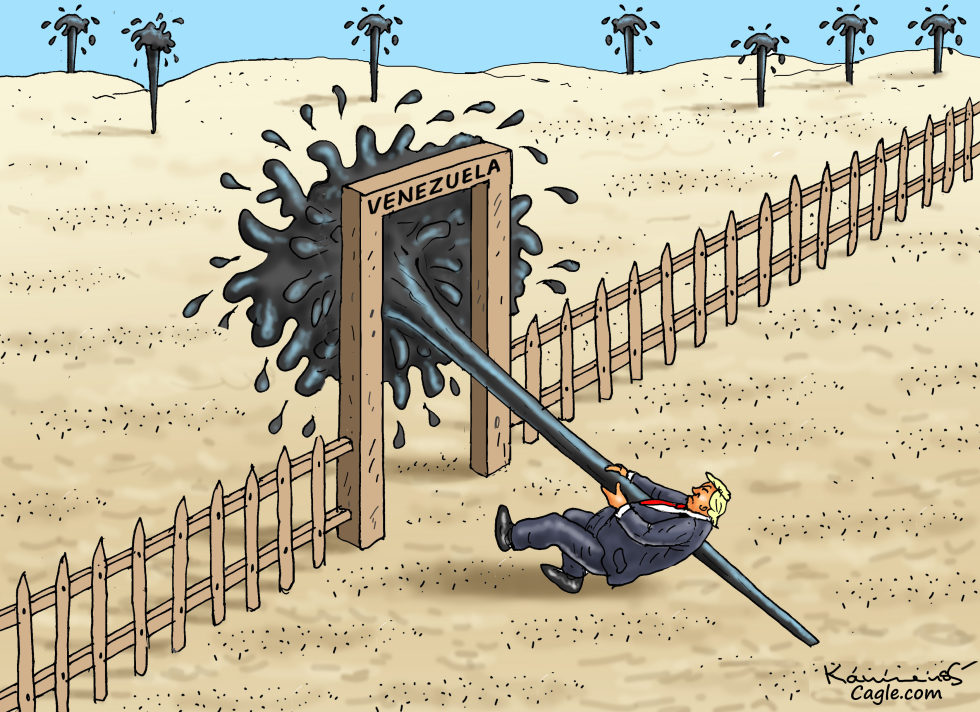
US policy toward Venezuelan oil exports shifted in 2026 as the Trump administration eased certain sanctions. This allowed increased crude shipments to reach American markets. The change raised questions about energy security and relations with Caracas. Critics argued the move undermined prior pressure on the Maduro government. The cartoon depicts the oil surge directly impacting Trump, suggesting the policy backfired on its architect.
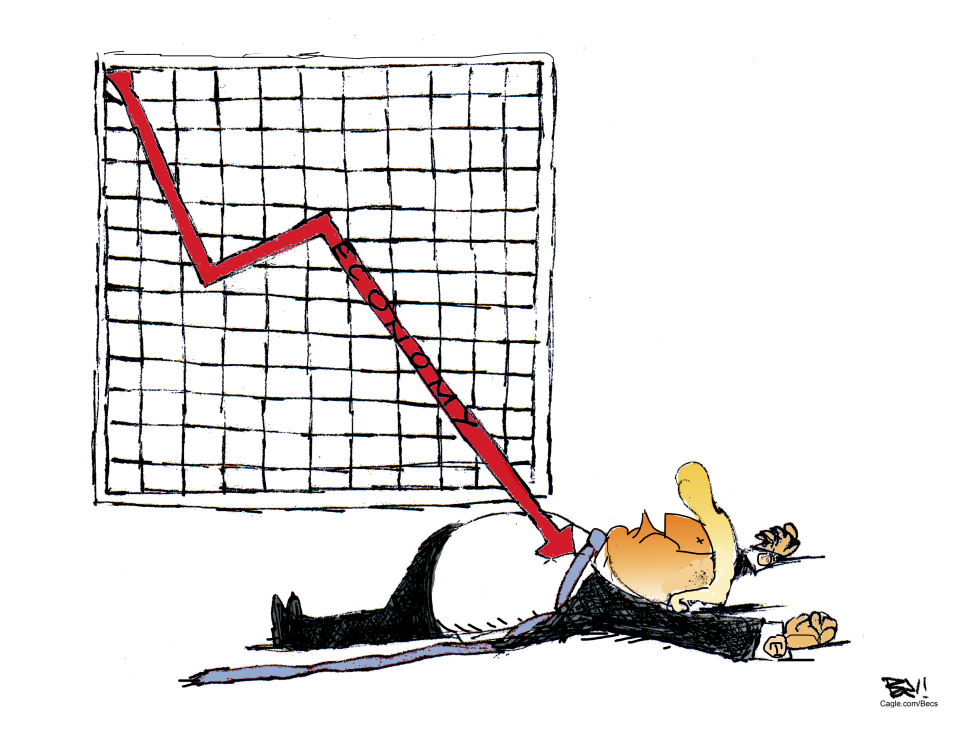
Economic indicators released in late August 2026 showed continued contraction in key sectors including manufacturing and consumer spending. President Donald Trump faced direct political fallout from the downturn. The data underscored challenges in sustaining growth amid inflation pressures and global trade tensions. The cartoon depicts the president flattened by the falling trend line, underscoring the administration's vulnerability on economic performance. It argues that the president bears responsibility for the slide and cannot escape its consequences.
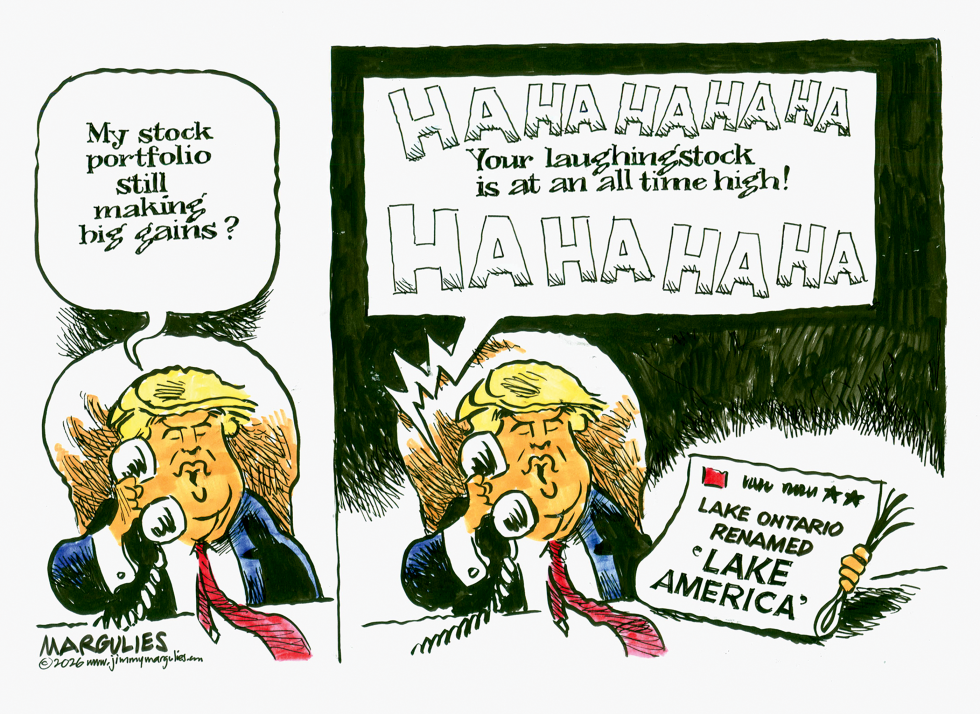
Donald Trump brushed aside questions about renaming Lake Ontario as Lake America during an August 2026 call focused on his stock holdings. The move drew attention to ongoing efforts to rebrand geographic features under his administration. The piece portrays the episode as another instance of Trump prioritizing personal financial optics over policy substance.
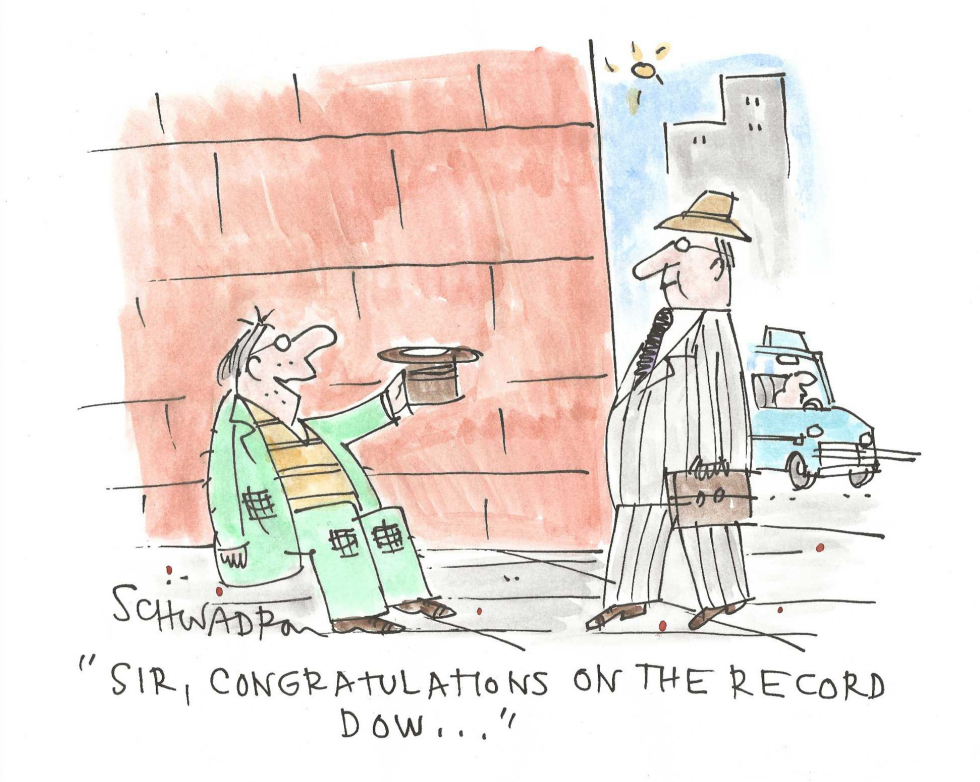
The Dow Jones Industrial Average reached a new record high in late August 2026, reflecting strong corporate earnings and investor confidence. Business leaders celebrated the milestone while many Americans continued to face stagnant wages and rising living costs. The cartoon depicts a beggar offering congratulations to a passing executive, underscoring the disconnect between Wall Street performance and everyday economic reality. This visual argument critiques how market success often benefits a narrow segment of society while leaving others behind.
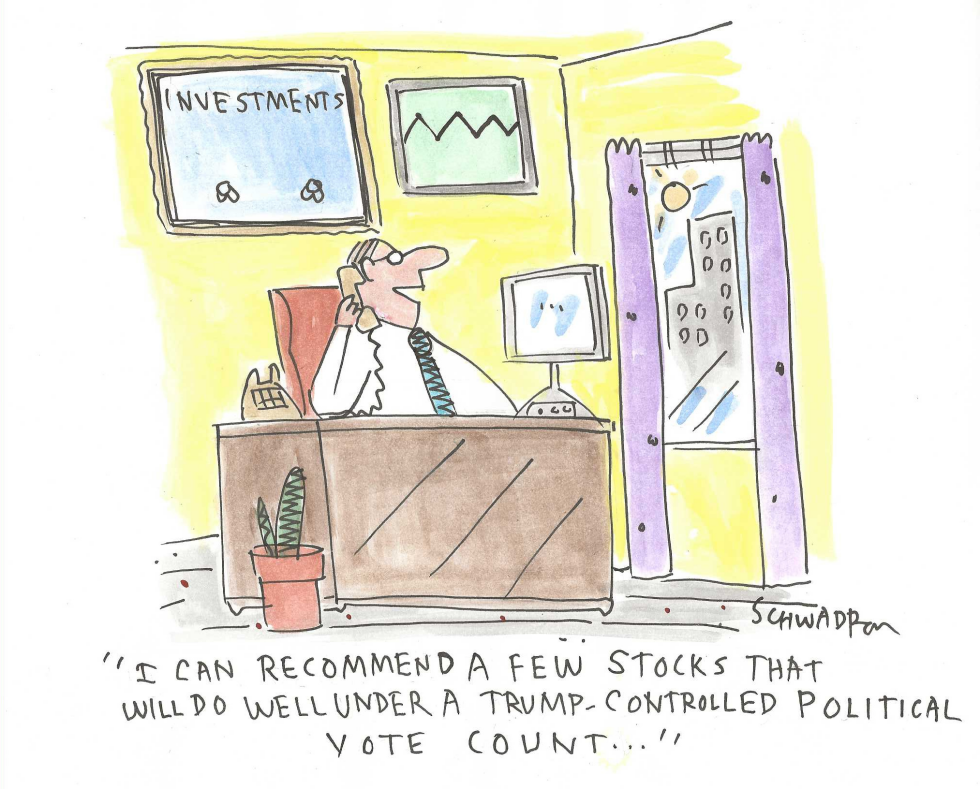
A stockbroker on the phone recommends investments expected to perform under a Trump-controlled political vote count. The scene occurs amid visible symbols of restraint including handcuffs on an investments sign and a barred door resembling a prison cell. The piece responds to ongoing concerns about election integrity and potential political interference in vote tabulation processes. It takes the position that such influence creates opportunities for financial gain tied directly to control over electoral outcomes.
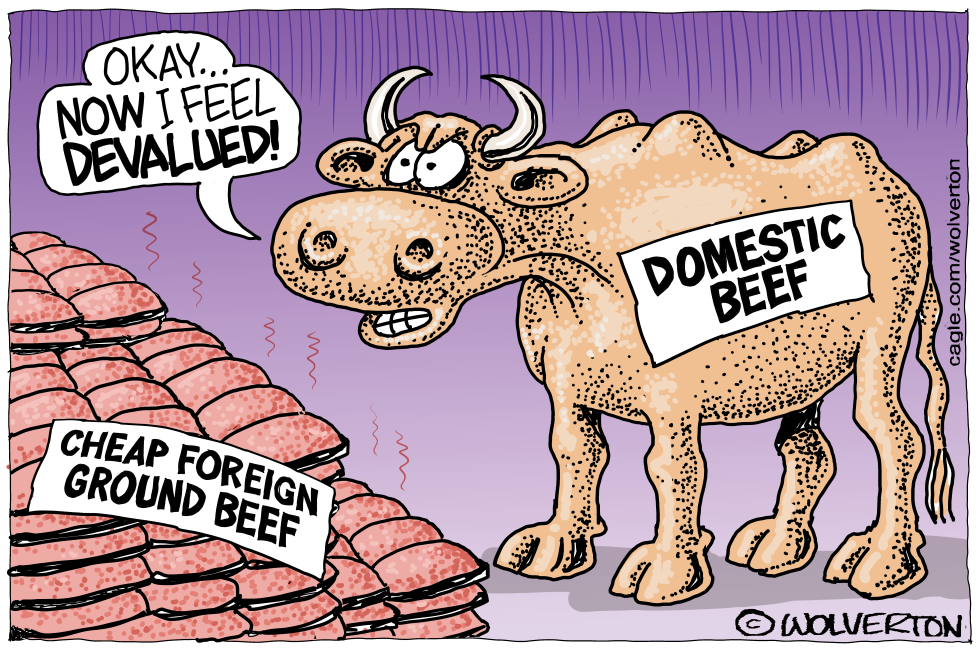
The cartoon depicts a domestic beef cow standing beside stacks of cheap foreign ground beef. The cow, labeled clearly, utters a speech bubble expressing feelings of devaluation. Artist Monte Wolverton uses the visual to address ongoing pressures on the US beef sector from lower-cost imports. The image was published on August 23, 2026. It reflects persistent concerns in agricultural markets where domestic producers compete with foreign supply. The composition places the cow in the foreground with the imported product shown as abundant and lower positioned.
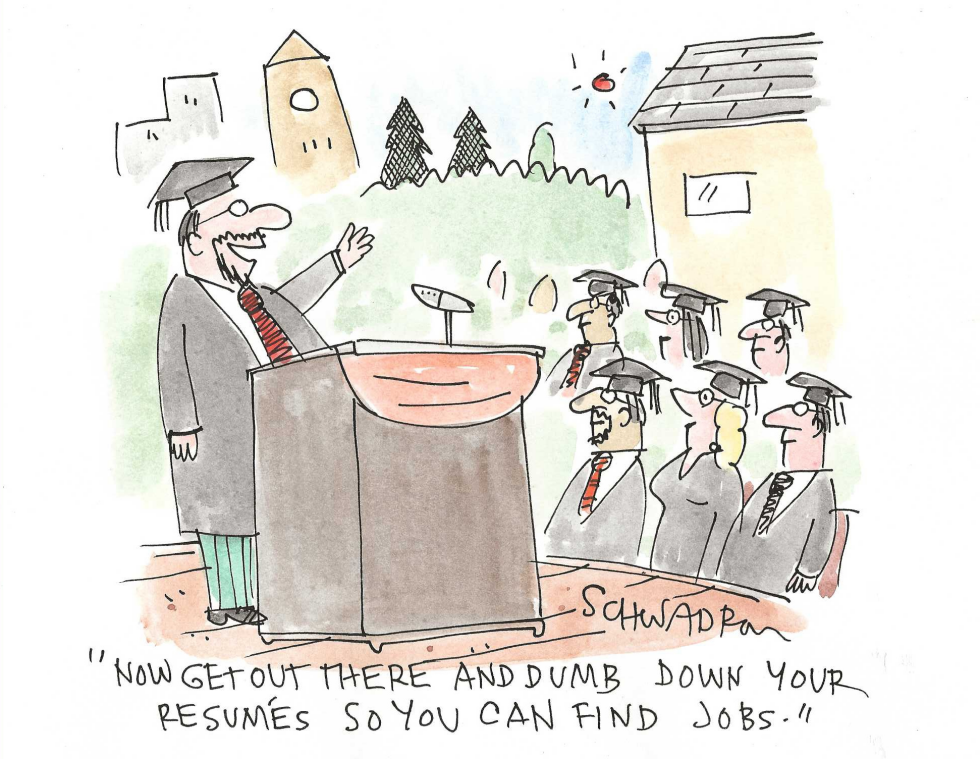
A commencement speaker at a college graduation advised new graduates to simplify their resumes by removing advanced qualifications to better compete in the current job market. The advice reflects ongoing concerns about hiring managers overlooking overqualified candidates and economic pressures limiting entry-level opportunities. The editorial takes the position that such guidance underscores systemic mismatches between higher education outcomes and employer demands rather than individual shortcomings.
Investment firms continue to market specialized stock offerings designed to gain value during periods of widespread economic or geopolitical turmoil. Such products attract attention from clients seeking protection against market downturns or global instability. The cartoon highlights the persistent appeal of these instruments even as broader uncertainty lingers around policy and international developments.
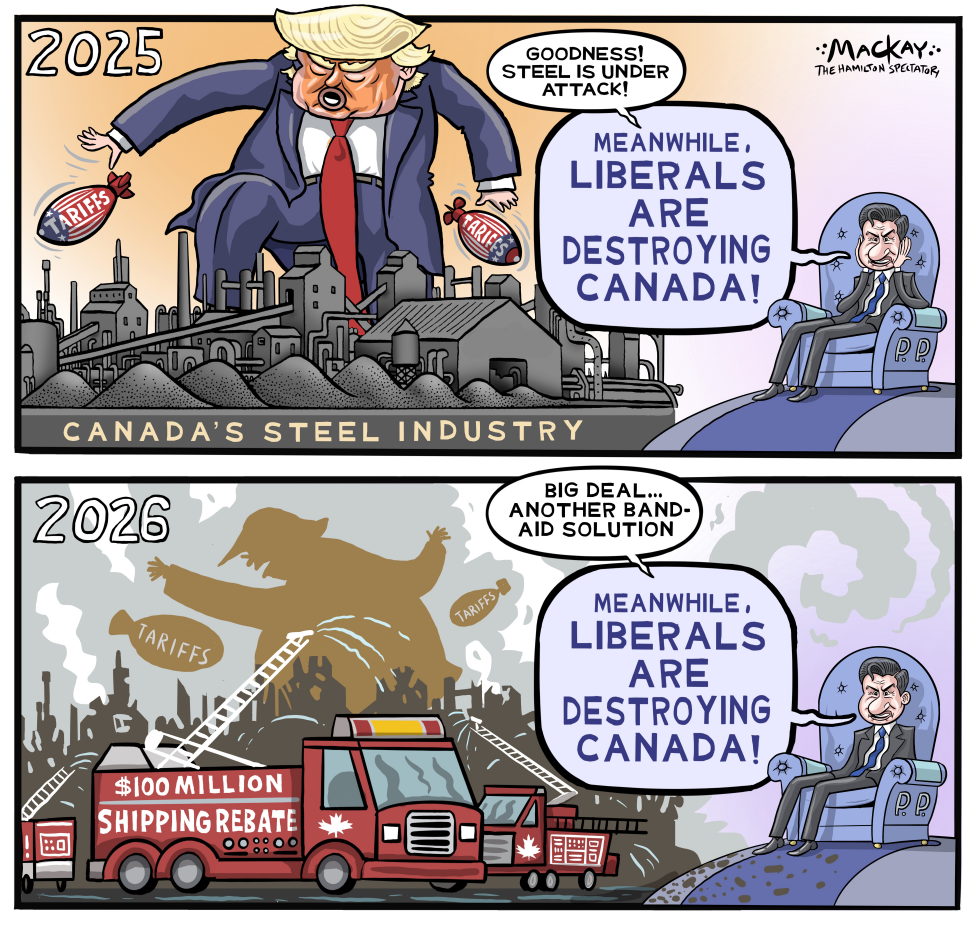
U.S. tariffs imposed on Canadian steel in 2025 triggered sharp declines in the domestic industry by 2026. The federal government responded with a $100 million shipping rebate. Conservative Leader Pierre Poilievre continued to focus attacks on the Liberal government rather than the trade shock. The cartoon argues this stance amounts to a repeated distraction from the core economic damage.