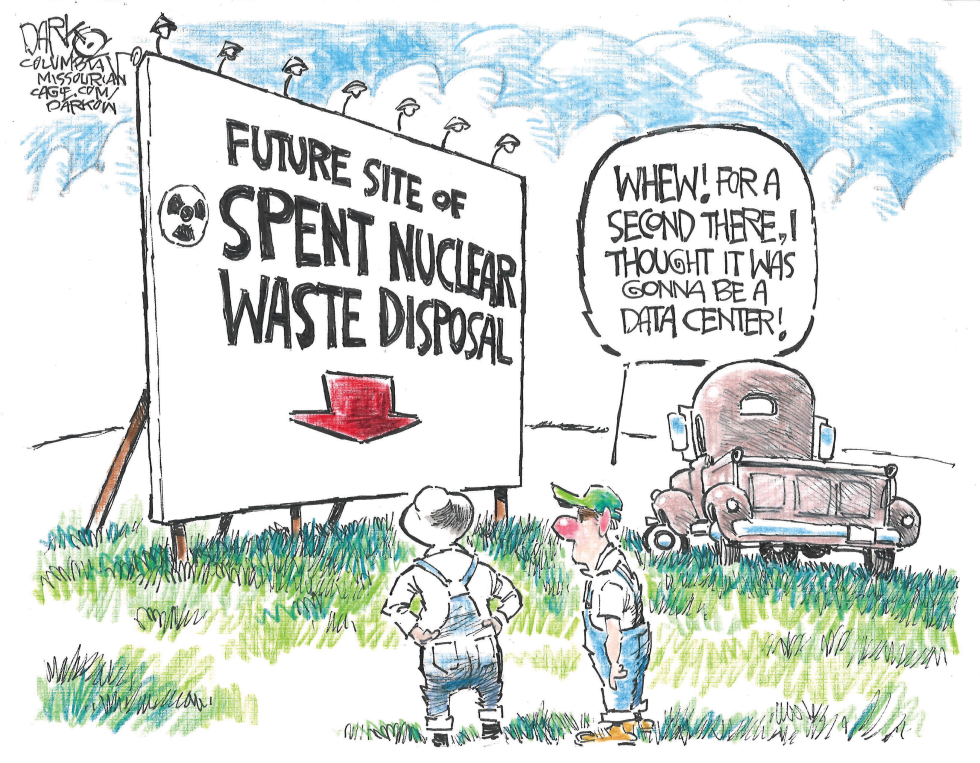
Rural communities continue to face competing proposals for large-scale projects on agricultural land. A planned spent nuclear waste disposal facility draws attention as residents weigh it against potential data center developments that often bring high energy demands and infrastructure changes. The editorial takes the position that such choices reflect broader tensions in siting energy-related facilities versus technology operations in farming areas.
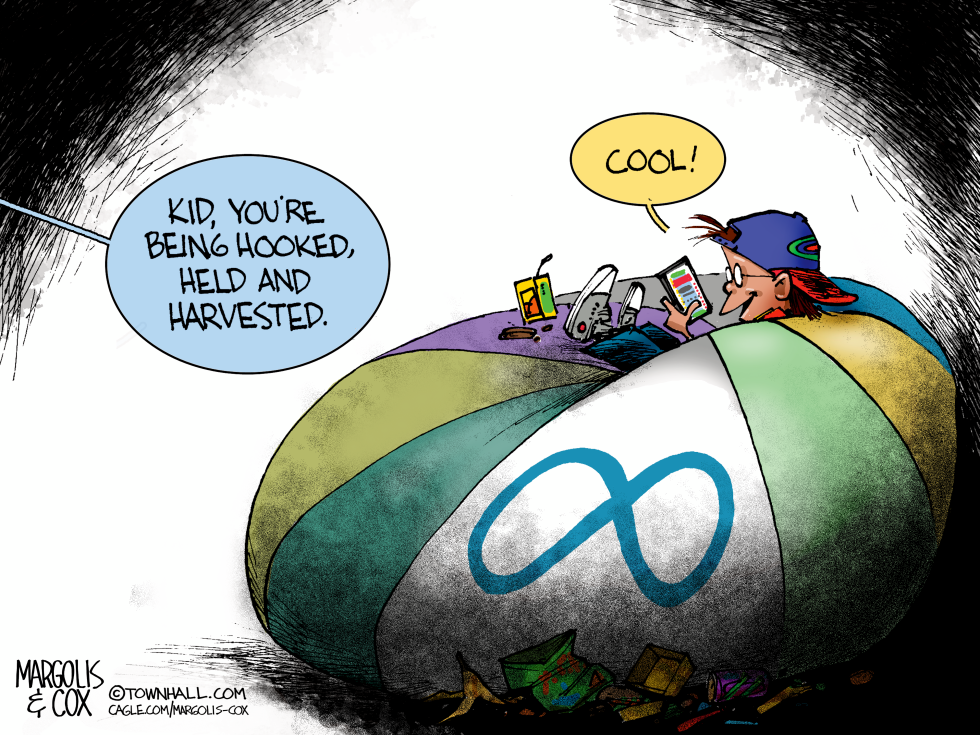
Meta faces ongoing scrutiny for social media features that prioritize engagement over child safety. Critics argue the company's algorithms and design choices deliberately hook young users for data collection. The piece portrays this dynamic as predatory, with the platform's infinity symbol serving as the central lure.
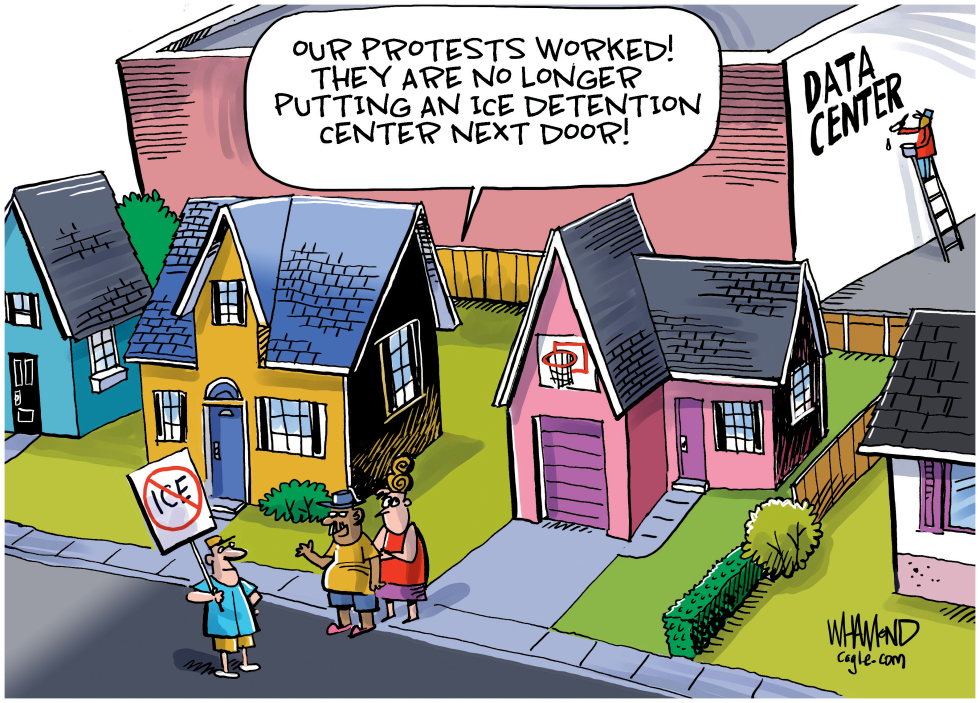
Residents in a suburban neighborhood protested plans for an ICE detention center near their homes. The facility was replaced by a data center, prompting cheers from locals who had opposed the detention site. The editorial highlights community pushback against immigration enforcement infrastructure and the unexpected outcome favoring commercial development instead.
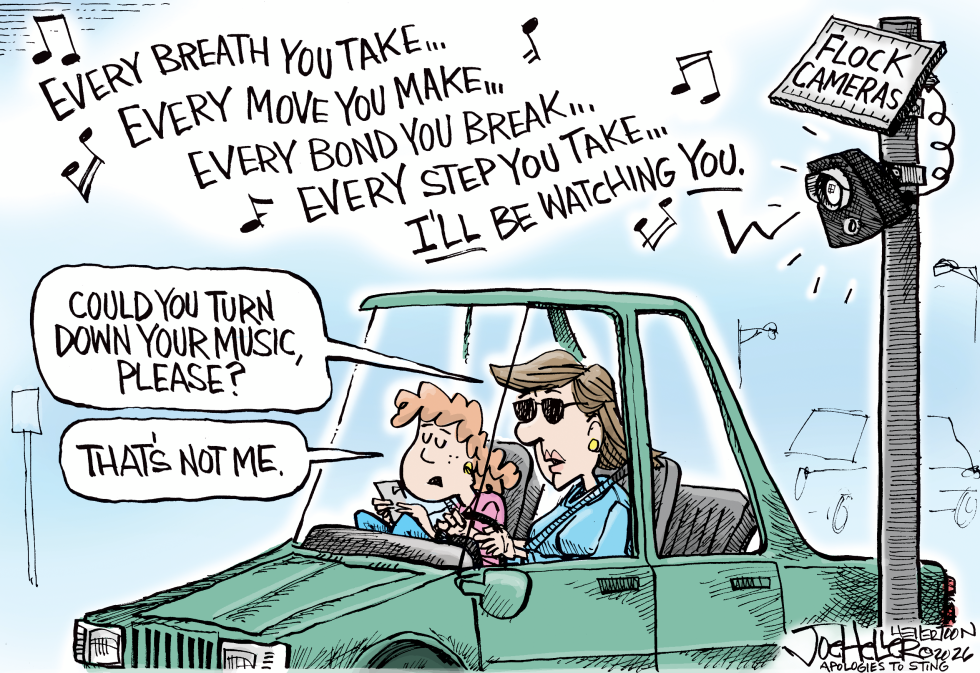
Police departments across the country have expanded use of Flock license plate readers to track vehicles in real time. The technology raises questions about the balance between public safety and individual privacy. The piece argues that such systems create an inescapable watch on everyday movement.
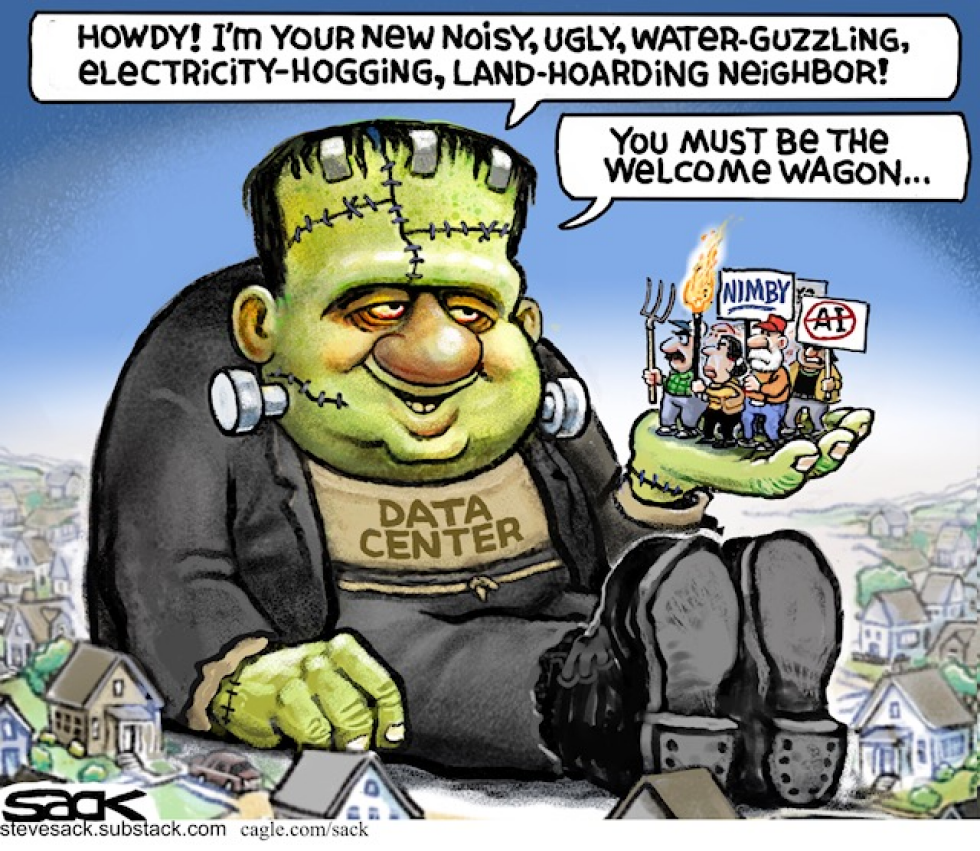
Rapid growth in AI data centers has triggered protests in suburban areas over high electricity and water consumption plus land use. Residents organized under NIMBY banners to block projects they say strain local infrastructure. The cartoon frames the facilities as intrusive newcomers disrupting neighborhoods.
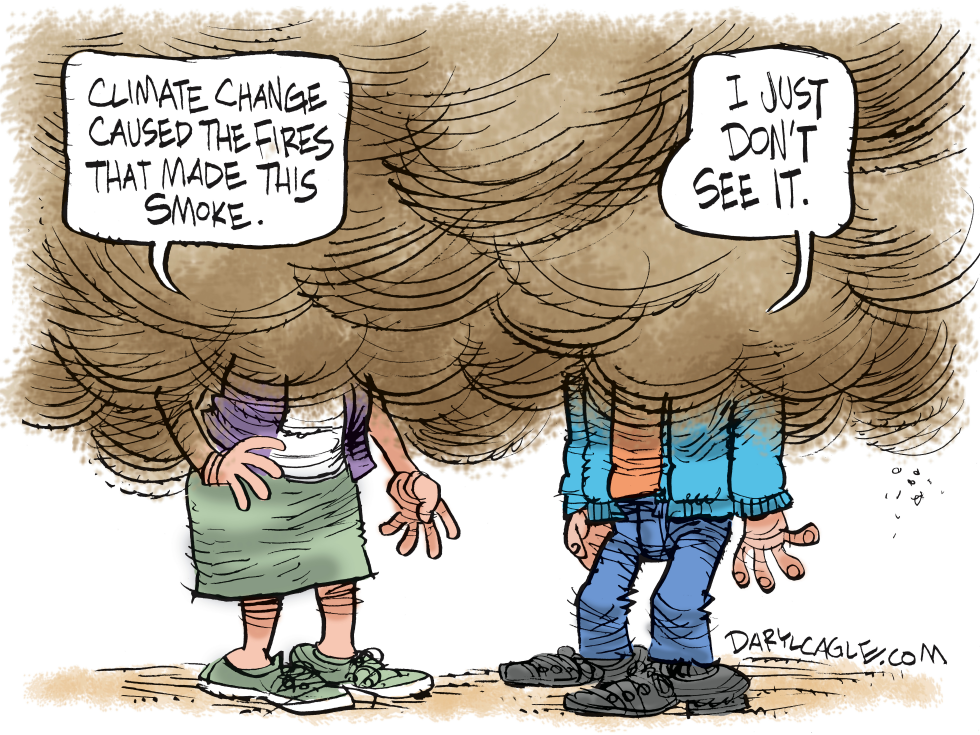
Canadian wildfires have produced widespread smoke affecting air quality across regions. The debate centers on whether climate change drives the fires or if other factors dominate. Public discourse shows persistent skepticism despite visible evidence. The piece highlights how some reject the link between rising temperatures and increased fire activity. It critiques the refusal to acknowledge observable environmental changes tied to climate patterns.
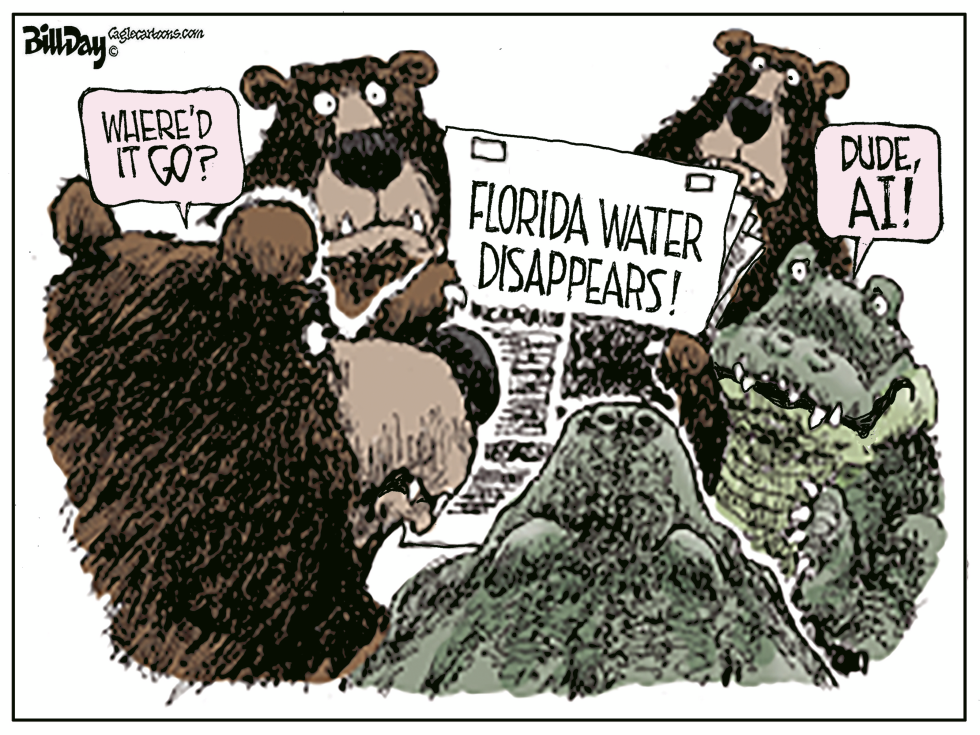
Florida faces ongoing water supply pressures amid population growth and technological expansion. Bears in the cartoon accuse artificial intelligence of causing the shortage. The piece highlights how data centers and computing demands draw scrutiny for resource consumption. The editorial position frames the blame on AI as a simplistic deflection from broader environmental and policy challenges in the state.
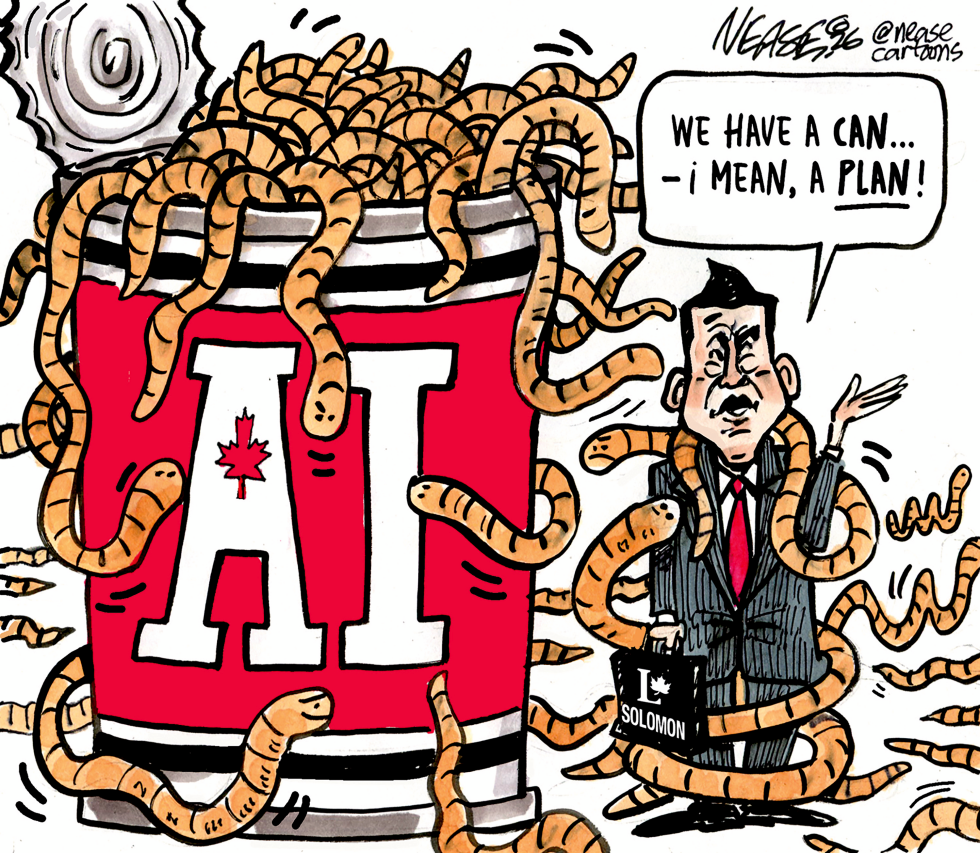
A Canadian official entangled in worms emerging from an AI-labeled container attempts to present a coherent plan. The situation highlights ongoing challenges in managing rapid AI development within government frameworks. The piece portrays the difficulty of containing technological disruptions once released into public and policy spheres.
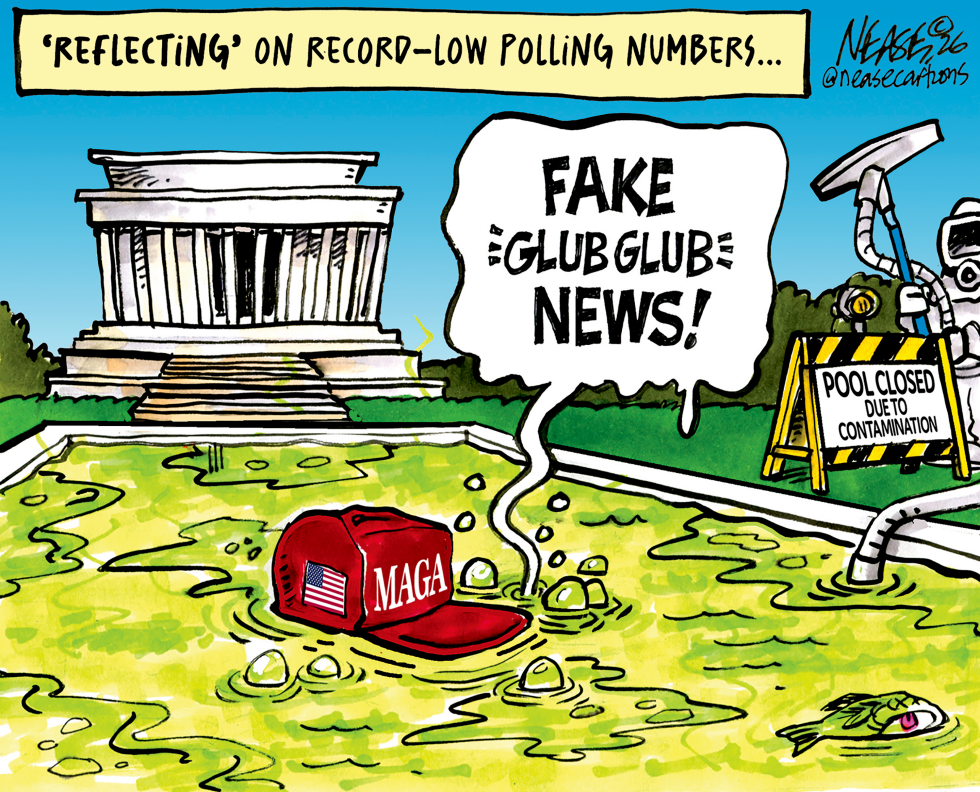
Donald Trump-aligned polling numbers reached record lows in early August 2026. Supporters responded with claims of fake news rather than addressing the data. The piece portrays this denial as occurring in a toxic environment.
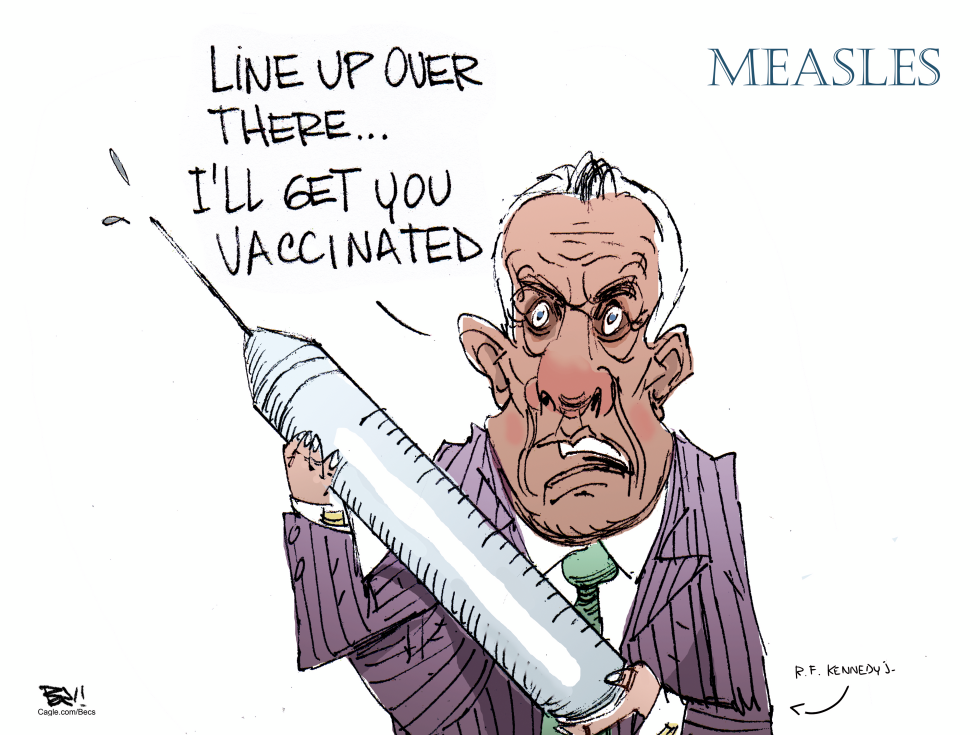
Robert F. Kennedy Jr., serving as a top health official in 2026, faces scrutiny over a sudden push for measles vaccinations. The move comes as cases rise and public skepticism lingers from prior stances. The editorial argues the policy reversal exposes inconsistent leadership on immunization.
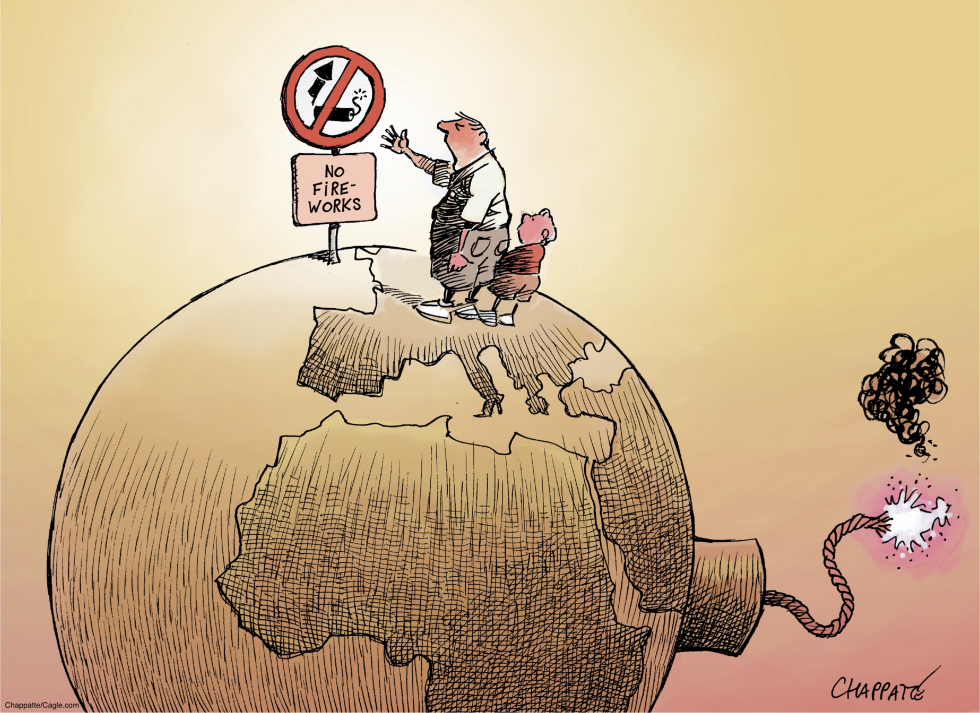
Global leaders continue to dismiss repeated scientific warnings about accelerating climate impacts even as extreme weather events intensify worldwide. The ongoing failure to curb emissions and adopt binding reductions leaves future generations exposed to rising temperatures, sea levels, and resource conflicts. The editorial argues that such willful disregard of clear danger signs amounts to reckless endangerment of the planet itself.
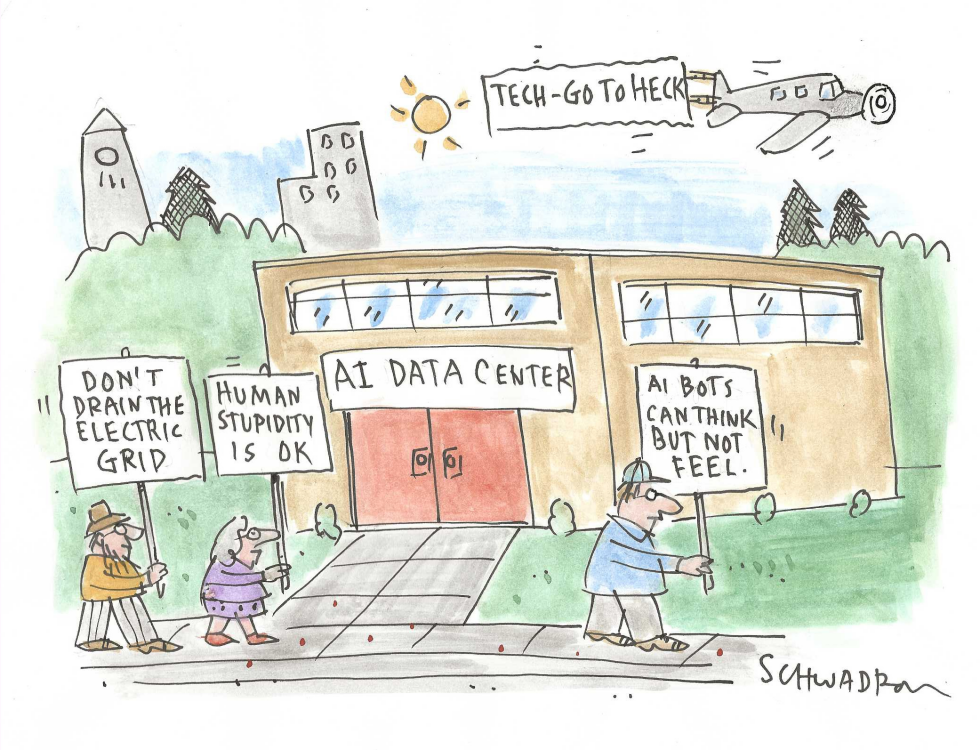
Protesters gather outside an AI data center building holding signs that read 'DON'T DRAIN THE ELECTRIC GRID,' 'HUMAN STUPIDITY IS OK,' and 'AI BOTS CAN THINK BUT NOT FEEL.' An airplane tows a banner reading 'TECH-GO TO HECK' overhead. The cartoon by Harley Schwadron, published July 31, 2026, depicts public opposition to the energy demands of AI facilities amid ongoing debates about data center impacts on electricity grids and technology development.
Rapid expansion of artificial intelligence tools and outputs continues to reshape daily operations across industries. The proliferation raises questions about adaptation and safeguards. The piece portrays the deluge as an overwhelming force requiring personal protection measures.
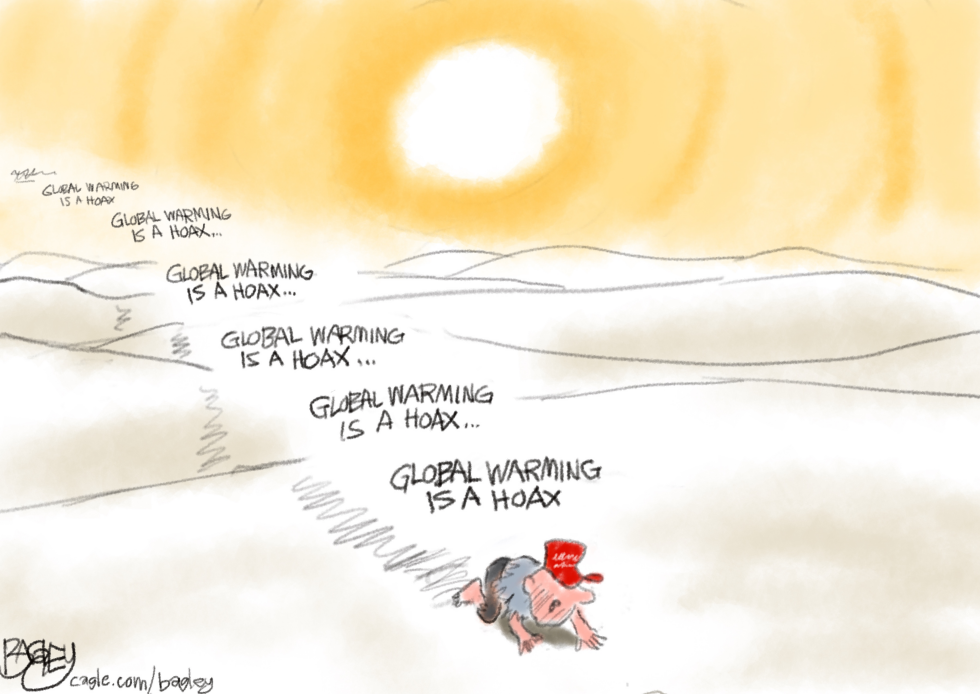
Public figures continue to label global warming a hoax despite record heat events affecting communities worldwide. The stance draws scrutiny as temperatures climb and denial rhetoric persists in political circles. The piece highlights the disconnect between such claims and observable conditions on the ground.
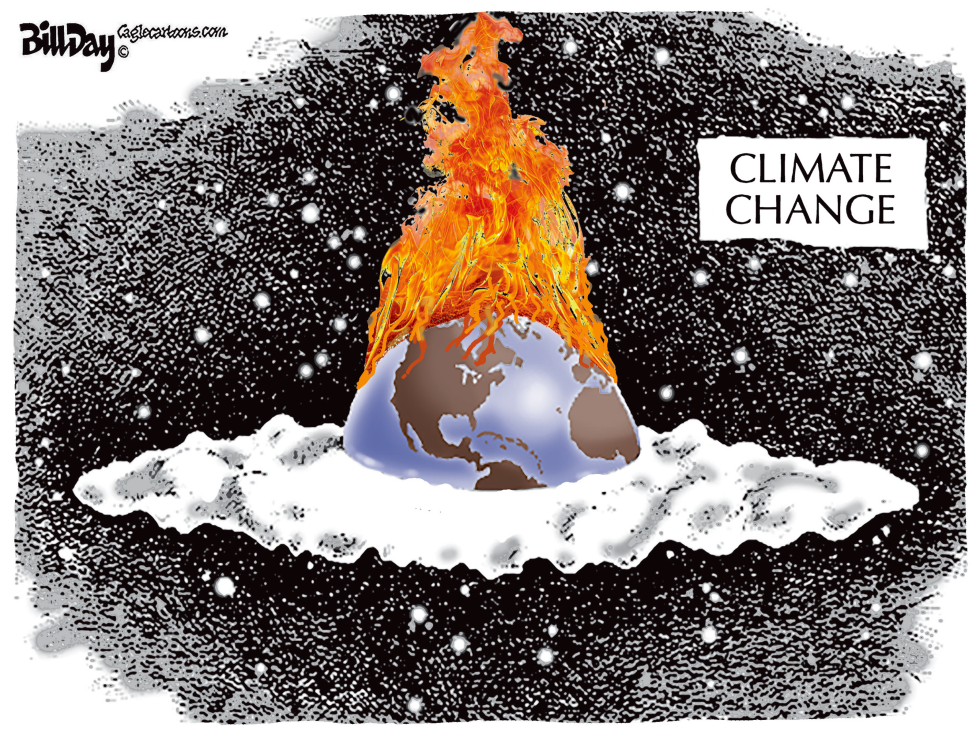
Ongoing global temperature records continue to climb in mid-2026 amid extreme weather events worldwide. Scientists and governments track accelerating impacts from greenhouse gas emissions. The cartoon underscores the direct link between human-driven climate change and planetary distress, presenting the crisis as an immediate and visible threat rather than a distant concern.