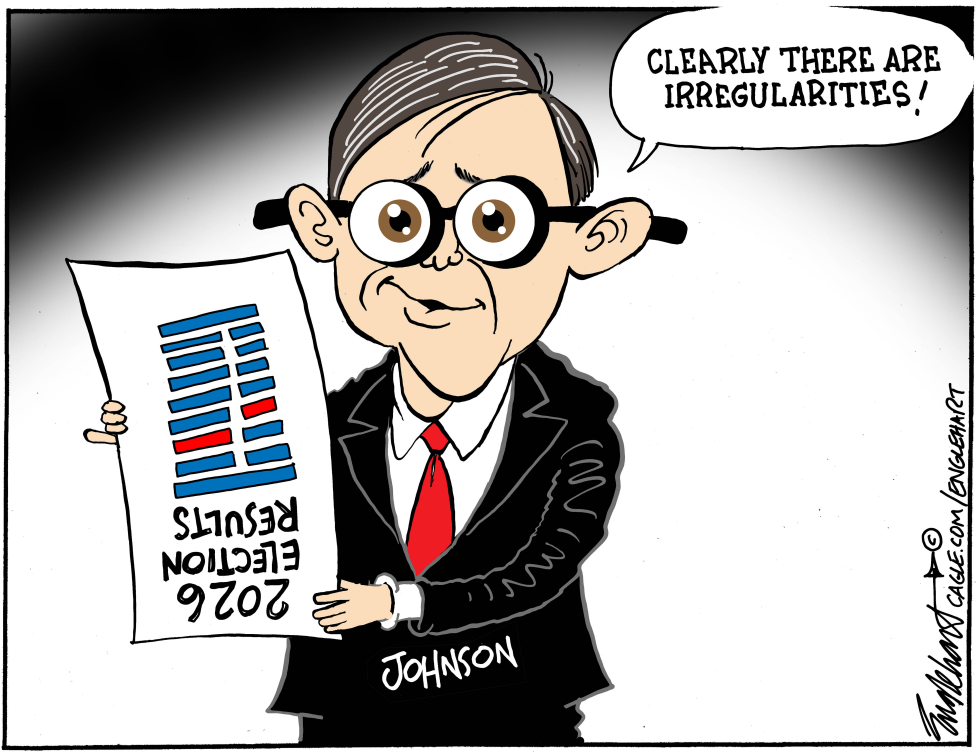
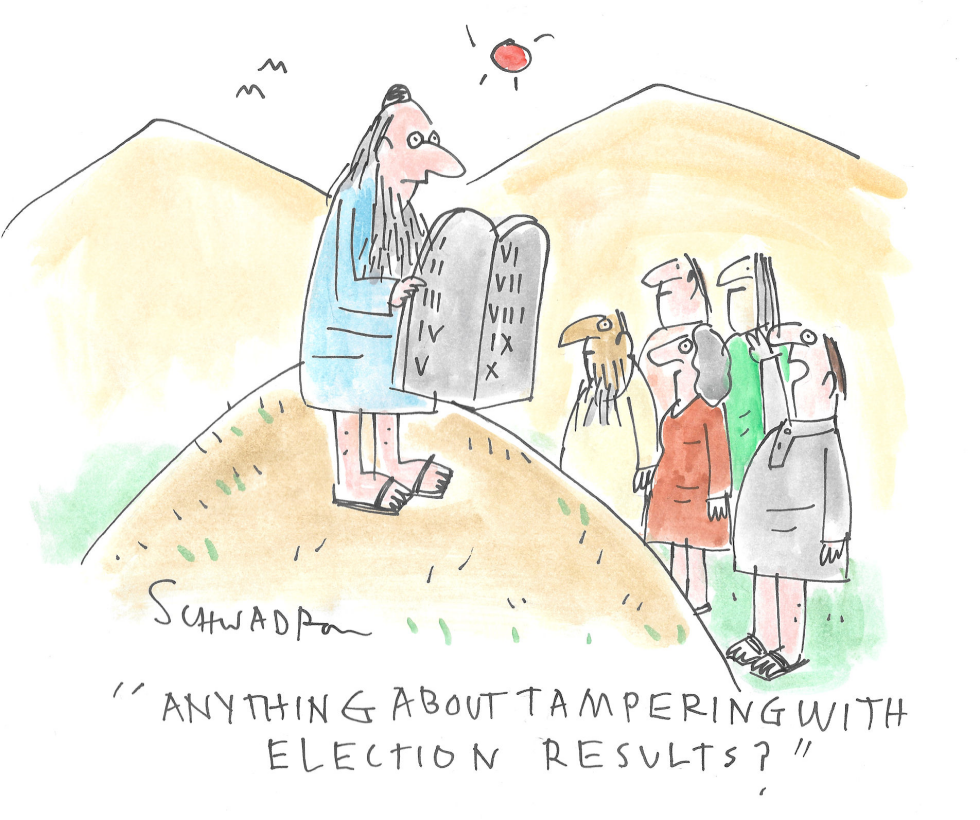
House Speaker Mike Johnson publicly questioned the integrity of the 2026 election results in September 2026, citing irregularities in a bar chart of outcomes. The move raised alarms about potential delays or challenges to congressional certification of the vote. Critics argue the statements undermine public confidence in the electoral process without evidence of widespread fraud. The cartoon portrays Johnson as actively sowing doubt in the results to influence outcomes. It takes the position that such rhetoric from congressional leadership threatens democratic norms and the peaceful transfer of power.
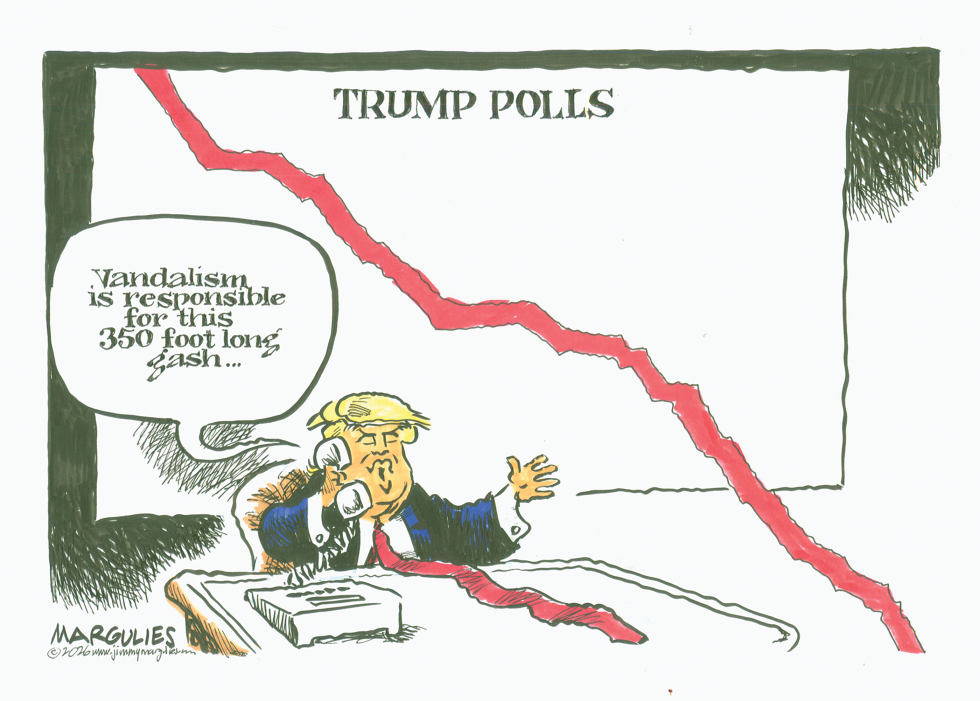
Donald Trump has attributed a steep decline in his polling numbers to alleged vandalism that created a long gash in his chart. The claim comes amid ongoing questions about his support levels ahead of future electoral tests. The piece presents the explanation as an attempt to deflect responsibility for unfavorable results rather than address underlying voter concerns.
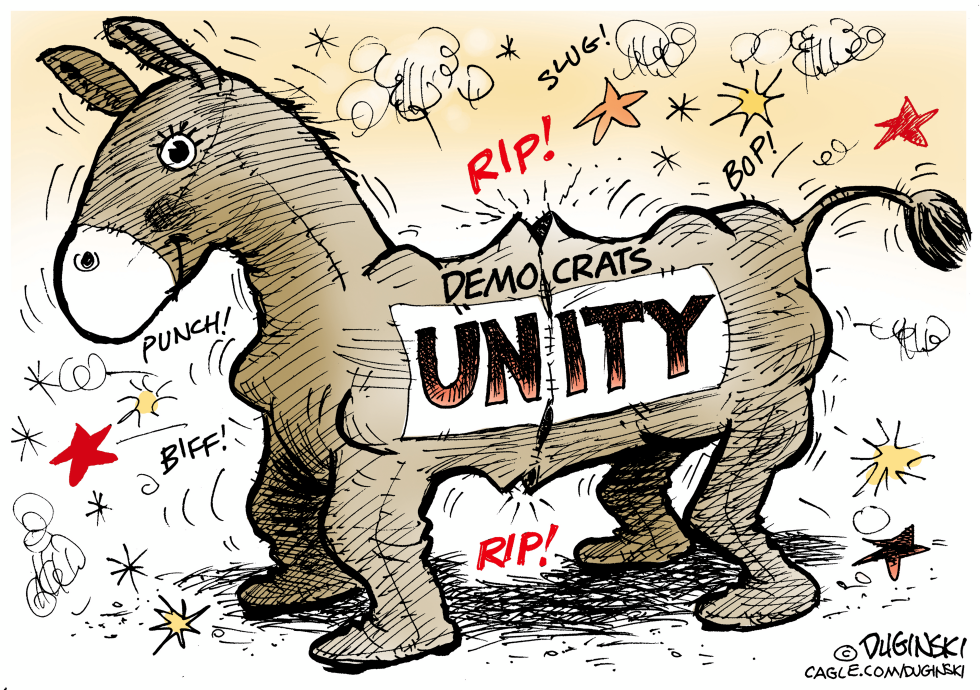
Democrats continue to display public divisions over strategy and messaging in the run-up to midterm and presidential contests. Party leaders struggle to project cohesion on issues ranging from economic policy to social priorities. The resulting perception of disarray weakens their ability to counter Republican narratives and mobilize voters. The cartoon highlights how these internal conflicts undermine the party's core message of unity.
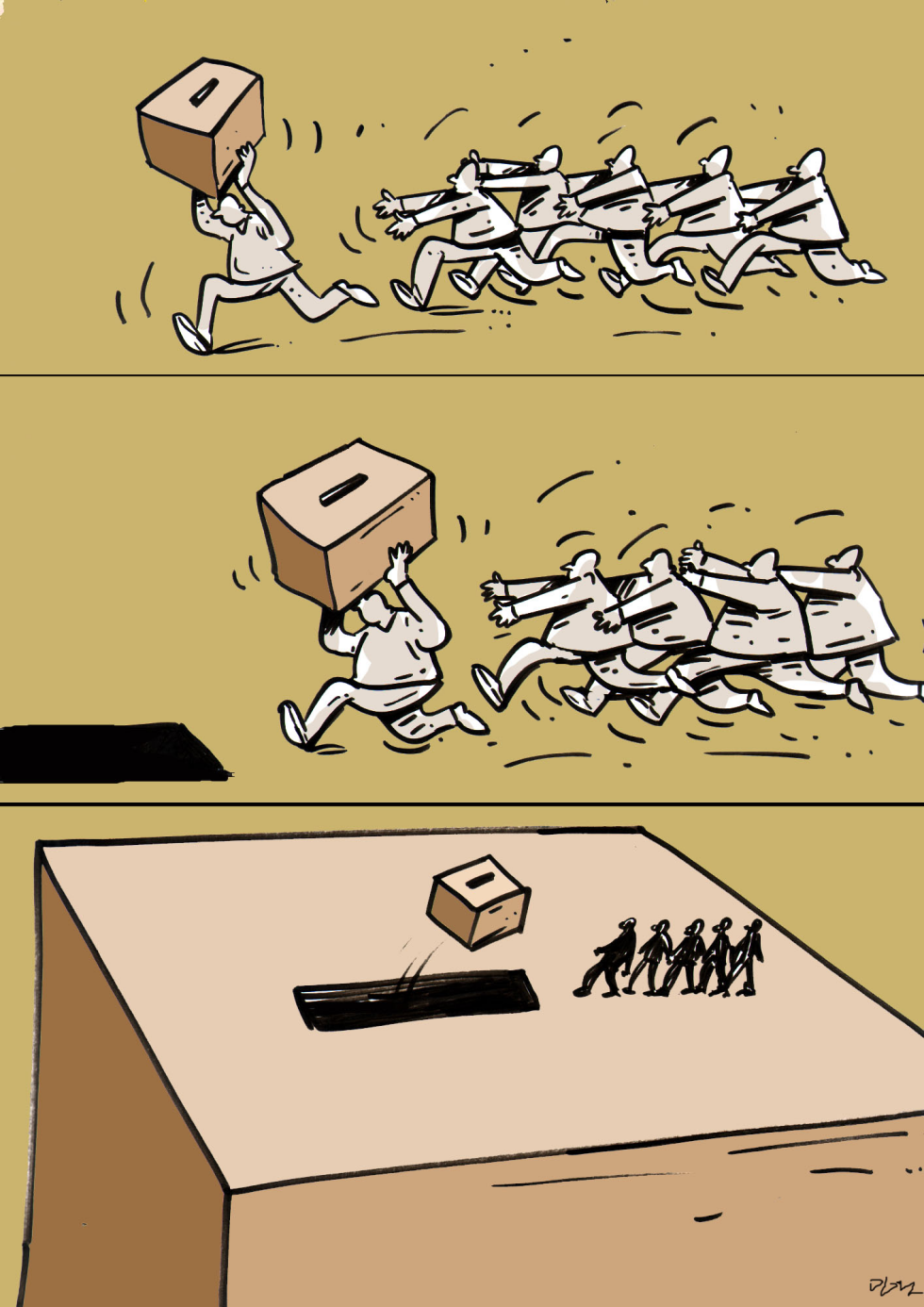
An election official carries a ballot box while pursued by a chain of figures in successive panels. The sequence ends with the box on a voting table beside its slot and the group nearing. The piece highlights concerns over ballot security and potential interference in vote counting during an election cycle.
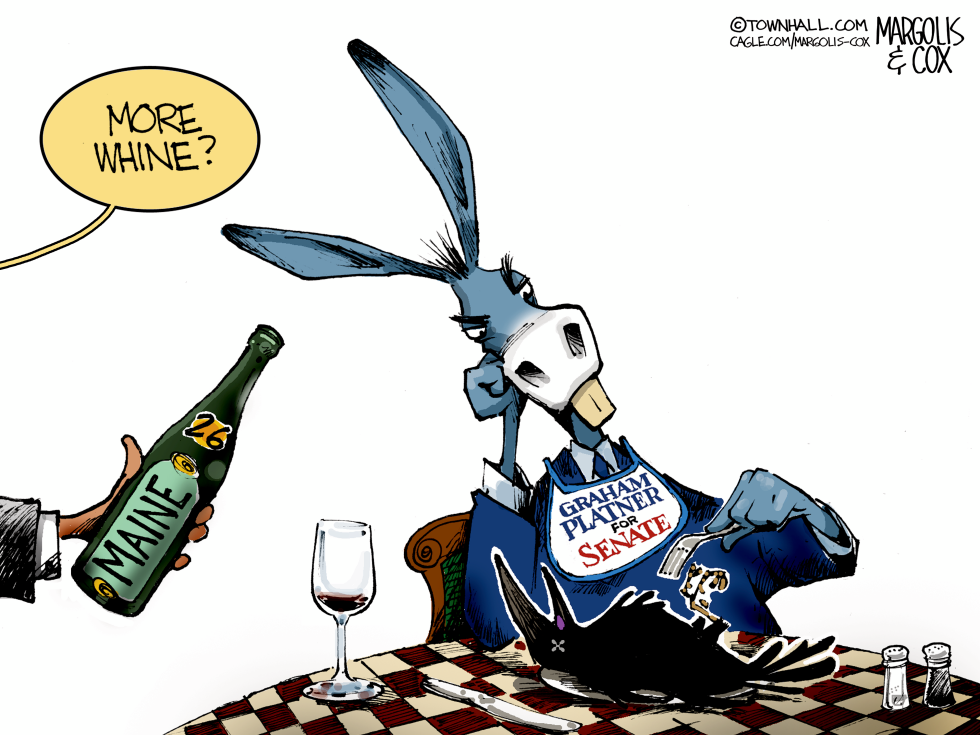
A political cartoon published July 9, 2026, depicts a slumped Democratic donkey wearing a Graham Platner for Senate bib at a table with spilled wine. A hand offers a bottle labeled Maine 26 as a speech bubble asks More Whine? The image responds to the recent defeat of the Maine Senate candidate in the 2026 election cycle.
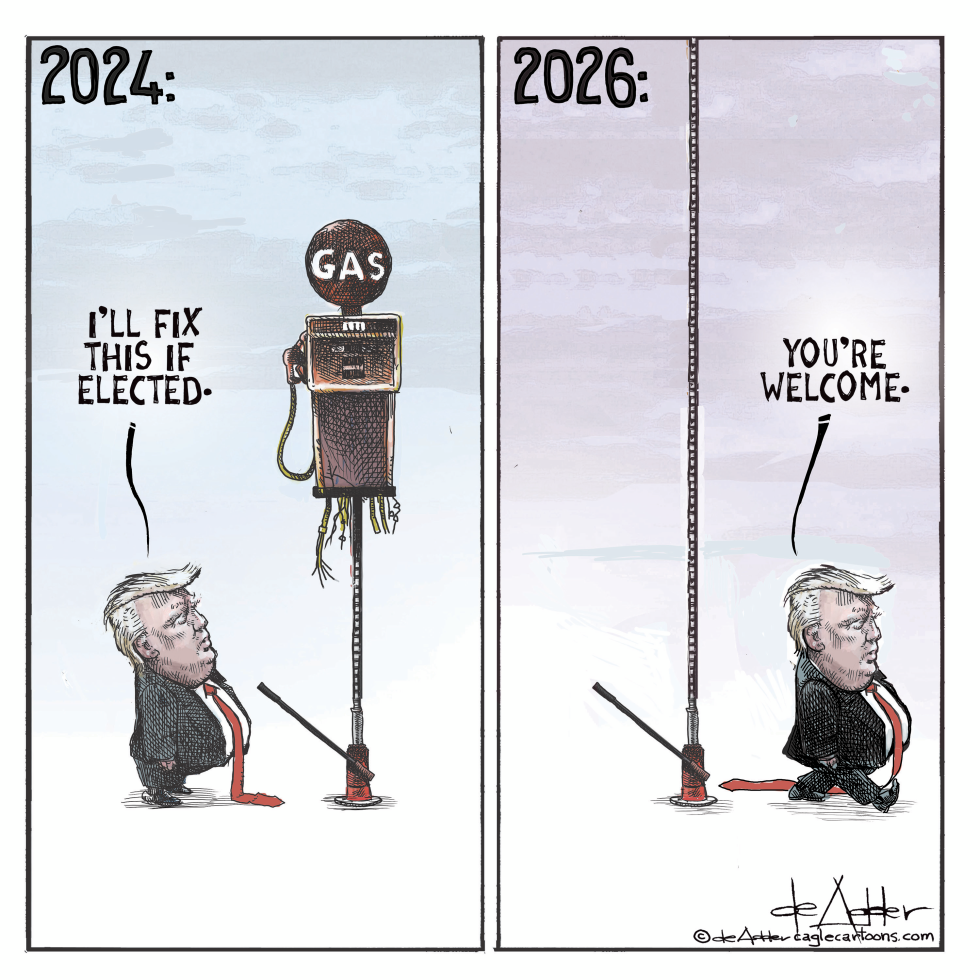
Michael de Adder's cartoon splits into 2024 and 2026 panels, showing a figure resembling Trump addressing a high gas pump with a promise to fix it if elected, tagged with Trump, gas, prices. In the later panel, the same figure pulls the pump down low, saying 'you're welcome,' tying into election, energy, Iran, war themes. The satire highlights contrasts in promise versus action on cost, economy, inflation, oil, barrel issues. This visual commentary underscores political pledges on energy costs, with the figure's actions suggesting a direct, perhaps misguided intervention. Tags like conflict and prices emphasize the economic satire at play.