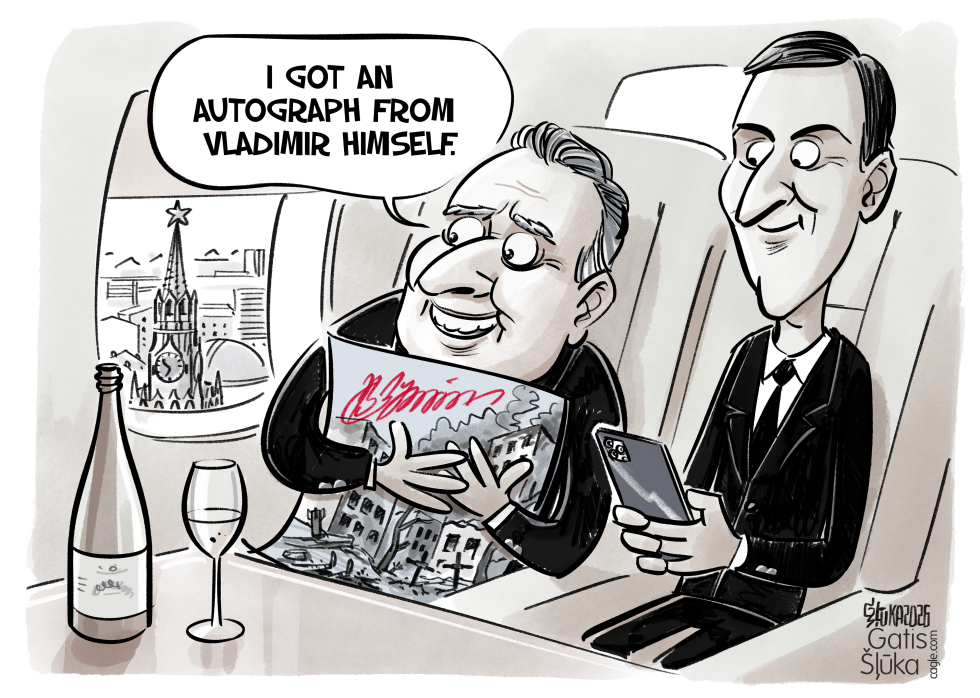
The cartoon depicts a politician on an airplane excitedly showing a colleague an autograph from Vladimir Putin on a book or document. The speech bubble reads that the autograph came from Vladimir himself. A bottle of wine and glass sit on the table, with a view of a city featuring a star-topped tower outside the window. The second man smiles while holding a phone. Published on September 7, 2026, the image comments on political figures maintaining or displaying ties to Russia despite international strains. The visual emphasizes the politician's enthusiasm for the souvenir as a point of pride.
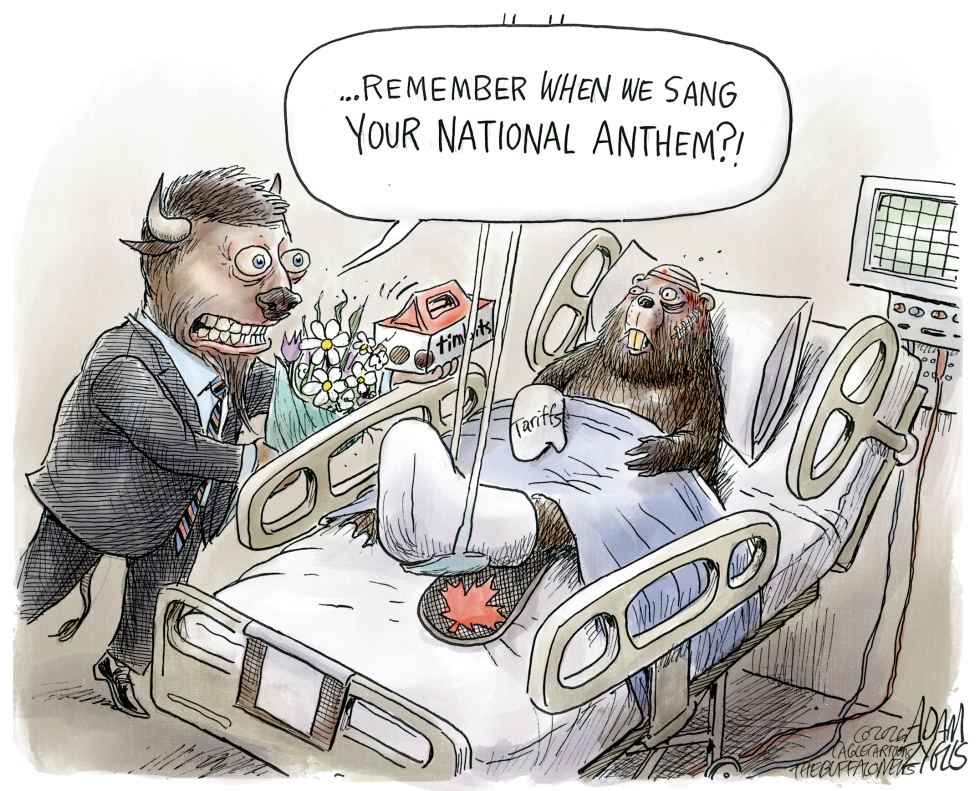
The cartoon depicts a suited bull figure at the bedside of an injured beaver wearing a hospital gown labeled Tariffs. The beaver lies in a hospital bed with a maple leaf emblem visible. A speech bubble from the bull references singing the national anthem. Medical equipment and a Tim Hortons box appear in the room. The image addresses ongoing tariff policies affecting US Canada trade relations as of the September 2026 publication date. The visual metaphor highlights economic harm to the Canadian side of the partnership while recalling past cooperative gestures between the two nations.
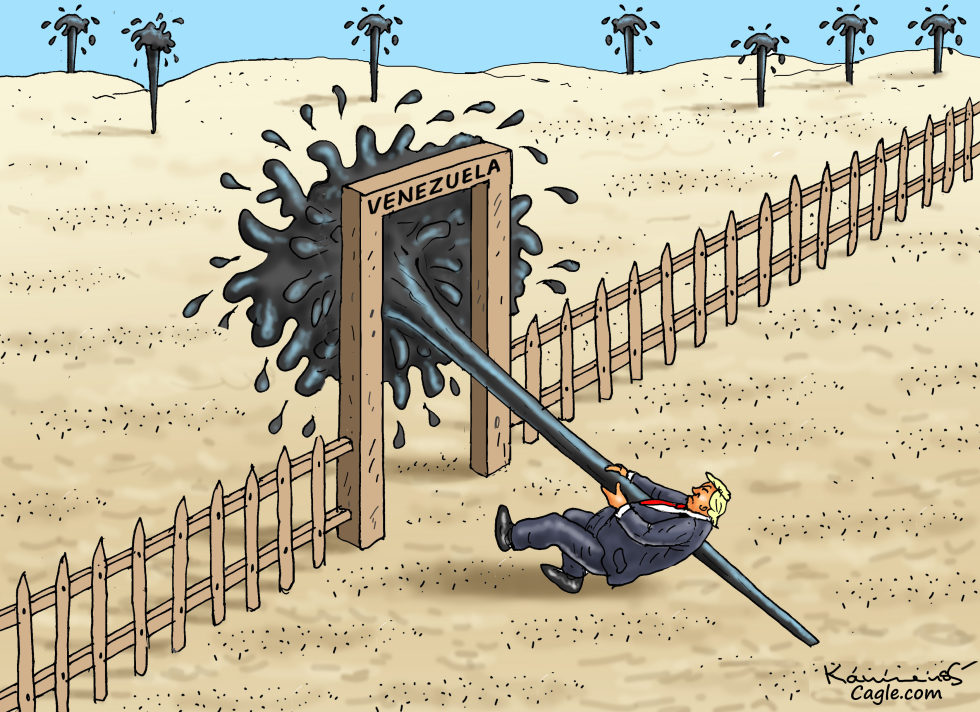
US policy toward Venezuelan oil exports shifted in 2026 as the Trump administration eased certain sanctions. This allowed increased crude shipments to reach American markets. The change raised questions about energy security and relations with Caracas. Critics argued the move undermined prior pressure on the Maduro government. The cartoon depicts the oil surge directly impacting Trump, suggesting the policy backfired on its architect.
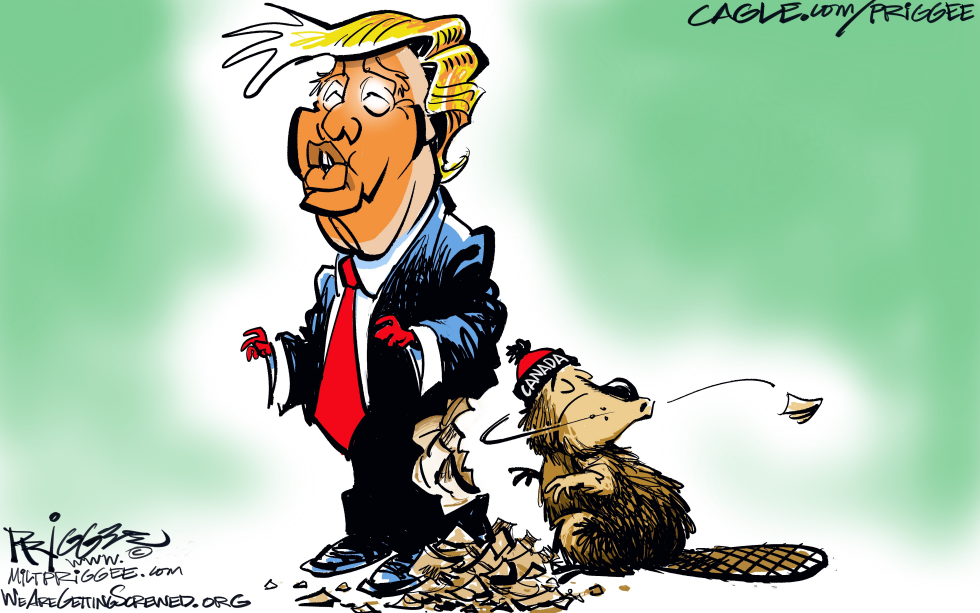
A political cartoon shows Donald Trump with his pants chewed by a beaver wearing a Canada hat. Wood chips litter the ground around his feet. The image captures friction in U.S.-Canada relations as of September 2026. The beaver represents Canada responding to policies from the Trump administration. Trade and diplomatic issues form the backdrop for the visual metaphor.
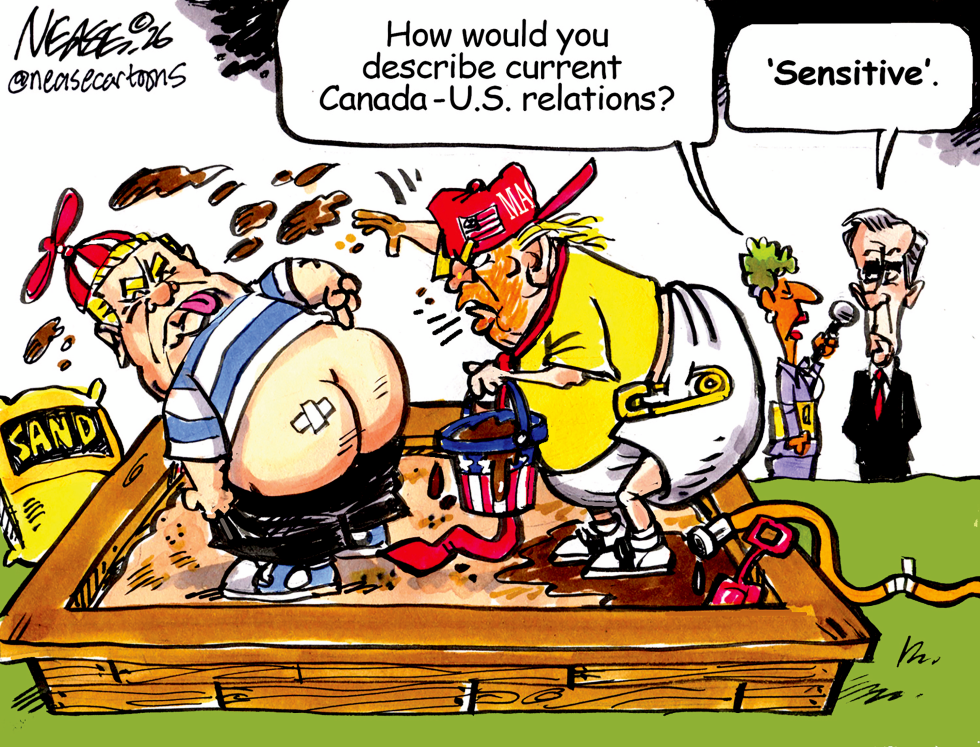
Donald Trump described current Canada-U.S. relations as sensitive during a period of ongoing trade and diplomatic friction between the two nations. The characterization came amid broader tensions over tariffs, border issues, and economic interdependence. The piece portrays the label as understated given the confrontational dynamic between the leaders.
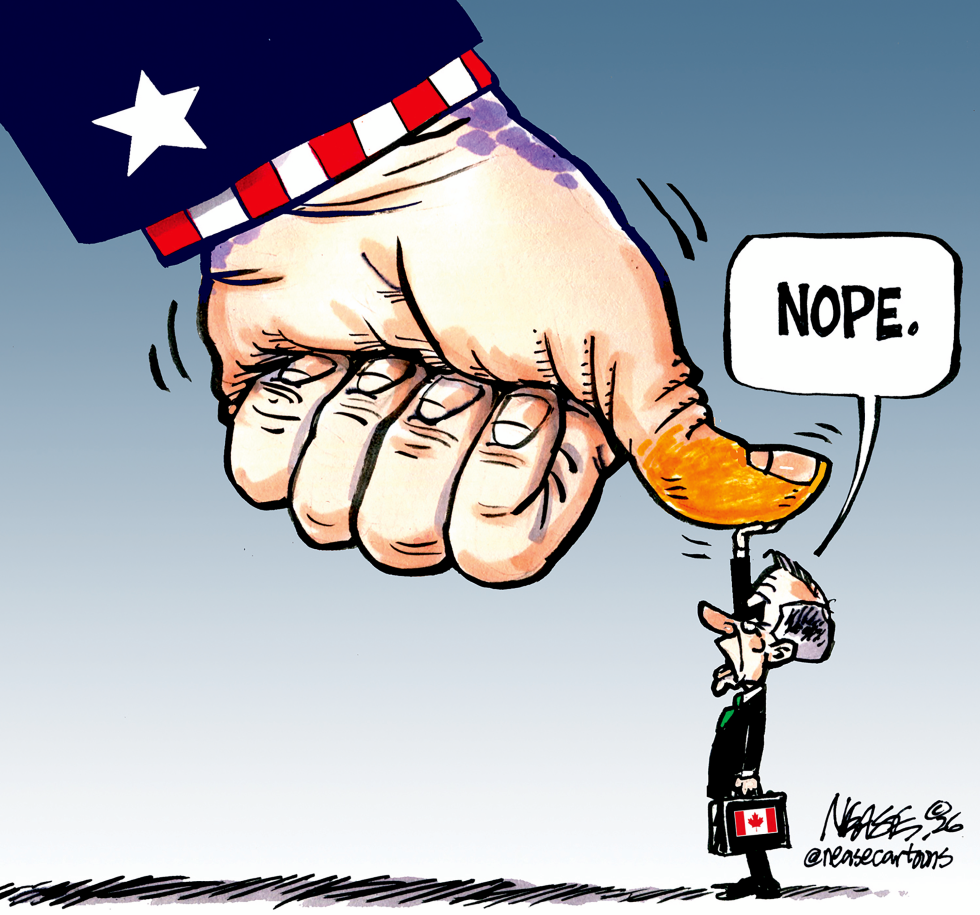
Canada has rejected a US trade offer during bilateral negotiations. The decision highlights ongoing tensions over economic terms between the two neighbors. It matters because trade relations affect supply chains and tariffs across North America. The piece portrays the Canadian stance as a direct refusal to the American proposal.
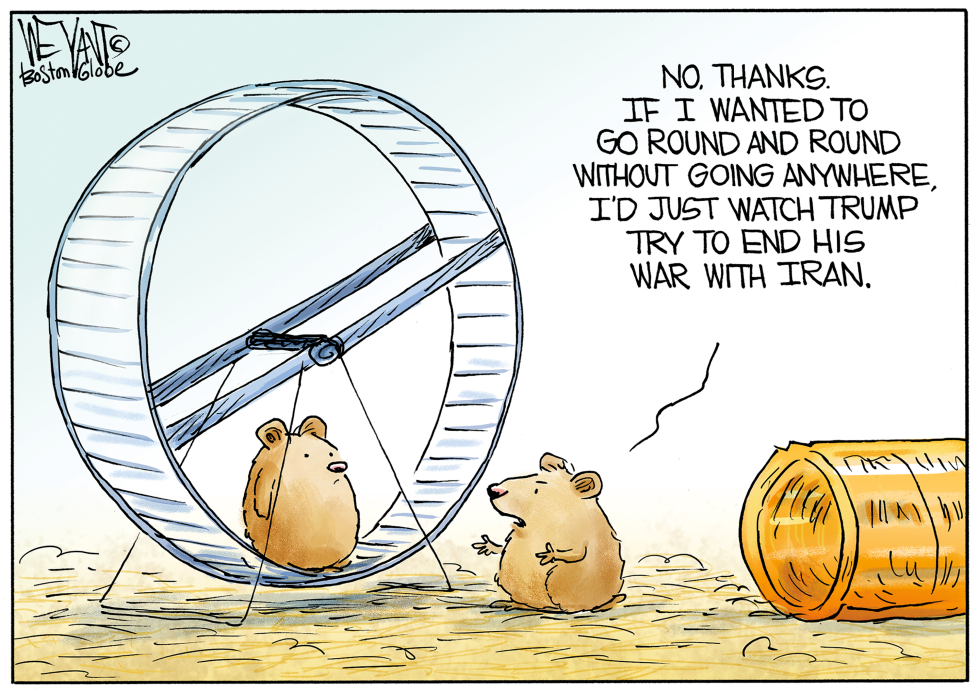
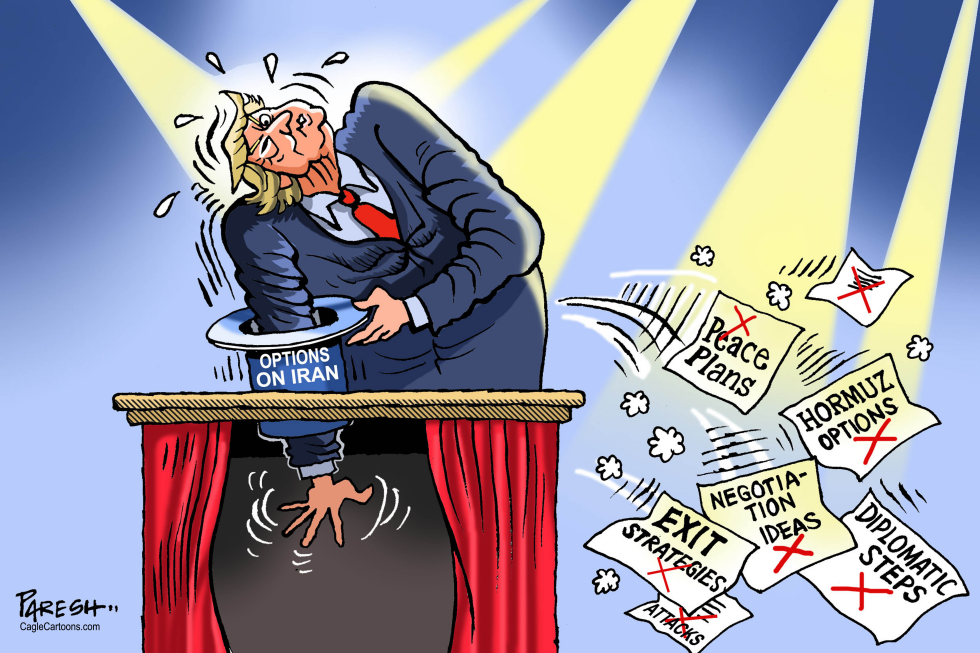
President Trump continues efforts to resolve the ongoing conflict with Iran through repeated diplomatic rounds. The situation remains stalled with no clear progress after multiple attempts. Observers note the repetitive nature of the process without advancement. The piece portrays the hamster's refusal as a commentary on the futility of the approach.
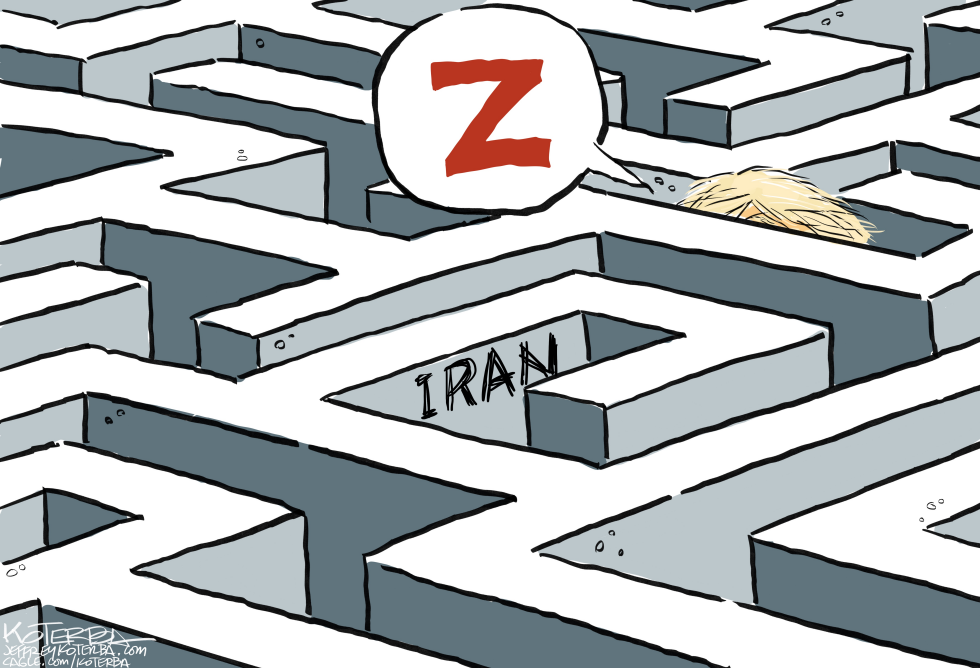
Iran's political and diplomatic challenges continue amid stalled negotiations and shifting alliances in the Middle East. External actors send mixed signals that complicate efforts to resolve nuclear and regional tensions. The piece suggests these hidden influences deepen the impasse rather than clarify a path forward.
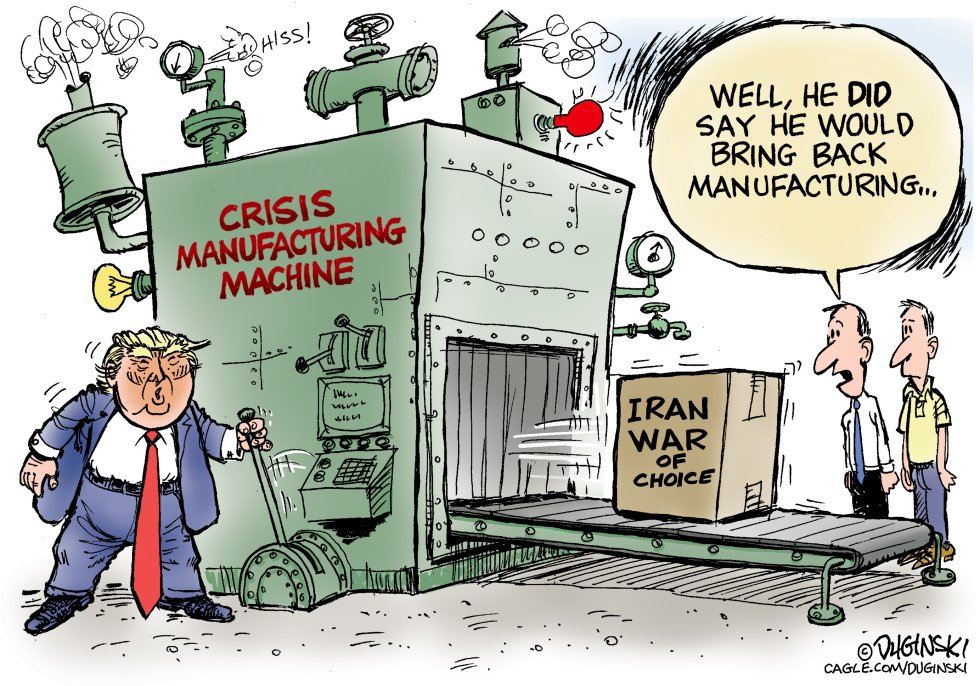
Donald Trump, holding the presidency in 2026, faces renewed scrutiny over foreign policy toward Iran. Recent statements revive campaign pledges to restore domestic manufacturing while tensions with Tehran escalate. The administration\\\'s approach draws criticism for prioritizing confrontation over diplomacy. Observers note the pattern of generating external crises rather than economic gains at home. The cartoon argues that Trump\\\'s actions fulfill a literal version of his manufacturing rhetoric by producing conflict instead of jobs.
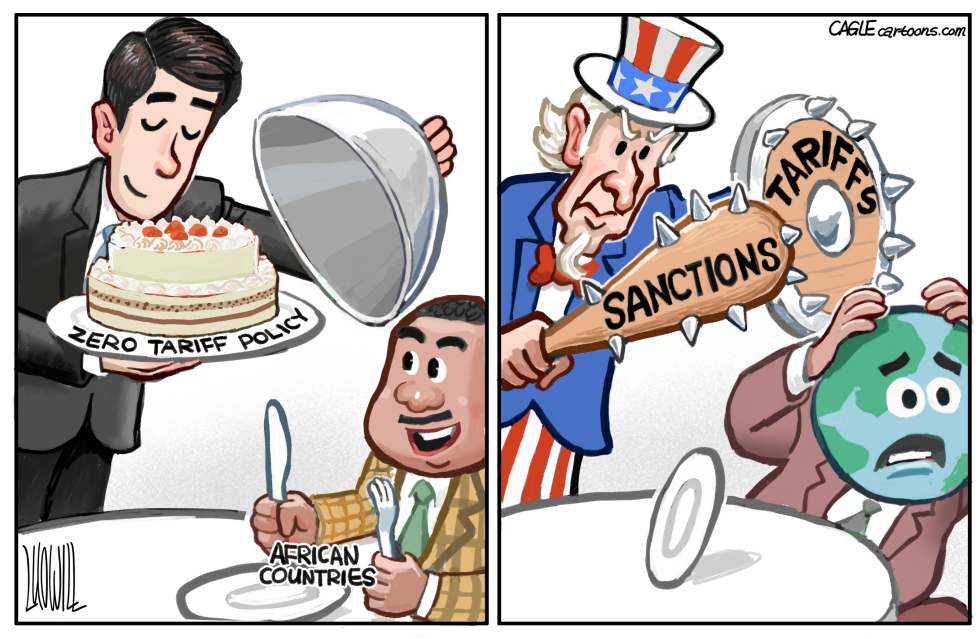
The United States has extended a zero-tariff policy offer to African nations amid ongoing global trade tensions. This move stands in contrast to simultaneous use of tariffs and sanctions against other trading partners. The policy highlights selective economic engagement by Washington. The editorial position criticizes the inconsistency between the overture to Africa and the punitive approach applied more broadly.
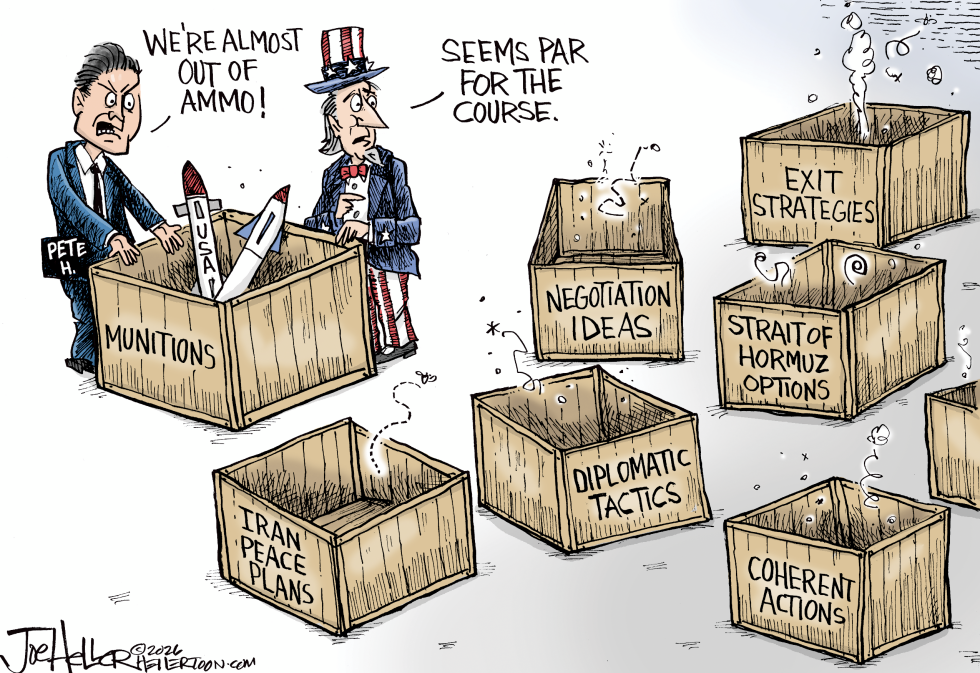
Defense Secretary Pete Hegseth alerts that the United States is nearly out of munitions while pursuing Iran policy options. The cartoon depicts Uncle Sam acknowledging the situation as routine, underscoring limited remaining diplomatic and strategic tools for addressing Iran.
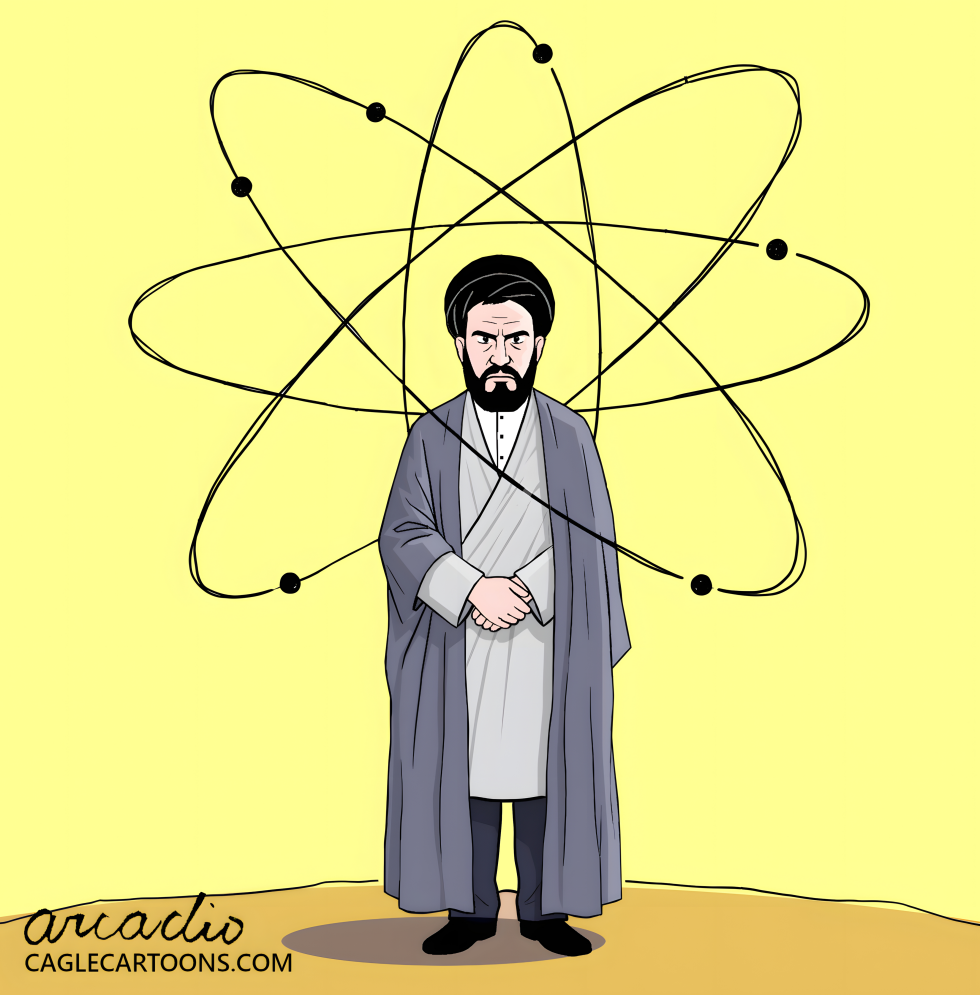
The cartoon shows Iran's supreme leader positioned in front of a large atom symbol. It responds to persistent international concerns over Tehran's nuclear activities as of mid-2026. The visual places the figure directly under the orbiting electrons, underscoring the central role of the nuclear issue in global discussions about the country.
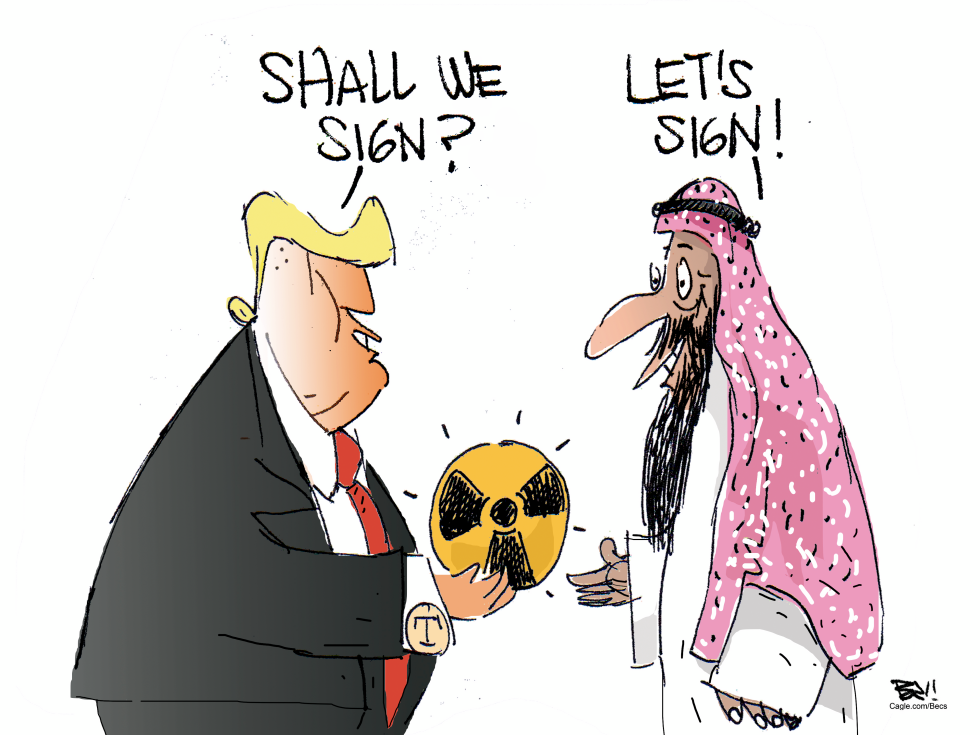
Donald Trump proposed a nuclear cooperation agreement with Saudi Arabia in mid-2026, reviving long-standing talks over civilian atomic energy that critics fear could advance weapons ambitions. The move drew immediate scrutiny from nonproliferation experts who warned that Riyadh has previously signaled interest in matching any Iranian capability. The cartoon frames the overture as reckless, using the radiation symbol to underscore the inherent dangers of such a deal.