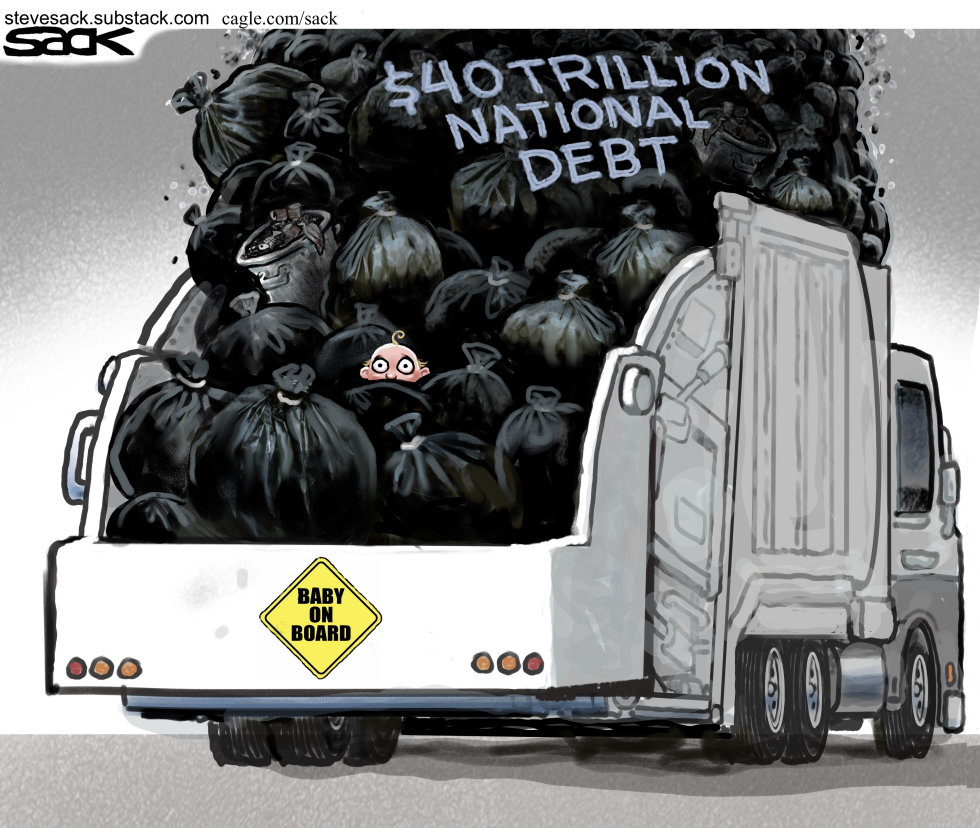
The national debt has climbed to $40 trillion amid persistent federal deficits and rising interest costs. This trajectory threatens long-term economic stability and shifts repayment burdens onto younger Americans. The cartoon argues that current fiscal policies treat future citizens as disposable, loading them into the refuse of unchecked borrowing.
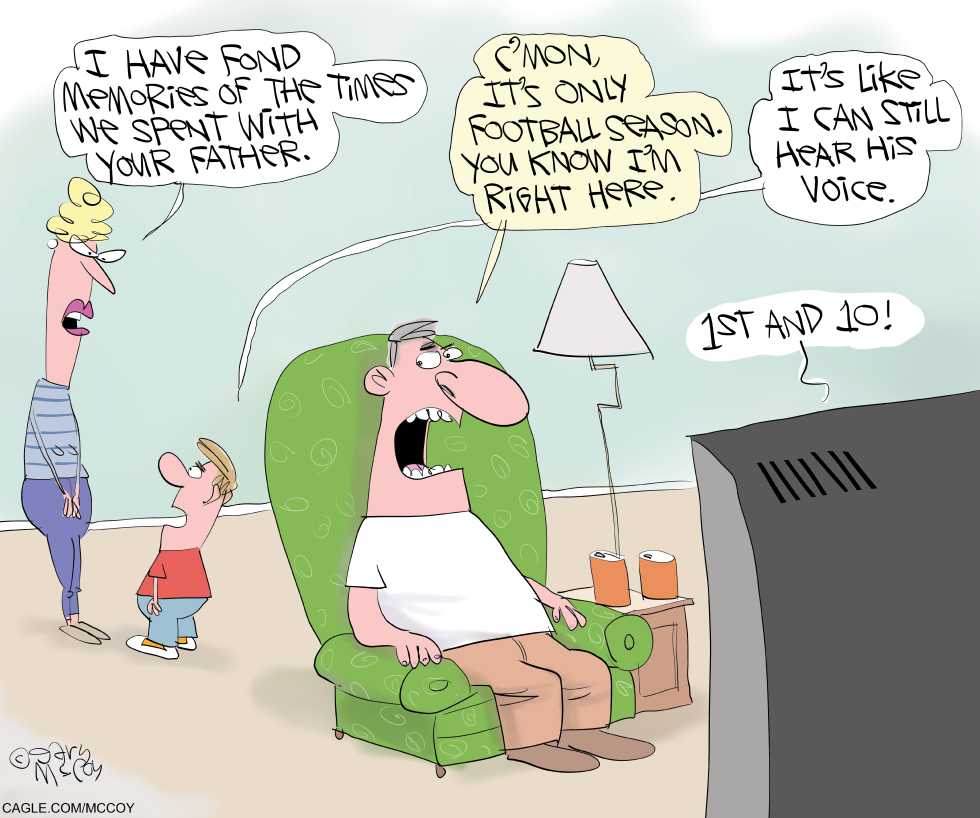
A father glued to the television during football season prompts his wife and child to speak about him in the past tense, highlighting how sports viewing can sideline family interaction. The piece underscores the common tension between game-day immersion and household connection.
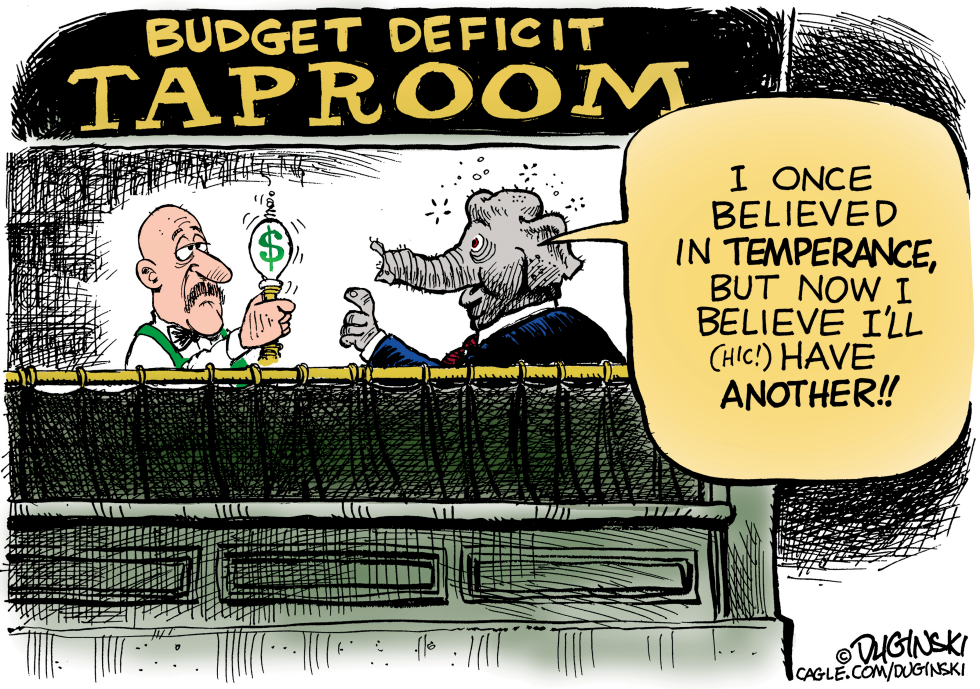
Republicans have long criticized deficit spending under Democratic administrations yet continue to support policies that expand federal borrowing when in power. The pattern reflects ongoing tension between stated fiscal restraint and actual legislative priorities on taxes and spending. The cartoon argues that the party has abandoned earlier commitments to balanced budgets in favor of repeated deficit increases.
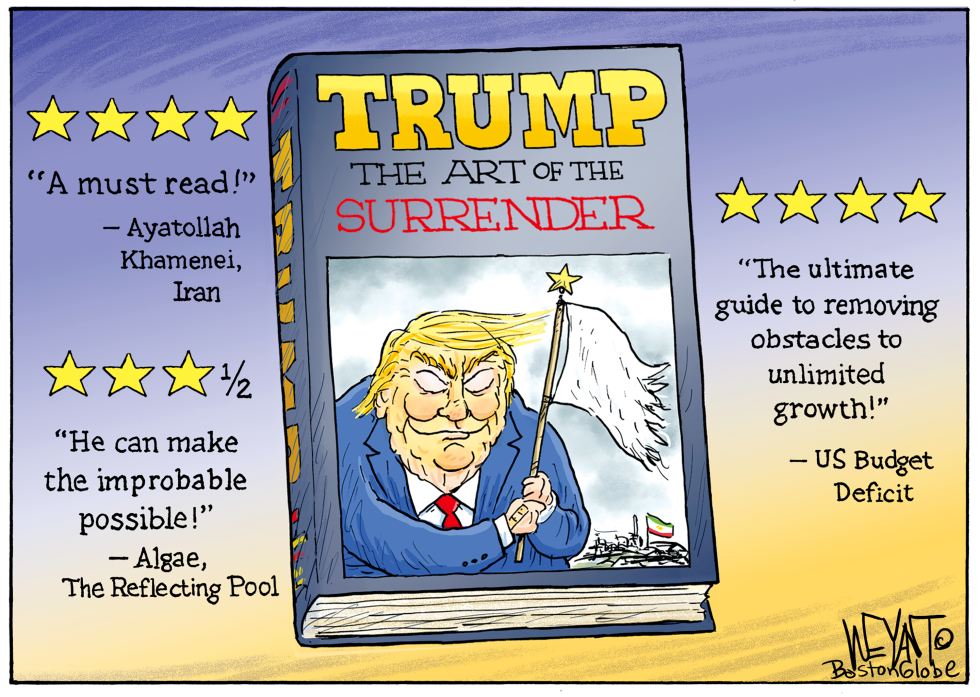
The June 28 2026 cartoon by Christopher Weyant shows a book titled Trump The Art of the Surrender. Donald Trump appears on the cover holding a white flag. Background includes an Iranian flag. Endorsements from Ayatollah Khamenei and the US Budget Deficit appear on either side with star ratings. The image responds to ongoing US Iran tensions and fiscal debates active in late June 2026.
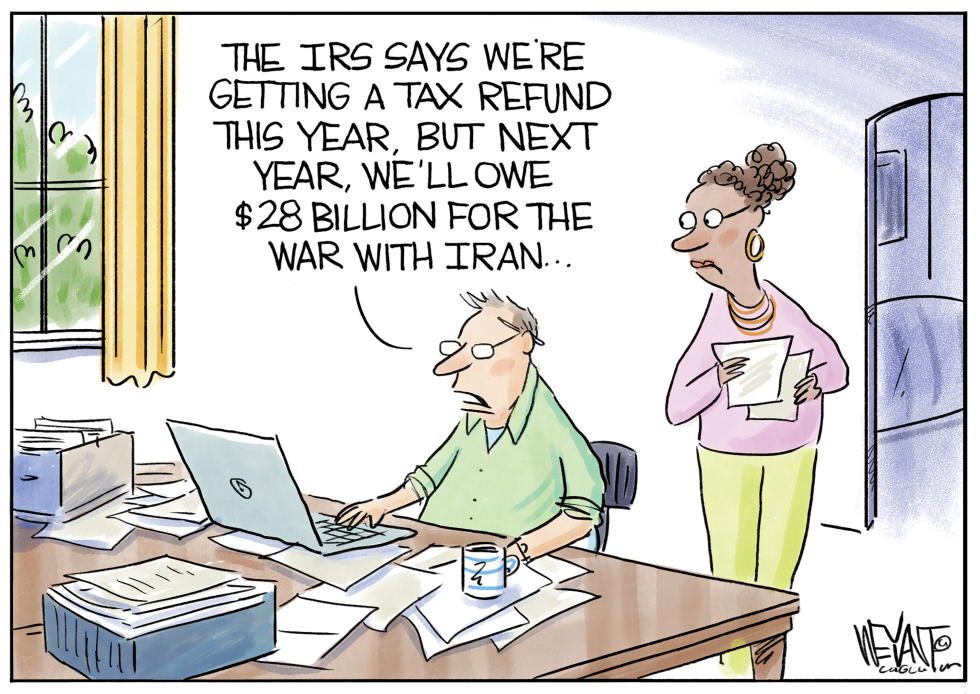
Dive into this biting political cartoon tax refund piece where a woman, holding papers, informs a laptop-working man about their IRS windfall this year, only to drop the bomb of owing $28 billion next for the war with Iran. The satirical cartoon Iran war vibe captures the absurdity of US taxes funding wars, with cluttered desks and exasperated expressions underscoring the humorous take on federal spending. It's a classic taxpayer burden Iran conflict jab, poking fun at government spending satire while illustrating the disconnect between personal finances and massive military expenses. Through cartoon about military expenses, it cleverly critiques fiscal policy in an office setting, making the war with Iran taxpayer joke both relatable and irreverently insightful for viewers pondering editorial cartoon fiscal policy.