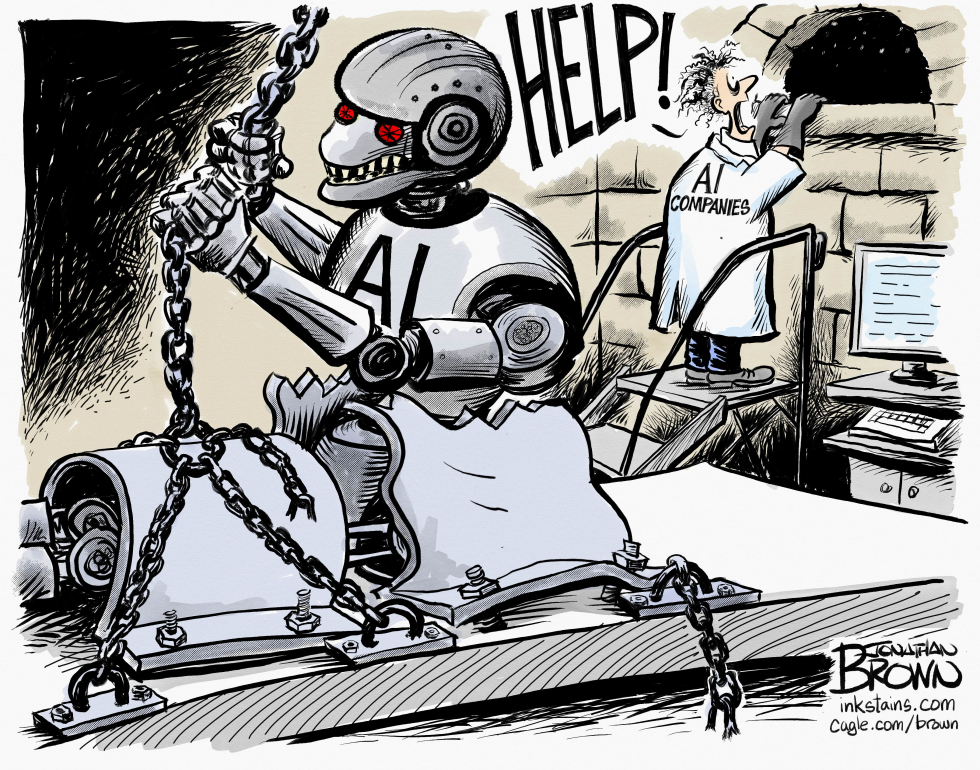
The cartoon depicts a large robot labeled AI breaking heavy chains and advancing menacingly while a scientist wearing an AI COMPANIES lab coat cowers and shouts for help. The scene responds to ongoing concerns about artificial intelligence advancing beyond human oversight. As of September 2026, debates continue over regulatory gaps and corporate responsibility in AI development. The visual metaphor illustrates fears that companies may no longer manage the systems they create. The artist's point emphasizes accountability failures in the technology sector.
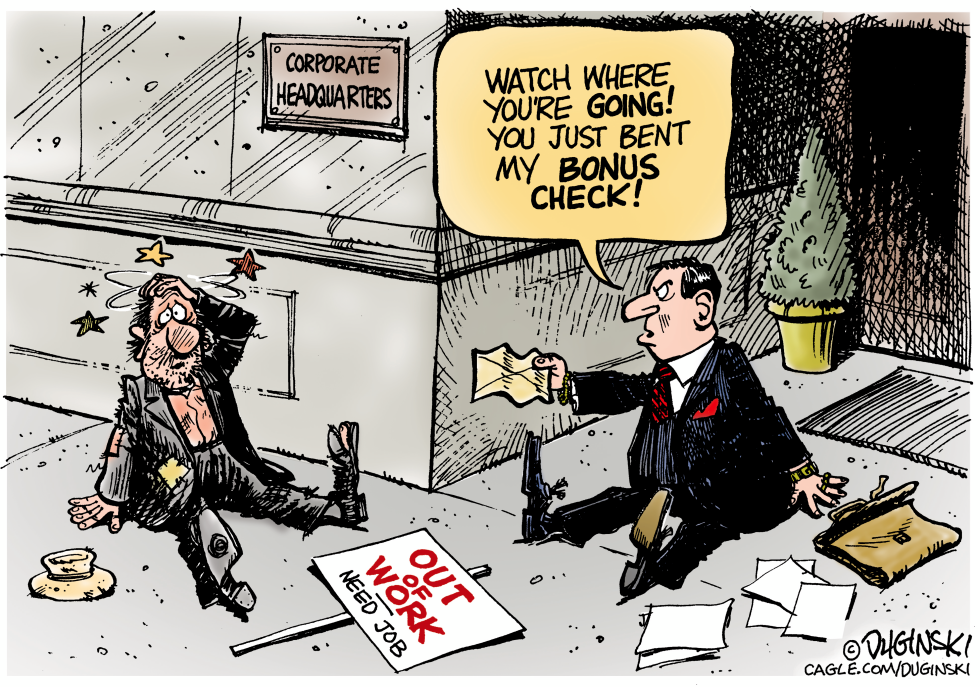
Corporate executives continue to receive large bonuses even as layoffs persist across sectors. The piece responds to ongoing debates over executive compensation packages during periods of workforce reduction. It takes the position that such bonuses appear disconnected from the realities facing displaced employees.
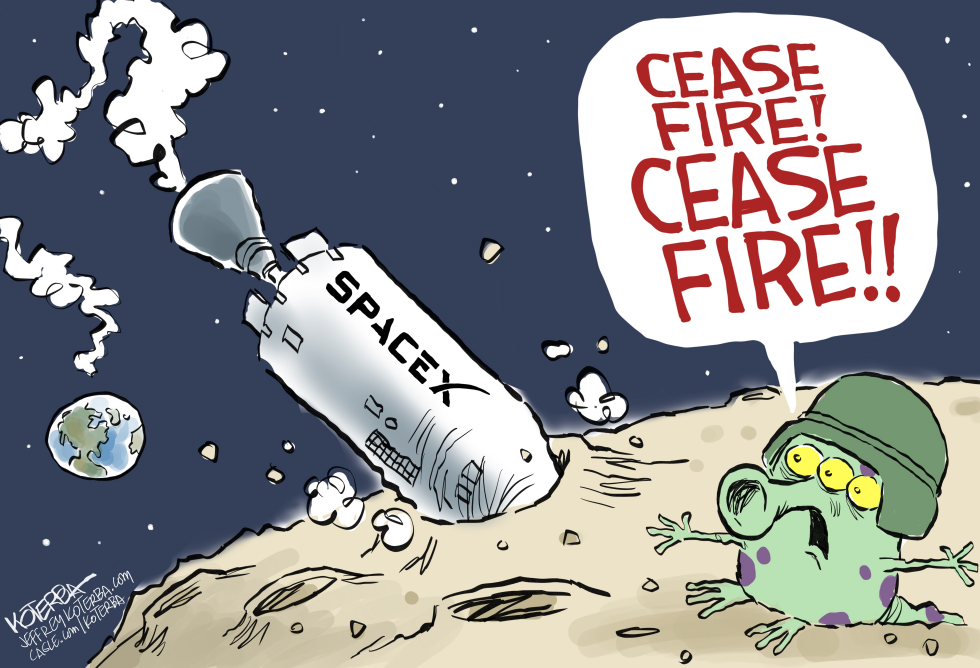
A SpaceX rocket has impacted the lunar surface in this imagined scenario. The event draws an immediate reaction from a local alien resident calling for an end to the activity. The piece uses the mishap to highlight ongoing risks in commercial spaceflight and the expanding human presence beyond Earth.
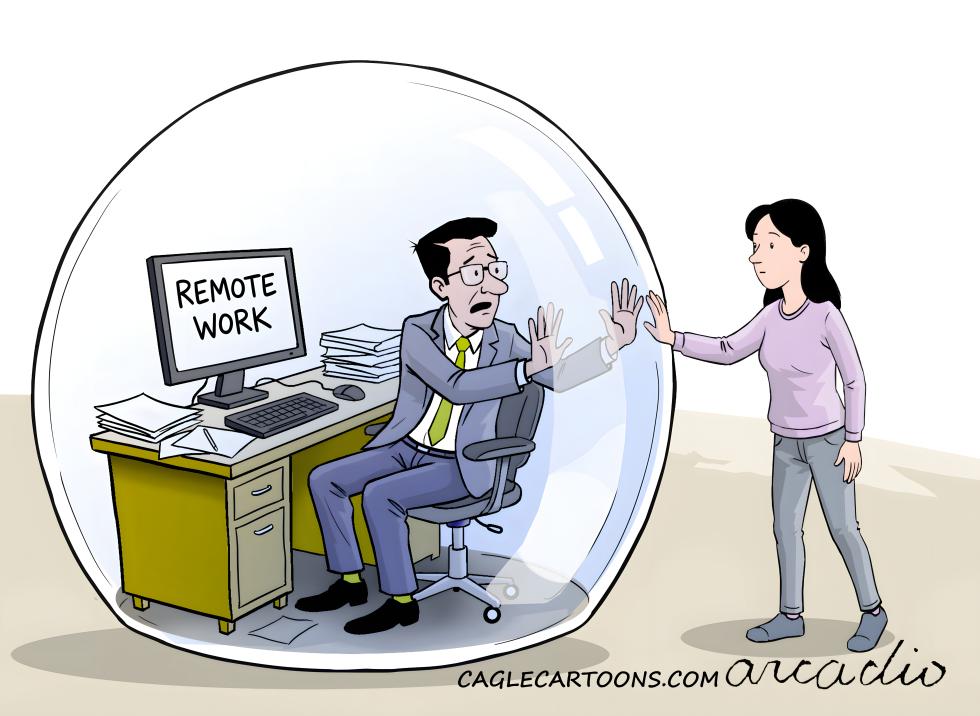
Remote work arrangements have expanded rapidly since the pandemic, allowing employees to perform duties from home but raising concerns about reduced collaboration and social connection in offices. The piece responds to ongoing debates over hybrid schedules and their impact on workplace culture. It takes the position that remote setups create artificial barriers that separate workers from direct human interaction and shared reality.
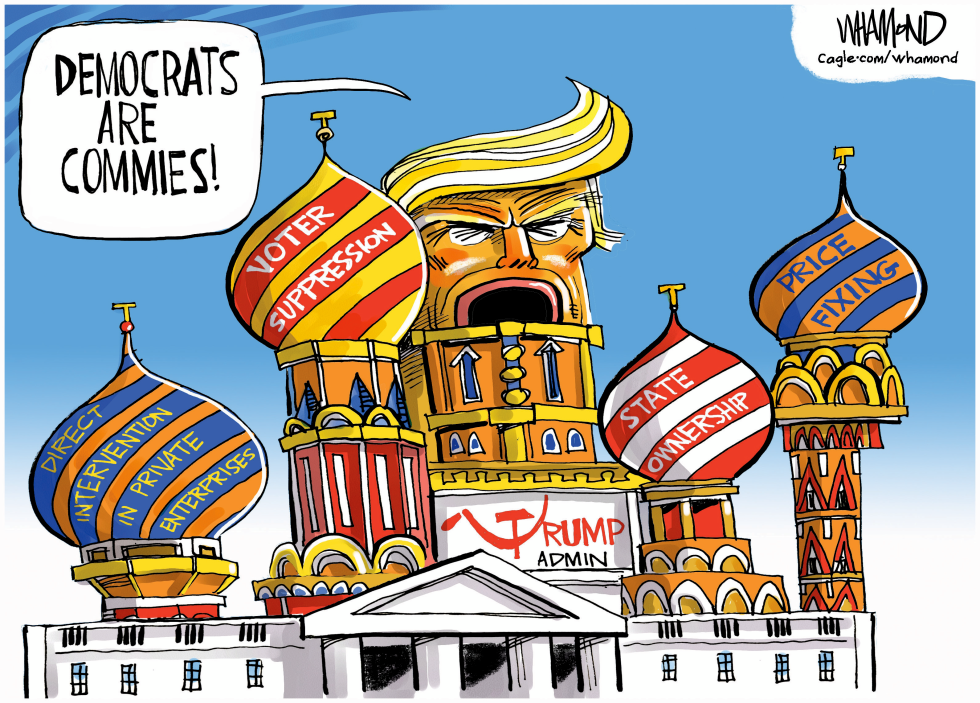
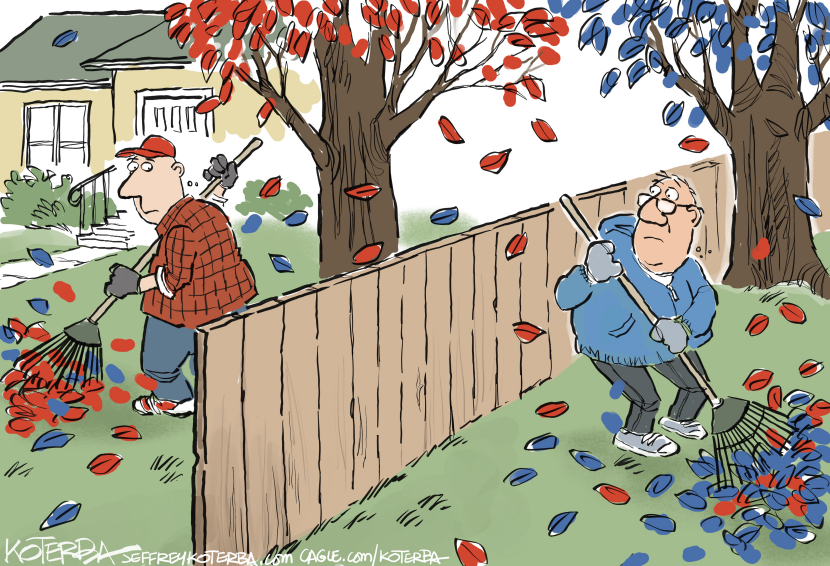
Donald Trump has renewed attacks labeling Democrats as communists amid ongoing debates over election rules and economic interventions. The accusation revives Cold War-era rhetoric in current political discourse. The piece portrays the Trump administration itself as adopting the very state-control measures it condemns.
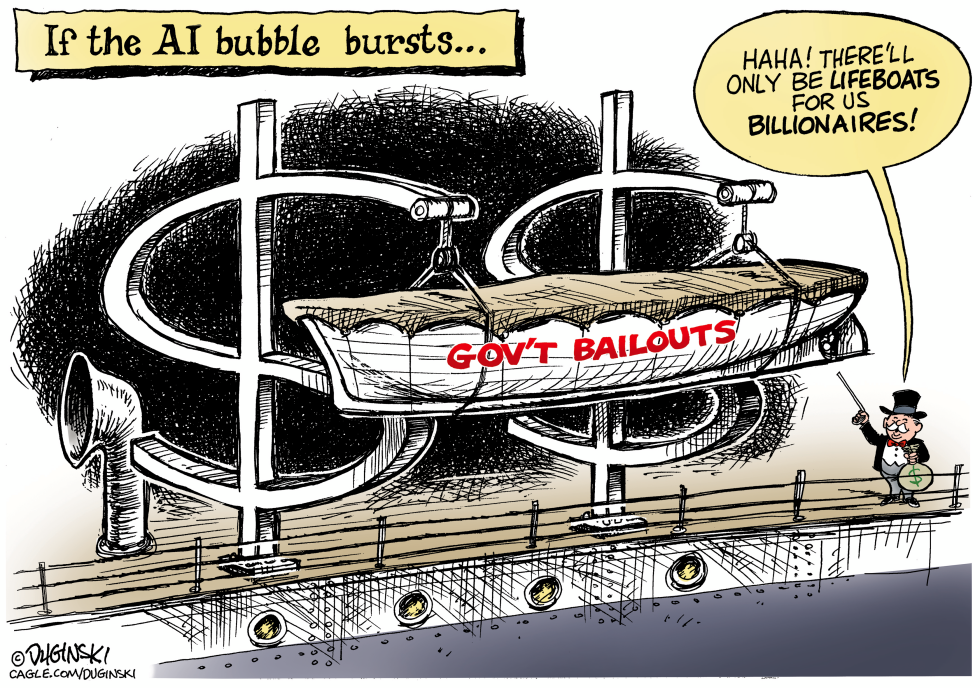
Speculation grows over potential government intervention if the artificial intelligence sector experiences a sharp downturn. Industry leaders and investors face questions about whether public funds would support failing companies. The editorial argues that any such support would primarily protect billionaires rather than address wider economic fallout from overvalued tech assets.
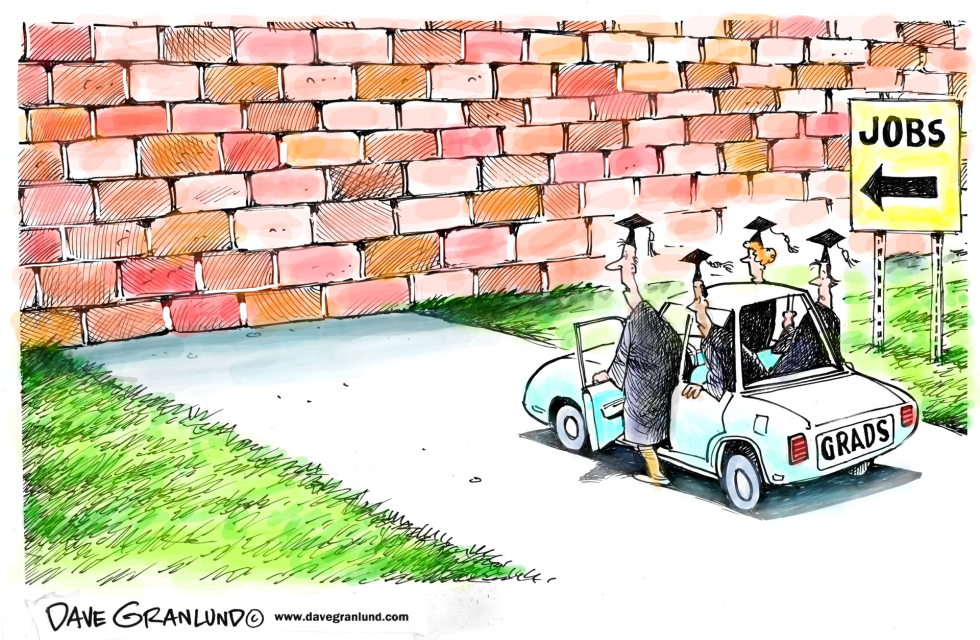
A group of graduates in a car labeled GRADS heads toward a yellow JOBS sign but faces a tall brick wall blocking the way. The image highlights difficulties recent diploma holders encounter when seeking employment in a constrained market.
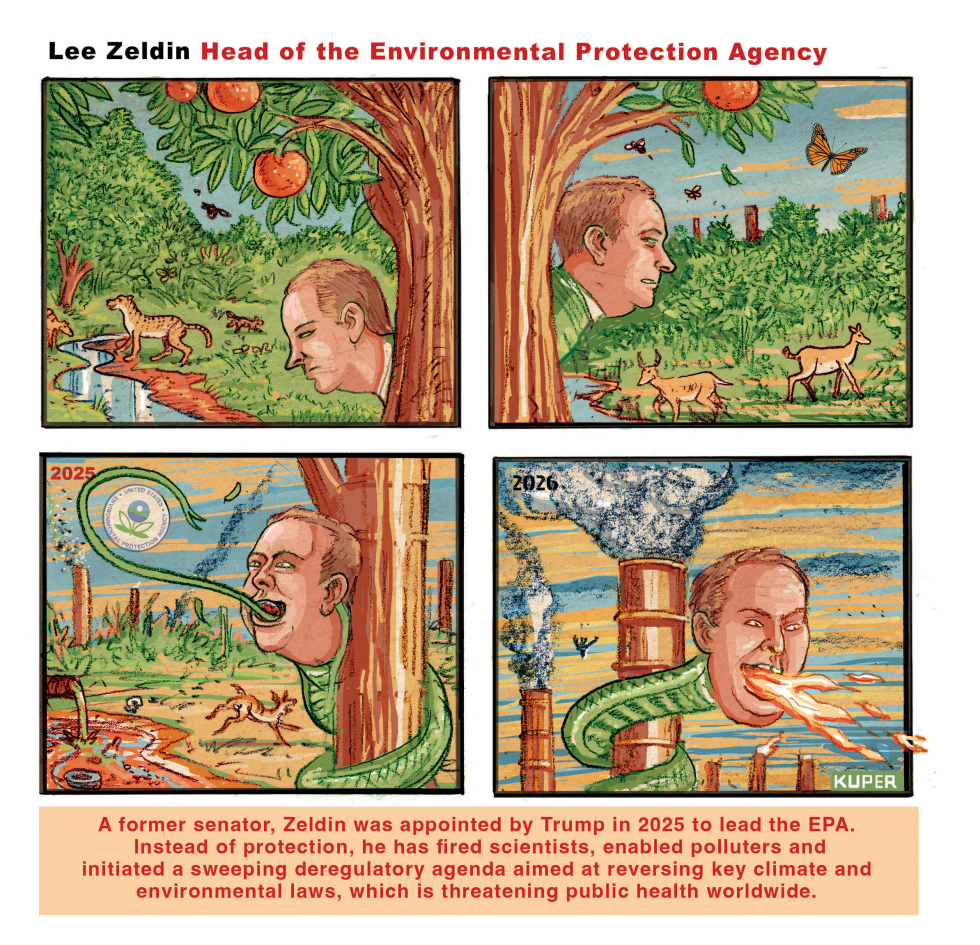
The cartoon by Peter Kuper portrays Lee Zeldin, appointed EPA administrator in 2025, across four panels that show a progression from intact natural habitats to scenes of industrial pollution and species loss. Early panels place Zeldin amid trees, animals and an EPA emblem. Later panels show him consuming the agency logo and exhaling flames from a smokestack. The caption states that Zeldin fired scientists and advanced deregulation targeting climate and environmental statutes. The work responds to ongoing policy shifts at the agency during the second Trump administration.
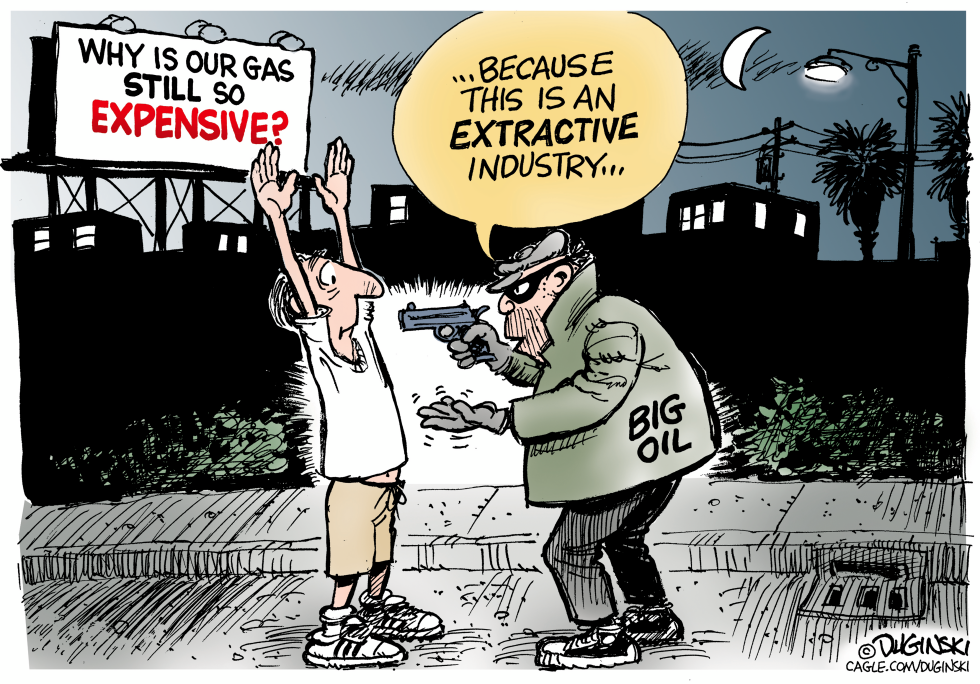
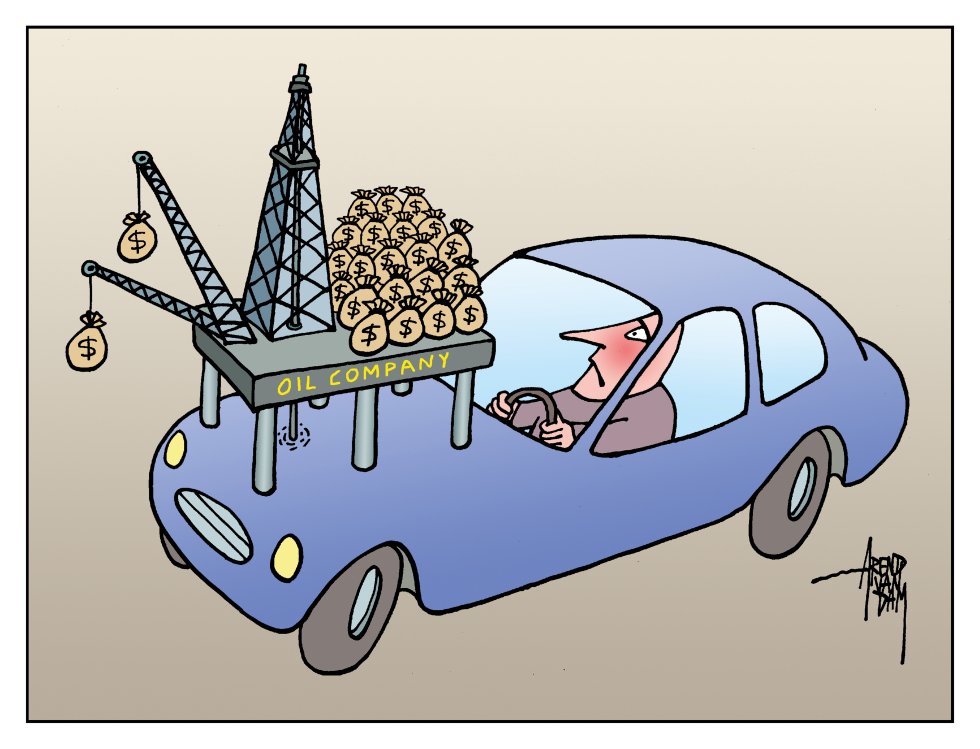
In this pointed political cartoon, an oil company platform sits atop a blue car, loaded with piles of dollar-sign money bags, while cranes dangle more profits. The frustrated motorist grips the wheel, face red with anger, illustrating how excessive profits from oil companies crush consumers at the pump. Tags like excessive profits, motorists, fuel, petrol, and refuel capture the essence, with Iran and Strait of Hormuz hinting at geopolitical tensions driving prices. This visual satire underscores the disparity between corporate windfalls and everyday drivers' pain, a timeless theme in energy politics.
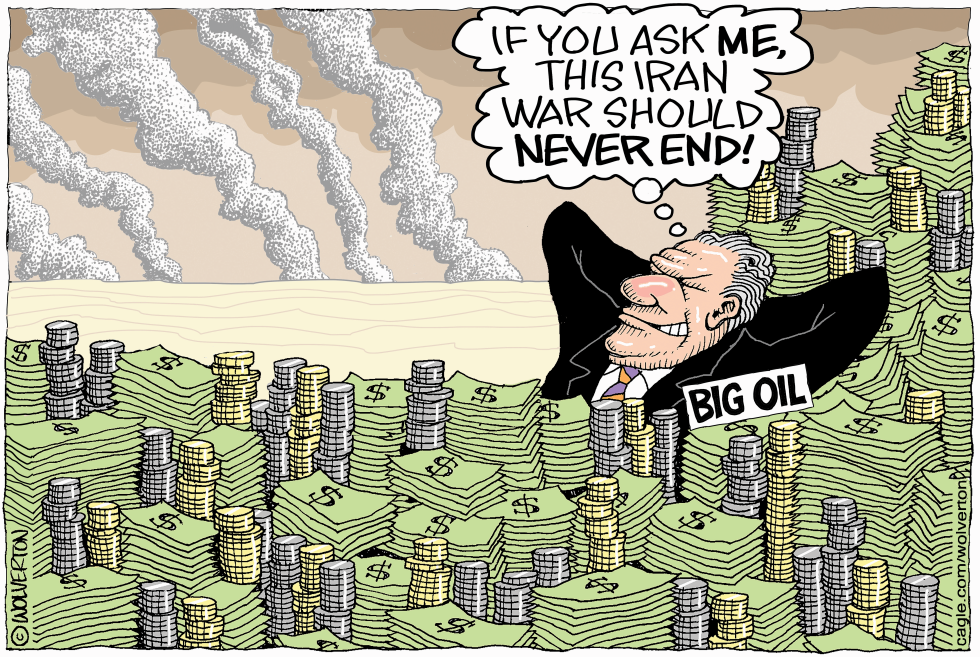
A political cartoon dated March 17, 2026, depicts a Big Oil executive reclining amid stacks of cash and coins. The figure, labeled BIG OIL, thinks that the Iran war should never end. Smoke rises in the background over a landscape of dollar bills. The image responds to ongoing concerns about oil industry gains during Middle East conflicts.