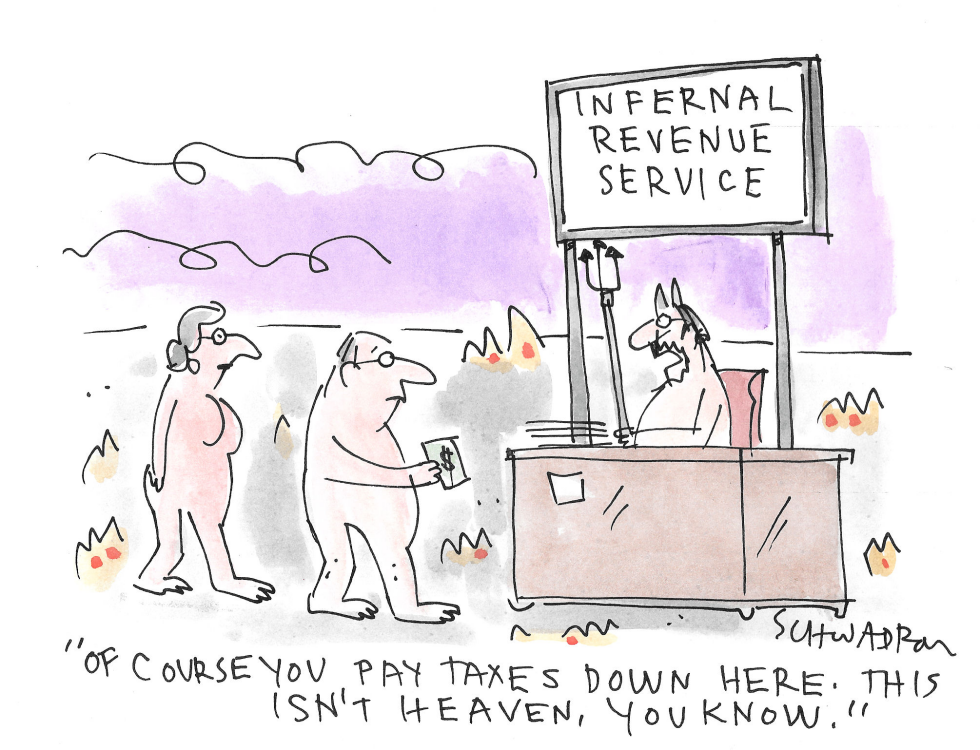
The long-standing adage that only death and taxes are certain receives fresh treatment in a cartoon depicting an IRS outpost operating in hell. No specific policy change or ruling prompted the piece, which instead plays on the enduring public frustration with tax collection as an inescapable force. The editorial stance pokes at bureaucratic persistence, suggesting the tax man follows citizens beyond the grave with the same relentless efficiency seen in life.
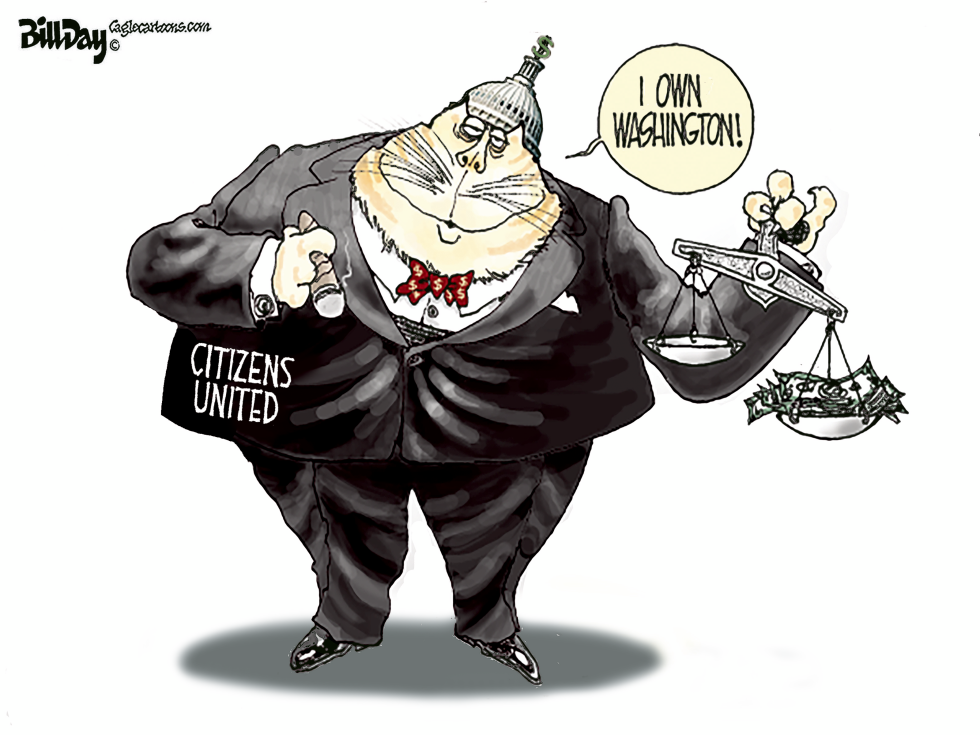
The 2010 Citizens United Supreme Court ruling opened the door to unlimited independent expenditures by corporations and unions in elections. Critics argue the decision amplified the voice of wealthy donors and special interests over average voters. The cartoon responds to the ongoing effects of that precedent by depicting a powerful corporate figure claiming control of the capital. It highlights how the ruling has reshaped campaign finance and public trust in government institutions.
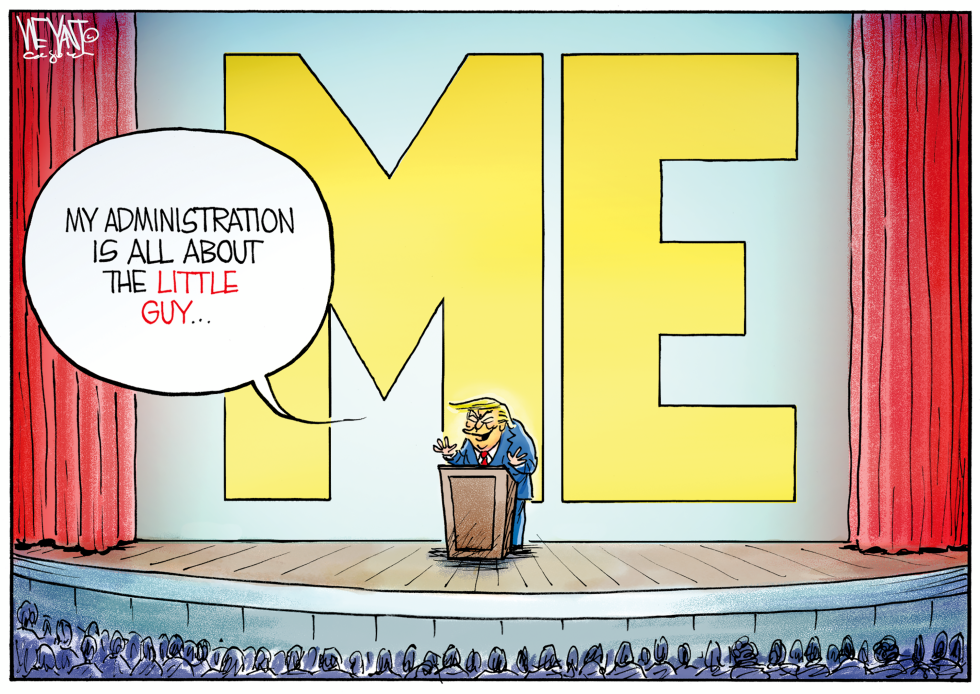
Donald Trump has repeatedly positioned his administration as champion of ordinary Americans during public addresses. The claim comes amid ongoing debates over policy priorities and personal branding in the White House. The piece portrays the rhetoric as centered on the speaker rather than the public.
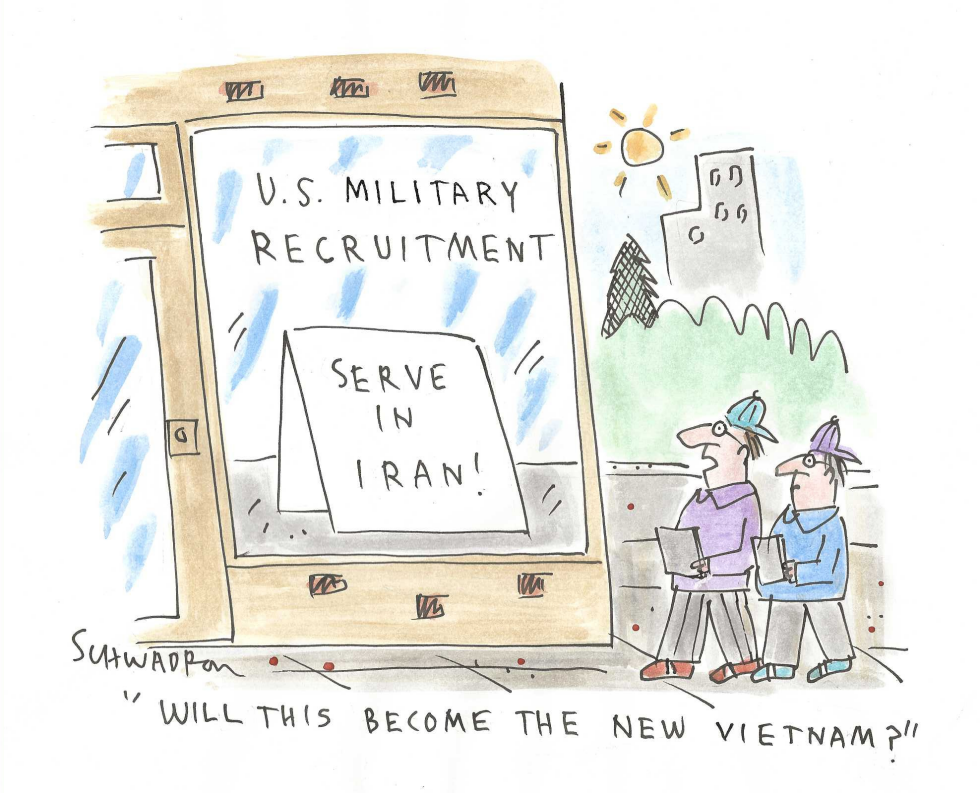
U.S. military recruitment efforts have begun highlighting opportunities to serve in Iran, prompting public questions about potential escalation. The move comes amid ongoing regional tensions and draws direct comparisons to the Vietnam War era. Observers worry the campaign signals a shift toward deeper U.S. military commitments overseas. The editorial takes the position that such recruitment tactics risk repeating past mistakes by underestimating public resistance to prolonged conflicts.
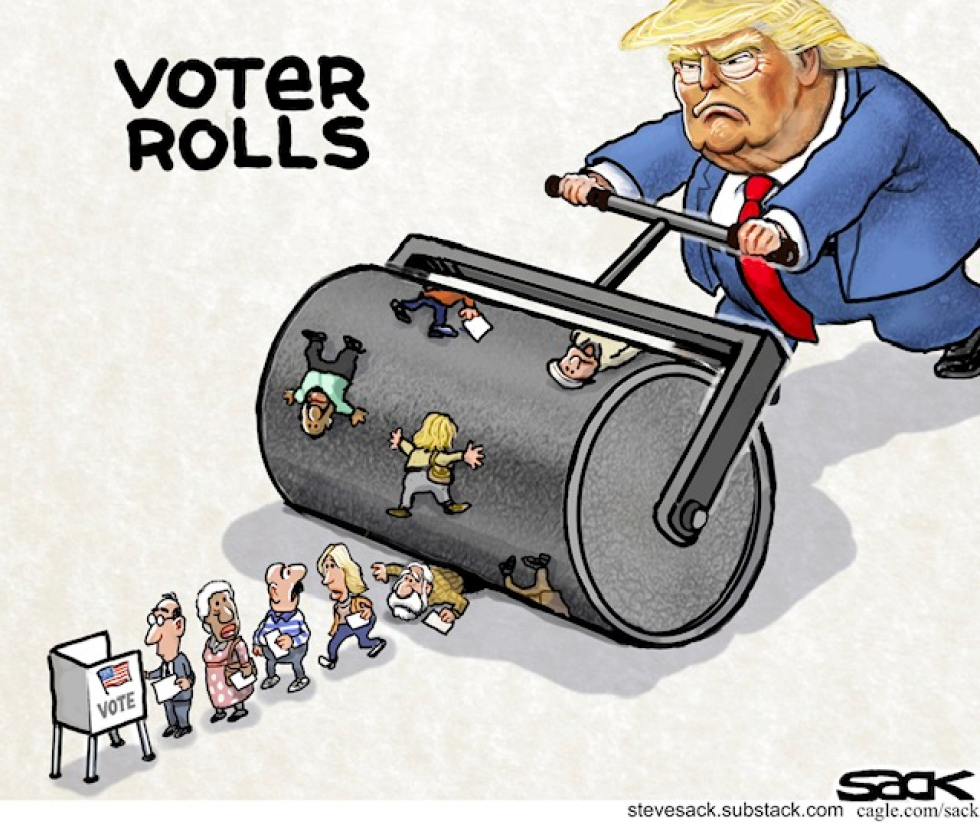
Donald Trump has pushed aggressive reviews of state voter rolls in multiple states, citing fraud concerns ahead of upcoming elections. Critics argue the moves risk removing eligible voters and suppressing turnout. The piece portrays the effort as a blunt instrument harming ordinary citizens waiting to cast ballots.
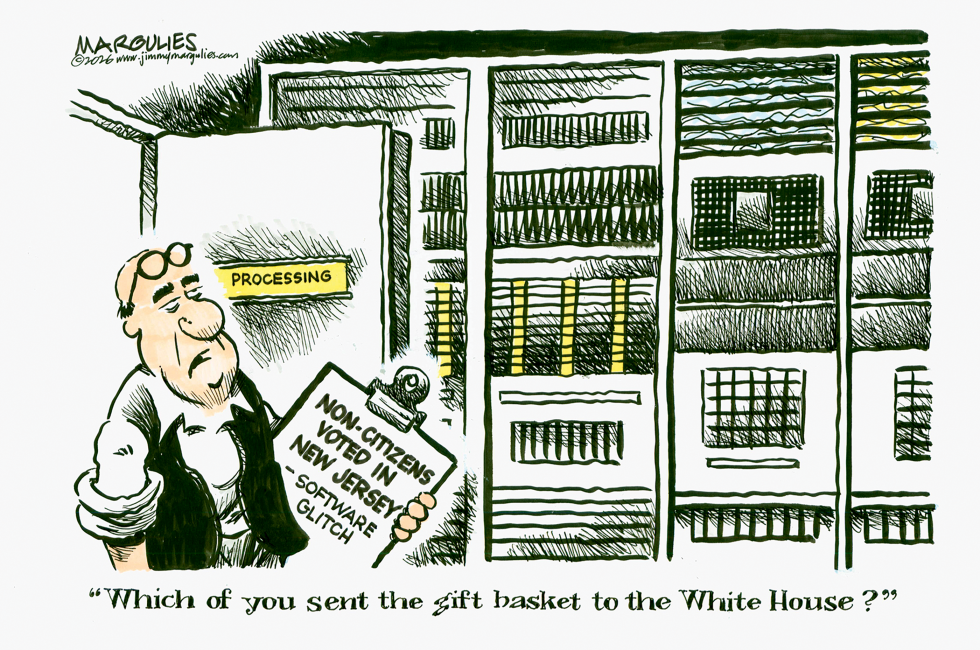
A software glitch in New Jersey allowed non-citizen votes to be counted during recent election processing. Officials are now under scrutiny after the error surfaced. The incident raises concerns about election integrity and data handling systems. The cartoon depicts a processing center where staff receive pointed questions about a gift sent to the White House. It highlights accountability issues in managing voting technology.
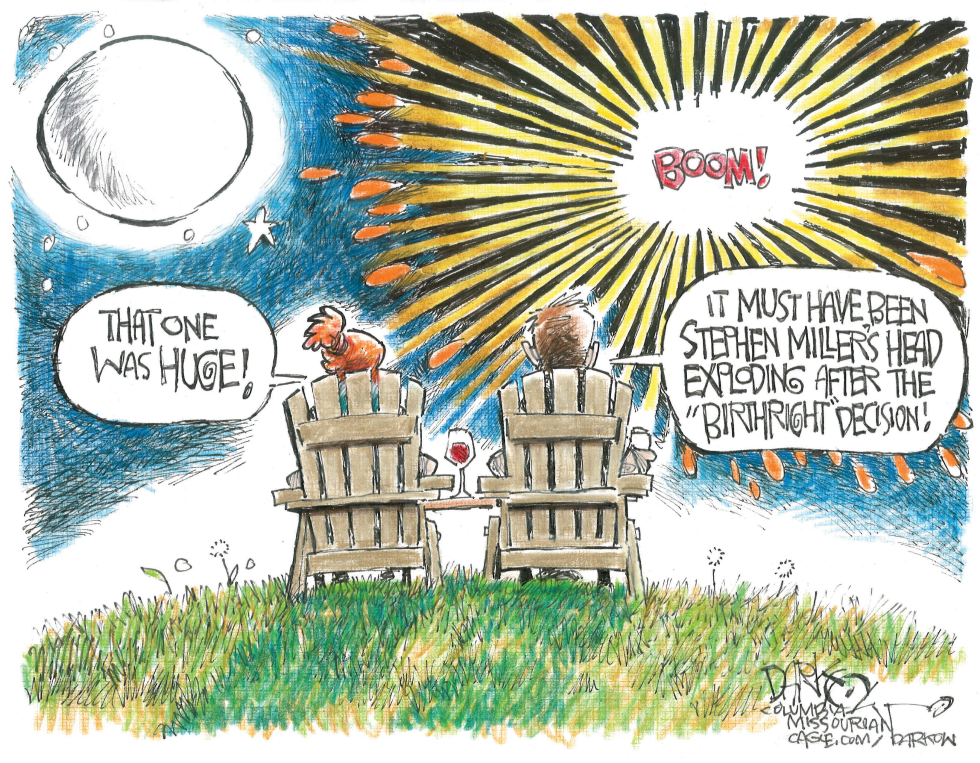
John Darkow's cartoon depicts two people in lawn chairs under a starry sky reacting to a massive explosion labeled as Stephen Miller's head after a birthright citizenship decision. The drawing uses fireworks and dialogue to highlight the intensity of the reaction to the ruling on the 14th Amendment.
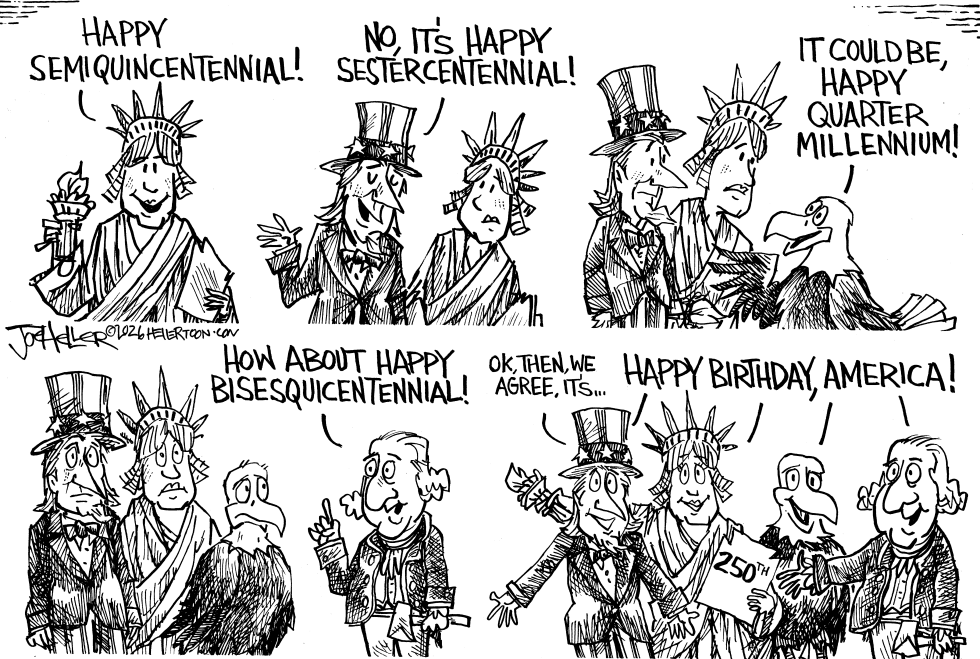
Joe Heller's June 2026 cartoon shows the Statue of Liberty, Uncle Sam, a bald eagle and Benjamin Franklin debating elaborate terms for America's 250th anniversary. The figures propose semiquincentennial, sestercentennial, quarter millennium and bisquincentennial before conceding to the straightforward greeting Happy Birthday, America! The strip marks the upcoming July 4, 2026 milestone with light humor on naming conventions.
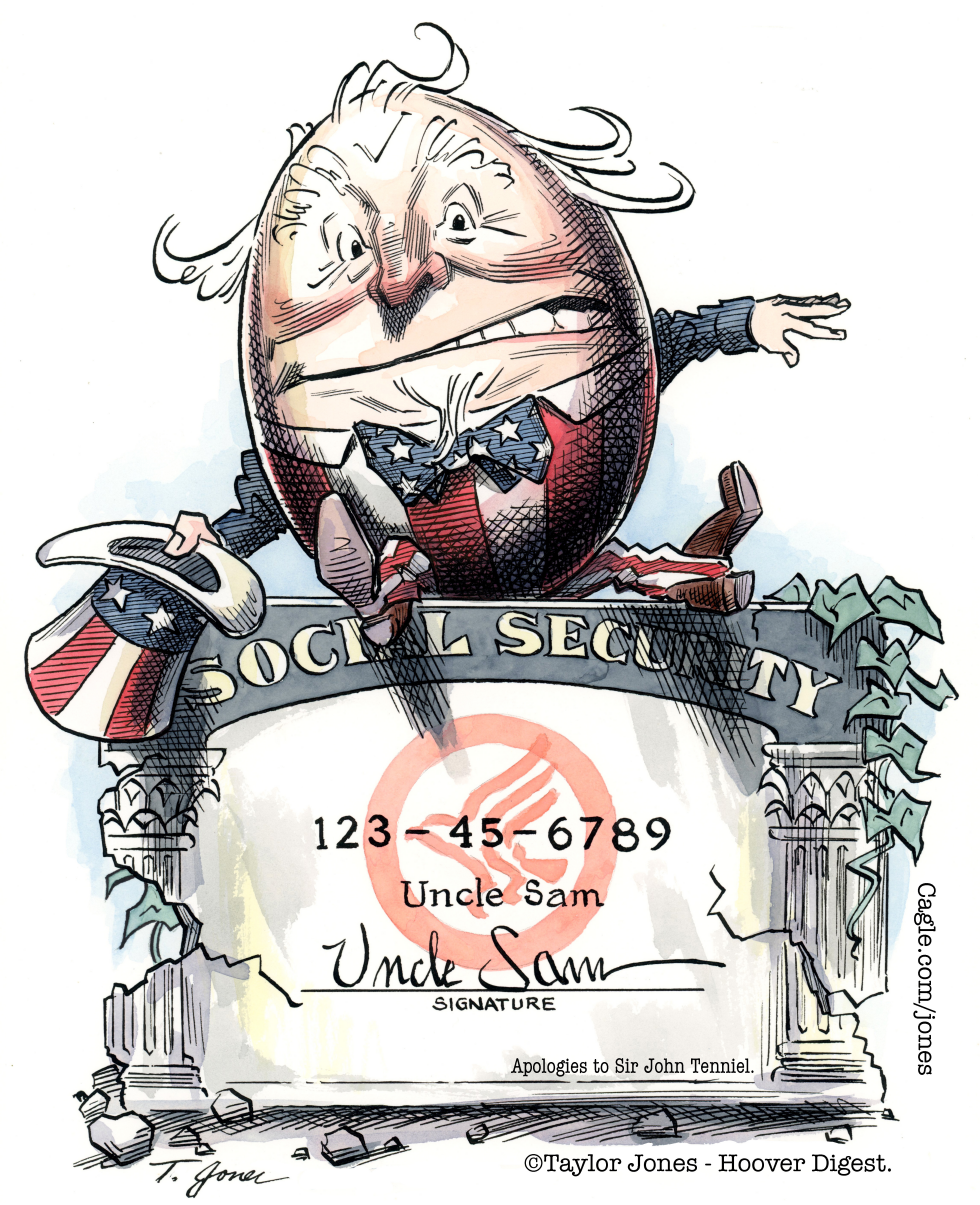
The cartoon shows Uncle Sam rendered as Humpty Dumpty perched on a crumbling Social Security arch while holding a canceled benefits card. It responds to ongoing concerns about the program's projected insolvency around 2032 driven by demographic shifts and rising national debt. The visual draws on the classic nursery rhyme and Tenniel illustration to highlight funding pressures facing retirement benefits for an aging population.
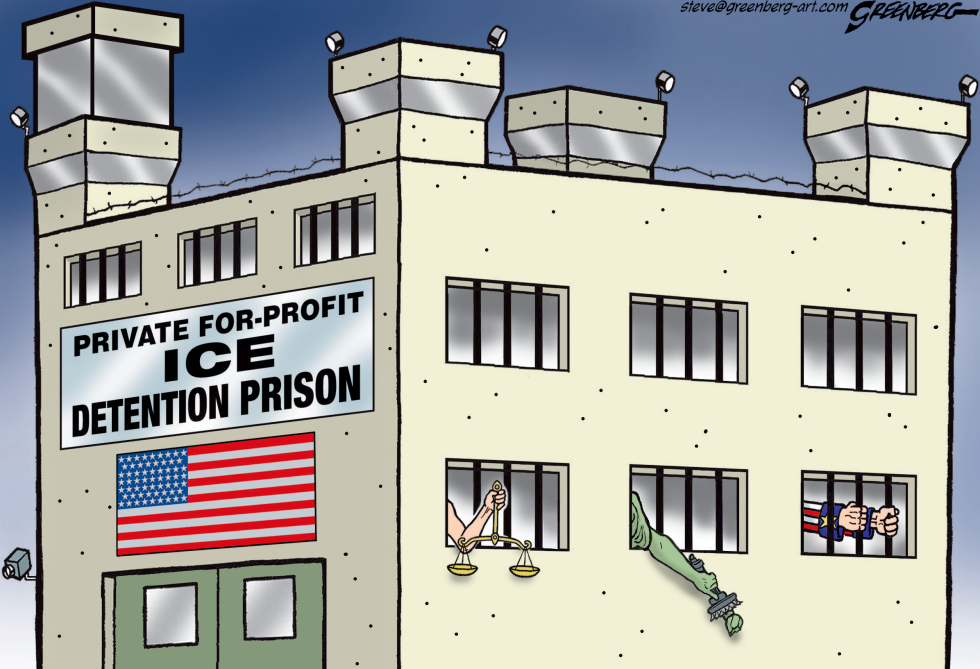
The cartoon depicts a private ICE detention prison flying the American flag, with figures reaching from barred windows grasping scales of justice and a ball and chain. It responds to ongoing debates over detention practices and due process in immigration enforcement around mid-2026.
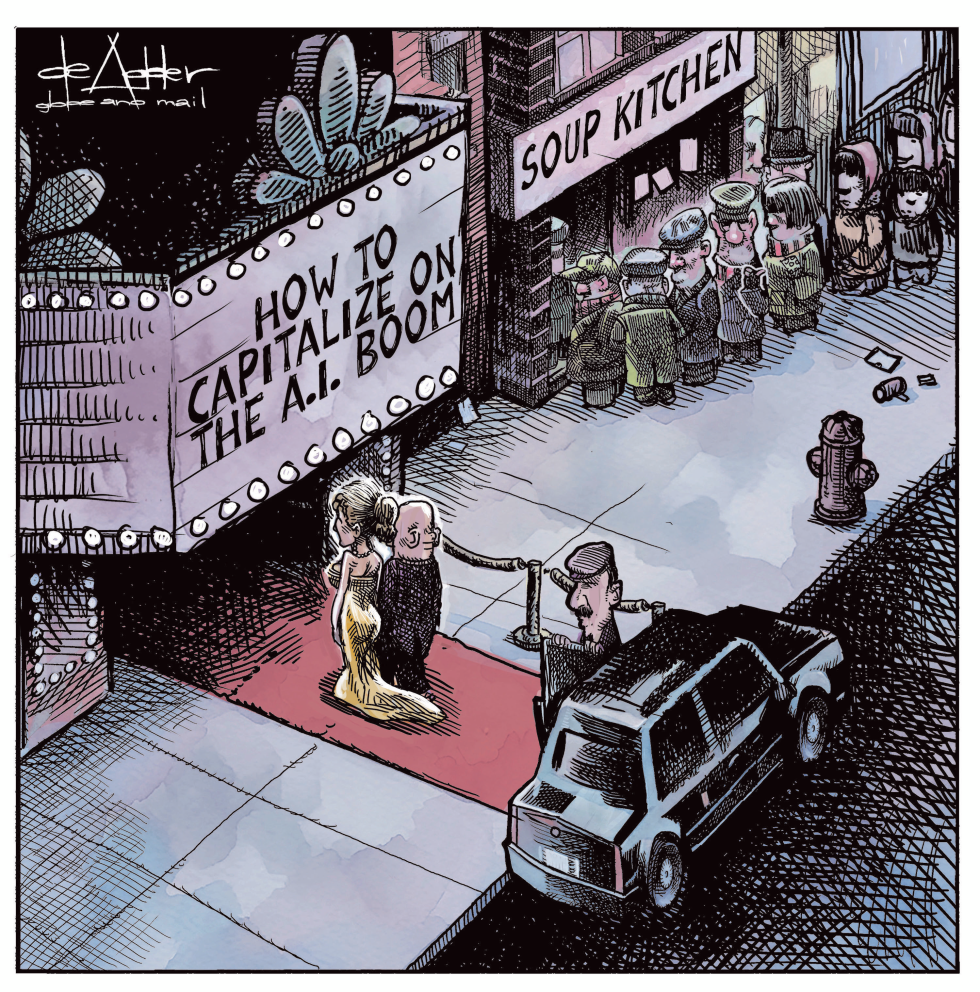
A political cartoon depicts a wealthy couple arriving at a theater hosting an event titled 'How to Capitalize on the A.I. Boom.' A red carpet and limousine service the entrance. Across the street a long line of people waits outside a soup kitchen. The image contrasts the gains from artificial intelligence for some with ongoing needs for others in 2026.
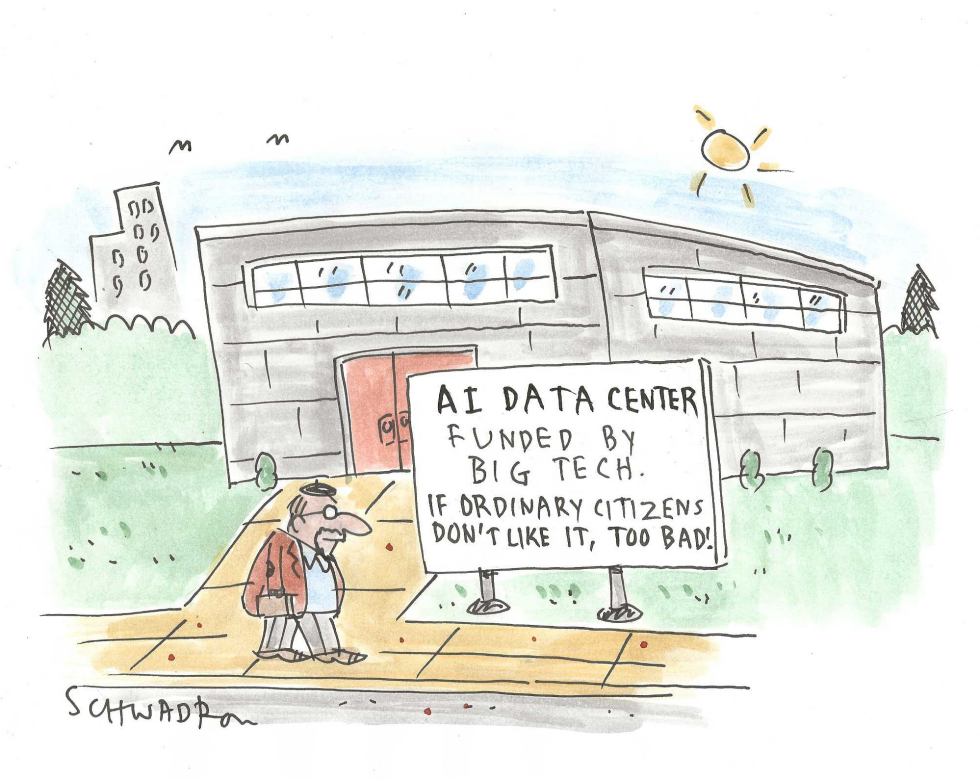
On June 6, 2026, a political cartoon depicts a man approaching an AI data center funded by big tech. The facility's sign bluntly informs ordinary citizens that their objections do not matter. The drawing highlights tensions between rapid AI infrastructure growth and public concerns over environmental consequences such as pollution and resource use. The cartoonist uses the dismissive message to underscore how technology companies often proceed without community consent.