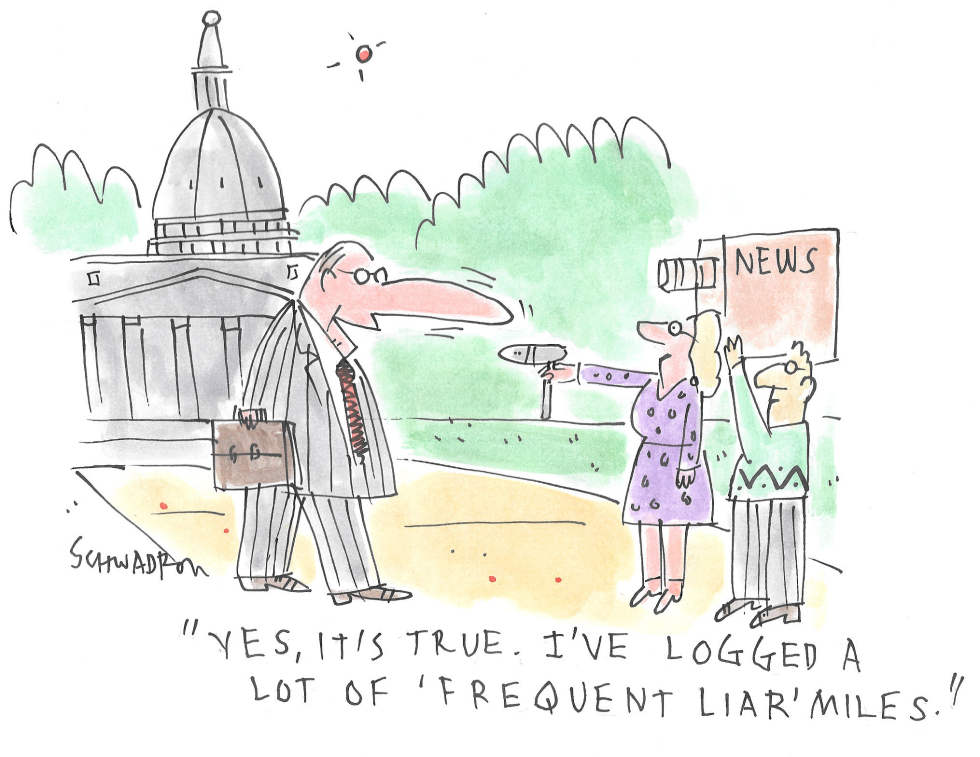
A Capitol politician carrying a briefcase marked GB faces a news interview outside the building and openly acknowledges logging many frequent liar miles. The exchange highlights routine political deception as a normalized practice rather than an exception. The cartoon frames the admission as unremarkable business for those in government.
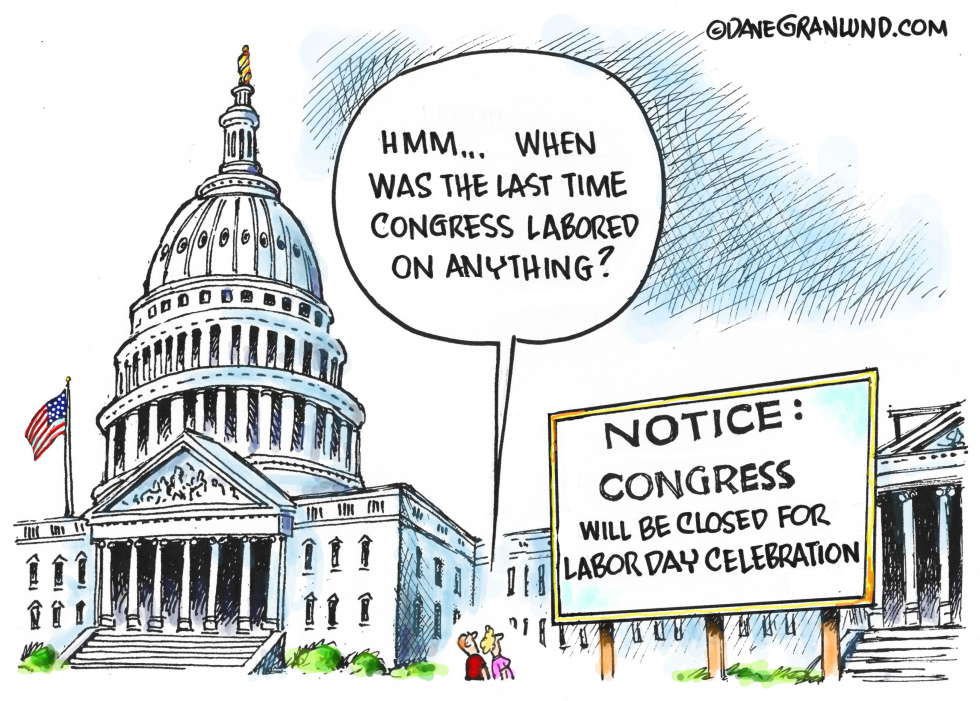
A political cartoon depicts the US Capitol Building with a prominent notice announcing Congress will be closed for Labor Day celebration. A speech bubble from onlookers asks when Congress last labored on anything. The image, dated September 1, 2026, comments on legislative inactivity during a federal holiday. It reflects common public frustration with congressional productivity and frequent recesses. The cartoon uses the holiday to underscore perceptions of limited legislative output in recent sessions.
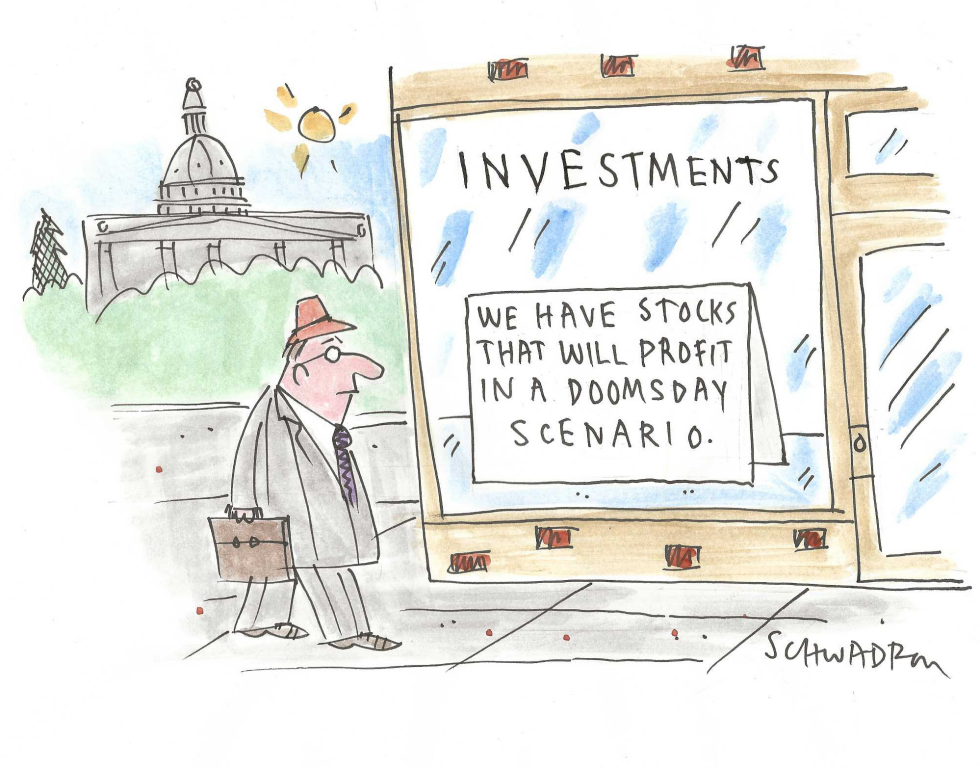
Investment firms continue to market specialized stock offerings designed to gain value during periods of widespread economic or geopolitical turmoil. Such products attract attention from clients seeking protection against market downturns or global instability. The cartoon highlights the persistent appeal of these instruments even as broader uncertainty lingers around policy and international developments.
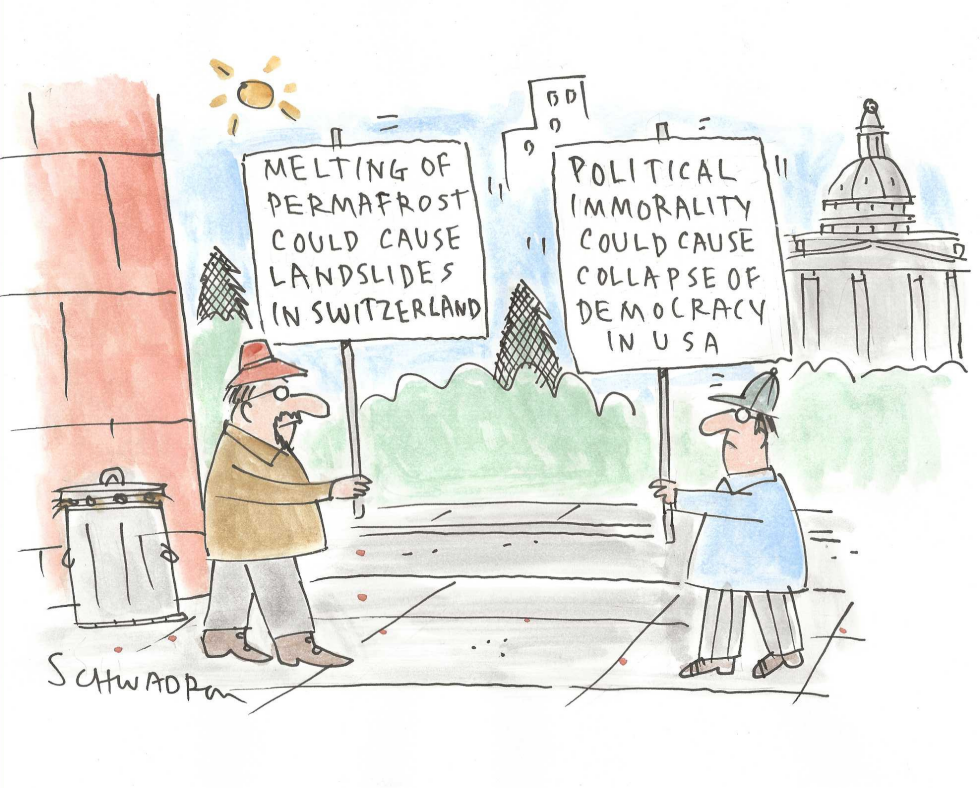
Activists in public spaces continue to draw parallels between accelerating climate impacts such as thawing permafrost and landslides in Switzerland and warnings about political conduct undermining democratic institutions in the United States. The signs highlight how environmental changes and governance failures each carry risks of sudden structural breakdown. The editorial stance underscores that both threats deserve equal public attention as visible warning indicators.
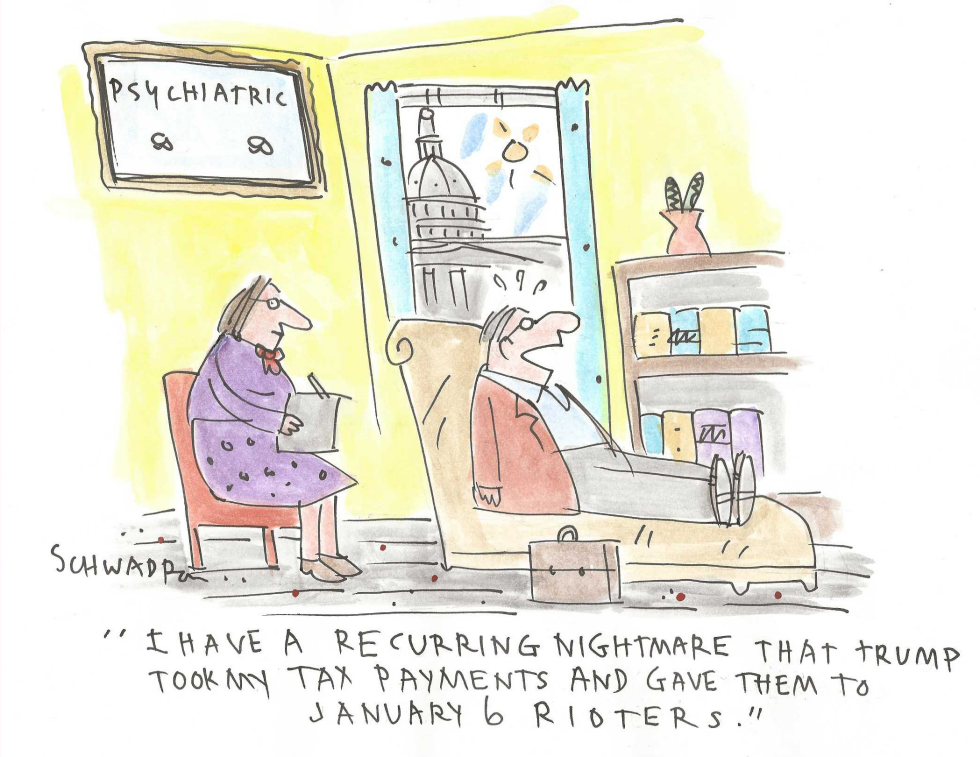
A patient describes a recurring nightmare in which former President Trump diverts tax payments to January 6 rioters. The session reflects persistent public concerns over accountability for the Capitol events and use of public funds. The piece portrays these fears as a continuing source of political unease.
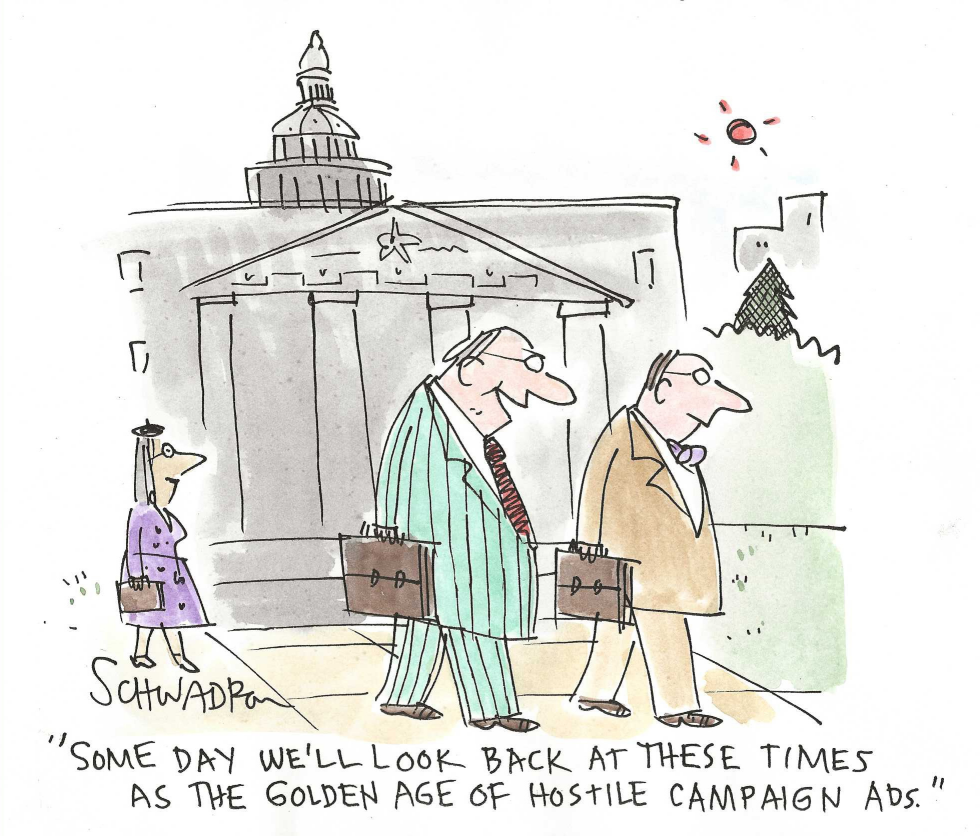
In mid-2026, partisan campaign rhetoric remains sharply negative with Democrats and Republicans trading attacks through ads and statements. The ongoing dynamic highlights deepening divides in Washington. The piece suggests these contentious times may later be viewed more favorably than current participants expect.
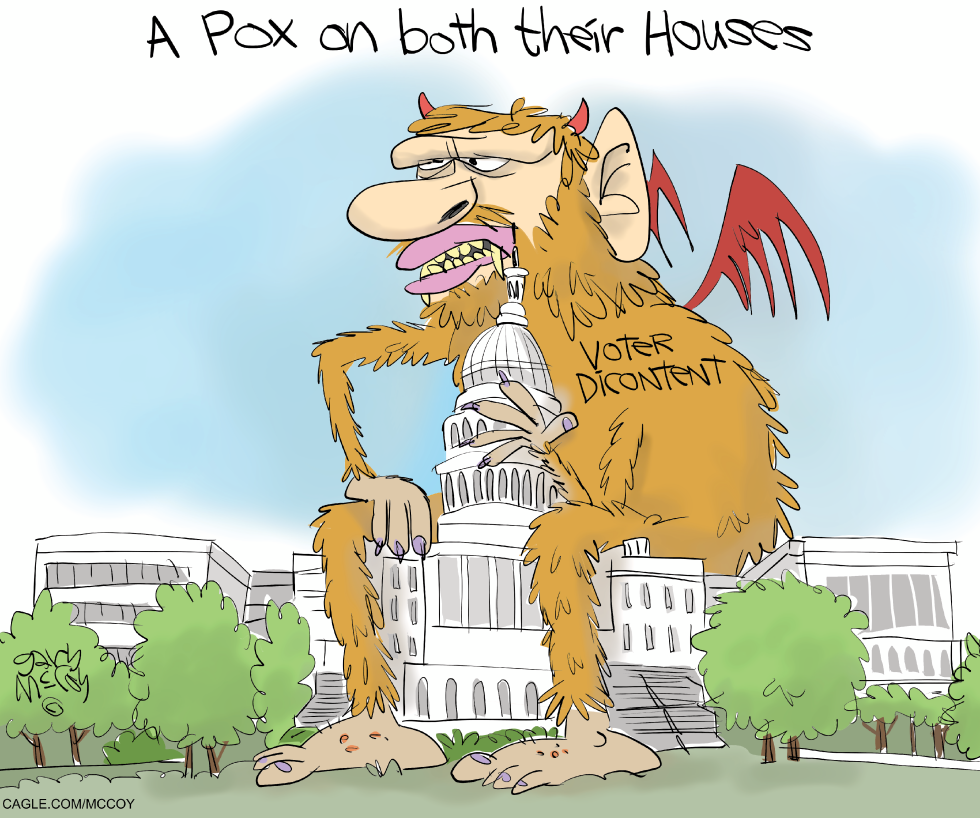
Voter frustration with Congress has grown amid stalled legislation and partisan gridlock on Capitol Hill. The piece portrays this sentiment as a towering monstrous force looming over the legislative branch. It argues that public anger targets both parties equally for failing to address key issues.
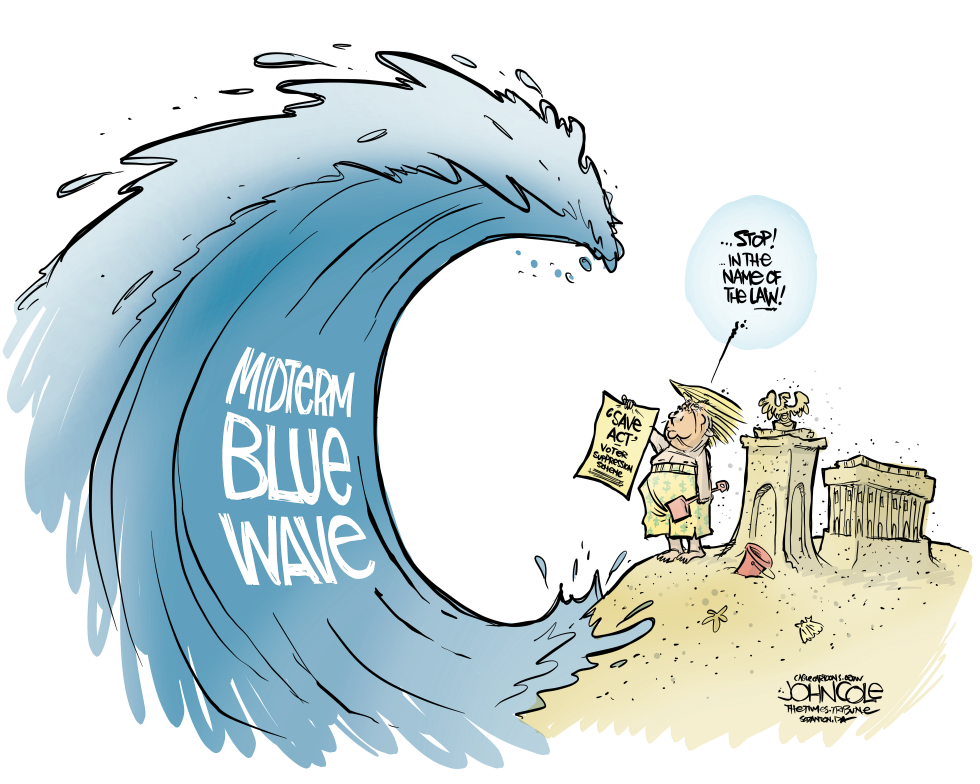
A large midterm electoral surge is projected to challenge Republican-backed election measures including the Save Act ahead of the 2026 contests. The legislation aims to require proof of citizenship for federal voting. Democrats argue the requirements amount to suppression tactics that could disenfranchise eligible voters. Republicans maintain the rules protect election integrity against fraud. The cartoon frames the Save Act defender as standing firm with a law banner while the wave approaches the Capitol steps.
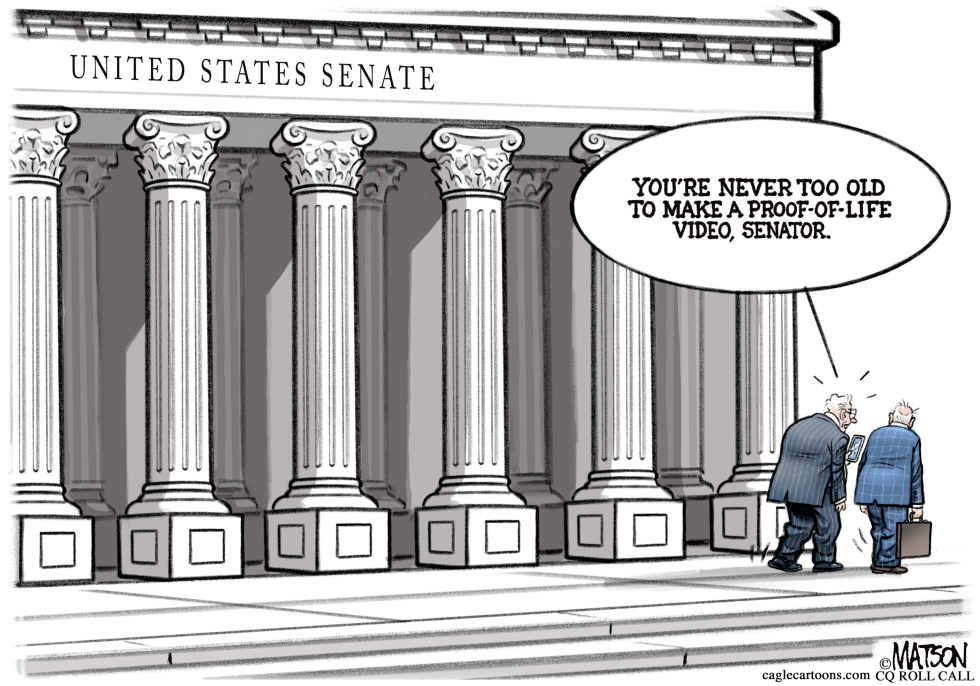
A political cartoon depicts two older senators outside the United States Senate building. One man holds a phone and tells the other that he is never too old to make a proof-of-life video. The exchange occurs amid visible columns labeled United States Senate. The image addresses persistent public questions about the advanced age of many sitting senators and their capacity to serve. No specific legislation or recent vote is shown. The visual focuses on the routine nature of such concerns within Congress.
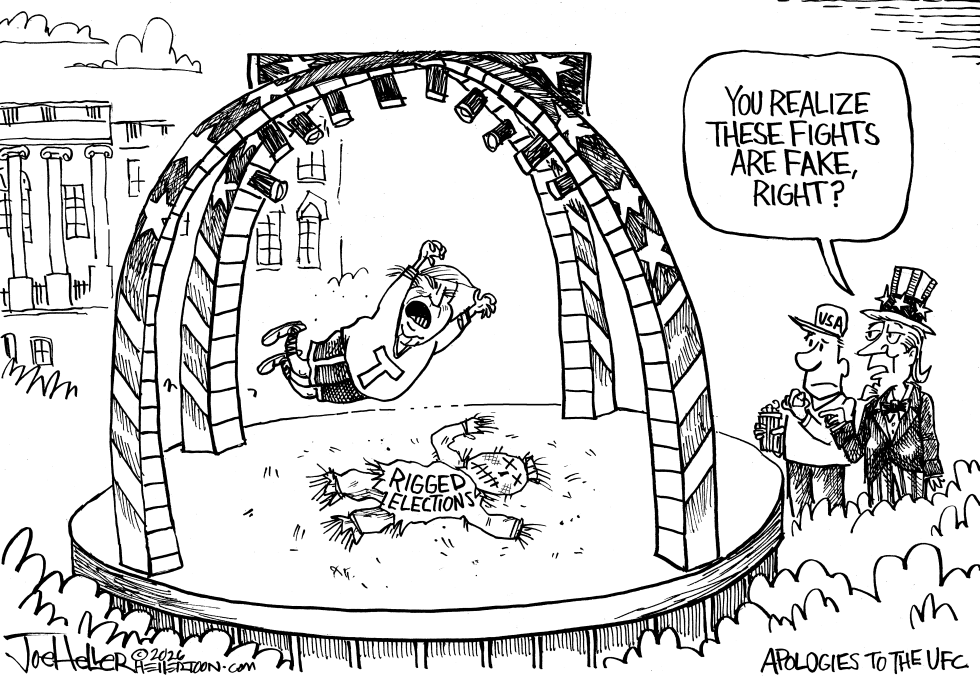
A wrestling ring scene shows a Trump figure thrown onto a mat labeled rigged elections while Uncle Sam remarks that the fights are fake. The image responds to ongoing 2026 election integrity debates with a direct visual comparison to staged matches.
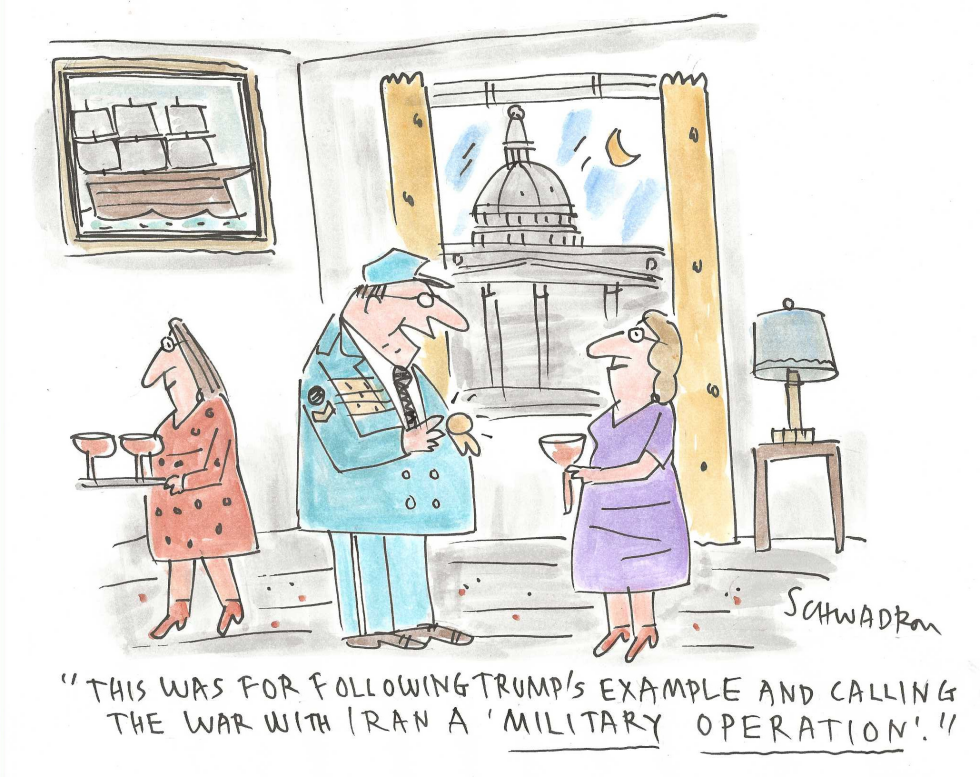
Harley Schwadron's cartoon depicts a cocktail party scene where a military officer toasts with two women, celebrating the decision to follow Trump's example by calling the war with Iran a 'military operation.' The room features a framed ship painting, a window view of the Capitol dome under a crescent moon, and a lamp on a table. Tags such as war, Iran, military, Trump, shipping, and oil underscore the satirical jab at semantic dodges in foreign policy. The dry humor highlights how leaders reframe conflicts to soften public perception, with the officer's uniform and medals emphasizing official endorsement. This piece captures the absurdity in political language, set against a backdrop of potential economic fallout like inflation and gas prices, though peace negotiations remain distant.
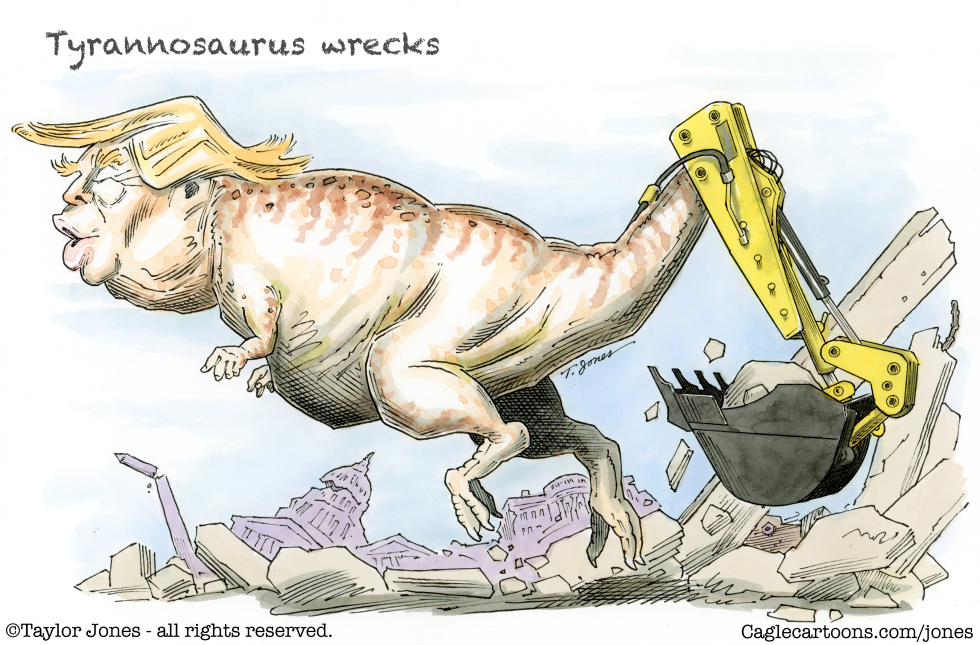
The cartoon shows a Tyrannosaurus Rex with Donald Trump's features operating heavy machinery to demolish parts of the White House complex. Rubble surrounds the U.S. Capitol and other structures in the background. The image responds to reported plans for White House renovations including a ballroom addition and East Wing work around late October 2025.
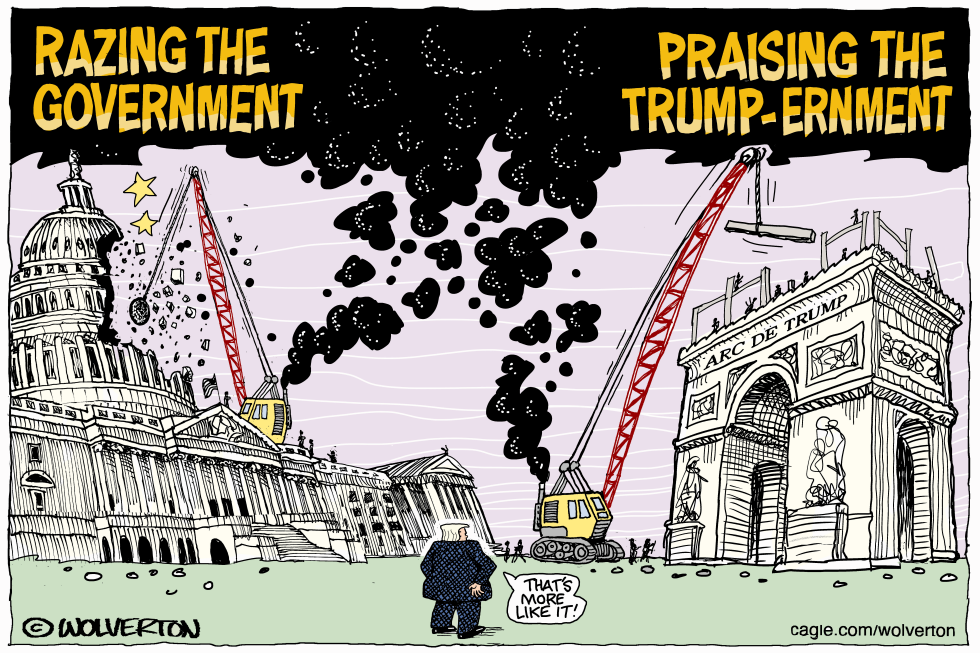
On October 18, 2025, a Monte Wolverton cartoon depicts President Donald Trump observing the demolition of the U.S. Capitol Building on the left and the construction of an Arc de Trump monument on the right. A wrecking ball and crane damage the Capitol while another crane assembles the arch. Black smoke fills the center. Trump, in the foreground, says 'THAT'S MORE LIKE IT!' The split headline reads 'RAZING THE GOVERNMENT' and 'PRAISING THE TRUMP-ERNMENT.' The image comments on federal workforce reductions and infrastructure priorities during the second Trump term.
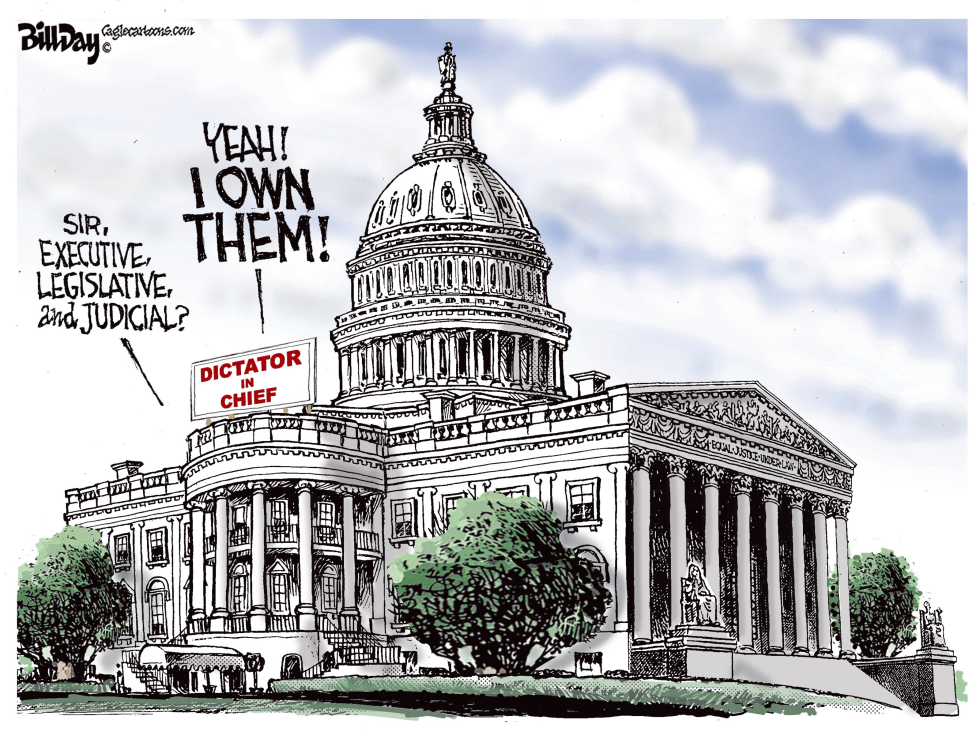
The drawing shows the U.S. Capitol building bearing a prominent sign reading Dictator in Chief. Large lettering above the dome proclaims Yeah! I Own Them! while a separate line of text asks Sir, Executive, Legislative, and Judicial? The composition merges elements of the Capitol dome with a classical columned facade bearing the inscription Equal Justice Under Law.