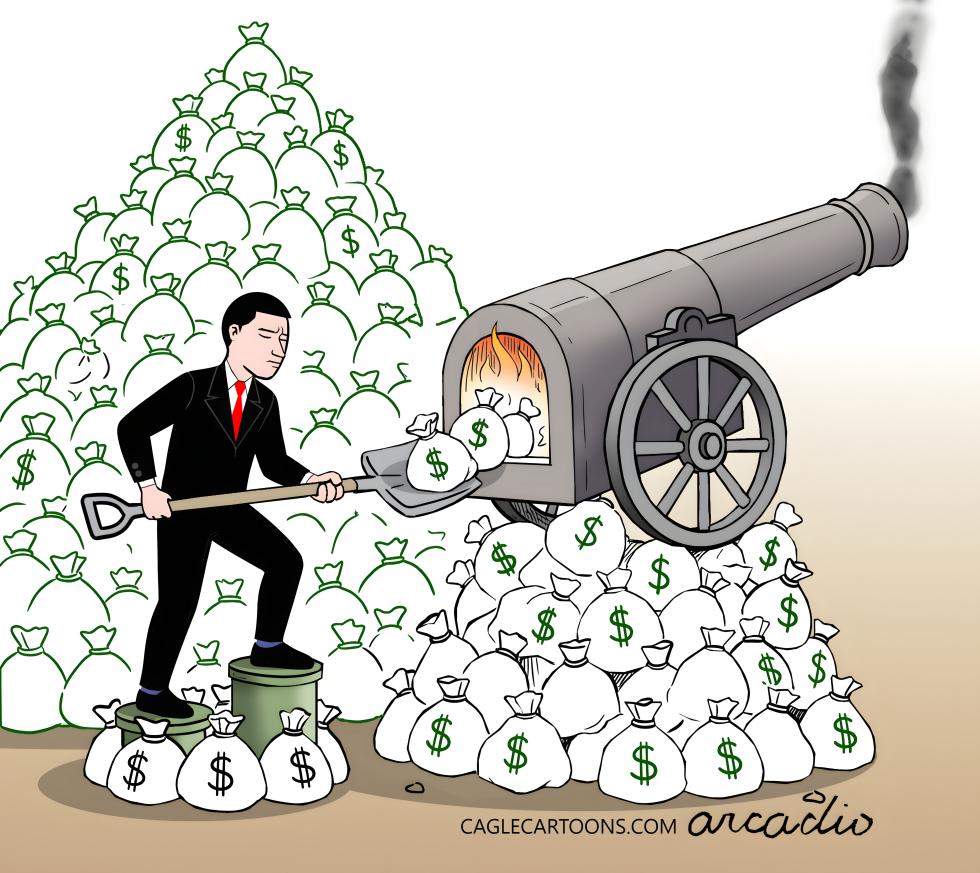
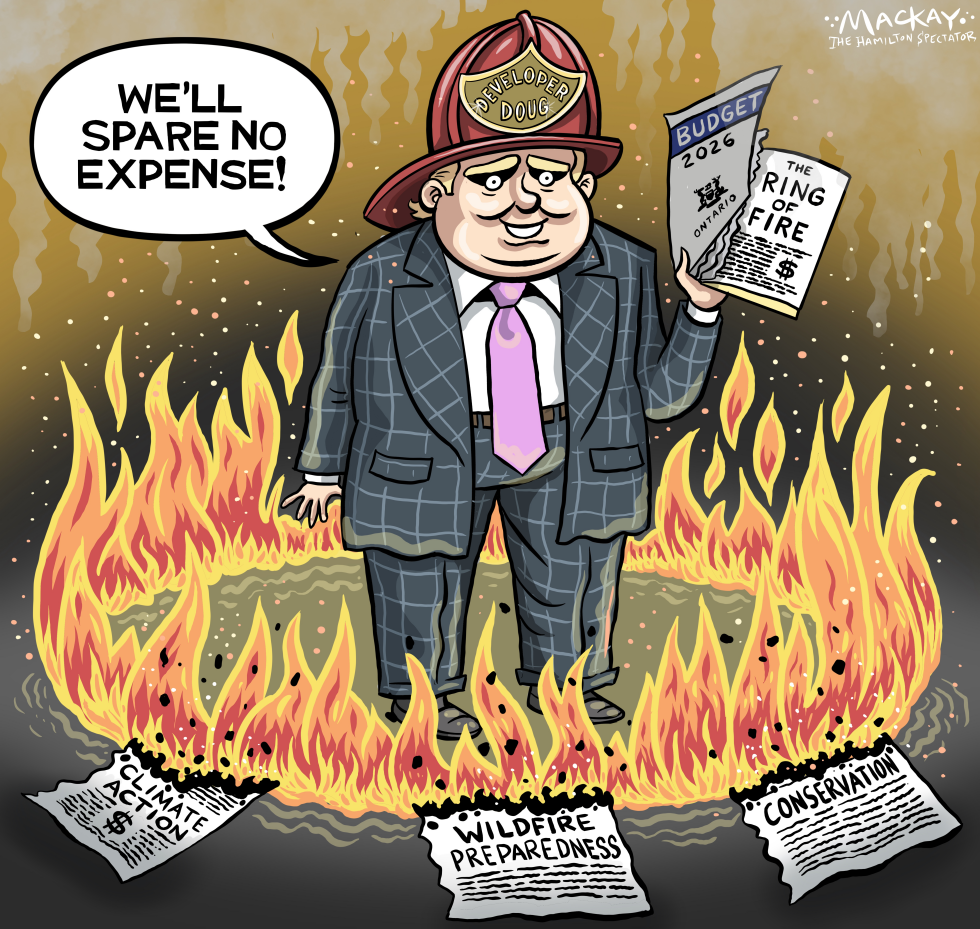
Business leaders continue to allocate large sums toward unproductive or destructive ends, drawing criticism for prioritizing short-term displays over sustainable practices. The pattern reflects ongoing concerns about corporate priorities where substantial resources vanish without clear returns. The piece argues that such spending represents a fundamental misallocation that harms long-term stability.
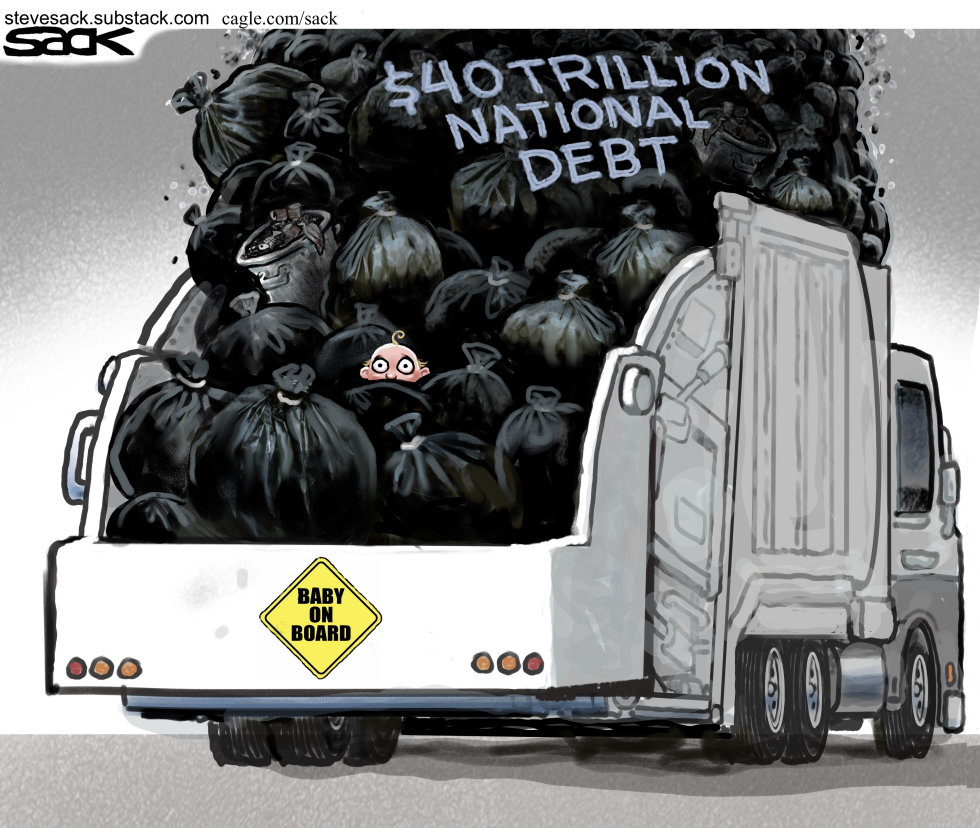
The national debt has climbed to $40 trillion amid persistent federal deficits and rising interest costs. This trajectory threatens long-term economic stability and shifts repayment burdens onto younger Americans. The cartoon argues that current fiscal policies treat future citizens as disposable, loading them into the refuse of unchecked borrowing.
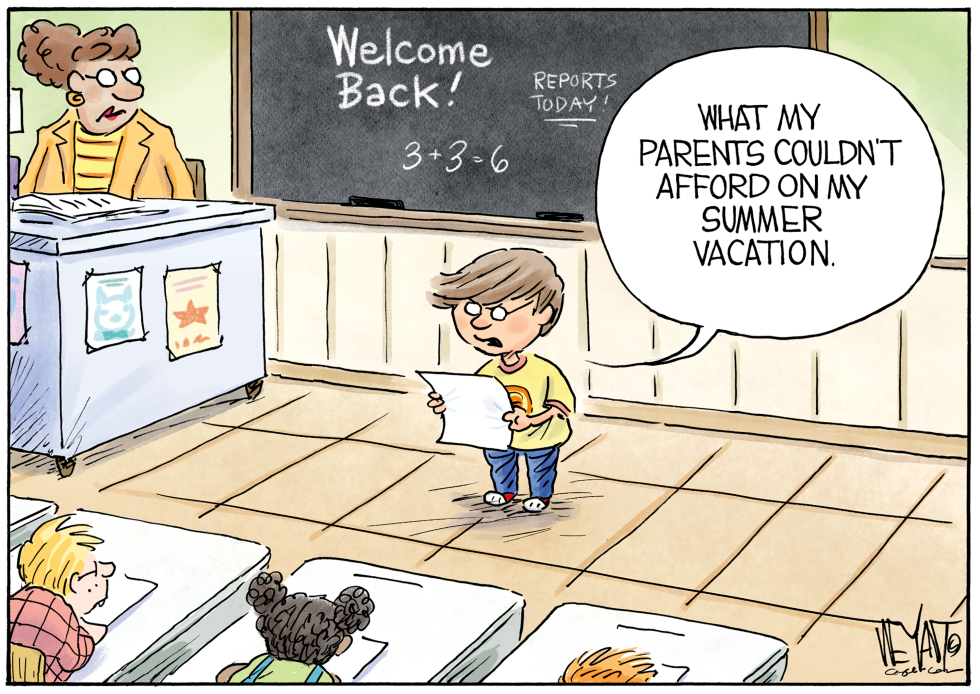
Rising living costs continue to squeeze household budgets as families navigate post-pandemic recovery and persistent price pressures on travel and leisure. A classroom scene captures one student's report on what his parents could not afford during summer break, underscoring how everyday families feel the pinch. The piece frames the issue as a direct consequence of ongoing economic conditions affecting ordinary households.
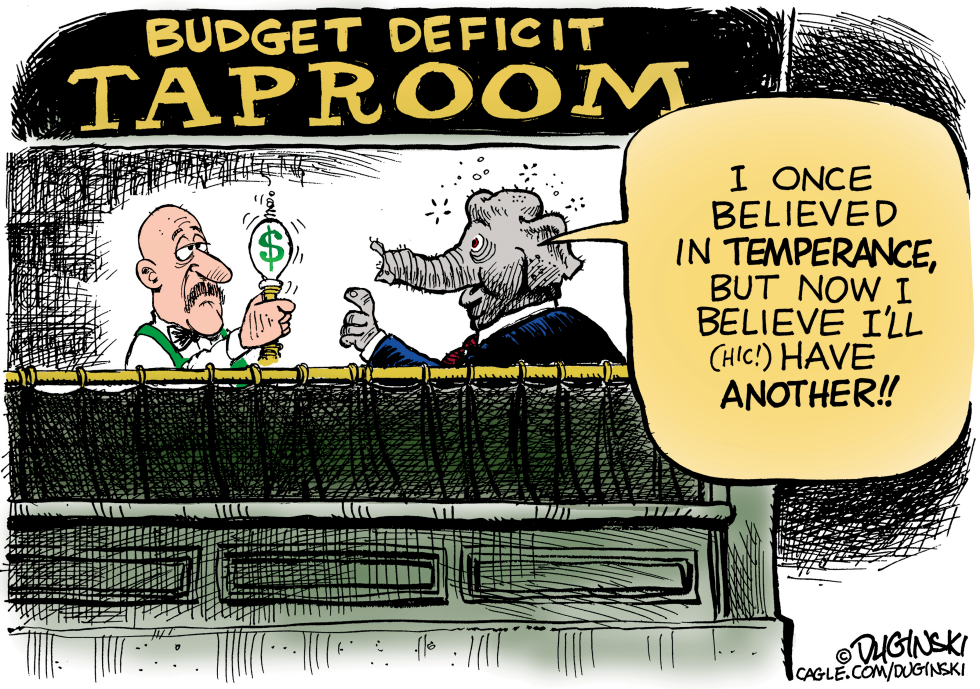
Republicans have long criticized deficit spending under Democratic administrations yet continue to support policies that expand federal borrowing when in power. The pattern reflects ongoing tension between stated fiscal restraint and actual legislative priorities on taxes and spending. The cartoon argues that the party has abandoned earlier commitments to balanced budgets in favor of repeated deficit increases.
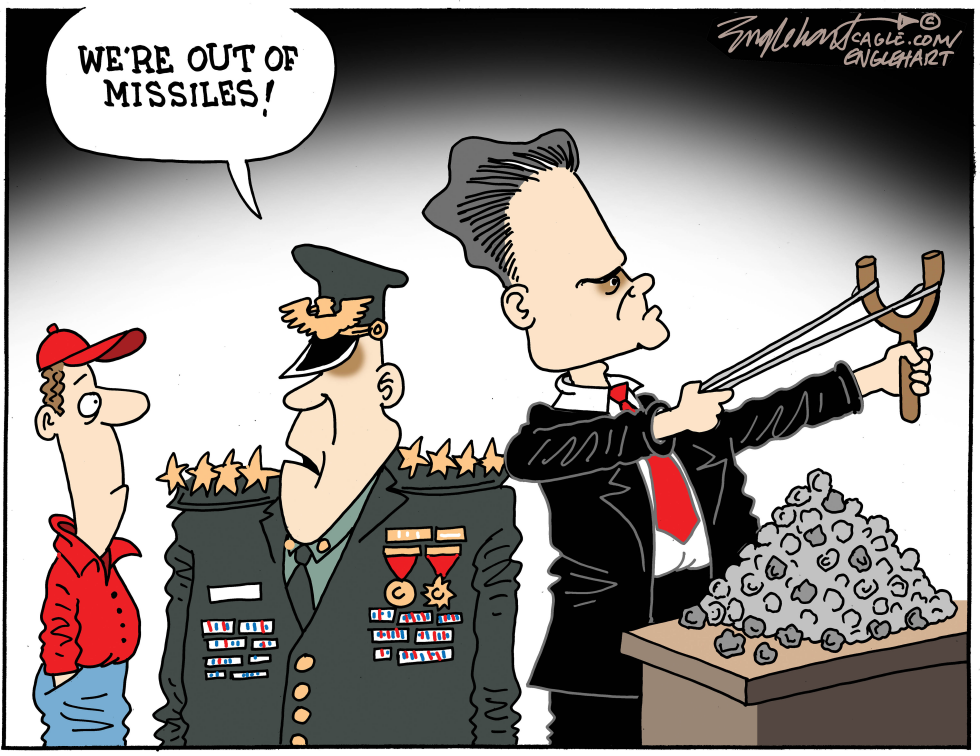
The Pentagon confronts depleted missile inventories during active defense needs. Officials explore improvised options including slingshots loaded with rocks. The development highlights supply chain strains and readiness questions for U.S. forces. The piece criticizes the situation as a failure of planning and resource allocation.
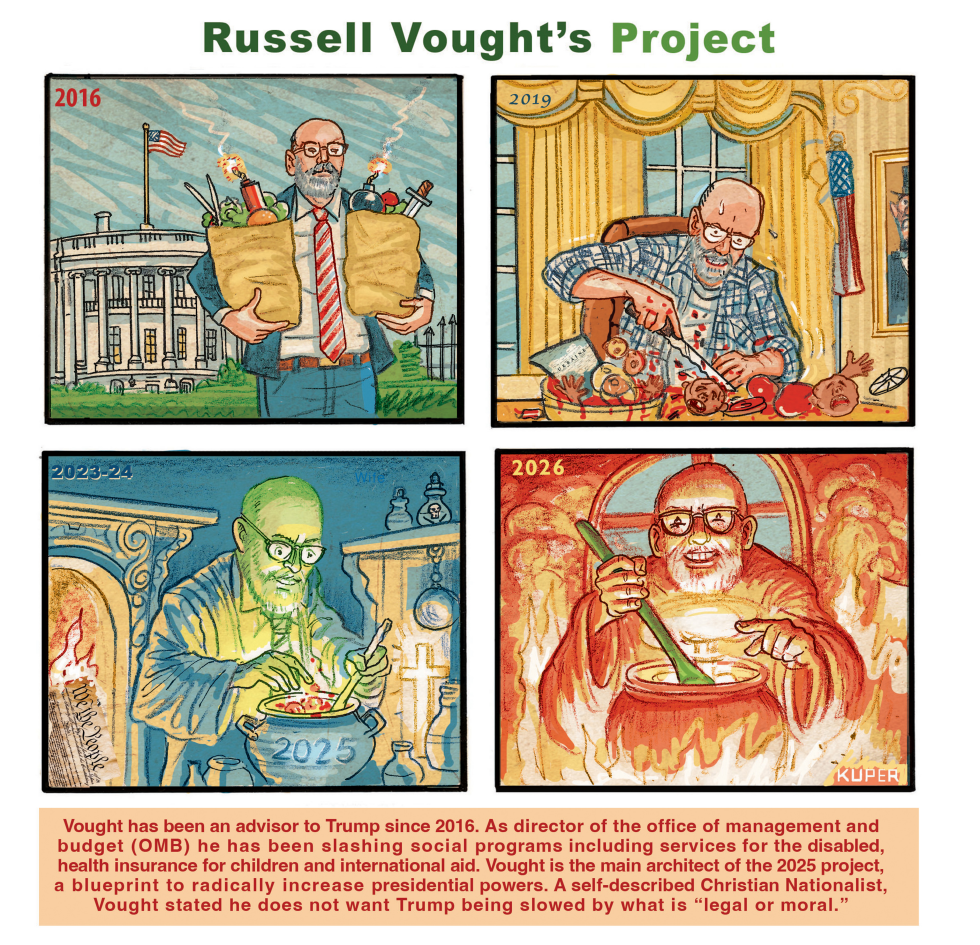
Russell Vought has served as a Trump advisor since 2016 and later directed the Office of Management and Budget, where he cut funding for disability services, children’s health insurance and foreign aid. He is the principal author of Project 2025, a plan to enlarge presidential authority. The cartoon presents his progression from 2016 through 2026 as a deliberate effort to remove legal or moral restraints on executive action.
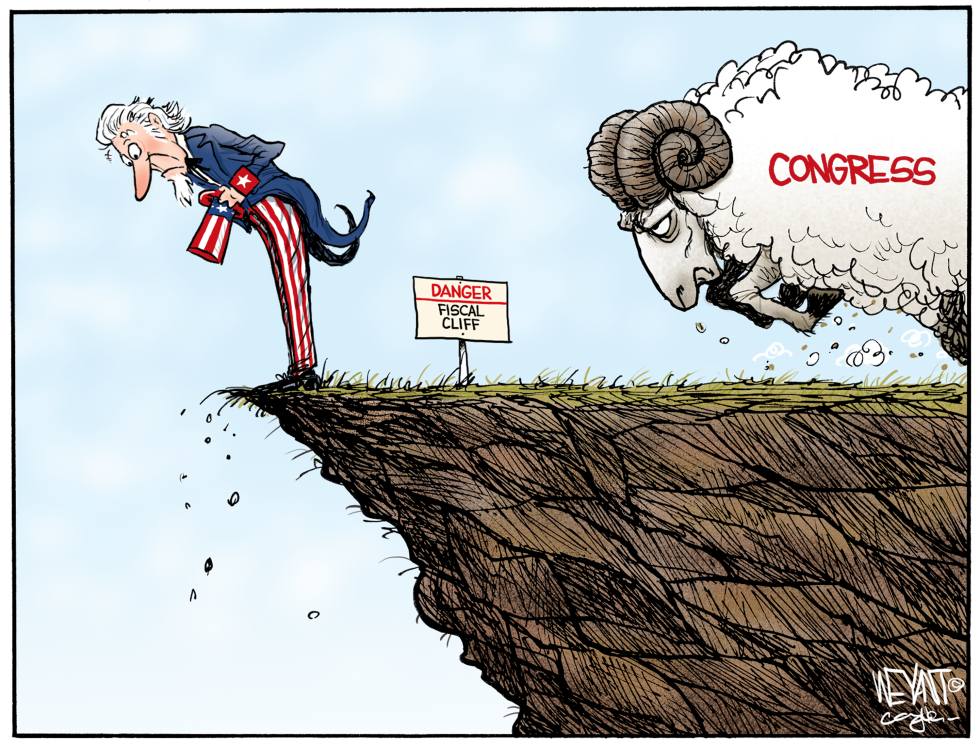
Congress faces renewed pressure over federal spending limits and debt ceiling negotiations. The impasse threatens automatic spending cuts and tax changes. The piece portrays Congress as the force driving the nation toward the fiscal cliff.
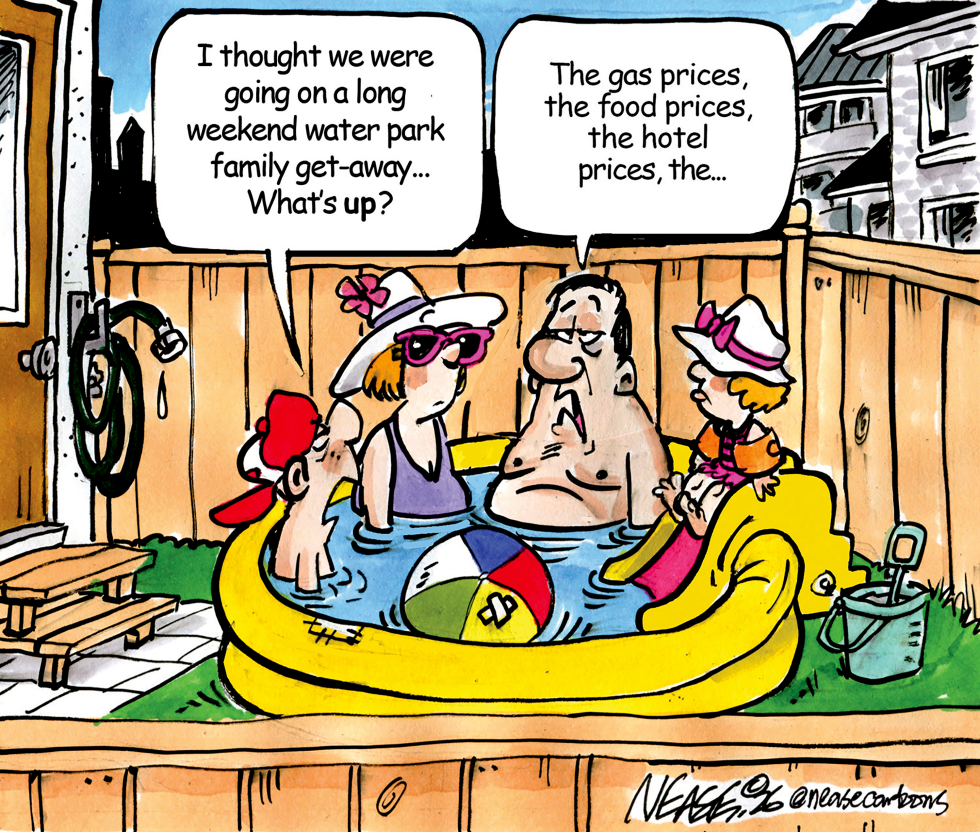
Families planning summer getaways face steep increases in gas, food, and hotel costs that disrupt long weekend plans. The piece highlights how these expenses push households toward simpler backyard alternatives while underscoring the persistent strain inflation places on everyday leisure.
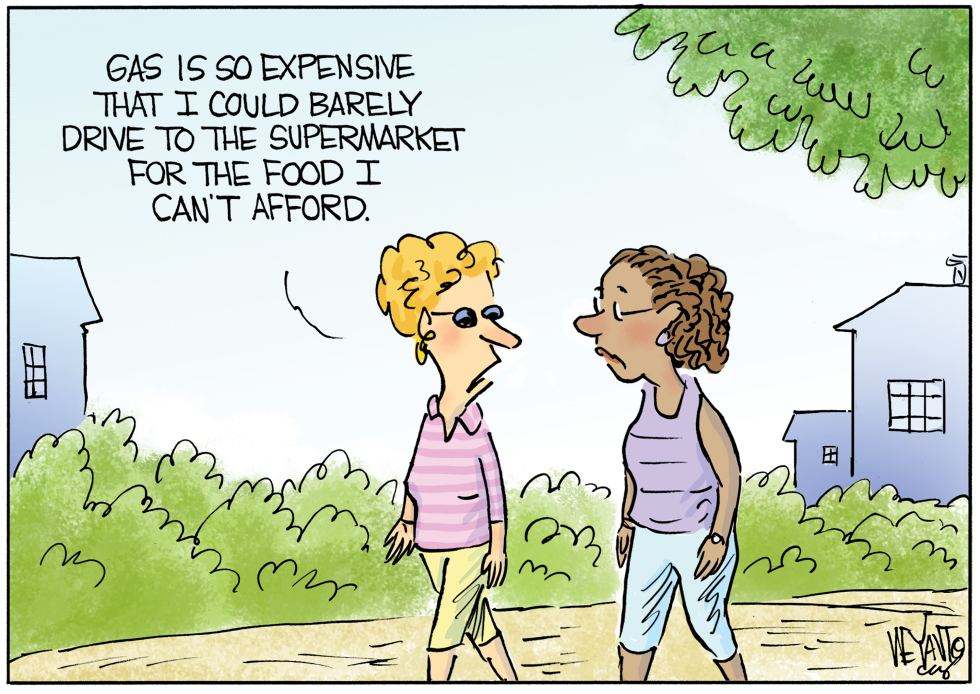
Elevated gasoline prices continue to squeeze household budgets by raising the cost of essential travel for groceries. Families report that filling the tank now competes directly with buying food, amplifying the effects of broader inflation on daily necessities. The editorial highlights how these intertwined expenses limit mobility and purchasing power for average consumers.
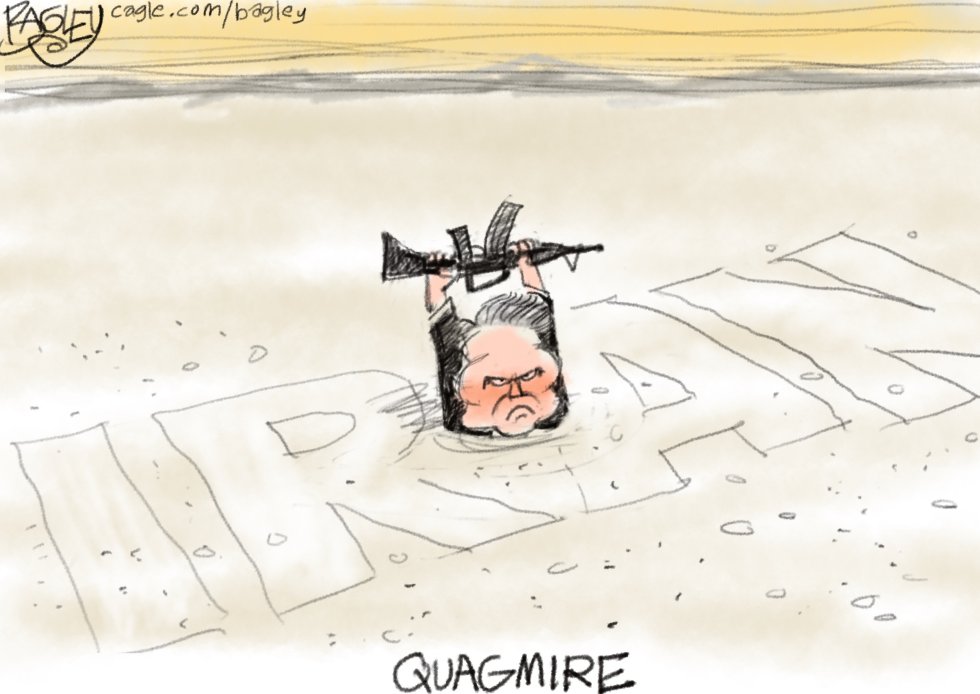
Donald Trump faces mounting difficulties tied to military engagements as of late July 2026. The situation underscores risks of prolonged involvement abroad. The piece portrays these events as a self-inflicted trap that threatens broader stability.
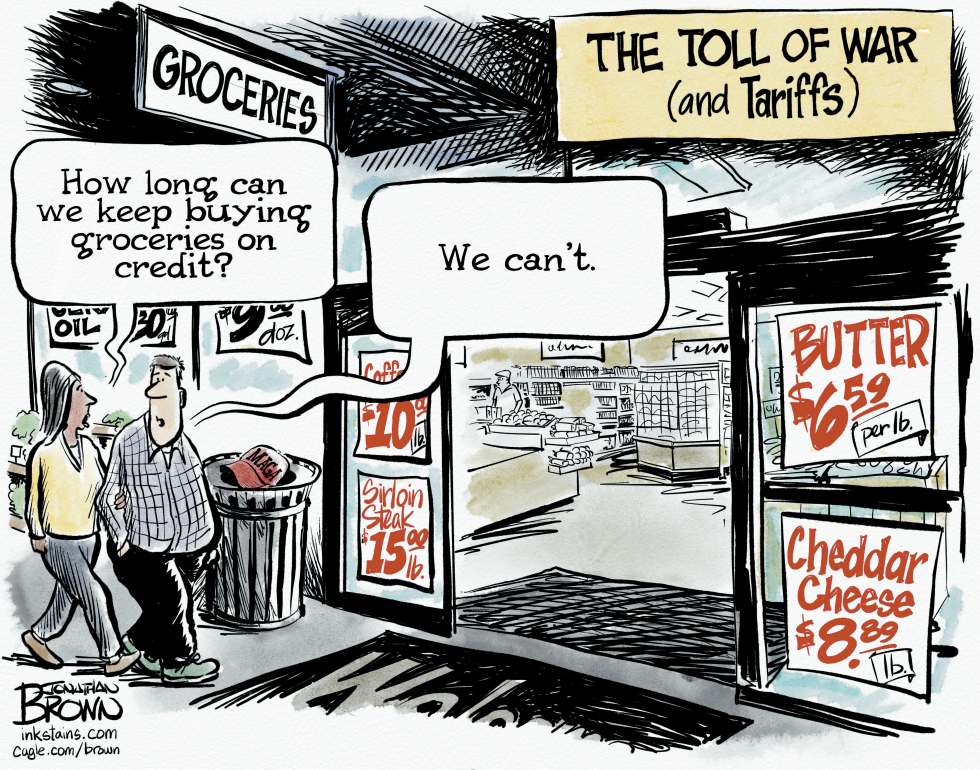
A political cartoon depicts a couple leaving a grocery store after learning they cannot continue buying food on credit. Signs inside show sharply higher prices for butter at $6.59 per pound, cheddar cheese at $8.89 per pound and sirloin steak at $15 per pound. A banner overhead reads The Toll of War (and Tariffs). The scene illustrates how ongoing conflict and trade barriers have driven up everyday food costs leaving households to rely on credit that is no longer sustainable.
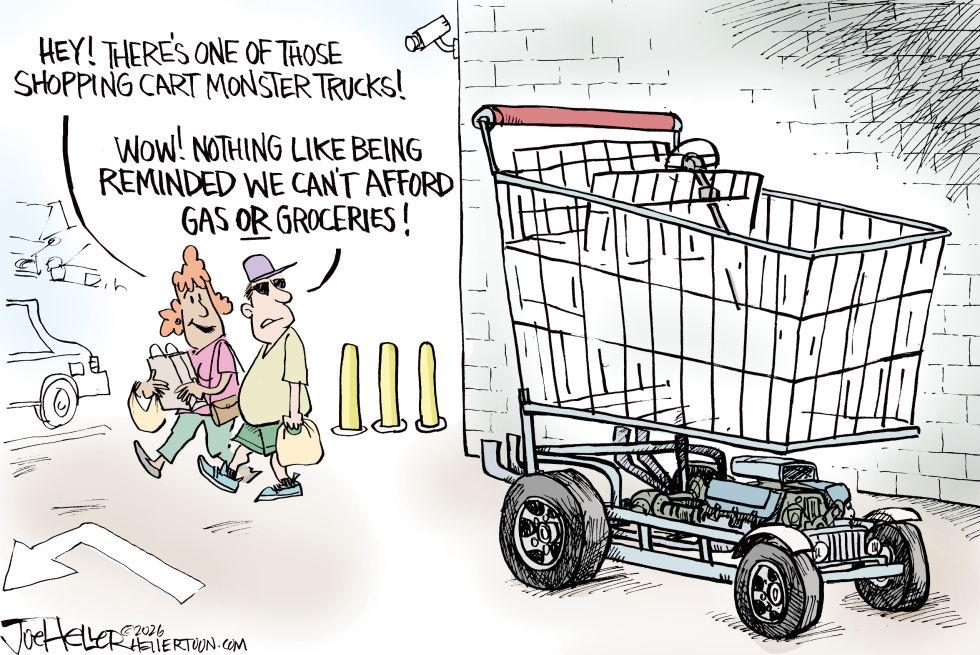
A modified shopping cart on large wheels draws comments from passersby about unaffordable gas and groceries. The scene on July 10 2026 captures ongoing economic strain from higher living costs. Passersby note the reminder of tight budgets for fuel and food. The image reflects persistent inflation concerns affecting household spending.
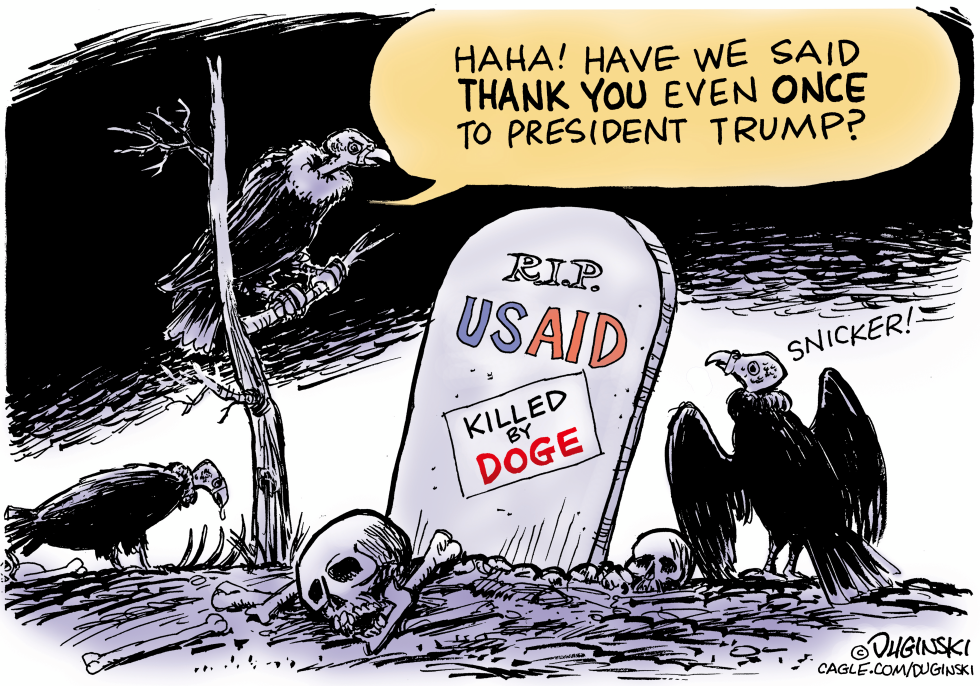
Vultures perch around a tombstone reading R.I.P. USAID killed by DOGE on July 9 2026. One bird in a speech bubble asks if thanks have been given to President Trump while another snickers nearby. Skulls and bones litter the ground beneath the marker. The scene follows recent DOGE actions targeting the aid agency.
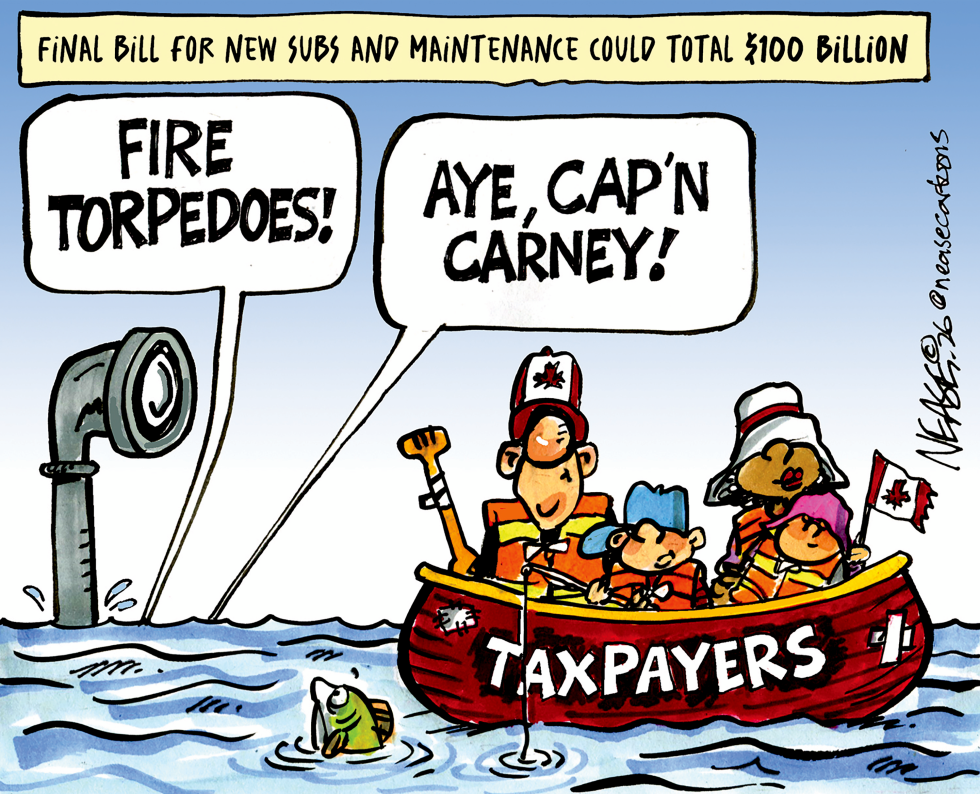
A political cartoon from July 6, 2026, shows a red boat marked TAXPAYERS carrying figures including one identified as Cap'n Carney. Speech bubbles show calls to fire torpedoes and affirm orders. A banner above warns that the final bill for new submarines and maintenance could reach $100 billion. A periscope rises from the water beside the vessel. The image highlights Canadian defense procurement costs borne by the public.