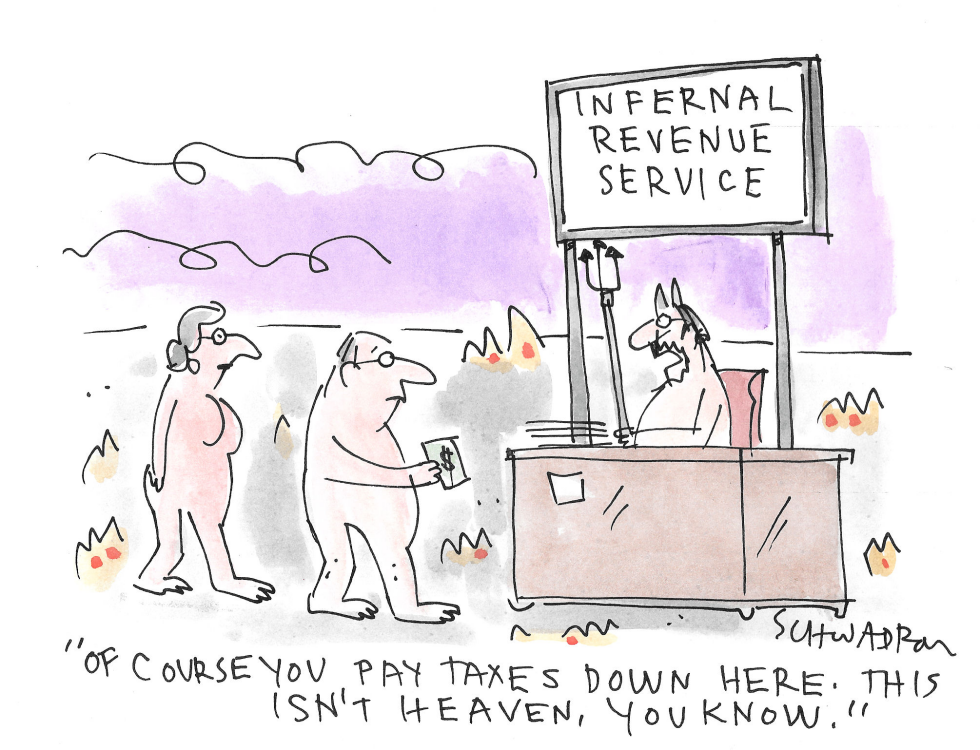
The long-standing adage that only death and taxes are certain receives fresh treatment in a cartoon depicting an IRS outpost operating in hell. No specific policy change or ruling prompted the piece, which instead plays on the enduring public frustration with tax collection as an inescapable force. The editorial stance pokes at bureaucratic persistence, suggesting the tax man follows citizens beyond the grave with the same relentless efficiency seen in life.
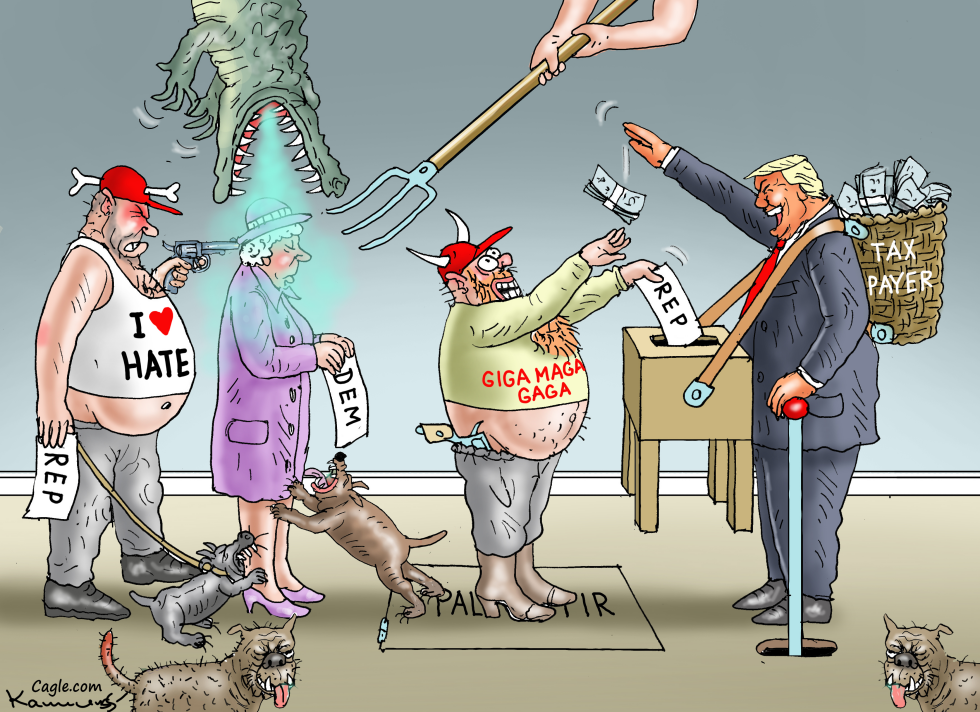
As the 2026 midterm elections approach, former President Trump has positioned himself as a central force in Republican campaigns, directing resources and mobilizing supporters. The cartoon highlights the use of taxpayer money in these efforts and the intense partisan divide, with Democrats portrayed as under attack. It takes the position that such involvement risks undermining fair electoral processes.
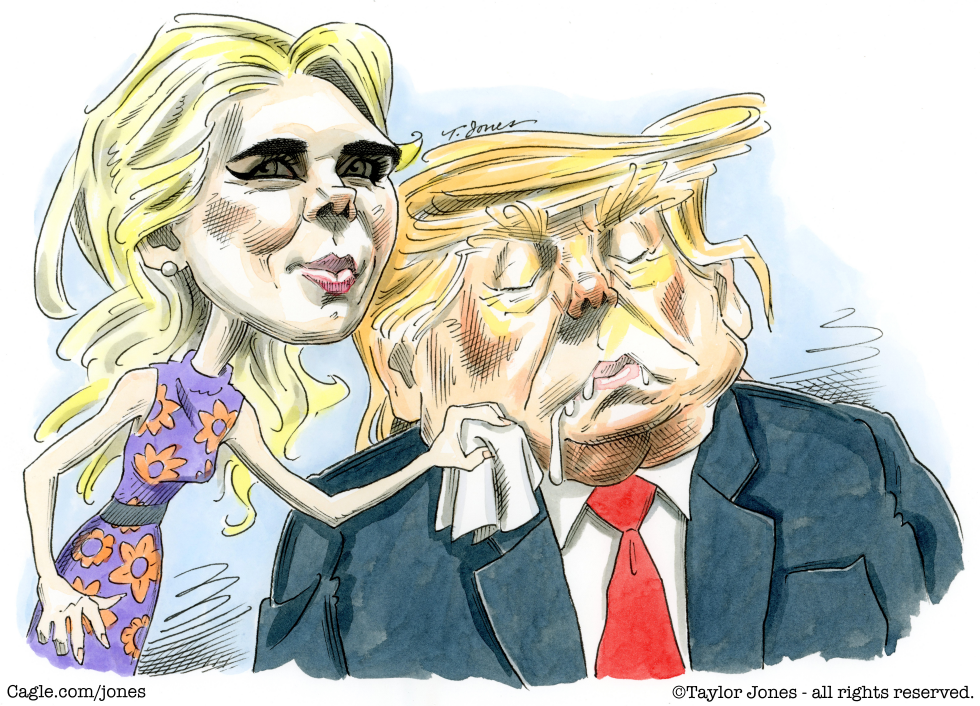
Donald Trump appears in a vulnerable state during a public or staff interaction in 2026. Natalie Harp, a known associate, tends to him by wiping drool from his face. The moment highlights ongoing scrutiny of the former president's health and stamina. Observers note the personal nature of the assistance amid continued political activity. The piece presents the scene as evidence of reliance on close aides.
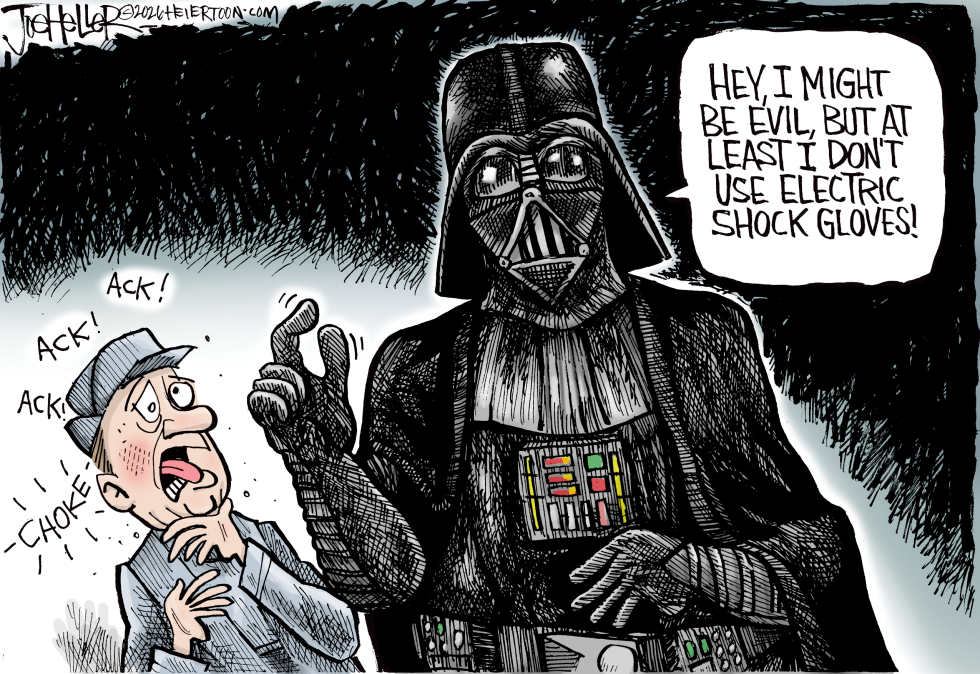
Public discussion continues over the use of electric shock gloves in security and law enforcement settings. Critics argue the devices risk excessive force and injury during confrontations. Darth Vader's stance in the piece frames the tools as crossing a line that even a fictional villain avoids. The editorial position holds that such methods undermine claims of restraint and invite scrutiny on their necessity and oversight.
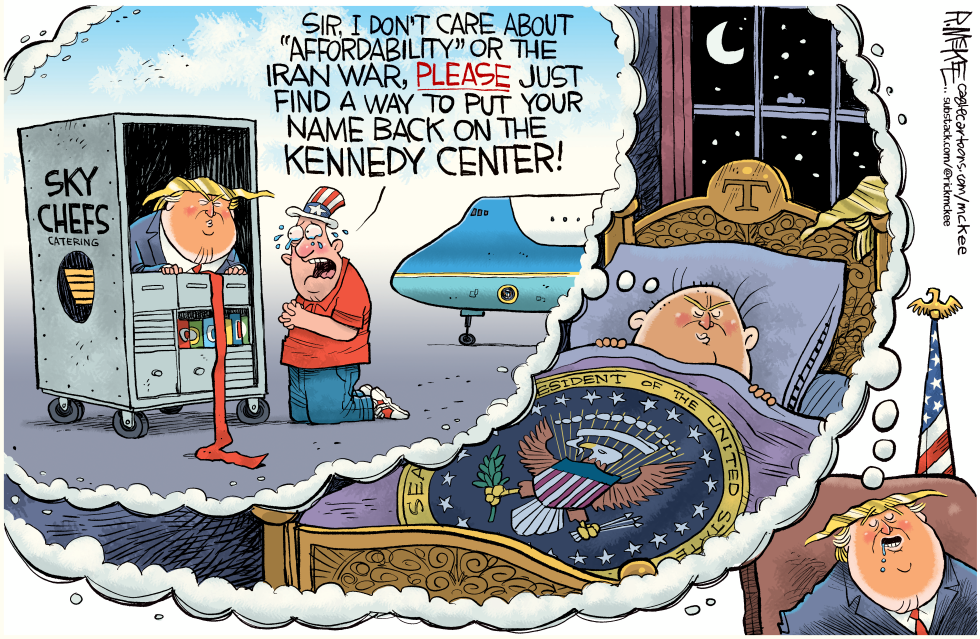
Donald Trump has repeatedly expressed interest in attaching his name to prominent public institutions. The Kennedy Center, a major arts venue in Washington, has drawn his attention as a potential target for rebranding. Critics argue such moves distract from pressing national issues including foreign conflicts and domestic spending. The cartoon depicts this fixation as a nighttime preoccupation that sidelines other responsibilities.
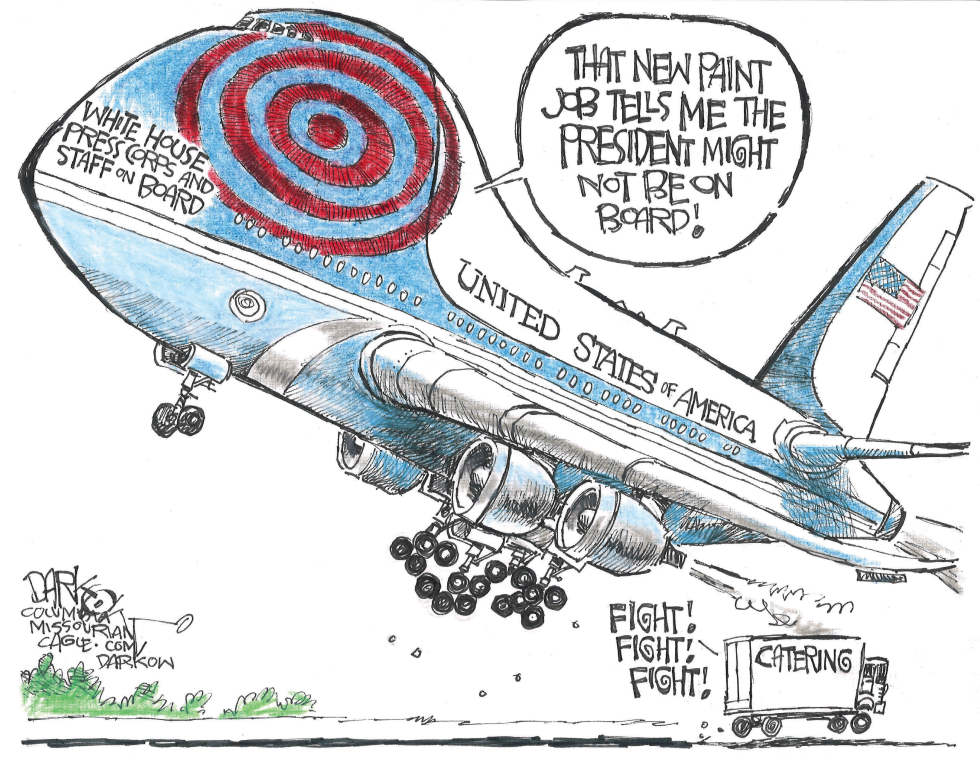
Air Force One appears with a large target painted on its upper fuselage while carrying White House press corps and staff. A nearby catering truck chants fight slogans as the plane descends. The image suggests the president may not be aboard the targeted aircraft. This visual plays on recent tensions surrounding presidential travel and security. The editorial stance highlights perceived risks or distancing from official duties.
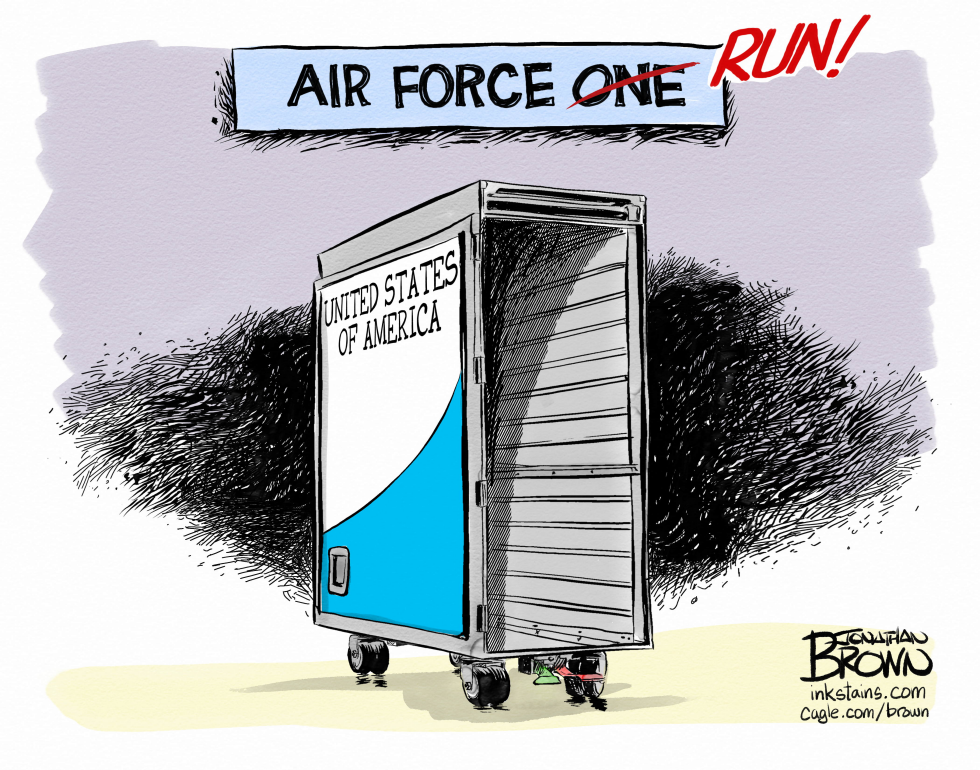
A wheeled airline catering cart occupies the center of the frame, painted in the livery of the presidential aircraft: white upper body, curved blue lower panel, and UNITED STATES OF AMERICA lettered down the side. Its full height door hangs open on empty wire shelving. Above it a pale blue placard reads AIR FORCE ONE, with ONE struck through in red and RUN! added beside that word in the same color. Two neckties poke out from between the casters underneath, one of them the long red tie Donald Trump is known for, the only trace of the men folded up inside. The drawing responds to reports that Trump sheltered in an airline galley cart against an assassination threat traced to Iran, turning the most recognizable branding in presidential aviation into an instruction to flee. Jonathan Brown signed the lower right corner alongside inkstains.com and Cagle.com/brown.
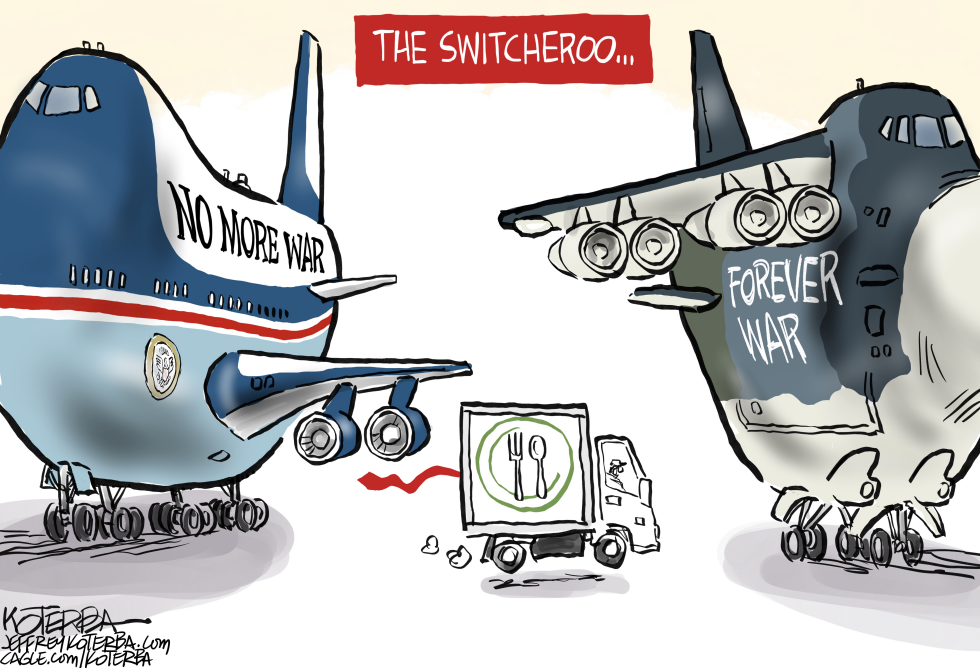
A political shift in military posture draws attention as commitments move from ending wars to sustaining them indefinitely. The editorial critiques the reversal as a cynical about-face on foreign engagements.
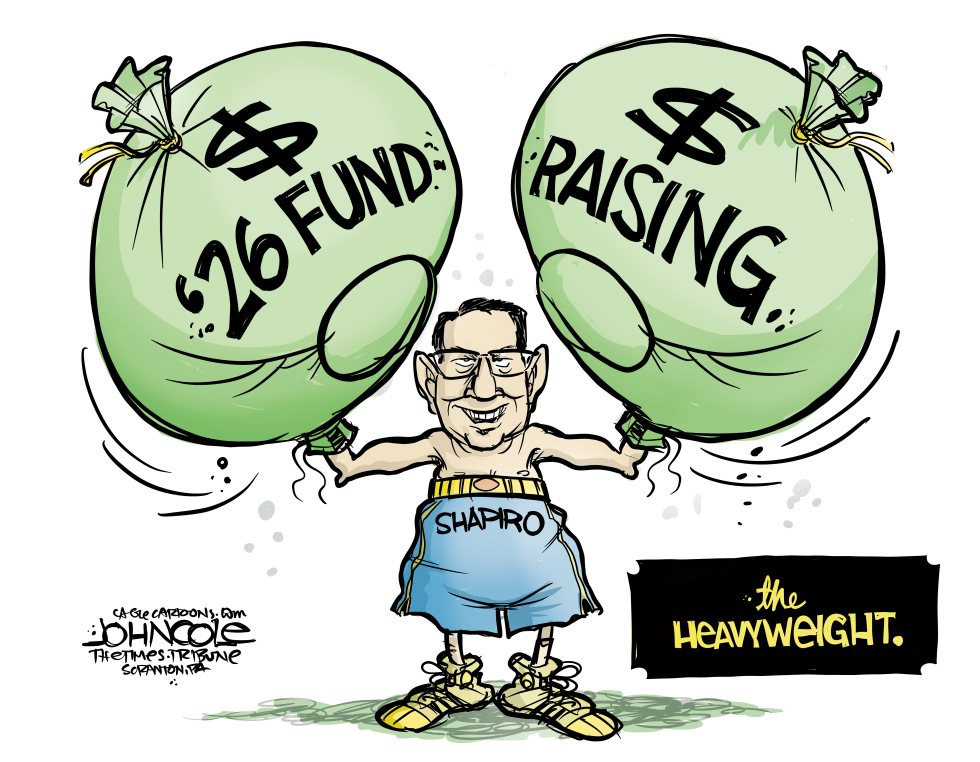
Ben Shapiro has built a substantial fundraising operation centered on a $26 fund and ongoing raising activities. The effort underscores the role of individual donors in sustaining prominent conservative media voices. The piece presents Shapiro as a dominant force in this arena.
Air Force One appears with a prominent target symbol on its fuselage amid questions about an escape vehicle. The image highlights concerns over presidential aircraft security during a period of heightened threats to the presidency. The editorial position critiques vulnerabilities in executive protection protocols.
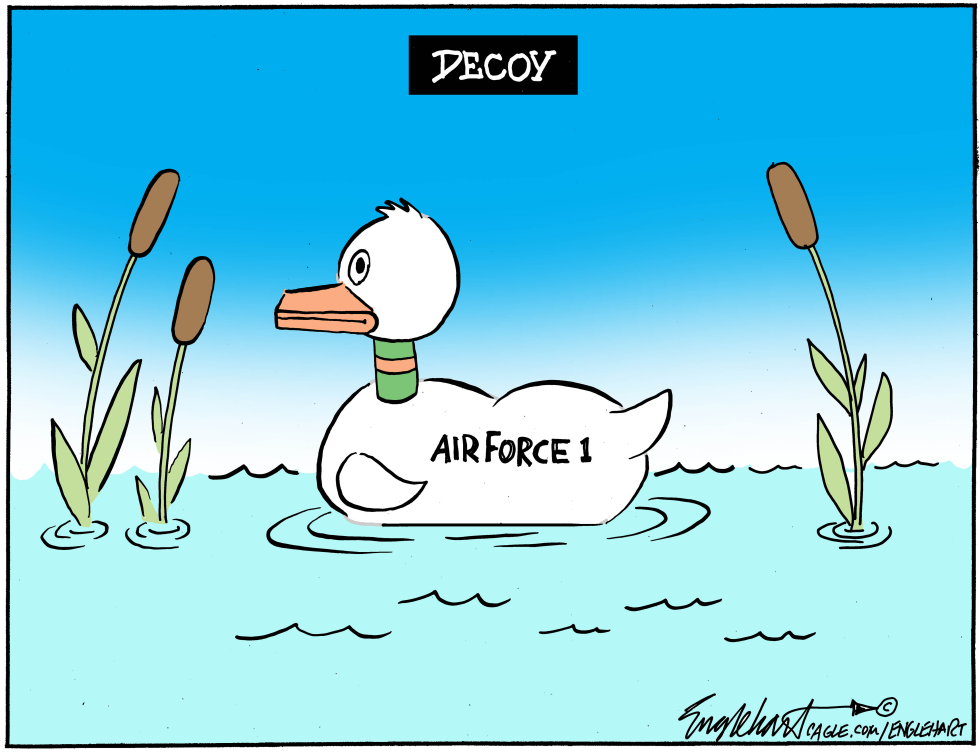
A decoy duck labeled Air Force One has surfaced amid ongoing questions about presidential aircraft usage and transparency. The image captures public skepticism toward official government assets. The editorial position critiques reliance on misleading symbols in high office.
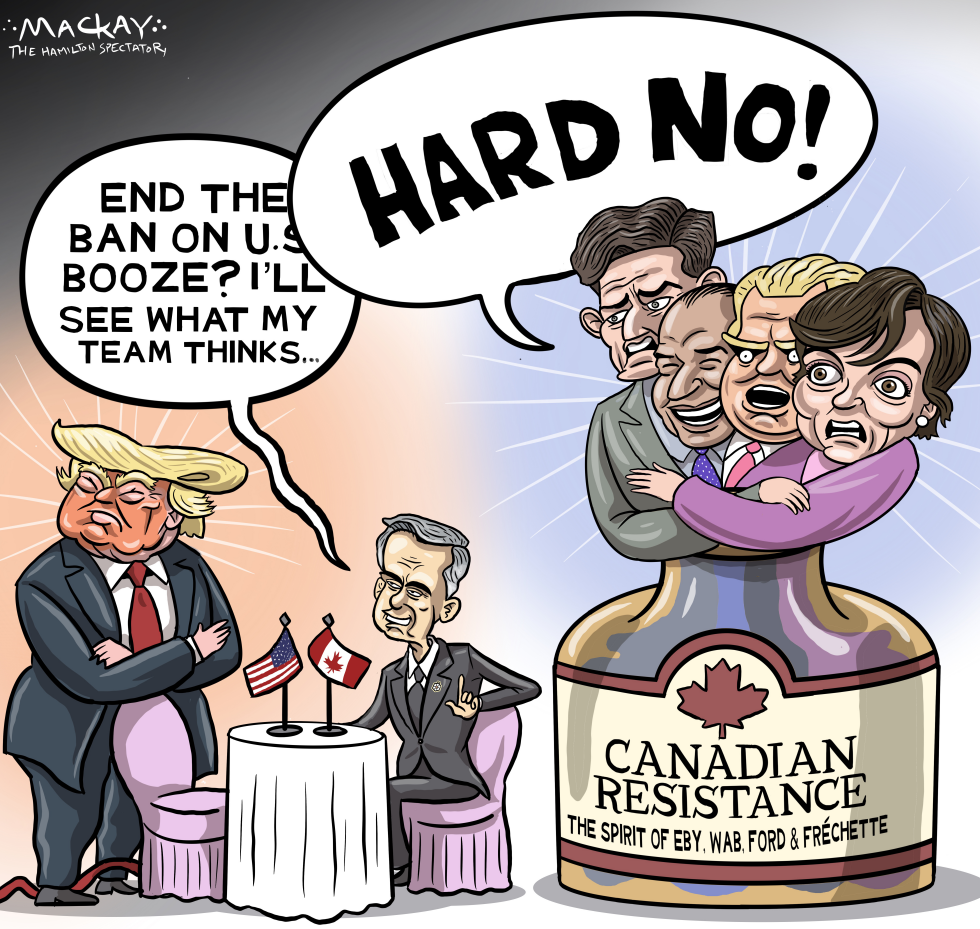
Donald Trump signaled openness to ending a ban on US alcohol imports into Canada during a meeting with Canadian officials. Provincial leaders including David Eby and Doug Ford responded with unified opposition. The cartoon portrays the premiers as a collective force of resistance and shows Trump deferring the decision to his team.
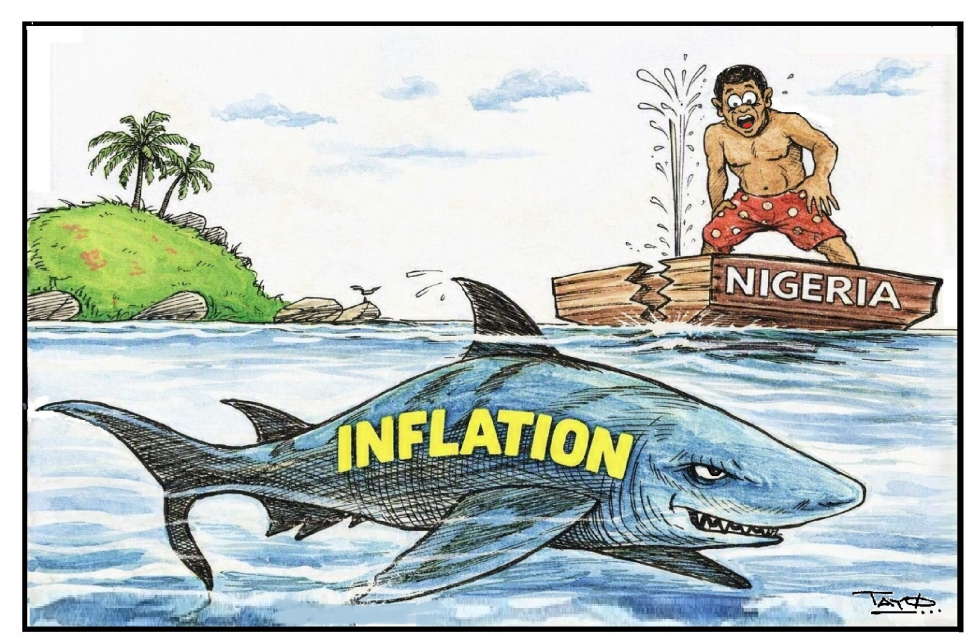
Nigeria continues to contend with sustained inflation and rising living costs. The piece responds to persistent price pressure on households and the strain it places on the wider economy. It presents inflation as a predatory force circling a vessel already taking on water.
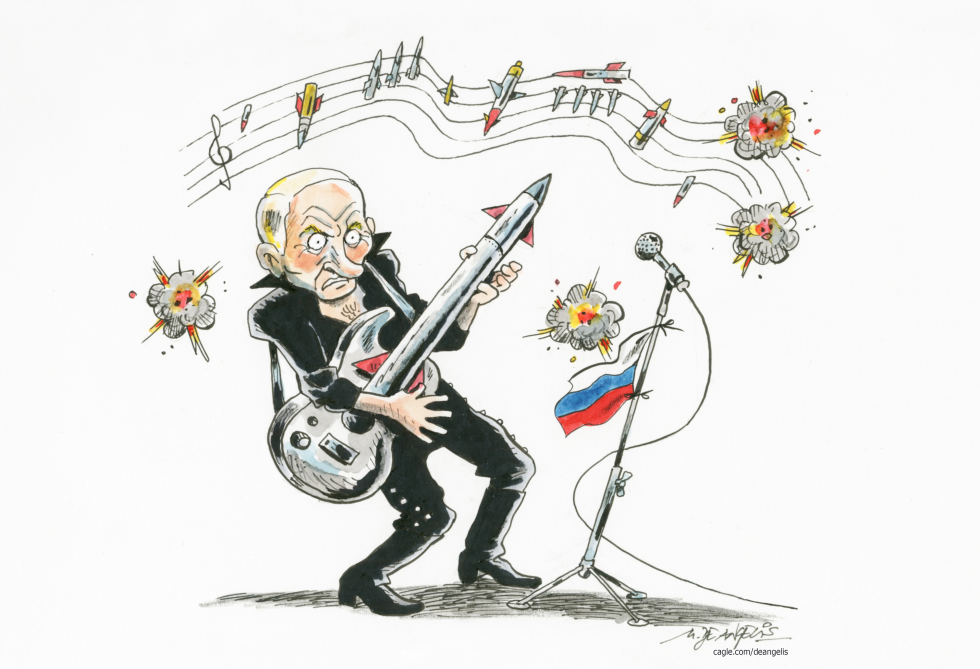
Russian President Vladimir Putin continues directing missile strikes in the Ukraine conflict, maintaining pressure on Kyiv through repeated aerial attacks. The imagery frames this sustained military campaign as a theatrical rock performance. The piece critiques the leader's embrace of destructive weaponry as spectacle rather than strategy.