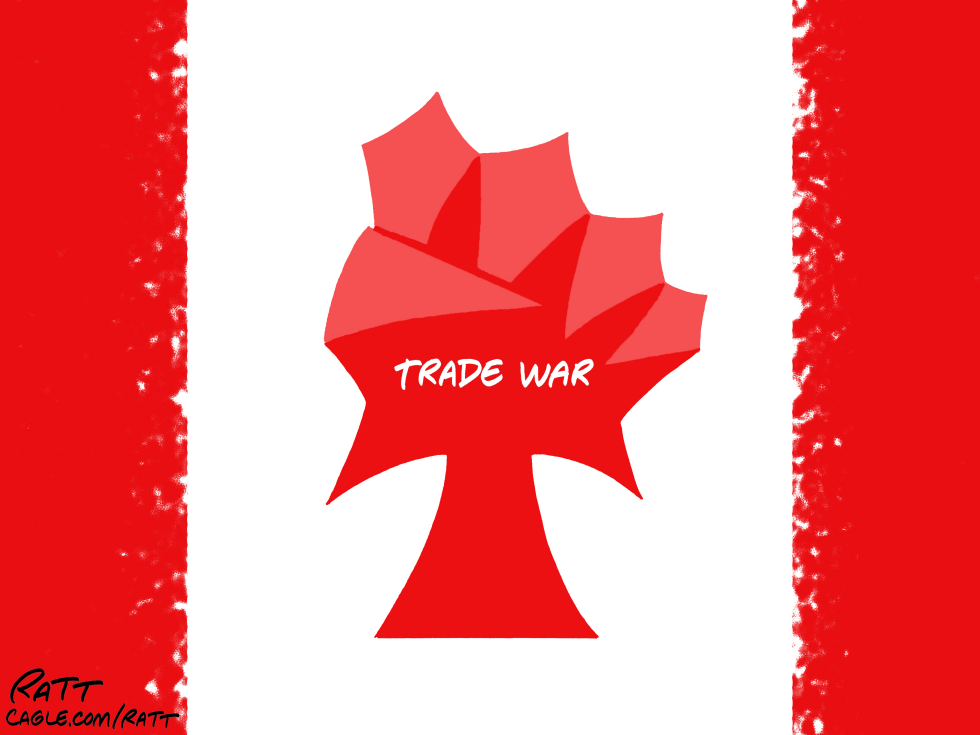
Ongoing US-Canada trade tensions escalated in 2026 with new tariff threats targeting Canadian exports. The dispute threatens key sectors including autos, lumber and agriculture, raising costs for consumers on both sides of the border. Canada has signaled plans to diversify markets and strengthen domestic industry. The cartoon frames the conflict as a direct assault on Canadian sovereignty and economic stability. It portrays the trade war as fracturing national symbols while urging a stronger northern response.
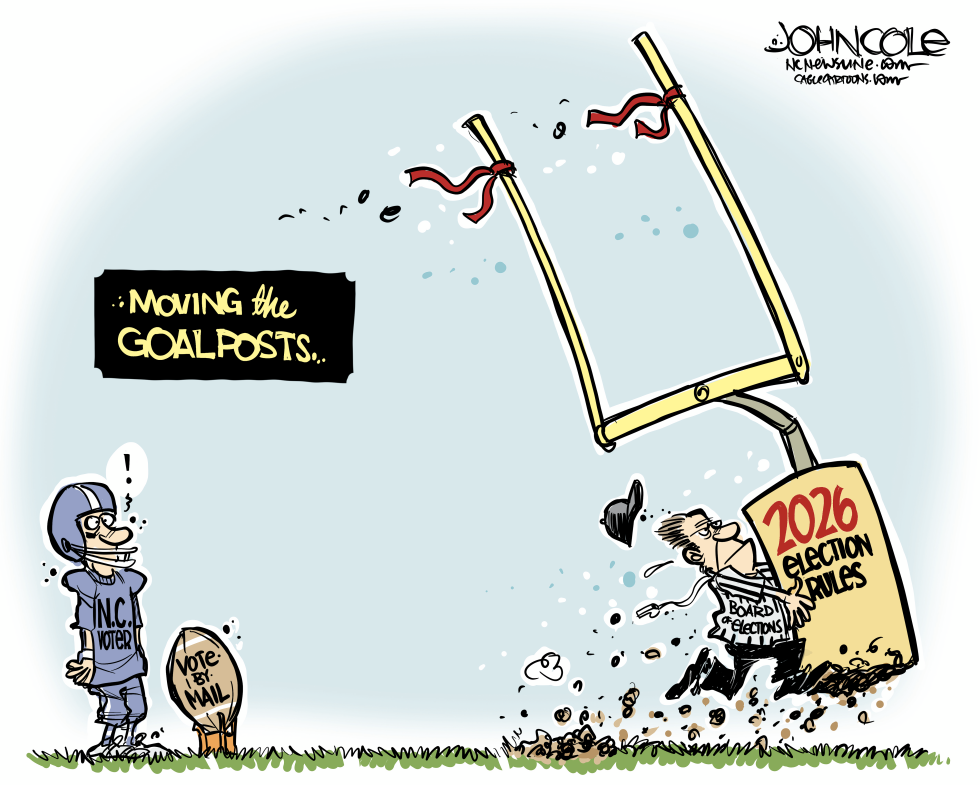
The North Carolina Board of Elections has updated rules governing mail ballots for the 2026 elections, introducing stricter verification and deadline requirements. The changes affect how voters submit ballots and have drawn criticism for complicating access. The move comes amid ongoing debates over election security and participation. Critics argue the adjustments disproportionately impact certain voter groups. The cartoon portrays the board as actively shifting standards to the disadvantage of mail voters.
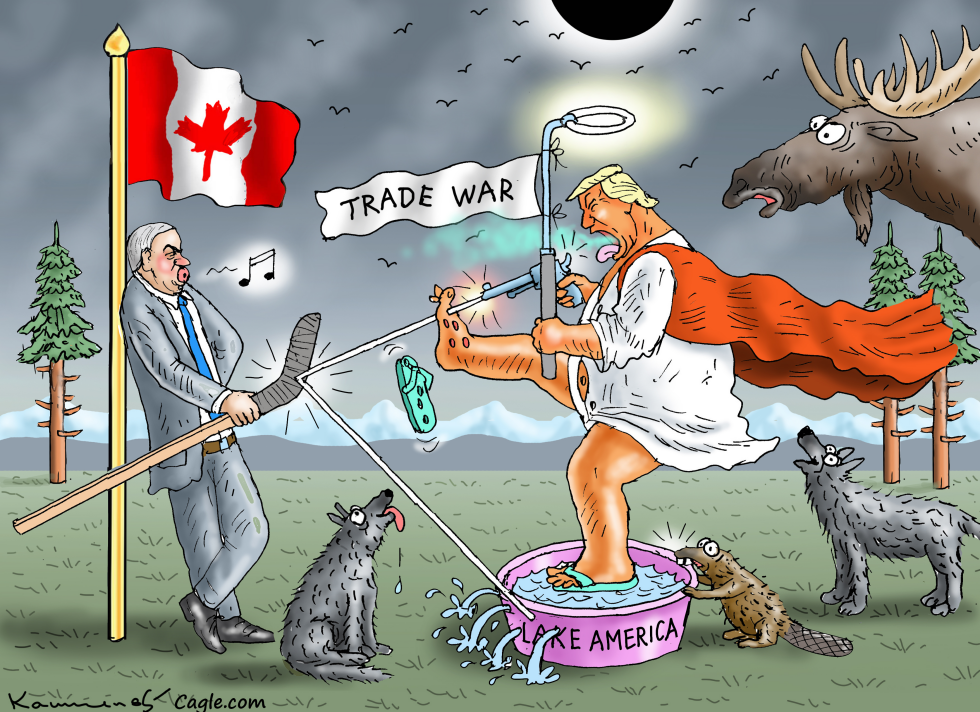
President Trump launched new tariffs on Canadian goods in early September 2026, citing trade imbalances and border issues. The move immediately prompted Canadian countermeasures including duties on US exports. The policy shift disrupts integrated supply chains in autos, energy and agriculture that support millions of jobs on both sides of the border. Markets reacted with volatility as investors weighed the costs of renewed protectionism. The cartoon portrays the tariff campaign as self-inflicted harm that leaves the US exposed to swift Canadian pushback.
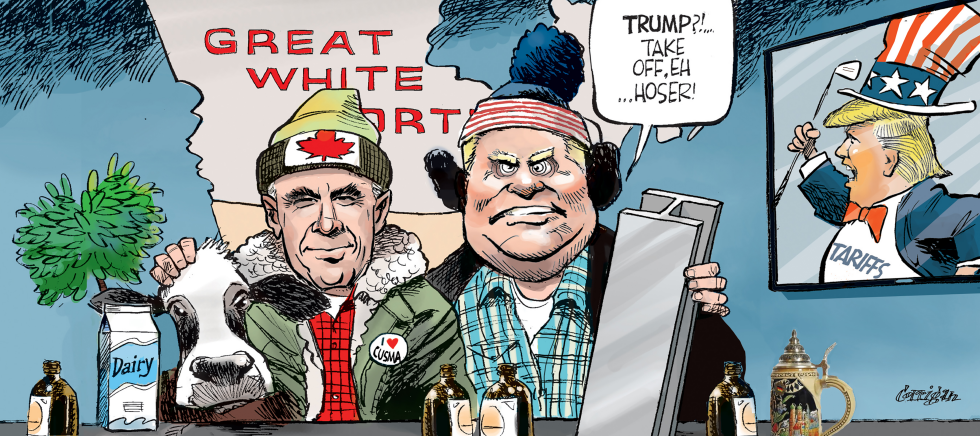
President Trump renewed tariff threats against Canada focused on dairy imports in late August 2026. Canadian leaders responded by highlighting domestic protections and cultural stakes. The move risks straining long-standing trade ties under existing agreements. The cartoon frames the confrontation as a direct challenge to Canadian sovereignty in agriculture. It portrays US policy as aggressive posturing that ignores mutual economic interests.
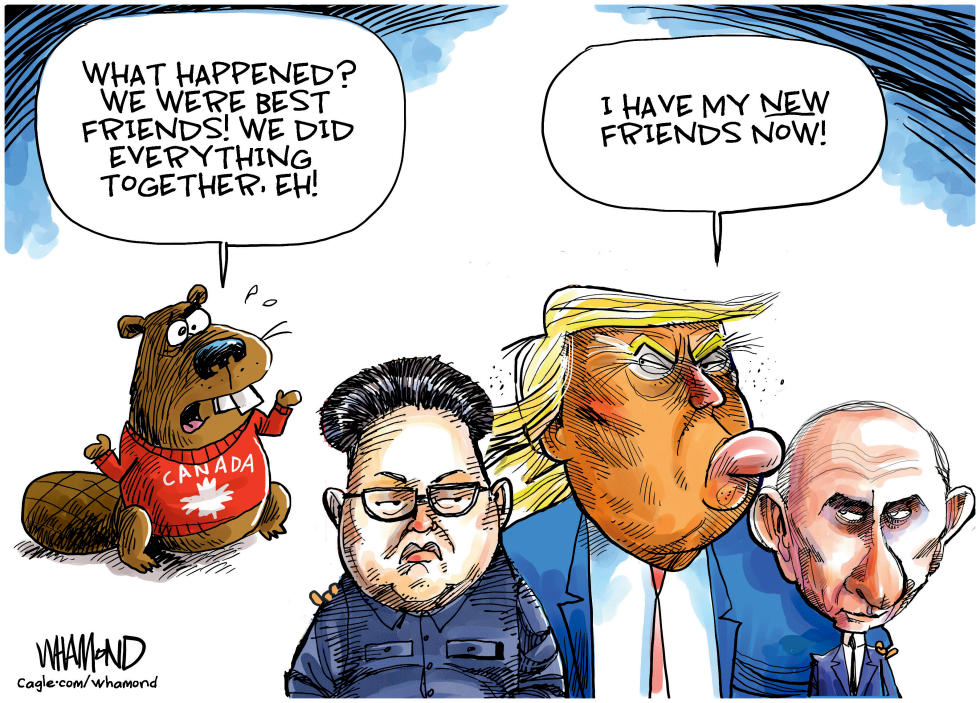
President Trump has redirected diplomatic priorities toward closer ties with Russian President Vladimir Putin and North Korean leader Kim Jong Un. Traditional partners such as Canada now face reduced engagement. The move reflects a broader realignment in U.S. foreign policy that favors authoritarian counterparts over longstanding democratic allies. Observers note the shift carries risks for trade, security cooperation, and international norms. The editorial position criticizes the pivot as shortsighted and damaging to established relationships.
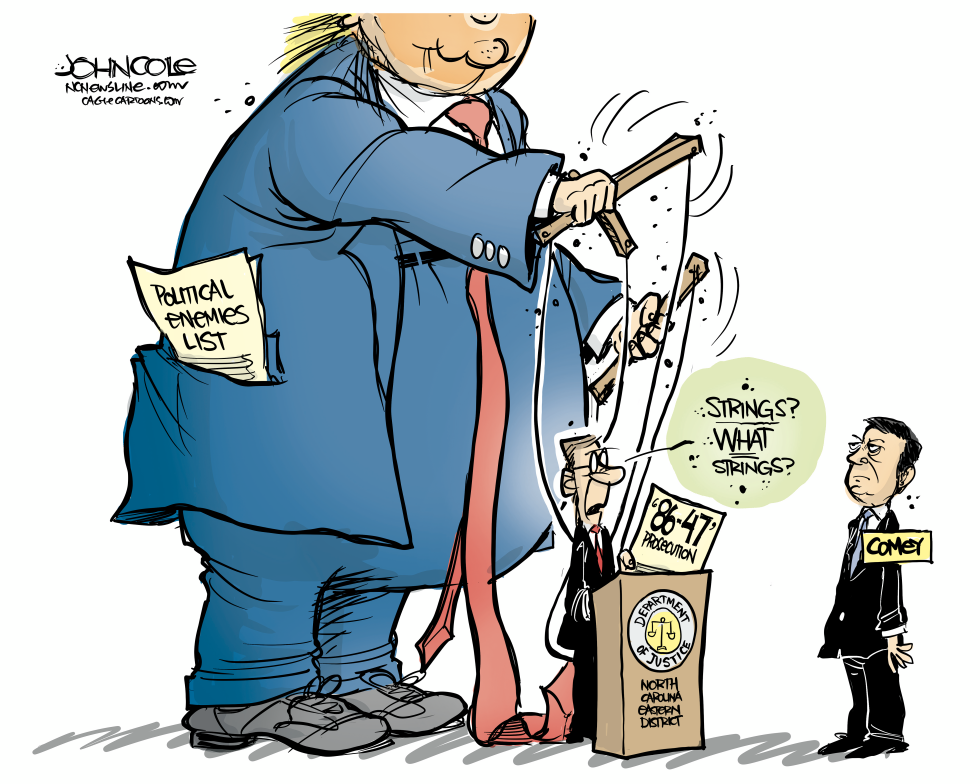
President Trump is shown directing a Department of Justice prosecution of former FBI Director James Comey in the North Carolina Eastern District. The image portrays the president as a puppeteer controlling the case through strings attached to a figure holding an 86-47 prosecution sign. The editorial position criticizes the use of federal prosecutorial power against political opponents.
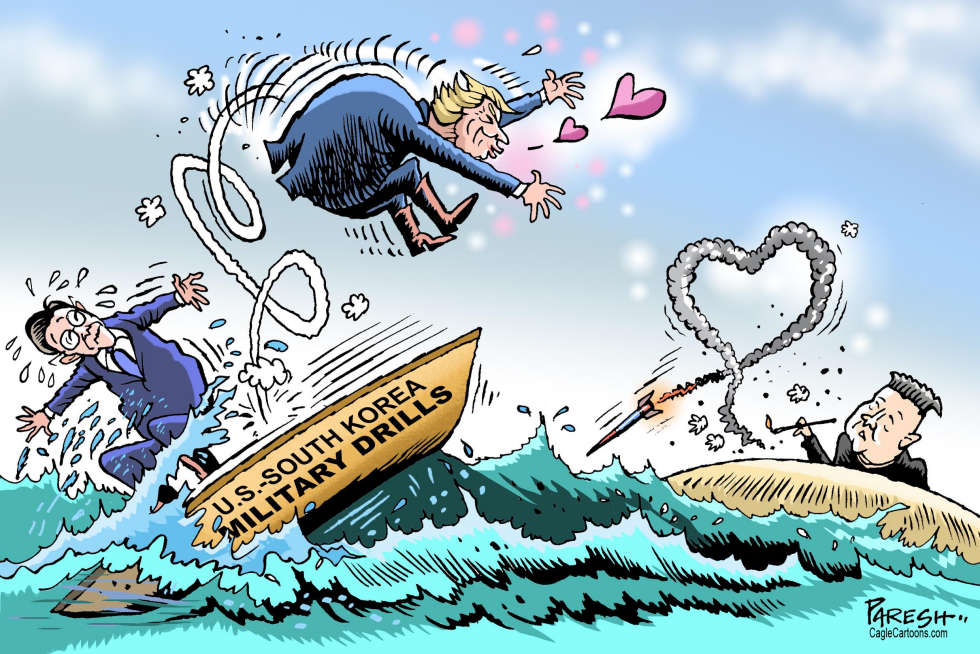
The image depicts Donald Trump being pulled from a boat labeled U.S.-South Korea military drills toward a heart formed by smoke from a missile launched by Kim Jong-un. Trump reaches out with hearts nearby while the other figure tumbles into the water. The scene illustrates tension between ongoing joint exercises and apparent interest in the North Korean leader. Publication occurred on August 21 2026 amid recurring discussions of regional security.
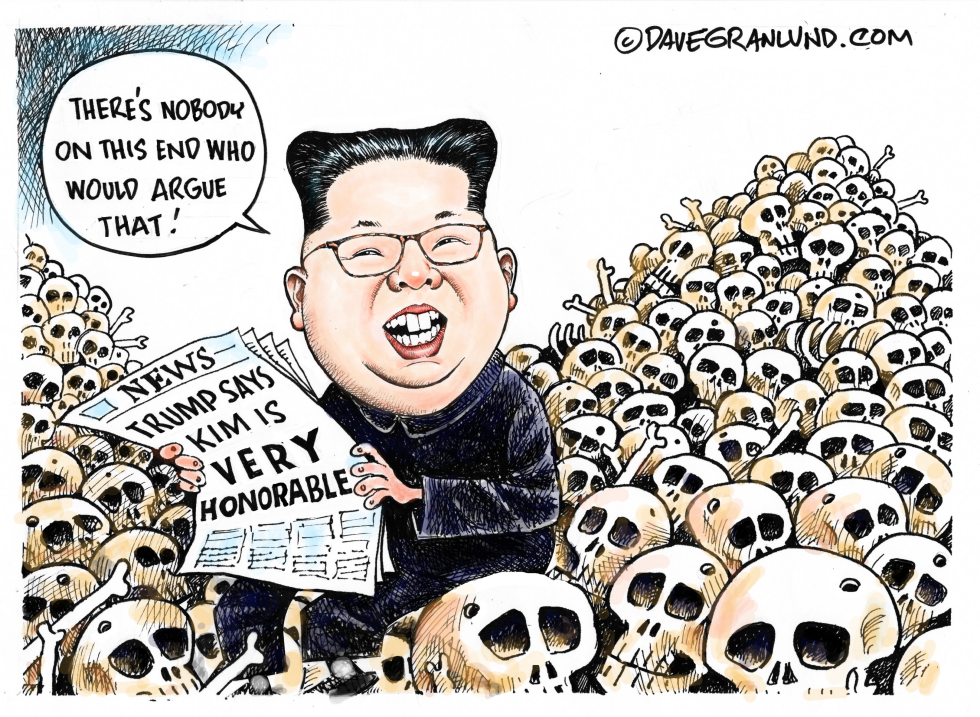
Donald Trump publicly described North Korean leader Kim Jong-un as very honorable. The remark revives questions about U.S. engagement with a regime long accused of severe human rights abuses and internal purges. Critics argue such language undercuts pressure on Pyongyang and signals weakness to allies. Supporters see it as pragmatic diplomacy aimed at reducing nuclear risks. The statement fits a pattern of personal assessments of foreign leaders that have drawn both support and condemnation depending on the political side. The editorial position holds that the praise ignores the human cost inside North Korea and weakens the moral standing of U.S. foreign policy.
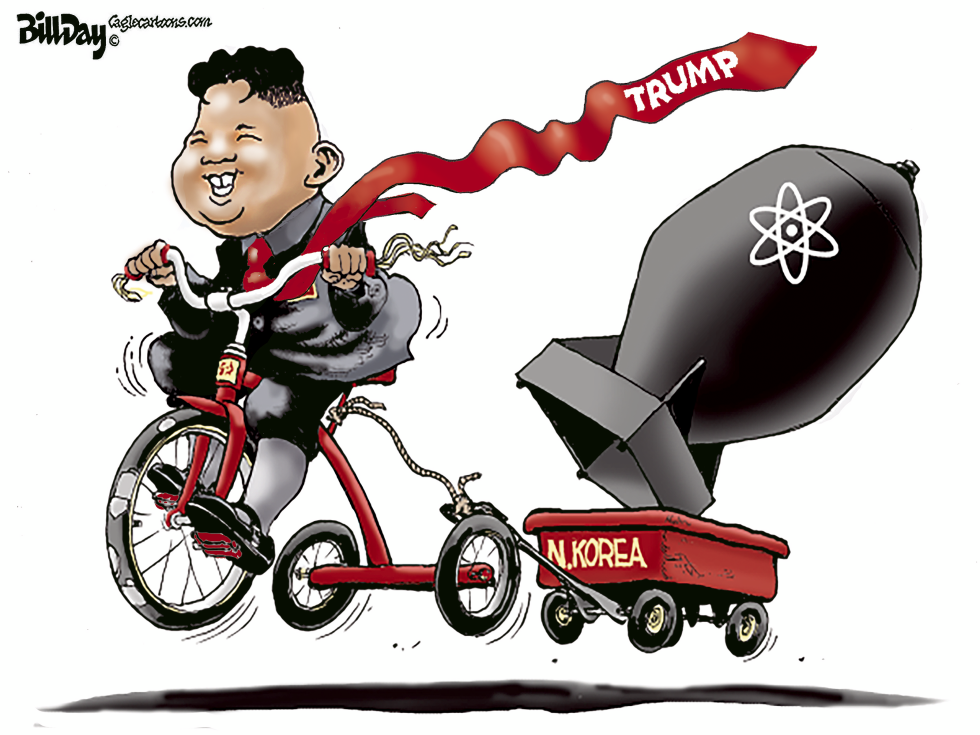
North Korea's leader Kim Jong-un is shown transporting a nuclear bomb on a child's tricycle and wagon toward Donald Trump. The image responds to ongoing tensions over North Korea's nuclear program and its direct implications for U.S. security under the Trump administration.
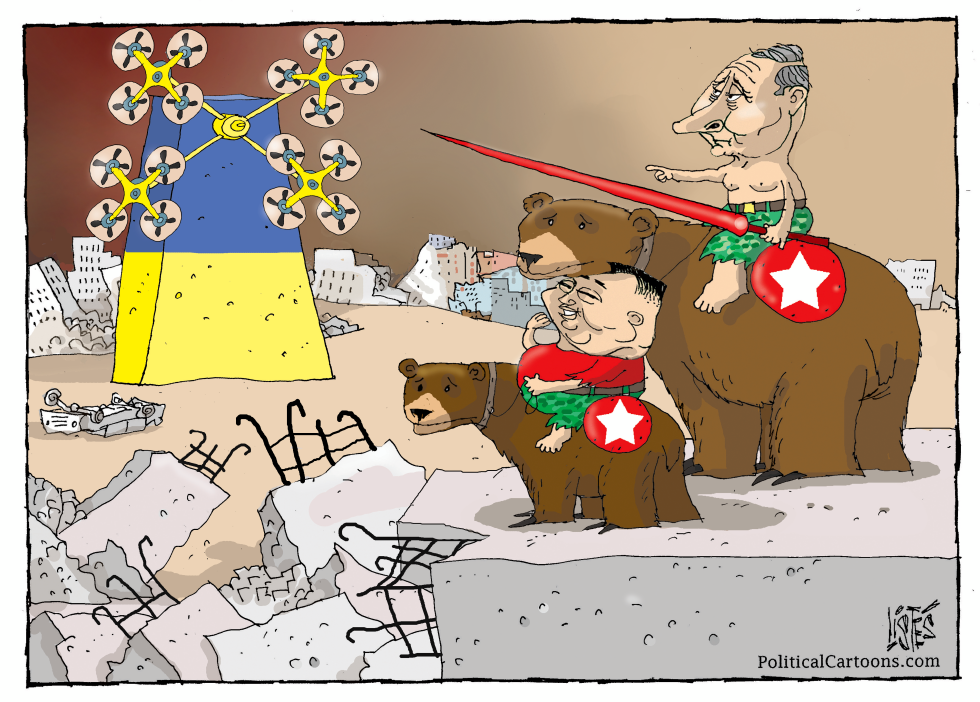
Russian President Vladimir Putin and North Korean leader Kim Jong-un coordinate military support involving drones and personnel in the ongoing Ukraine conflict. The partnership raises concerns over expanded battlefield capabilities and prolonged fighting. The piece portrays their joint advance as a direct strike on Ukrainian infrastructure and sovereignty.
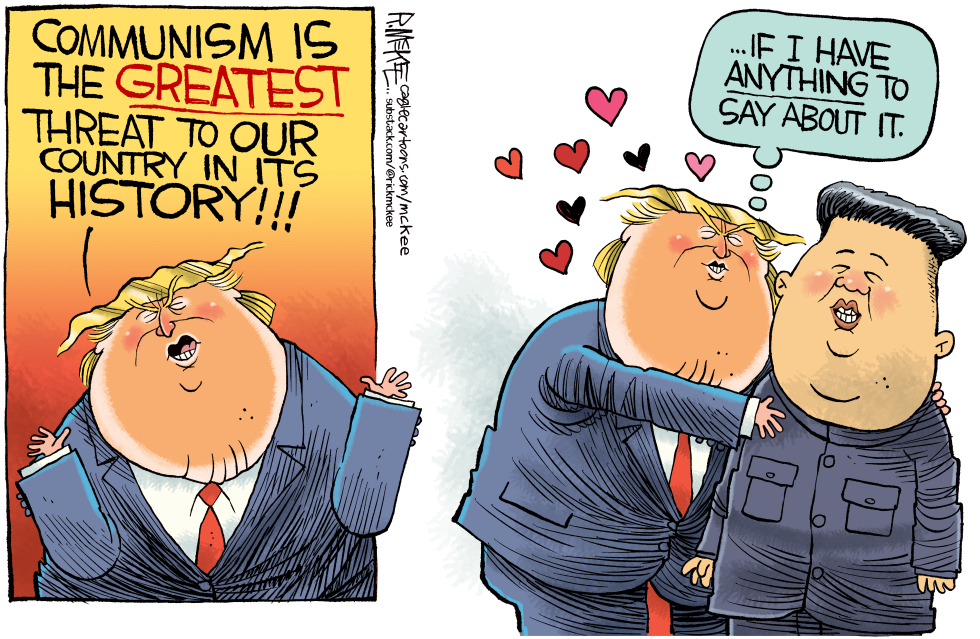
Donald Trump publicly labeled communism the greatest threat to the country before embracing North Korean leader Kim Jong Un. The image captures the shift in tone through contrasting scenes of protest and affection. The editorial position criticizes the inconsistency in the approach to the regime.
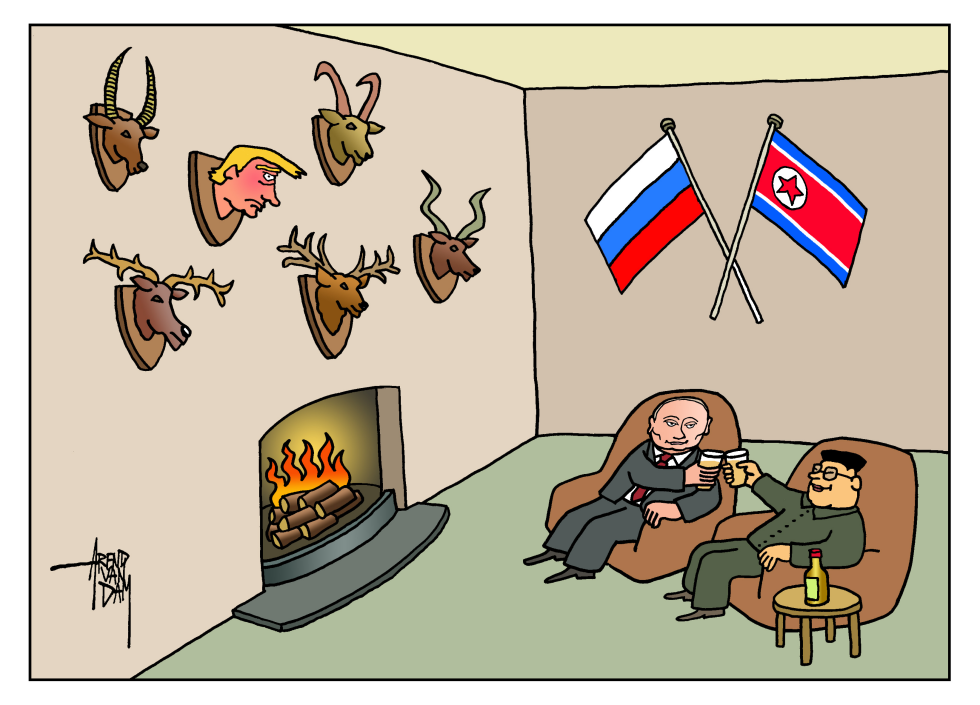
Vladimir Putin and Kim Jong Un appear together in a hunting lodge raising glasses in celebration. A mounted head resembling Donald Trump joins animal trophies on the wall beside the flags of their two nations. The scene reflects ongoing diplomatic alignment between Moscow and Pyongyang amid persistent tensions with Washington over security and sanctions.
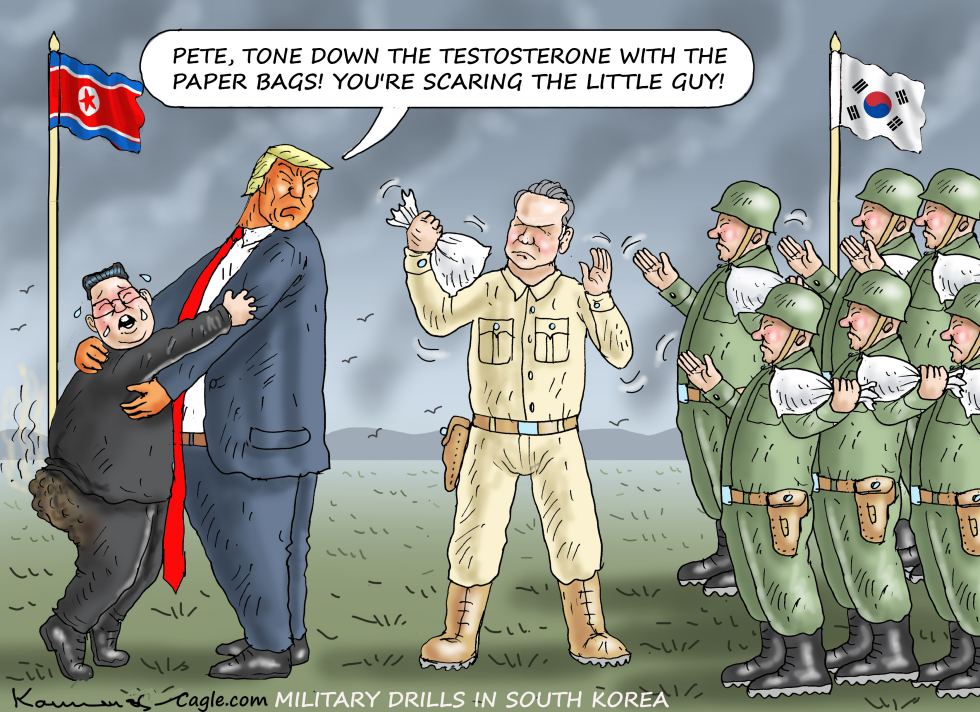
US and South Korean forces conducted joint military drills in mid-August 2026, prompting sharp North Korean protests over perceived threats. Donald Trump appeared at the scene restraining Kim Jong-un while a uniformed figure urged restraint with paper bags to calm the North Korean leader. The image frames the drills as overly provocative and mocks the testosterone-driven posturing on all sides.
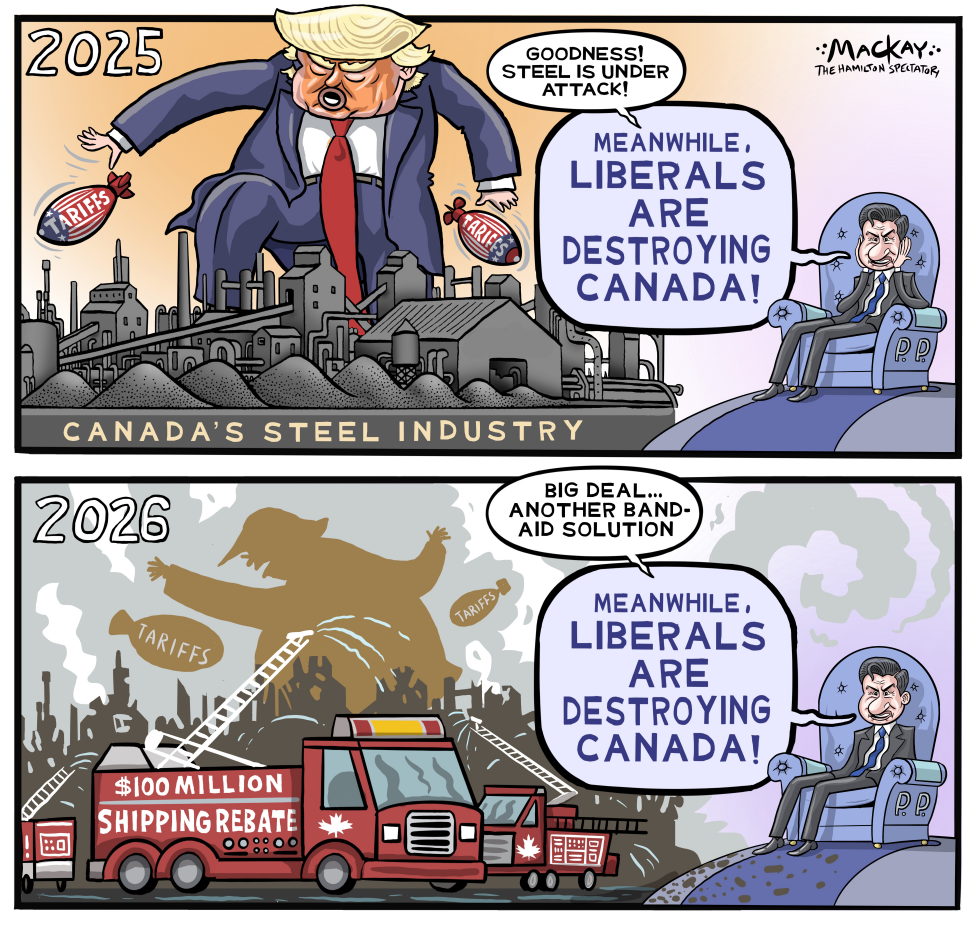
U.S. tariffs imposed on Canadian steel in 2025 triggered sharp declines in the domestic industry by 2026. The federal government responded with a $100 million shipping rebate. Conservative Leader Pierre Poilievre continued to focus attacks on the Liberal government rather than the trade shock. The cartoon argues this stance amounts to a repeated distraction from the core economic damage.
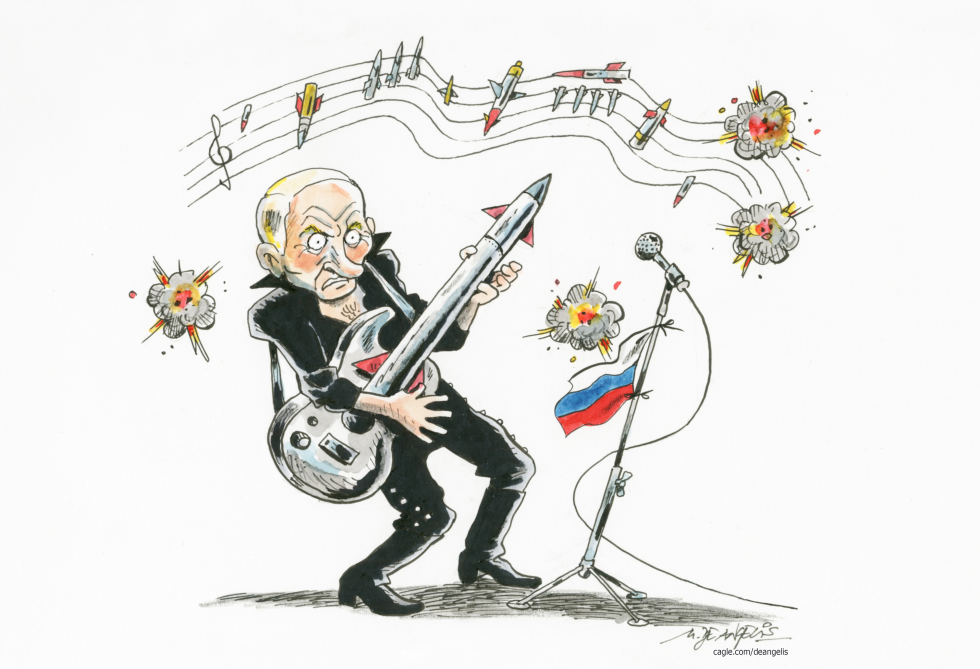
Russian President Vladimir Putin continues directing missile strikes in the Ukraine conflict, maintaining pressure on Kyiv through repeated aerial attacks. The imagery frames this sustained military campaign as a theatrical rock performance. The piece critiques the leader's embrace of destructive weaponry as spectacle rather than strategy.