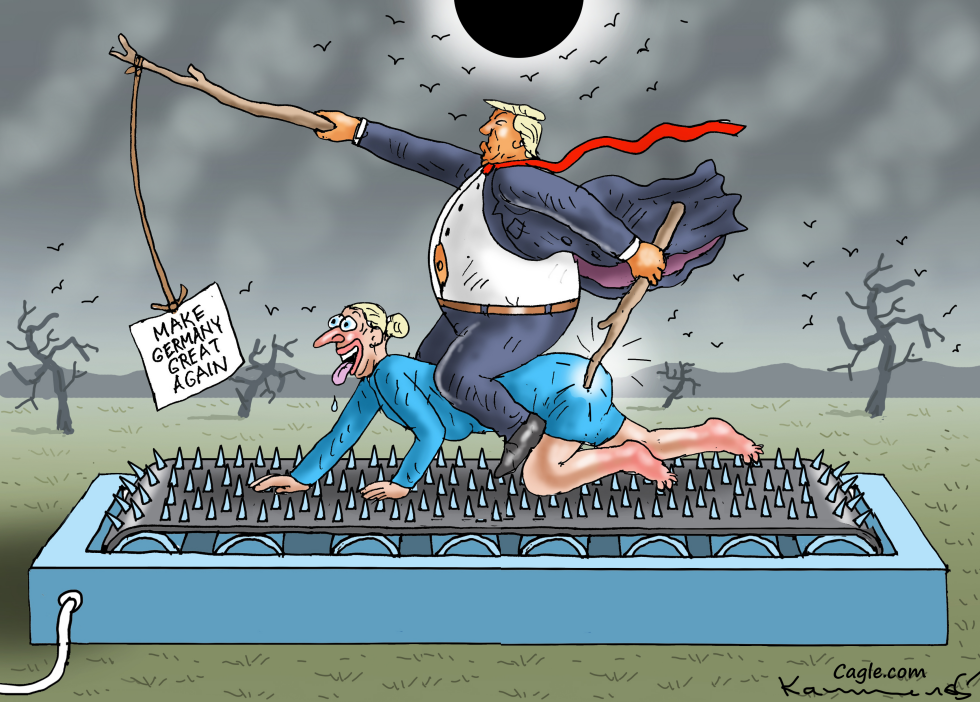
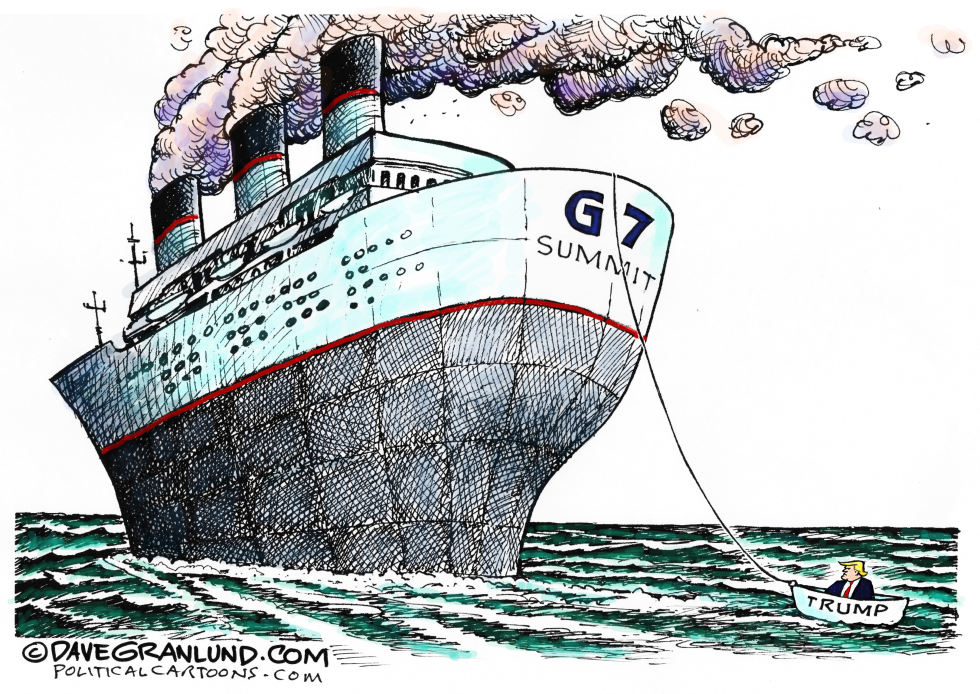
Donald Trump promotes a revival slogan aimed at Germany while Angela Merkel faces the consequences. The effort highlights ongoing tensions in transatlantic relations and questions about external influence on European domestic policy. The piece argues that such interventions impose unnecessary hardship without delivering benefits.
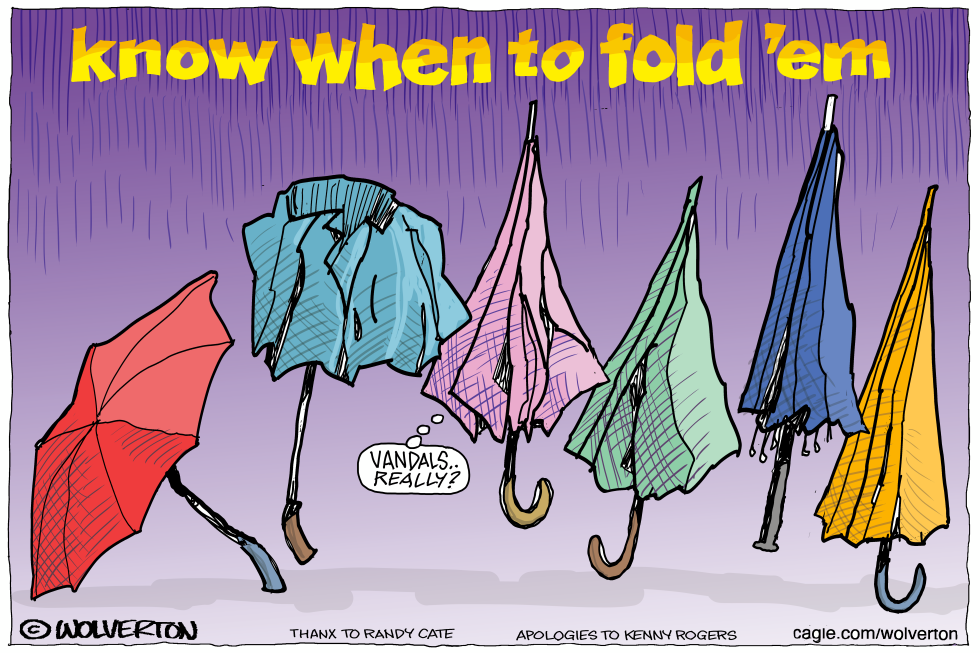
Political figures and institutions often confront moments requiring retreat or adjustment under external pressure. Recent developments show various actors weighing whether to persist or step back from contested positions. The piece argues that recognizing the right moment to fold preserves strength and avoids unnecessary damage in ongoing contests.
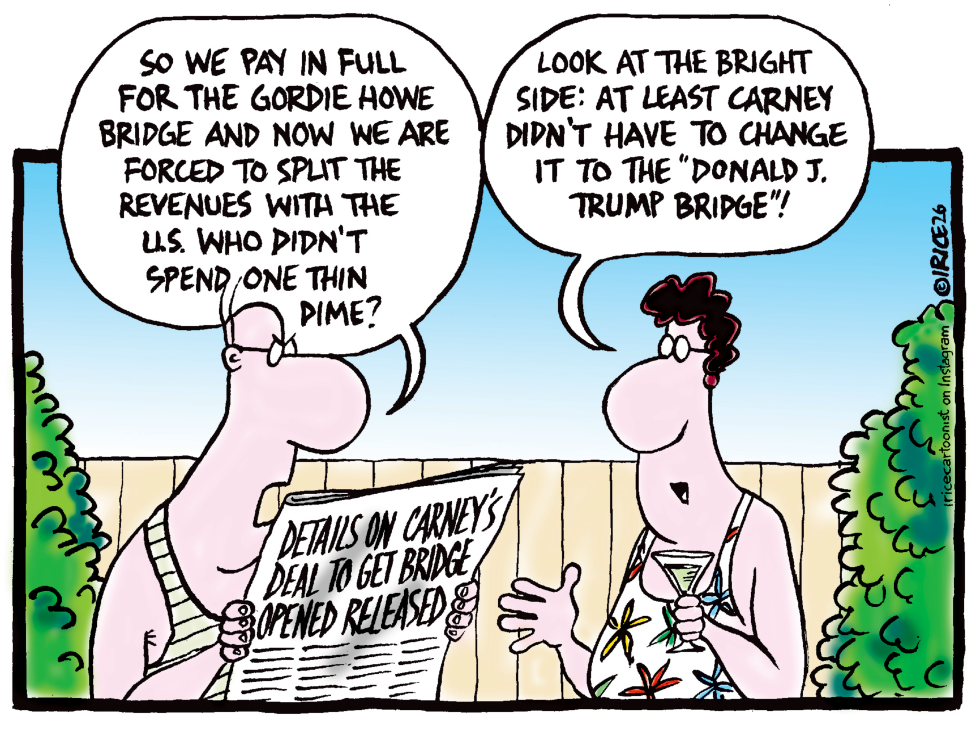
Details of a revenue-sharing agreement for the Gordie Howe Bridge between Canada and the United States have been released. The arrangement requires Canada to split toll revenues despite covering full construction costs. The editorial highlights public frustration with the terms and uses a reference to a potential Trump naming to underscore political sensitivities around the project.
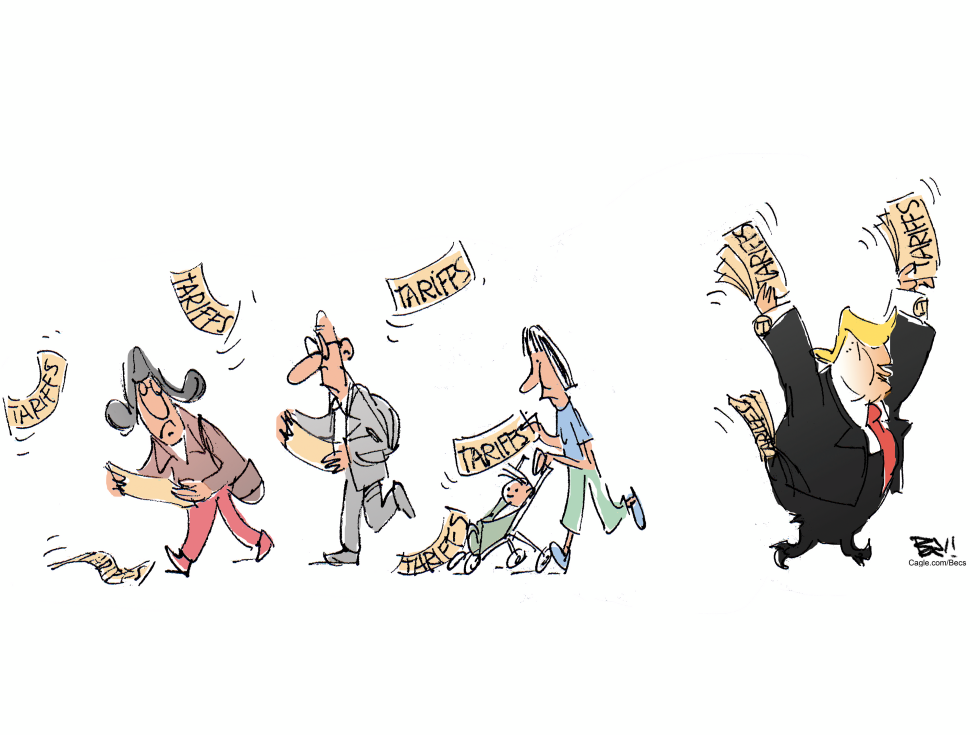
Donald Trump expanded tariffs across trading partners in mid-2026, triggering immediate market volatility and diplomatic pushback. The move raised costs for consumers and businesses reliant on imports. The piece portrays the policy as an indiscriminate barrage that disrupts daily life and global commerce.
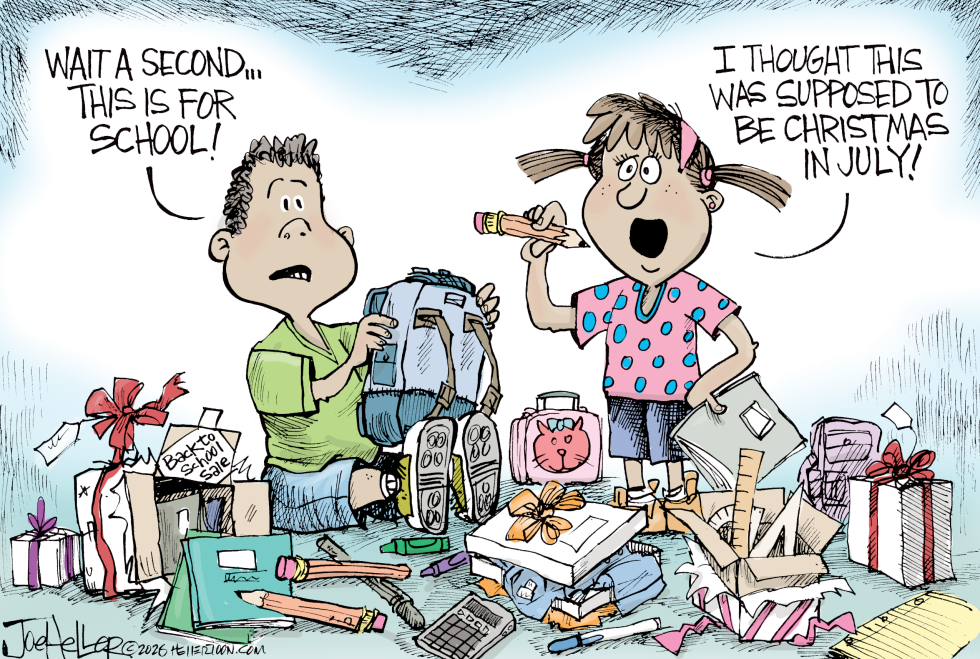
Retailers launched back-to-school promotions in late July, prompting families to stock up on supplies weeks ahead of the academic calendar. The timing overlaps with summer clearance events that mimic holiday marketing tactics. Parents and students face added pressure to buy early amid rising costs for essentials. The piece highlights how commercial calendars compress traditional shopping seasons and shift family routines.
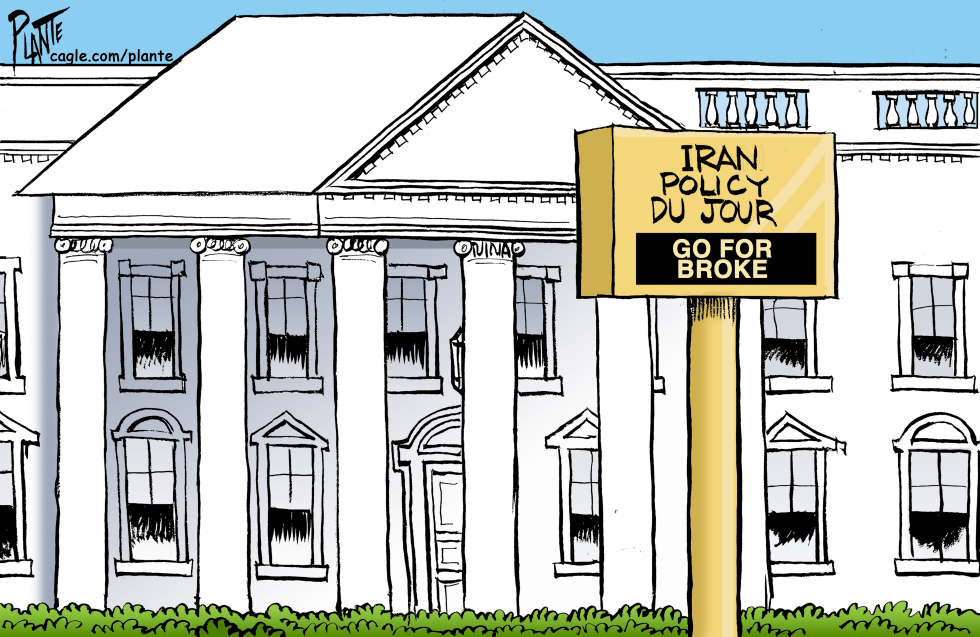
The White House has signaled a more aggressive posture toward Iran through public messaging that emphasizes risk-taking. The move comes amid persistent tensions over nuclear issues and regional influence. The editorial takes the position that such an approach lacks consistency and invites unnecessary escalation.
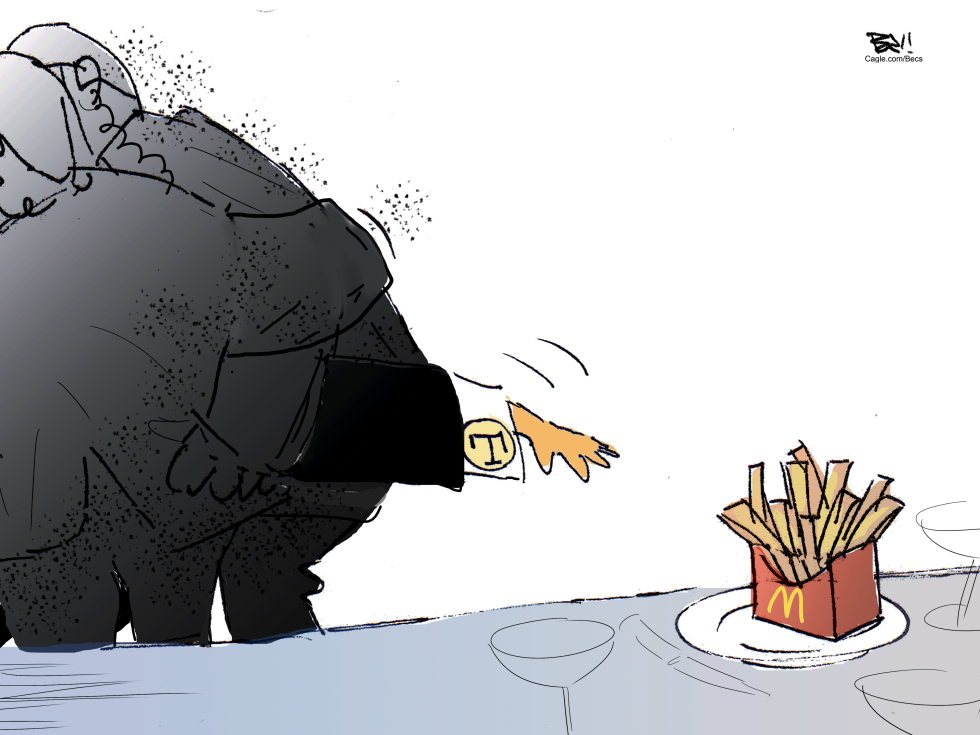
This political cartoon shows a bulky figure in a dark suit, viewed from behind, with a hand bearing a cufflink labeled TRUMP reaching out toward a red box of McDonalds fries overflowing on a white plate. The scene is set on a table with stemmed glasses, and there's a dusting of particles on the figure's shoulder. Incorporating tags such as Donald Trump Administration USA, attack, Hilton Hotel, shooting, terrorist, lone wolf, the image pokes fun at familiar tropes of excess and impulse. The artist's signature Becs and Cagle.com/Becs appear in the corner, grounding it in syndicated cartoon tradition. Such drawings often go viral for their sharp, relatable jabs at public figures. At around 100 words, this summary captures the essence without overreaching what's drawn.
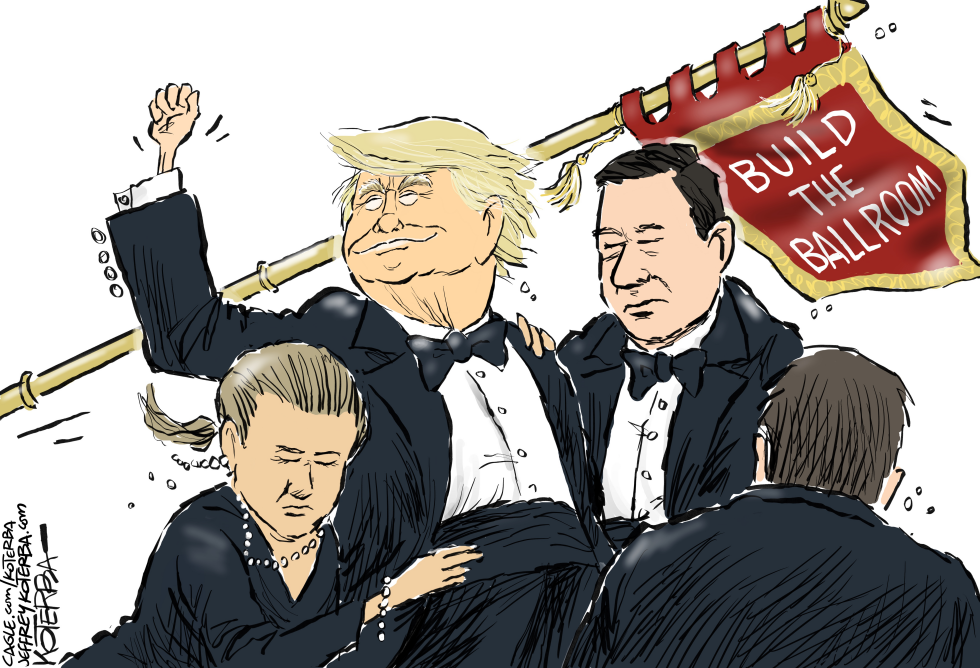
Jeff Koterba draws Trump in tuxedo, fist raised high, gripping a flagpole with a red banner proclaiming 'Build the Ballroom.' Surrounded by figures in formal wear, the scene captures a moment in a Washington ballroom, tagging into press and journalism themes. The cartoon nods to an assassination attempt in Butler, with secret service elements visible. Trump's caricature dominates, his expression set as agents cluster around. This piece fits into White House Correspondents' Dinner aftermath, blending fist symbolism with ballroom absurdity. Tags like flag and tuxedo underscore the satirical take on political resilience.
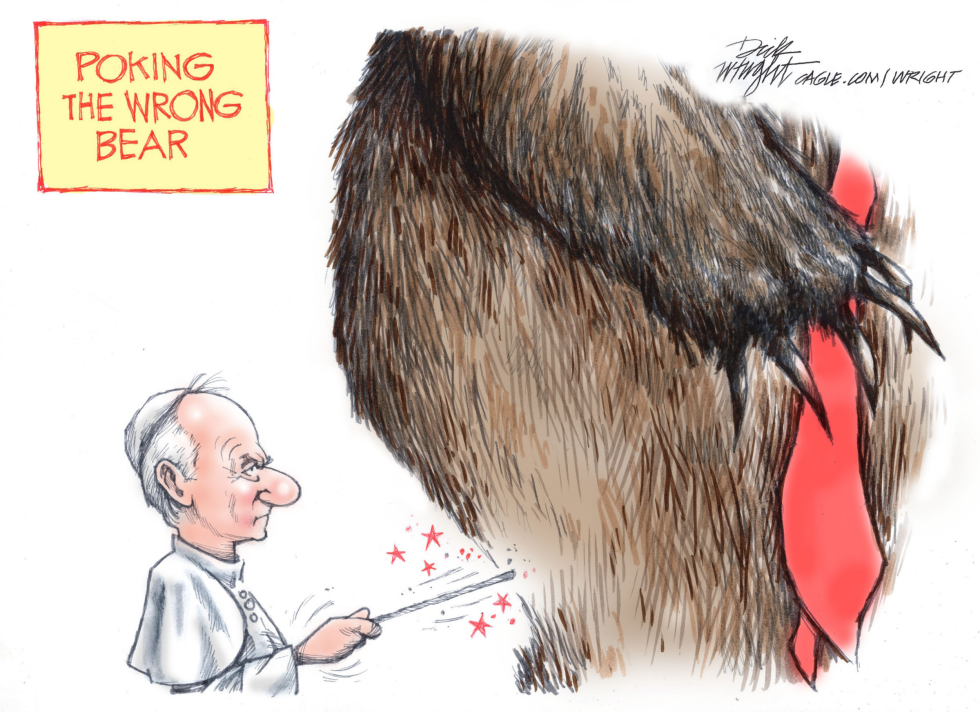
Dick Wright's political cartoon depicts a Pope-like figure in white attire, extending a thin rod toward the rear of a massive brown bear, complete with a dangling red tie and sparkling effects at the point of contact. The yellow label reads 'POKING THE WRONG BEAR,' playing on the idiom with a twist. This satirical illustration ties into the Trump-Pope feud, using the bear as a stand-in for power, the red tie evoking Trump's signature look, and the poking action suggesting provocation. Cartoonists often employ such animal metaphors for political commentary, and Wright's style here delivers clear lines and exaggerated features for impact. The image avoids overstatement, sticking to visible elements like the bear's claws and fur details, making it a straightforward jab at ongoing tensions.
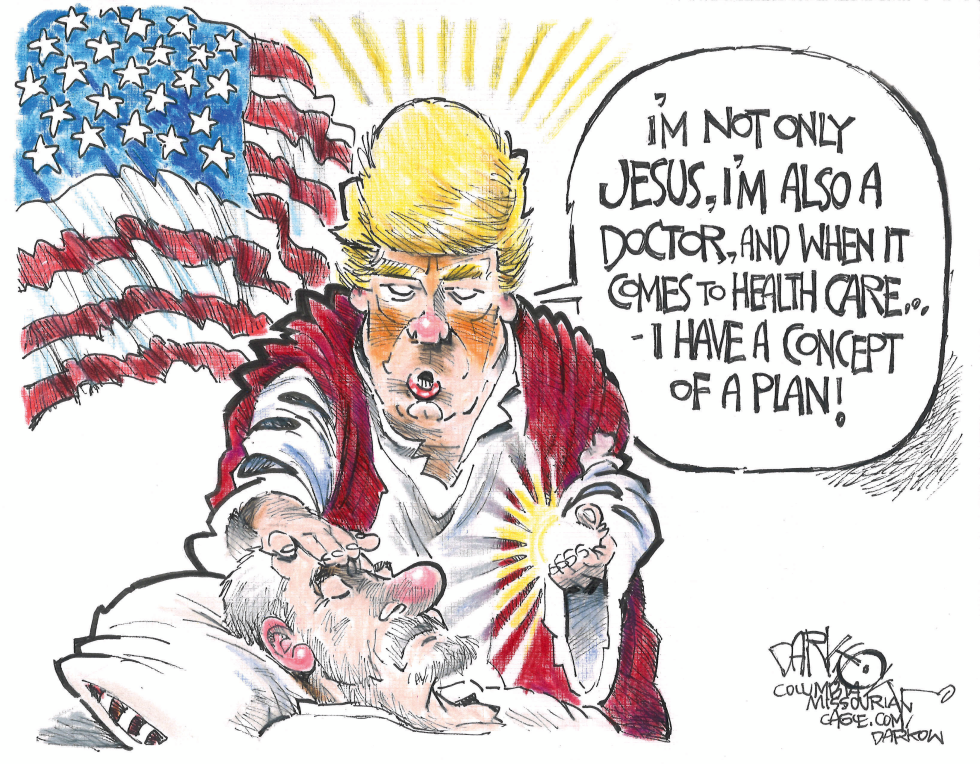
John Darkow's cartoon shows a blonde-haired figure resembling Donald Trump, clad in a red cape and white garment, extending a glowing hand toward an elderly man lying in bed. An American flag waves in the background with radiant beams from above. The speech bubble declares the figure as both Jesus and a doctor, boasting a concept of a health care plan. This setup highlights satirical elements in political imagery. Tags like donald trump political cartoon, trump health care plan satire, jesus doctor parody cartoon, american flag political humor, trump messiah complex illustration, and health care policy cartoon fit the visible components.
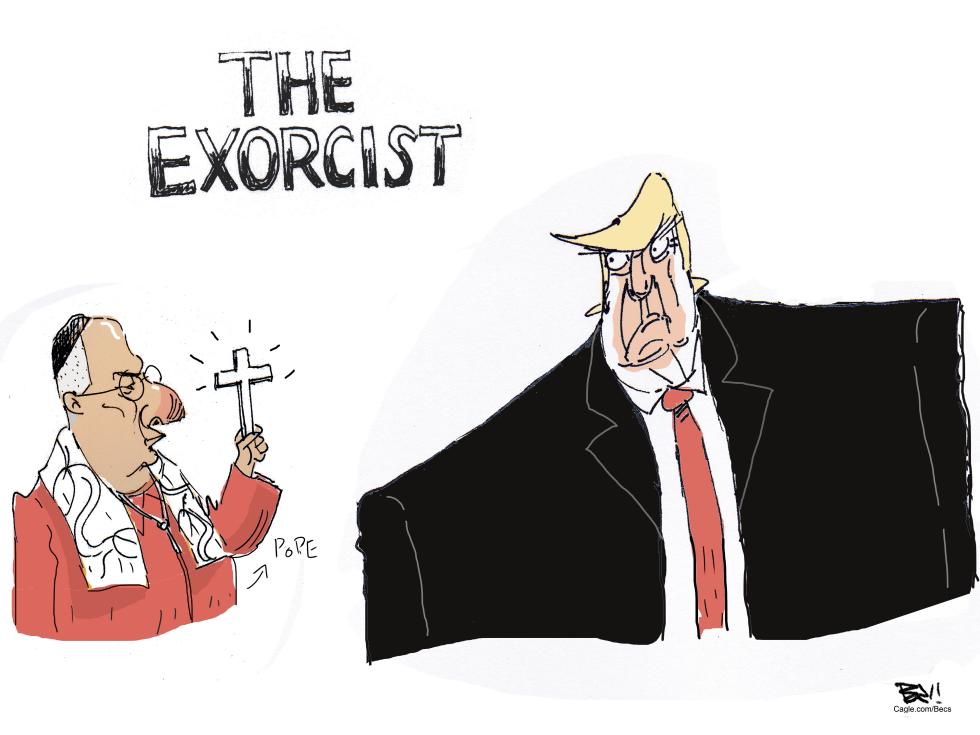
This political cartoon by Becs parodies the classic horror film 'The Exorcist' with a pope figure confronting a demonic Trump caricature. Labeled clearly with 'POPE' and the movie title overhead, the image uses simple lines to show the pope wielding a glowing cross against the oversized, frowning Trump in a black suit and red tie. The dry humor lies in the exaggerated features and direct setup, highlighting tensions between religious authority and political figures. Tags like political satire, exorcism parody, Trump caricature, pope illustration, religious humor, and cartoon exaggeration make it shareable and relevant for editorial pages.
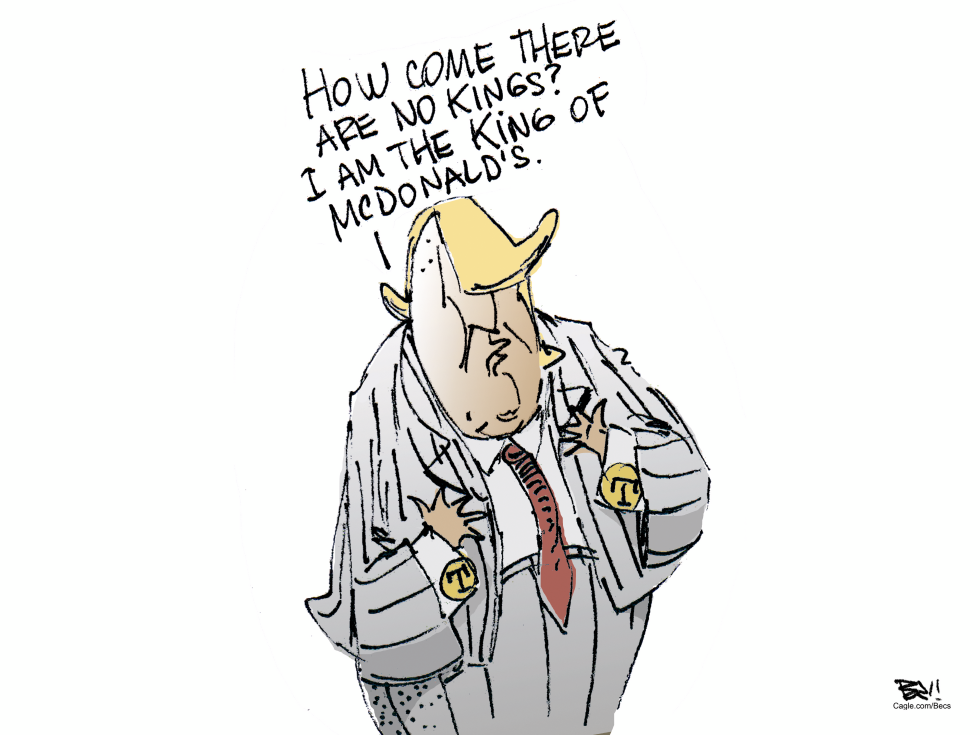
Becs's cartoon from 2026 captures a familiar figure in US politics, dressed in a white suit with yellow hair and hat, gesturing emphatically. The speech bubble reads, 'How come there are no kings? I am the king of McDonald's!' This piece tags into Donald Trump Administration themes, portraying the subject as Not King yet self-proclaimed ruler of McDonalds, emphasizing traits like Glutton, Egomaniac, Bad Guy, Dictator, and Arrogant. It's a straightforward jab at overblown self-importance, common in political satire. The simple line art keeps focus on the absurdity, making it shareable for those tracking Trump-era humor. Cagle.com hosts such works, blending dry wit with insider commentary on power and excess.
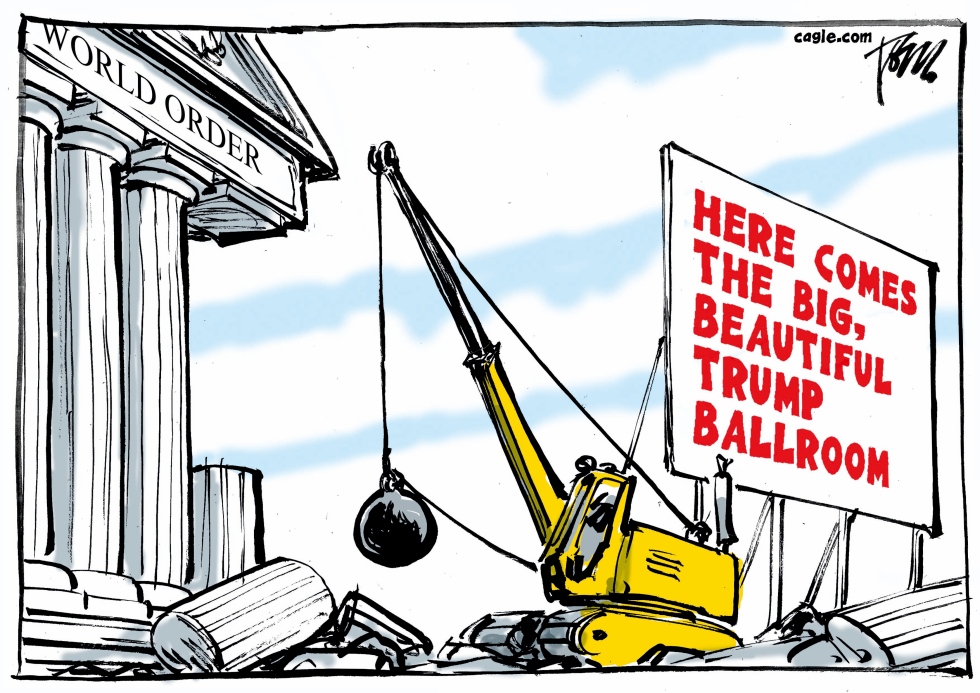
The cartoon depicts a classical building labeled 'World Order' being demolished by a yellow crane's wrecking ball, with debris scattering below and a prominent sign announcing 'Here Comes the Big, Beautiful, Trump Ballroom.' Tags like world order, NATO rift, allies, unreliable, chaos, and tariffs underscore the imagery of disruption. The scene captures a straightforward visual metaphor for upheaval, with broken columns and rubble emphasizing destruction. No characters appear, keeping the focus on structural collapse. Europe and Asia tags suggest broader implications, while the dry humor lies in rebranding ruin as a luxurious ballroom. Oil prices and economy tags tie into the fallout, making it a pointed commentary on global shifts.