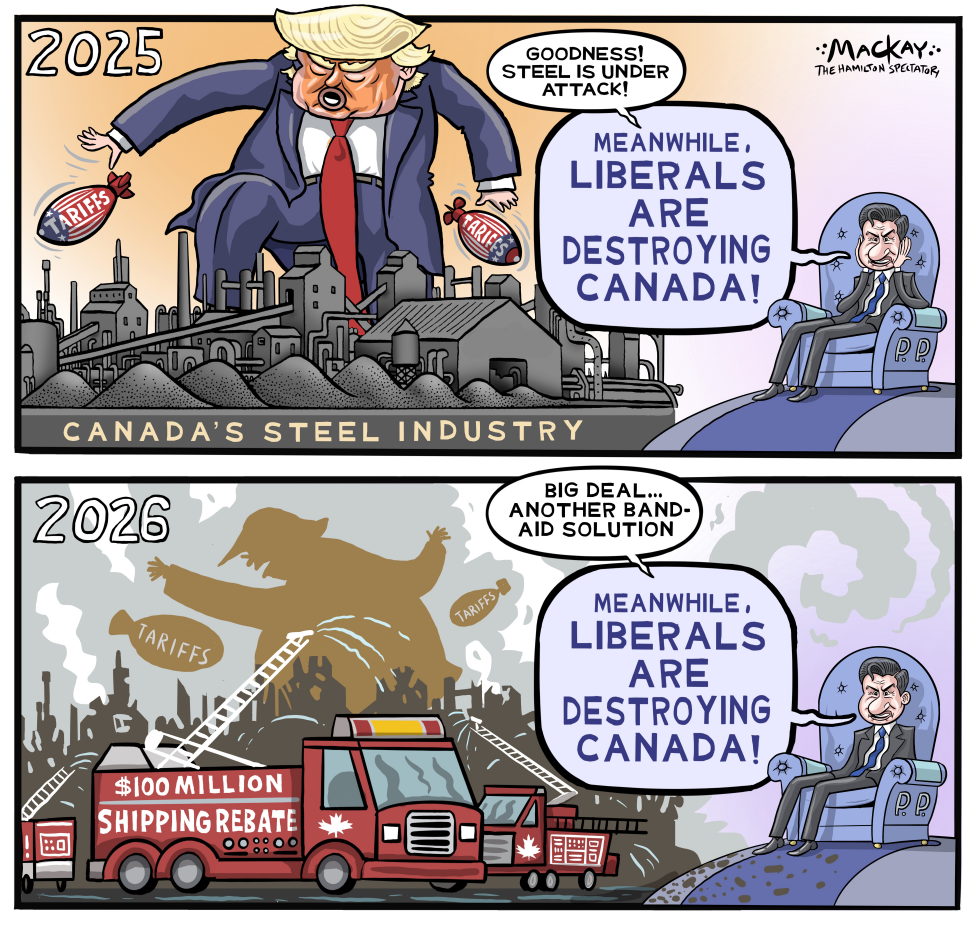
U.S. tariffs imposed on Canadian steel in 2025 triggered sharp declines in the domestic industry by 2026. The federal government responded with a $100 million shipping rebate. Conservative Leader Pierre Poilievre continued to focus attacks on the Liberal government rather than the trade shock. The cartoon argues this stance amounts to a repeated distraction from the core economic damage.
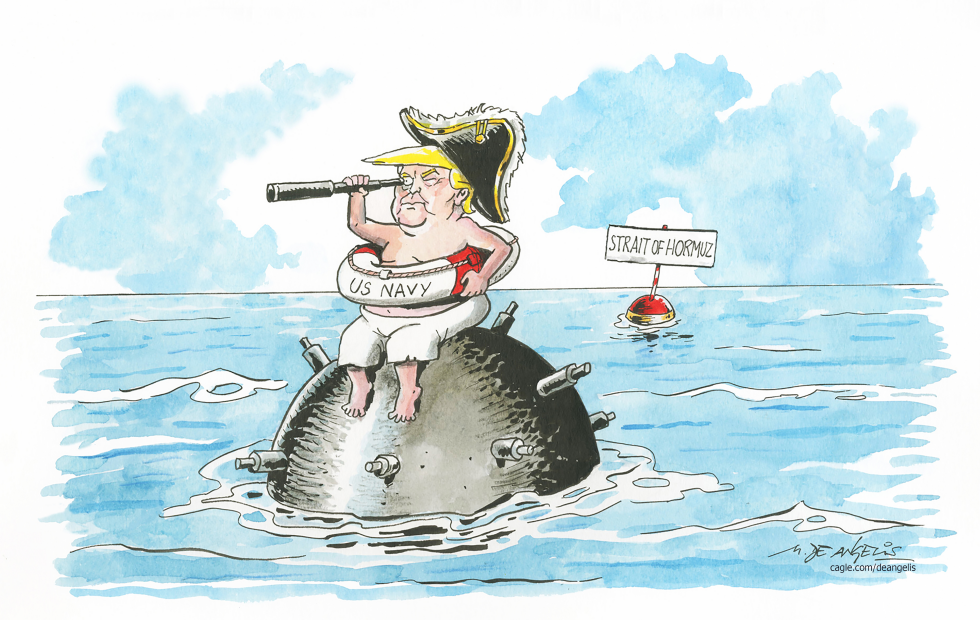
Marco De Angelis draws a caricature resembling Donald Trump, shirtless with a US NAVY life preserver, white shorts, and pirate hat, sitting on a large mine bobbing in blue waters. He holds a telescope to his eye, gazing out, while a small buoy nearby bears a Strait of Hormuz sign. The scene tags USA, IRAN, HORMUZ, NAVY, MINES, OIL, NEGOTIATIONS, FLEET, ALONE, ADMIRAL, MIDDLE EAST, WAR, capturing a sense of solitary watch in troubled seas. The dry humor underscores the absurdity of one man embodying an entire fleet, floating precariously on explosive hardware. Cartoons like this thrive on exaggeration, turning geopolitical standoffs into visual punchlines that newspapers love for their sharability.
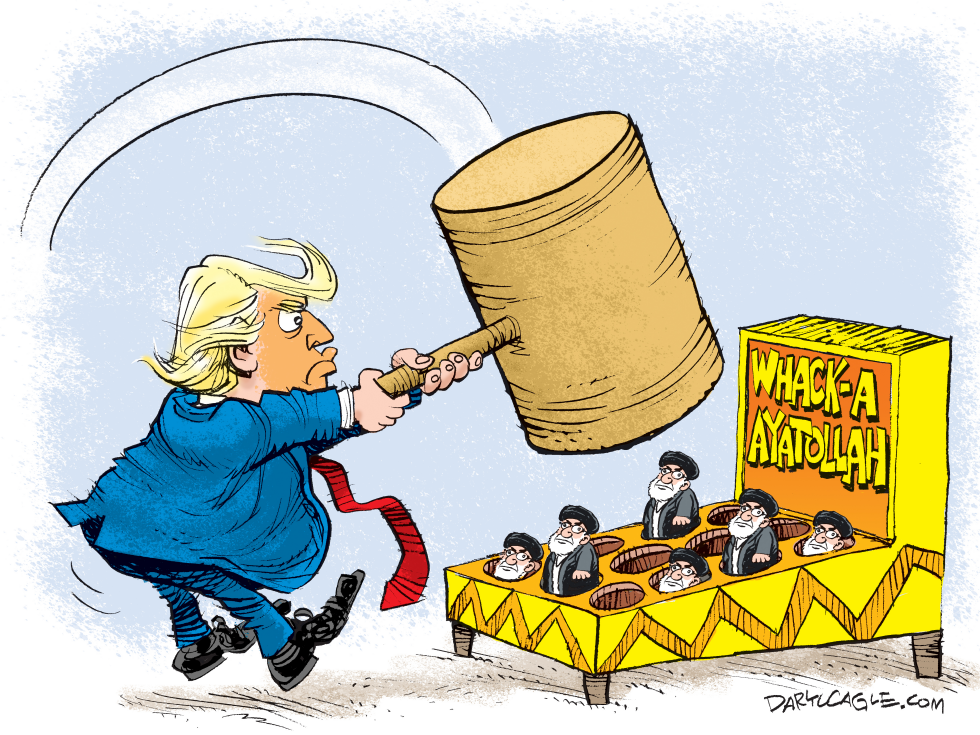
The cartoon shows Donald Trump in a blue suit swinging a massive wooden mallet at figures resembling Iranian Ayatollahs emerging from holes in a yellow arcade machine labeled Whack-A Ayatollah. The president appears mid-swing with motion lines indicating effort. The image comments on US policy toward Iran by framing the conflict as a repetitive carnival game where targets keep reappearing. Publication occurs during a period of heightened US-Iran tensions over nuclear issues and regional influence. The visual metaphor suggests difficulty in permanently resolving the challenge despite repeated attempts.