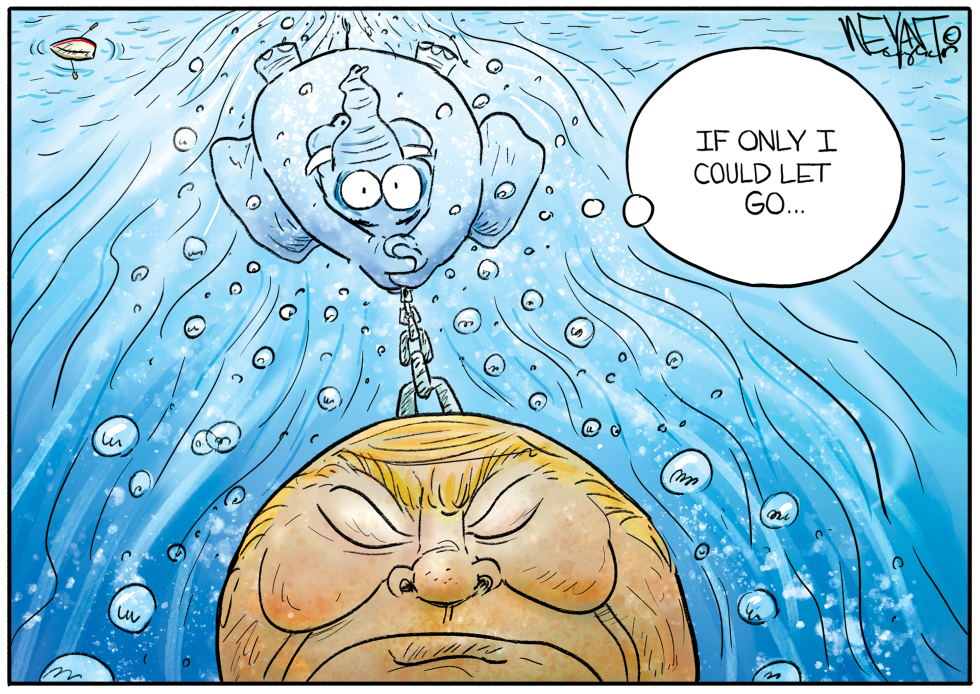
The Republican Party continues to grapple with its deep ties to Donald Trump as the 2026 election cycle approaches. Trump remains the dominant force within the GOP, and efforts to distance the party from him have repeatedly failed. This dynamic risks further electoral damage as voters grow weary of the internal conflict. The cartoon argues that the GOP's inability to break free from Trump is self-inflicted and will lead to its continued decline.
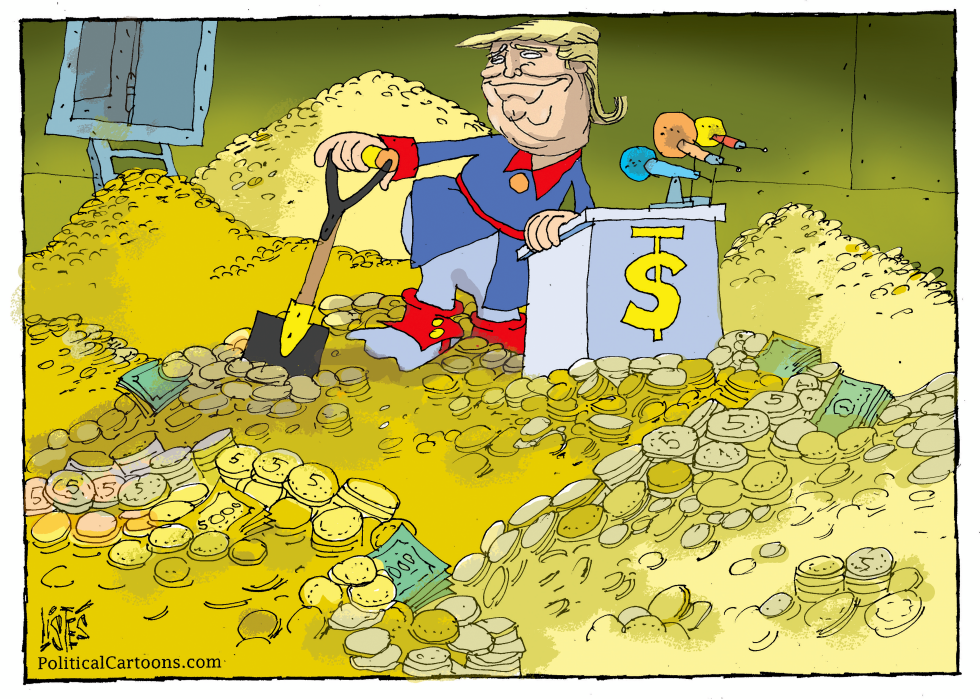
Donald Trump remains a central figure in debates over wealth and political power as of September 2026. The cartoon responds to ongoing scrutiny of how personal fortune intersects with public life and policy influence. It portrays the former president amid symbols of money to critique that dynamic. The editorial position frames Trump's association with wealth as a defining and problematic feature of his political presence.
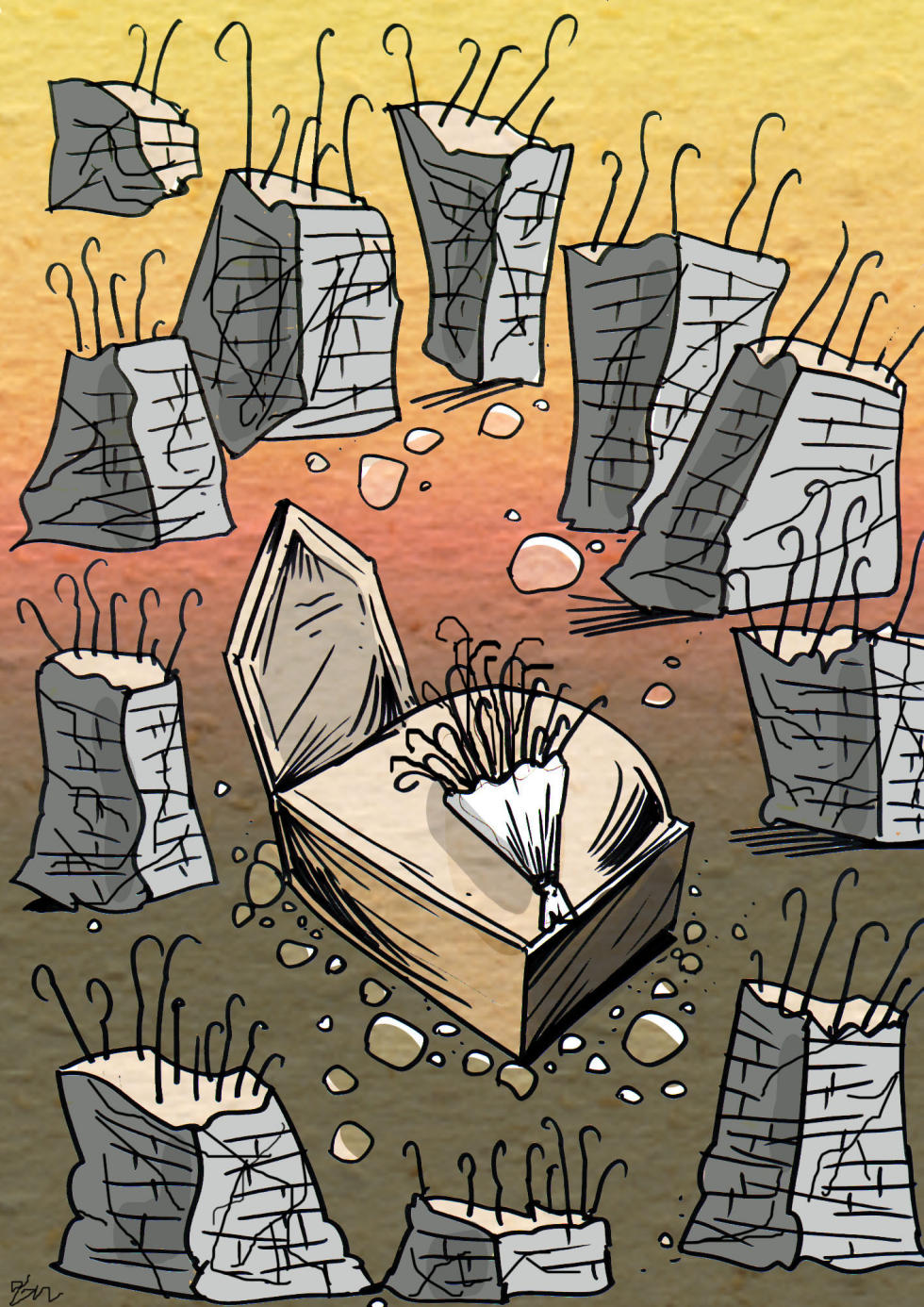
No single dated event anchors this image. It addresses the ongoing pressure on books and ideas from censorship, bans, and cultural conflict. The piece argues that literature and open inquiry remain vulnerable yet resilient amid surrounding threats.
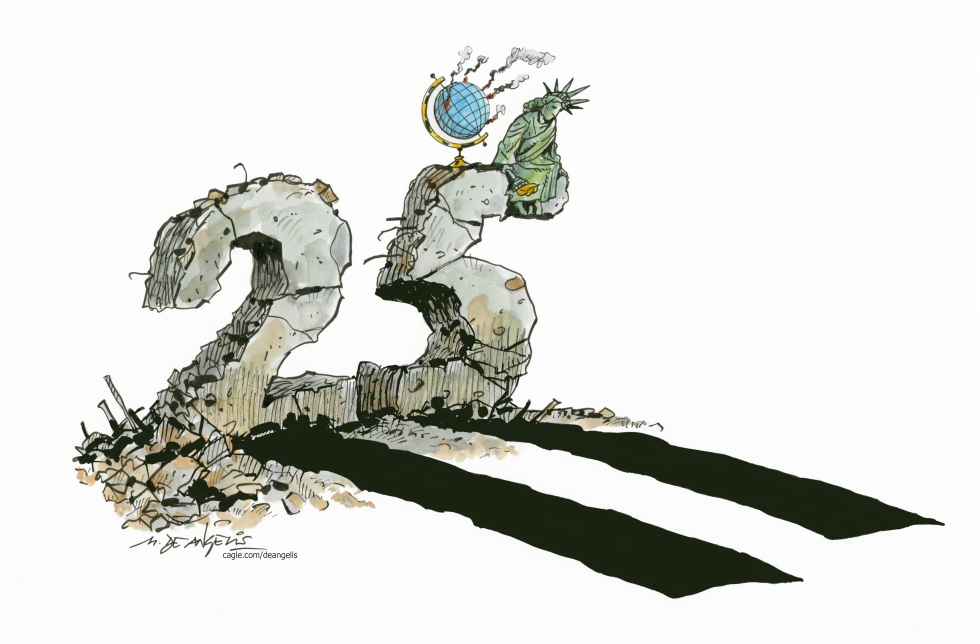
September 11, 2026 marks the 25th anniversary of the attacks that reshaped U.S. foreign policy and domestic security. The milestone arrives amid ongoing global conflicts, eroded alliances, and questions about whether the post-9/11 era delivered promised security. The cartoon frames the anniversary as a moment of visible strain on core American symbols and the broader international order they once anchored.
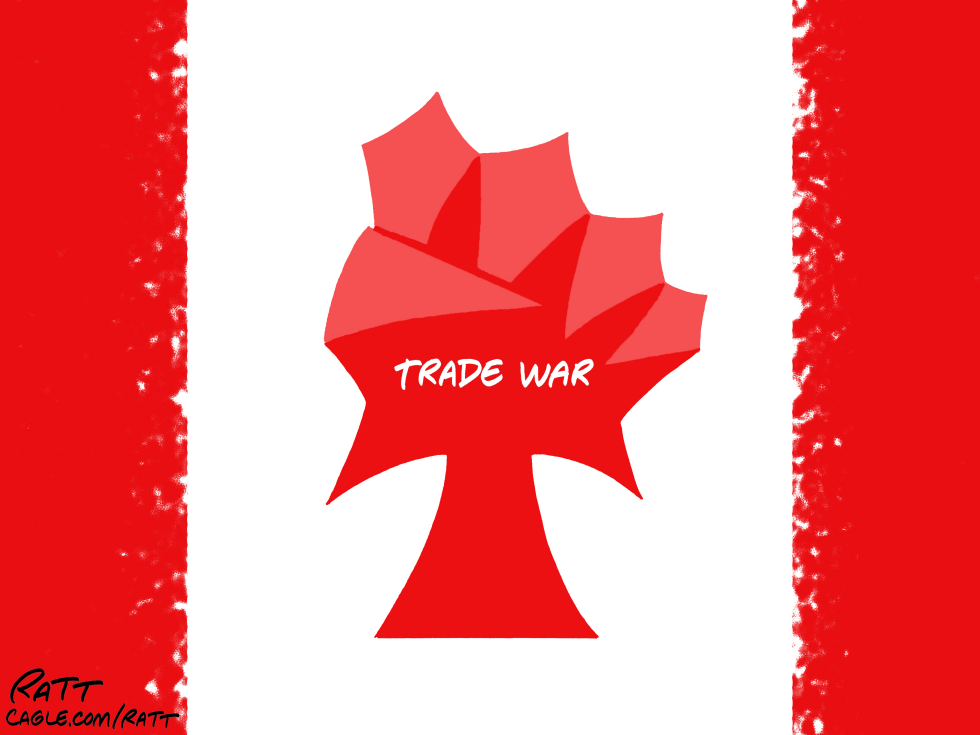
Ongoing US-Canada trade tensions escalated in 2026 with new tariff threats targeting Canadian exports. The dispute threatens key sectors including autos, lumber and agriculture, raising costs for consumers on both sides of the border. Canada has signaled plans to diversify markets and strengthen domestic industry. The cartoon frames the conflict as a direct assault on Canadian sovereignty and economic stability. It portrays the trade war as fracturing national symbols while urging a stronger northern response.
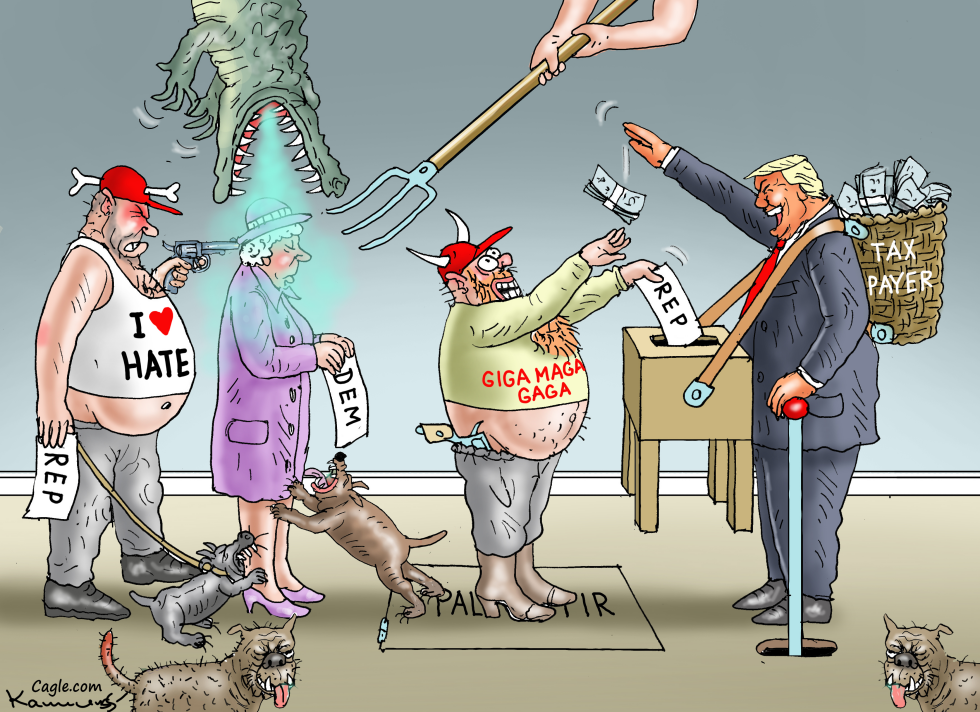
As the 2026 midterm elections approach, former President Trump has positioned himself as a central force in Republican campaigns, directing resources and mobilizing supporters. The cartoon highlights the use of taxpayer money in these efforts and the intense partisan divide, with Democrats portrayed as under attack. It takes the position that such involvement risks undermining fair electoral processes.
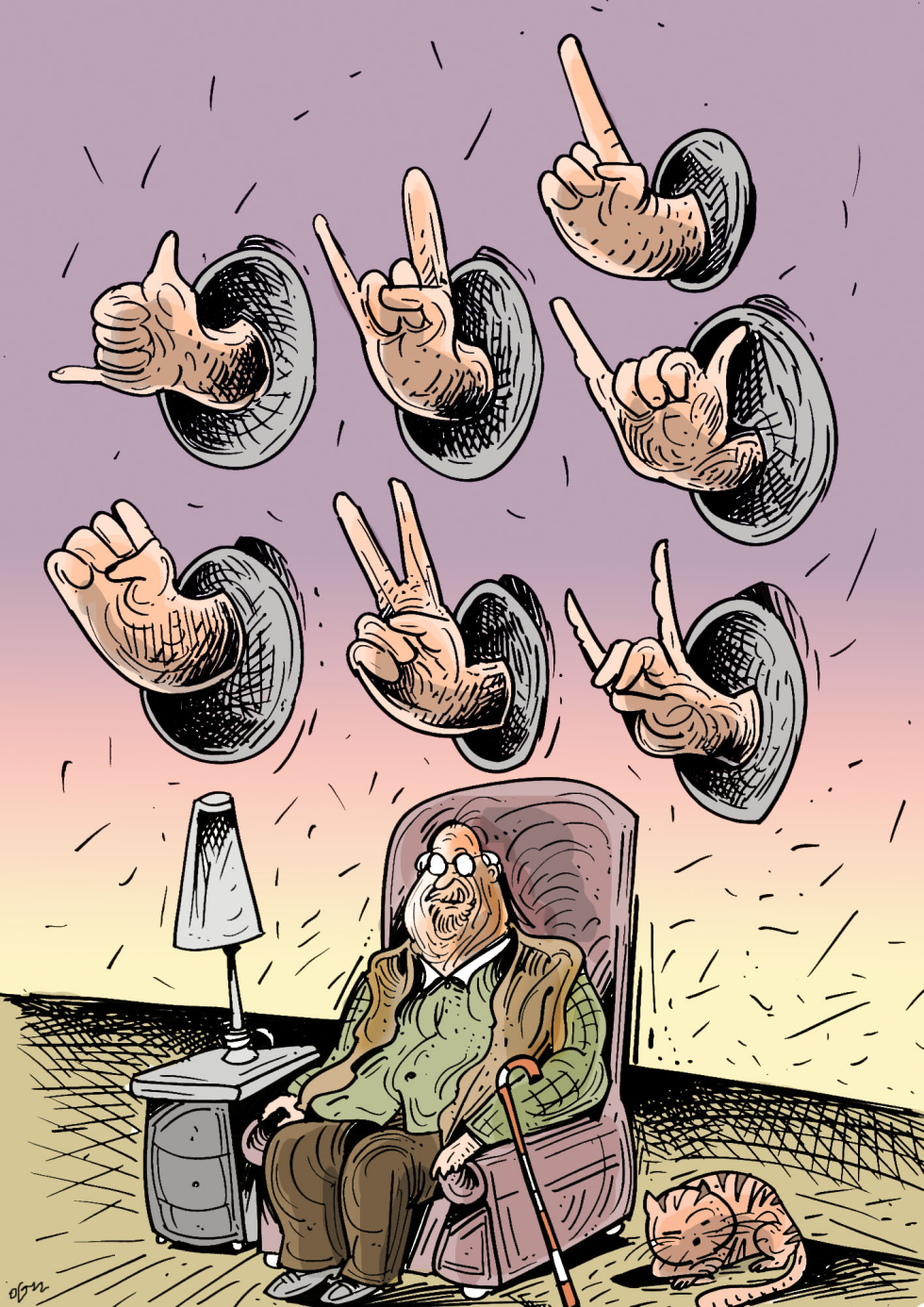
Public figures, particularly older officials in government roles, continue to face intense scrutiny and negative public reaction in 2026. Criticism has intensified through various channels, highlighting frustration with established leadership. The piece portrays an overwhelmed elderly man absorbing a barrage of dismissive gestures, underscoring the editorial view that such backlash reflects legitimate fatigue with unresponsive or out-of-touch figures in power.
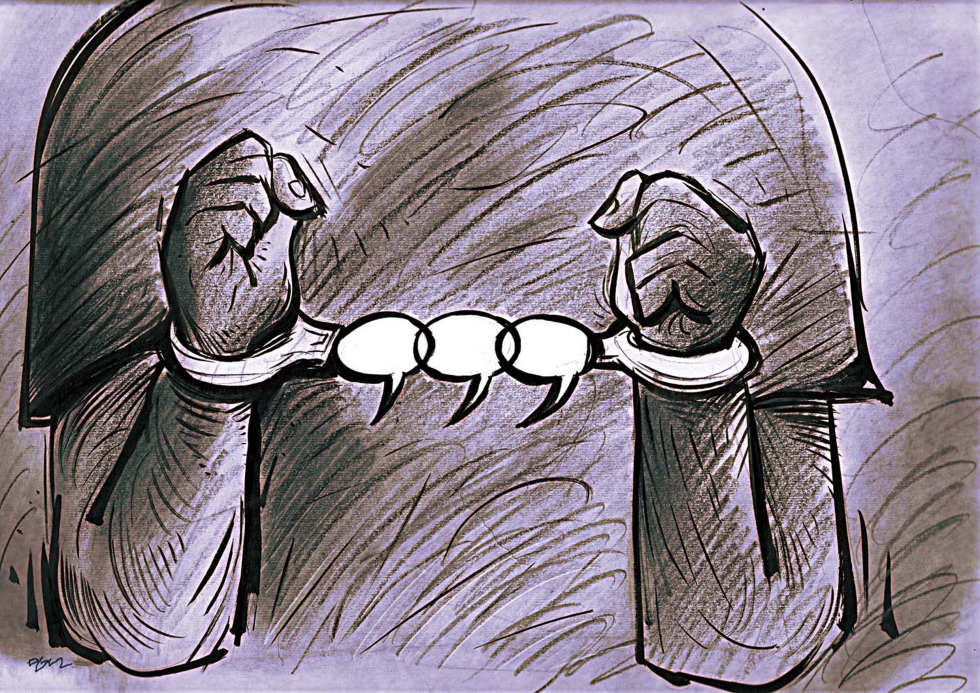
Political expression faces ongoing restrictions in many systems where authorities limit public assembly and direct action. The cartoon responds to this dynamic by showing speech bubbles as the only remaining link between two restrained fists. It argues that attempts to silence dissent through physical means ultimately fail because communication finds alternative paths. The piece underscores the resilience of dialogue even when force is applied to suppress it.
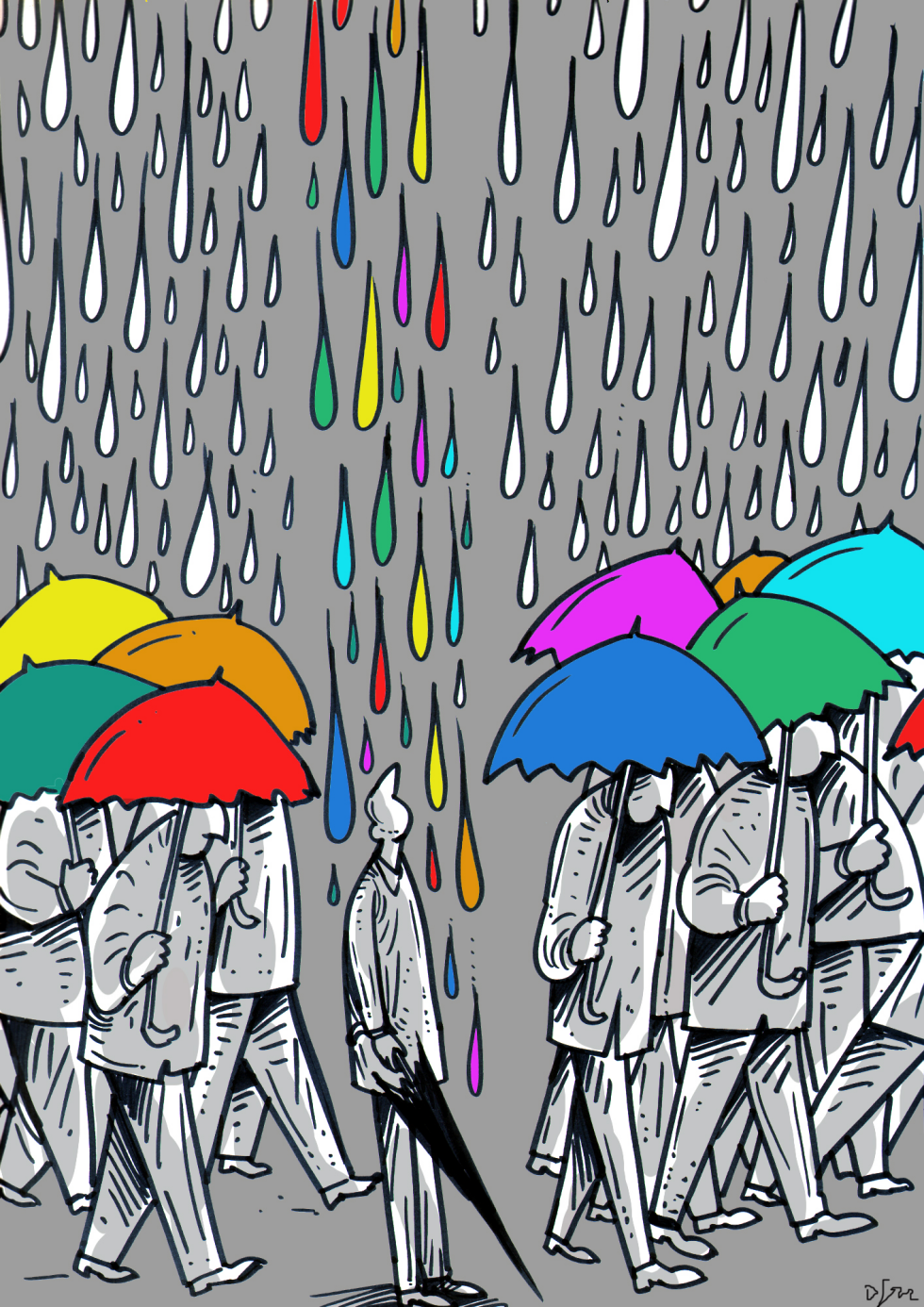
Society often pressures people to conform to norms around them. Maintaining personal identity remains important in such environments. The piece advocates for embracing one's distinct qualities.
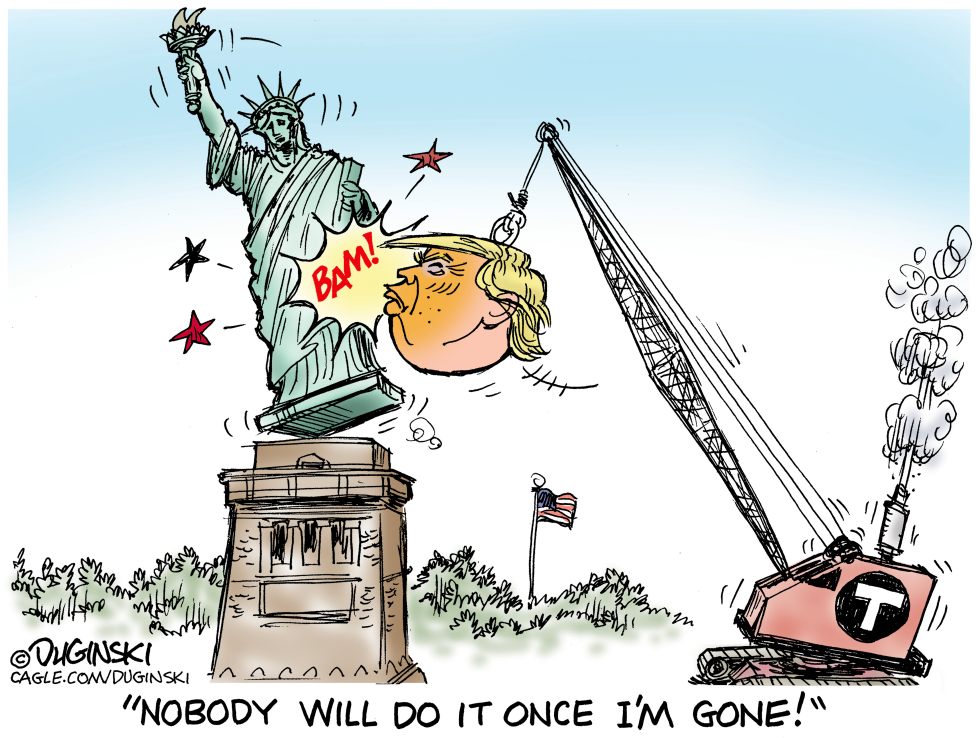
Donald Trump has repeatedly positioned his administration as the primary force reshaping or challenging long-standing U.S. institutions and norms. Critics argue this approach risks permanent erosion of democratic safeguards and public trust. The cartoon presents Trump's own words as an admission that the damage stops only when he leaves office.
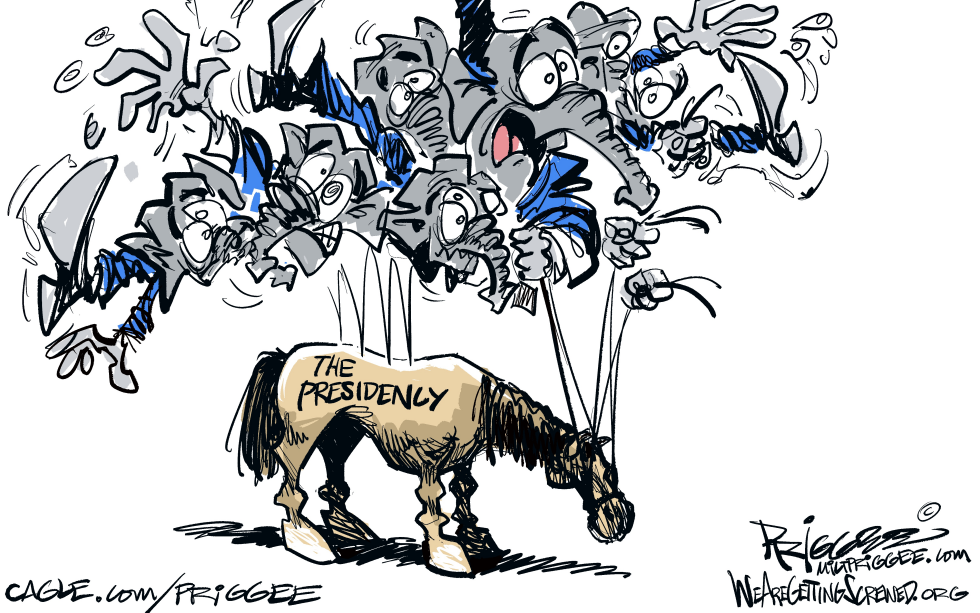
A political cartoon depicts several puppet-like figures with elephant features holding strings attached to a horse labeled THE PRESIDENCY. The image illustrates competing pulls on the office amid disarray. It responds to ongoing discussions about party influence and leadership dynamics around the 2026 period.
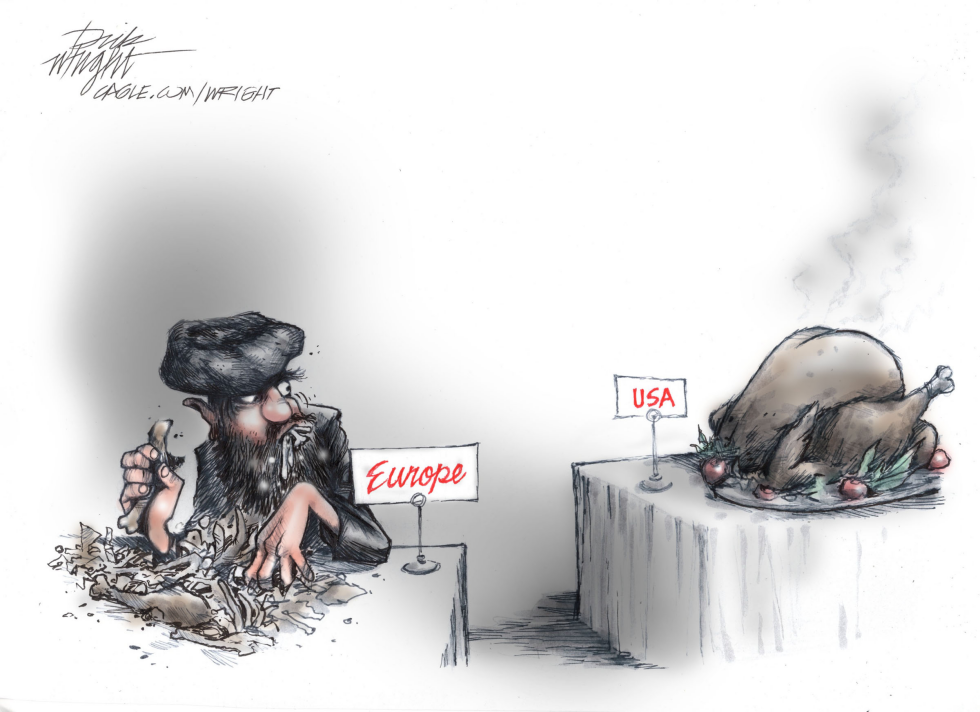
A foreign leader has stripped Europe bare and now eyes the United States as the next prize. The piece argues that unchecked expansionist momentum threatens American security and global stability.
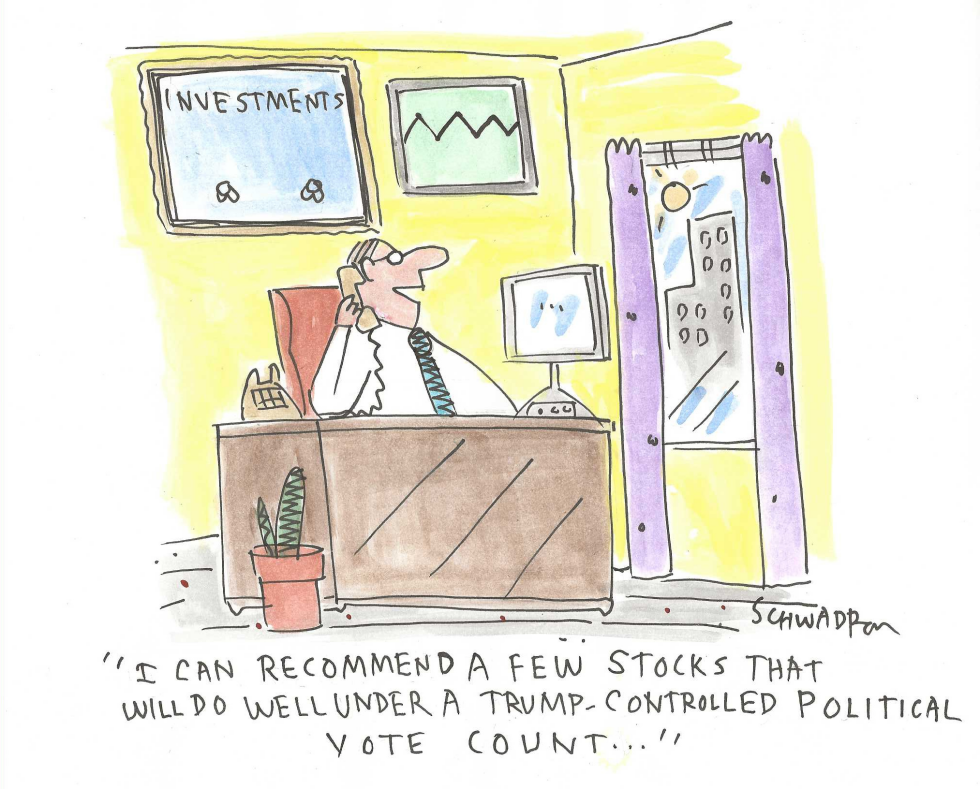
A stockbroker on the phone recommends investments expected to perform under a Trump-controlled political vote count. The scene occurs amid visible symbols of restraint including handcuffs on an investments sign and a barred door resembling a prison cell. The piece responds to ongoing concerns about election integrity and potential political interference in vote tabulation processes. It takes the position that such influence creates opportunities for financial gain tied directly to control over electoral outcomes.
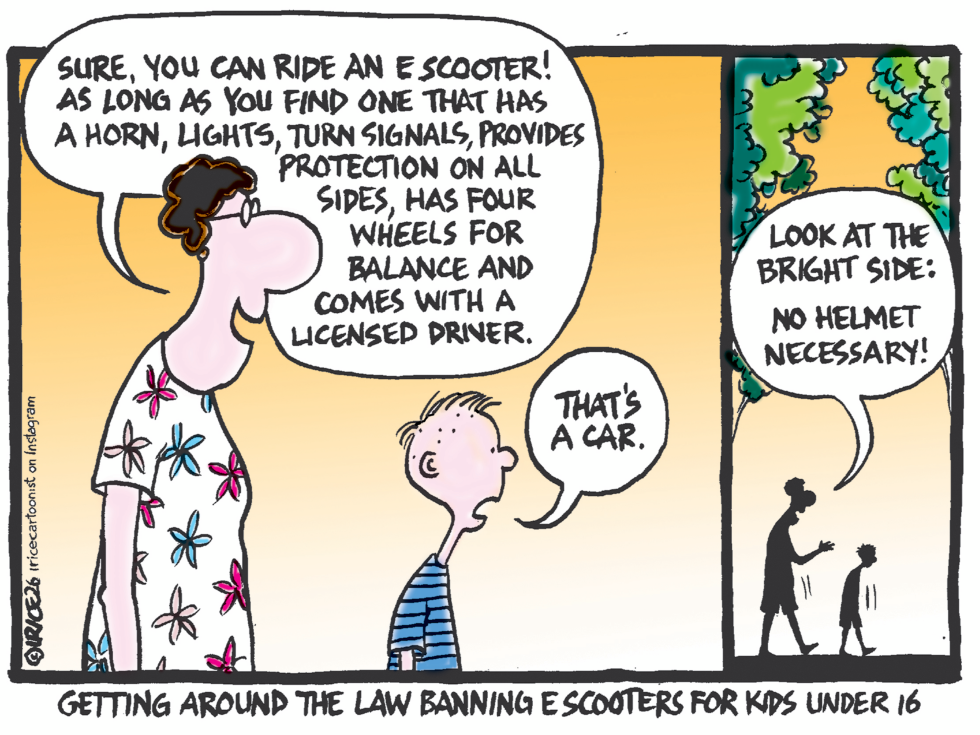
A new law bans e-scooters for children under 16. Parents seek workarounds by reclassifying other vehicles. The cartoon highlights how the rules allow a standard car to qualify while removing helmet requirements.
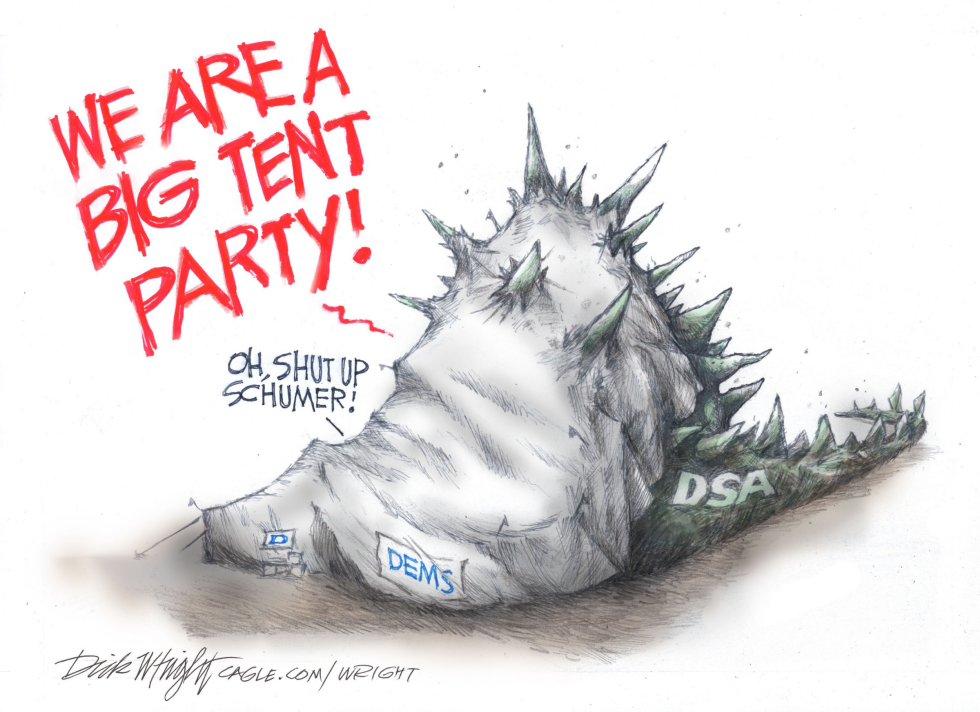
Democratic leaders continue to promote the party as a big tent open to all factions. The DSA's growing role creates visible friction with establishment figures like Senate Minority Leader Chuck Schumer. This dynamic highlights ongoing tensions over the party's direction and messaging ahead of future elections. The piece argues that the big tent claim rings hollow when the socialist wing dominates and dismisses traditional voices.