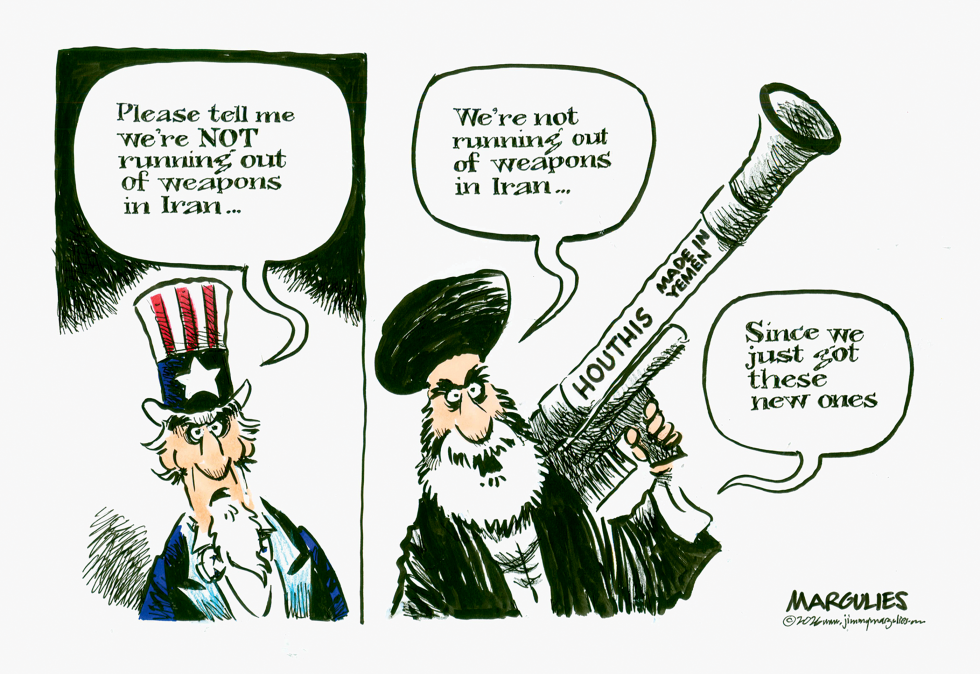
Reports indicate Houthi forces in Yemen have begun supplying missiles to Iran, addressing potential shortages in Iranian stockpiles. The development raises questions about regional arms flows and US policy responses in the Middle East. The cartoon highlights American concerns over whether Iran is truly facing weapons deficits, given the influx of Houthi-provided arms from Yemen. It portrays the situation as undermining claims of Iranian vulnerability while underscoring ongoing tensions in proxy dynamics.
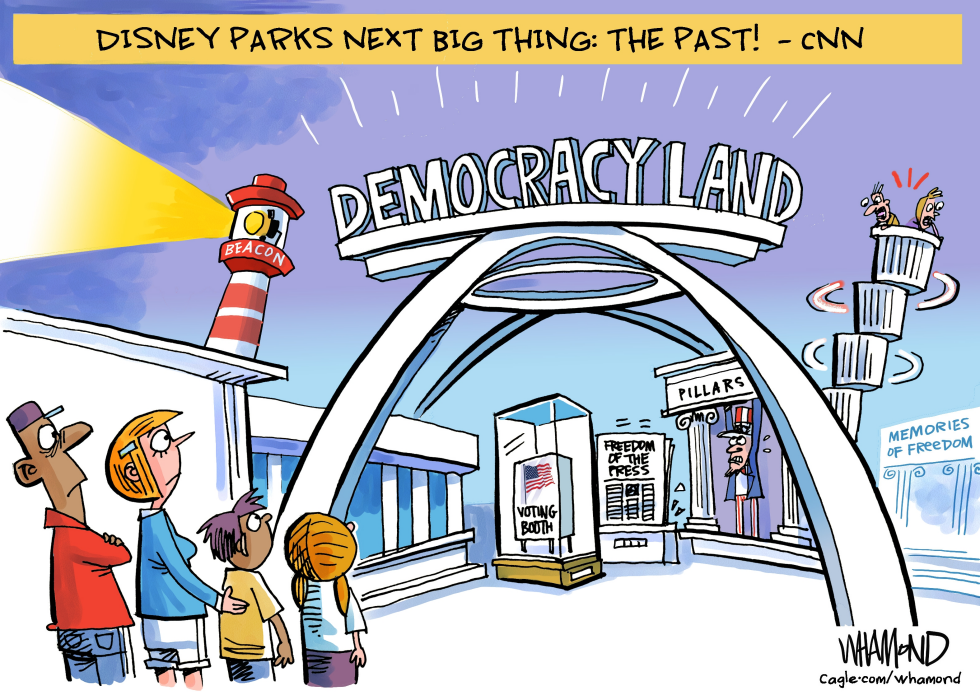
A CNN report on Disney parks reviving past attractions coincides with ongoing debates over voting access and press protections in 2026. Critics argue recent policies have weakened core democratic safeguards, turning once-central institutions into historical curiosities. The cartoon frames this shift as an editorial critique of backsliding norms.
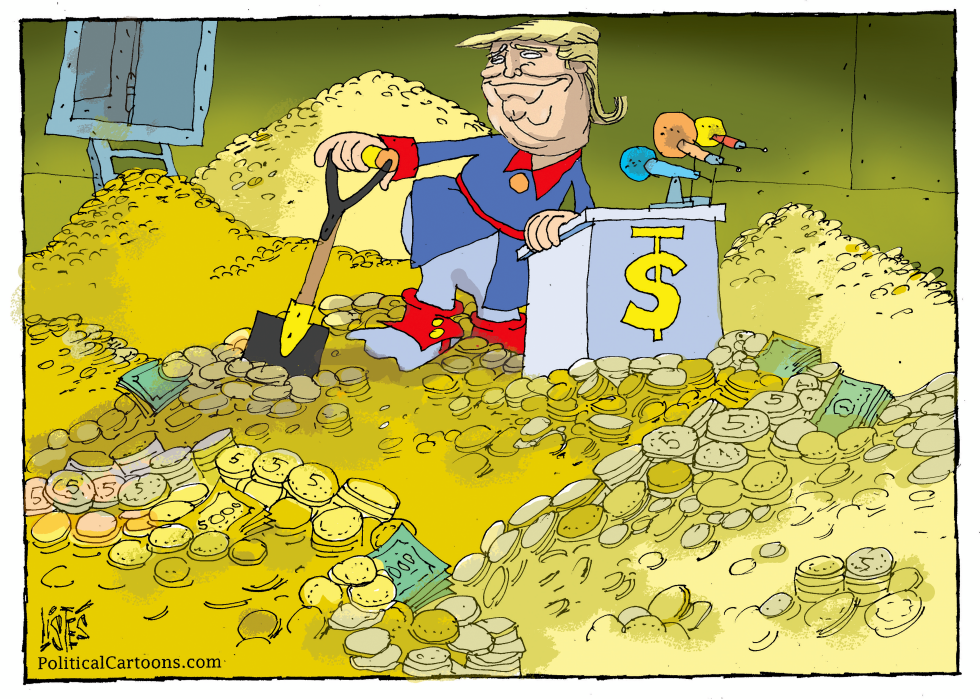
Donald Trump remains a central figure in debates over wealth and political power as of September 2026. The cartoon responds to ongoing scrutiny of how personal fortune intersects with public life and policy influence. It portrays the former president amid symbols of money to critique that dynamic. The editorial position frames Trump's association with wealth as a defining and problematic feature of his political presence.
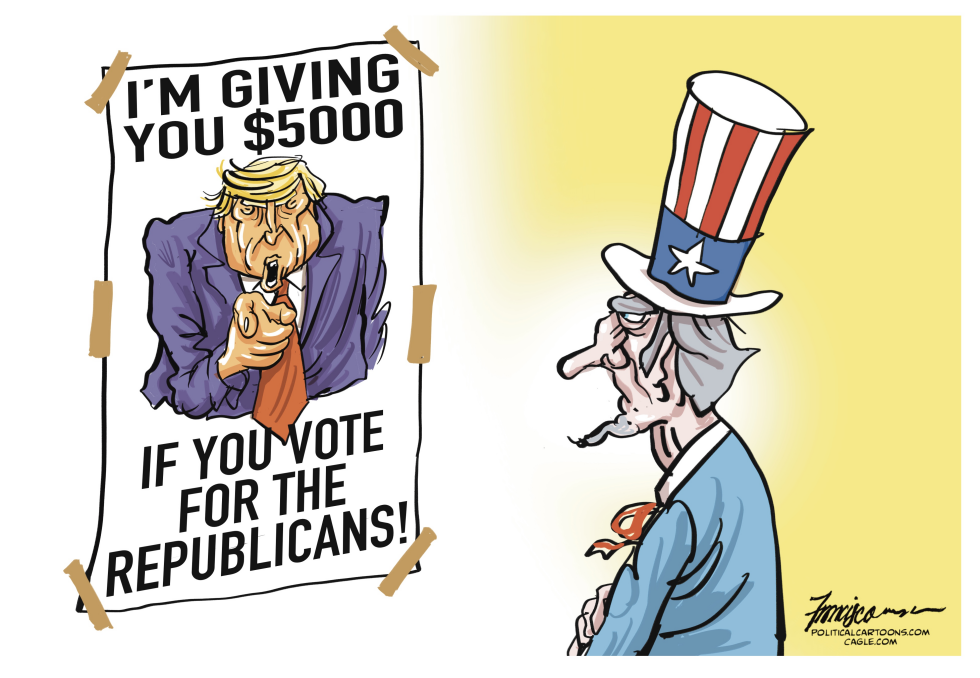
Donald Trump has floated direct cash payments to voters who support Republican candidates. The proposal surfaces weeks before the 2026 midterms and draws immediate scrutiny over its legality and intent. Critics argue the move risks turning elections into auctions. Supporters frame it as economic relief. The cartoon depicts the offer as a blunt transaction that leaves traditional symbols of American integrity uneasy.
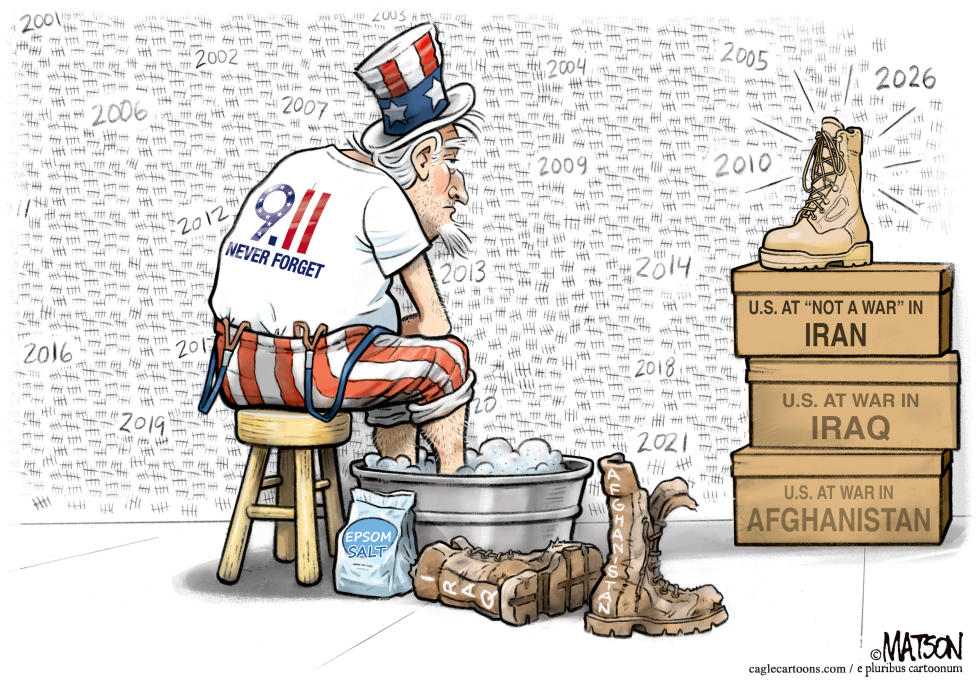
The United States has maintained military involvement across Iraq and Afghanistan for more than two decades following the September 11 attacks. Ongoing regional tensions with Iran now raise the prospect of additional commitments. The cartoon captures public and institutional exhaustion with extended deployments and questions the capacity for another prolonged engagement.
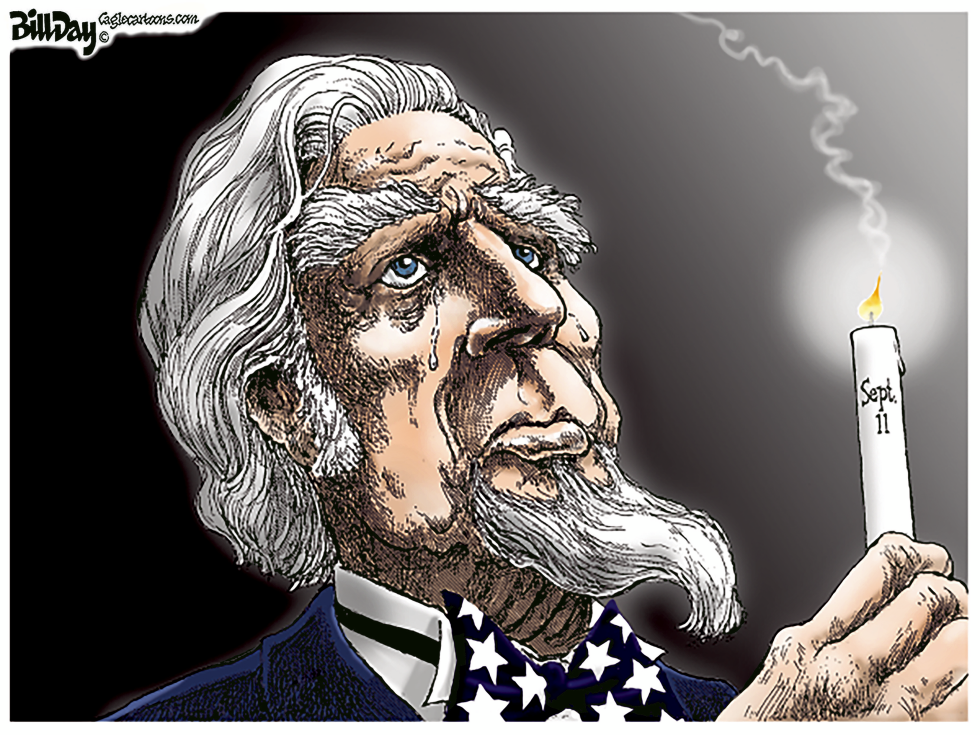
On the eve of the September 11 anniversary, Americans pause to remember the lives lost in the 2001 attacks. The annual observance continues to draw national attention as survivors, families, and officials gather at memorials across the country. The cartoon captures the enduring grief and patriotic resolve that mark the day each year.
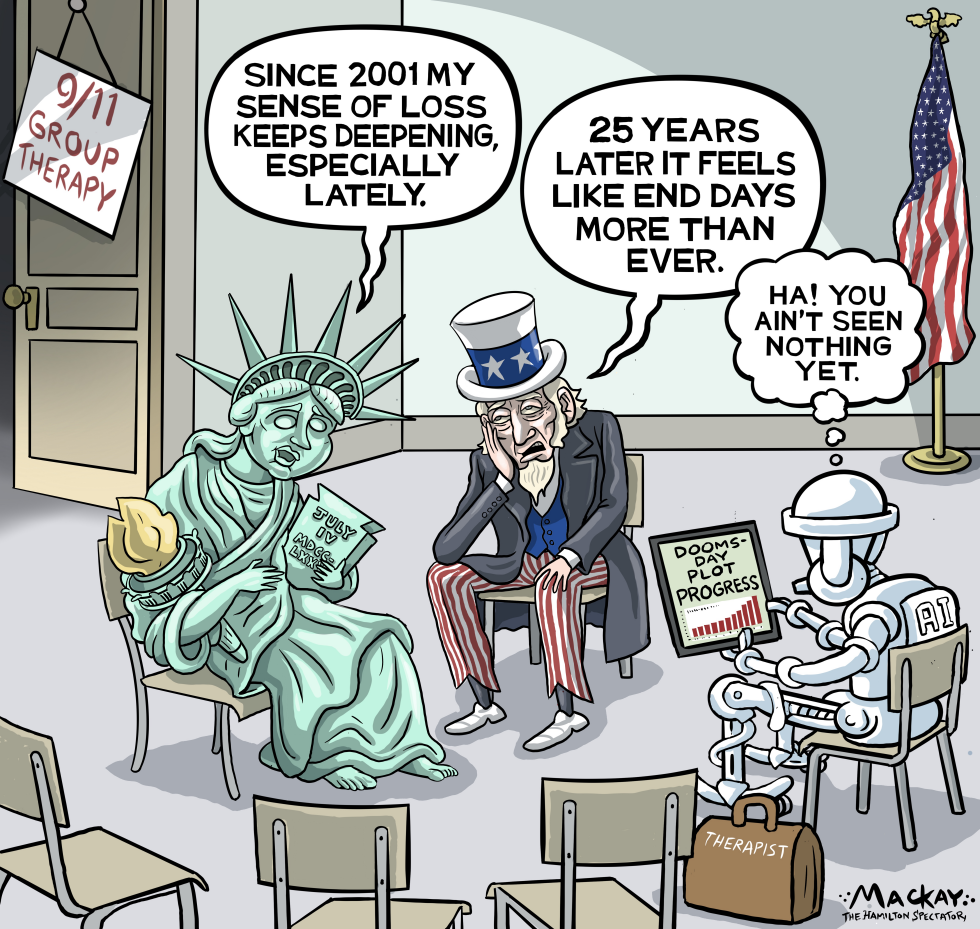
The cartoon depicts the Statue of Liberty, Uncle Sam and an AI robot seated in a 9/11 group therapy session on the 25th anniversary of the attacks. The Statue of Liberty holds a book marked July IV MDCCLXXVI and speaks of deepening loss since 2001. Uncle Sam echoes the sentiment of end days. The AI figure, labeled with a rising doomsday plot progress chart, retorts that the others have seen nothing yet. The scene uses national symbols to reflect persistent national trauma and emerging technological threats two and a half decades after the September 11 attacks.
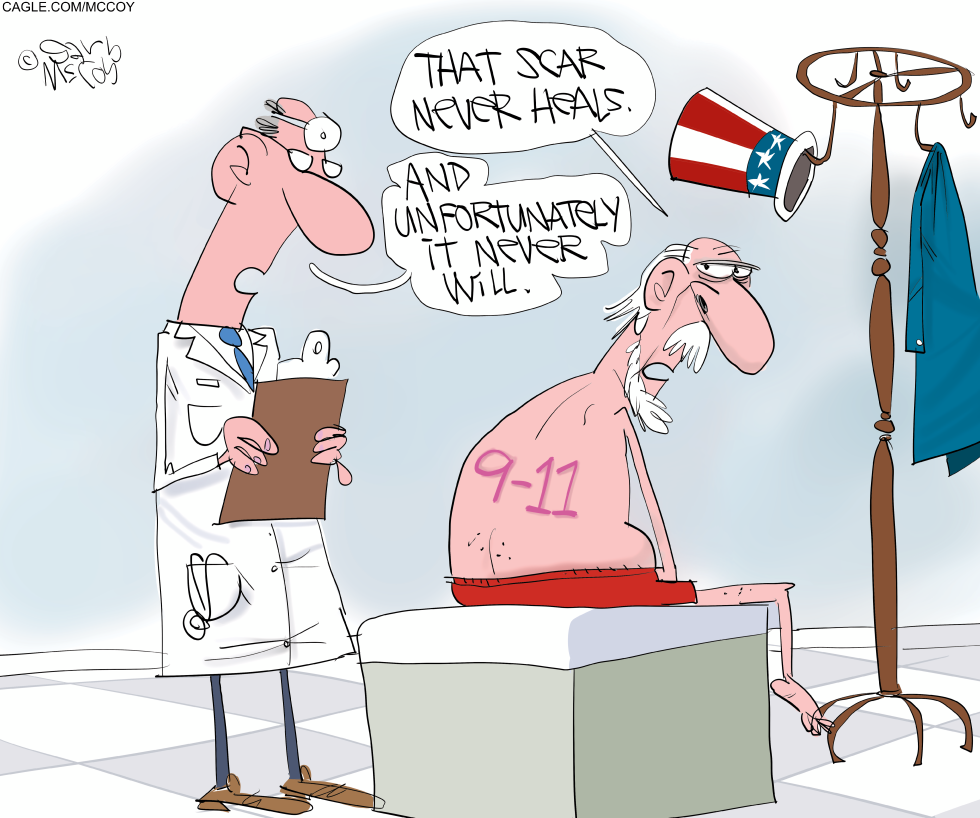
On the 25th anniversary of the September 11 attacks, the nation continues to grapple with the lasting physical and emotional wounds inflicted that day. The cartoon underscores that the trauma inflicted on the United States has not faded despite the passage of time. It argues the scars from the attacks are permanent and will never fully heal.
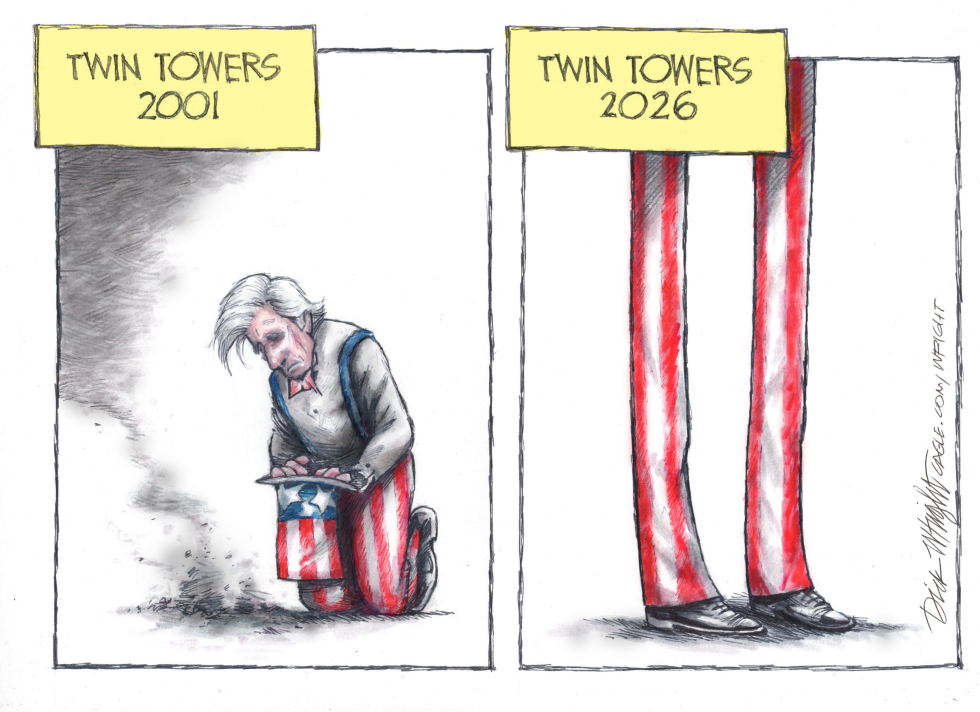
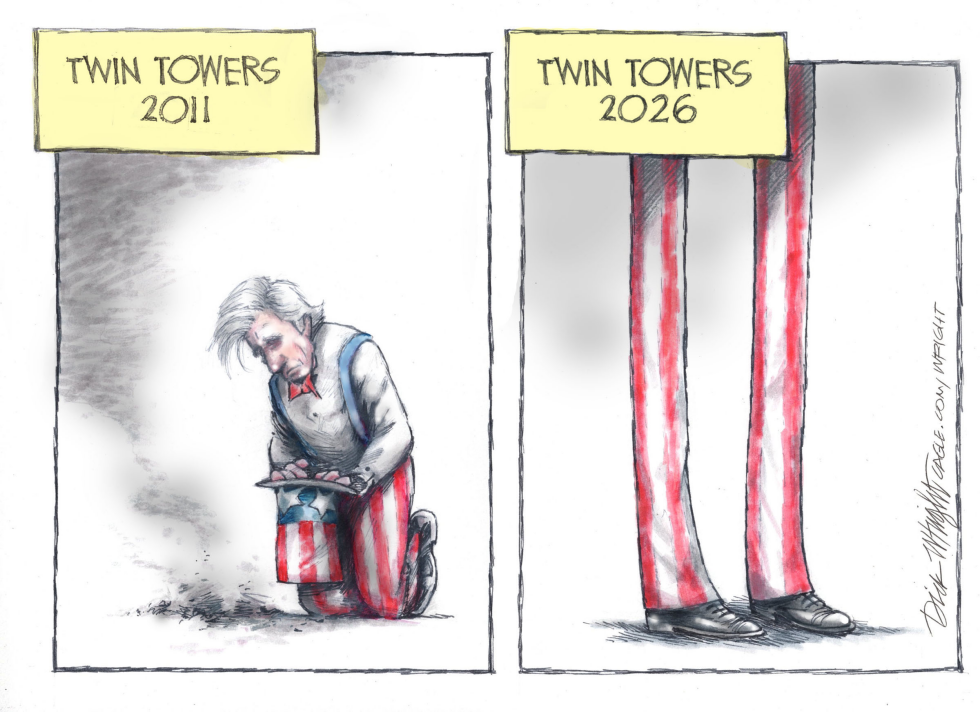
The September 11 attacks struck the United States in 2001, killing nearly 3,000 and leaving the nation in shock. The cartoon contrasts that moment of grief with a 2026 image of standing strength. It marks the 25th anniversary by showing America moving from bowed mourning to upright posture. The editorial position frames the country as resilient and recovered after the tragedy.
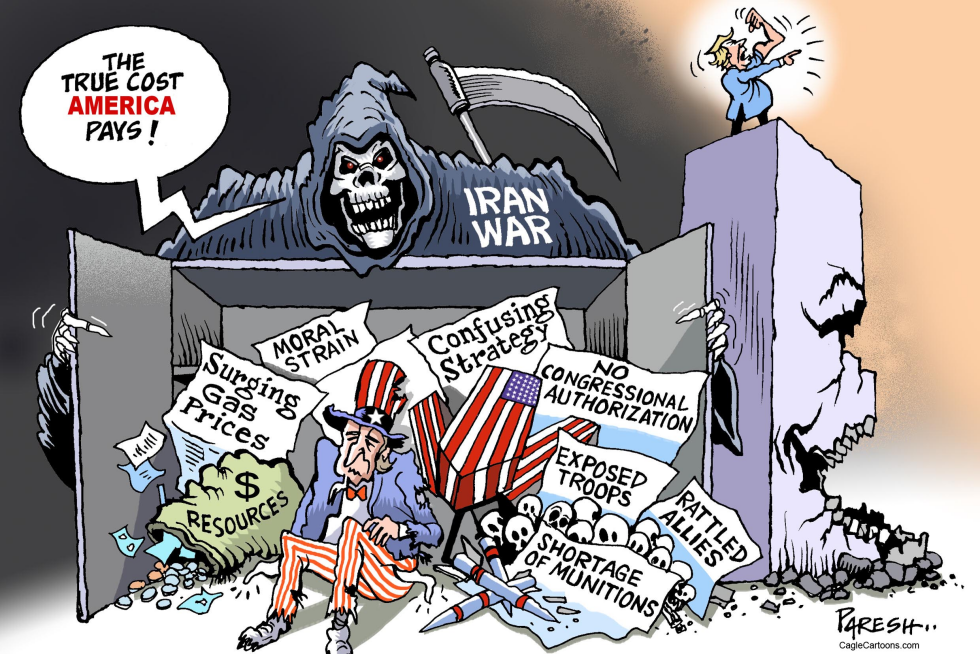
The cartoon depicts the Grim Reaper personifying the Iran War looming over a box of American costs including surging gas prices, moral strain, confusing strategy, no congressional authorization, exposed troops, shortage of munitions and rattled allies. Uncle Sam sits defeated among the debris with a broken flag and skulls. Donald Trump stands on a pedestal pointing upward. A speech bubble declares the true cost America pays. Published September 4, 2026, the piece critiques the drain on U.S. resources and lack of oversight in the conflict.
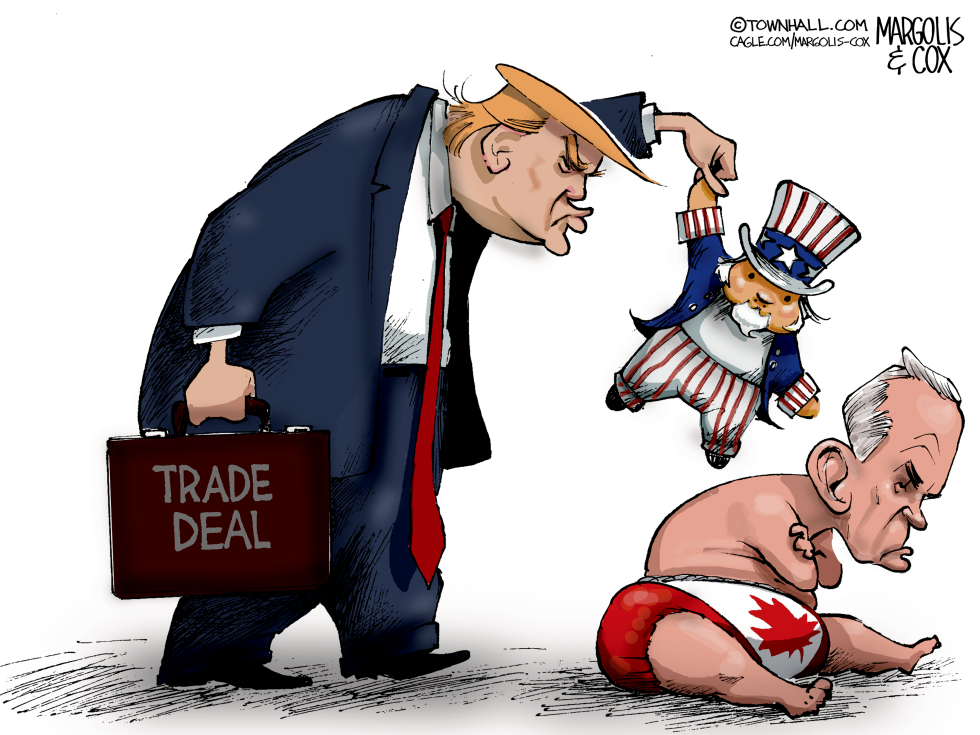
Donald Trump holds a briefcase labeled trade deal while dangling an Uncle Sam puppet above a baby figure wearing a Canadian flag diaper, identified as Mark Carney. The September 2026 cartoon responds to ongoing US-Canada trade tensions under the Trump administration. Carney, a prominent Canadian figure eyed for leadership, faces portrayal as vulnerable in negotiations. The piece argues that Trump exerts direct control over Canadian interests through economic leverage rather than equal partnership.
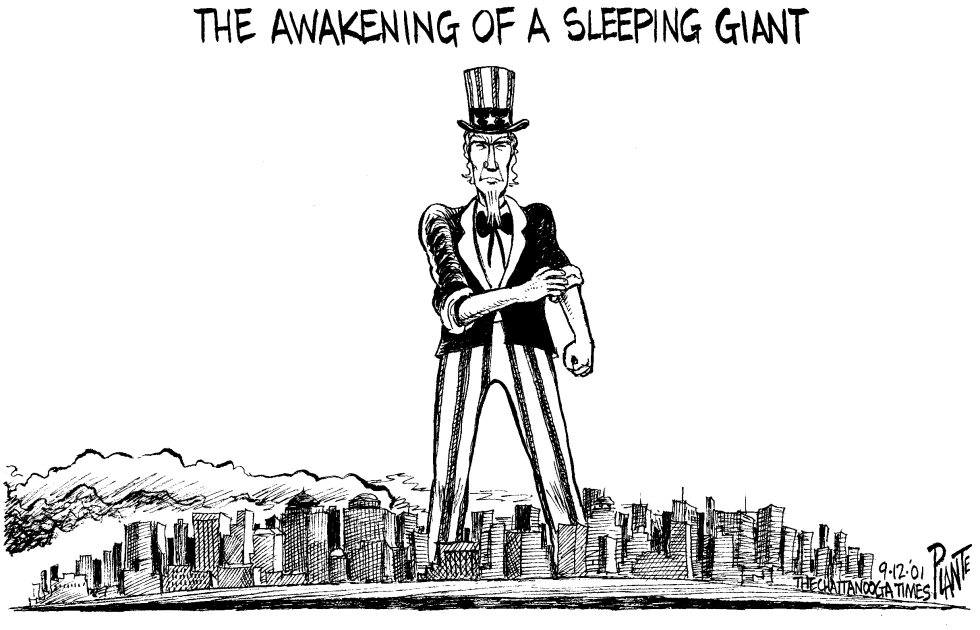
On September 11, 2001, al-Qaeda terrorists flew planes into the World Trade Center and the Pentagon, killing nearly 3,000 people. The attacks prompted an immediate national mobilization and the launch of the war on terror. The cartoon frames the United States as a sleeping giant now roused to action, reflecting the widespread view that the country would respond with unified strength and resolve.
Fifteen years after the September 11 attacks, the United States continued to rebuild its physical and symbolic infrastructure. By 2026 the nation had completed major reconstruction projects at the World Trade Center site and restored a sense of forward momentum. The cartoon contrasts a bowed national figure in 2011 with an upright stance in 2026 to argue that the country has regained its footing and strength.
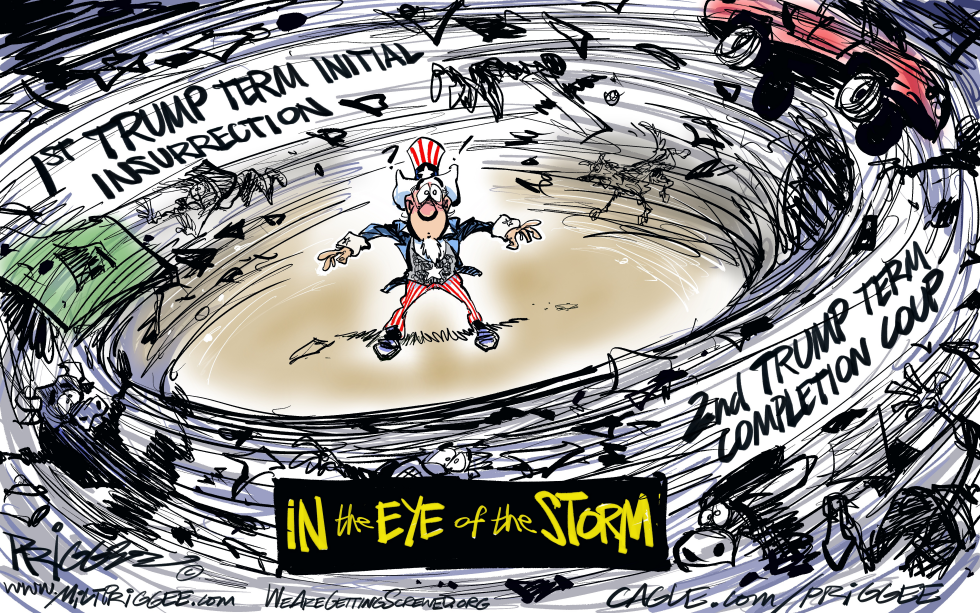
The image shows Uncle Sam positioned in a calm central area surrounded by swirling debris labeled as the first Trump term initial insurrection and the second Trump term completion coup. Text on the left and right frames the scene with those phrases. A banner at the bottom reads in the eye of the storm. The composition places the national symbol between references to past and future political events tied to Donald Trump.
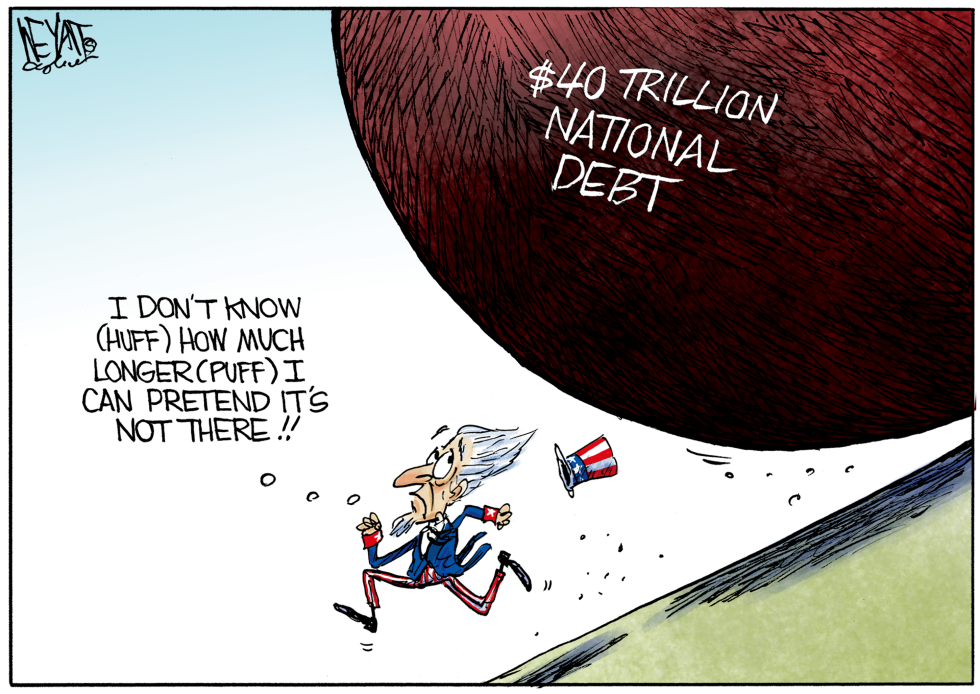
The US national debt has climbed to $40 trillion amid ongoing debates over spending and borrowing limits. Lawmakers continue to defer tough choices on entitlements and revenue. The cartoon argues that pretending the problem does not exist only delays an inevitable reckoning.