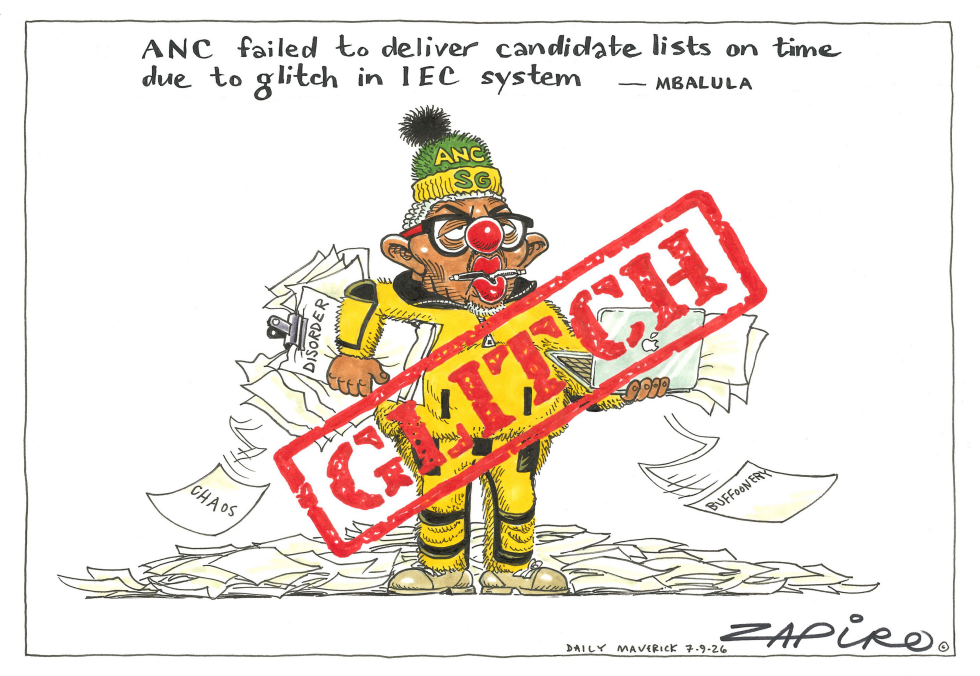
ANC secretary general Fikile Mbalula attributed the party's failure to submit candidate lists on time to a technical glitch in the Independent Electoral Commission system. The claim came as the party faced internal disarray ahead of upcoming elections. The cartoon portrays the excuse as a transparent attempt to mask organizational failure and buffoonery.
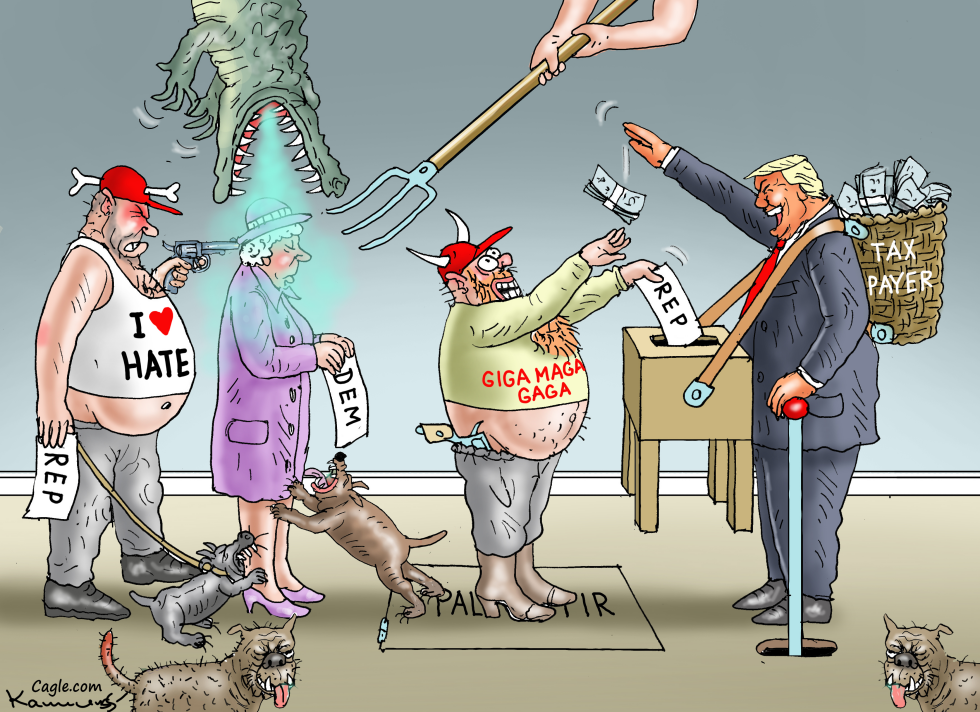
As the 2026 midterm elections approach, former President Trump has positioned himself as a central force in Republican campaigns, directing resources and mobilizing supporters. The cartoon highlights the use of taxpayer money in these efforts and the intense partisan divide, with Democrats portrayed as under attack. It takes the position that such involvement risks undermining fair electoral processes.
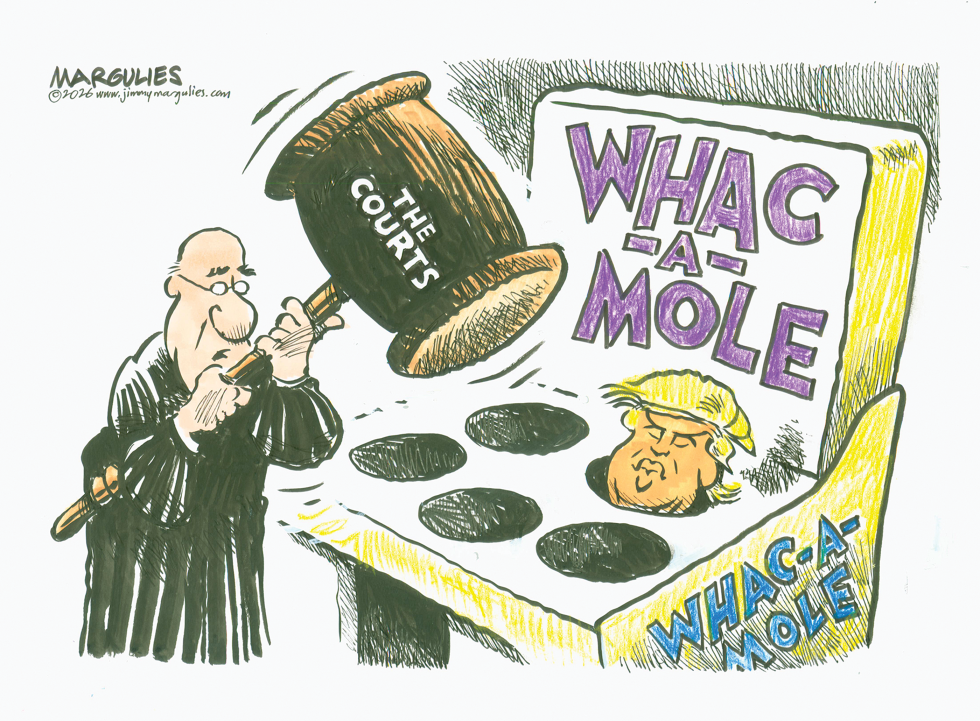
Courts have pursued multiple cases against Donald Trump in recent years, raising questions about timing and motivation ahead of elections. The editorial argues the legal actions resemble a repetitive game rather than measured justice.
The US Postal Service continues to play a central role in processing and delivering mail-in ballots for federal elections. With voting by mail now a standard option in many states, the agency manages millions of ballots each cycle, raising questions about capacity, security, and timely delivery. The editorial position emphasizes the importance of a reliable postal network to maintain voter access without disruption.
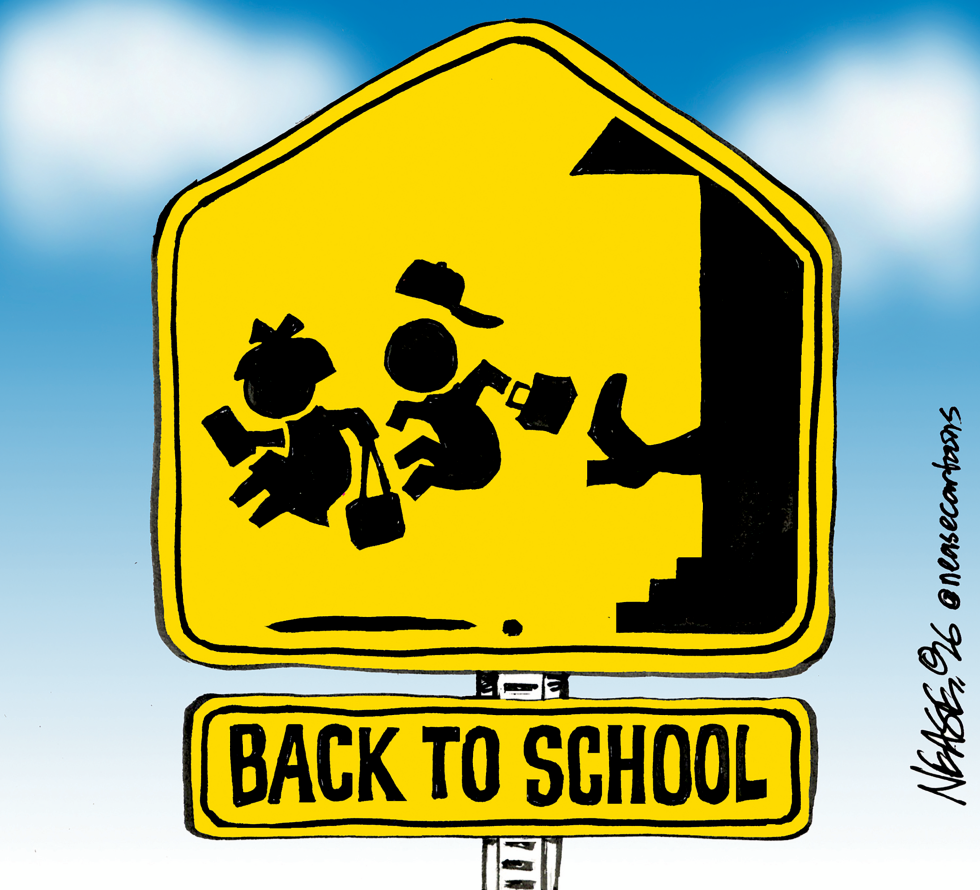
Schools across the country prepare for the fall semester amid ongoing debates over student safety and resource allocation. The modified crossing sign serves as a visual reminder of hazards that accompany the annual back-to-school period. The piece argues that standard precautions remain insufficient without stronger policy support for protection measures.
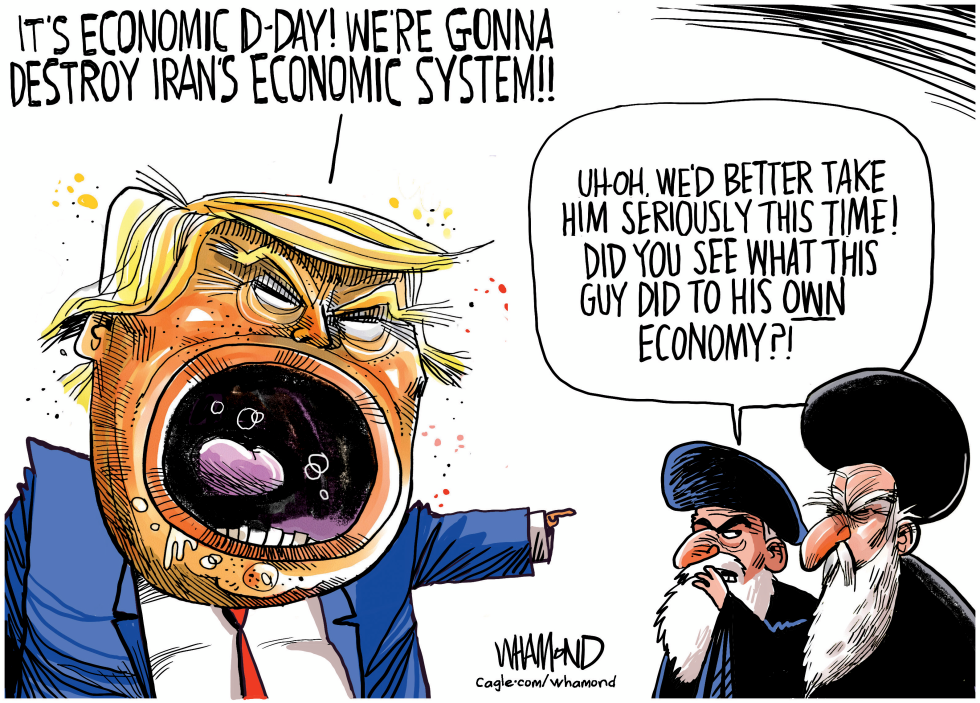
Donald Trump has warned of an economic D-Day targeting Iran's economic system. The statement comes as part of ongoing pressure on Tehran. Iranian leaders in the scene respond by urging seriousness, citing the impact Trump had on the US economy during his term. The development highlights continued tensions in US-Iran relations and the use of economic measures as leverage. The piece portrays the threat as potentially undermined by Trump's own economic legacy.
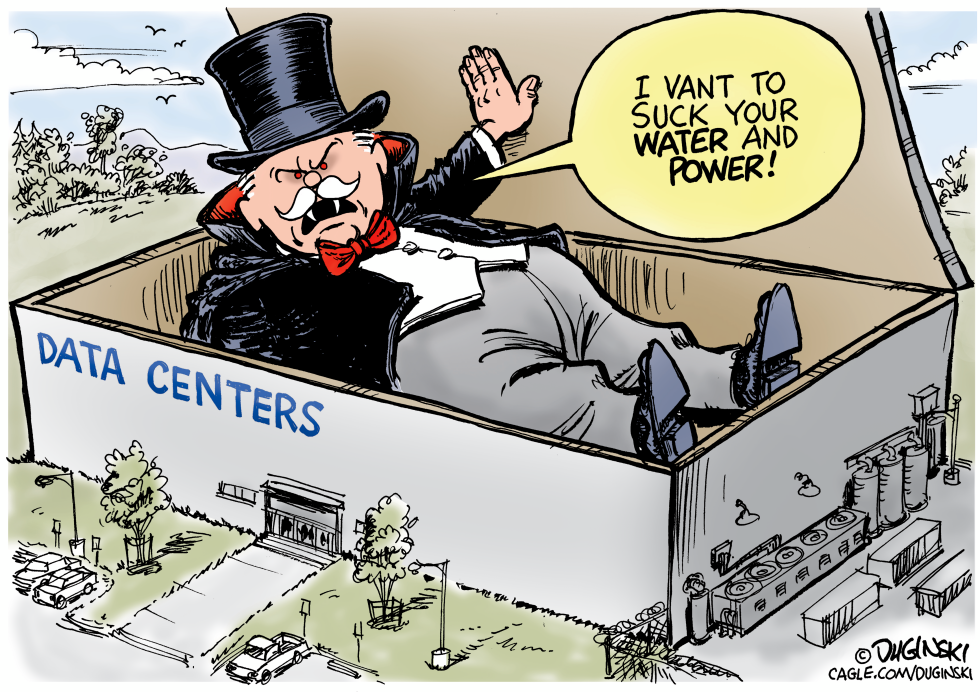
Data center operators continue rapid expansion to support cloud computing and artificial intelligence workloads, driving sharp increases in electricity and water consumption across multiple states. Local utilities report strain on grids and aquifers as facilities require constant cooling and backup power. The editorial takes the position that unchecked growth treats public resources as unlimited, urging stronger oversight before shortages worsen.
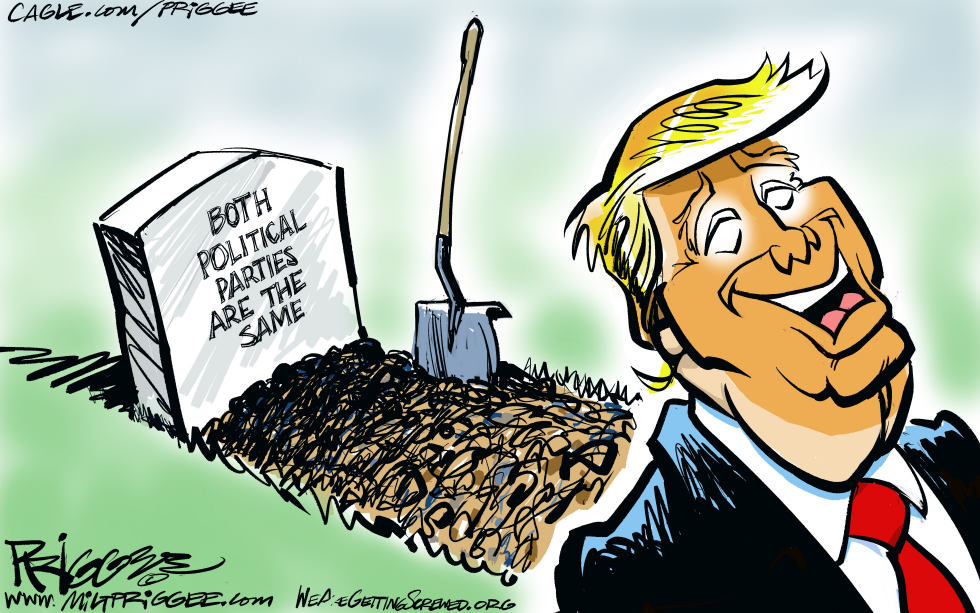
The cartoon depicts Donald Trump laughing heartily beside a freshly dug grave marked with a headstone reading 'BOTH POLITICAL PARTIES ARE THE SAME.' A shovel stands upright in the mound of dirt. The scene presents Trump as amused by the burial of the idea that the two major parties are identical. As of the August 2026 publication date, the image reflects ongoing debates about partisan differences and voter perceptions of the two-party system. The visual places Trump in the foreground with an open-mouthed laugh while the gravestone occupies the left side of the frame.
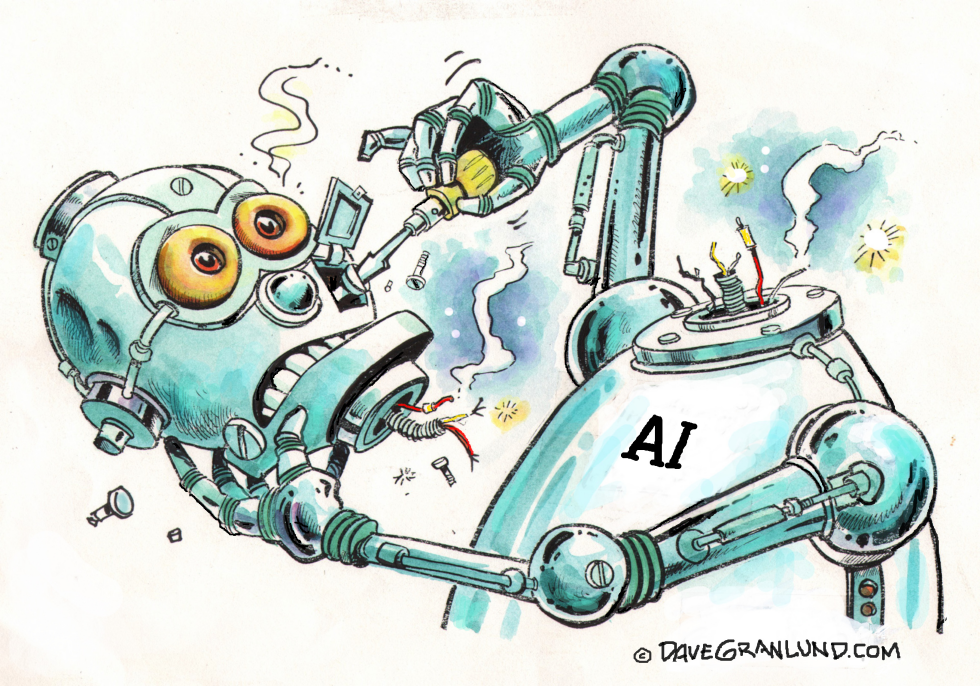
The cartoon depicts a robot with an open panel and wide eyes attempting to fix a larger component labeled AI. Robotic arms hold tools amid sparks, smoke and scattered parts. The image illustrates ongoing difficulties with artificial intelligence systems and their maintenance. No specific news event from the prior month is referenced in the provided metadata.
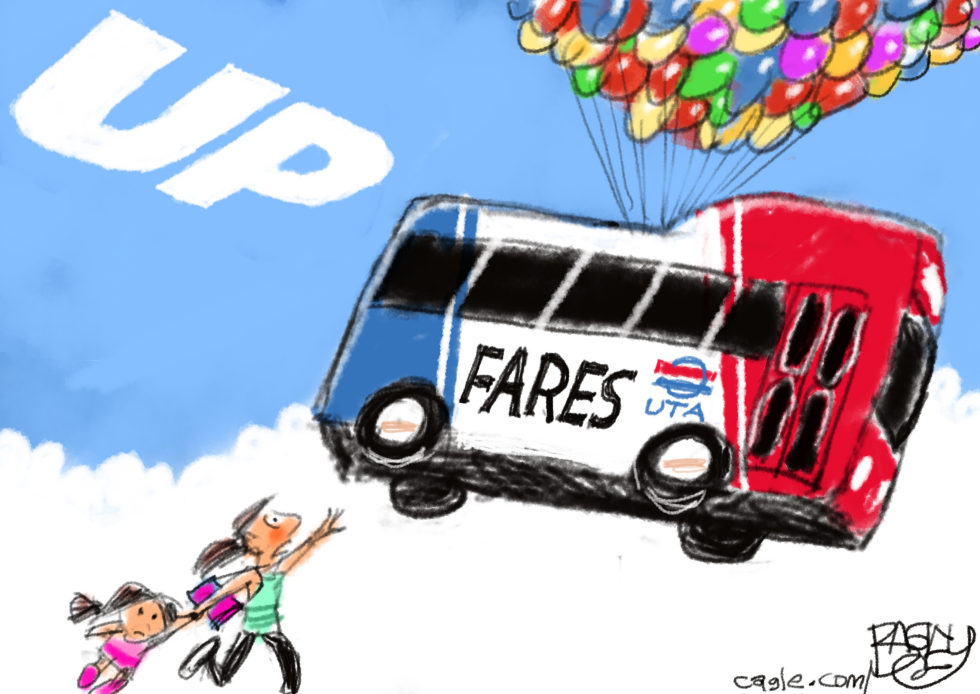
Utah Transit Authority faces pressure to increase bus fares amid broader cost pressures affecting public services. The development matters because higher fares can reduce ridership and strain lower-income households that rely on transit. The piece argues that these increases are being driven by external forces that riders are actively trying to resist.
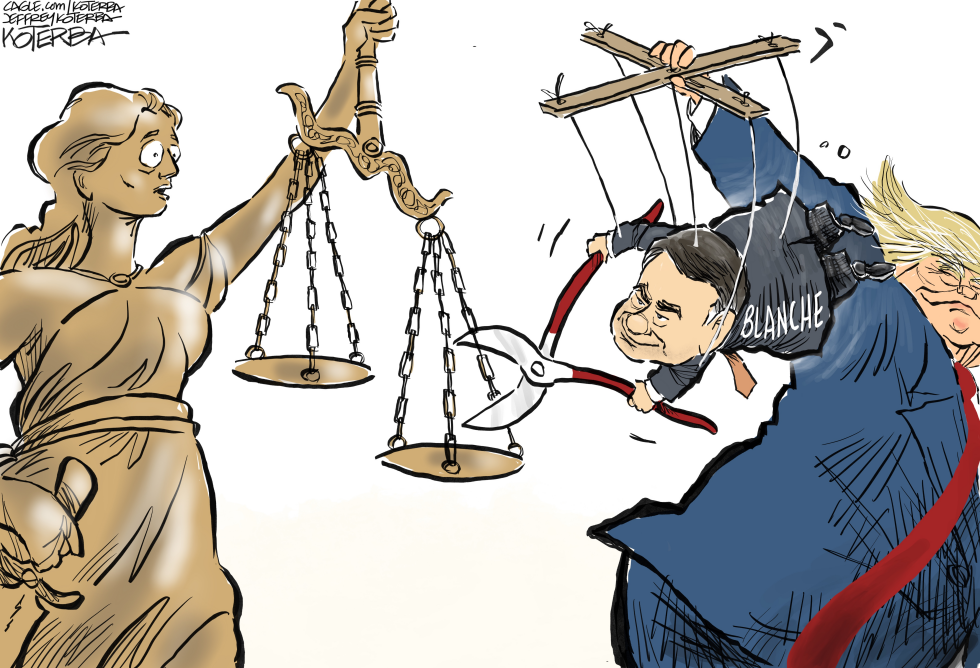
Donald Trump directs his attorney Todd Blanche to undermine judicial processes through direct influence. The move raises concerns over executive interference in legal proceedings. The piece portrays this as an assault on impartial justice.
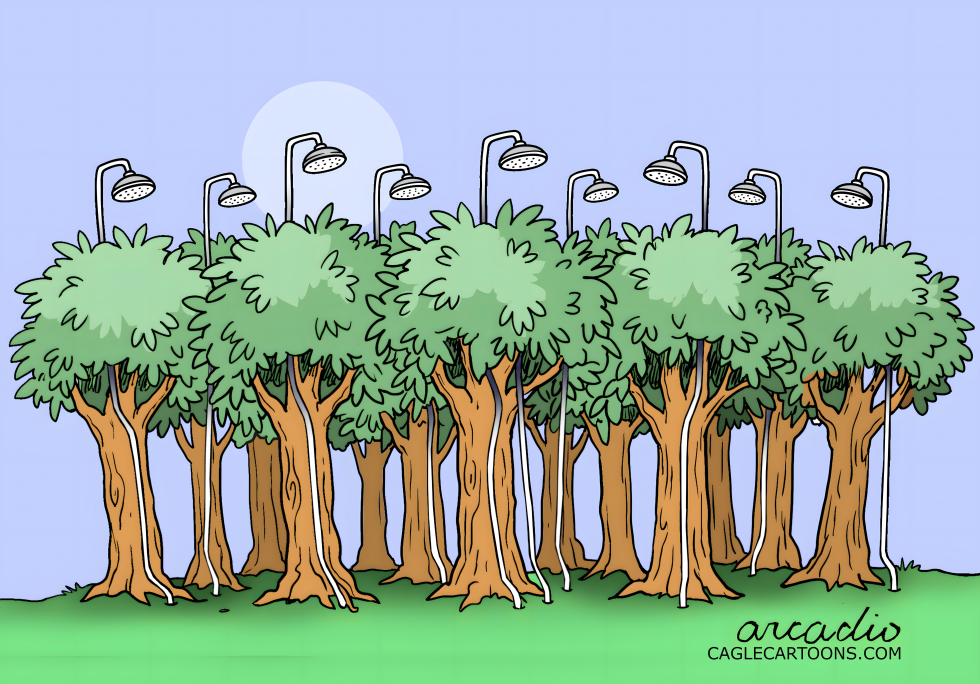
Forests in dry regions face heightened wildfire risks due to prolonged drought and climate patterns. Officials and environmental groups explore supplemental watering techniques to maintain tree moisture and reduce ignition potential. The approach matters because uncontrolled fires destroy habitats, release carbon, and threaten communities. The piece supports proactive hydration strategies as a practical step in broader fire prevention efforts.
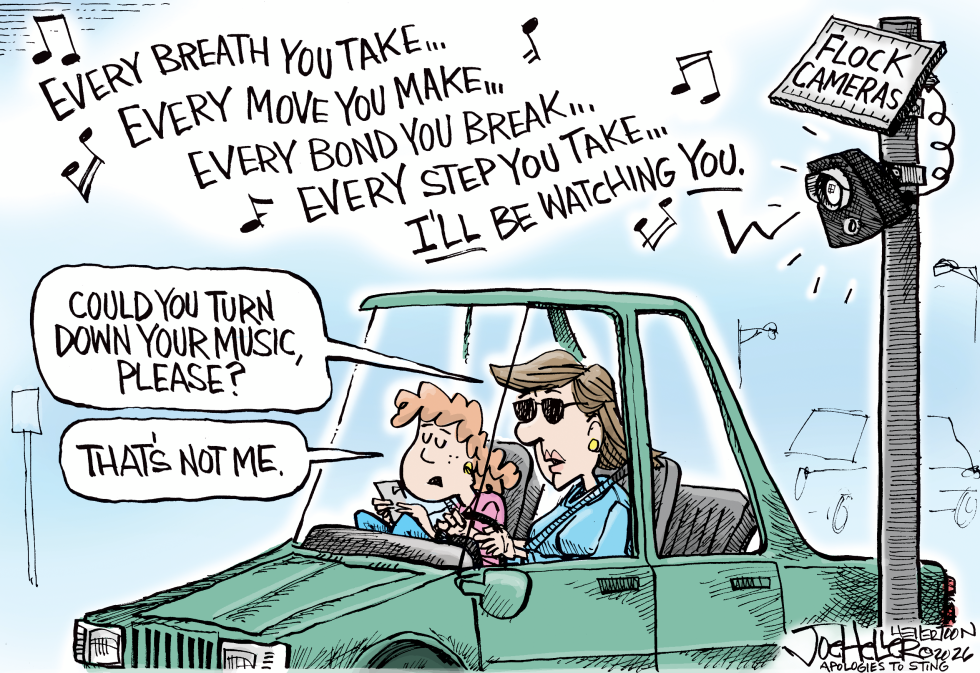
Police departments across the country have expanded use of Flock license plate readers to track vehicles in real time. The technology raises questions about the balance between public safety and individual privacy. The piece argues that such systems create an inescapable watch on everyday movement.
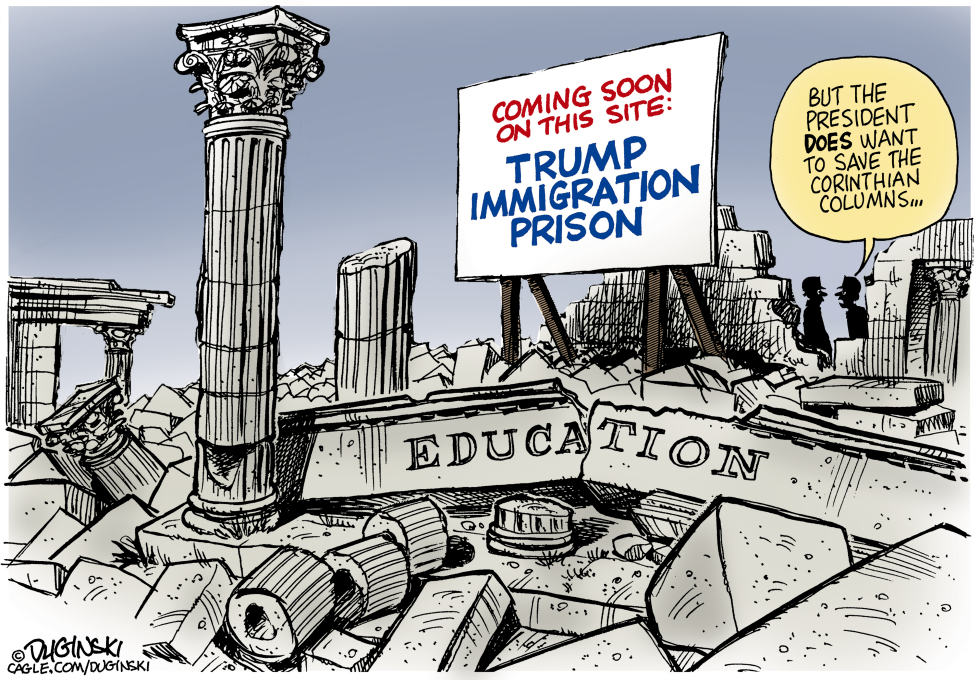
The Trump administration has moved to repurpose a site previously tied to education programs for a new immigration detention facility. The shift reflects ongoing policy emphasis on border enforcement over domestic education support. The piece argues that selective preservation of symbolic elements masks broader institutional damage.