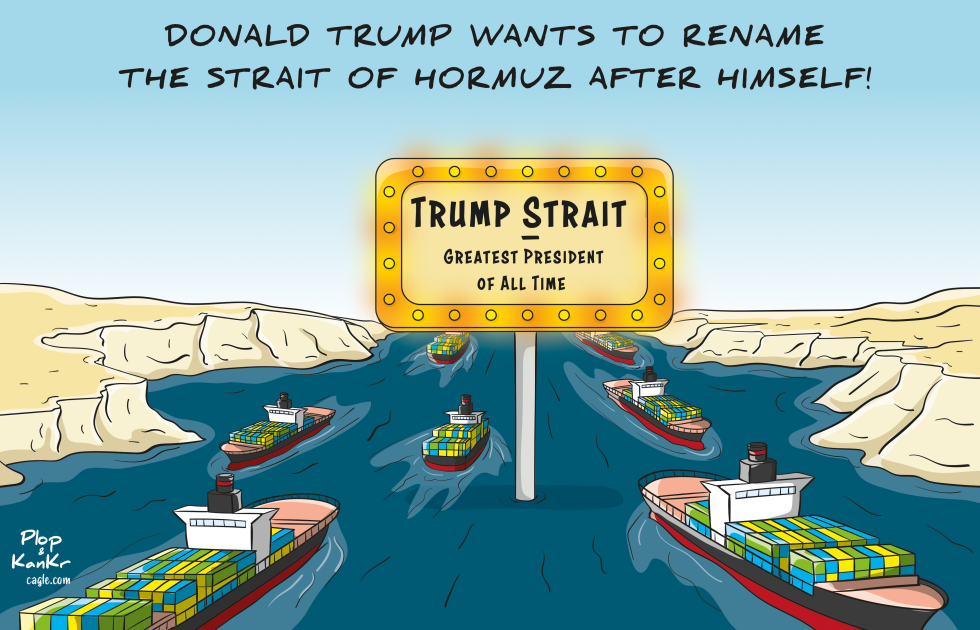
A political cartoon depicts Donald Trump proposing to rename the Strait of Hormuz after himself. The image shows multiple cargo ships navigating the waterway beneath a large glowing sign reading Trump Strait with the subtitle Greatest President of All Time. The top text states Donald Trump wants to rename the Strait of Hormuz after himself. The cartoon uses the visual of a prominent sign overlooking busy shipping lanes to comment on the proposal. It responds to ongoing discussions about international waterways and presidential initiatives in the Middle East region as of the September 2026 publication date.
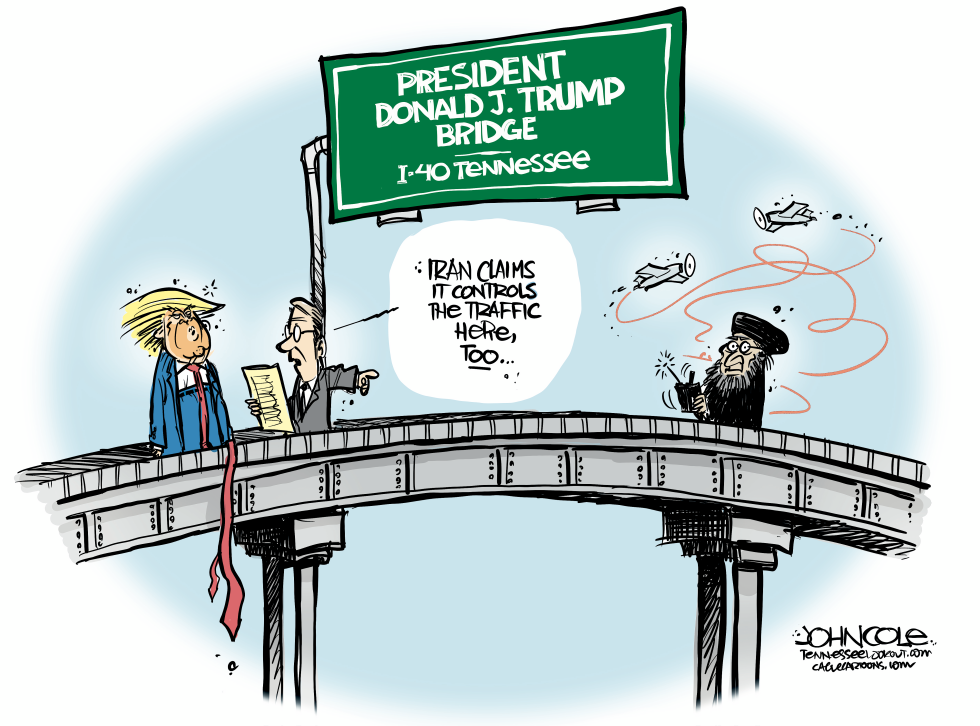
President Donald J. Trump attended the naming of the President Donald J. Trump Bridge on I-40 in Tennessee. The event drew attention when an Iranian figure appeared to claim control over traffic on the span. The development highlights ongoing tensions with Iran over shipping lanes and international routes. The cartoon frames the claim as an extension of Iran's broader pattern of asserting dominance over key passages. It positions the bridge naming as a domestic moment overshadowed by foreign threats.
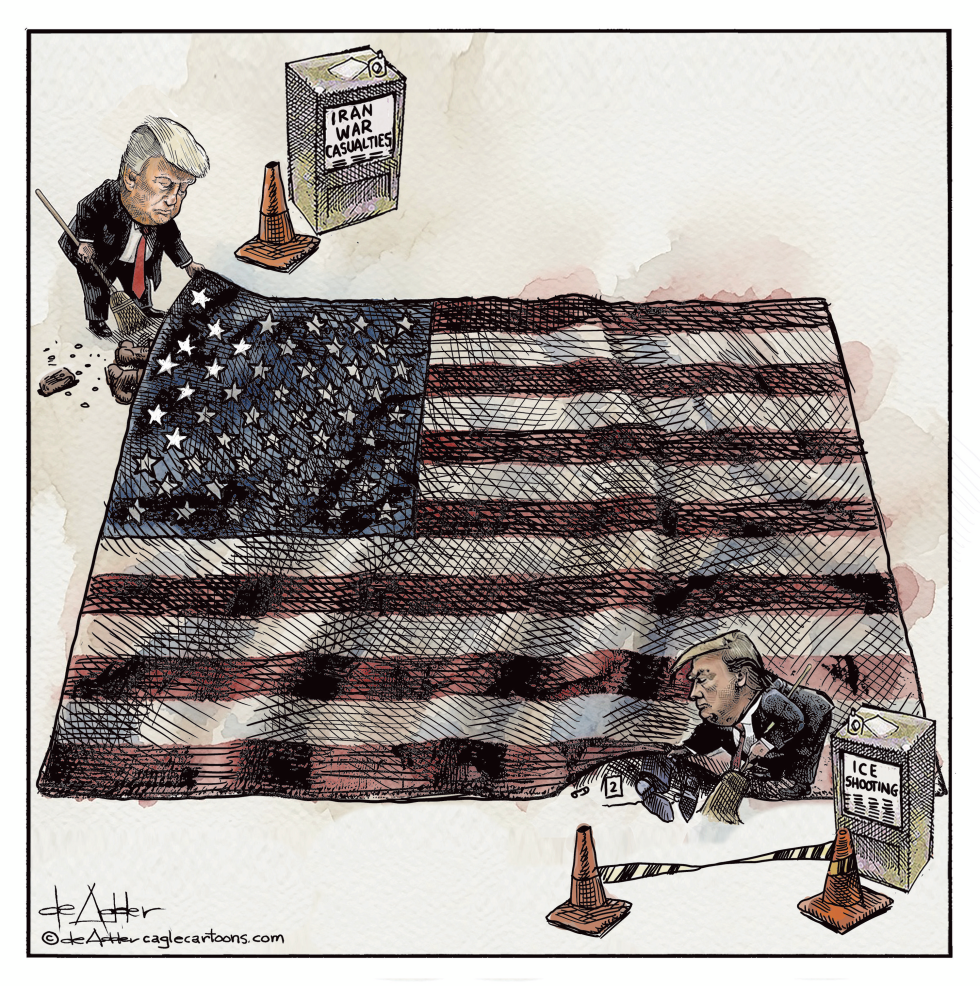
Donald Trump faces scrutiny over reported casualties from potential Iran conflict and an ICE-related shooting incident in mid-2026. The administration's handling of these events draws criticism for downplaying accountability. The piece argues that attempts to minimize these issues undermine public trust in governance.
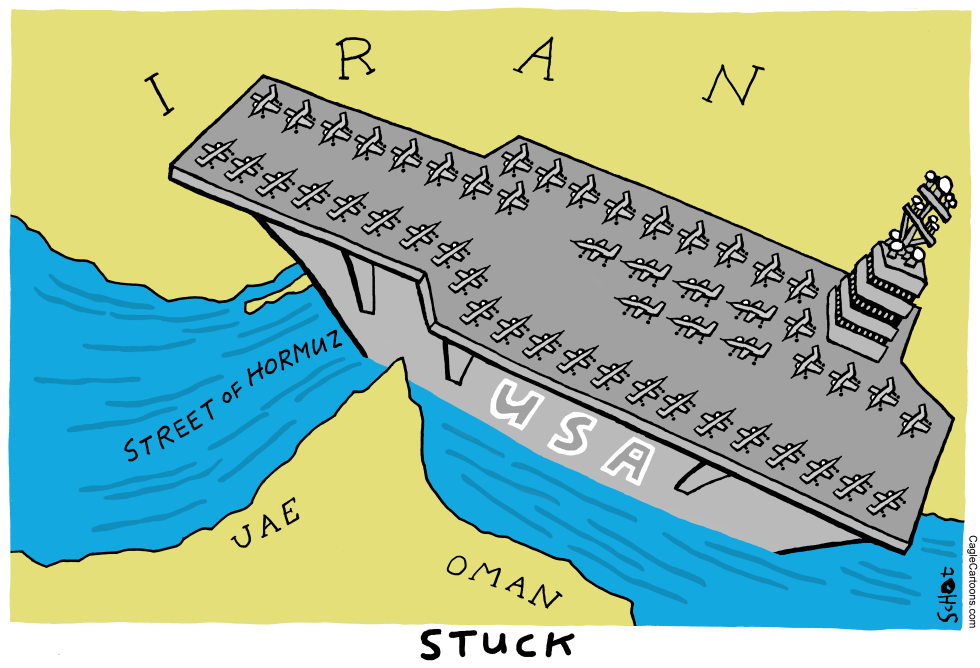
Tensions persist in the Strait of Hormuz where US naval forces maintain a presence amid ongoing disputes with Iran over shipping access and regional influence. The narrow waterway remains a critical chokepoint for global oil transit between the Persian Gulf and open seas. No single triggering incident stands out in the days before July 22 2026 yet the strategic standoff continues. The cartoon frames the US carrier as physically immobilized by the surrounding geography and neighboring states.
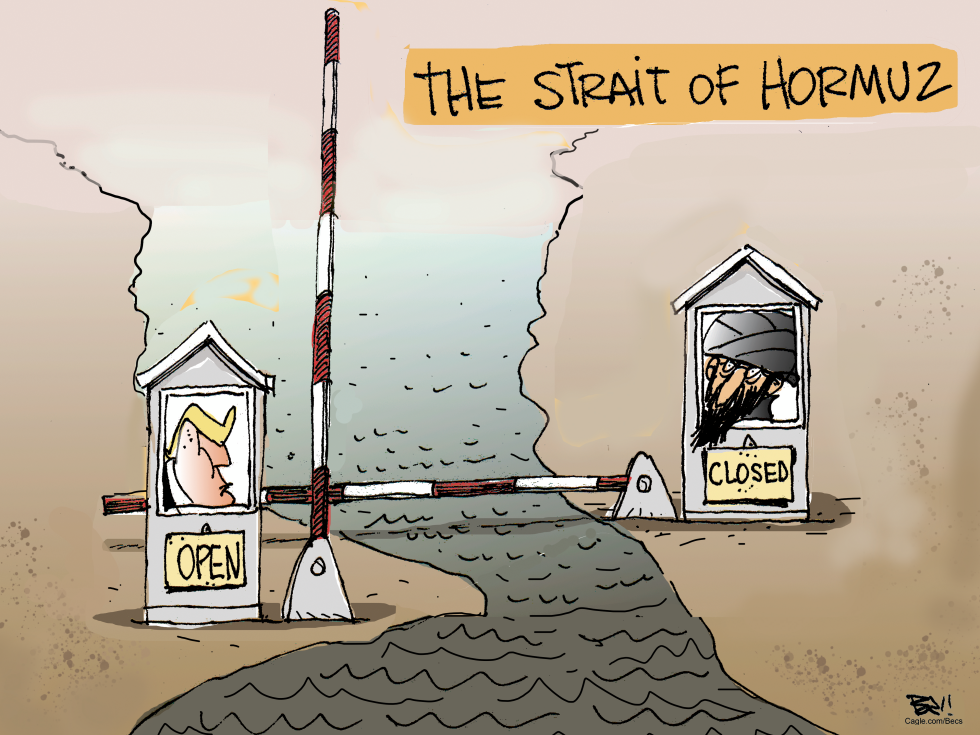
The Strait of Hormuz remains a flashpoint for global oil transit as the United States and Iran maintain opposing stances on access. Donald Trump positions an open checkpoint while an Iranian official signals closure. The editorial highlights the standoff's direct impact on energy markets and shipping security.
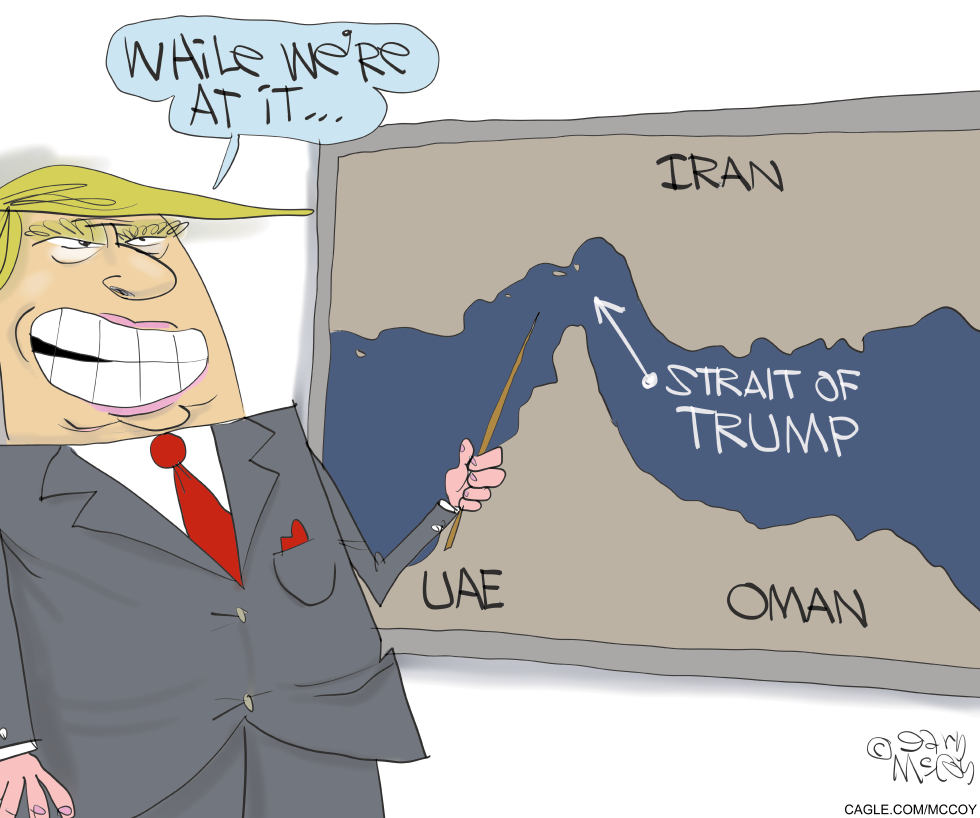
On July 13 2026 Donald Trump appears in a gray suit and red tie before a map of the Persian Gulf region. He points with a stick at the waterway between Iran UAE and Oman now labeled Strait of Trump. A speech bubble reads While we're at it. The image responds to ongoing executive actions on foreign geographic names and regional policy.
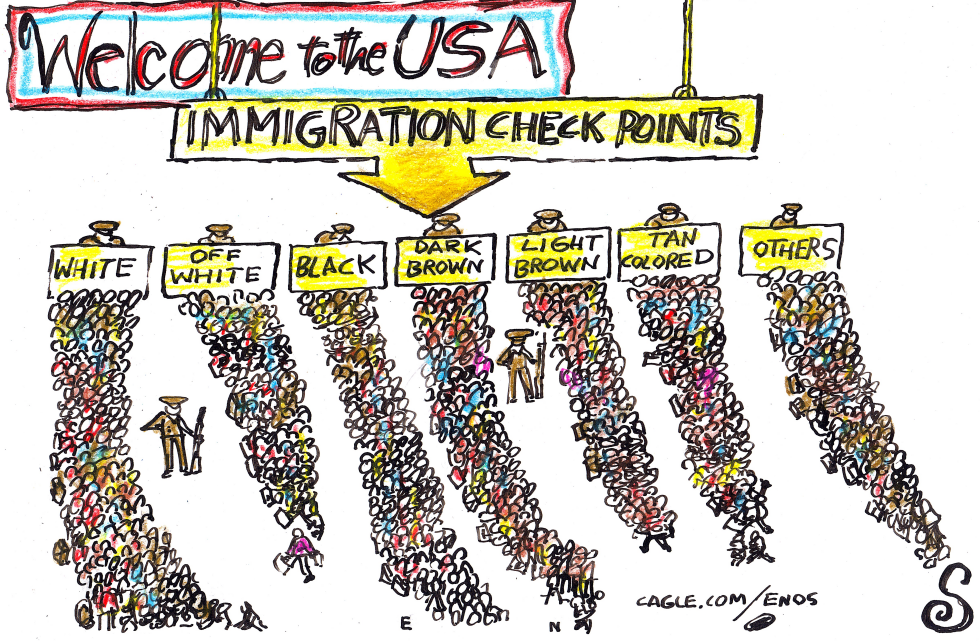
A cartoon depicts seven distinct lines of people at US immigration checkpoints, each labeled by skin color from white through off-white, black, dark brown, light brown, tan colored and others. Guards stand watch while a prominent welcome banner and immigration sign direct arrivals into the segregated queues. The image highlights the visual separation of entrants based on appearance.
In this June 28, 2026 cartoon a mother and daughter stand in a doorway expressing alarm over the slumped father in the living room. The man wears a kilt, traffic cone hat, and Scottish flag socks while surrounded by bagpipes and a Saltire. The mother states she doubts he can survive another four years without the Scots. The scene captures domestic worry tied to the father's evident attachment to Scottish symbols and attire.
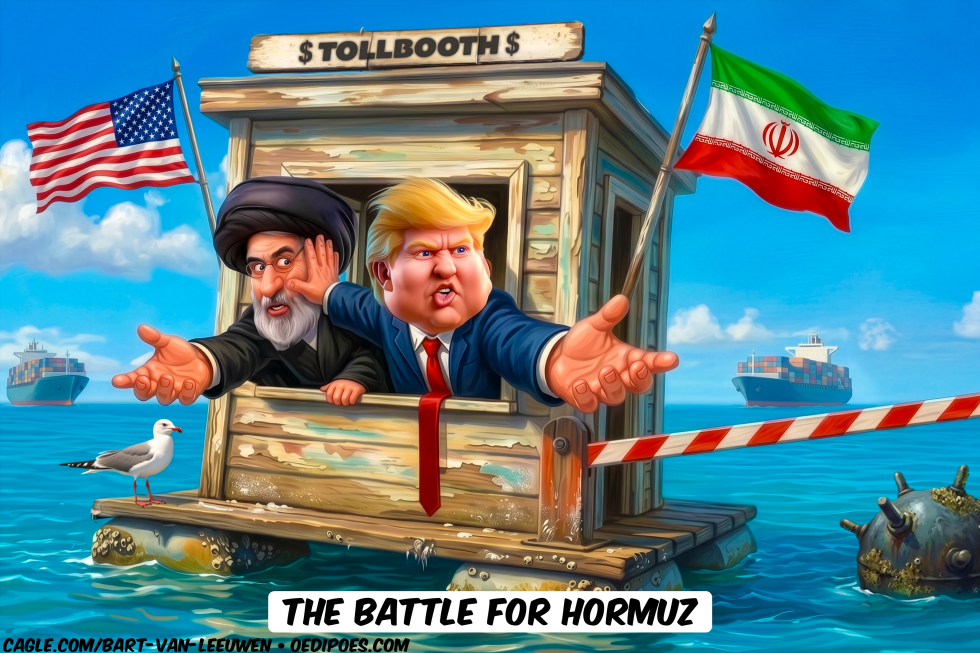
A new political cartoon shows President Trump and Iran's supreme leader sharing a tollbooth positioned across the Strait of Hormuz. Both figures extend their hands toward passing cargo ships while American and Iranian flags fly from the structure. The image comments on ongoing disputes over control of the vital oil shipping route.
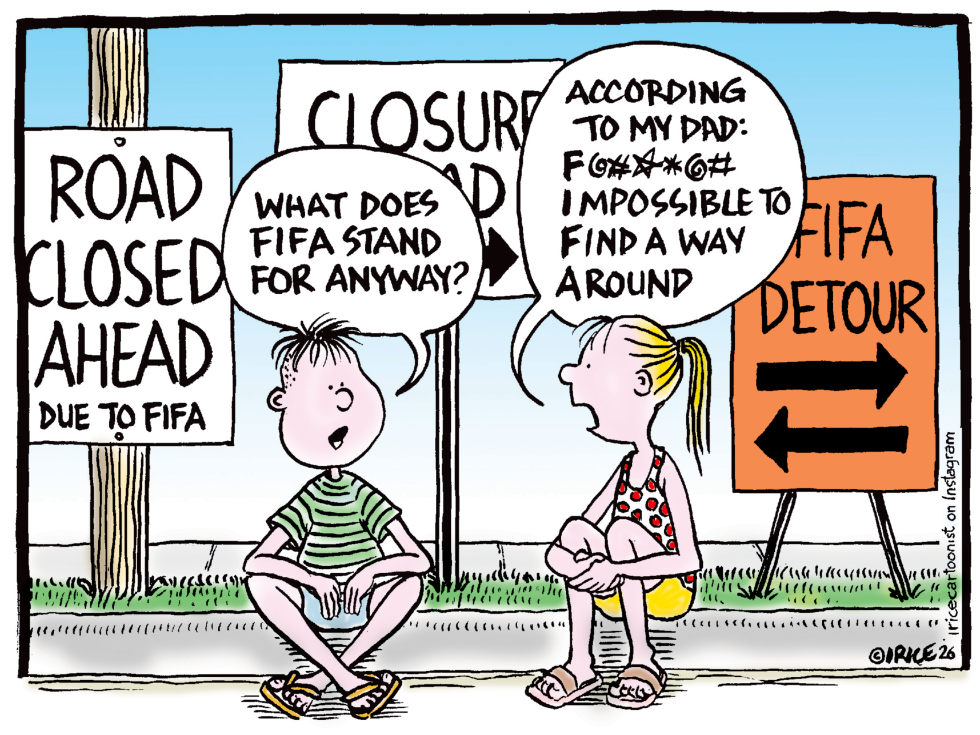
A cartoon shows two children seated beside road closure and detour signs tied to a FIFA event. One child asks what the acronym stands for while the other relays a frustrated, censored remark from a parent about finding alternate routes.
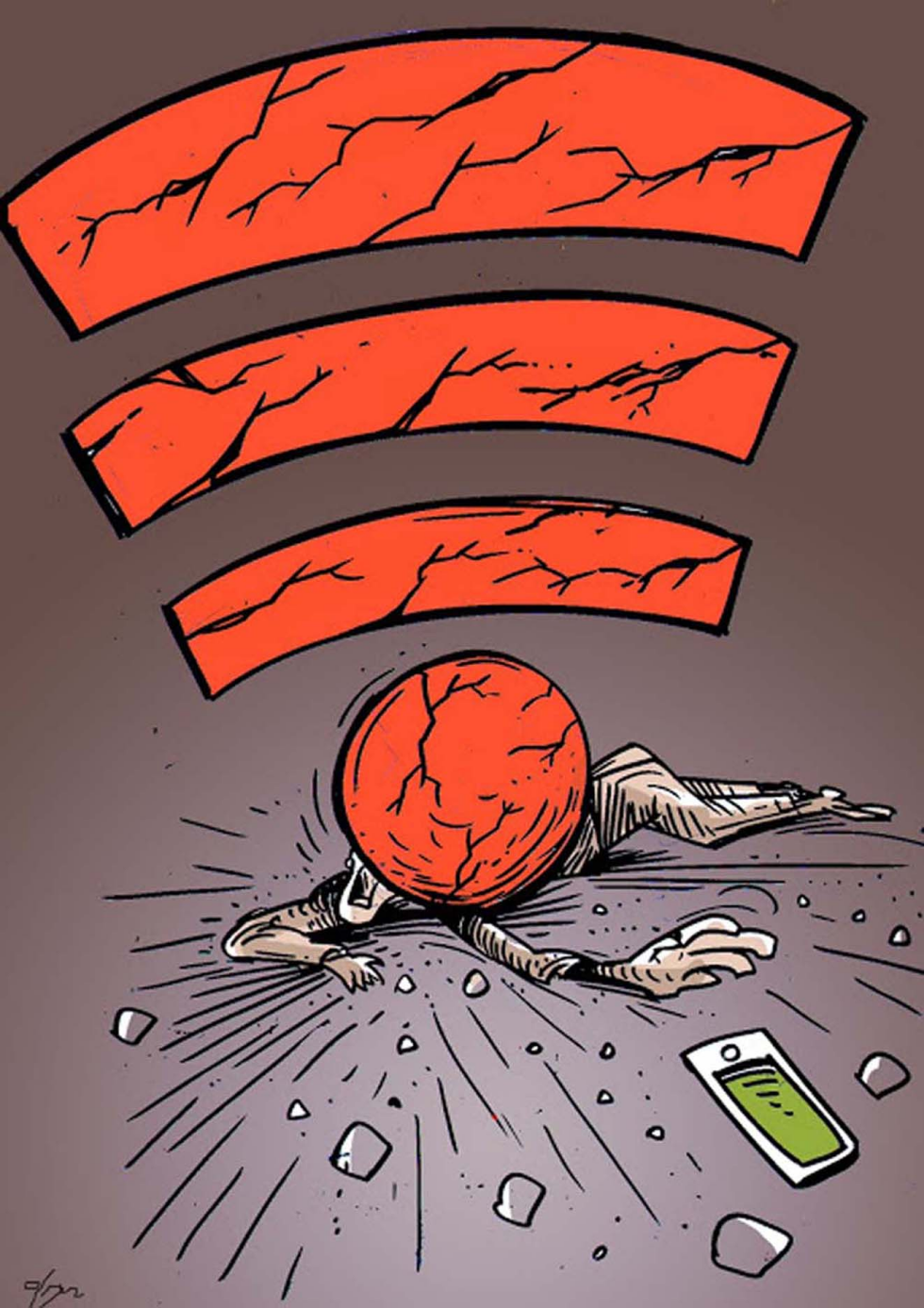
Wireless networks face mounting pressure from rising demand and aging infrastructure, leaving users stranded when signals falter. A dead phone battery compounds the isolation during outages. The piece frames this as a cautionary view of overreliance on fragile digital systems that can collapse without warning.
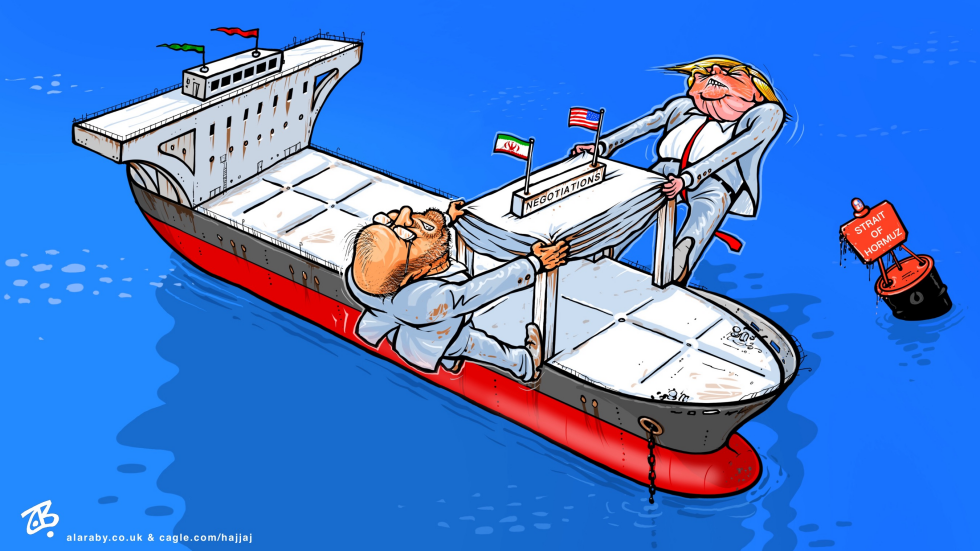
Emad Hajjaj\'s cartoon captures the tense Hormuz Strait negotiations between Trump and an Iranian figure on a massive tanker ship flying US and Iran flags. The scene shows them balancing a \'NEGOTIATIONS\' table on the tilting vessel, with an anchor chain and a leaking \'Strait of Hormuz\' buoy spilling oil. This Gulf war satire highlights the precarious talks amid potential sea block, where the ship appears damaged and unstable. Tags like ship, anchor, Gulf, war, tanker, talks underscore the maritime conflict theme. The dry humor lies in the literal sinking of diplomatic efforts.
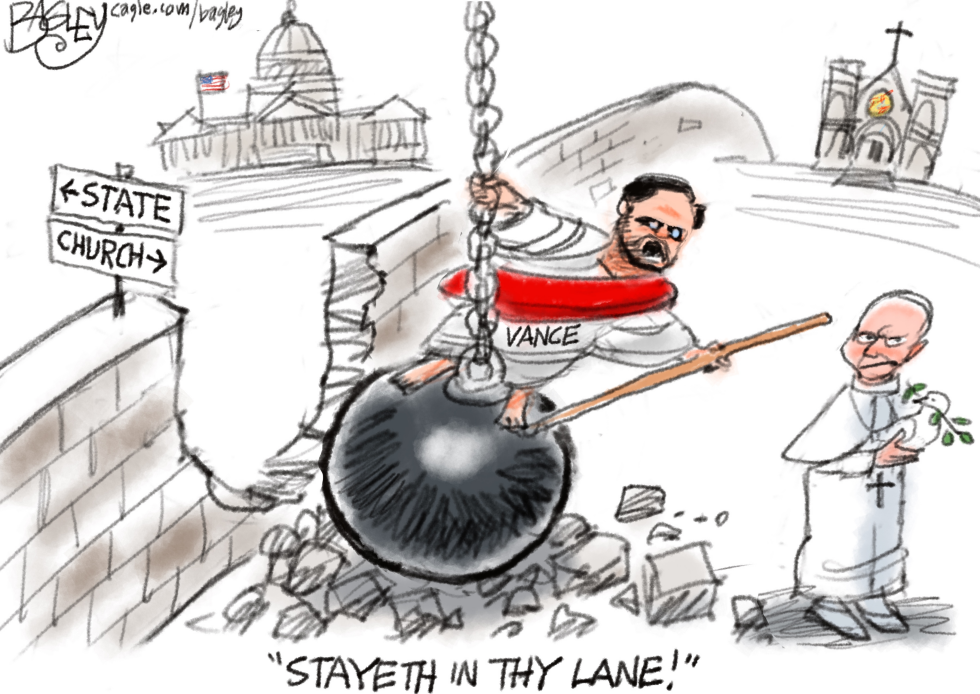
Pat Bagley's cartoon shows JD Vance dressed as Jesus, labeled 'VANCE,' swinging a massive wrecking ball to shatter a brick wall marked with signs pointing to 'STATE' and 'CHURCH.' He shouts 'STAYETH IN THY LANE!' at a figure resembling the Pope, who holds an olive branch and dove, symbols of peace. In the background, the U.S. Capitol flies an American flag, while a church with a cross represents the Vatican. Tags like war, peace, JD Vance, religion, Trump, and scripture underscore the satire on blurring lines between church and state, with Vance enforcing boundaries ironically through destruction. The image critiques political figures invoking religion amid Capitol politics.