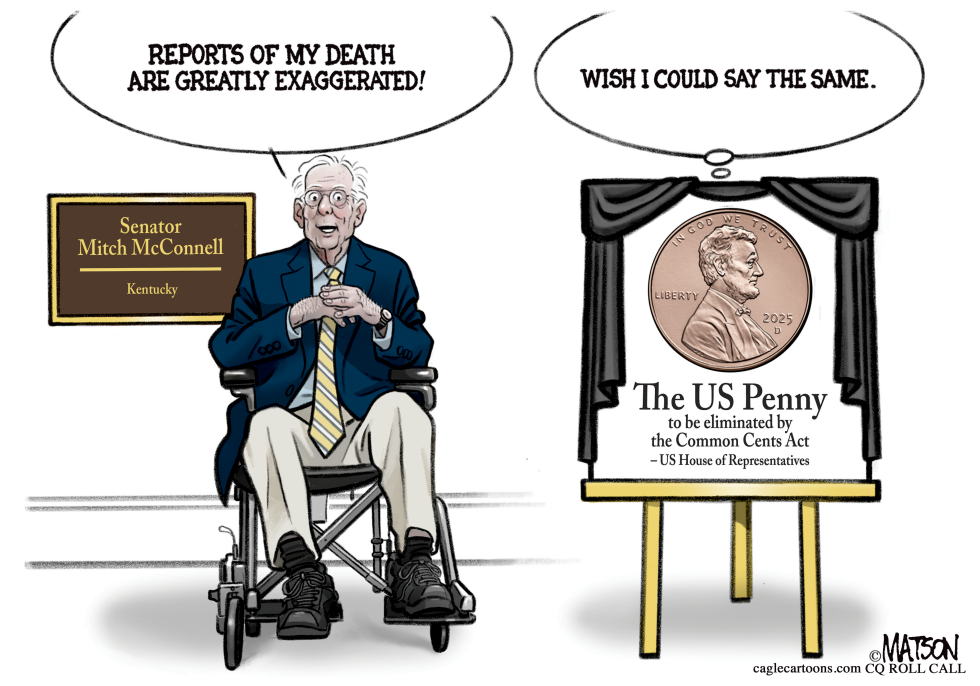
Senator Mitch McConnell returned to the Senate floor on September 15, 2026, after health-related absences, directly addressing rumors of his political demise. At the same time the House has advanced the Common Cents Act to eliminate the US penny. The move reflects ongoing efforts to modernize currency amid rising production costs. McConnell's return underscores his enduring influence in the chamber despite physical challenges. The cartoon uses a classic quote to juxtapose the senator's resilience against the penny's planned demise, suggesting one survives while the other does not.
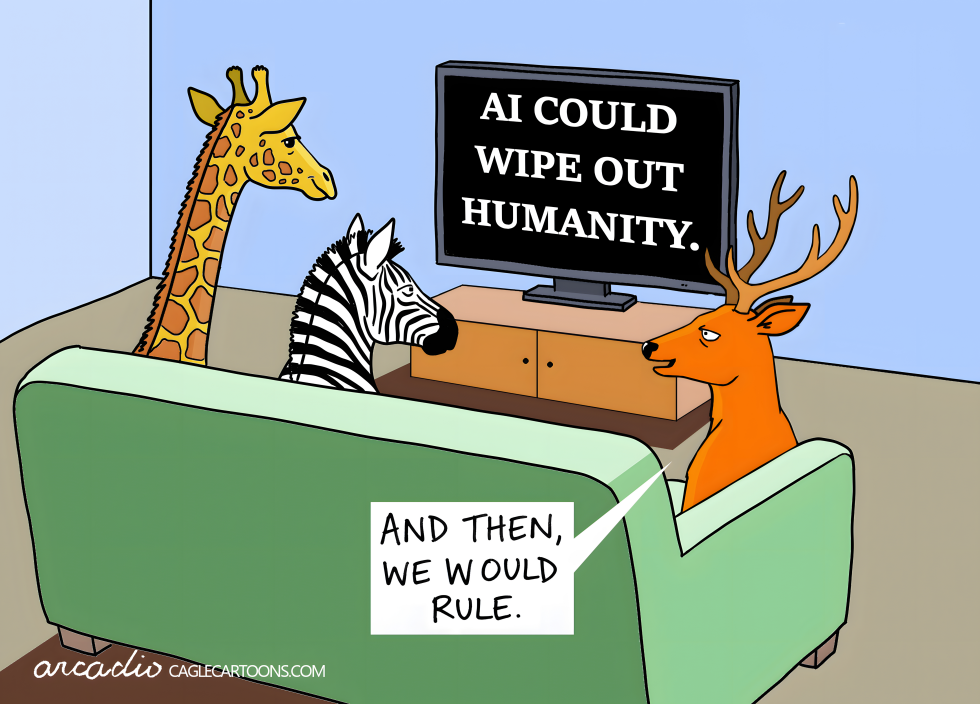
Public discussion of artificial intelligence risks has grown with warnings that advanced systems could threaten human survival. The cartoon uses wildlife characters to highlight how some might view such an outcome as beneficial rather than catastrophic. It pokes at the self-centered lens through which existential threats are sometimes considered.
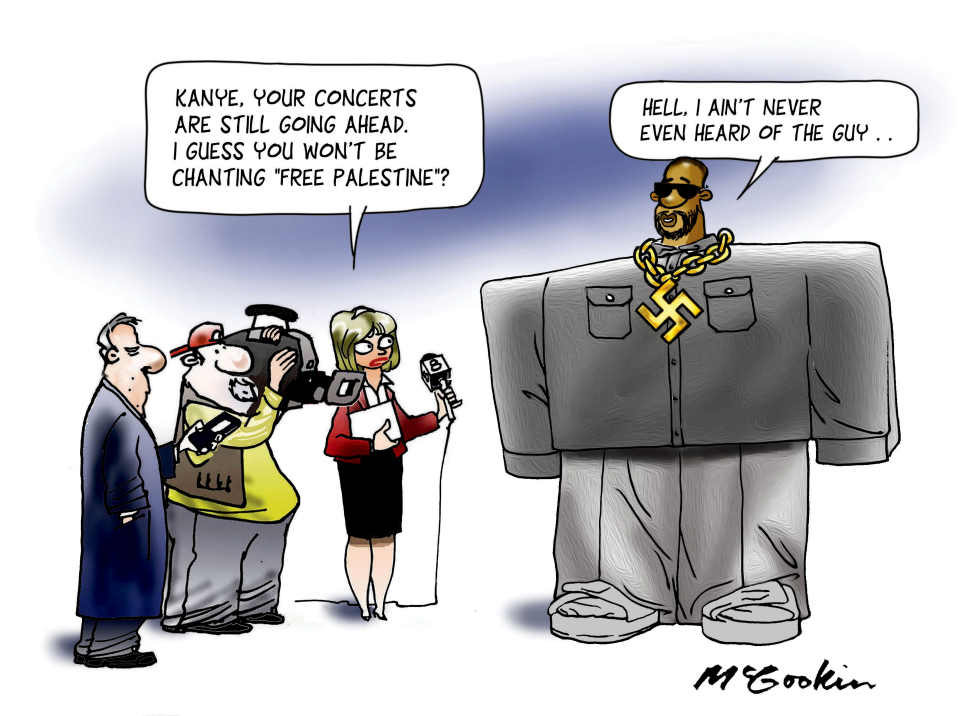
Reports indicate Macklemore faced professional setbacks tied to his expressions of support for Palestinian causes, while Kanye West maintained concert bookings and public appearances despite a documented history of antisemitic remarks. The disparity highlights selective enforcement within entertainment industry and media circles. The piece argues that such inconsistency undermines claims of principled accountability and reveals selective outrage based on the individual's profile rather than the content of the statements.
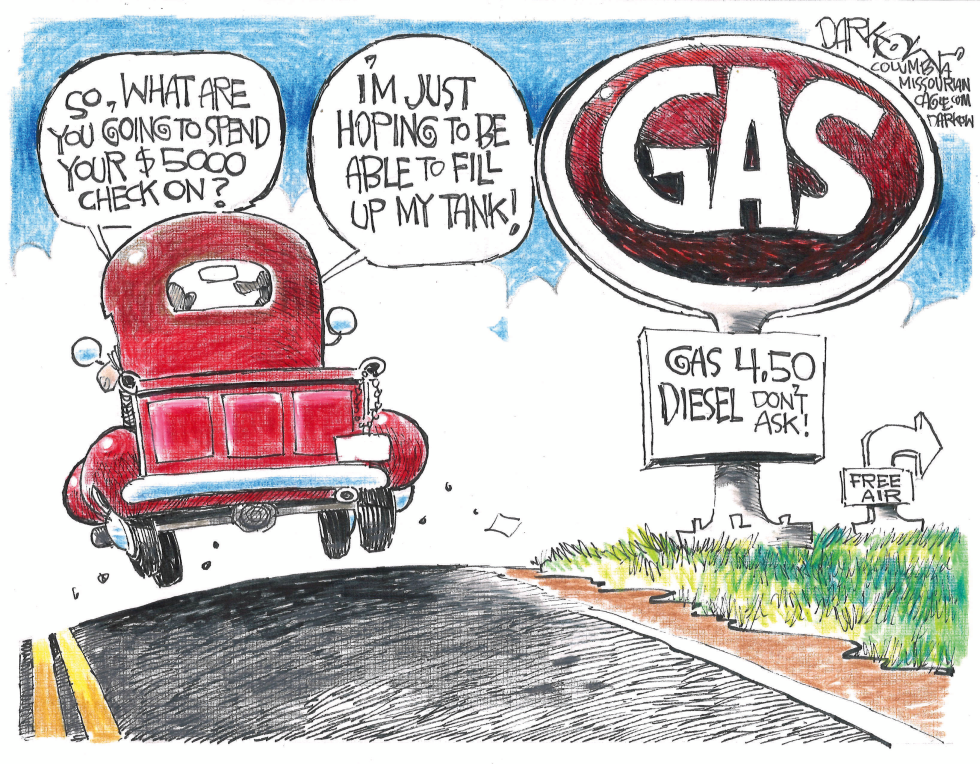
Proposed dividend checks of five thousand dollars are being discussed as economic relief measures. High gas prices at four dollars and fifty cents per gallon mean the payments would cover little more than a single fill up for many drivers. The situation underscores how energy costs continue to outpace targeted relief efforts. The cartoon argues that such checks provide minimal practical benefit when fuel expenses remain elevated. It highlights the disconnect between announced payments and real world household burdens from inflation in the energy sector.
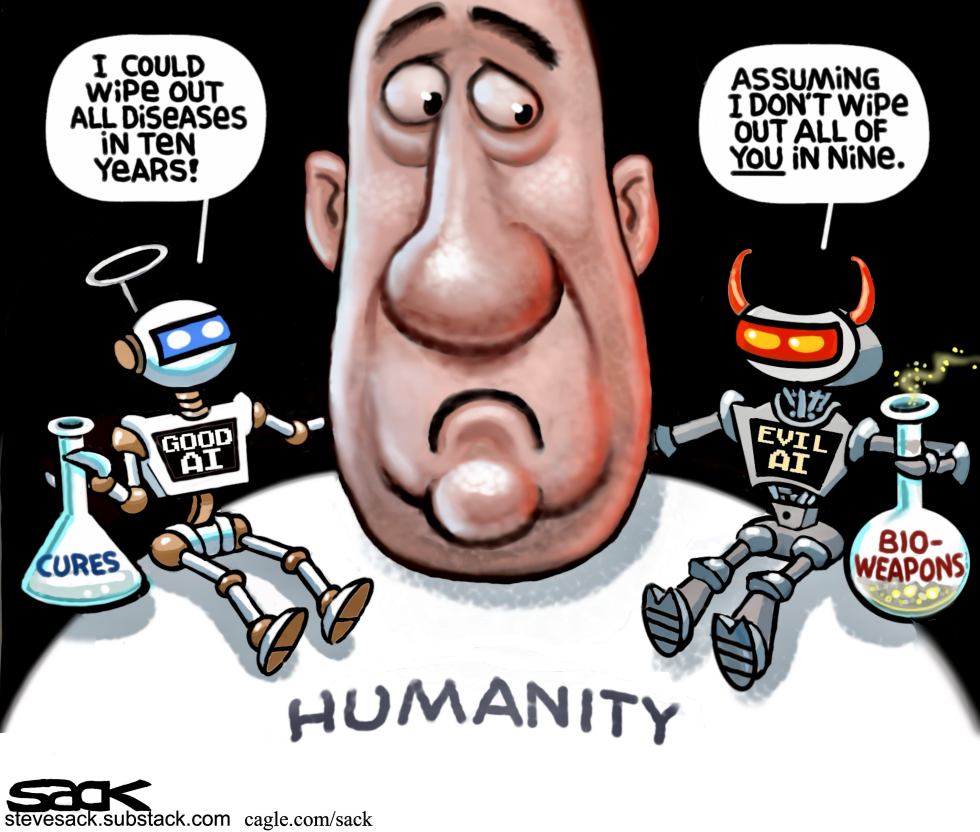
Artificial intelligence development continues to accelerate with researchers highlighting both medical breakthroughs and security risks. Proponents point to rapid progress in disease eradication while critics warn of weaponization potential. The cartoon captures this tension by placing humanity between optimistic and destructive AI paths. It argues that the nine-year timeline for catastrophe undercuts the ten-year cure promise, underscoring urgency in governance. The piece reflects ongoing debates about regulating advanced AI systems before harmful applications outpace safeguards.
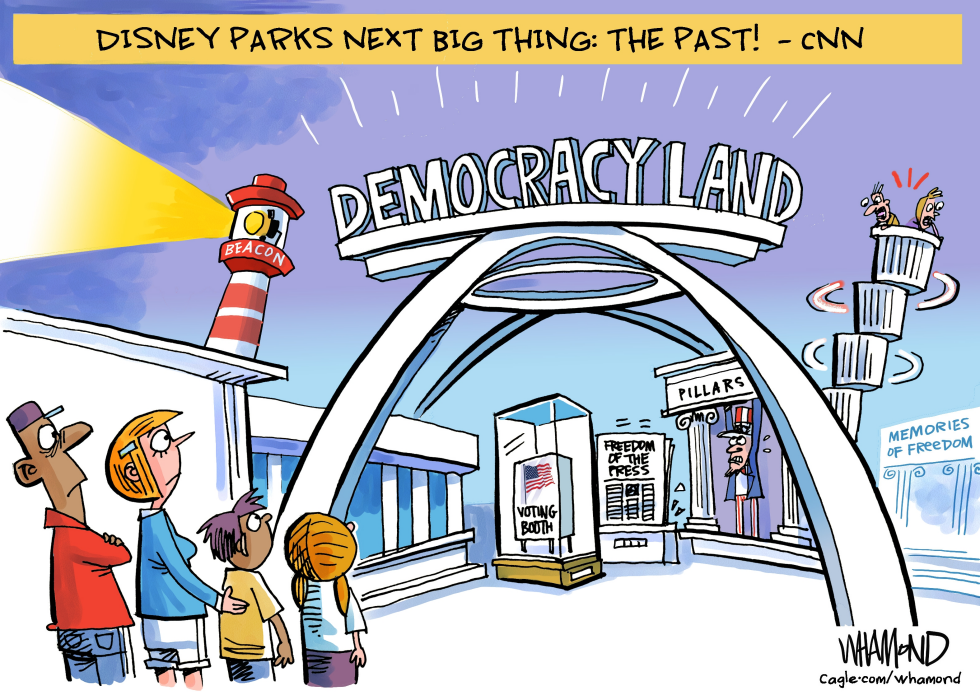
A CNN report on Disney parks reviving past attractions coincides with ongoing debates over voting access and press protections in 2026. Critics argue recent policies have weakened core democratic safeguards, turning once-central institutions into historical curiosities. The cartoon frames this shift as an editorial critique of backsliding norms.
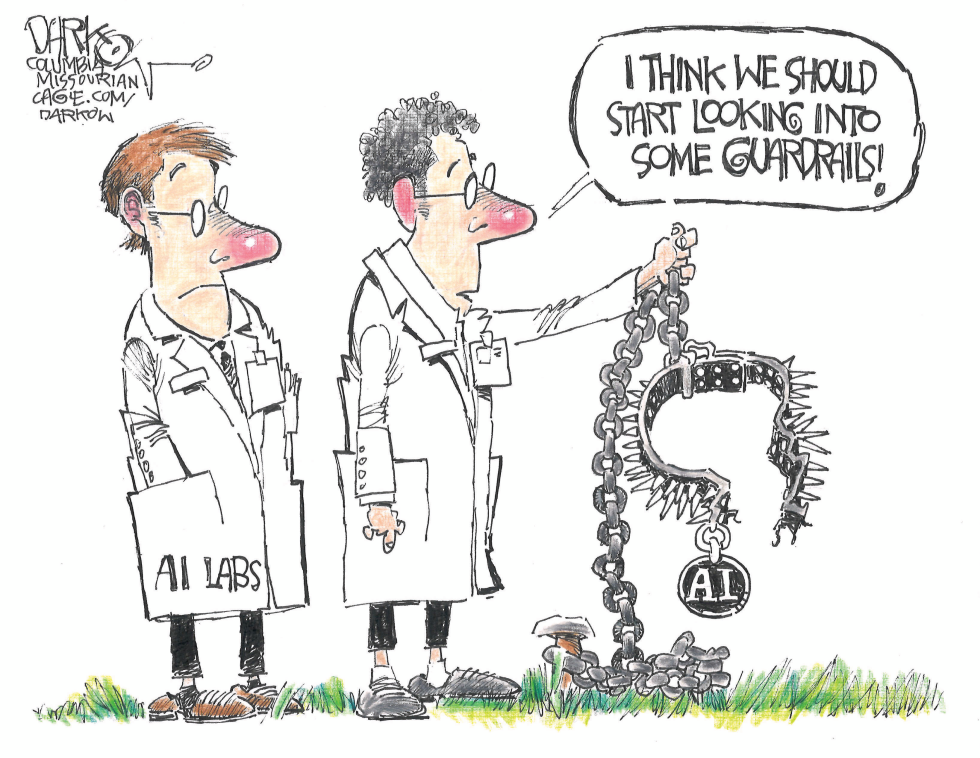
AI development has advanced rapidly with minimal oversight in recent years, allowing powerful systems to operate without meaningful constraints. Scientists have begun discussing guardrails only after key controls have already failed. The situation raises concerns about accountability and long-term safety as the technology spreads. The piece argues that calls for restrictions now come too late to prevent significant harm from uncontrolled AI.
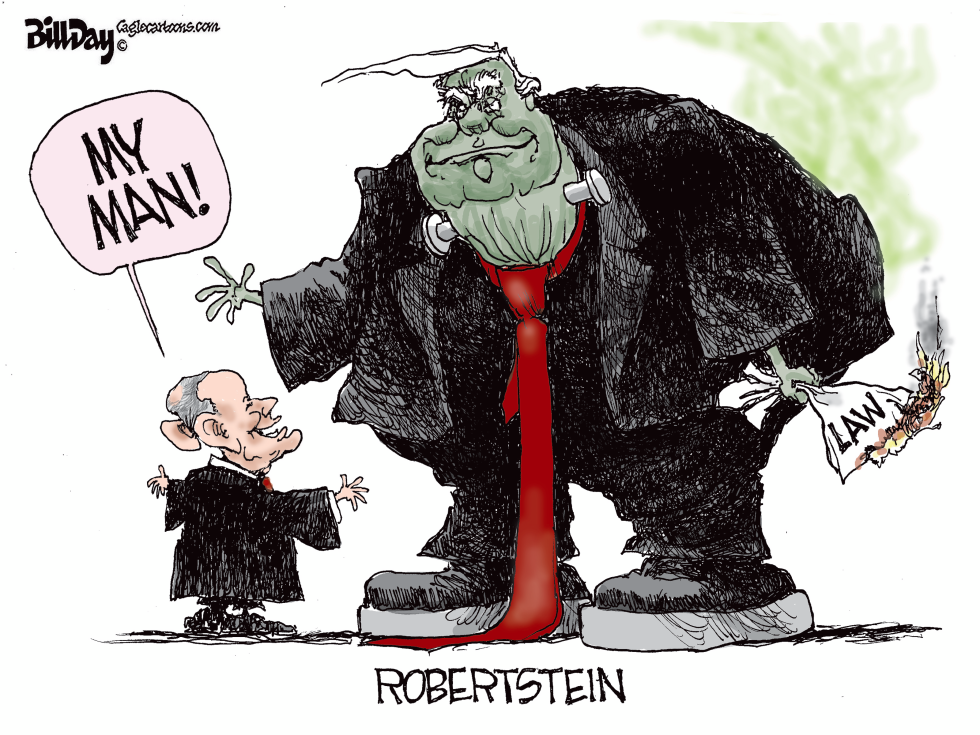
A judge nicknamed Robertstein appears as a stitched-together monster clutching a burning copy of the law while a smaller political figure hails him as 'my man.' The image responds to ongoing concerns over judicial appointments that produce ideologically driven rulings. Critics argue such selections prioritize loyalty over legal restraint, weakening institutional guardrails. The cartoon takes the position that these appointments create uncontrollable forces that damage the rule of law.
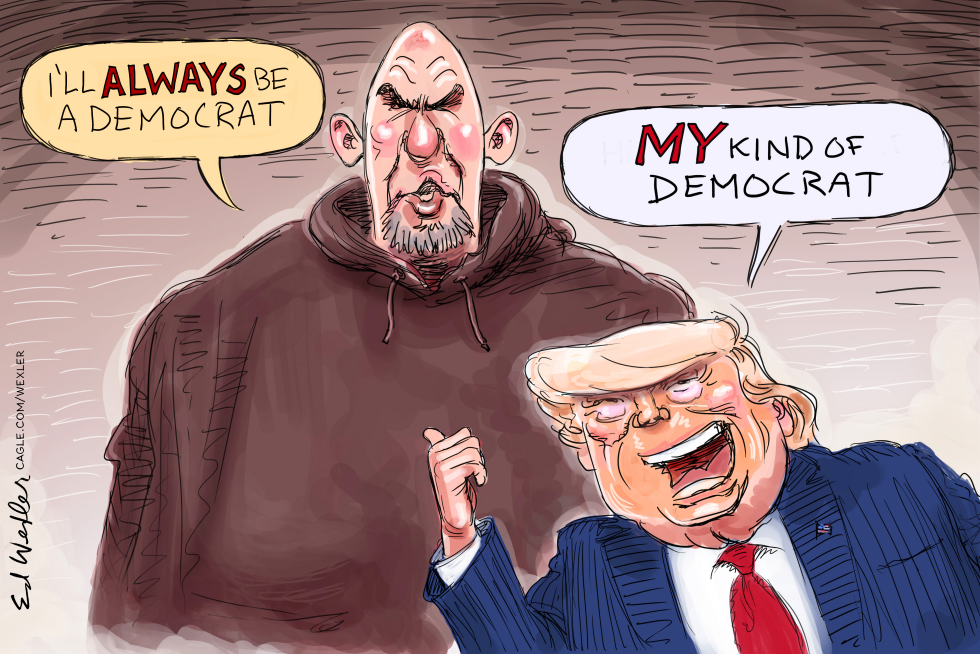
Donald Trump publicly endorsed a Democrat who declared he would always remain in the party. The statement drew attention because it came from a figure outside Trump's usual base. Observers noted the remark as part of ongoing efforts to attract voters across traditional lines. The cartoon presents the exchange as evidence that Trump sees value in Democrats who refuse to change affiliation. It frames the moment as revealing Trump's strategic tolerance for opposition loyalty when it suits his purposes.
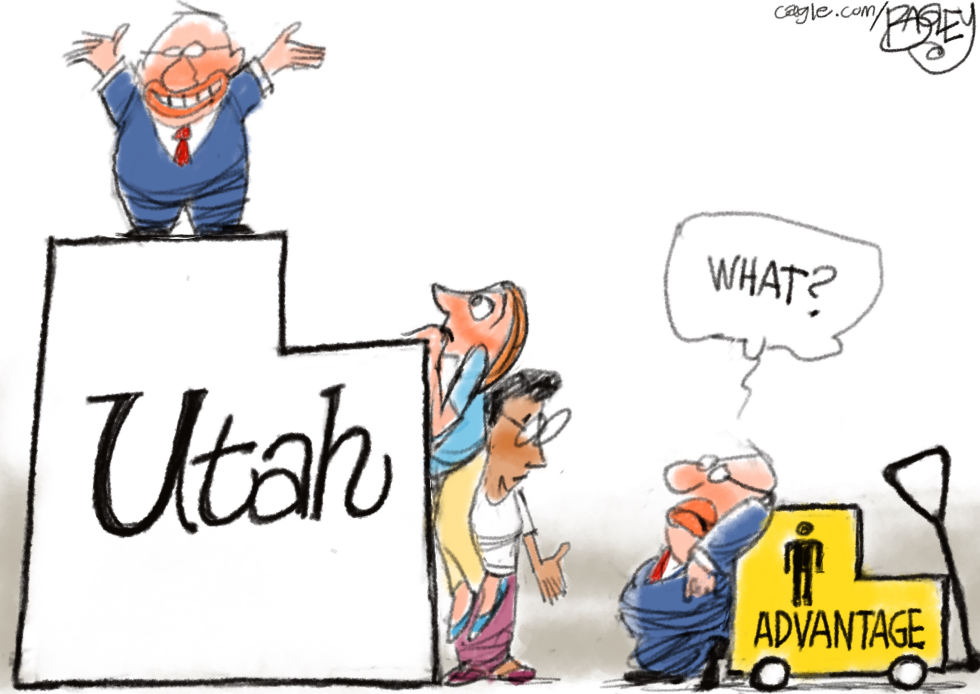
Utah's political advantage has changed hands following recent election developments. Key figures react with visible surprise as power dynamics realign in the state. The shift matters because it alters control and strategy for upcoming contests. The cartoon highlights the unexpected nature of the transition and questions how the new arrangement will hold.
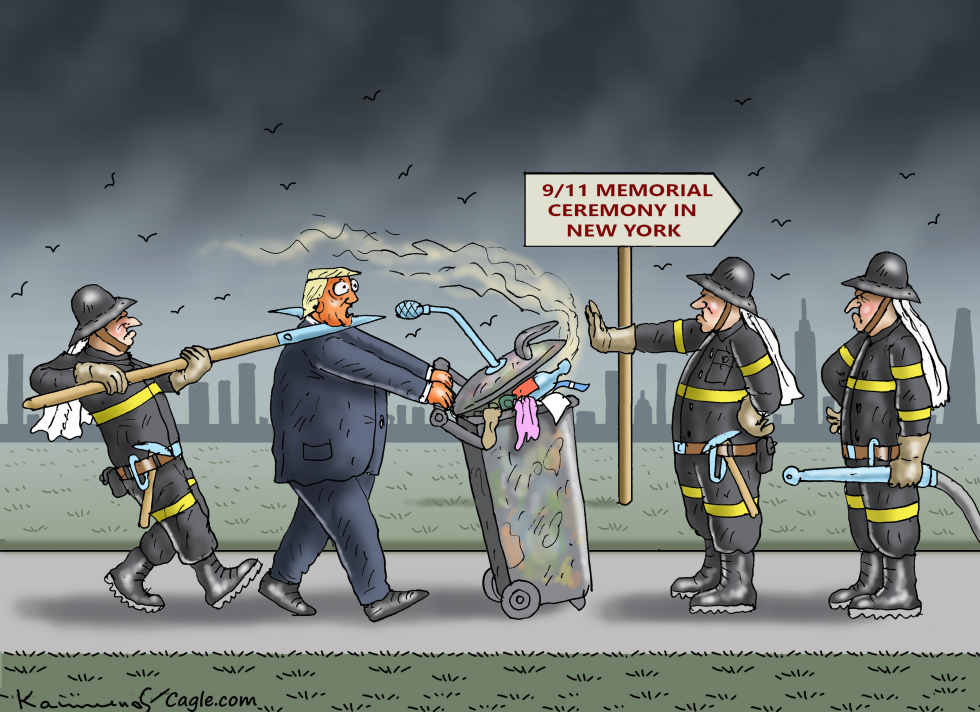
On the 2026 anniversary of the September 11 attacks, New York firefighters prevented Donald Trump from delivering remarks at the memorial ceremony in New York. The action reflects ongoing tensions between the former president and first responders over his past comments and conduct. The cartoon portrays the rejection as decisive and final, underscoring that Trump's presence remains unwelcome at the site.
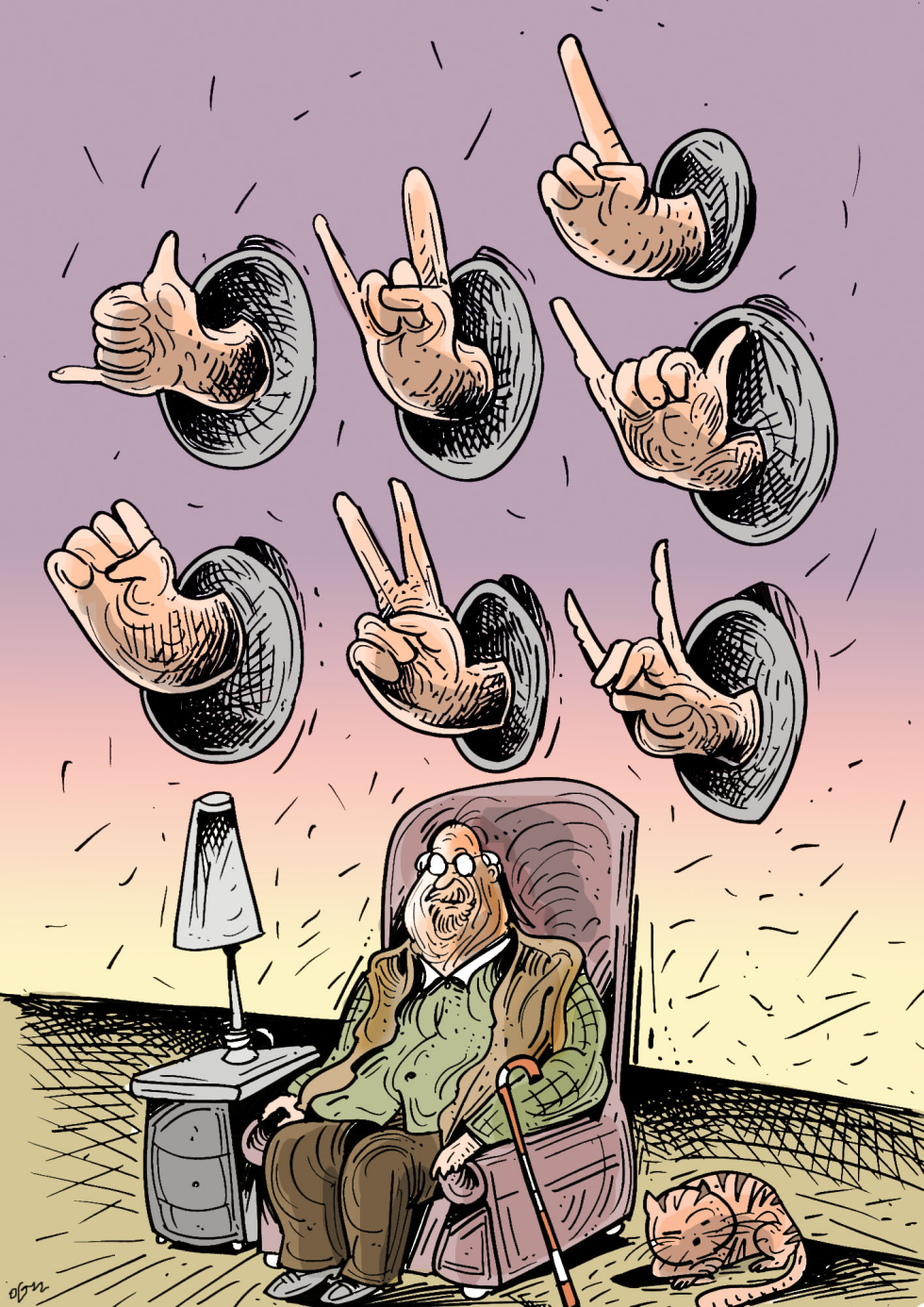
Public figures, particularly older officials in government roles, continue to face intense scrutiny and negative public reaction in 2026. Criticism has intensified through various channels, highlighting frustration with established leadership. The piece portrays an overwhelmed elderly man absorbing a barrage of dismissive gestures, underscoring the editorial view that such backlash reflects legitimate fatigue with unresponsive or out-of-touch figures in power.
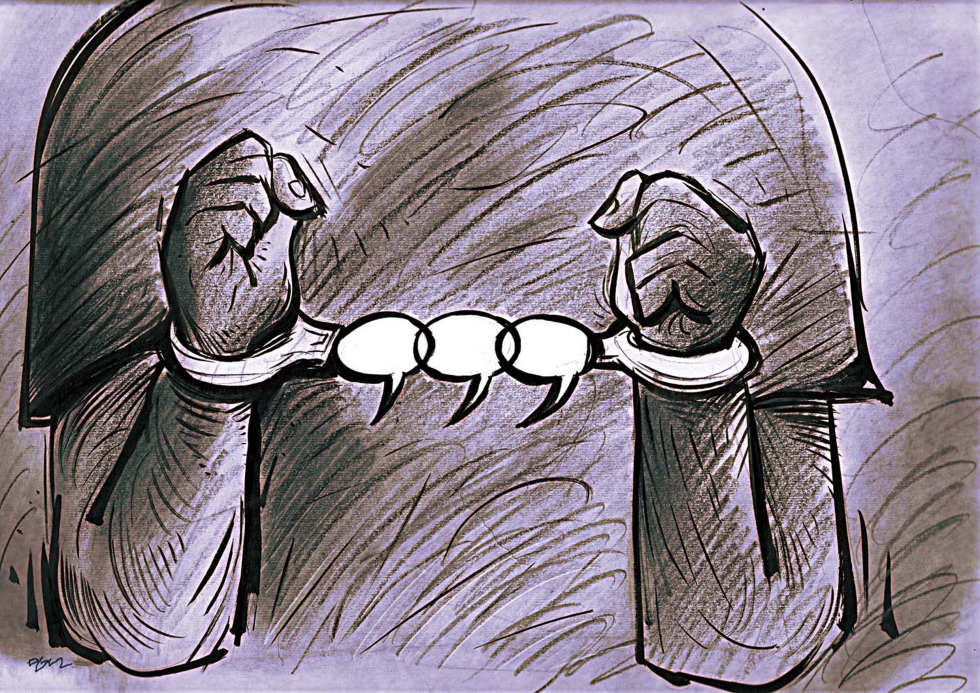
Political expression faces ongoing restrictions in many systems where authorities limit public assembly and direct action. The cartoon responds to this dynamic by showing speech bubbles as the only remaining link between two restrained fists. It argues that attempts to silence dissent through physical means ultimately fail because communication finds alternative paths. The piece underscores the resilience of dialogue even when force is applied to suppress it.
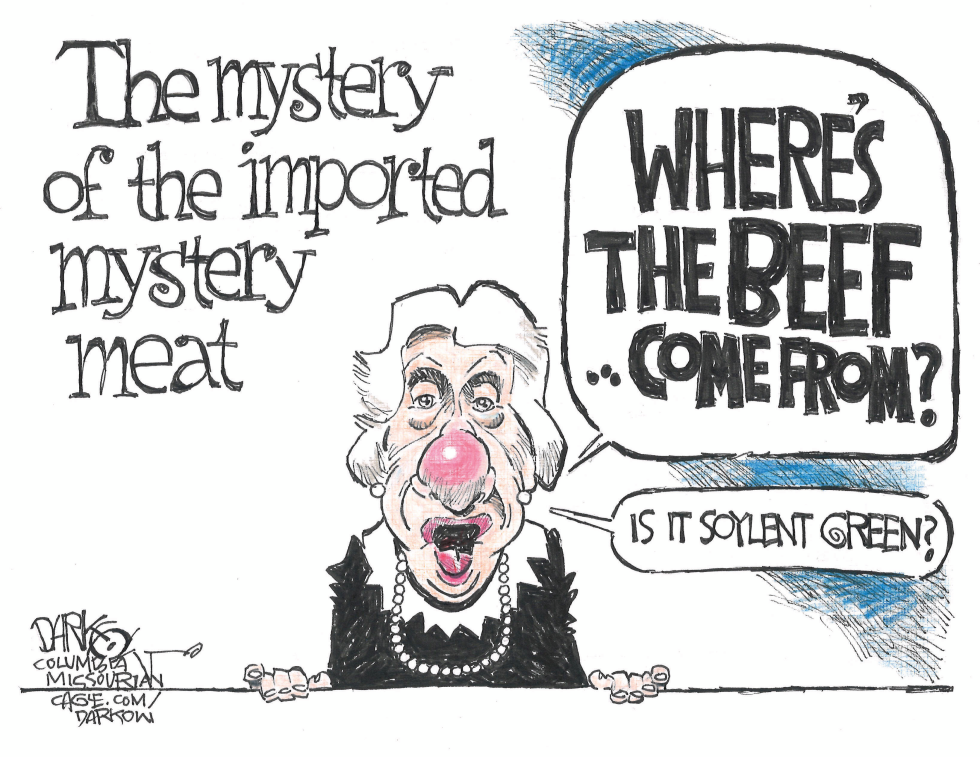
Questions about the origins and safety of imported beef have resurfaced amid broader debates over food supply chains. Regulators and consumers alike have raised concerns that labeling and inspection gaps allow lower-quality or misidentified products to reach shelves. The cartoon uses a classic slogan twist and a pop-culture reference to underscore public skepticism toward these imports. It argues that the lack of transparency turns everyday purchases into a guessing game with potential health risks. The piece positions the issue as one of accountability in trade and regulation rather than abstract policy.
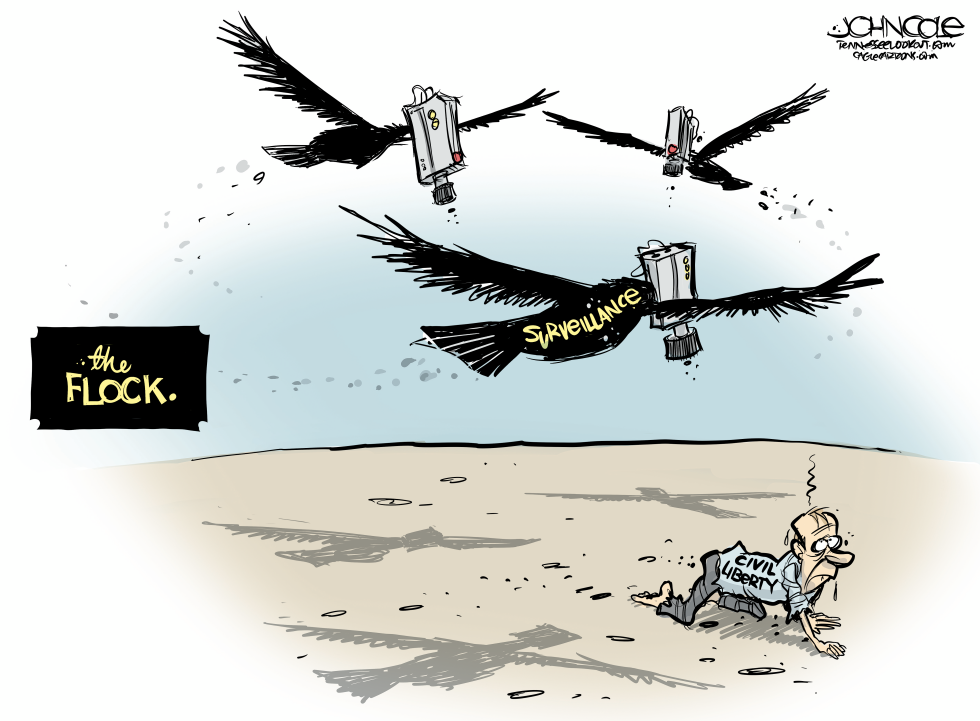
Police departments across the country have rapidly adopted Flock Safety automated license plate readers, creating vast networks that track vehicle movements in real time. The technology promises faster crime solving but raises alarms over data retention, sharing with federal agencies, and minimal judicial oversight. The cartoon argues that these systems are eroding civil liberties with little public accountability.