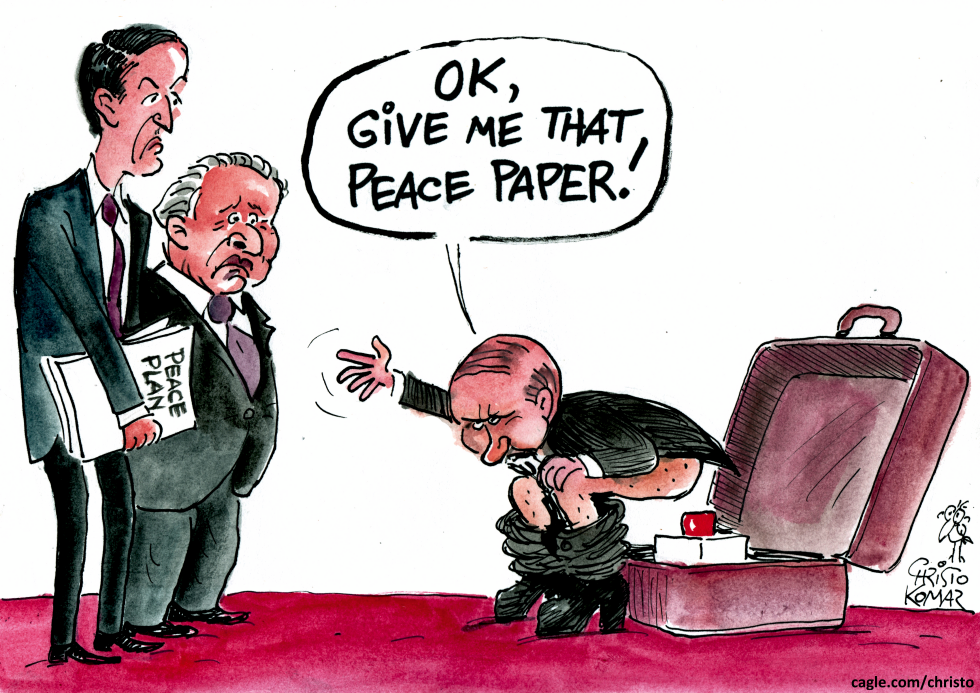
Vladimir Putin has signaled interest in renewed talks to end the war in Ukraine, a conflict that has now stretched for years with heavy costs on all sides. Recent diplomatic overtures have gained little traction as battlefield positions remain entrenched. The cartoon portrays Putin as constrained by his own choices yet eager to claim any available peace document. It underscores the gap between Russian rhetoric and the reality of prolonged fighting. The piece suggests that genuine progress remains unlikely without major concessions from Moscow.
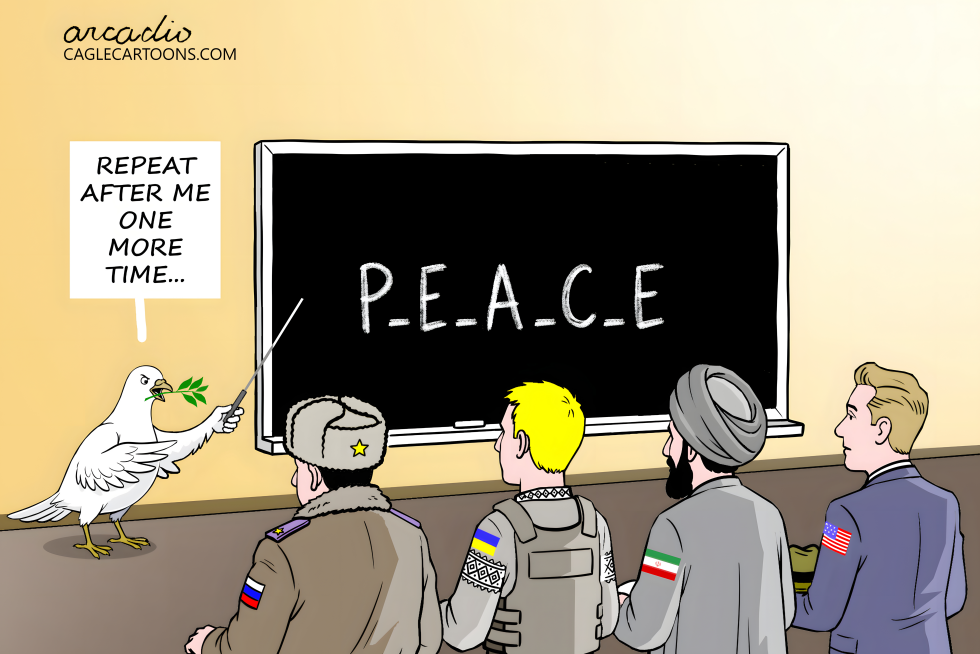
Ongoing tensions in the Russia-Ukraine war continue to draw in Iran and the United States with little progress toward resolution. The four nations remain locked in a cycle of confrontation and limited talks. The cartoon argues that the parties still cannot grasp even the simplest concept of peace despite repeated instruction.
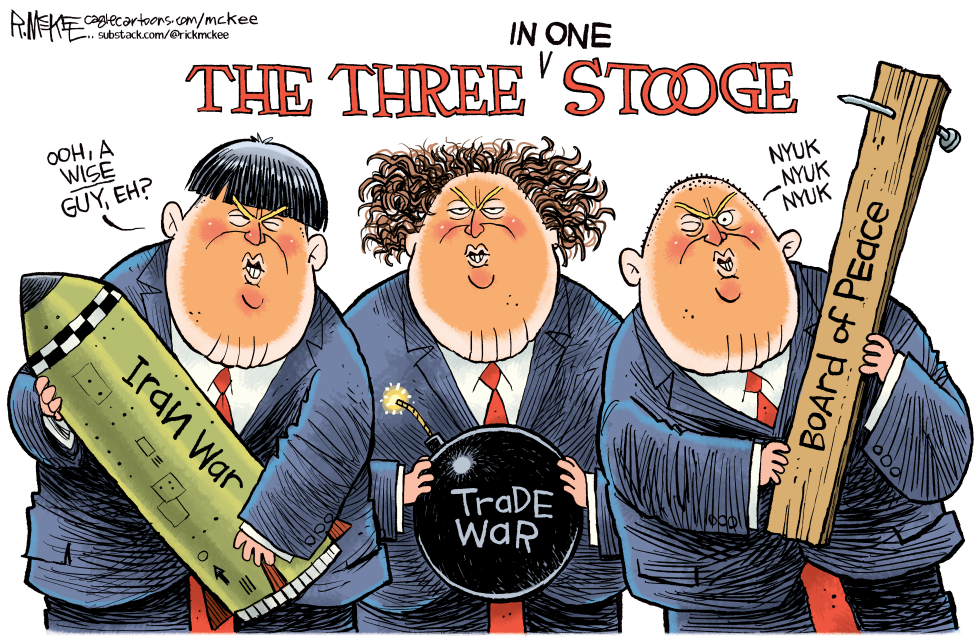
The cartoon depicts three political figures styled as the Three Stooges holding symbols of an Iran War missile, a Trade War bomb and a Board of Peace plank. It responds to ongoing tensions involving Iran policy and trade disputes by using the comedy trio to portray chaotic leadership. The visual argument suggests that efforts at peace coexist with aggressive posturing in both military and economic arenas.
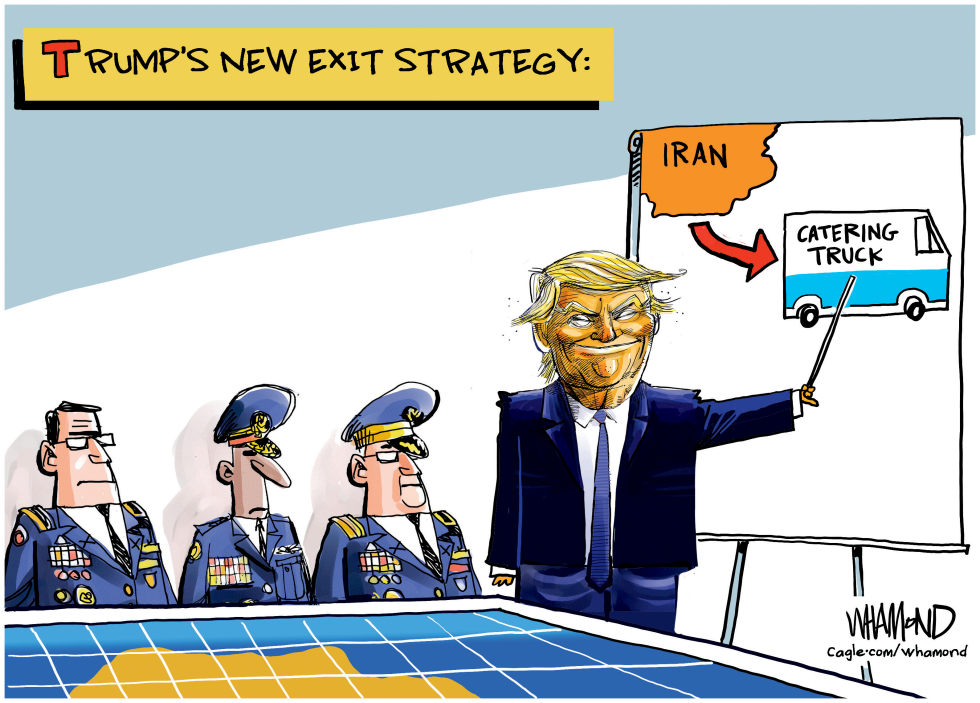
The cartoon depicts Donald Trump addressing three military officers while pointing to a whiteboard labeled Iran with a catering truck illustration. The yellow banner reads Trump's New Exit Strategy. The image uses the catering truck as a visual device for an Iran withdrawal plan. It responds to ongoing discussions about U.S. foreign policy toward Iran in 2026. The composition places Trump in a briefing role with officers seated at a table marked by a grid pattern.
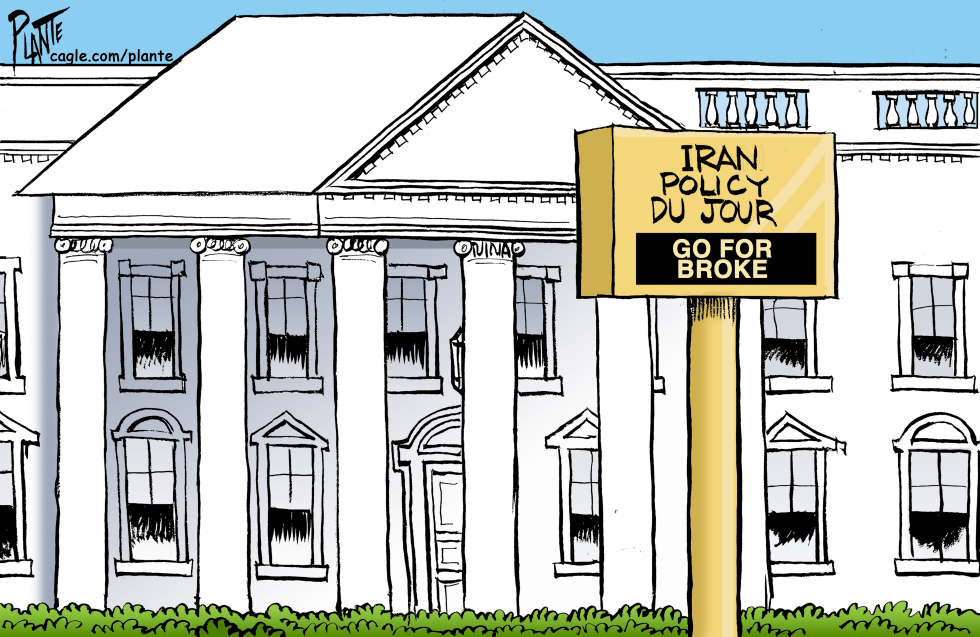
The White House has signaled a more aggressive posture toward Iran through public messaging that emphasizes risk-taking. The move comes amid persistent tensions over nuclear issues and regional influence. The editorial takes the position that such an approach lacks consistency and invites unnecessary escalation.
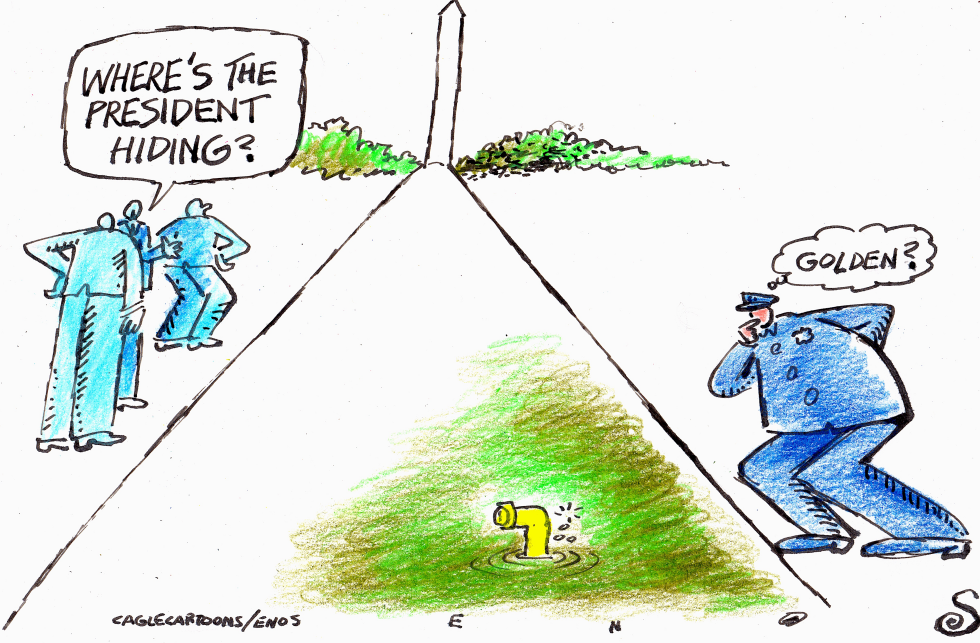
On July 11 2026 officers in blue uniforms search the grounds around a tall monument and a yellow fire hydrant. One officer asks where the president is hiding while another ponders golden in a thought bubble. The scene includes directional markers and grass patches under a clear sky.
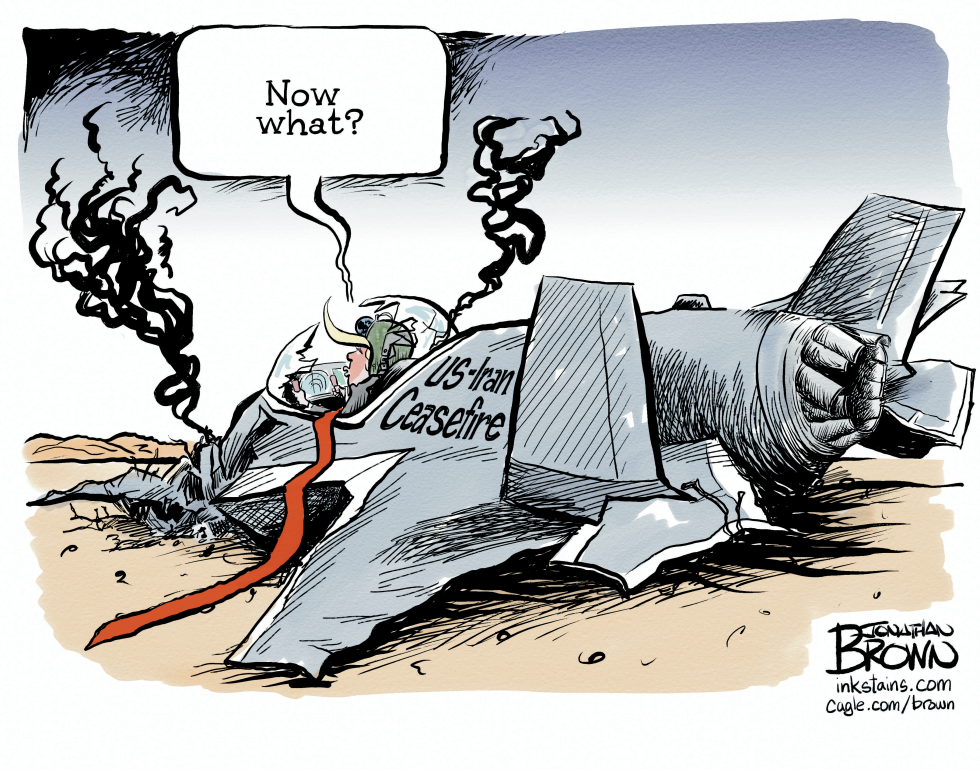
A crashed aircraft labeled US-Iran Ceasefire lies in desert sand with rising smoke. The pilot, visible in the cockpit, asks what comes next after the agreement fails.
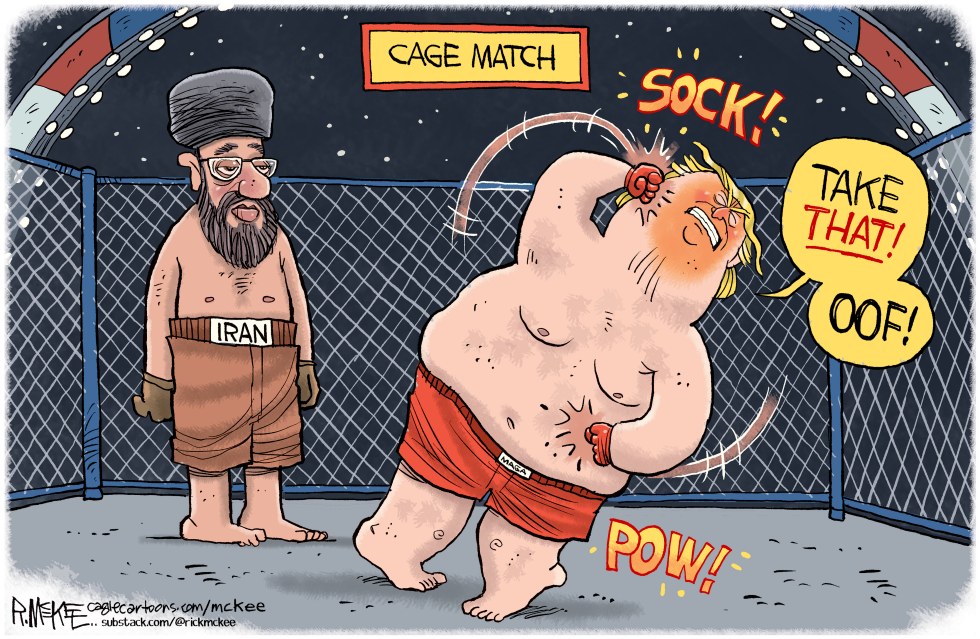
A political cartoon published June 12, 2026, portrays a cage match between a caricature of Donald Trump labeled America and a figure labeled Iran. Trump appears to be on the receiving end of punches with onomatopoeic sound effects. The image uses the fighting ring setting to illustrate the confrontational nature of relations between the United States and Iran during this period.
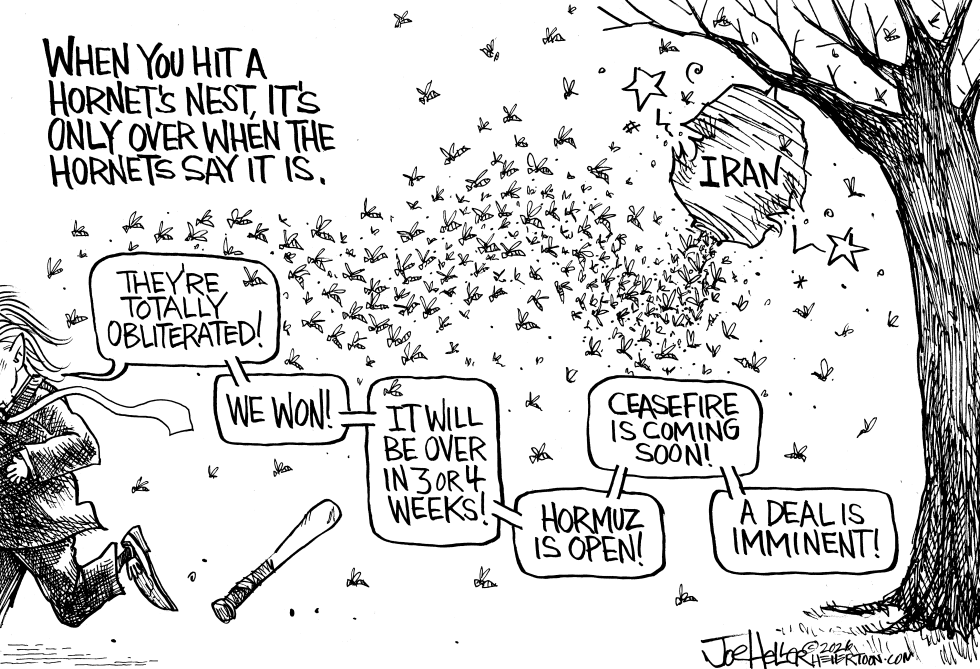
After a strike on an Iran labeled hornet nest, multiple figures issue statements claiming total obliteration, victory, a resolution in weeks, an open Hormuz Strait, an imminent ceasefire, and a deal. The nest hangs from a tree with stars nearby as insects fill the air.
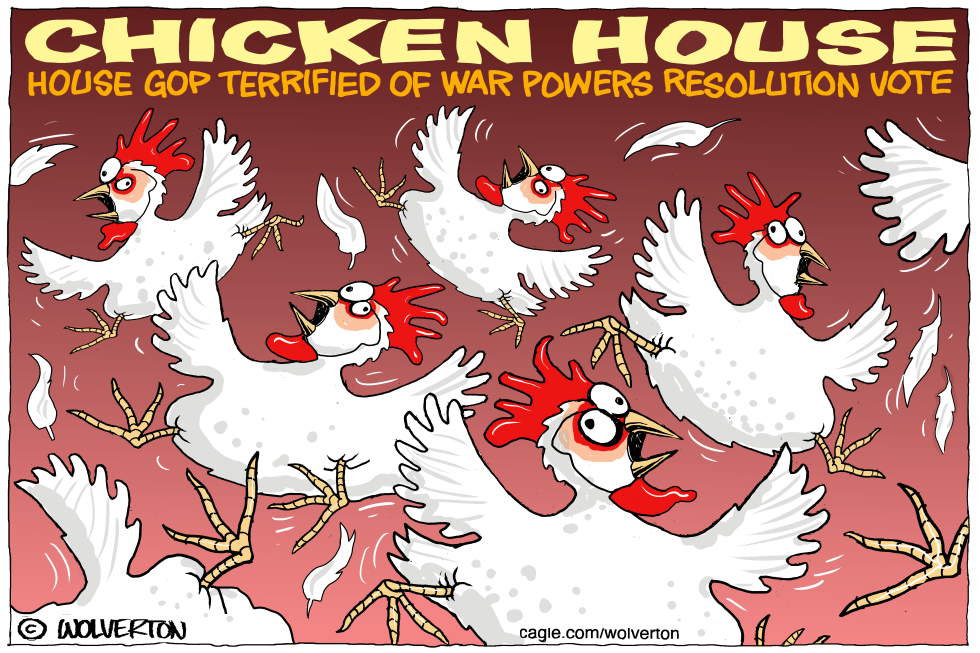
The cartoon depicts multiple white chickens with red combs running in panic inside a brown Chicken House setting. Feathers fly as the birds flap wings and kick up their legs. Large yellow text at the top reads CHICKEN HOUSE above orange text stating HOUSE GOP TERRIFIED OF WAR POWERS RESOLUTION VOTE. The scene uses simple lines and solid colors with no additional figures or objects visible beyond the chickens and text.
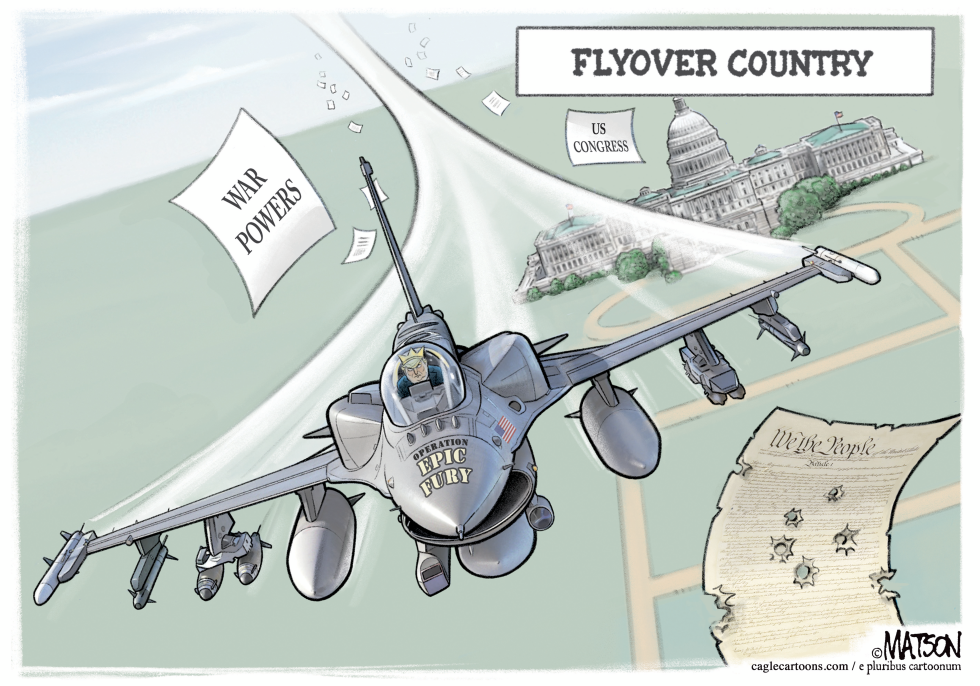
This sharp political cartoon captures the essence of executive overreach, with a fighter jet dubbed 'Epic Fury' zooming past US Congress, discarding war powers documents like confetti over flyover country. The torn US Constitution riddled with bullet holes symbolizes the erosion of constitutional principles amid unchecked military actions. Tags like political cartoon, war powers, US Congress, flyover country, US Constitution, and executive power underscore the satire on how presidents often sidestep legislative approval for wars, leaving the heartland—flyover country—to bear the brunt. It's a humorous yet insightful critique of the power imbalance in Washington, where the Capitol is just a scenic detour on the path to conflict.