Arend van Dam's cartoon shows a gray battleship marked USA, complete with guns and missiles, driven by a figure in a suit at the wheel, as it goes over a waterfall between rocky cliffs under a blue sky. The image captures the essence of strategy failure in the Strait of Hormuz, tying into themes of Iran, ayatollahs, war, battleship mishaps, Middle East conflicts, oil, gas, energy, and economy. Such visuals often poke at misguided military moves, where the ship's plunge represents a dramatic downfall in strategic planning. The dry humor lies in the absurdity of a warship treating a strait like a river rapid, underscoring potential economic fallout from regional tensions. Cartoons like this thrive on clear, exaggerated metaphors that resonate with readers familiar with global news.
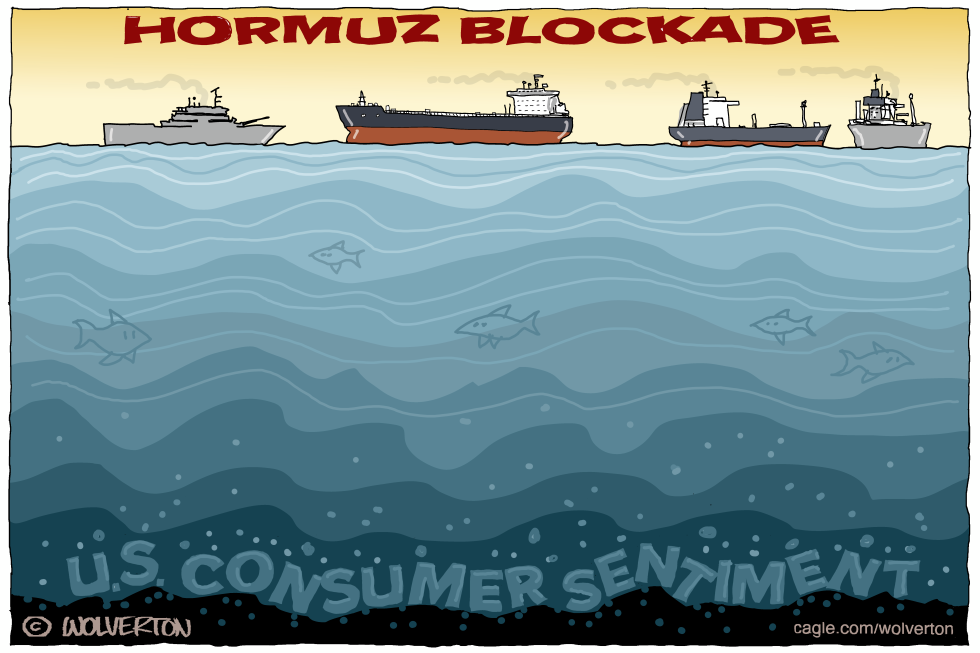
Monte Wolverton's cartoon captures the Hormuz Strait blockade with warships and tankers lined up on the water's surface, a clear nod to geopolitical strife in key oil passages. Below, the phrase U.S. consumer sentiment is etched into the ocean floor, surrounded by fish, driving home the idea of economic morale hitting rock bottom. This piece uses simple lines and color to highlight how international blockades can sink domestic confidence, tying into broader themes of global trade disruptions. The dry humor shines through in the visual pun, making it a standout in political satire circles. Tags like Hormuz Strait blockade political cartoon, US consumer sentiment sinking economy illustration, oil tanker ships naval blockade satire, Strait of Hormuz geopolitical tension comic, economic impact of Middle East conflict drawing, and consumer confidence underwater metaphor cartoon amplify its SEO reach.
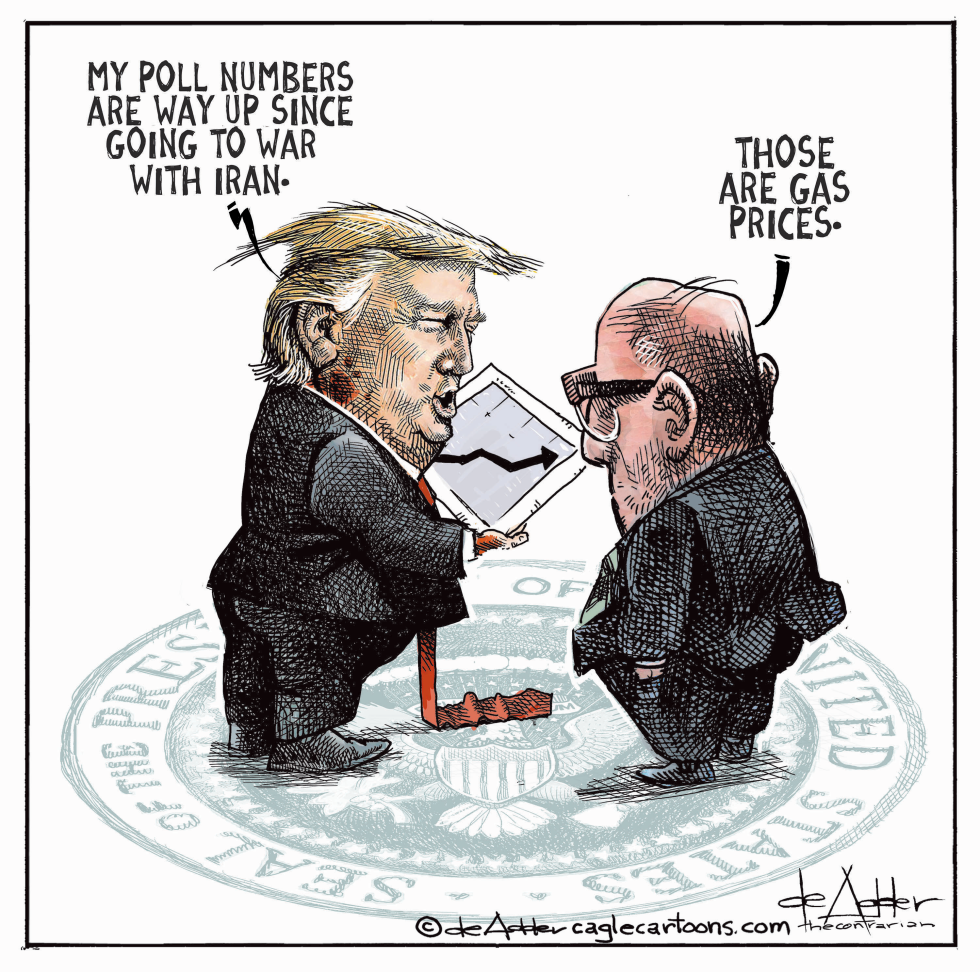
This sharp political cartoon by Michael de Adder captures Donald Trump triumphantly holding a chart of upward trends, claiming his poll numbers have skyrocketed since going to war with Iran. However, a bespectacled Dick Cheney corrects him, revealing those are actually gas prices soaring. The satire highlights the ironic consequences of Middle East conflict on the US economy, blending humor with commentary on presidential approval ratings tied to foreign policy blunders. Incorporating elements of US politics, oil prices, and war economy, the image stands on the presidential seal, emphasizing official folly. It's a witty jab at how leaders might misread economic fallout as personal gains, perfect for editorial discussions on satire and current events.
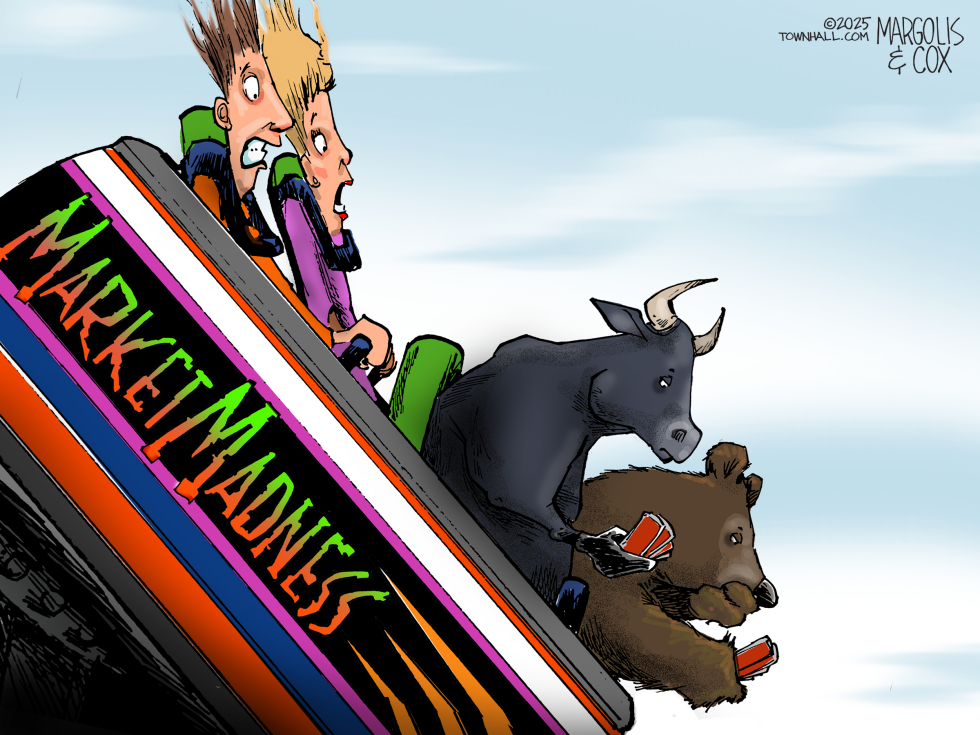
The cartoon shows a rollercoaster car marked 'Market Madness' diving steeply, carrying two human figures with wild hair and open mouths, a black bull with horns looking concerned, and a brown bear clutching red tickets. This setup captures stock market volatility, with the bull and bear as classic symbols of rising and falling markets. Tags such as tariff, economy, Dow Jones, rollercoaster, and turbulence underscore the wild ride of financial ups and downs. The image keeps it simple, focusing on the immediate thrill and fear without deeper layers. Artistic style is bold and cartoonish, emphasizing the chaos in a clear, unambiguous way. No hidden meanings jump out; it's all about that market madness feel.
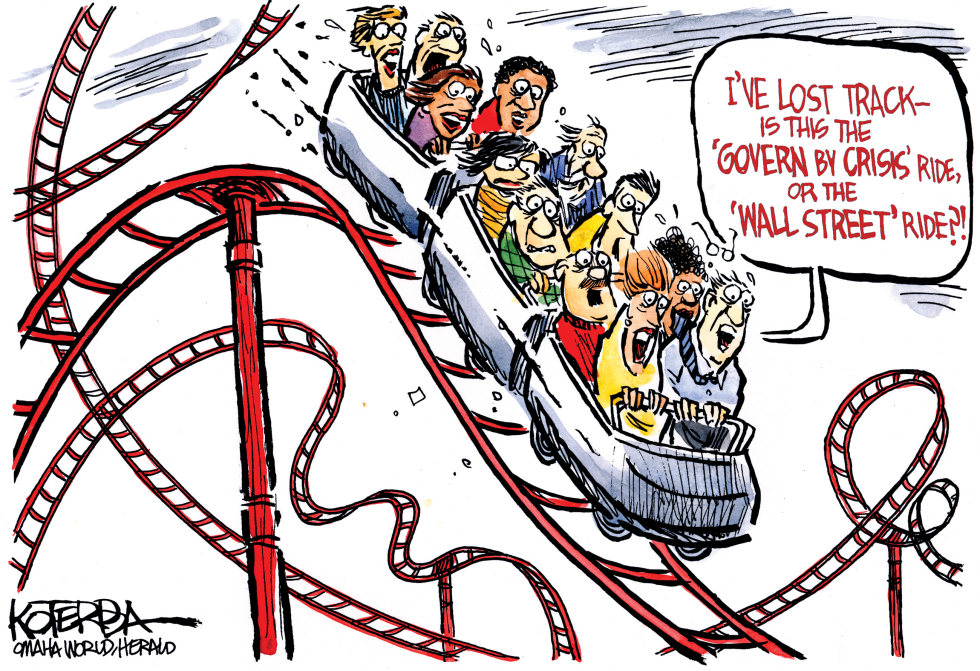
Jeff Koterba captures the chaos of 2018 politics in this roller coaster cartoon, where riders plummet down red tracks, their faces twisted in alarm. The speech bubble from one passenger confuses the 'govern by crisis' ride with the 'Wall Street' ride, tying into tags like government shutdown, Congress, and stock market. Amusement park elements underscore the wild ups and downs of economy and immigration issues. The illustration, dated December 18, 2018, uses bold lines and exaggerated expressions to satirize how political instability mirrors Wall Street volatility. This piece from the Omaha World-Herald blends humor with commentary on governing amid constant crises.