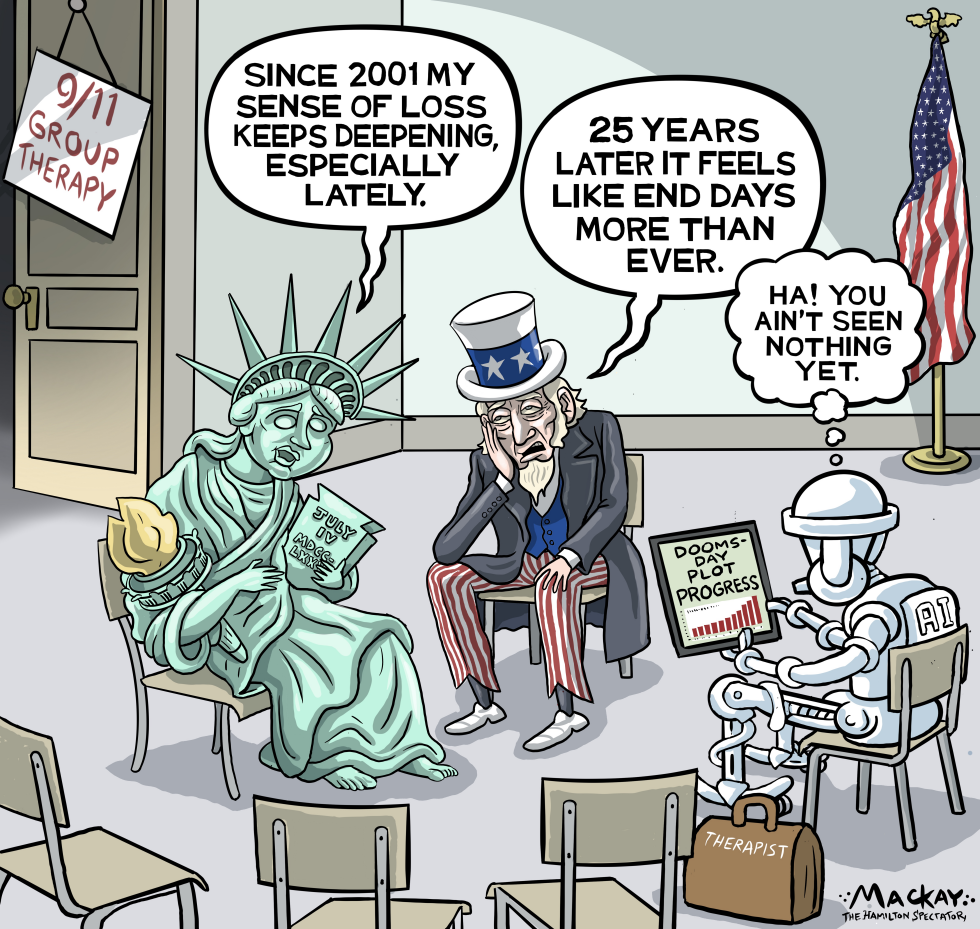
The cartoon depicts the Statue of Liberty, Uncle Sam and an AI robot seated in a 9/11 group therapy session on the 25th anniversary of the attacks. The Statue of Liberty holds a book marked July IV MDCCLXXVI and speaks of deepening loss since 2001. Uncle Sam echoes the sentiment of end days. The AI figure, labeled with a rising doomsday plot progress chart, retorts that the others have seen nothing yet. The scene uses national symbols to reflect persistent national trauma and emerging technological threats two and a half decades after the September 11 attacks.
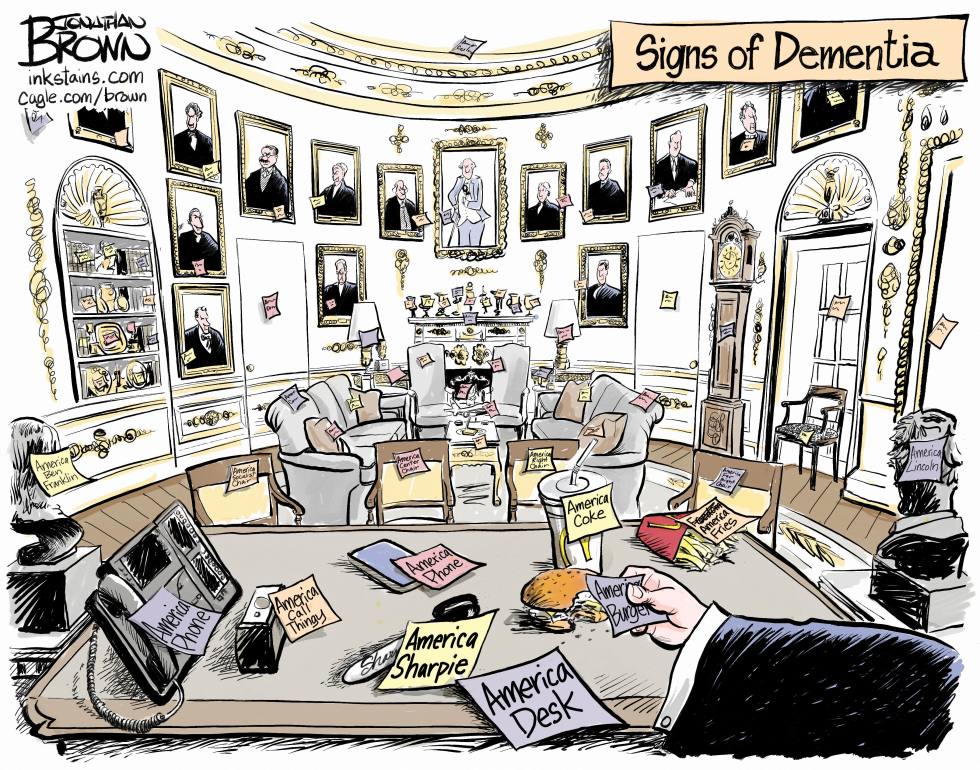
A new editorial cartoon depicts the Oval Office overrun with sticky notes labeling everyday items as America. The scene highlights signs of dementia through repeated branding on phones, desks, food and furniture. Published on September 9, 2026, the work comments on ongoing concerns about cognitive fitness in the presidency. The visual uses the familiar setting of the White House to underscore confusion and memory issues. Observers note the cartoon captures public debate over leadership capacity without naming specific individuals.
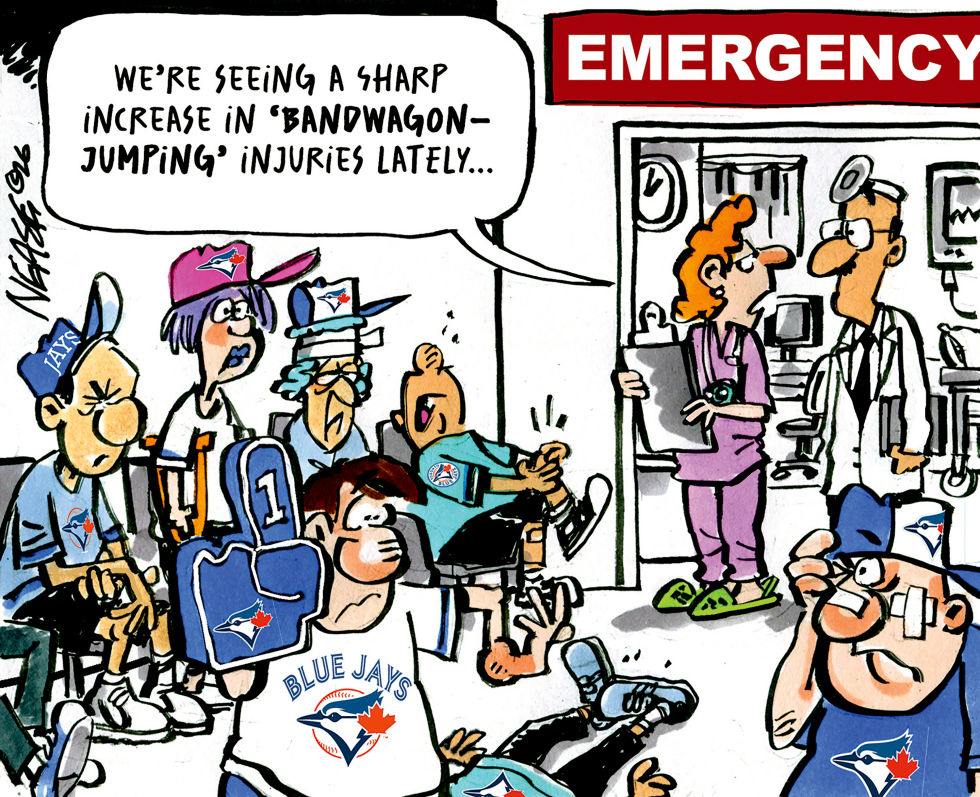
The Toronto Blue Jays' strong 2026 season has triggered a wave of self-proclaimed fans rushing to join the bandwagon. This sudden popularity spike has produced a humorous but pointed wave of reported injuries from overeager jumping. The cartoon uses the emergency room setting to highlight the fleeting nature of such support. It critiques how success attracts insincere followers who abandon teams during leaner times. The piece argues that genuine fandom requires consistency rather than opportunistic enthusiasm during winning streaks.
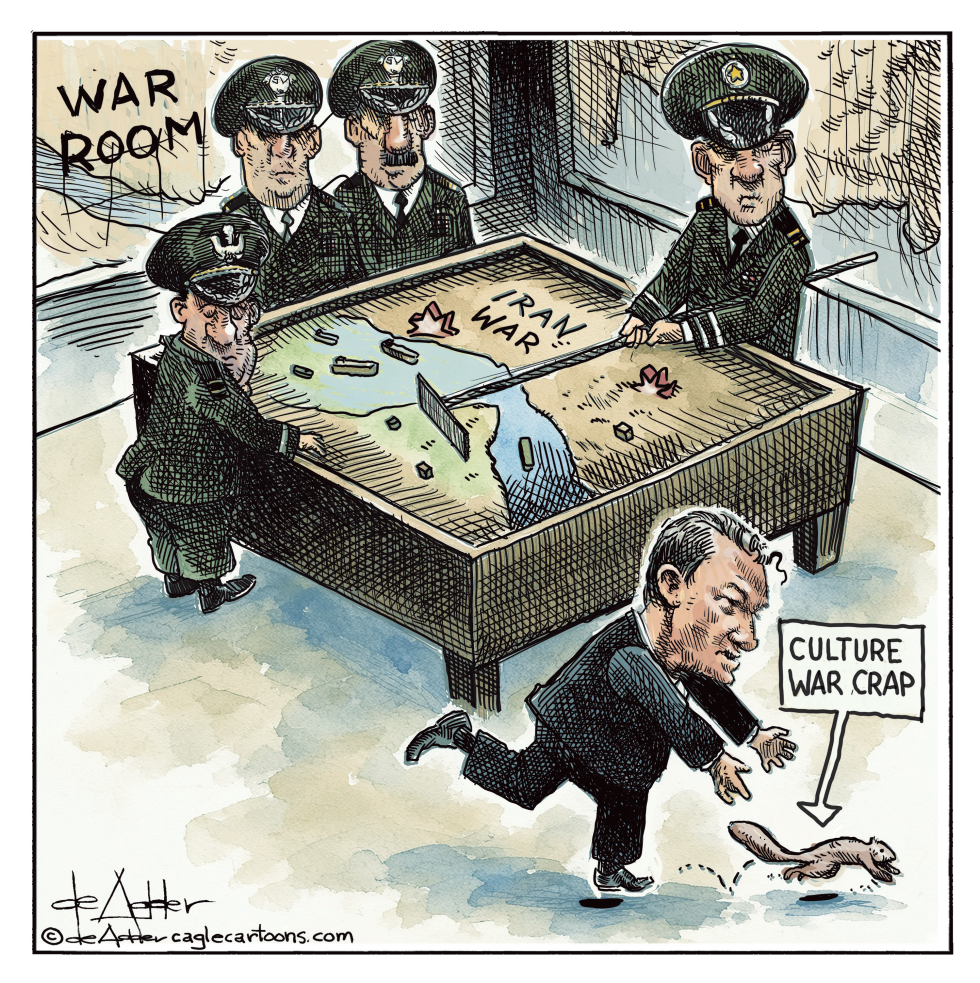
Defense Secretary Pete Hegseth has drawn scrutiny for emphasizing culture war issues while military planners address potential Iran contingencies. The cartoon depicts him pursuing a squirrel marked culture war crap instead of joining officers at the Iran war table. Critics argue this reflects a pattern of prioritizing domestic cultural battles over strategic readiness. The piece suggests such focus undermines effective leadership in the Pentagon. It critiques the administration's approach to balancing internal politics with national security demands.
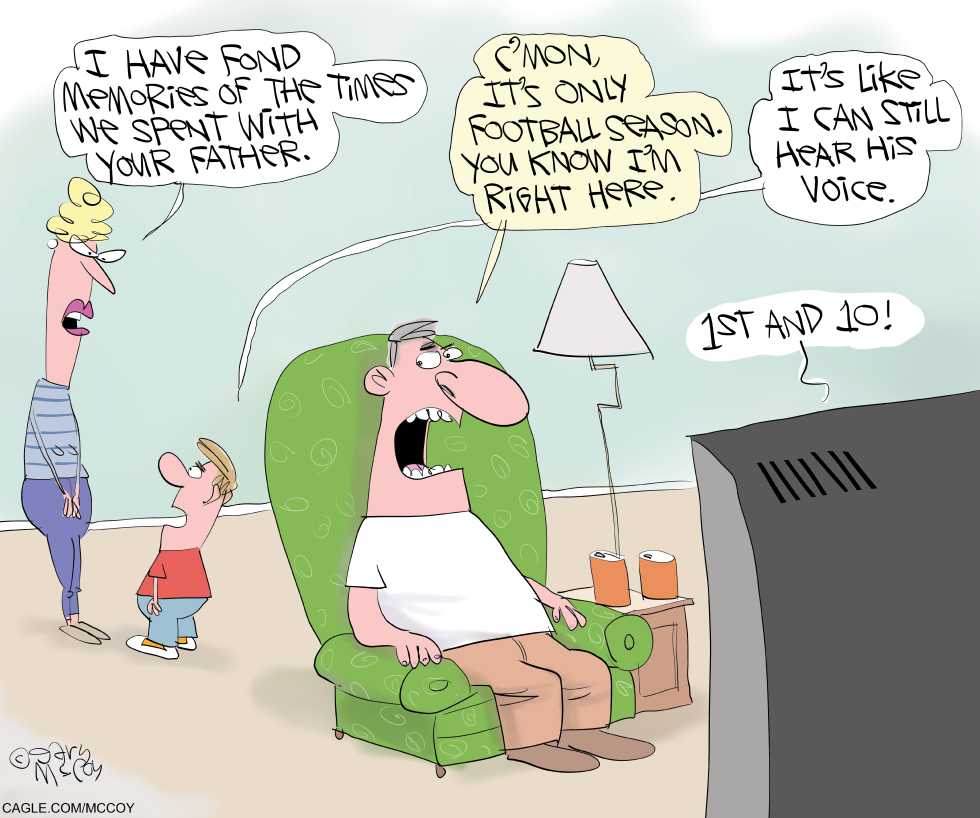
A father glued to the television during football season prompts his wife and child to speak about him in the past tense, highlighting how sports viewing can sideline family interaction. The piece underscores the common tension between game-day immersion and household connection.
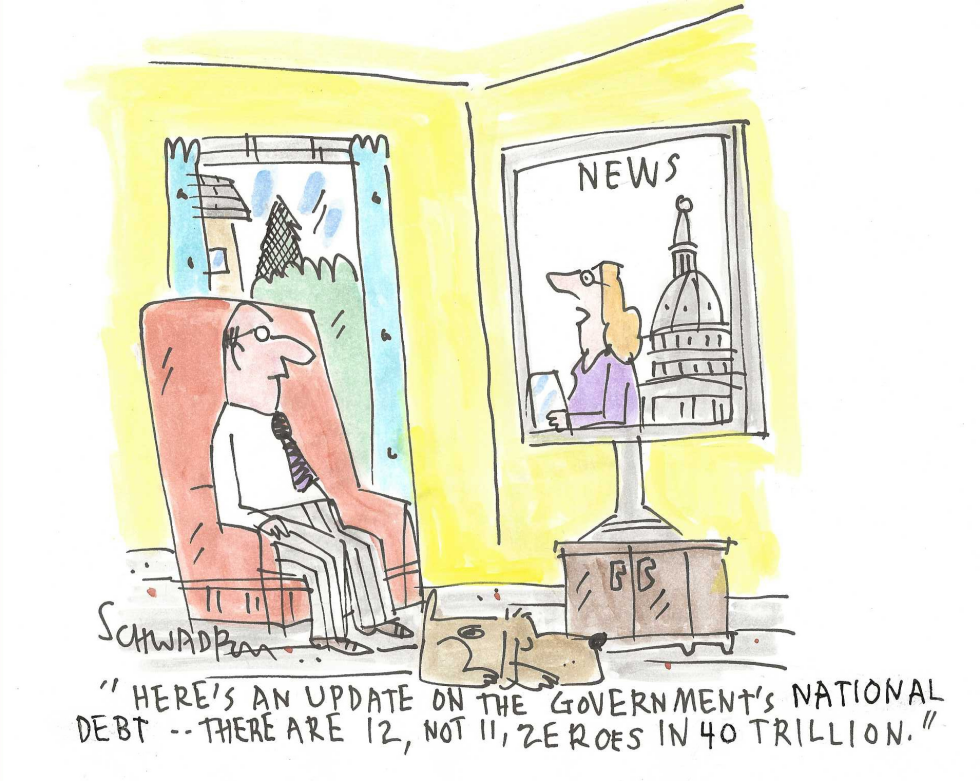
A television news report updates the national debt figure to 40 trillion dollars. The anchor emphasizes that the amount contains twelve zeros rather than eleven. The development underscores ongoing fiscal pressures on federal budgets and public attention to spending totals. The piece presents the correction as a straightforward broadcast detail delivered to a home audience.
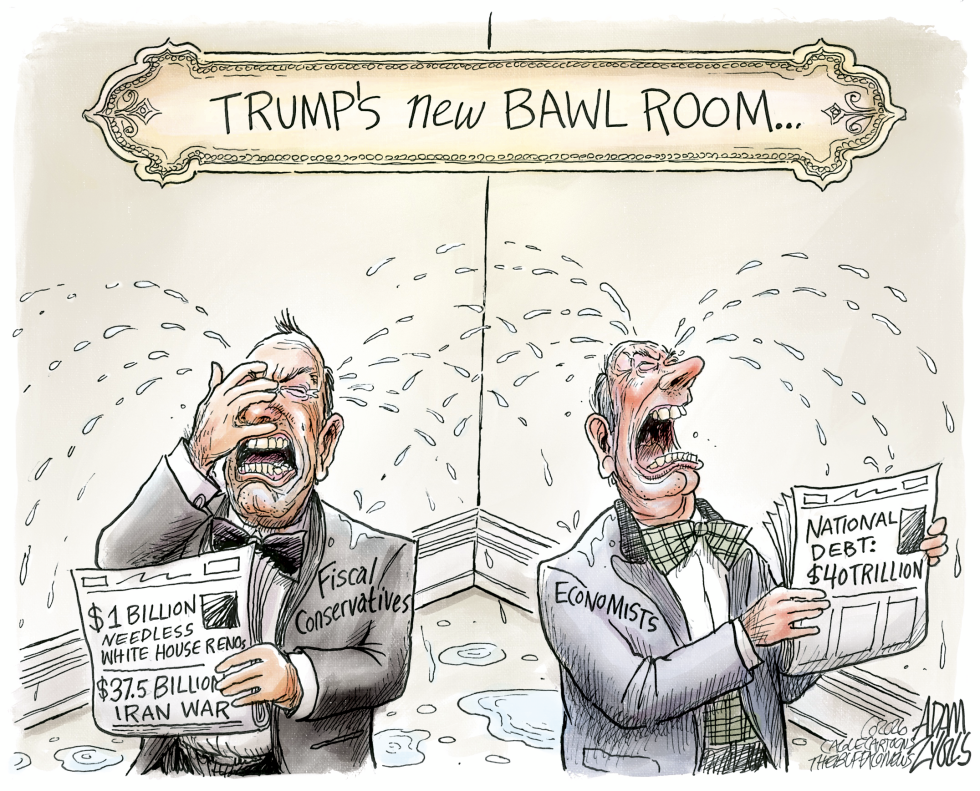
The cartoon depicts fiscal conservatives and economists weeping in a room labeled Trump's new bawl room. One holds documents citing a needless one billion dollar White House renovation and thirty seven point five billion dollar Iran war. The other displays a national debt of forty trillion dollars. The image highlights concerns over federal spending priorities.
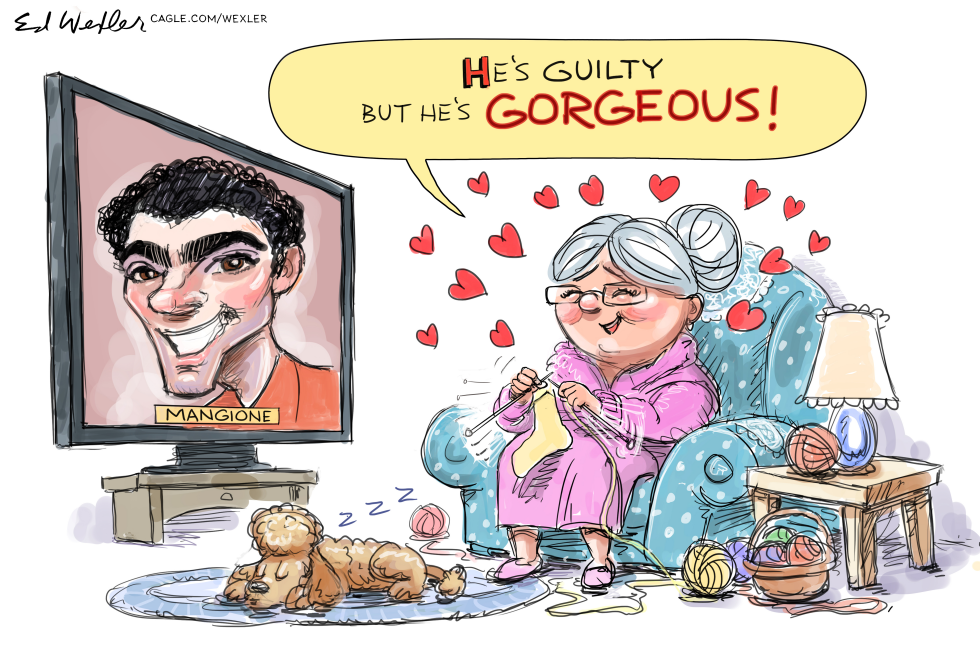
A guilty verdict was delivered in the Mangione case on or around August 2026. The decision drew widespread media coverage and public commentary. The editorial highlights how some viewers focused on the defendant's appearance rather than the legal outcome. It critiques the blending of serious justice matters with superficial attraction in popular reactions.
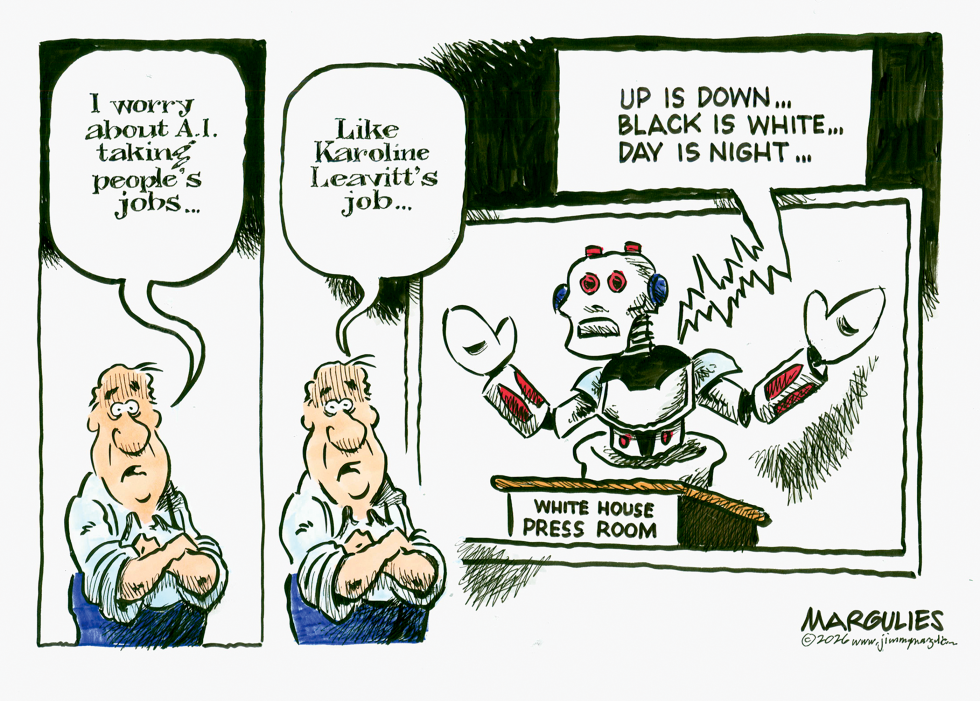
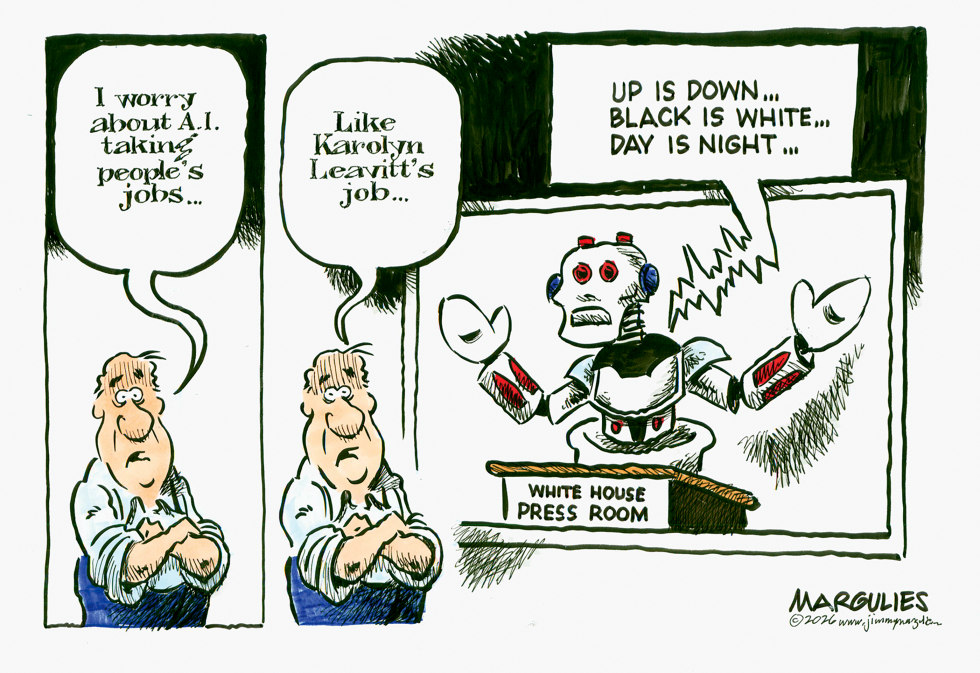
As artificial intelligence advances into government communications roles, concerns grow over job displacement for human staff including White House press secretary Karoline Leavitt. The piece responds to this development by depicting an AI robot assuming the podium and issuing contradictory statements. It takes the position that such automation risks eroding clarity and accountability in official messaging.
An AI robot has assumed duties as White House press secretary amid ongoing debates over automation displacing human roles in government communications. The development highlights tensions between technological efficiency and traditional staffing in high-profile federal positions. The piece portrays the shift as enabling scripted, contradictory messaging from the briefing room.
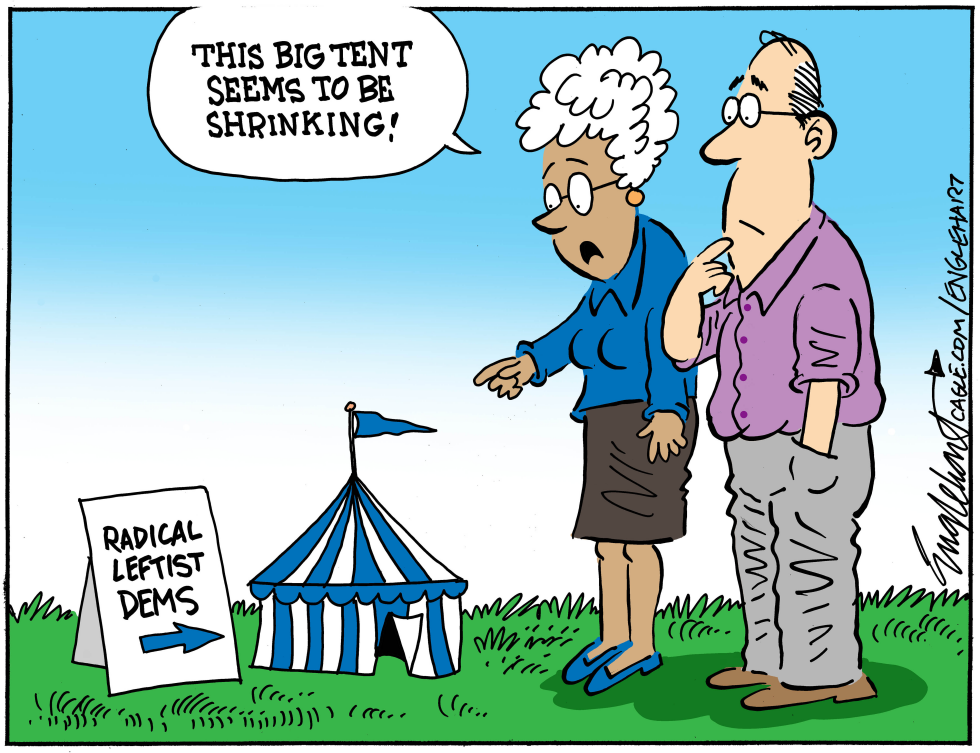
Democratic Party figures have grown concerned that the traditional big tent coalition is contracting as radical leftists consolidate control over the party's direction and messaging. The shift sidelines moderates and narrows the range of acceptable views within the organization. This dynamic raises questions about the party's ability to maintain broad electoral appeal in upcoming cycles. The editorial takes the position that the exclusionary turn is self-defeating and accelerates the party's isolation from mainstream voters.
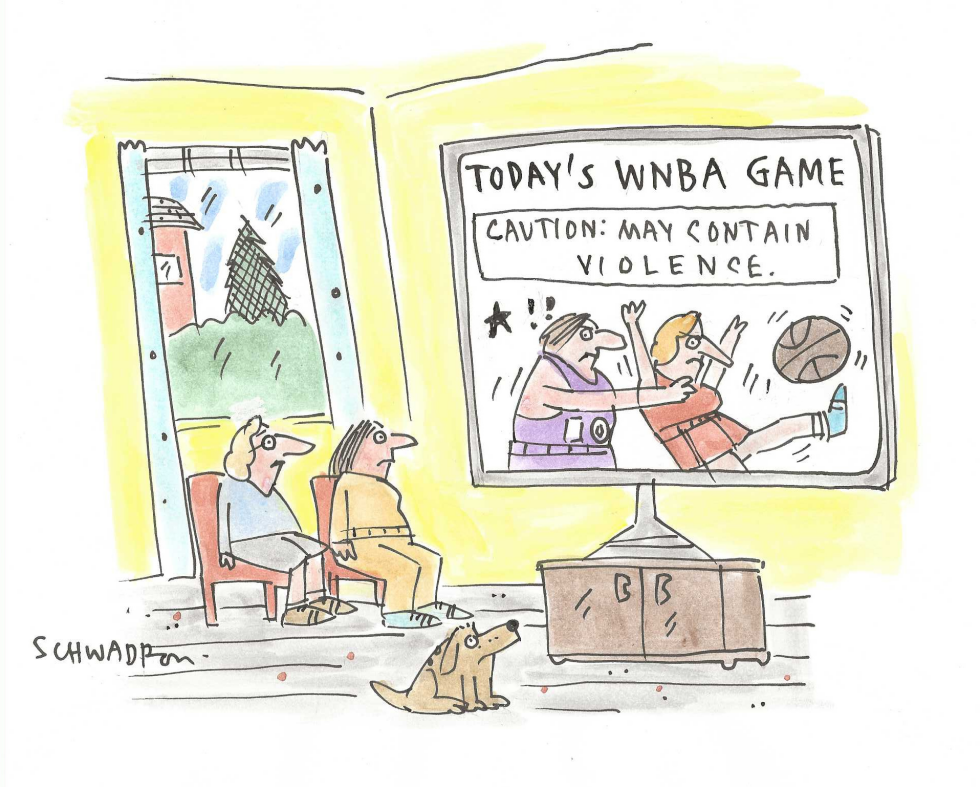
Sports networks have begun attaching violence disclaimers to WNBA game coverage following a series of on-court altercations. The move responds to rising physical confrontations during matches that have drawn broader attention. Broadcasters cite standard content guidelines applied to other programming. The editorial stance questions whether such alerts overstate routine basketball contact or accurately reflect escalating incidents that warrant viewer preparation.
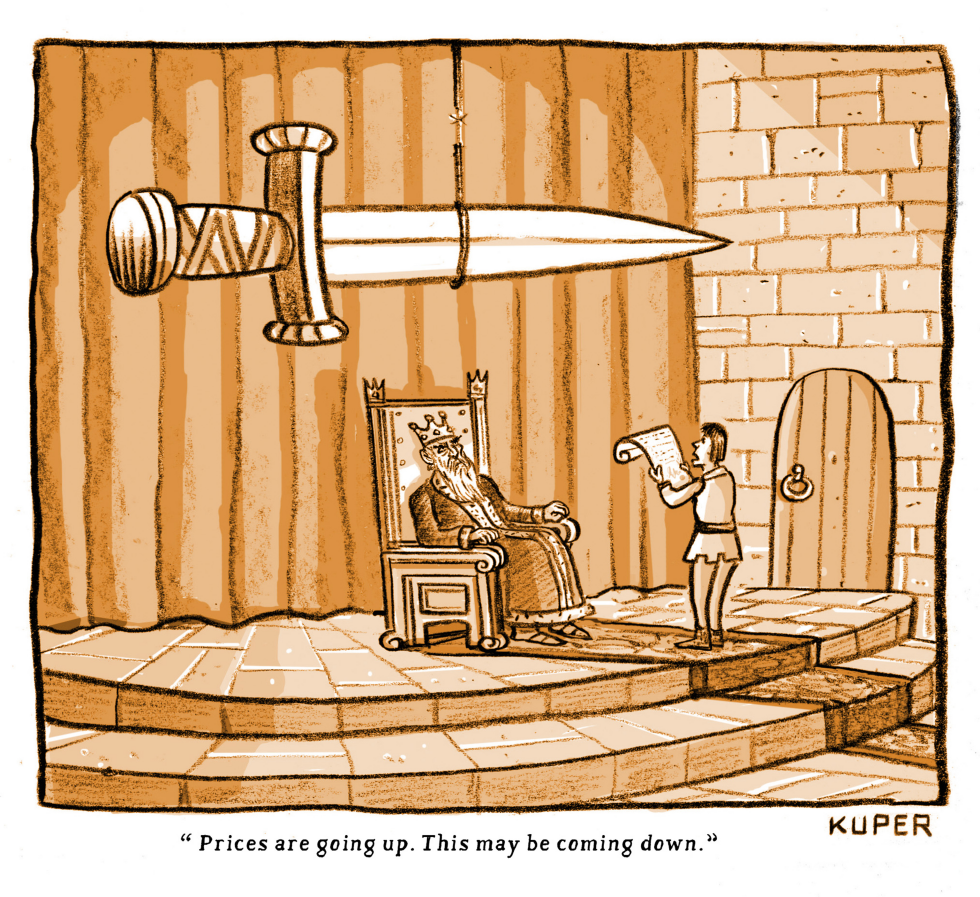
Rising prices continue to pressure economies worldwide as leaders confront persistent inflation data. The situation matters because unchecked costs erode public confidence and strain household budgets. The piece takes the position that such economic threats hang precariously over those in power, much like the ancient warning.
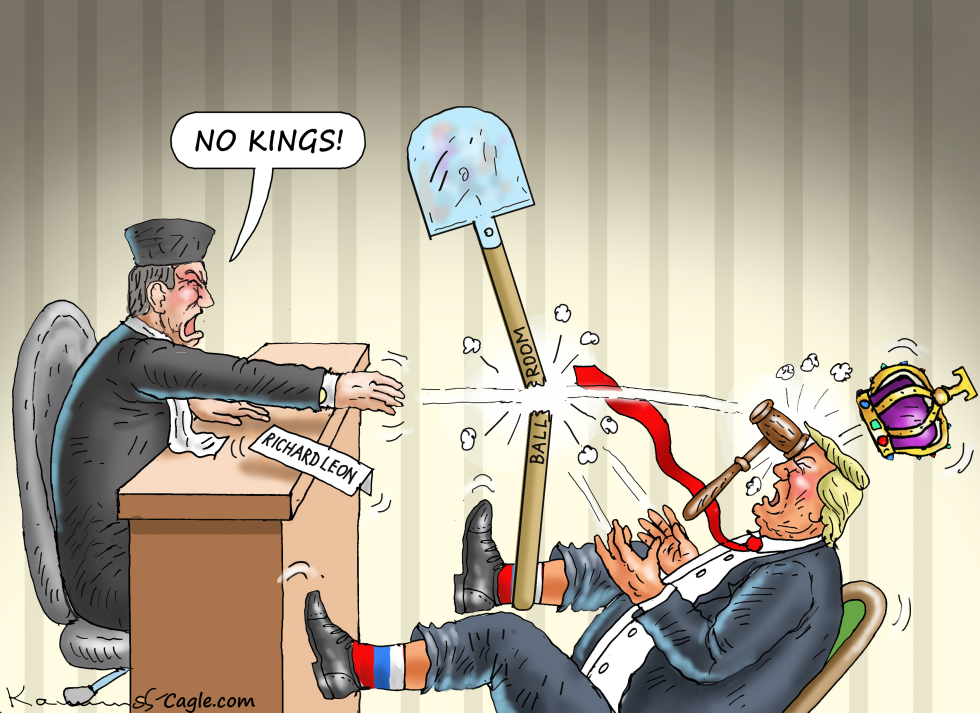
U.S. District Judge Richard Leon issued a ruling rejecting claims of unchecked executive authority. The decision underscores judicial limits on presidential power and draws immediate pushback from the White House. The cartoon portrays the ruling as a direct rebuke to any notion of royal prerogative.
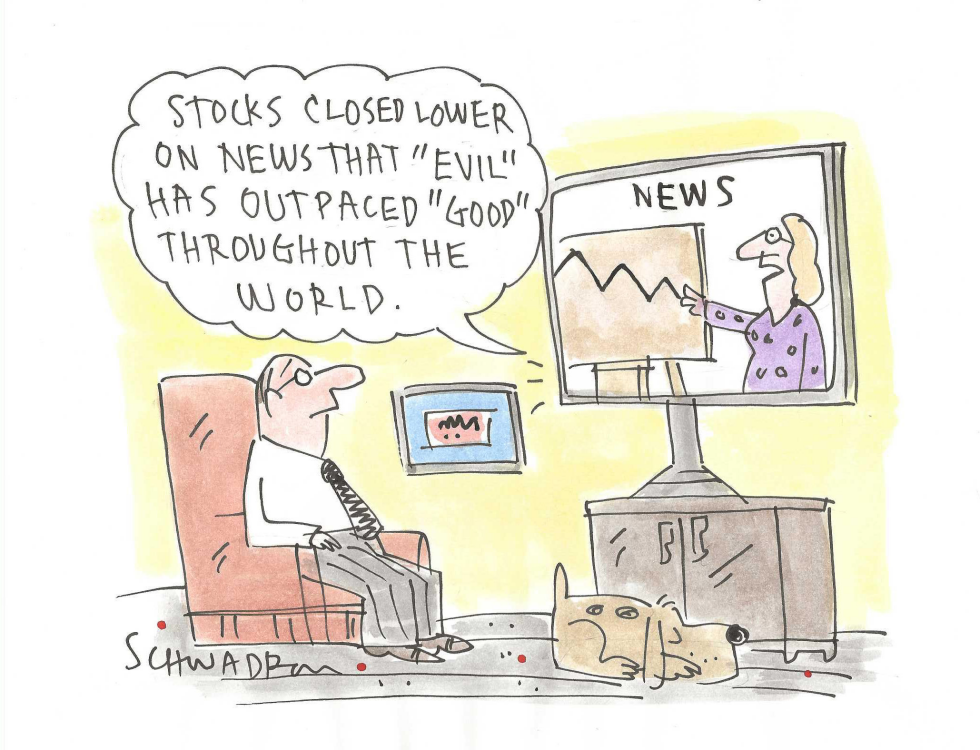
Stock markets declined after news reports indicated evil has outpaced good around the world. The development prompted immediate selling as traders absorbed the assessment from major outlets. The shift highlights how broad negative narratives can influence trading volumes and sentiment in real time. The piece presents the market reaction as a direct response to the reported imbalance between evil and good.