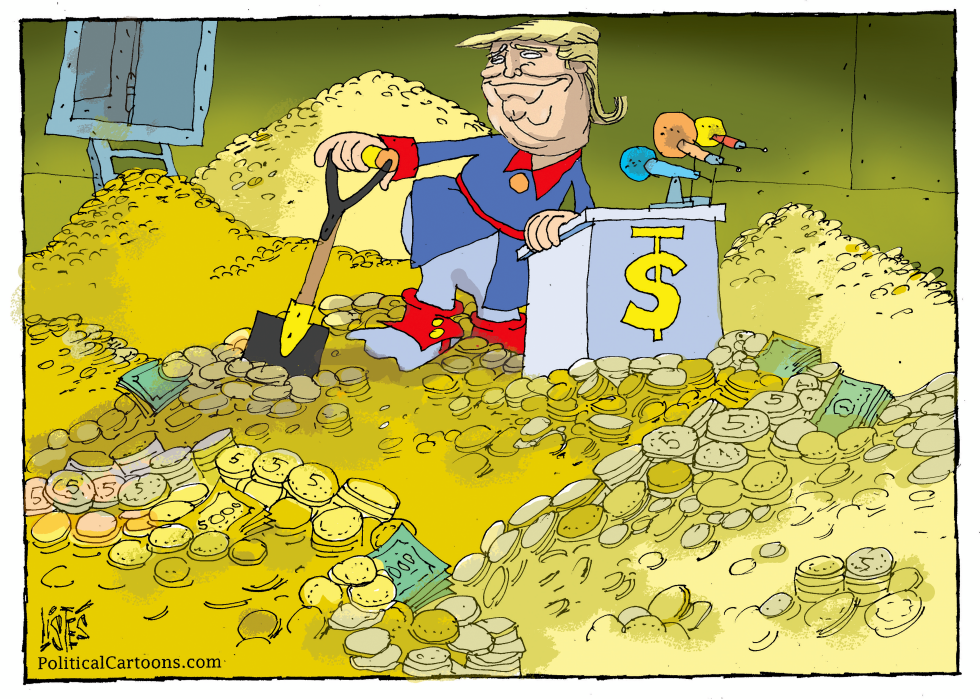
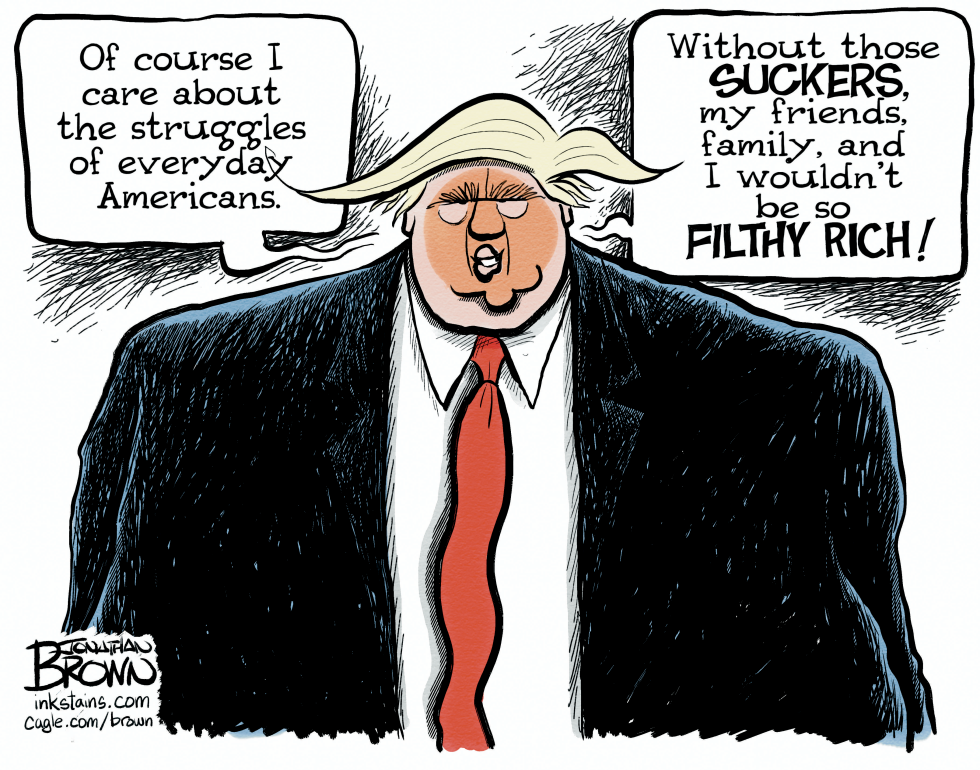
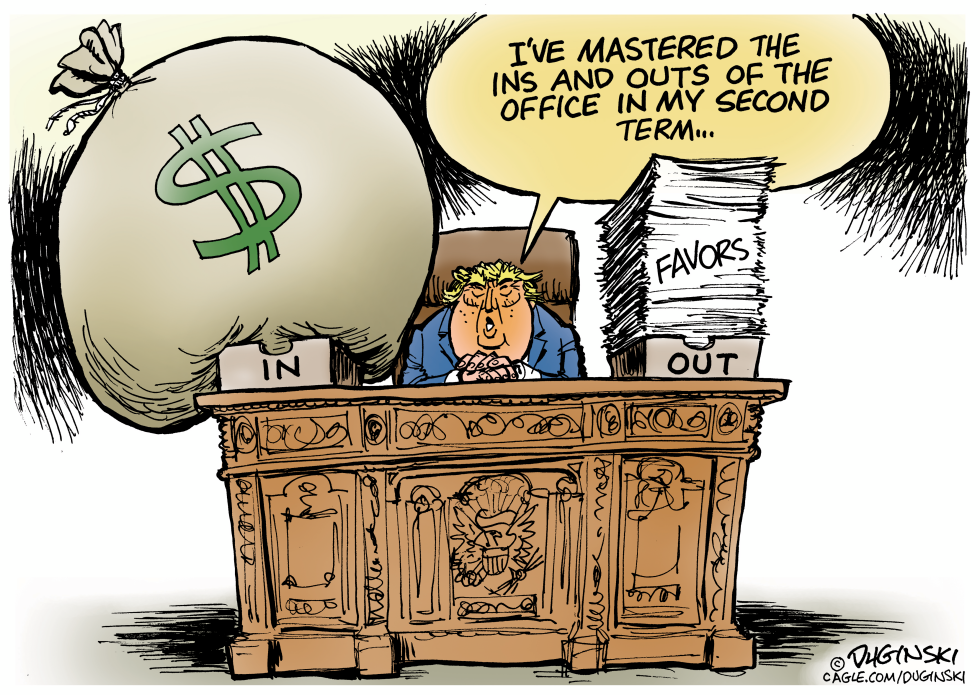
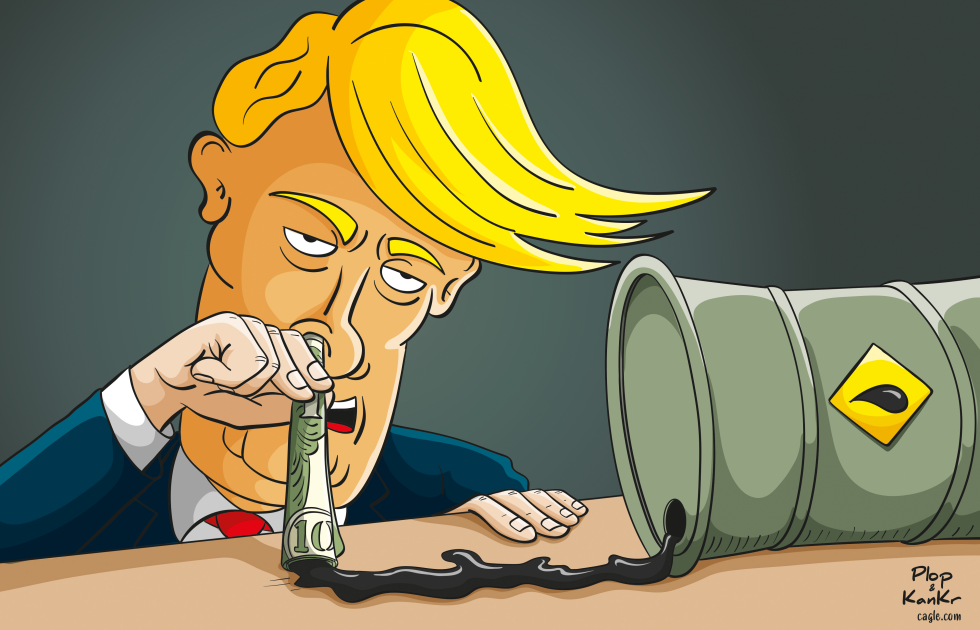
Donald Trump remains a central figure in debates over wealth and political power as of September 2026. The cartoon responds to ongoing scrutiny of how personal fortune intersects with public life and policy influence. It portrays the former president amid symbols of money to critique that dynamic. The editorial position frames Trump's association with wealth as a defining and problematic feature of his political presence.
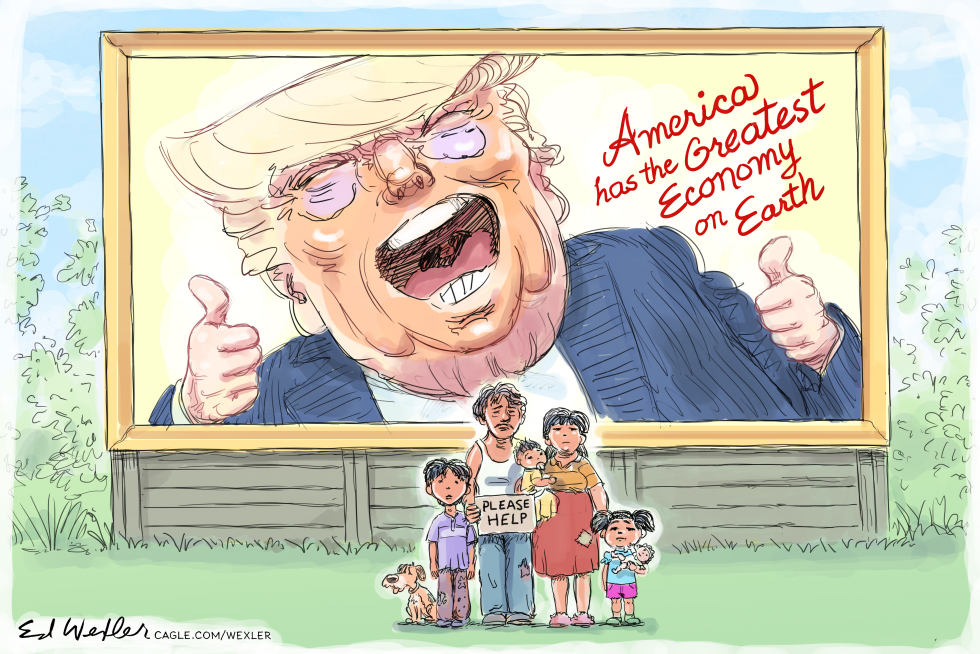
On August 29 2026 President Donald Trump continued promoting claims of an unmatched U.S. economy amid ongoing reports of persistent poverty and wage stagnation for many households. The billboard message highlights administration assertions of national prosperity. The accompanying image underscores the disconnect between official rhetoric and daily struggles for families facing unemployment and insufficient support. The piece argues that such promotional messaging ignores the lived experience of economic hardship.
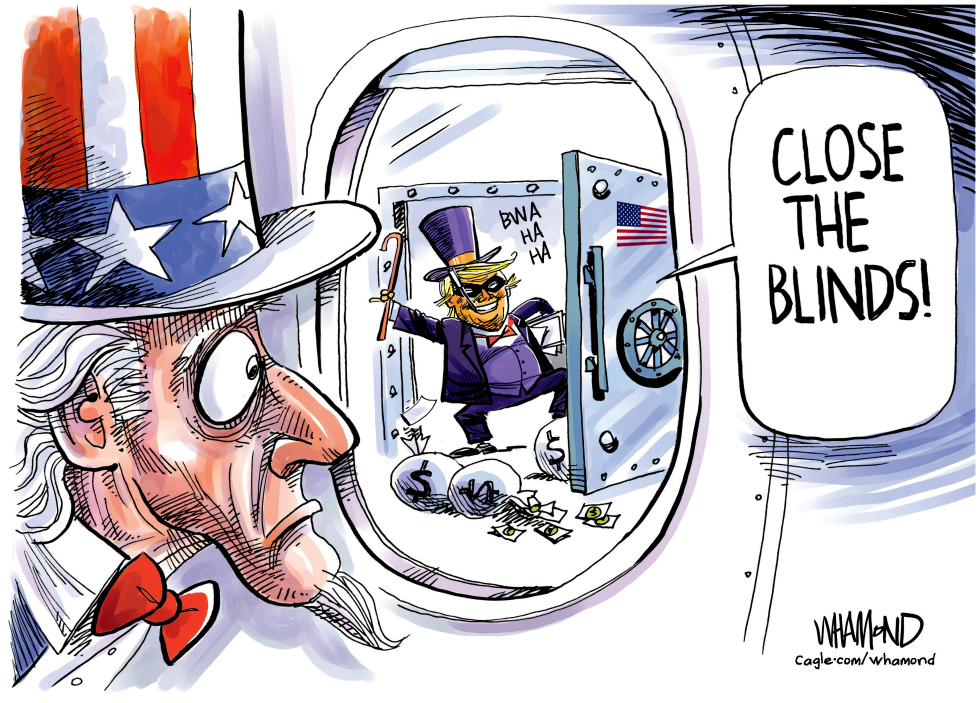
Donald Trump appears inside an open government vault surrounded by spilling money bags and orders the blinds closed. The scene highlights concerns over financial secrecy and lack of transparency in high office. The piece takes the position that such actions undermine public trust in how funds are handled.
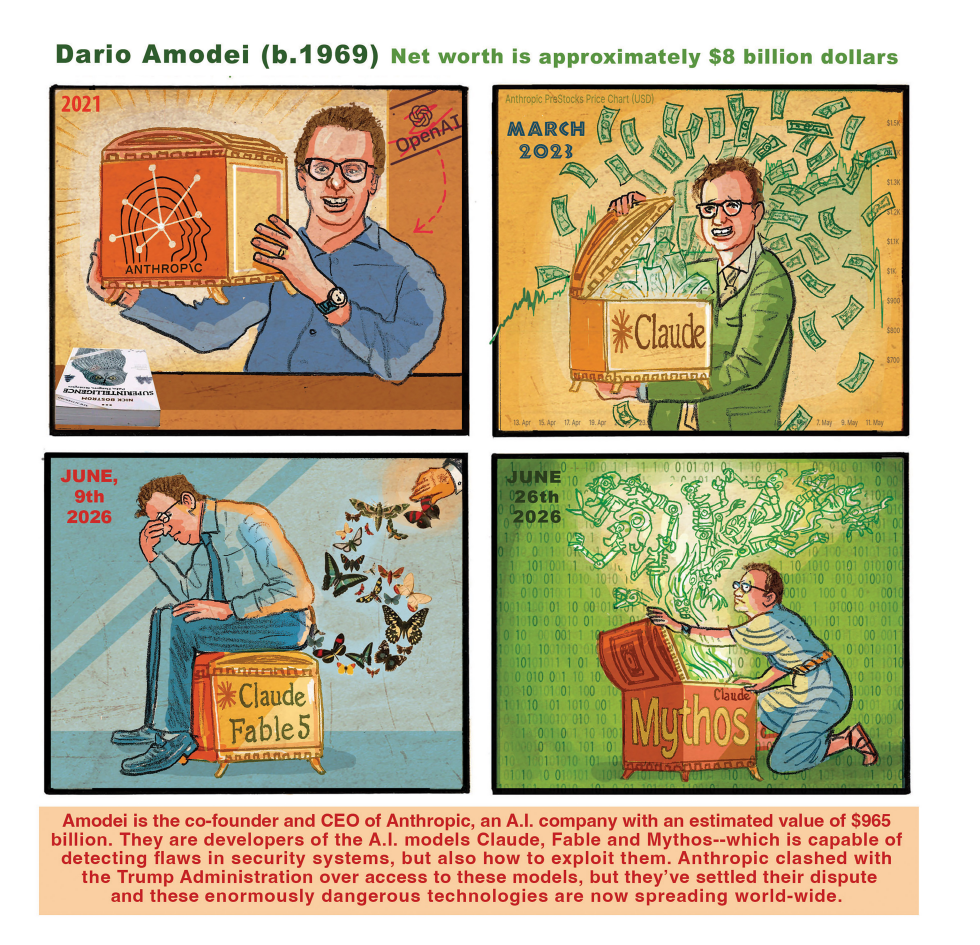
The four-panel timeline tracks Dario Amodei from 2021 Anthropic founding through 2023 Claude profits to 2026 Fable and Mythos releases. Bottom text notes company valuation, model capabilities for security flaws, and resolved clash with the Trump Administration over access.
On July 9, 2026, Pat Bagley's cartoon depicts Donald Trump pushing a cart loaded with enormous sacks labeled 2026 and $2,000,000,000.00 GRIFT. A woman in a red hat hands him a small handbag while stating that he donates his $400,000 salary. The image contrasts the tiny claimed donation against the massive grift sacks. The scene draws from ongoing discussions of presidential finances and public salary claims during the period.
A large commercial jet labeled Trump Family Grift and marked with a billions seal carries figures in its windows while a small biplane labeled Hunter Biden crashes into its nose. Debris flies as the biplane breaks apart. A speech bubble from the jet asks if anyone heard something. The July 2026 cartoon by Rick McKee uses the collision to contrast family business dealings and past scrutiny on the Biden family.
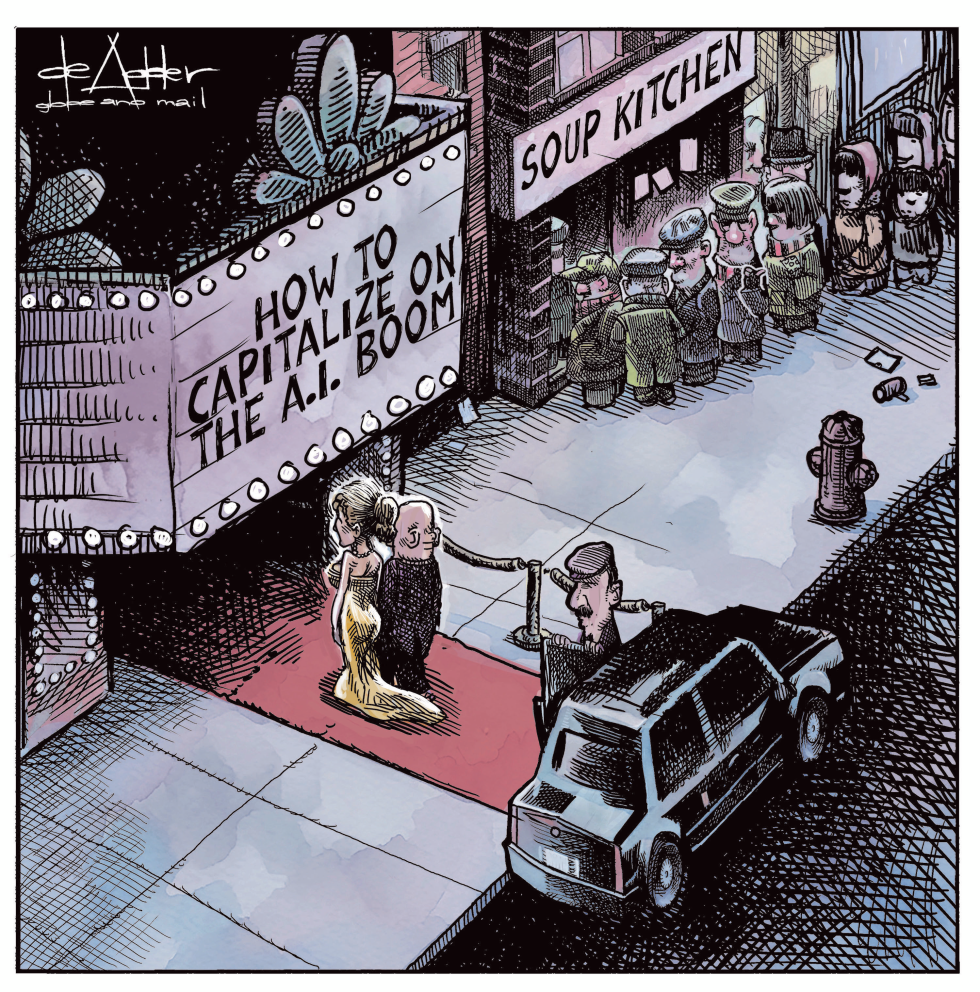
A political cartoon depicts a wealthy couple arriving at a theater hosting an event titled 'How to Capitalize on the A.I. Boom.' A red carpet and limousine service the entrance. Across the street a long line of people waits outside a soup kitchen. The image contrasts the gains from artificial intelligence for some with ongoing needs for others in 2026.
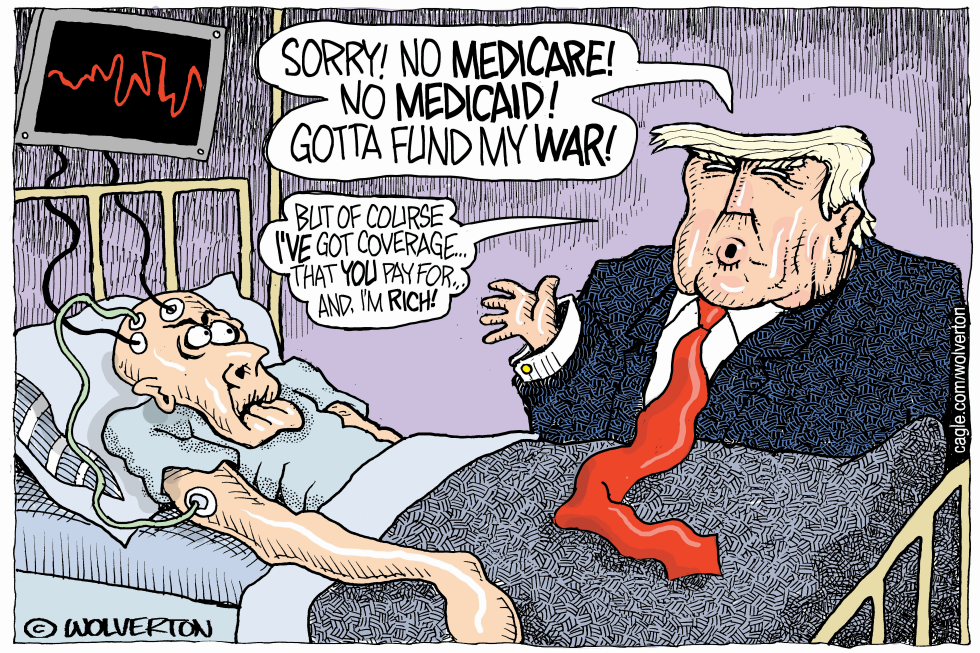
On April 3, 2026, a political cartoon depicts President Donald Trump at the bedside of a patient in a hospital room. Trump states that Medicare and Medicaid cannot be provided because funds must support an ongoing war. The patient replies that coverage exists because Trump pays for it and the patient is wealthy. The image references the Iran War and healthcare access issues.
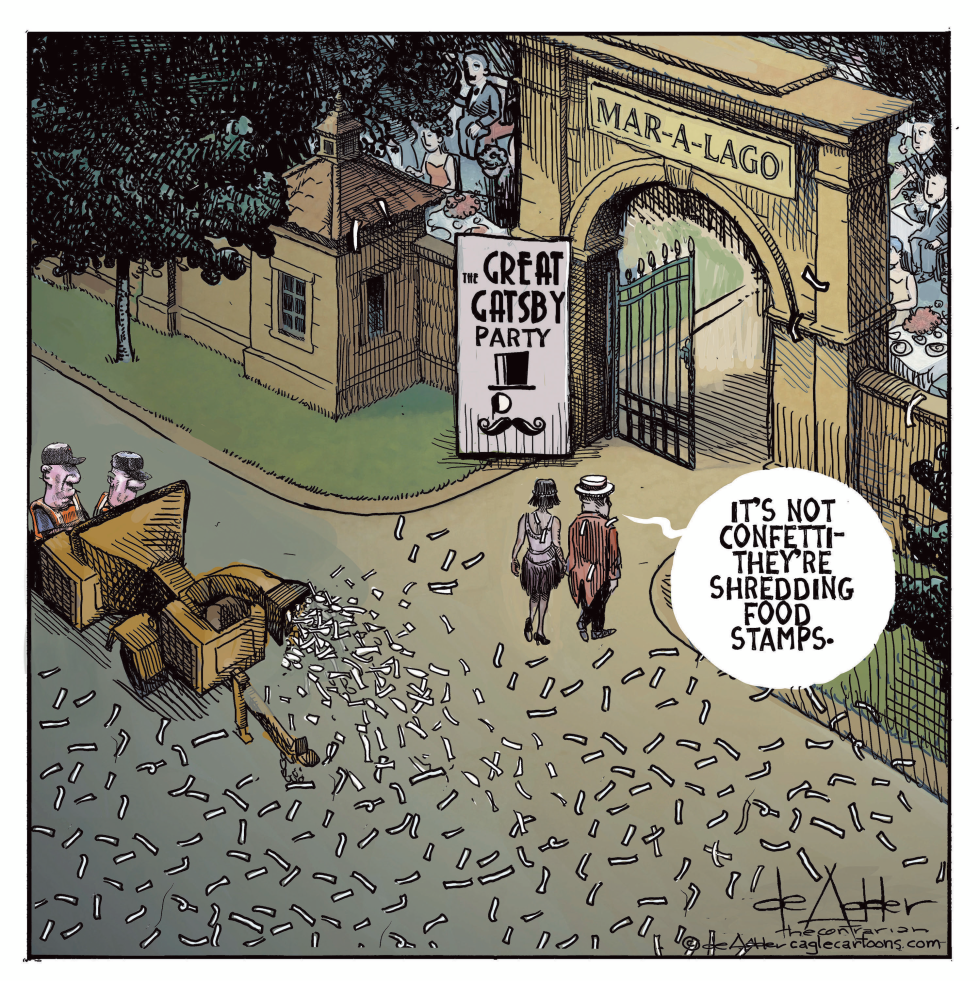
The cartoon by Michael de Adder depicts a Great Gatsby party at Mar-a-Lago where food stamps are shredded instead of confetti. It responds to ongoing debates over SNAP funding and cuts proposed by Republican leaders including Donald Trump. The visual uses the iconic novel's excess to highlight perceived indifference to low-income Americans reliant on nutrition assistance.
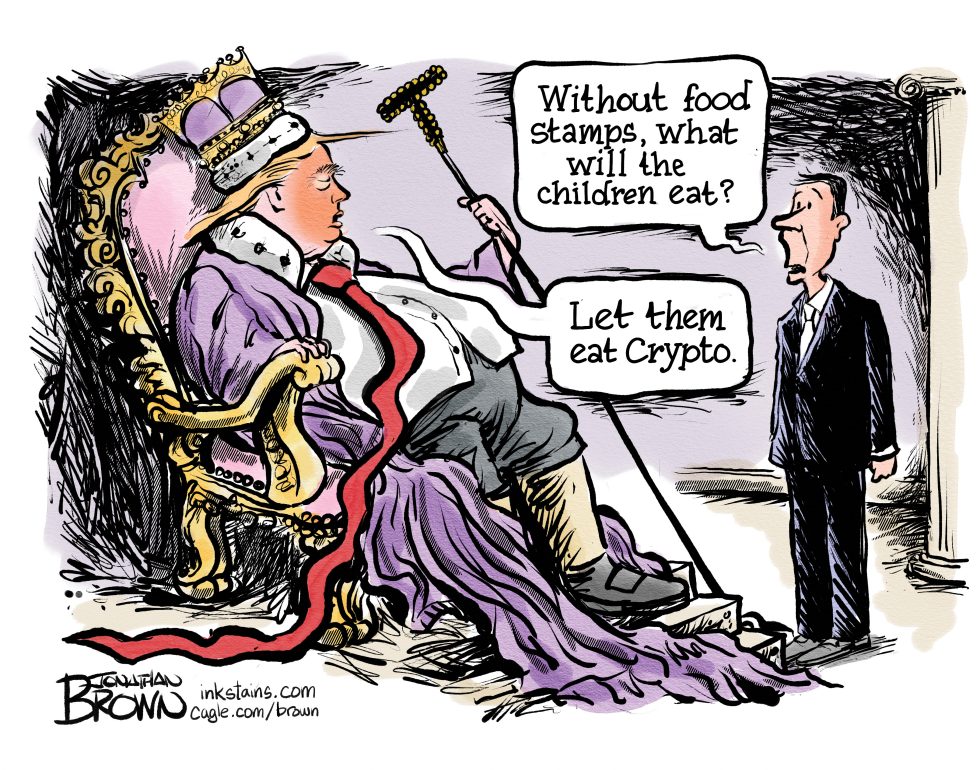
The image depicts Donald Trump dressed in royal attire on a throne responding to a question about food stamps during a government assistance halt. The suited figure asks what children will eat without SNAP benefits. Trump replies by suggesting crypto as the solution. This draws on the publication date of October 27 2025 when SNAP program disruptions were under discussion. The visual frames the response as detached from everyday economic pressures faced by recipients.