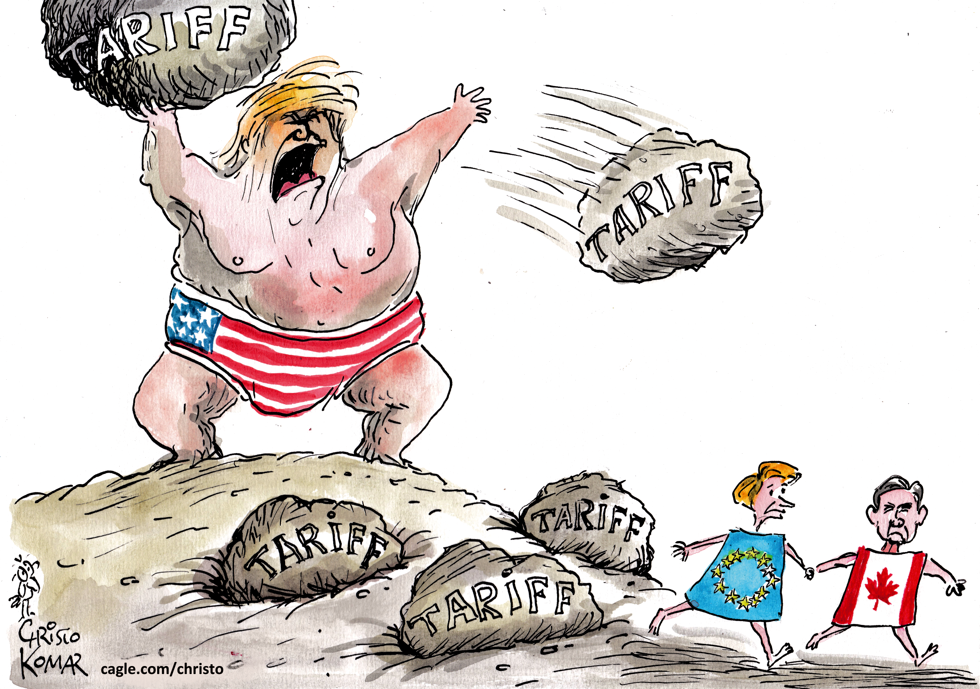
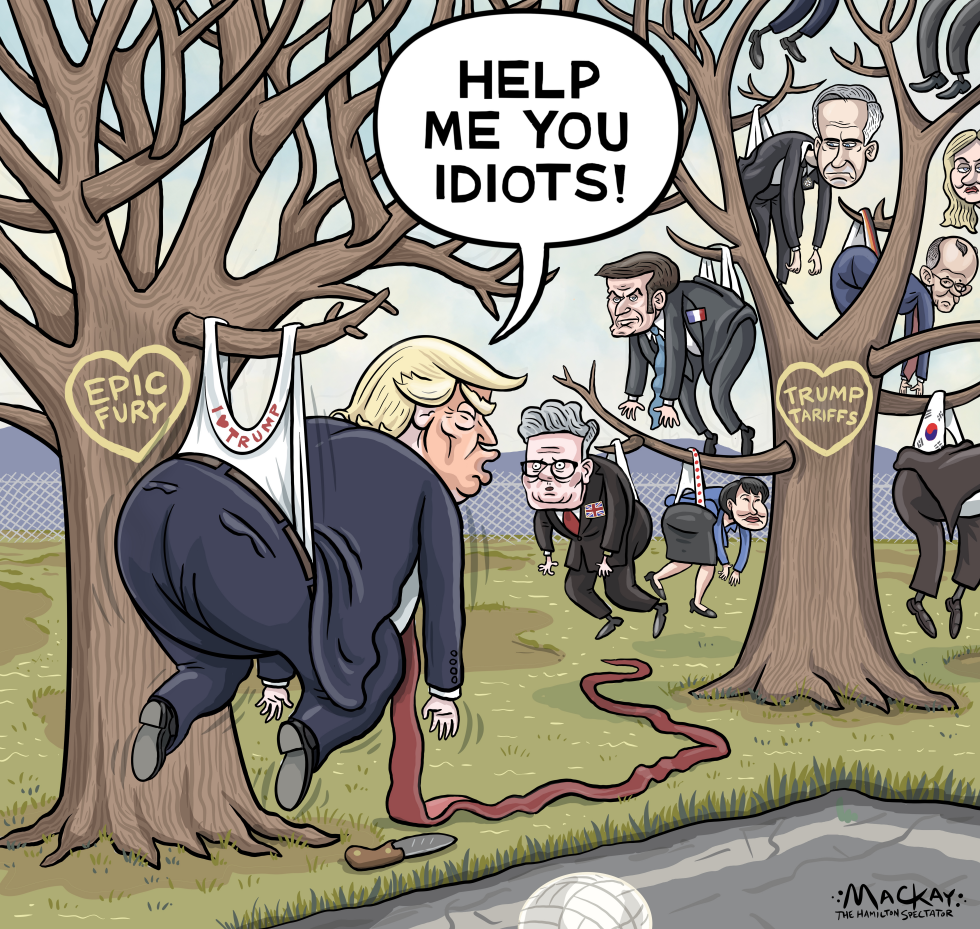
President Trump has escalated trade tensions by targeting tariffs at Canada and the European Union. The moves follow ongoing disputes over trade balances and economic policy. The action risks retaliation and higher costs for American consumers and businesses. The cartoon portrays the tariffs as reckless projectiles launched by an aggressive Trump figure, underscoring the self-inflicted risks and damage to alliances.
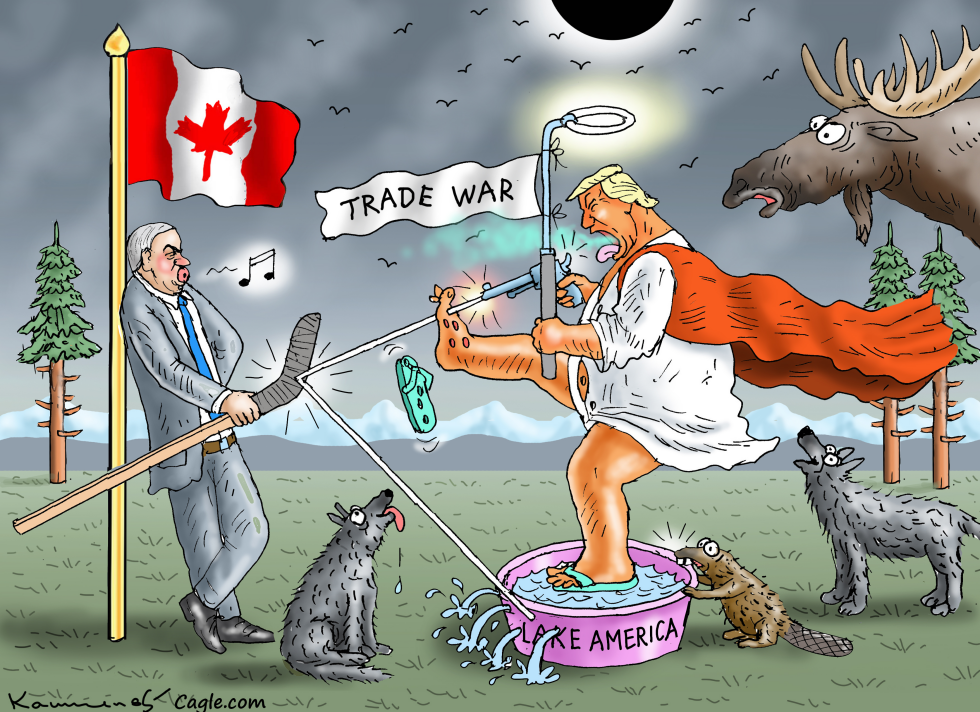
President Trump launched new tariffs on Canadian goods in early September 2026, citing trade imbalances and border issues. The move immediately prompted Canadian countermeasures including duties on US exports. The policy shift disrupts integrated supply chains in autos, energy and agriculture that support millions of jobs on both sides of the border. Markets reacted with volatility as investors weighed the costs of renewed protectionism. The cartoon portrays the tariff campaign as self-inflicted harm that leaves the US exposed to swift Canadian pushback.
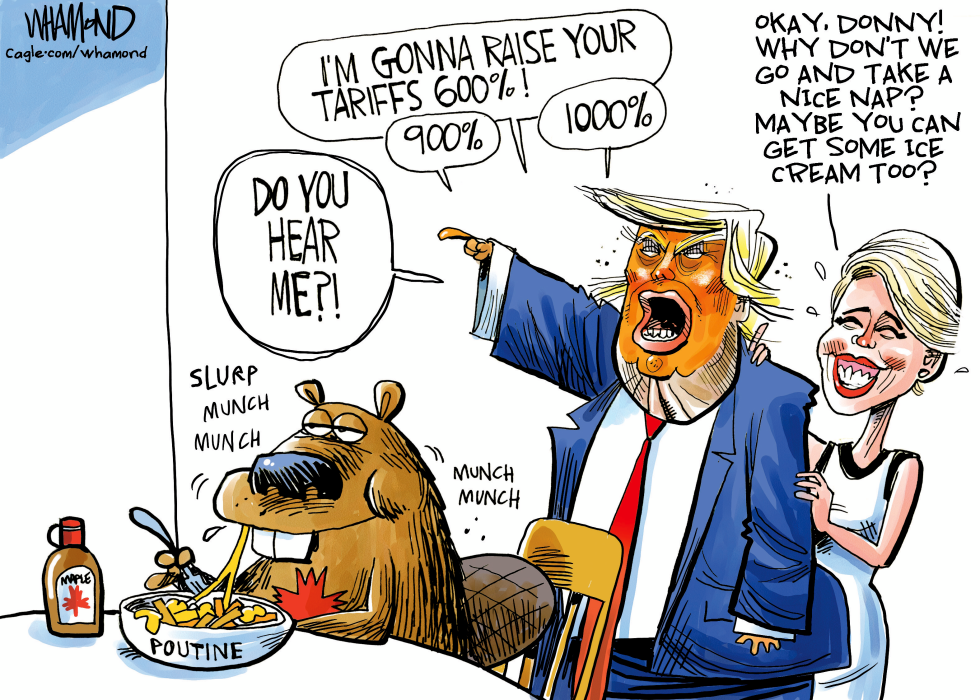
Donald Trump has renewed threats to impose tariffs as high as 1000 percent on Canadian goods. The move targets longstanding trade partners and risks disrupting supply chains for autos, lumber and agriculture. Canada has responded with calls for calm negotiations rather than retaliation. The escalation comes as both nations seek to stabilize economic ties ahead of potential policy shifts. The cartoon portrays the threats as an overreaction best met with indifference and redirection rather than escalation.
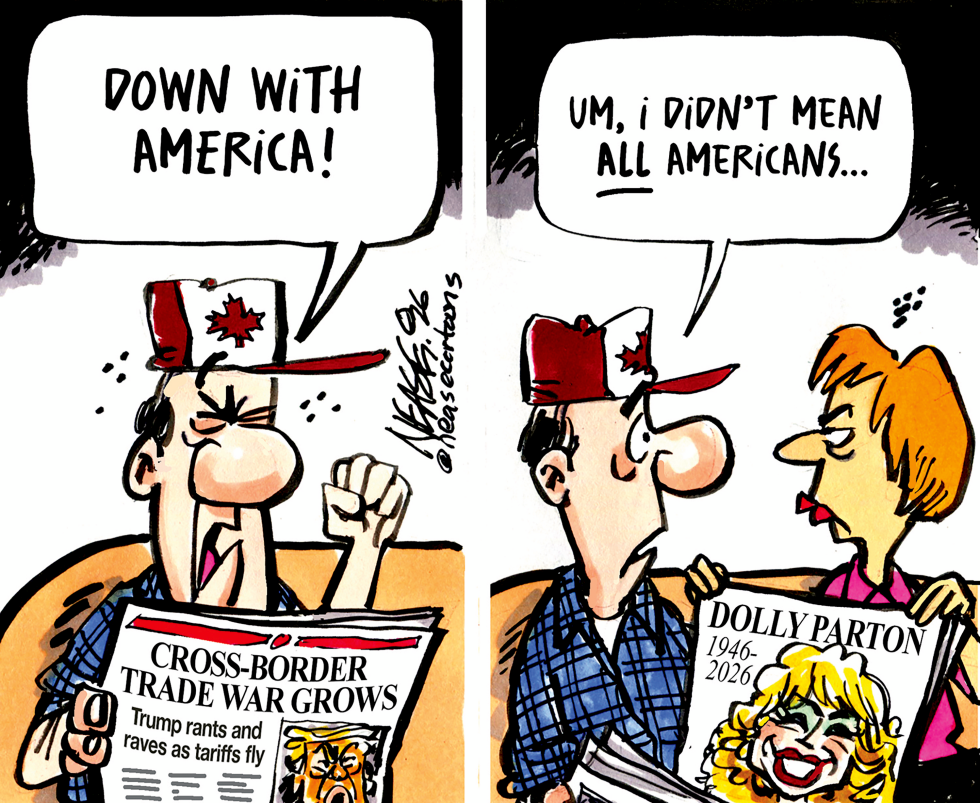
US-Canada trade tensions intensified in August 2026 as tariffs mounted amid heated rhetoric from President Trump. The dispute drew sharp reactions north of the border. The cartoon takes the position that even vocal critics of America make exceptions for beloved figures like Dolly Parton.
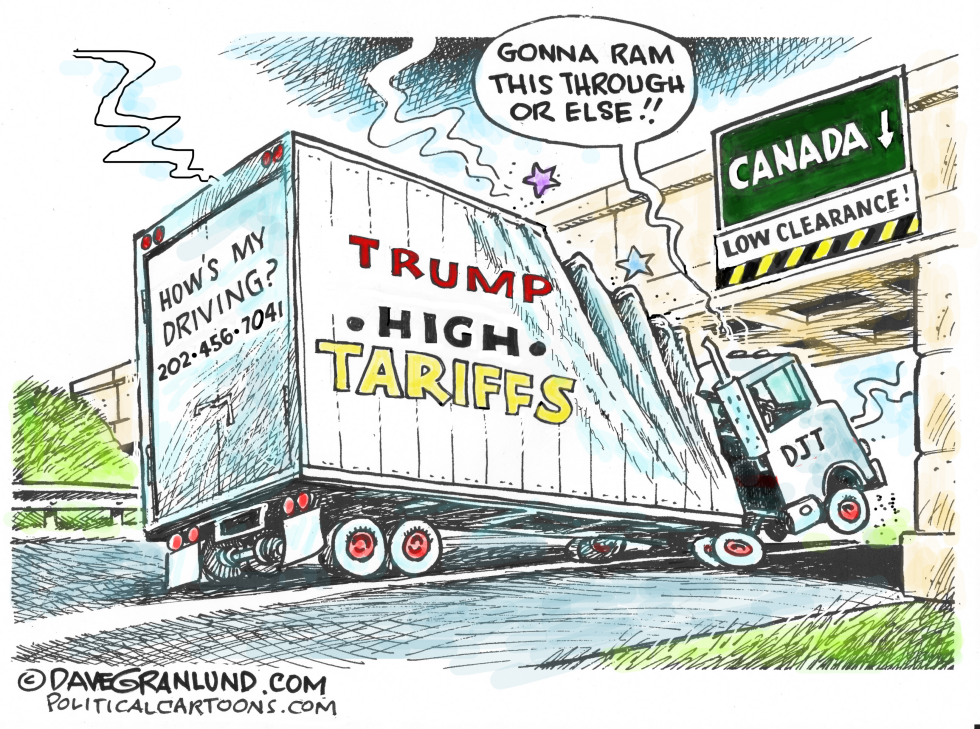
A political cartoon shows a large truck labeled Trump High Tariffs attempting to pass under a low clearance sign for Canada. The vehicle is jammed, with the driver vowing to ram through. The scene comments on proposed higher tariffs targeting Canada as a trading partner. The phone number on the trailer matches a known White House contact line. The cartoon critiques the approach as likely to harm US buyers through increased costs while straining longstanding alliance relations.
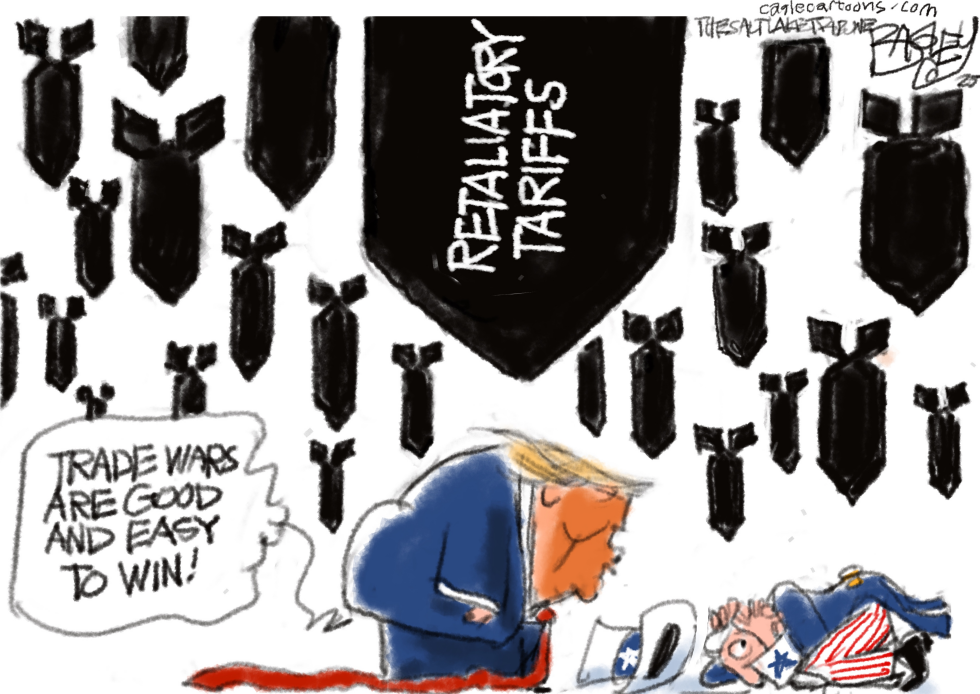
On April 8, 2025, the cartoon depicts Donald Trump proclaiming trade wars easy to win while retaliatory tariff bombs fall around a downed Uncle Sam, reflecting ongoing U.S. tariff policies and international responses from Europe and China.
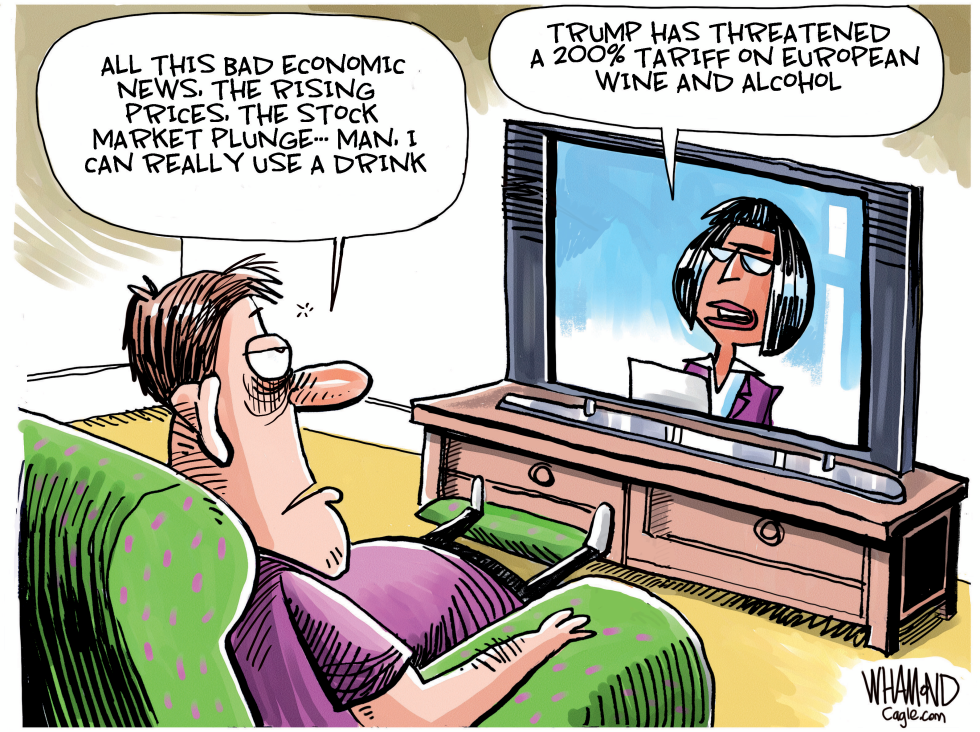
Dave Whamond's cartoon captures the irony of Trump alcohol tariffs, where a 200 percent tariff on European wine and alcohol threatens to escalate trade wars with the EU. Amid bad economic news like rising prices and stock market plunge, a weary viewer laments needing a drink, underscoring how such policies drive us to drink. Investors shaken by potential inflation and retaliatory tariffs on US whiskey and bourbon face higher costs for alcoholic beverages. The image highlights consumer burdens in this economy, blending humor with critique of trade escalation.
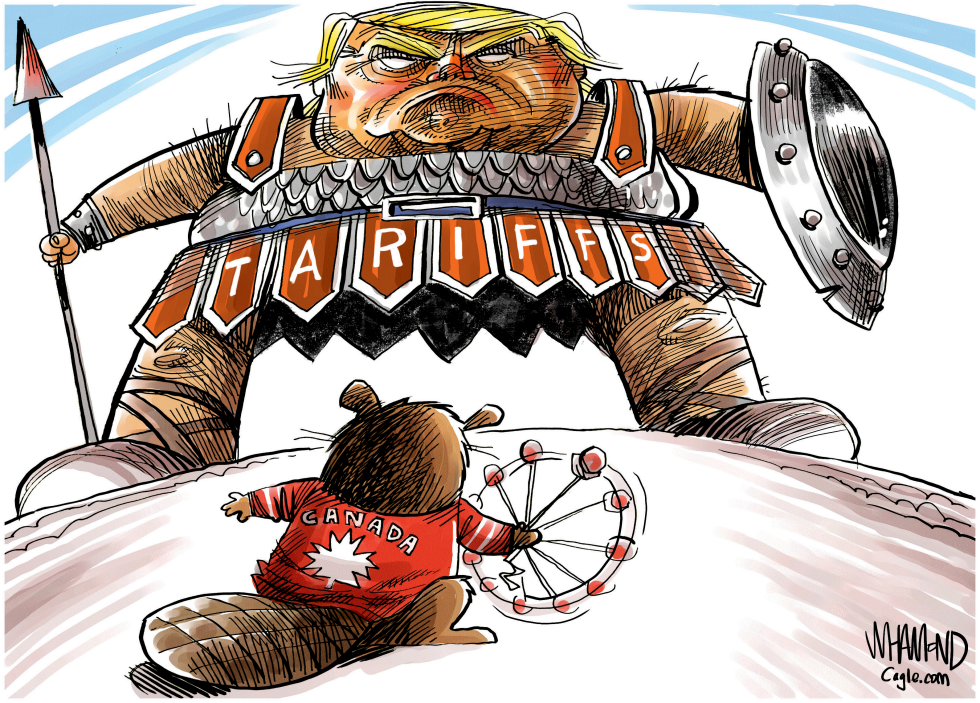
The cartoon shows President Donald Trump depicted as a massive armored warrior labeled TARIFFS standing over a small beaver representing Canada. The beaver holds a small wheel while Trump grips a spear and shield. This imagery responds to the March 2025 announcement of U.S. tariffs on Canadian goods. The visual draws on the David versus Goliath story to illustrate the economic pressure on the smaller trading partner. Publication occurred as markets reacted to the policy shift and concerns grew over rising consumer costs.