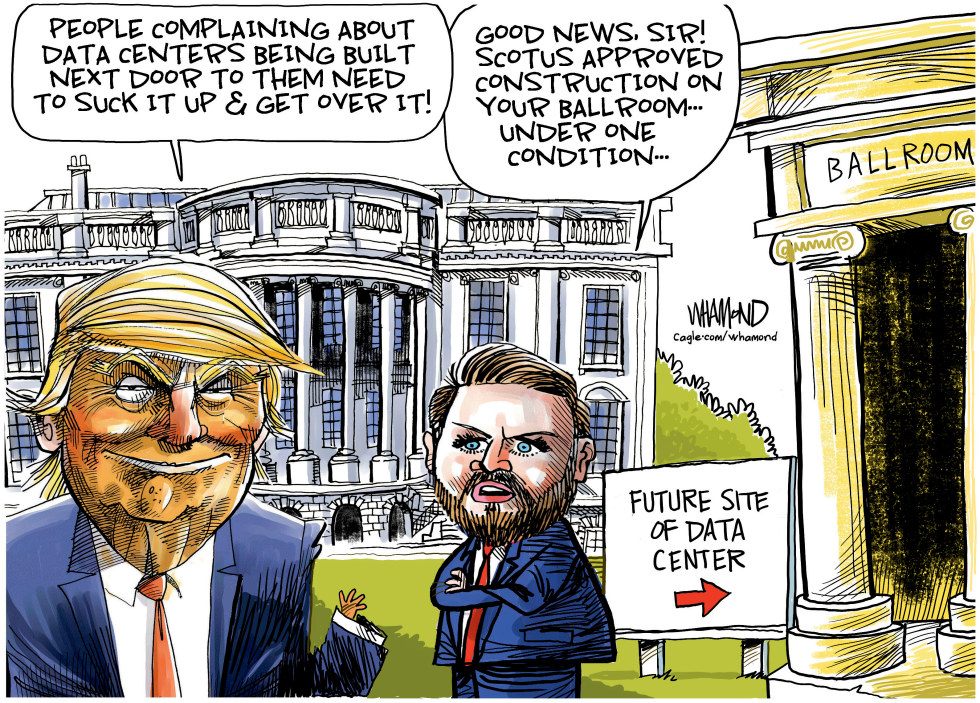
On September 2, 2026, reports emerged that the Trump administration secured Supreme Court approval for a new White House ballroom with the condition that the site also host a data center. The decision comes as communities nationwide protest data center construction near homes. The cartoon depicts Trump dismissing resident complaints while an aide delivers the conditional news. It highlights tensions between executive ambitions and local opposition to large-scale tech infrastructure. The piece argues that such projects prioritize political vanity over community concerns.
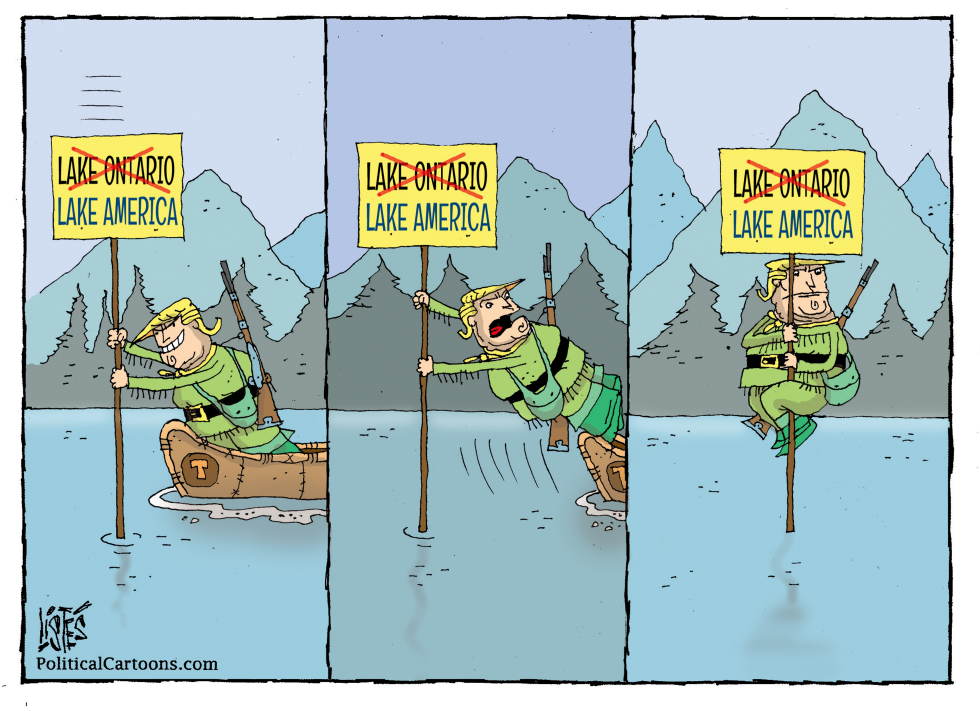
Donald Trump directed the renaming of Lake Ontario to Lake America in a move targeting shared U.S.-Canada waters. The action underscores ongoing tensions over border resources and national identity. The piece portrays the effort as an overreaching nationalist gesture that ignores international boundaries and practical realities.
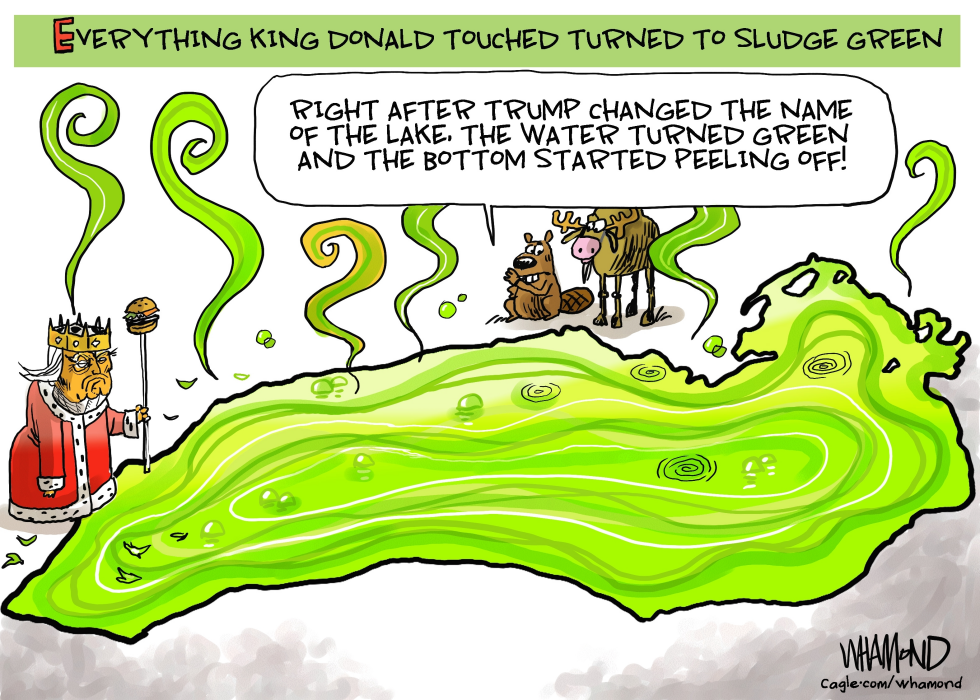
Donald Trump, depicted as a king, changes the name of a lake, after which the water turns green with sludge and the bottom begins peeling. Wildlife observers connect the timing directly to the renaming. The development raises concerns about environmental damage tied to executive actions. The piece portrays the outcome as an inevitable result of Trump's influence, turning natural areas into polluted sludge.
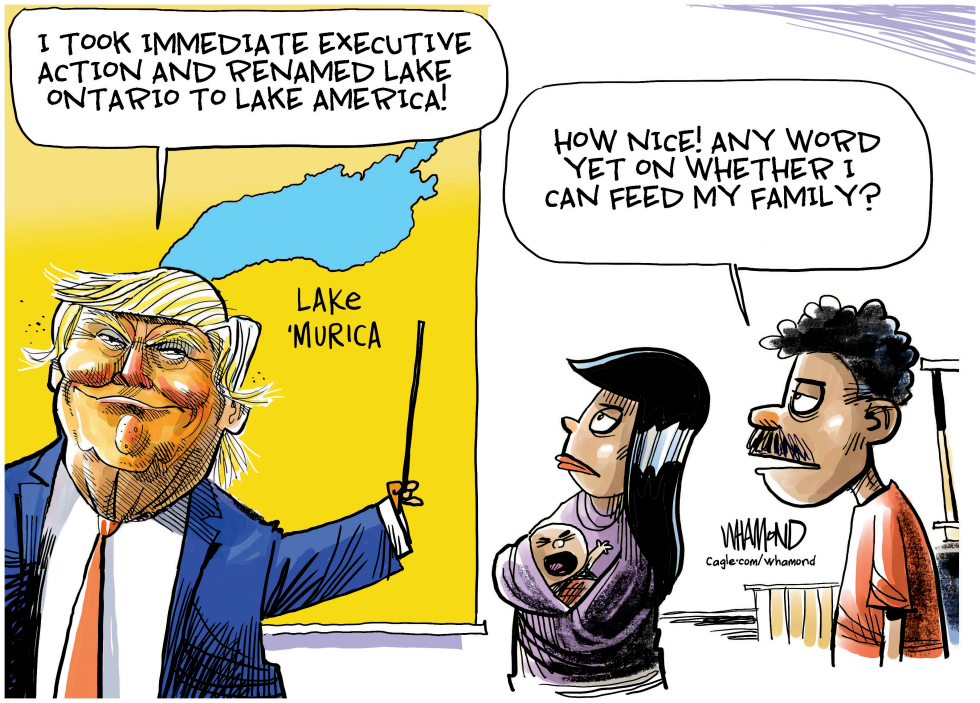
President Trump issued an executive order renaming Lake Ontario as Lake America. The move highlights his focus on symbolic gestures over practical governance. Critics note it distracts from economic pressures facing American households. The cartoon portrays the disconnect between such announcements and urgent family concerns like food security. It critiques the administration's priorities in the current political climate.
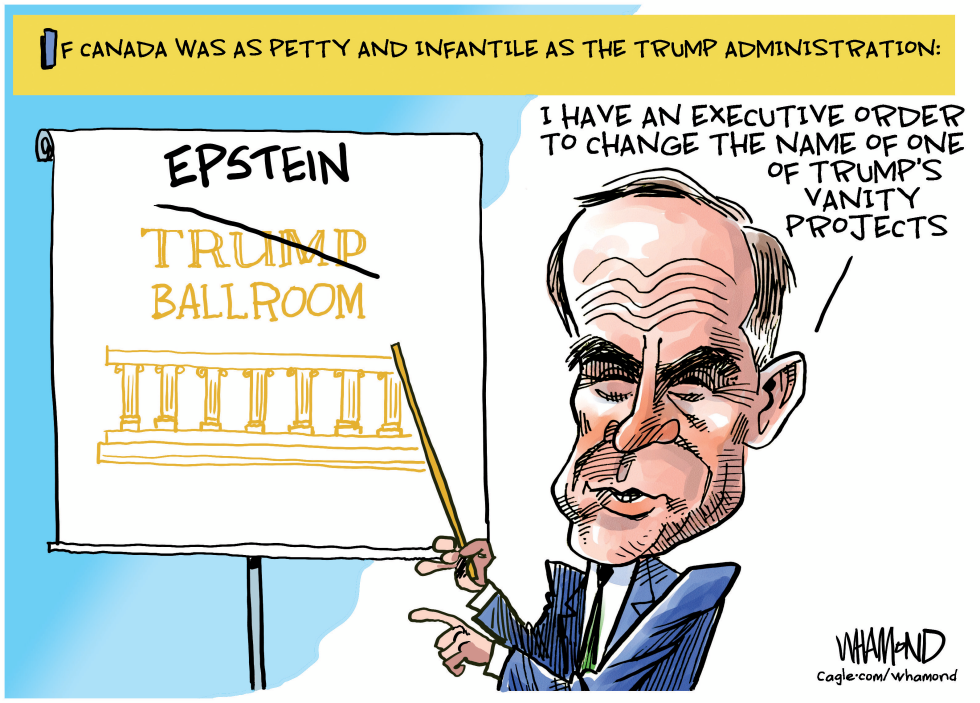
On August 27, 2026, a cartoon depicted Canadian Prime Minister Justin Trudeau issuing a mock executive order to rename a property tied to Jeffrey Epstein as the Trump Ballroom. The move parodies perceived pettiness in the Trump administration's handling of vanity projects and branding disputes. The piece argues that such tit-for-tat gestures underscore how executive actions can devolve into personal score-settling rather than substantive governance.
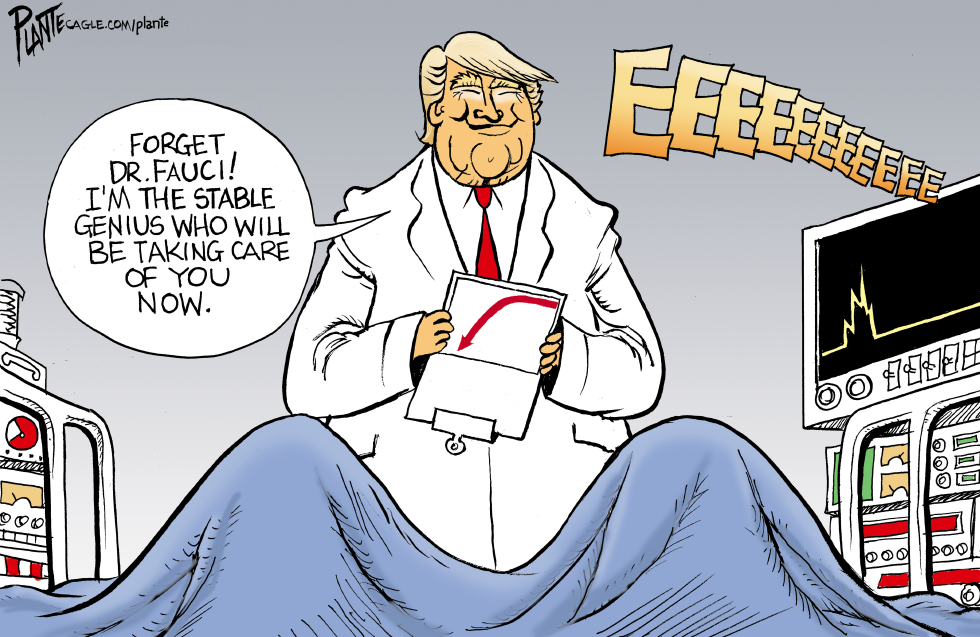
Donald Trump appears in a physician's coat asserting control over patient care and dismissing Dr. Fauci. The depiction occurs amid ongoing debates over federal health policy leadership and executive influence on medical decisions. The piece argues that such assertions risk undermining established expertise in public health administration.
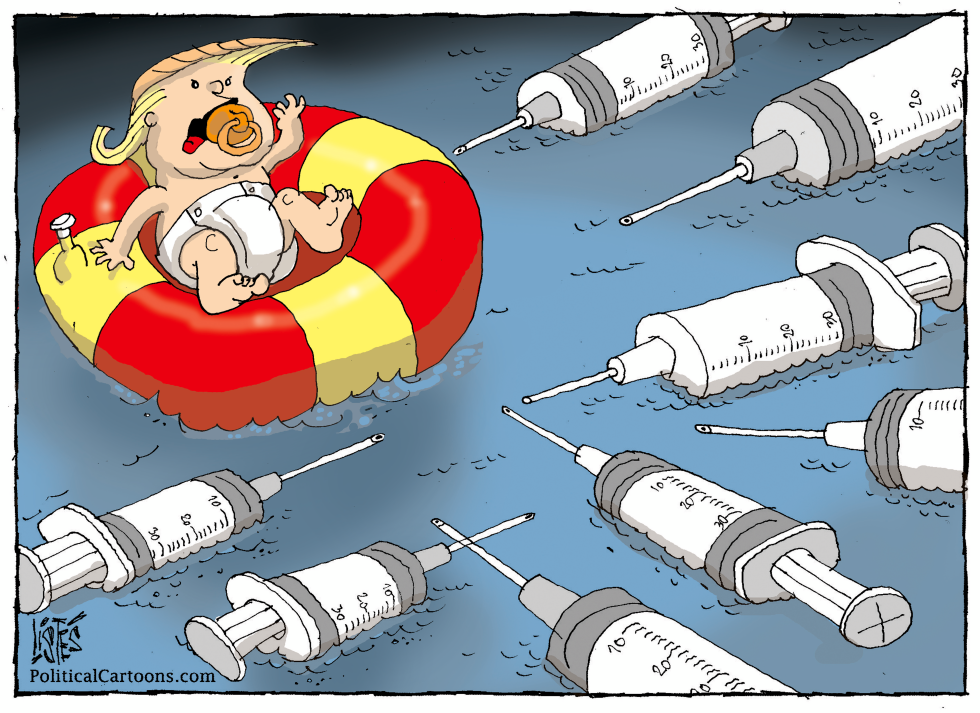
Donald Trump has maintained vocal opposition to certain vaccine mandates and public health measures in recent political discourse. The piece frames this stance through an infant metaphor to underscore perceived vulnerability and fear. It critiques the position as immature amid ongoing public health debates.
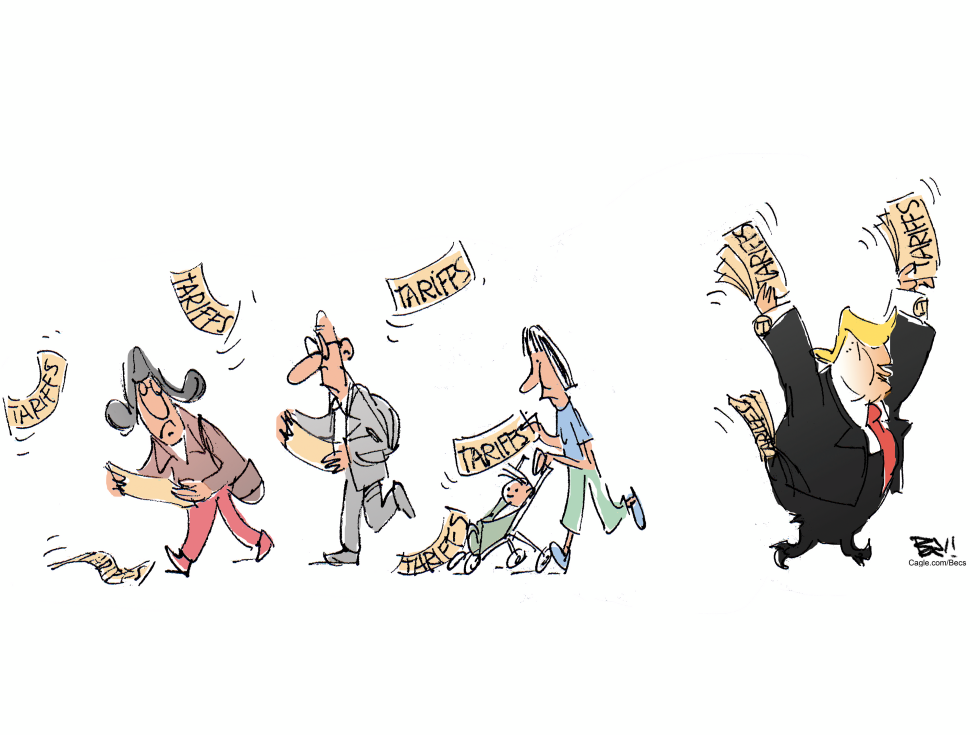
Donald Trump expanded tariffs across trading partners in mid-2026, triggering immediate market volatility and diplomatic pushback. The move raised costs for consumers and businesses reliant on imports. The piece portrays the policy as an indiscriminate barrage that disrupts daily life and global commerce.
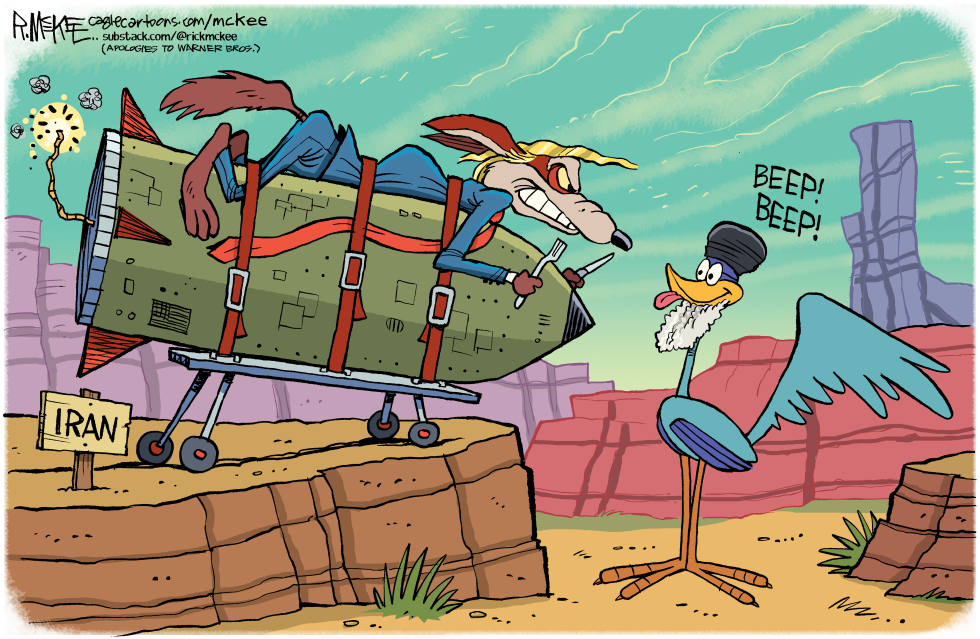
Donald Trump has renewed pressure on Iran through statements and policy signals in recent weeks. The moves come amid ongoing nuclear concerns and regional instability. The piece argues that such aggressive posturing risks backfiring in ways similar to past miscalculations.
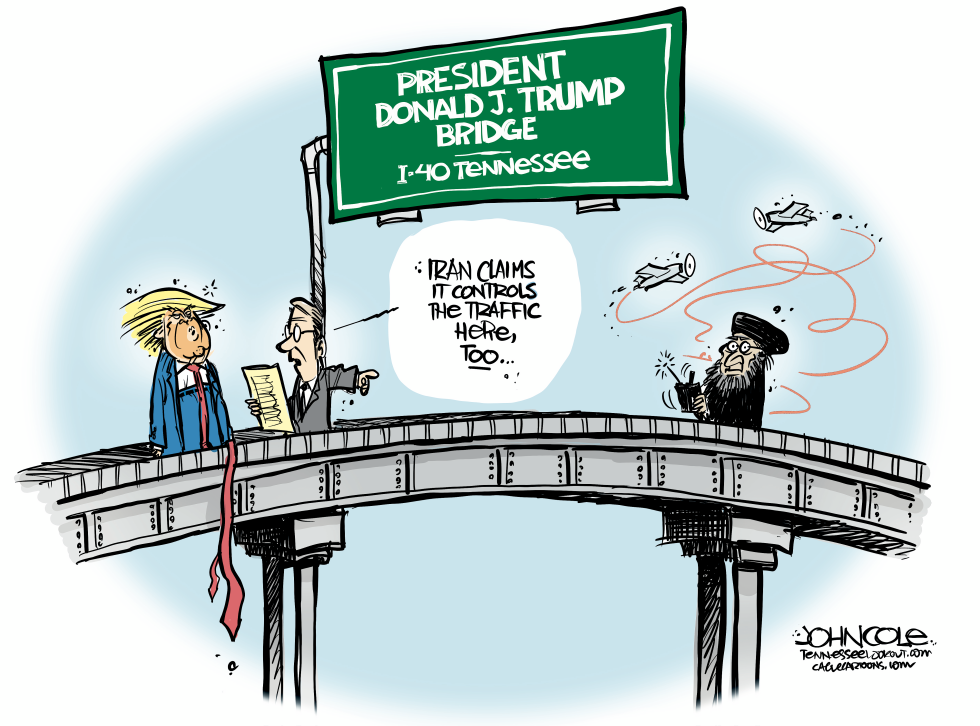
President Donald J. Trump attended the naming of the President Donald J. Trump Bridge on I-40 in Tennessee. The event drew attention when an Iranian figure appeared to claim control over traffic on the span. The development highlights ongoing tensions with Iran over shipping lanes and international routes. The cartoon frames the claim as an extension of Iran's broader pattern of asserting dominance over key passages. It positions the bridge naming as a domestic moment overshadowed by foreign threats.
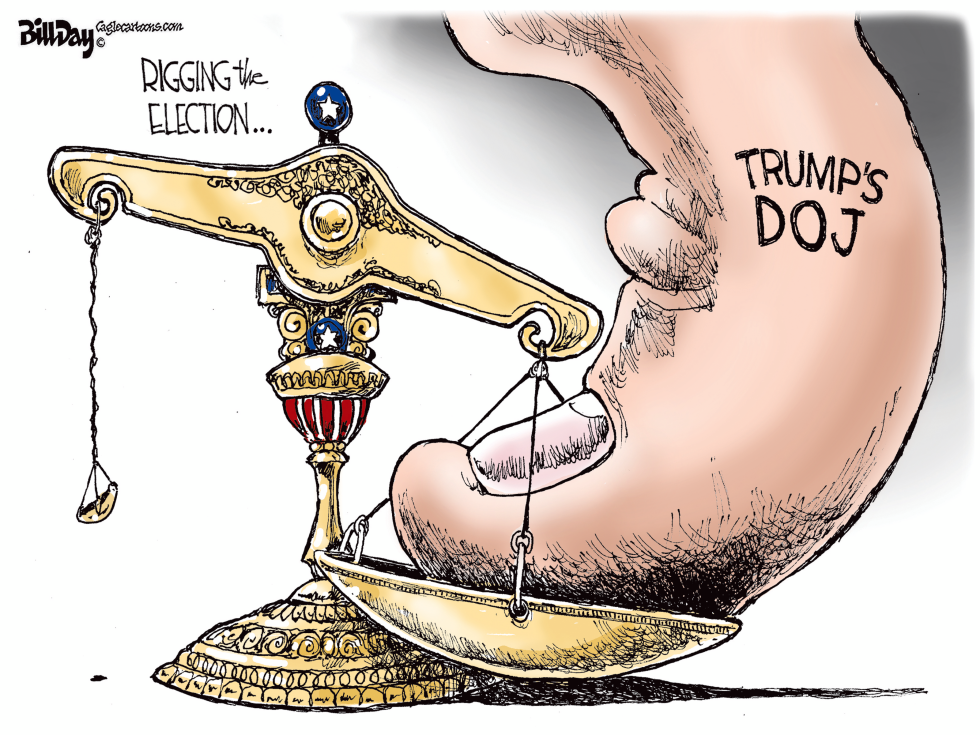
A political cartoon dated July 10, 2026, depicts an ornate scales of justice buckling under the weight of a massive figure labeled Trump's DOJ. The opposite pan hangs empty and elevated. Text above reads RIGGING the ELECTION. The image responds to ongoing concerns over Department of Justice actions and their potential impact on electoral processes during the Trump administration.
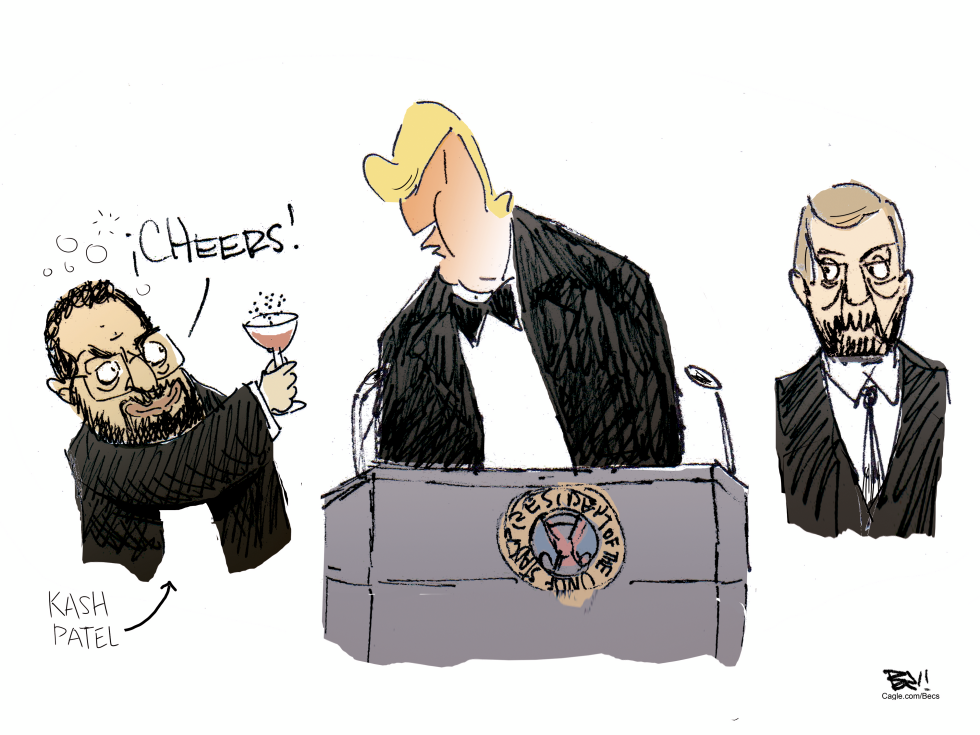
This political cartoon depicts a press conference scene with three suited men at a podium bearing an FBI-like seal. On the left, a bearded figure labeled Kash Patel holds a fizzing drink, exclaiming 'Cheers!' with bubbles floating up. The central blonde-haired man in a tuxedo leans forward, while a stern-faced man stands to the right. Drawing from tags like Donald Trump Administration, US Attack, Hilton Hotel, lone wolf, attempt to assassinate Donald Trump, and press conference, the artwork captures a moment of ironic celebration amid serious events. The style is sketchy and caricatured, emphasizing expressions and gestures without deeper inference.
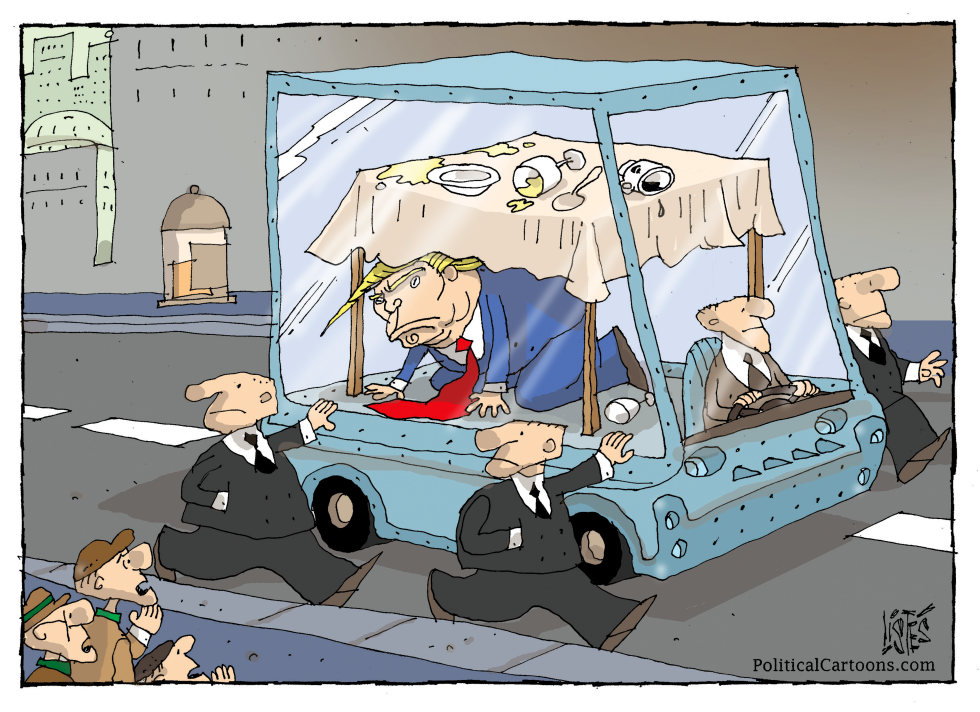
Nikola Listes captures President Trump in a satirical Trumpmobil, a blue armored vehicle with a glass dome enclosing a dinner table, plates and glasses spilling as Trump reaches out angrily. Suited agents push the vehicle on a city street, while onlookers react from the sidewalk. Tags like attack, Strait of Hormuz, war in Iran, terror frame the scene, blending humor with commentary on presidential security. The cartoon's composition highlights the absurdity of protection amid chaos, with Trump's exaggerated features driving the satire. Dry take on vulnerability in power, perfect for syndication.