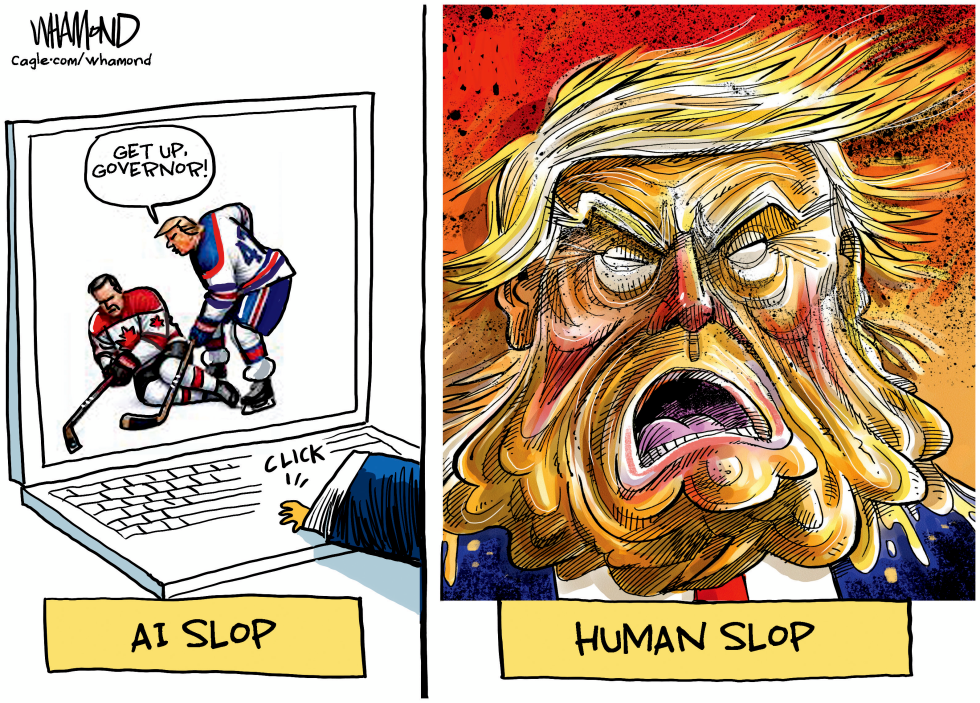
AI tools produce flawed political images while human artists create equally flawed ones. The piece highlights declining quality in both digital generation and traditional caricature of figures like Donald Trump. It argues neither approach delivers credible or effective visual commentary.
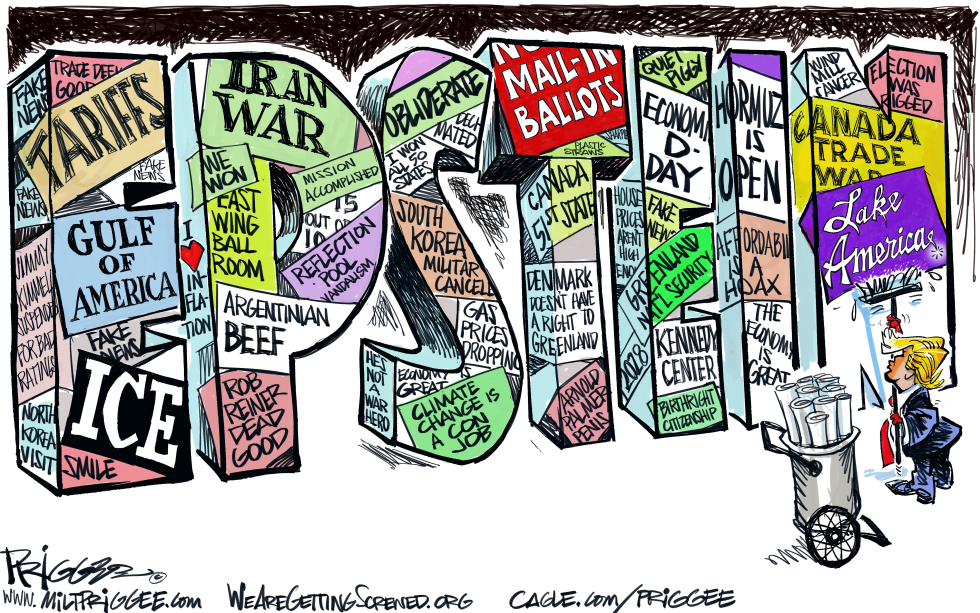
Donald Trump appears in a September 2026 cartoon pushing a cart stacked with signs promoting tariffs, questioning mail-in ballots, and asserting claims about Iran, Canada trade, and domestic issues. The image captures a pattern of public messaging that blends economic nationalism with repeated challenges to established processes. The editorial position frames these statements as a deliberate strategy to keep multiple controversies in motion at once.
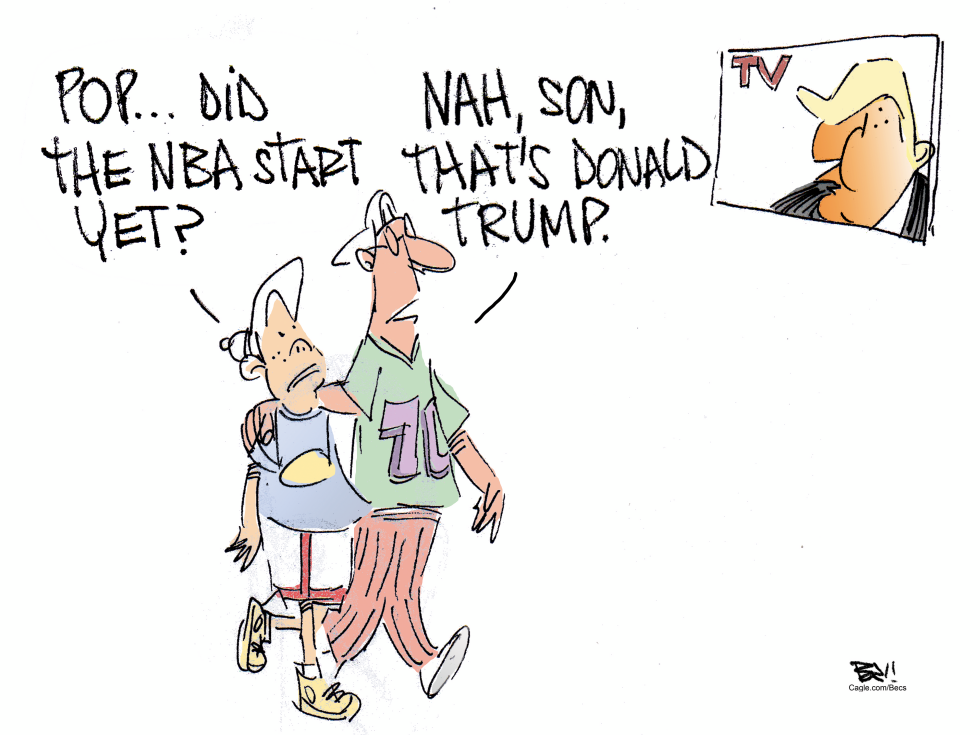
A father and son discuss the start of the NBA season while watching television. The son inquires whether the game has begun. The father replies that the figure shown is Donald Trump. The exchange highlights ongoing public attention to Trump's public profile and media presence. The piece presents the mix-up as a lighthearted comment on how Trump's image appears in everyday contexts.
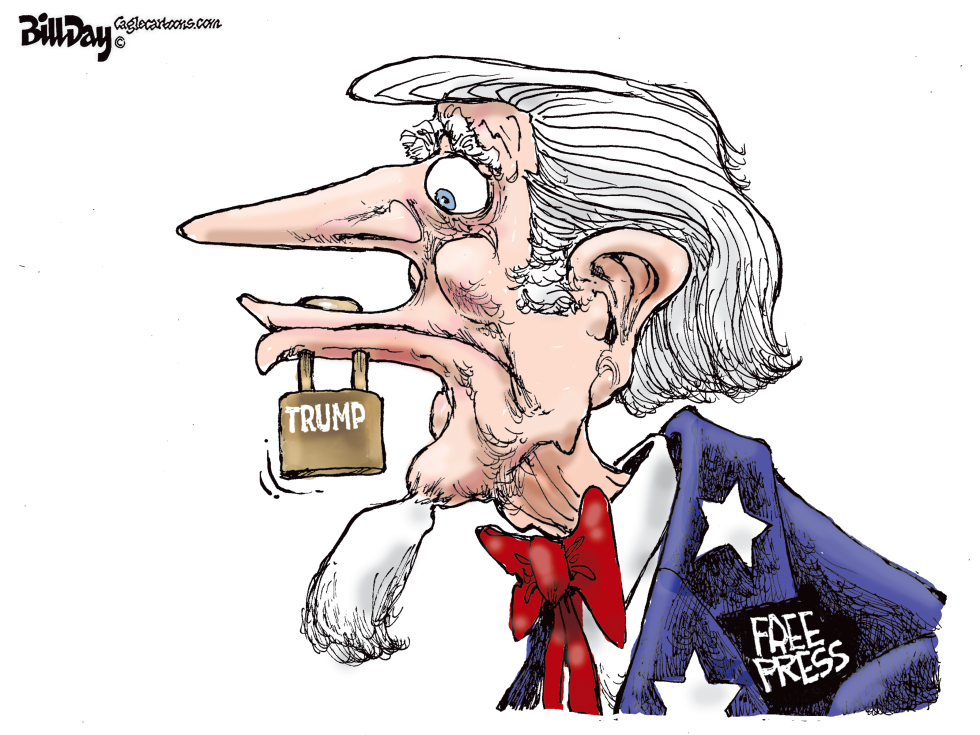
Donald Trump, holding office in 2026, faces renewed scrutiny over efforts to limit press access and information flow. Critics argue these moves undermine democratic oversight. The cartoon portrays the administration as actively securing or restricting the free press through direct control.
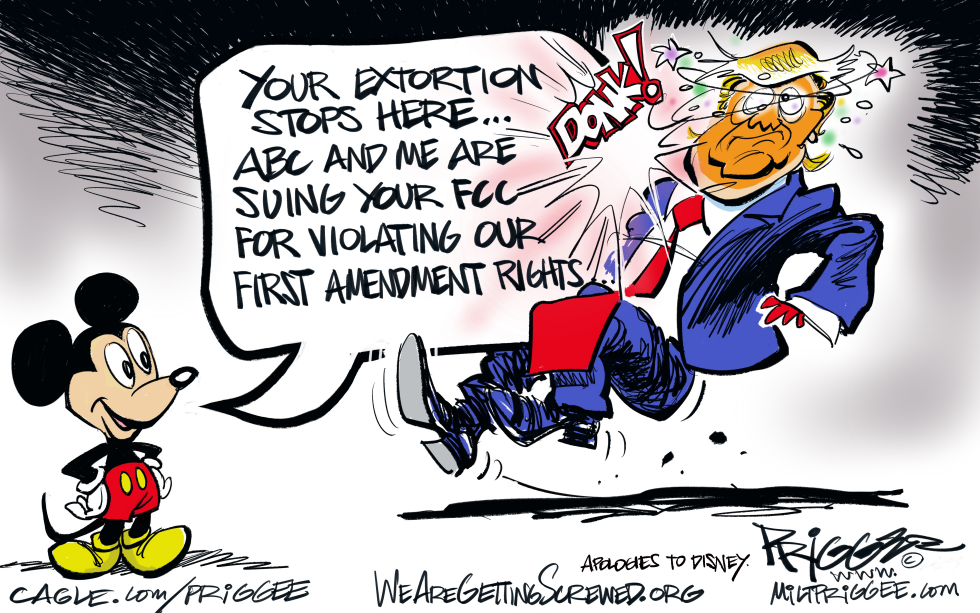
The cartoon depicts Mickey Mouse confronting a reeling Donald Trump, with a large speech bubble stating that ABC and Disney are suing the FCC for violating First Amendment rights. The scene shows Trump knocked off balance with a red folder, stars around his head, and the word Doh! above. Bottom text includes site references and an apology to Disney. The image responds to ongoing tensions between the Trump administration and media companies over regulatory actions at the FCC.
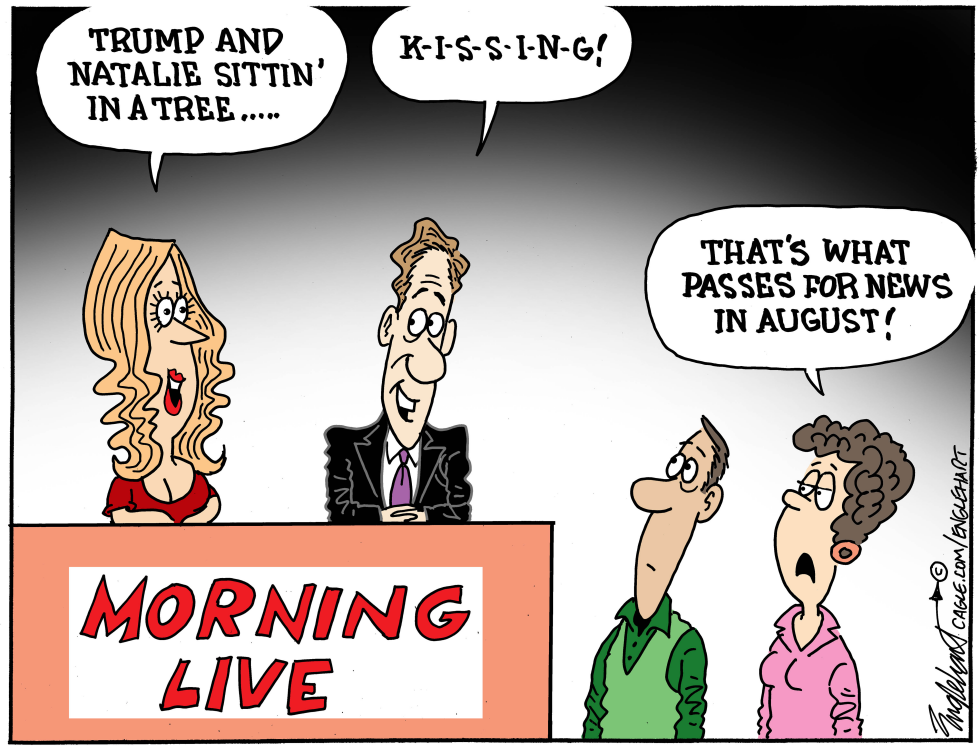
Speculation about Donald Trump and Natalie Harp sharing a kiss surfaced on morning television in August 2026. The story gained traction during a traditionally slow news period. The cartoon portrays the coverage as trivial gossip that passes for reporting when substantive events are scarce.
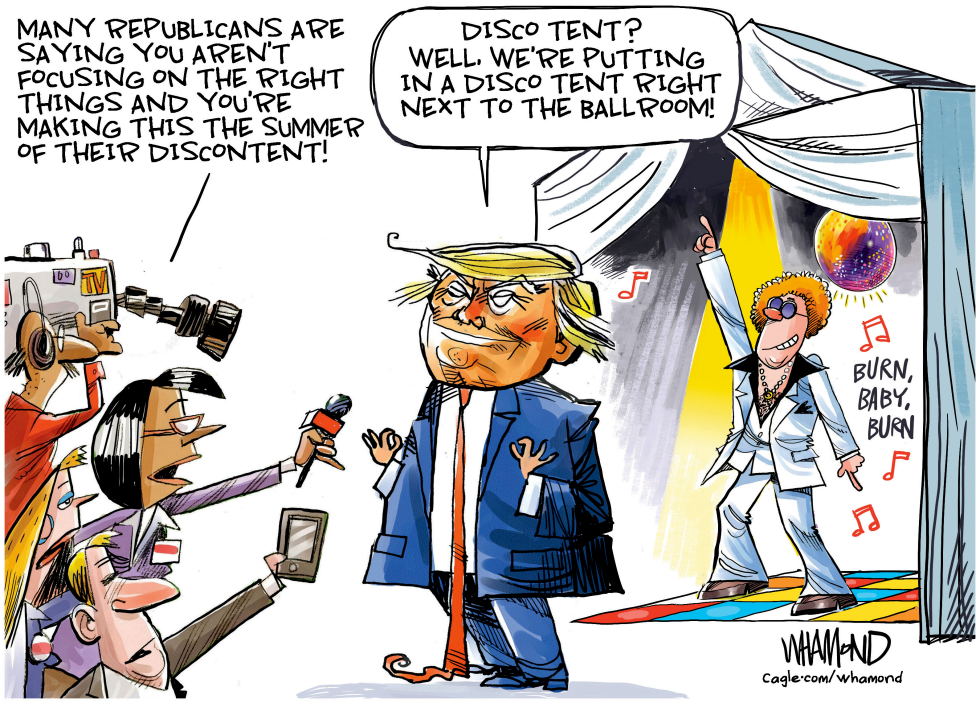
Republicans have publicly criticized Donald Trump for diverting focus from core issues during the summer of 2026, highlighting internal party friction over perceived misplaced priorities. The criticism centers on White House renovation choices that include adding a disco tent adjacent to the ballroom. Trump faces direct questions from the press about these decisions. The editorial position frames the episode as evidence of deepening discontent within the Republican ranks over the president's agenda.
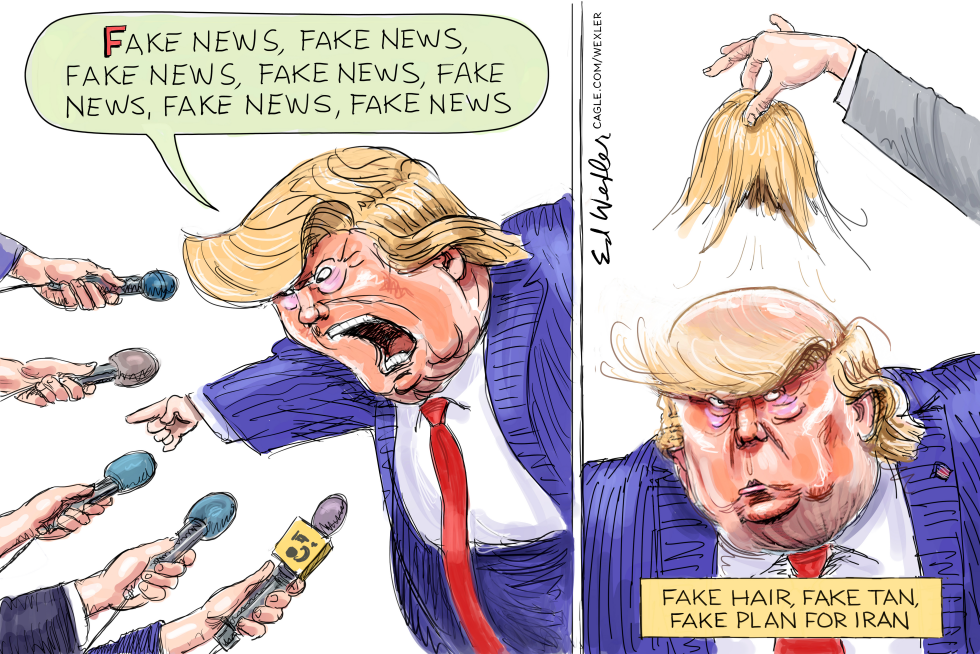
Donald Trump repeatedly labels media coverage as fake news during press encounters. The cartoon responds by questioning the authenticity of his appearance and his approach to Iran policy. It portrays the disconnect between his public statements and underlying realities.
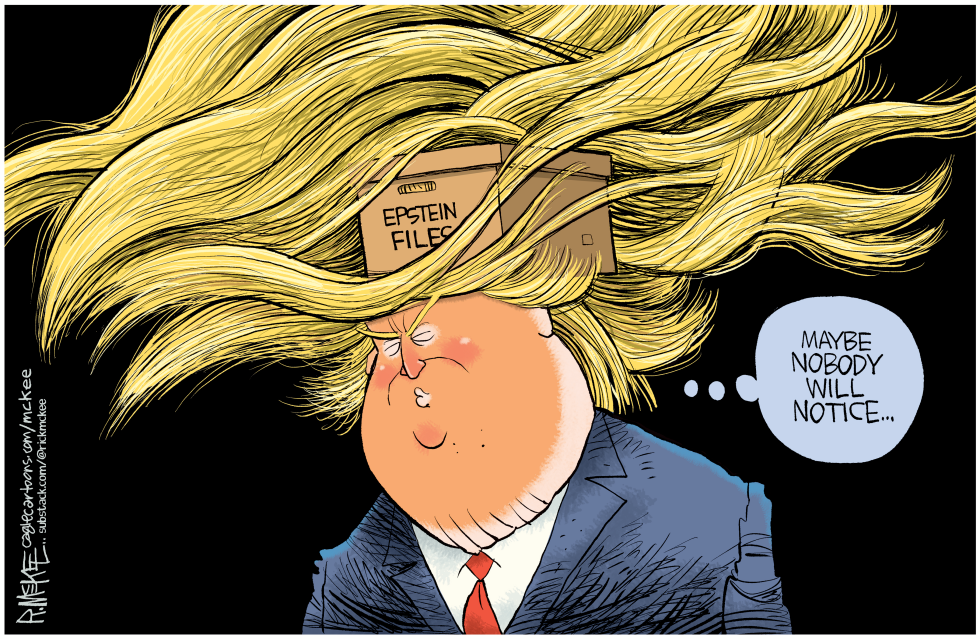
Donald Trump faces renewed public attention over the release of Epstein files detailing past connections. The documents have drawn fresh examination from investigators and media outlets. The editorial takes the position that attempts to downplay or obscure the material only intensify questions about accountability.
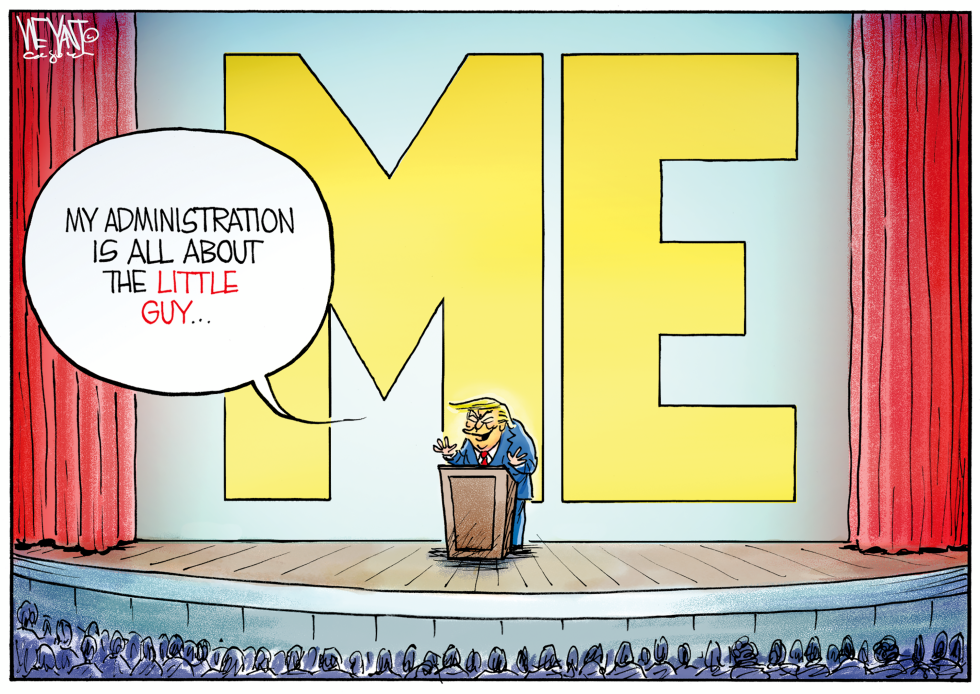
Donald Trump has repeatedly positioned his administration as champion of ordinary Americans during public addresses. The claim comes amid ongoing debates over policy priorities and personal branding in the White House. The piece portrays the rhetoric as centered on the speaker rather than the public.
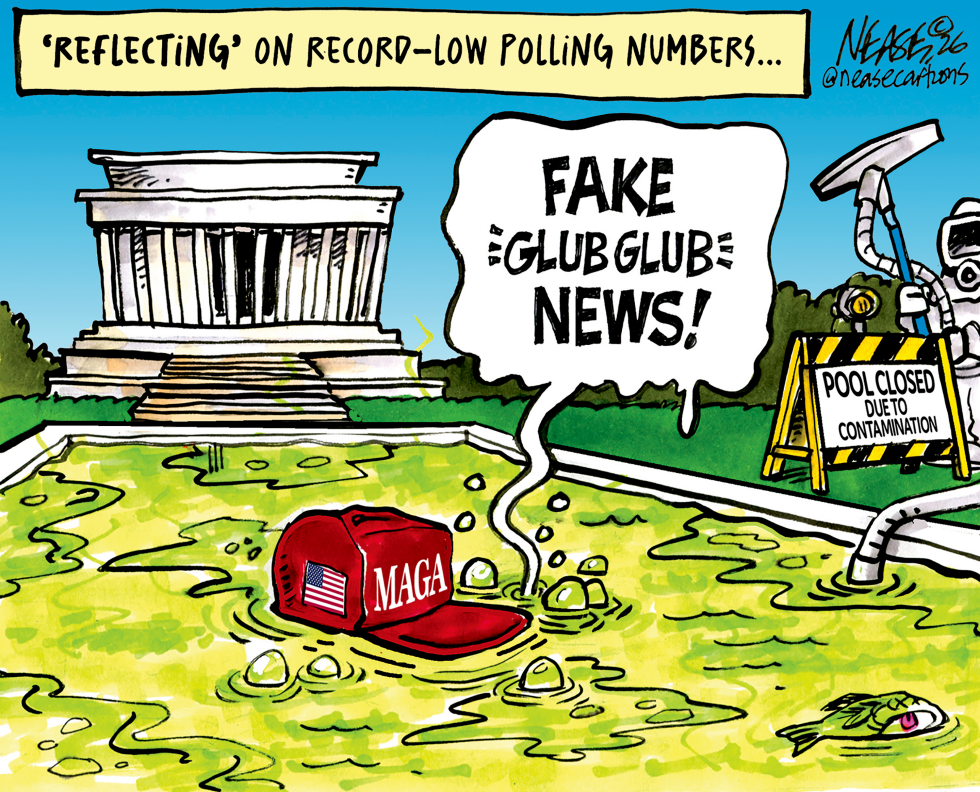
Donald Trump-aligned polling numbers reached record lows in early August 2026. Supporters responded with claims of fake news rather than addressing the data. The piece portrays this denial as occurring in a toxic environment.
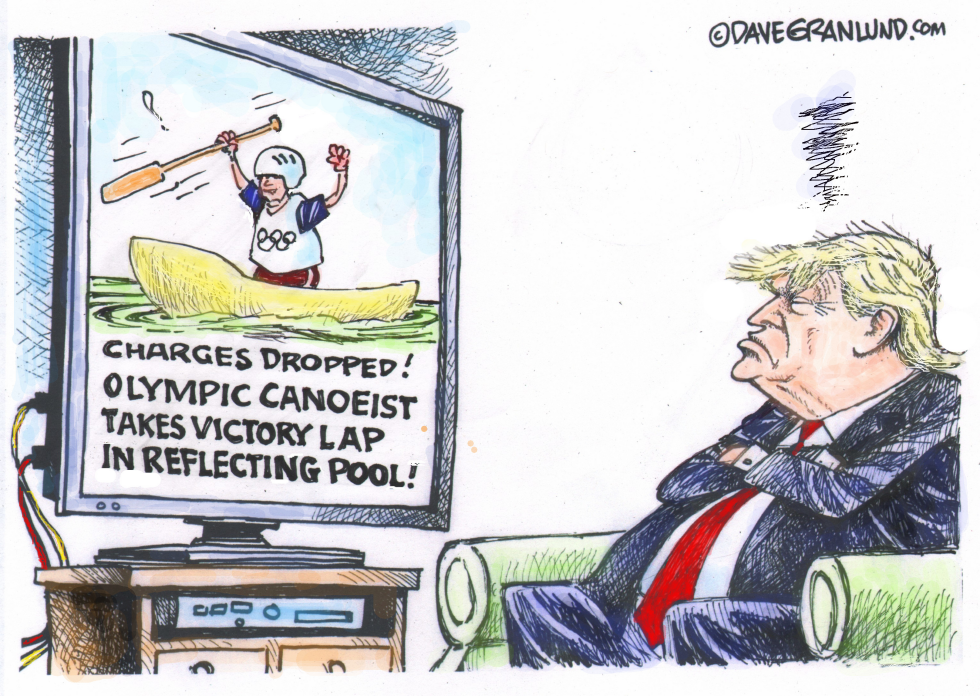
An Olympic canoeist had charges dropped and marked the outcome with a victory lap in a reflecting pool. The development drew attention from political observers including Donald Trump. The piece frames the episode as a notable moment in ongoing legal and public narratives around high-profile figures.
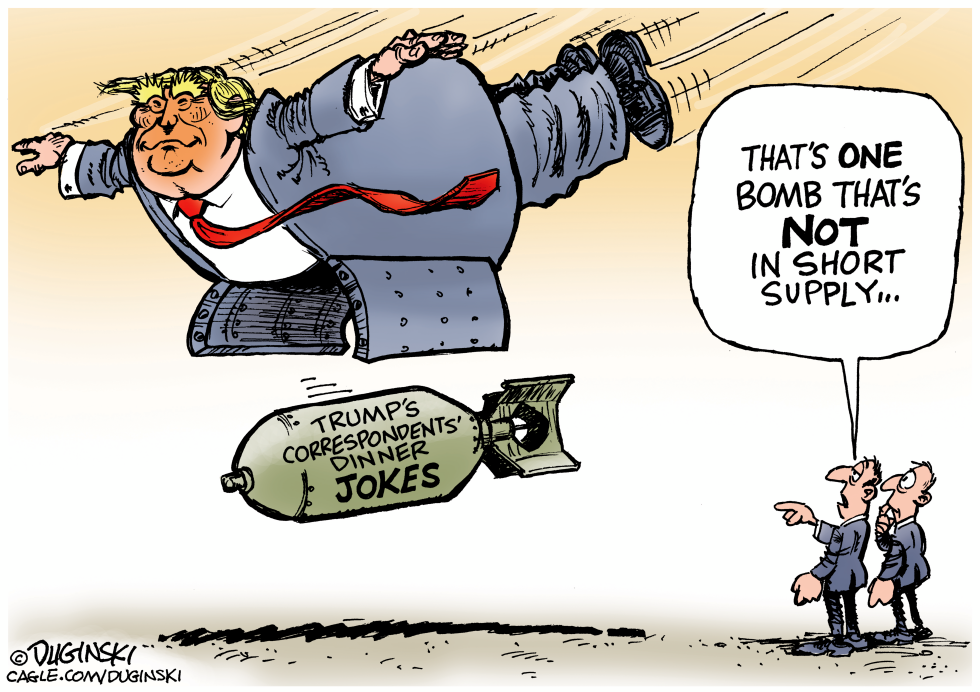
Donald Trump delivered jokes at the 2026 White House Correspondents Dinner that landed poorly with the audience. The event drew attention for the president's comedic missteps amid ongoing tensions with the press. The piece argues the routine exposed a persistent pattern of tone-deaf delivery rather than isolated misfires.
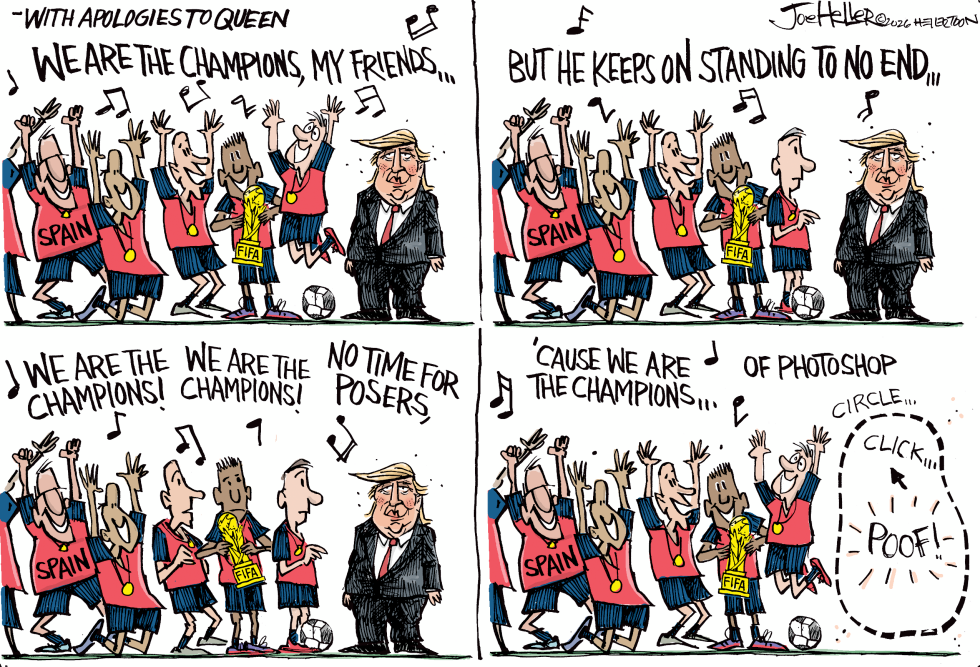
Spain's national soccer team won a major FIFA title in July 2026. Images circulated showing Donald Trump alongside the players. The cartoon uses altered Queen lyrics to argue the inclusion was digitally fabricated and Trump does not belong in the scene.
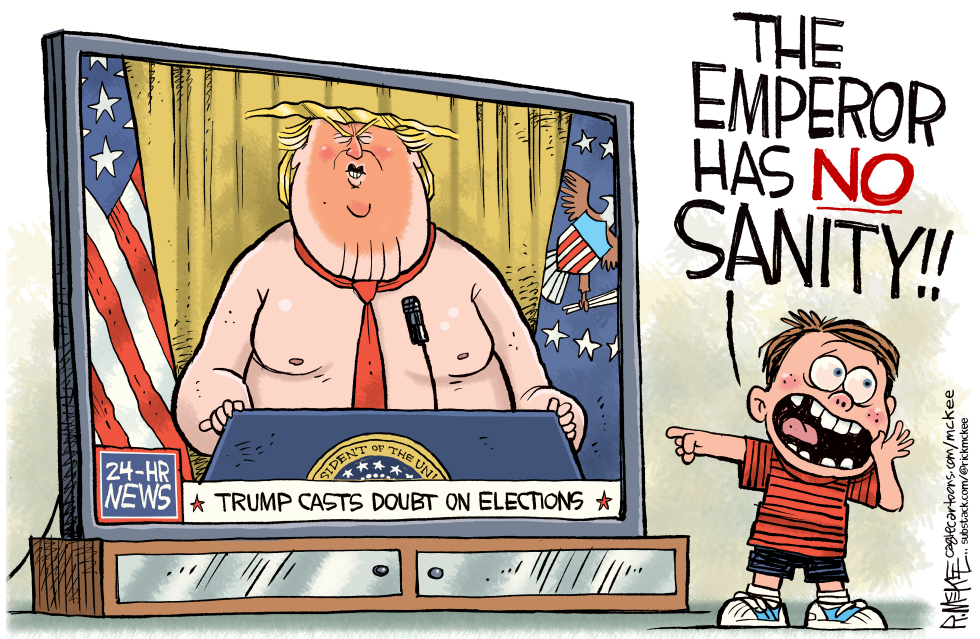
A television broadcast shows Donald Trump shirtless behind a presidential podium while casting doubt on elections. A young boy stands outside the screen pointing and shouting that the emperor has no sanity.