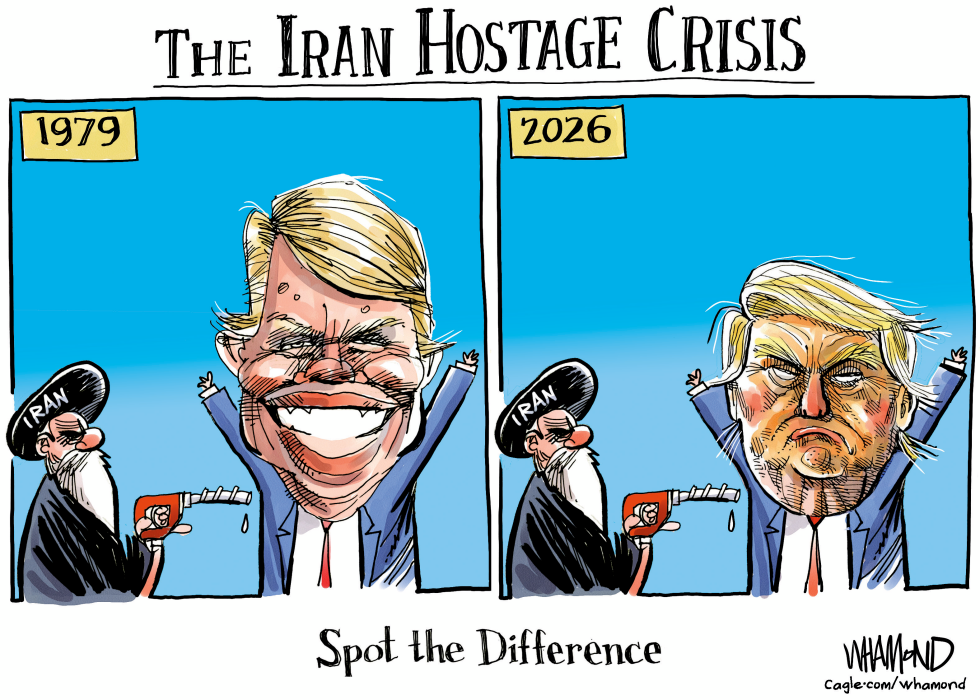
The cartoon splits the Iran Hostage Crisis into 1979 and 2026 panels. In the first Trump appears elated while an Iran-labeled figure holds a gas pump. In the second Trump looks distressed with the same figure present. The piece uses the visual contrast to comment on how Iran-related pressures affect US political figures differently over time.
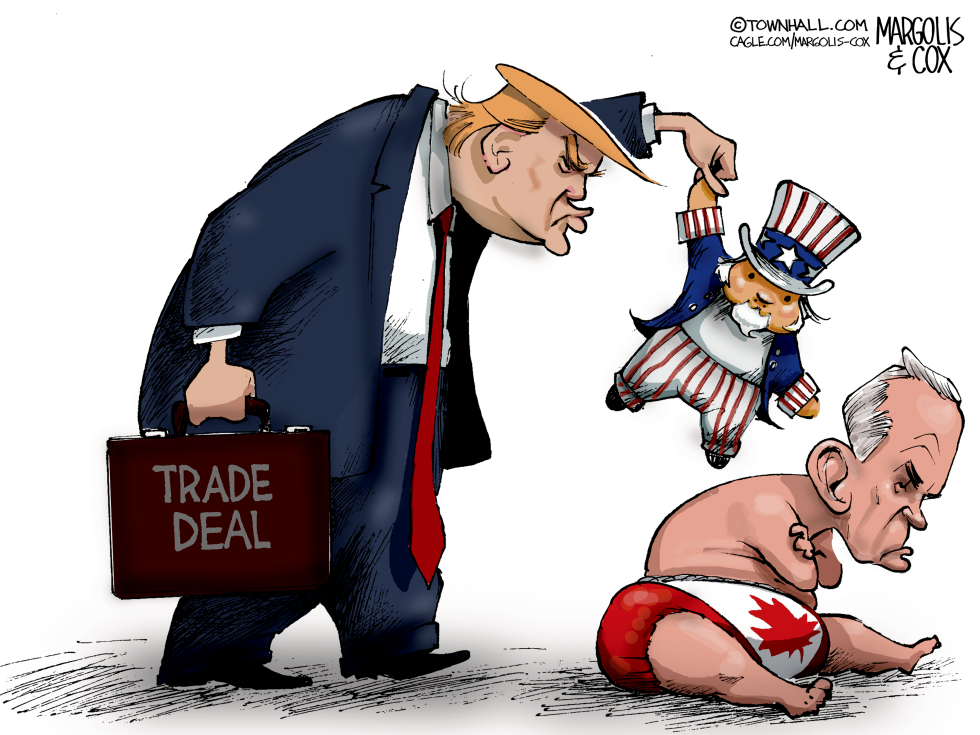
Donald Trump holds a briefcase labeled trade deal while dangling an Uncle Sam puppet above a baby figure wearing a Canadian flag diaper, identified as Mark Carney. The September 2026 cartoon responds to ongoing US-Canada trade tensions under the Trump administration. Carney, a prominent Canadian figure eyed for leadership, faces portrayal as vulnerable in negotiations. The piece argues that Trump exerts direct control over Canadian interests through economic leverage rather than equal partnership.
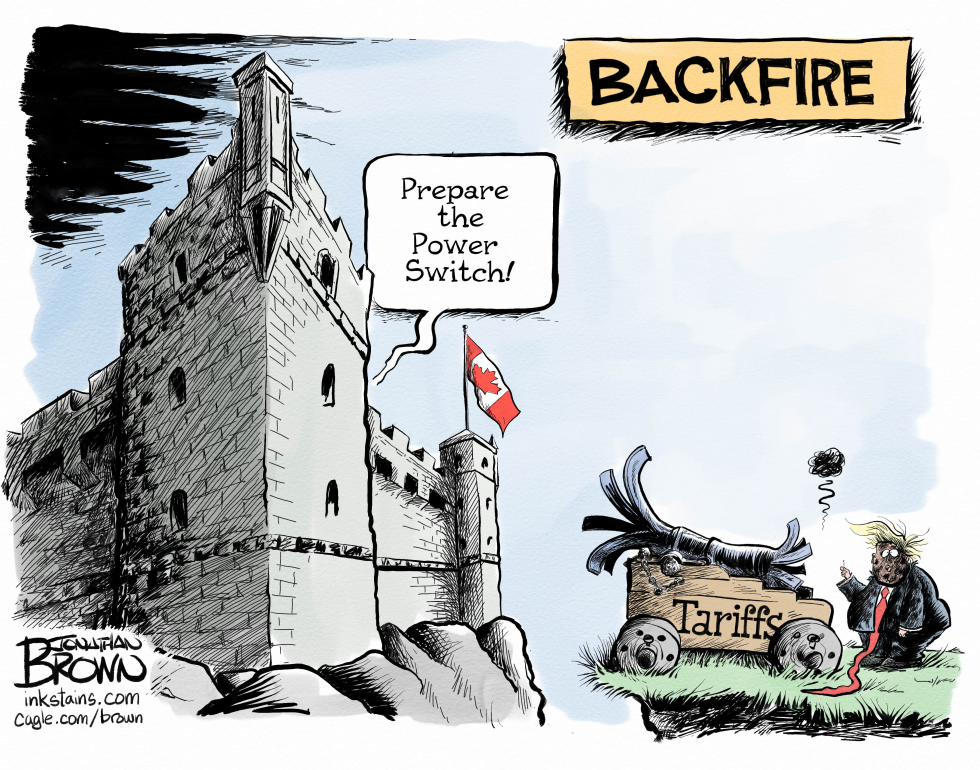
The cartoon shows a Canadian castle flying its flag while a cannon labeled Tariffs explodes backward toward a figure resembling Donald Trump. The scene responds to ongoing trade tensions where U.S. tariffs on Canadian goods prompted retaliatory measures. The visual emphasizes the policy rebounding on its originator rather than achieving intended pressure.
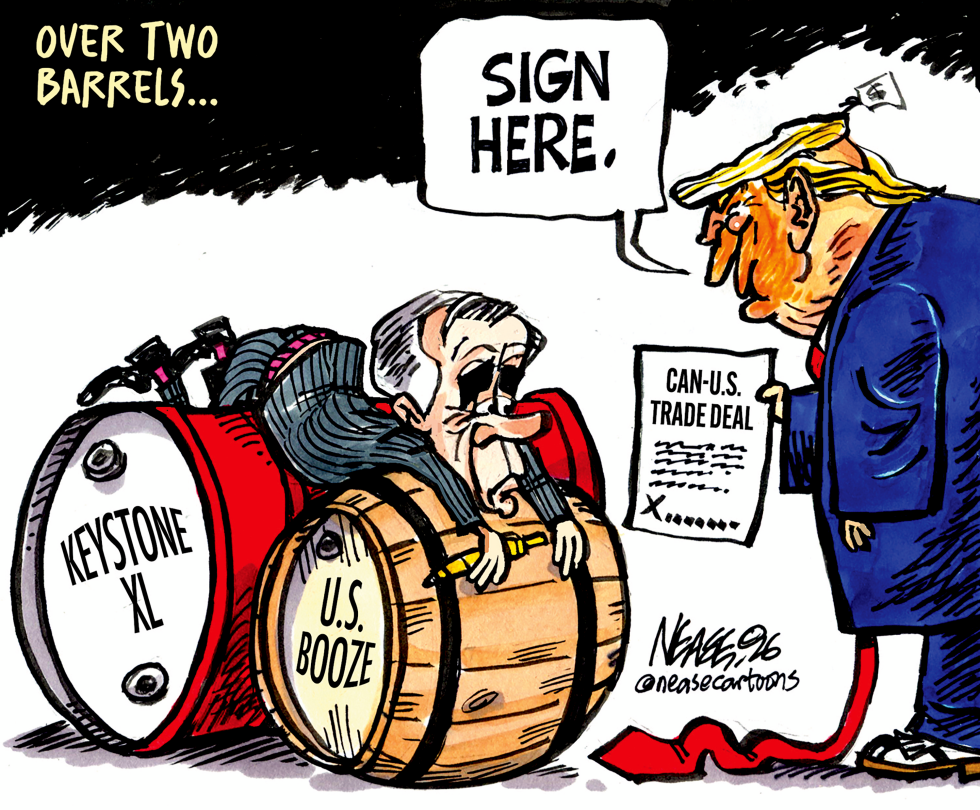
Donald Trump is pressing Canada to finalize a bilateral trade agreement by positioning the Canadian leader between a Keystone XL pipeline barrel and a U.S. booze barrel. The move ties energy infrastructure approval to broader trade concessions including alcohol exports. The editorial takes the position that such barrel-based pressure tactics risk undermining stable Canada-U.S. economic relations.
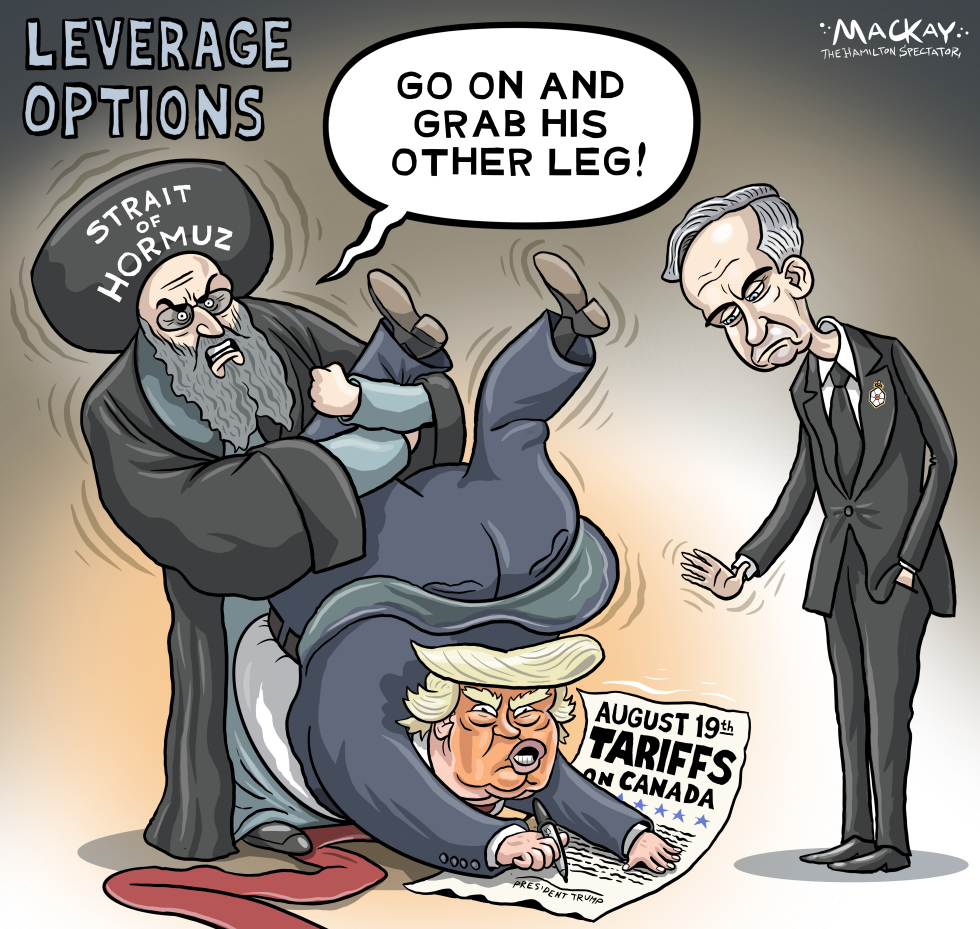
On August 12 2026 President Trump prepares to impose tariffs on Canada amid tensions involving the Strait of Hormuz. The move draws immediate pushback from Iran-linked actors seeking leverage. The piece argues that tariff policy invites risky entanglements that weaken U.S. position.
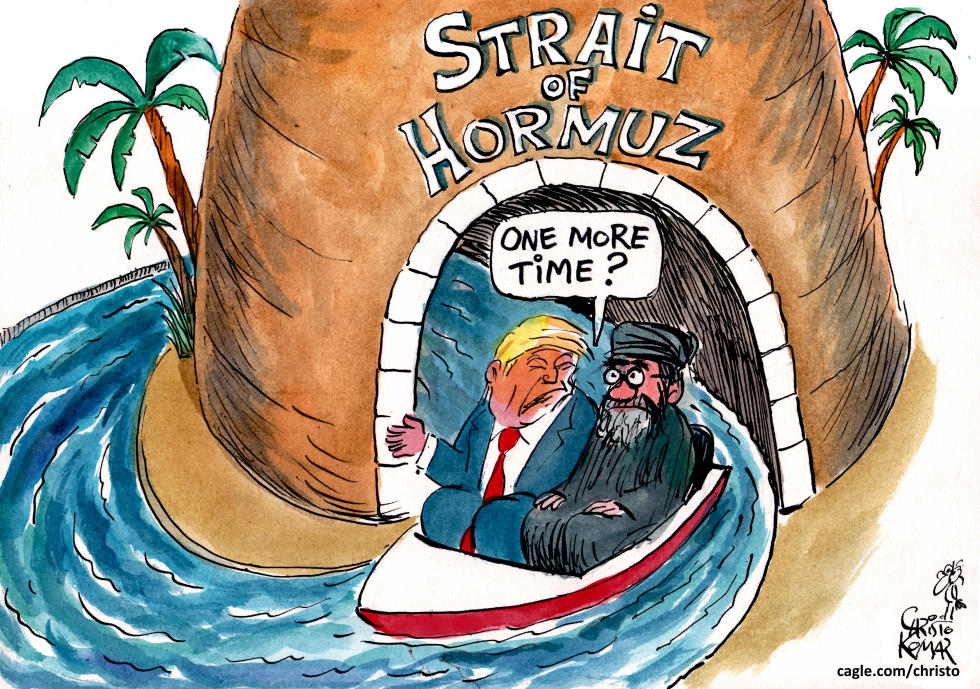
On August 5 2026 renewed friction over shipping lanes in the Strait of Hormuz draws attention as former President Donald Trump appears alongside Iran's Supreme Leader in a symbolic return to the chokepoint. The episode underscores ongoing US-Iran friction over energy exports and naval presence. The piece portrays the pair repeating a risky transit that highlights persistent strategic vulnerabilities in the Persian Gulf.
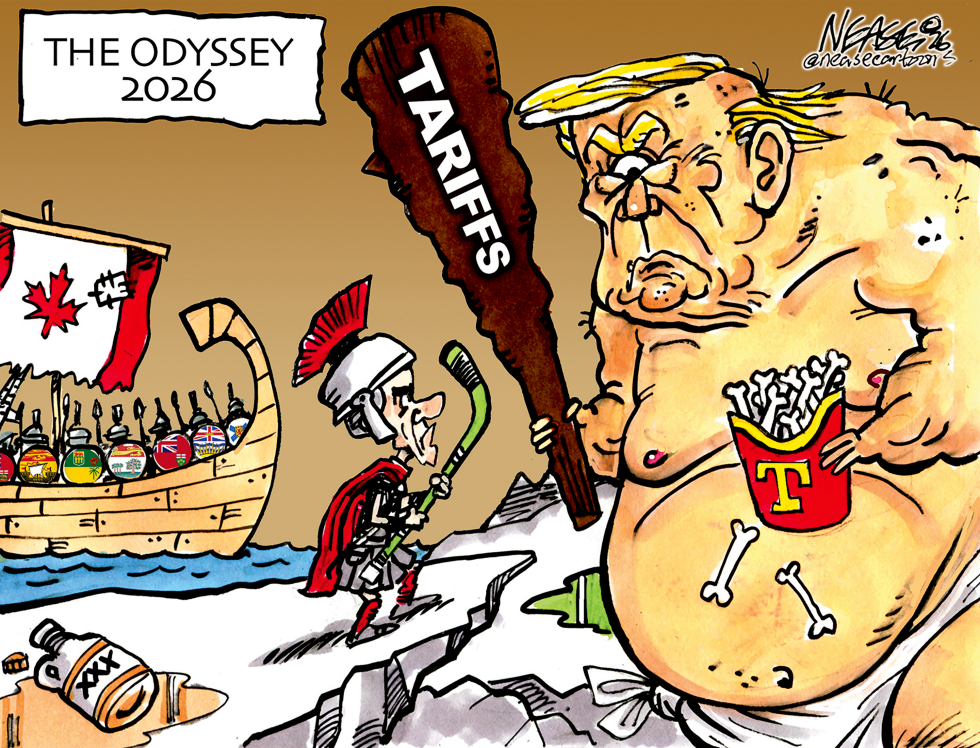
President Trump escalates tariffs on trading partners including Canada in mid-2026. The move targets imports amid ongoing disputes over trade balances and supply chains. Allies respond with coordinated pushback through diplomatic and economic channels. The cartoon casts the confrontation as a one-sided power play by the oversized tariff wielder against smaller coordinated opponents.
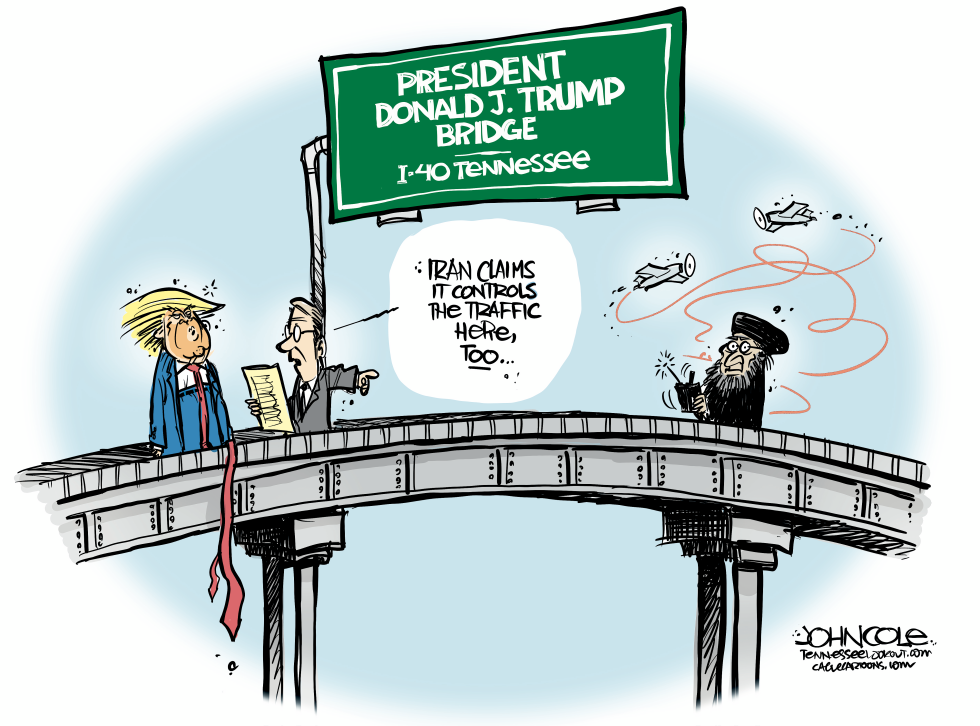
President Donald J. Trump attended the naming of the President Donald J. Trump Bridge on I-40 in Tennessee. The event drew attention when an Iranian figure appeared to claim control over traffic on the span. The development highlights ongoing tensions with Iran over shipping lanes and international routes. The cartoon frames the claim as an extension of Iran's broader pattern of asserting dominance over key passages. It positions the bridge naming as a domestic moment overshadowed by foreign threats.
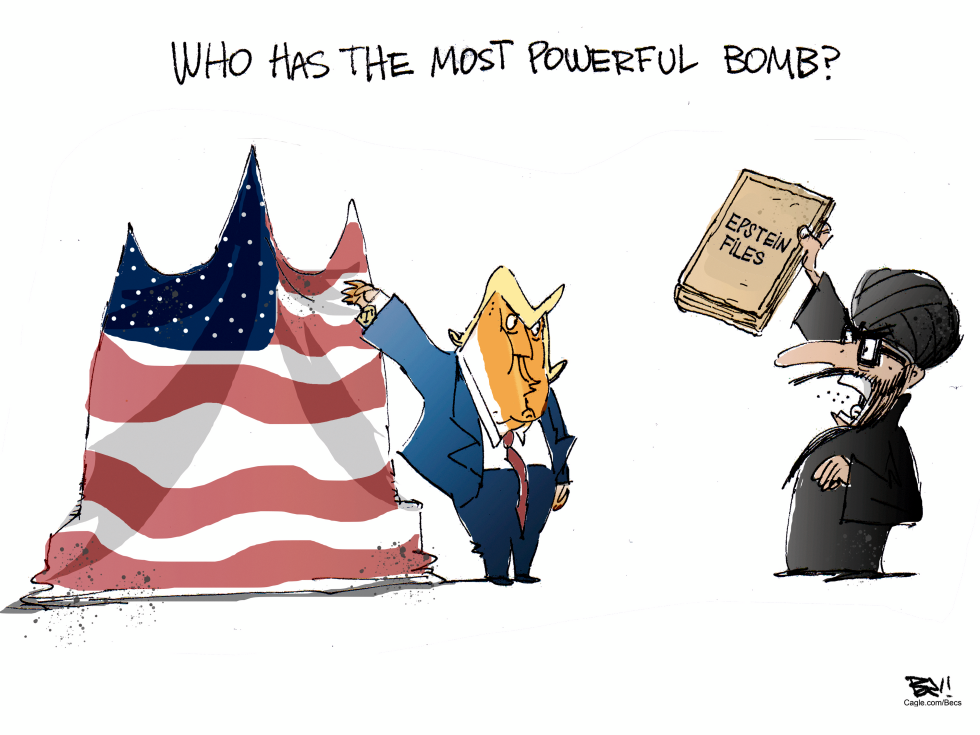
Leverage between the United States and Iran has long centered on nuclear capability and diplomacy. The piece sets that against domestic political pressure from document releases and investigations. It suggests the most damaging weapon in play may not be a military one.
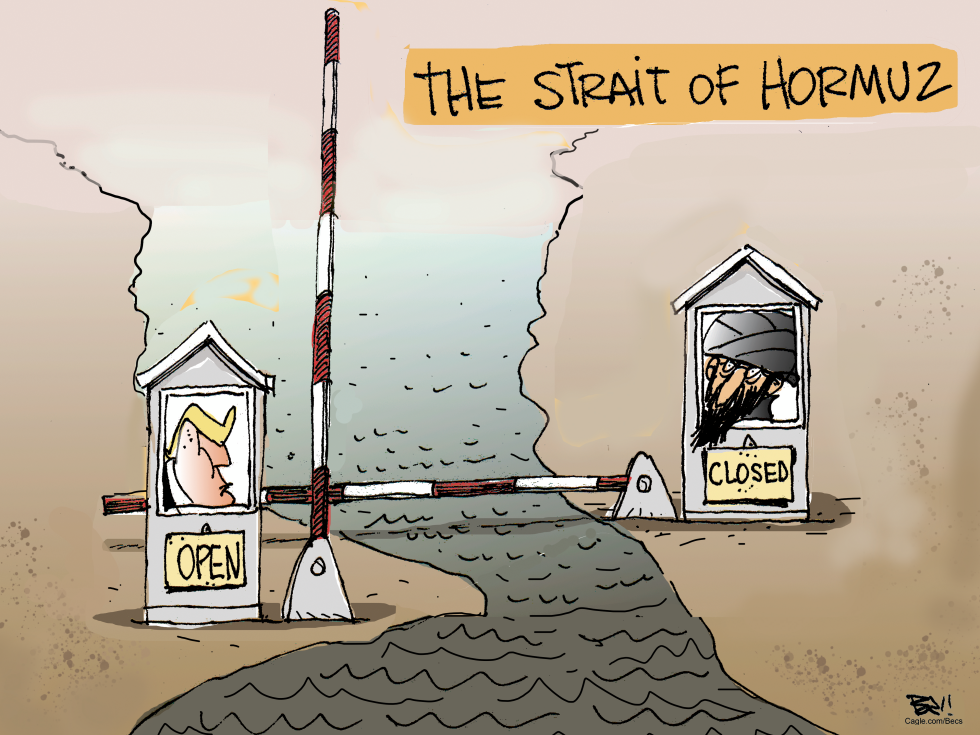
The Strait of Hormuz remains a flashpoint for global oil transit as the United States and Iran maintain opposing stances on access. Donald Trump positions an open checkpoint while an Iranian official signals closure. The editorial highlights the standoff's direct impact on energy markets and shipping security.
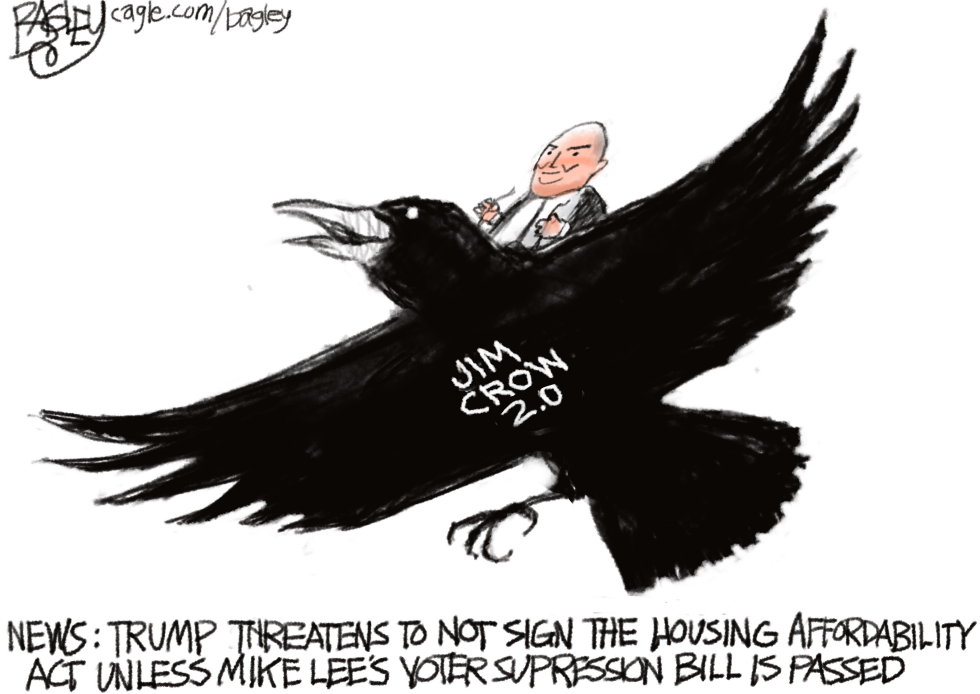
The cartoon shows President Trump riding a large black bird labeled Jim Crow 2.0. The bird carries him across the frame. Bottom text states Trump threatens to withhold signature from the Housing Affordability Act unless Mike Lee's voter suppression bill passes. The image responds to legislative negotiations in late June 2026 where the president linked the two measures. It uses the historical Jim Crow reference to frame the voter bill as restrictive. The visual ties the housing measure directly to the election-related proposal.
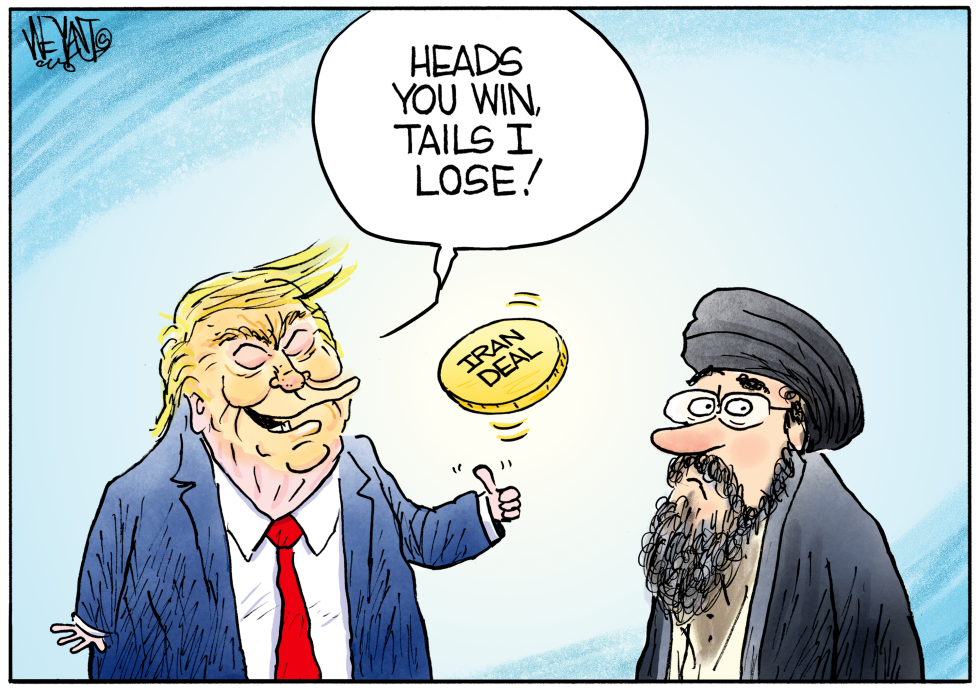
Weyant depicts Donald Trump flipping a coin to determine whether to uphold or abandon the Iran nuclear agreement, satirizing the randomness of his foreign policy decision-making. The coin toss metaphor suggests Trump treats major diplomatic decisions as matters of chance. The cartoon captures diplomatic anxiety about Trump's unpredictability.
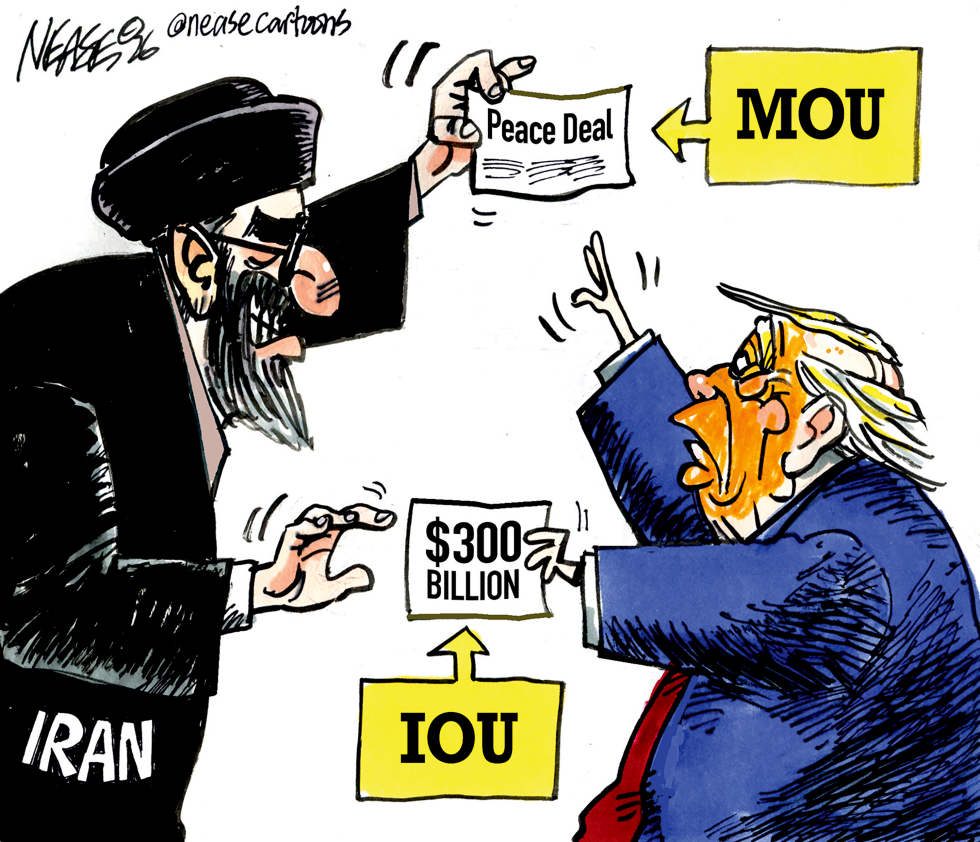
Nease, a Canadian cartoonist, examines the hidden costs of the peace agreements being brokered by Trump across multiple conflict zones. The cartoon suggests that peace achieved through coercion and abandonment of allies carries enormous human costs. The accounting metaphor frames diplomacy as a transactional exercise with losers.