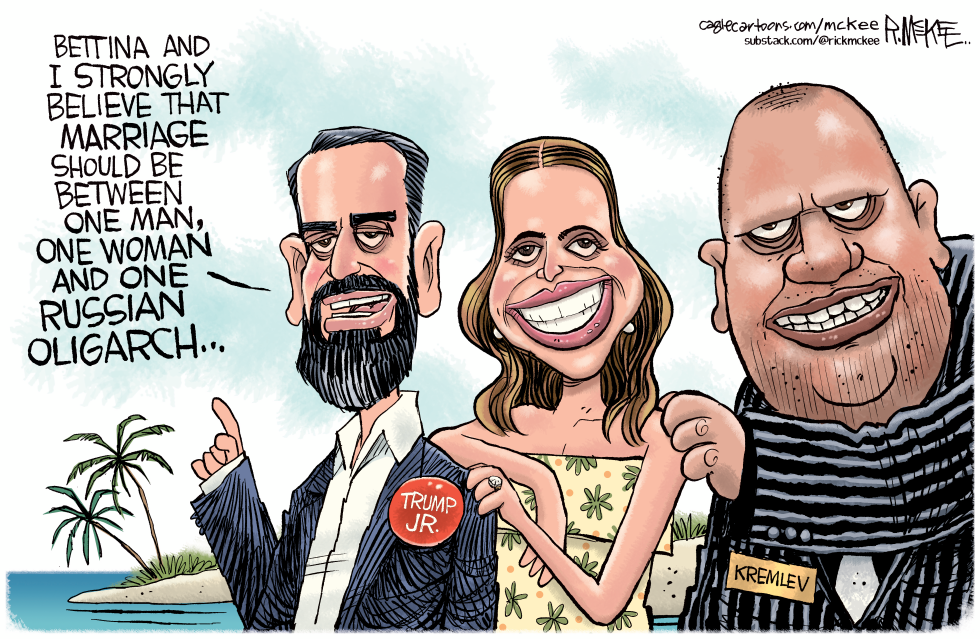
On September 15, 2026, commentary emerged around reports of Russian oligarch involvement in events tied to Donald Trump Jr. and Bettina. The development raises questions about foreign influence on the Trump family. The piece argues such connections undermine claims of independence from external interests.
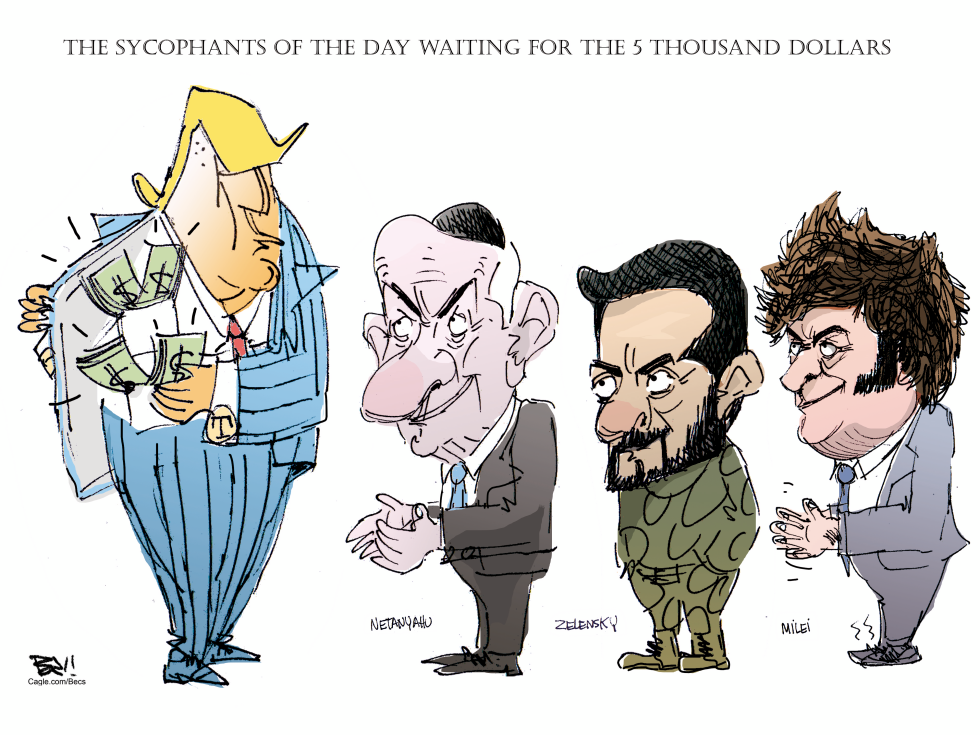
Donald Trump stands at the center of attention from Israeli Prime Minister Benjamin Netanyahu, Ukrainian President Volodymyr Zelensky and Argentine President Javier Milei. The scene reflects ongoing questions about how foreign leaders court favor with the U.S. president through displays of loyalty. The cartoon argues that these relationships reduce international diplomacy to transactional waiting for payoffs.
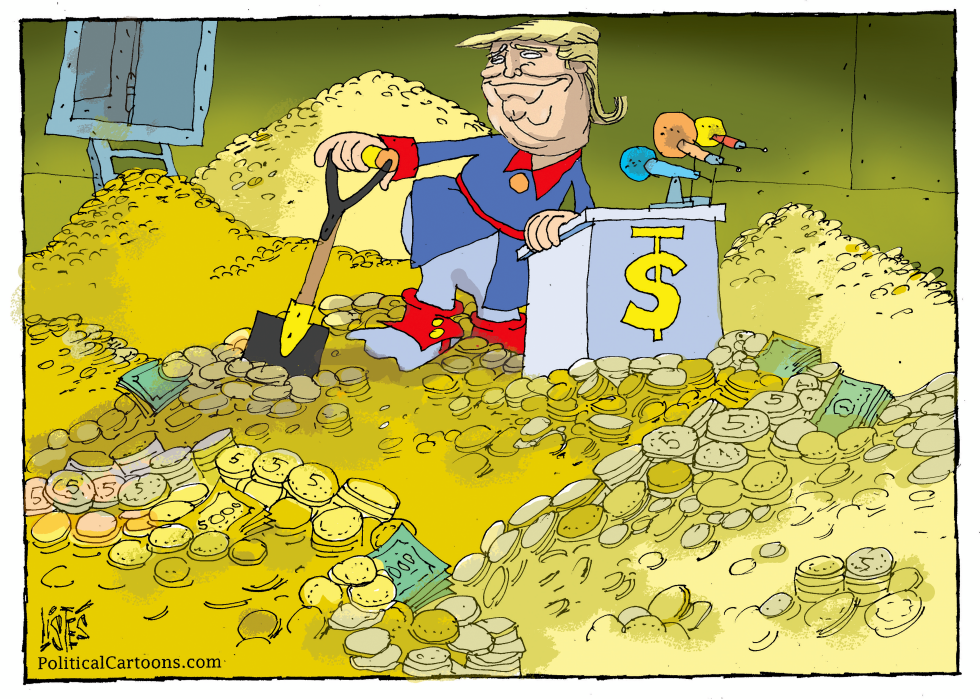
Donald Trump remains a central figure in debates over wealth and political power as of September 2026. The cartoon responds to ongoing scrutiny of how personal fortune intersects with public life and policy influence. It portrays the former president amid symbols of money to critique that dynamic. The editorial position frames Trump's association with wealth as a defining and problematic feature of his political presence.
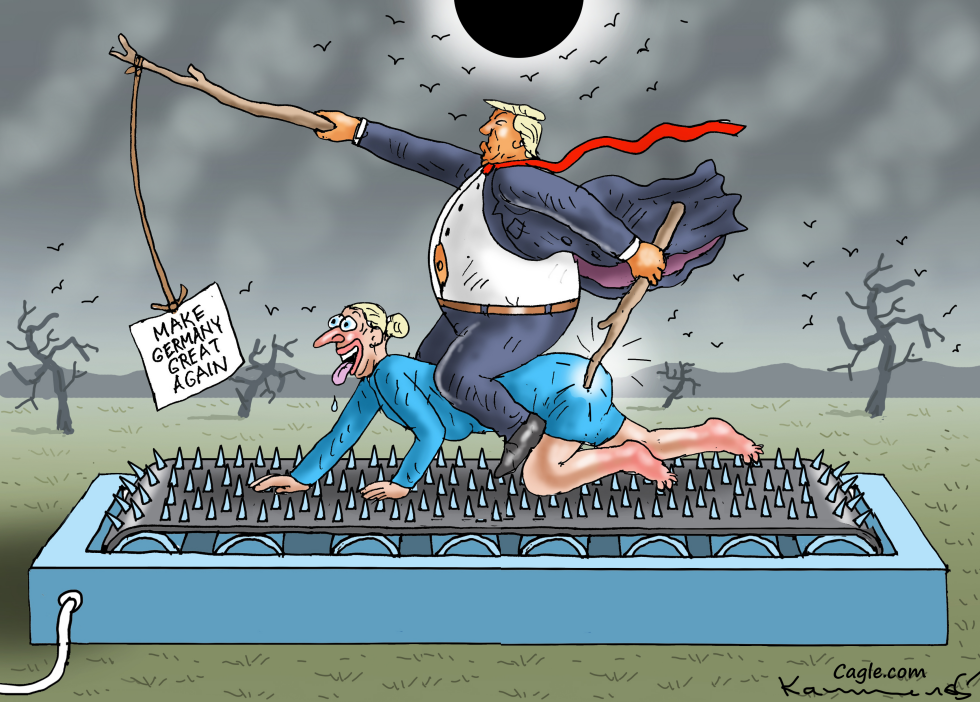
Donald Trump promotes a revival slogan aimed at Germany while Angela Merkel faces the consequences. The effort highlights ongoing tensions in transatlantic relations and questions about external influence on European domestic policy. The piece argues that such interventions impose unnecessary hardship without delivering benefits.
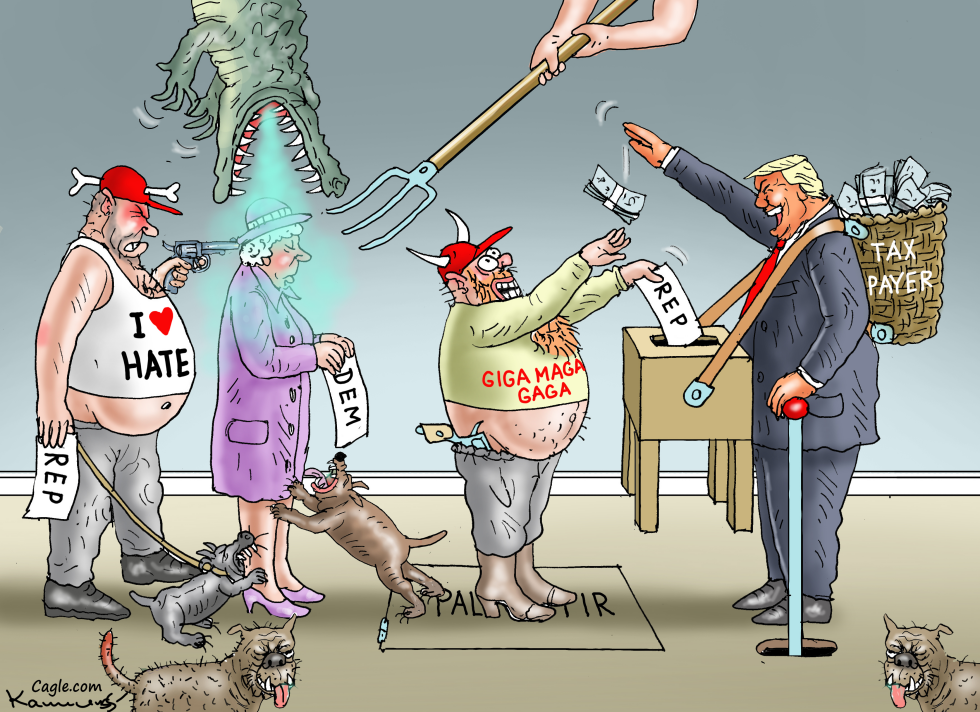
As the 2026 midterm elections approach, former President Trump has positioned himself as a central force in Republican campaigns, directing resources and mobilizing supporters. The cartoon highlights the use of taxpayer money in these efforts and the intense partisan divide, with Democrats portrayed as under attack. It takes the position that such involvement risks undermining fair electoral processes.
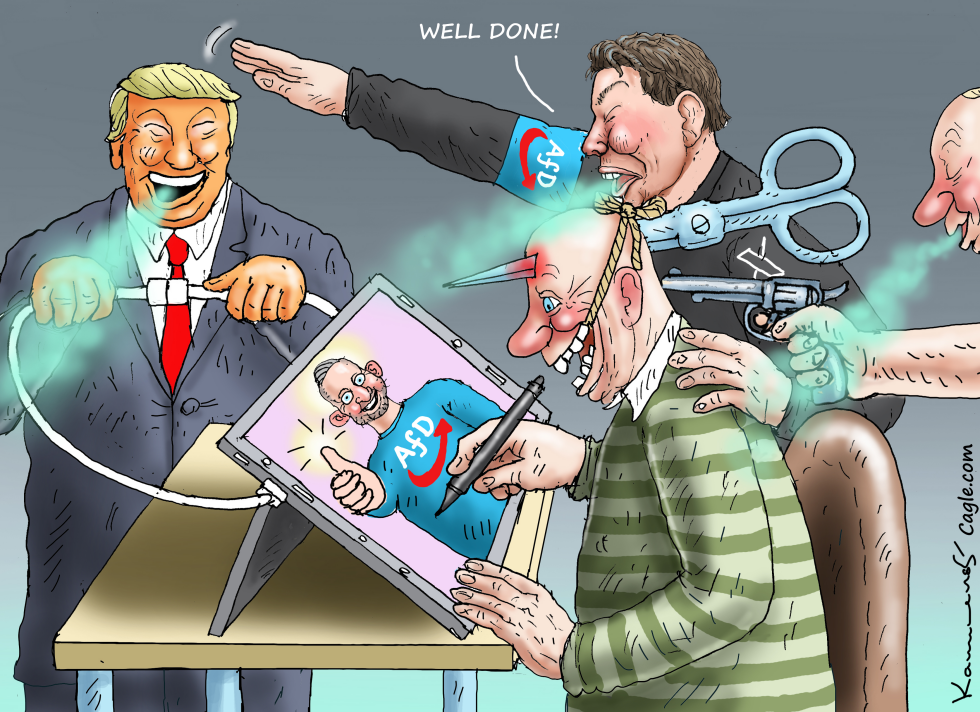
Donald Trump publicly aligned with Germany's Alternative for Germany party in the run-up to federal elections. The move drew scrutiny over foreign influence in European politics. The cartoon portrays the endorsement as reckless and dangerous, highlighting the risks of legitimizing extremist elements.
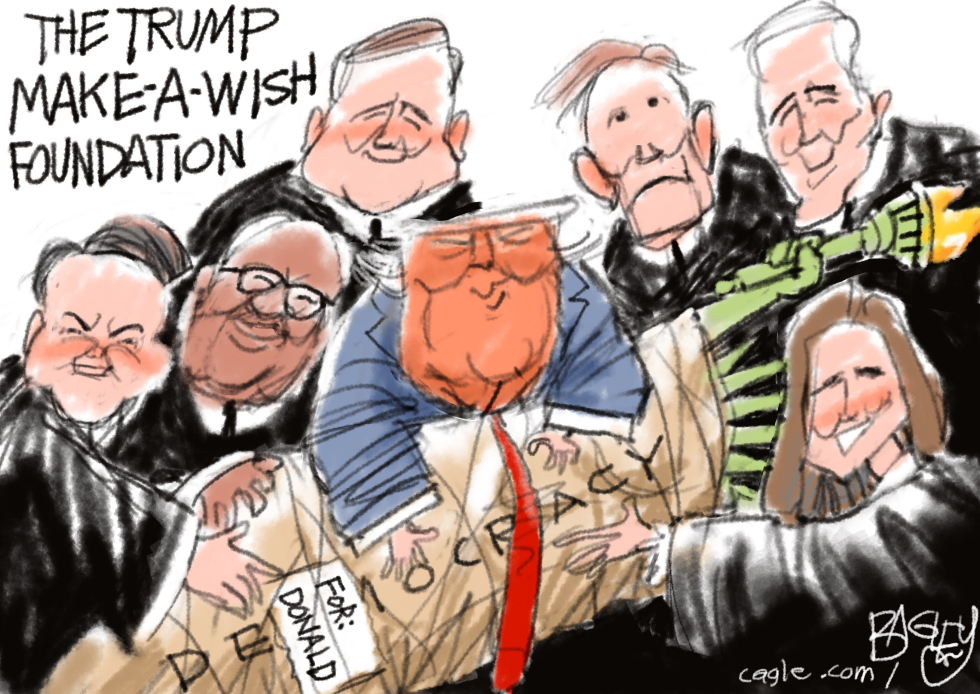
Donald Trump appears at the center of a Make-A-Wish style scene in which democracy itself is presented as a personal gift. The image responds to ongoing concerns in 2026 about executive overreach and institutional erosion under the Trump administration. Critics argue that norms protecting fair elections and checks on power face direct pressure. The cartoon frames these developments as self-serving rather than public-spirited. It takes the position that such actions treat democratic structures as items to be claimed rather than preserved.
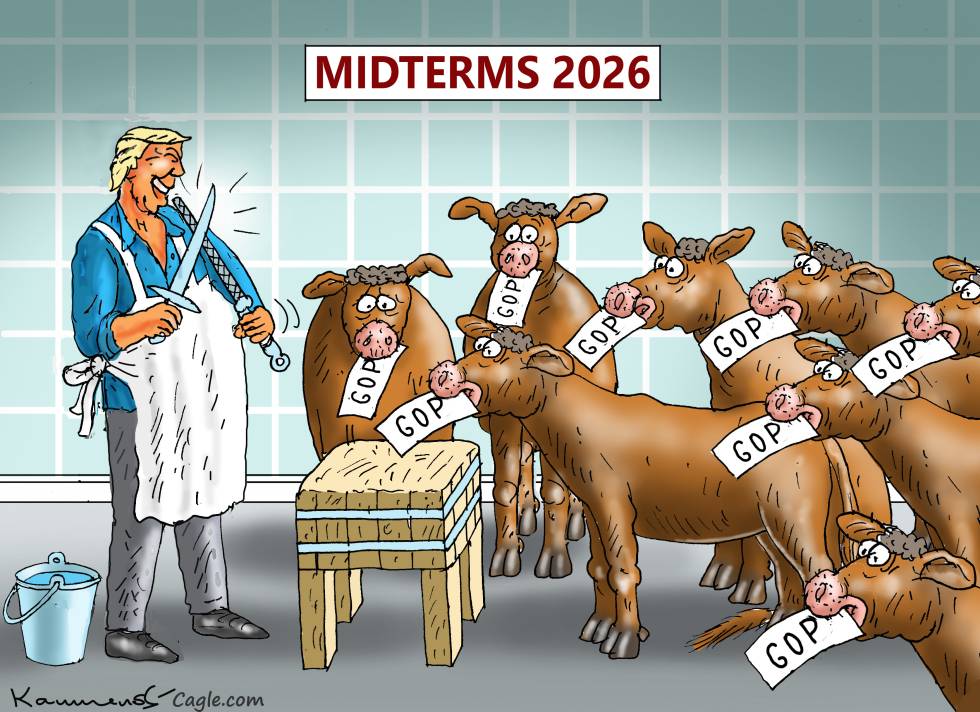
With the 2026 midterm elections approaching, former President Donald Trump has intensified efforts to shape Republican candidate slates through endorsements and public pressure. Party primaries have become battlegrounds where loyalty tests determine survival. The cartoon portrays this dynamic as a deliberate culling of the herd, with Trump positioned as the decisive figure deciding which GOP members advance. Critics argue the approach risks alienating voters and weakening the party's broader appeal in November contests.
Russian President Vladimir Putin and former President Donald Trump are shown aiding Germany's AfD party in the run-up to elections. The piece argues that external interference from these figures is boosting the far-right German party while harming domestic U.S. political elements.
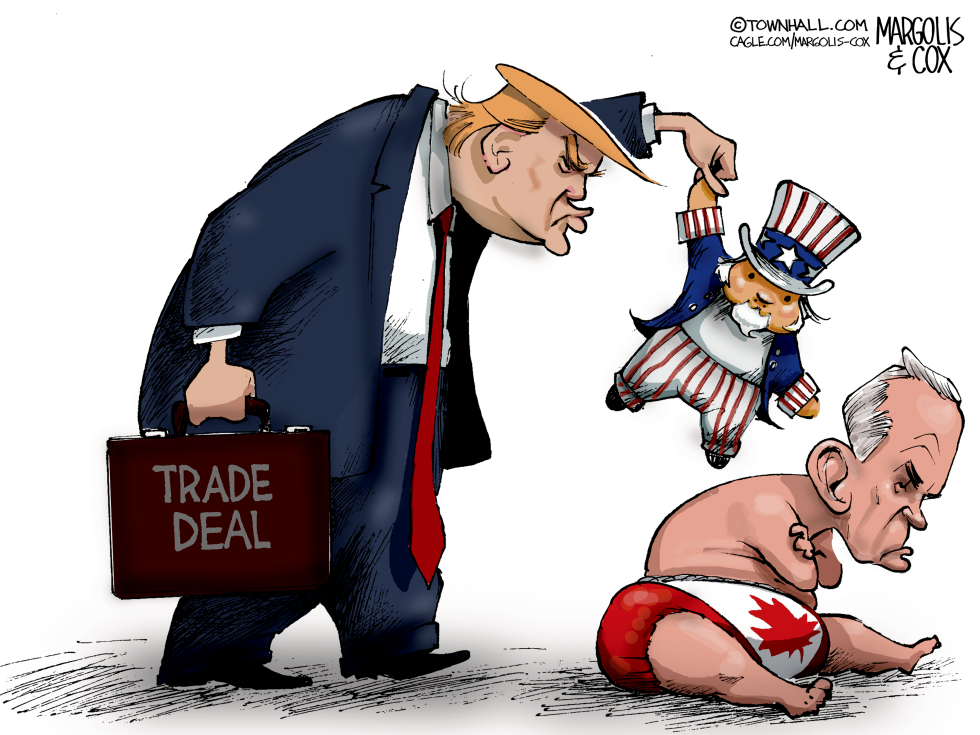
Donald Trump holds a briefcase labeled trade deal while dangling an Uncle Sam puppet above a baby figure wearing a Canadian flag diaper, identified as Mark Carney. The September 2026 cartoon responds to ongoing US-Canada trade tensions under the Trump administration. Carney, a prominent Canadian figure eyed for leadership, faces portrayal as vulnerable in negotiations. The piece argues that Trump exerts direct control over Canadian interests through economic leverage rather than equal partnership.
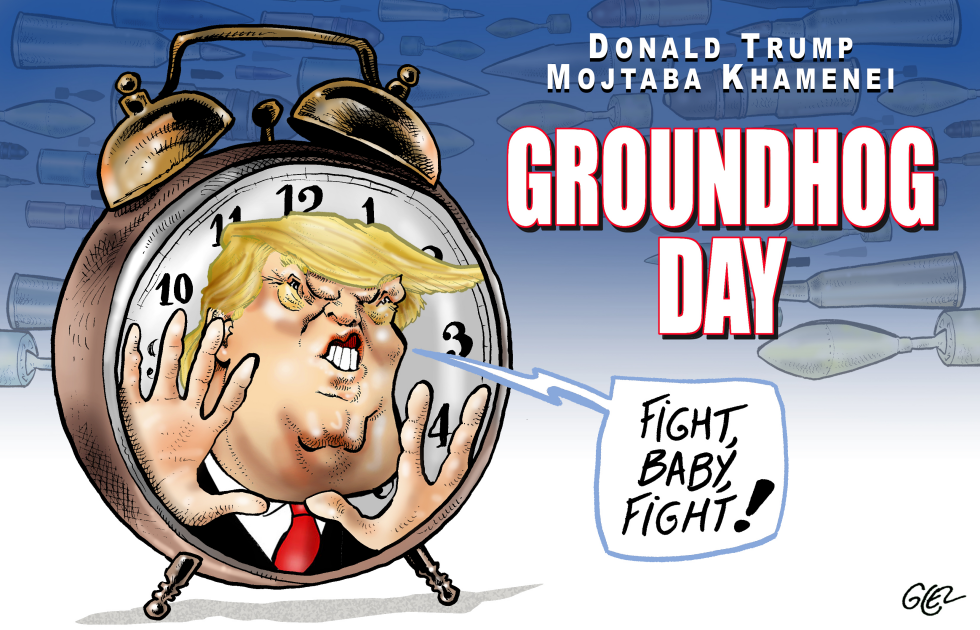
On September 3 2026 the cartoon highlights the recurring pattern of US-Iran tensions involving Donald Trump and Mojtaba Khamenei. The piece frames their renewed standoff as an endless Groundhog Day loop marked by missile threats and bellicose rhetoric. It argues that the same actors and dynamics keep producing the same dangerous cycle without resolution.
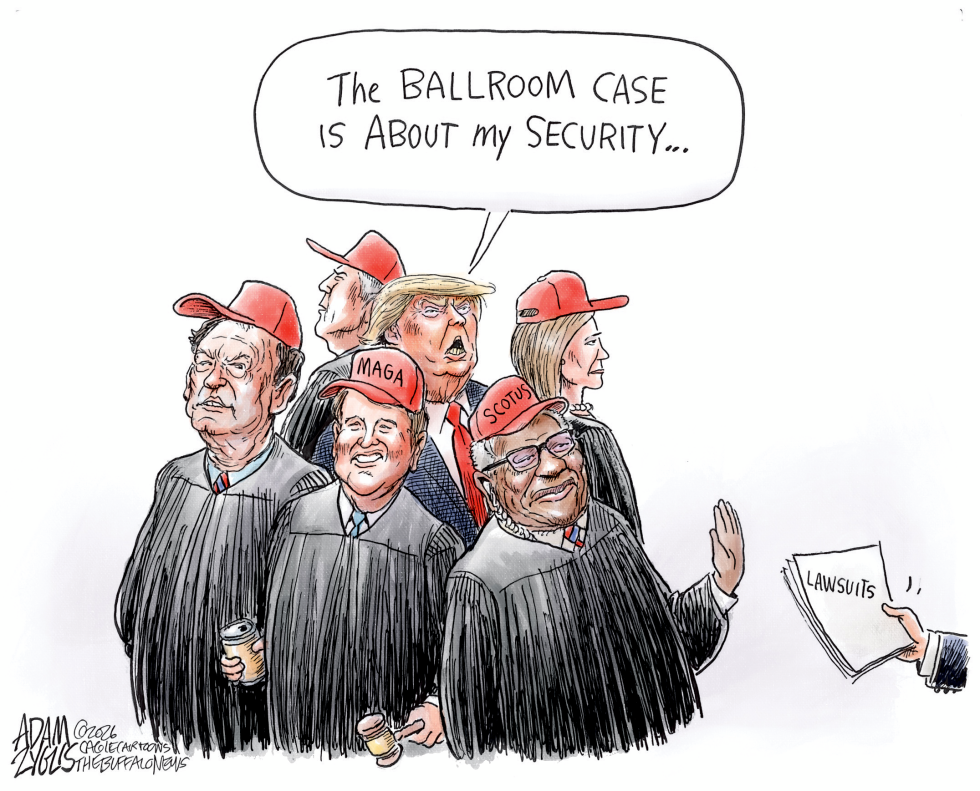
A political cartoon published September 2, 2026, shows Supreme Court justices in judicial robes and red MAGA caps gathered around Donald Trump. One justice declares in a speech bubble that the ballroom case is about my security. A hand extends papers labeled lawsuits from the side. The image comments on recent litigation involving Trump and claims of judicial security concerns tied to the case.
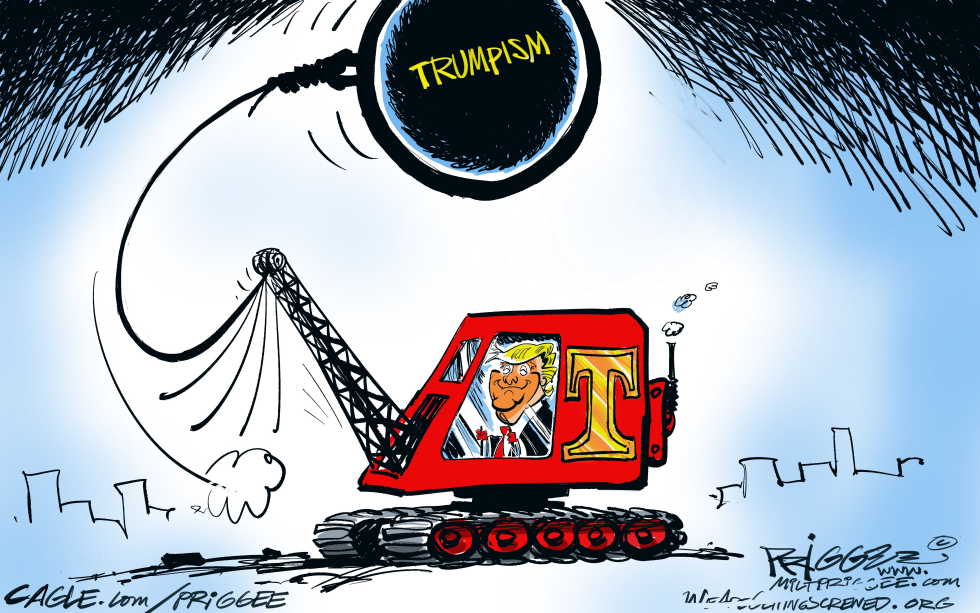
The cartoon depicts Donald Trump operating a crane with a wrecking ball labeled Trumpism. The ball swings toward a city skyline as the vehicle moves on tracks. The image uses the crane and ball to illustrate the impact of Trumpism on urban structures.
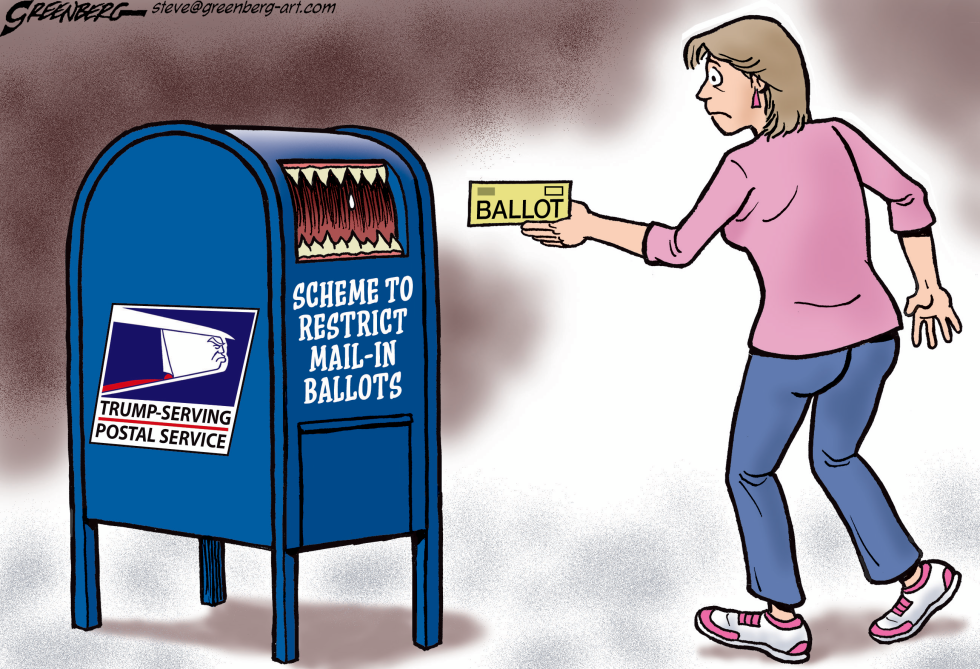
The U.S. Postal Service under Trump influence has implemented measures to restrict mail-in ballots ahead of the 2026 elections. These actions limit voter access through operational changes and heightened scrutiny of mail ballots. The moves raise concerns about equitable participation in elections. Critics argue the changes disproportionately affect certain voter groups and undermine trust in the process. The cartoon portrays the postal service as actively hostile to mail-in voting, framing the restrictions as a deliberate scheme to suppress turnout.
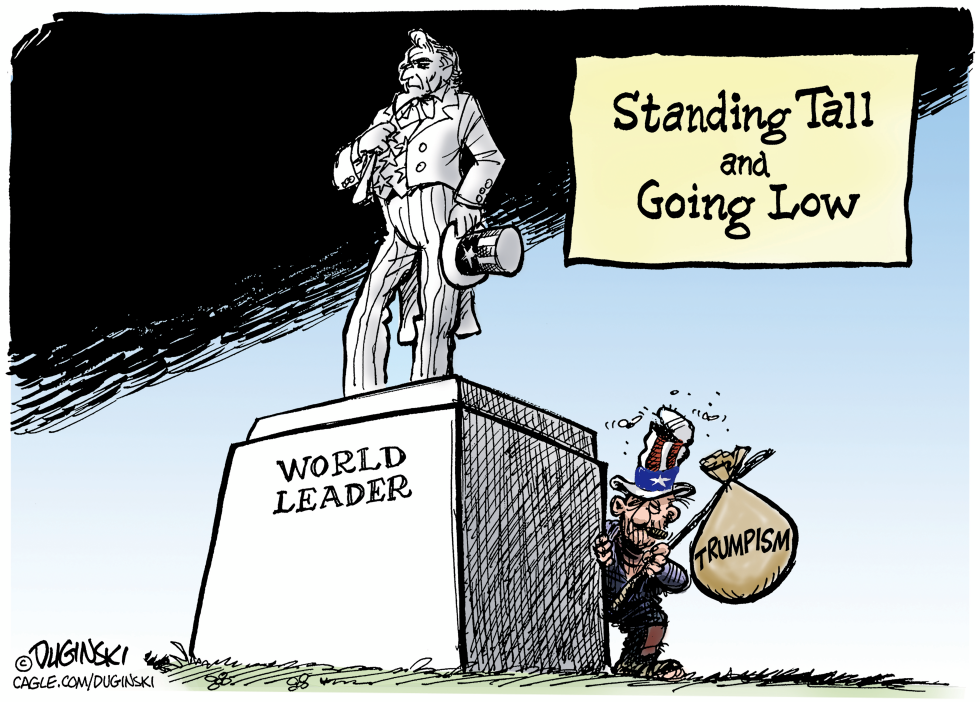
Donald J. Trump’s ideological legacy continues to shape Republican politics and foreign policy debates into 2026. Critics argue that Trumpism’s emphasis on transactional deals and nationalist rhetoric has eroded traditional US alliances and moral authority on the global stage. The cartoon presents this influence as a literal weight pulling the nation downward from its claimed leadership role, underscoring concerns that short-term domestic appeals come at the cost of long-term international credibility.