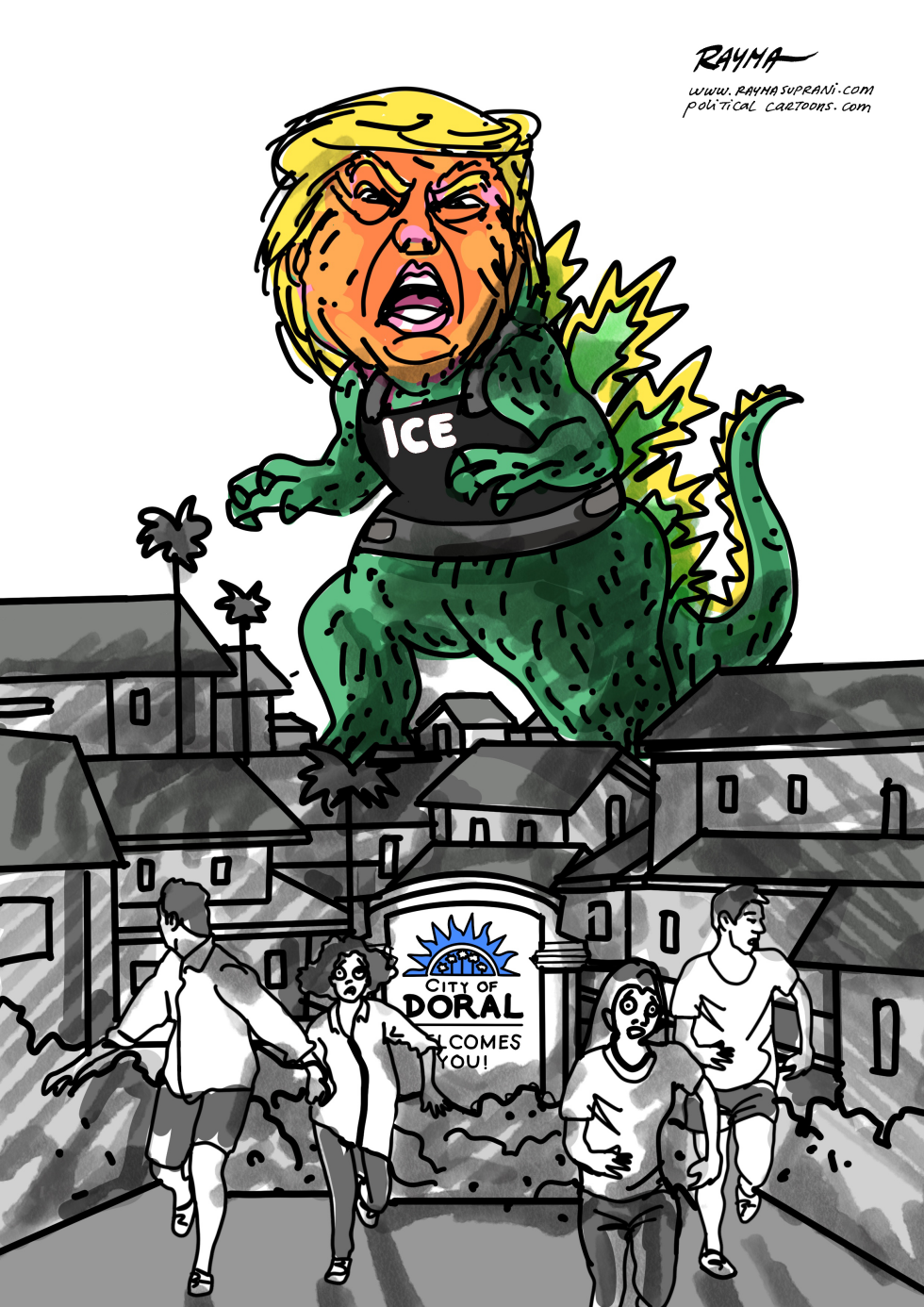
The image shows a large figure resembling Donald Trump dressed as an ICE agent towering over the city of Doral. People run from the scene near a welcome sign. The work addresses immigration enforcement policies active in Florida during 2026.
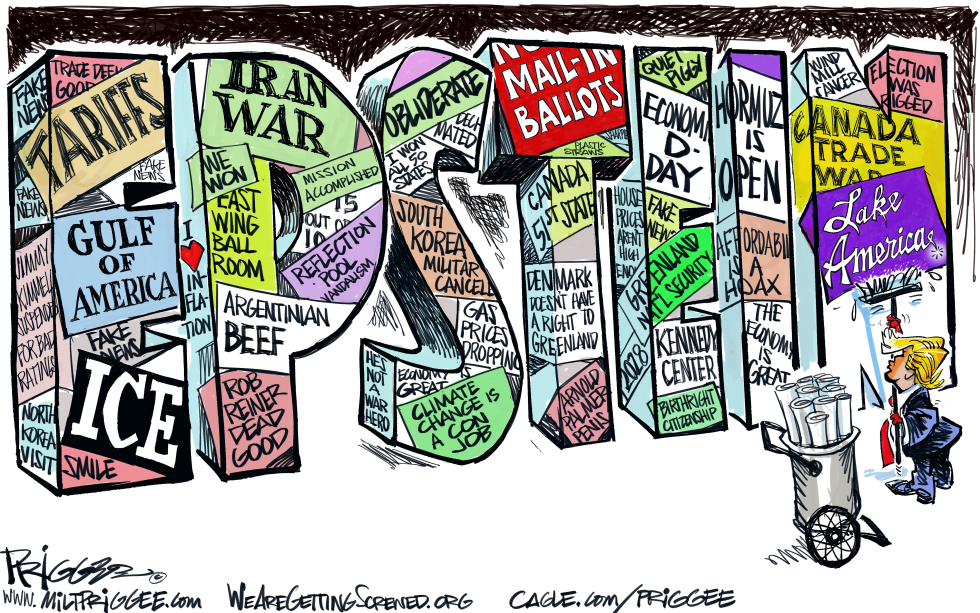
Donald Trump appears in a September 2026 cartoon pushing a cart stacked with signs promoting tariffs, questioning mail-in ballots, and asserting claims about Iran, Canada trade, and domestic issues. The image captures a pattern of public messaging that blends economic nationalism with repeated challenges to established processes. The editorial position frames these statements as a deliberate strategy to keep multiple controversies in motion at once.
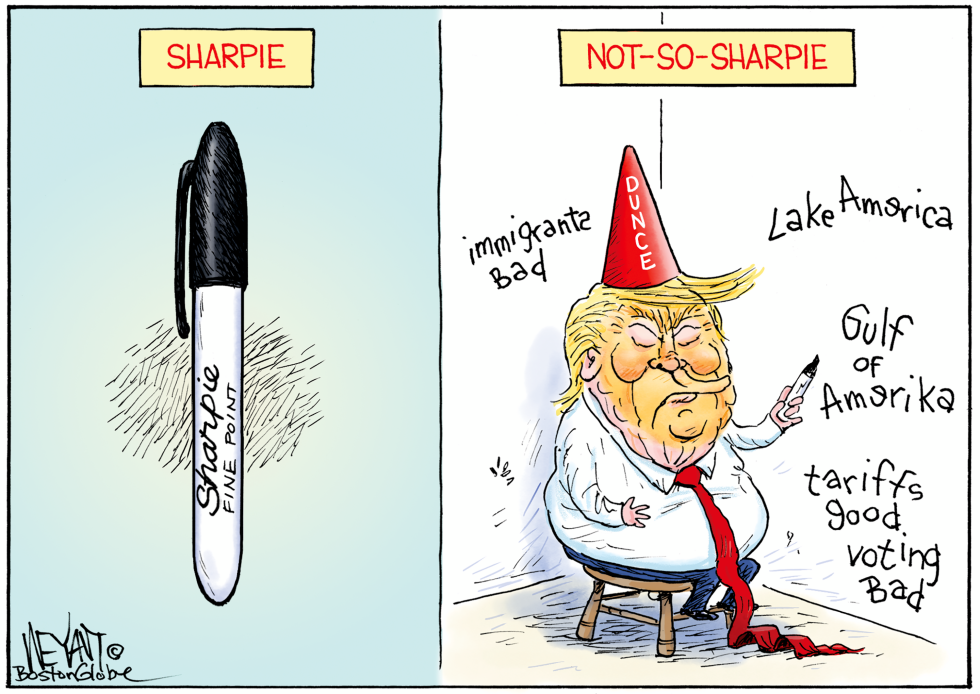
Donald Trump has continued to issue statements on tariffs, immigration enforcement and voting procedures that contain repeated factual inaccuracies. These comments have drawn renewed attention to his approach to governance. The cartoon portrays him as uninformed on these topics through the dunce cap and misspelled labels.
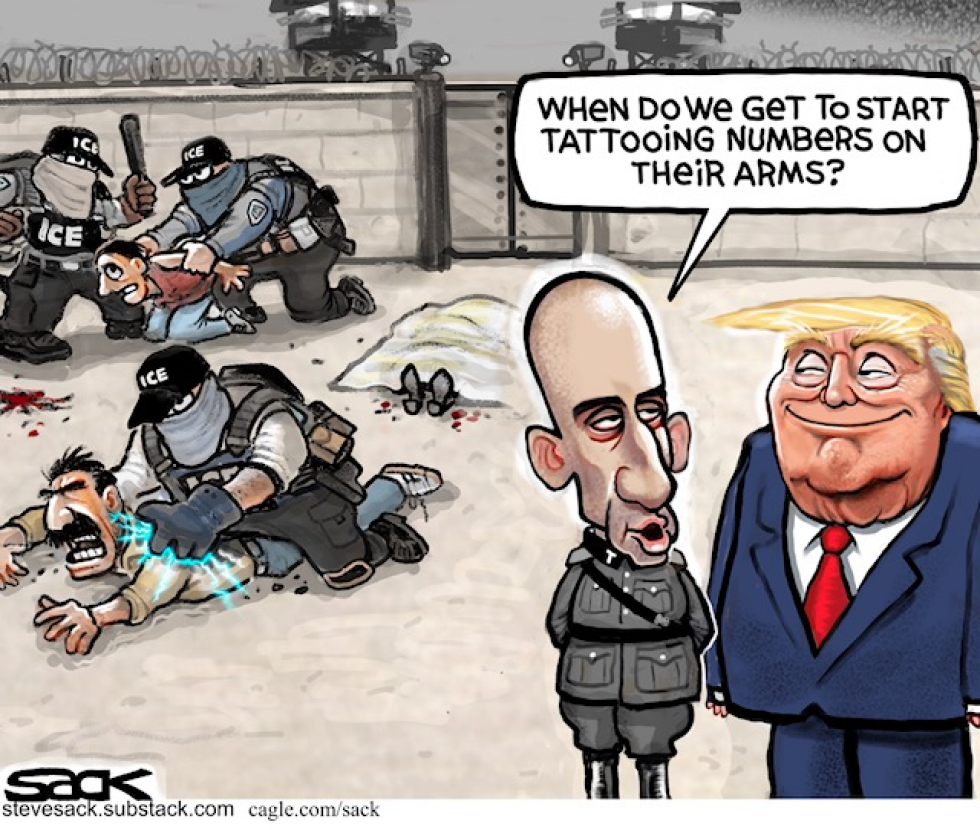
Donald Trump has publicly discussed aggressive measures in immigration detention facilities amid ongoing enforcement operations. The remarks come as ICE conducts arrests and holds individuals at secure sites. Critics argue the approach echoes past abuses. The piece portrays the comments as crossing into prohibited territory by invoking forced numbering.
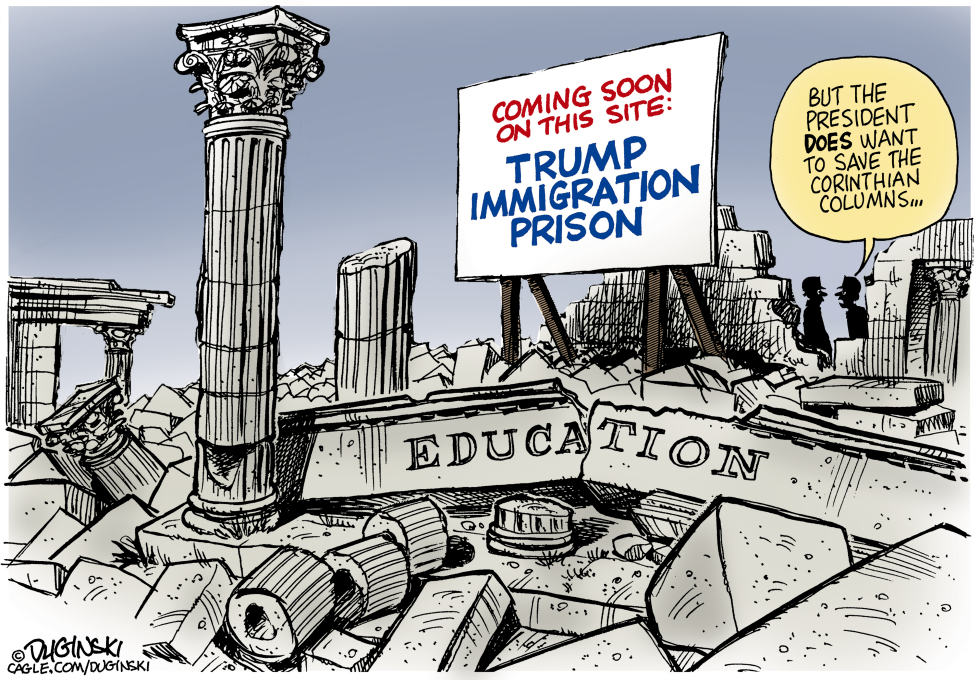
The Trump administration has moved to repurpose a site previously tied to education programs for a new immigration detention facility. The shift reflects ongoing policy emphasis on border enforcement over domestic education support. The piece argues that selective preservation of symbolic elements masks broader institutional damage.
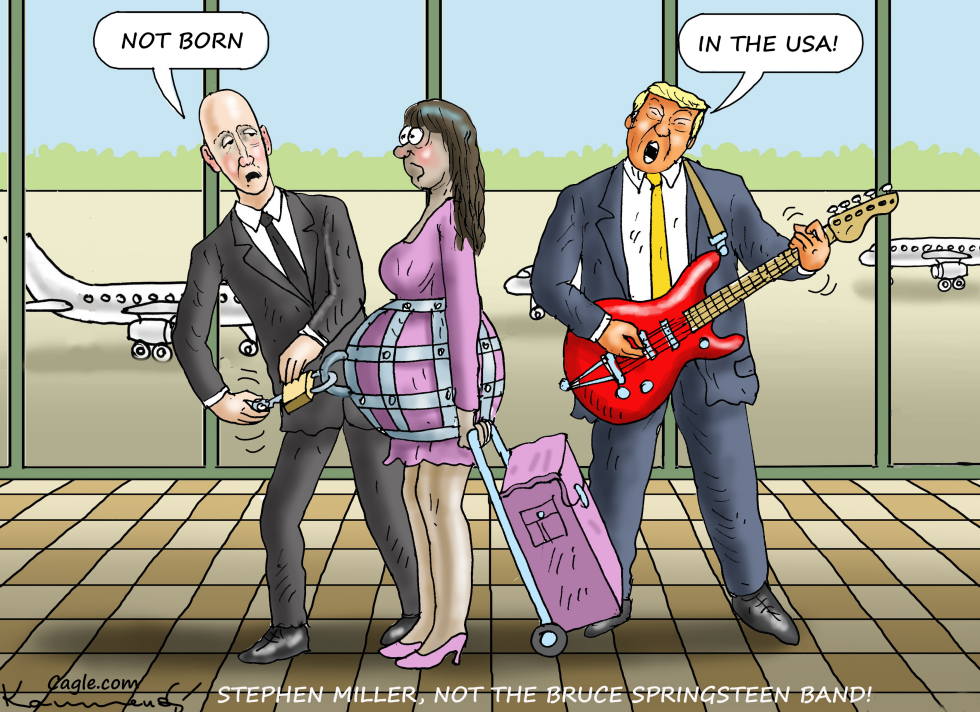
On August 7 2026 the Trump administration renewed focus on ending birthright citizenship through executive action targeting children of non-citizens. Stephen Miller has led policy efforts to reinterpret the 14th Amendment and increase deportations. The cartoon depicts Miller securing a pregnant traveler at an airport while Trump performs a Springsteen parody. It criticizes the administration's approach as overly aggressive and musically off-key.
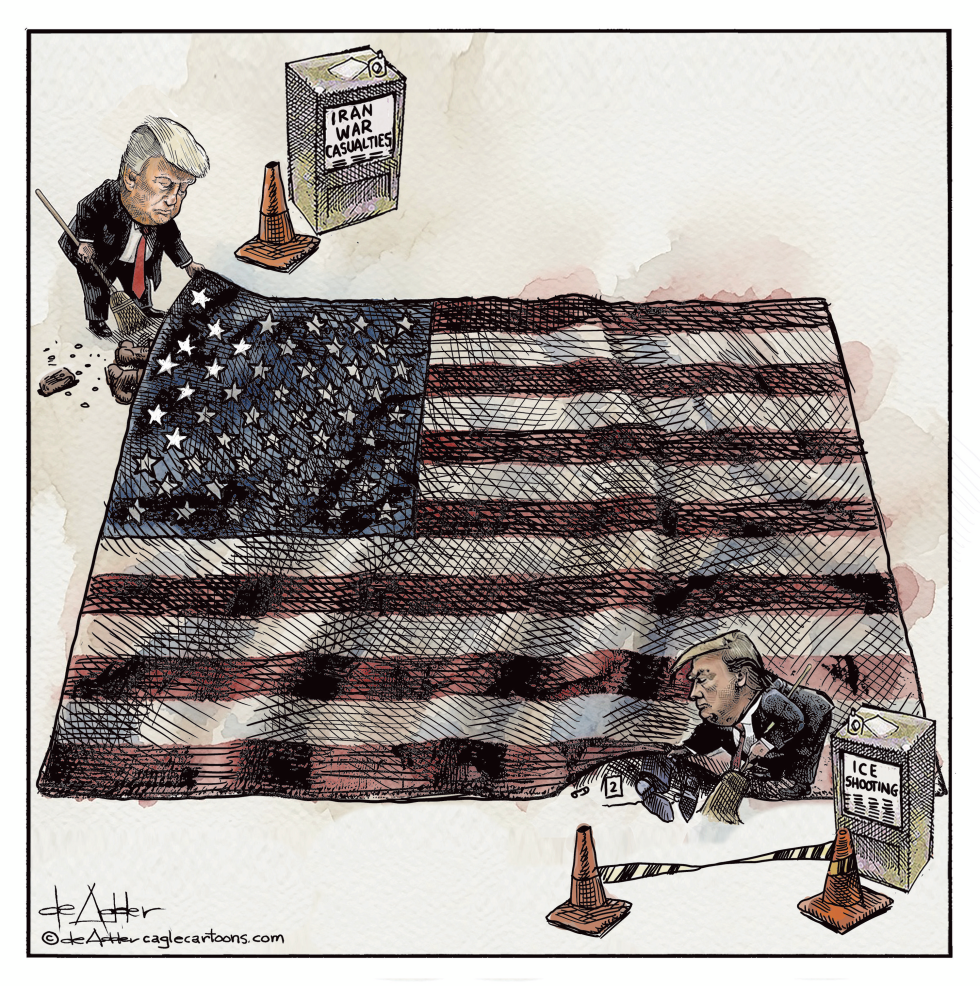
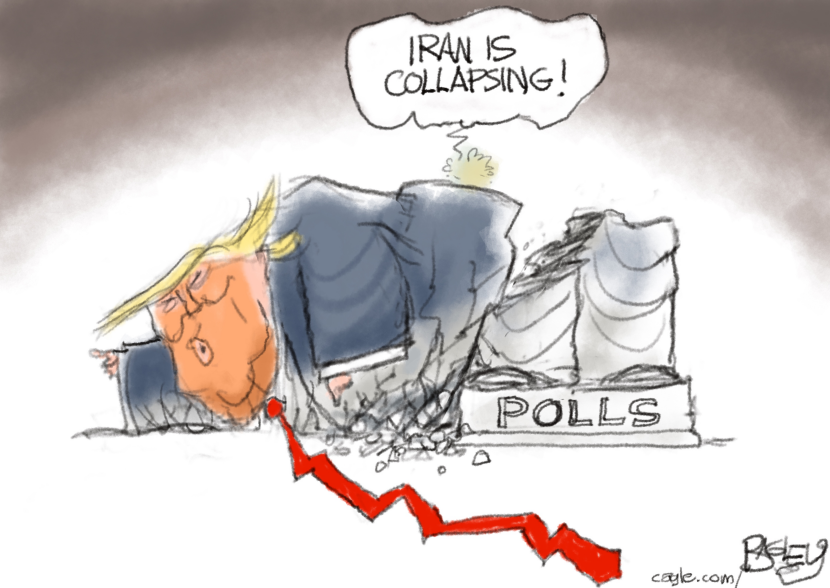
Donald Trump faces scrutiny over reported casualties from potential Iran conflict and an ICE-related shooting incident in mid-2026. The administration's handling of these events draws criticism for downplaying accountability. The piece argues that attempts to minimize these issues undermine public trust in governance.
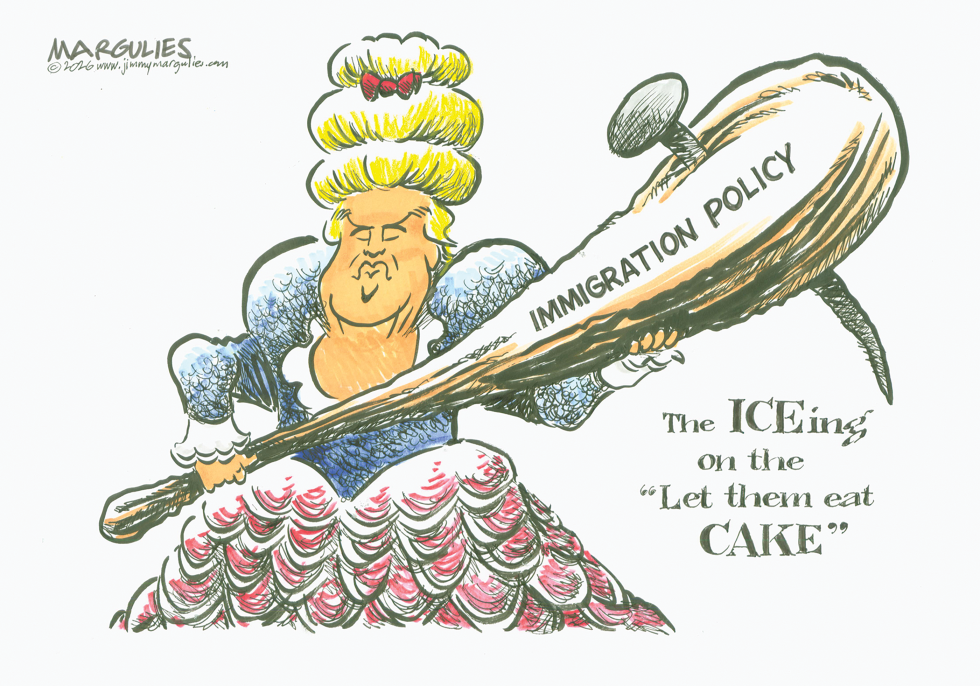
The image shows a figure resembling Donald Trump dressed in historical attire while holding a large bat marked immigration policy. Text beside it reads The ICEing on the Let them eat CAKE. The scene references enforcement actions tied to border policy around the July 2026 date.
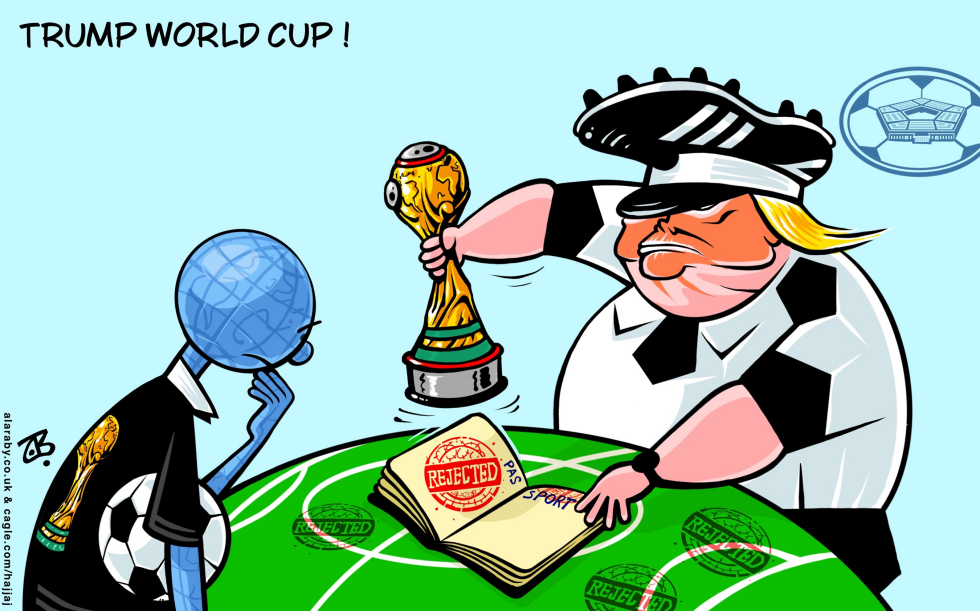
On June 11 2026 Donald Trump appears as a soccer referee in a cartoon rejecting national team entries to the World Cup. He stamps passports from Somalia Mexico Canada and Iran with large rejected marks while holding the trophy. A dejected figure with a globe for a head stands nearby on the pitch.
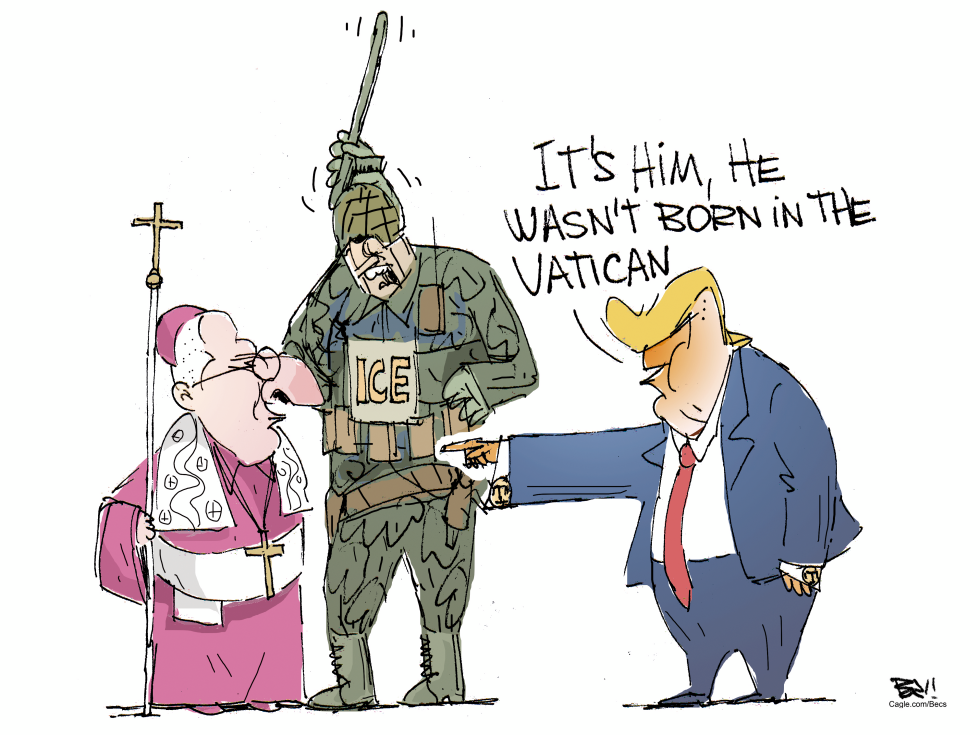
This cartoon shows Donald Trump accusing the Pope of not being born in the Vatican, with an ICE agent poised for action. The tags highlight themes of incompetent narcissistic leadership in US politics, blending Vatican imagery with immigration enforcement. Trump's pointing finger and the Pope's surprised expression drive the satire, while the ICE label on the agent's vest ties into border control debates. Such cartoons often poke at figures like Trump and the Pope to underscore absurdities in power dynamics. With elements of humor targeting narcissism and incompetence, it fits broader discussions on US-Vatican relations and policy follies.
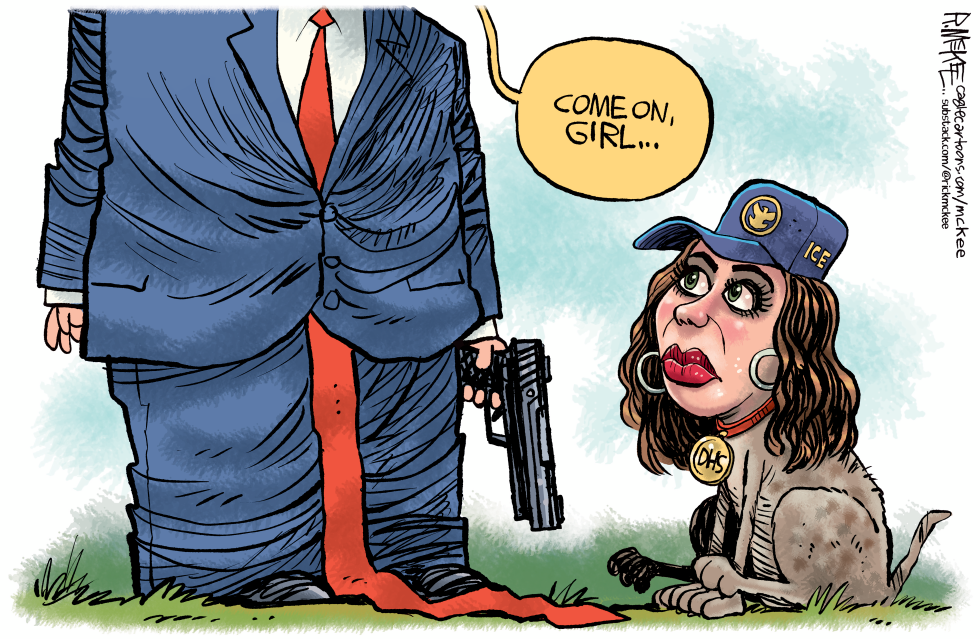
This political cartoon features Donald Trump coaxing a dog-like figure with Alexandria Ocasio-Cortez's face, donned in an ICE cap and DHS tag, gripping a gun on a leash— a sharp satire on immigration enforcement and border control. The image lampoons the Trump administration's hardline stance on deportation and US politics, using caricature to underscore the dehumanizing aspects of border patrol. With elements of political humor, it critiques how figures like AOC are portrayed in opposition, blending viral meme potential with editorial cartoon flair. The scene evokes questions about power dynamics in immigration policy, making it a timely piece for discussions on satire and governance.