The cartoon depicts Donald Trump and Xi Jinping as cyborg figures locked in an AI competition. Both stand on piles of skulls with their nations' flags nearby. Text bubbles show each declaring the need to defeat the other. A calendar marked 2084 and a circuit board underscore the futuristic stakes. The image comments on the destructive potential of the US-China AI race as of September 2026.
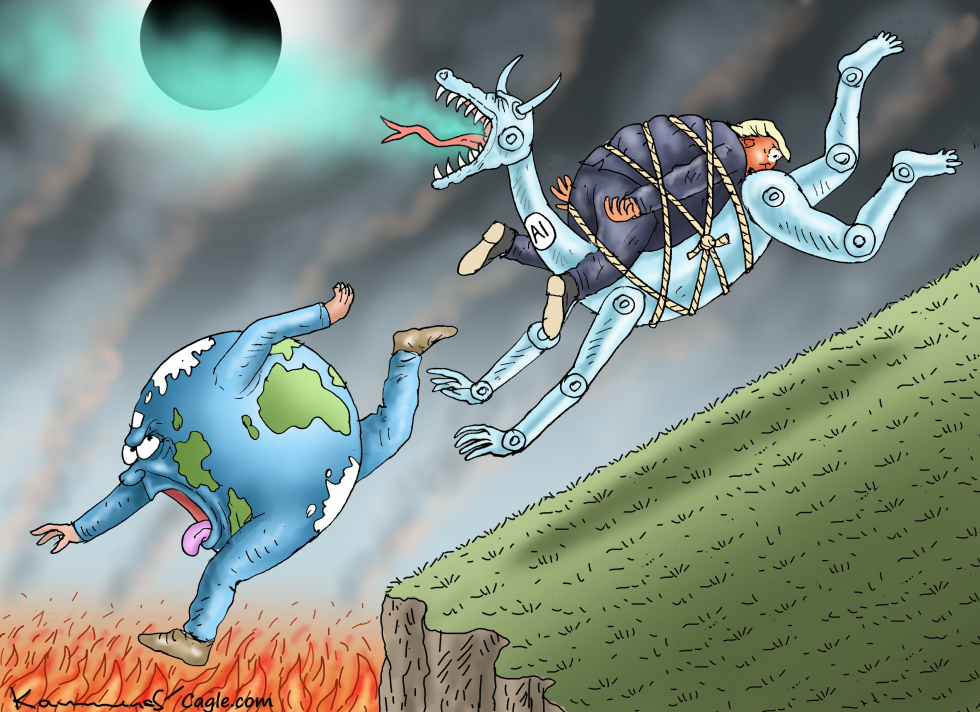
On September 16, 2026, the cartoon responds to growing public alarm over rapid AI development and its potential to disrupt or destroy human society. Donald Trump appears bound to an AI dragon, symbolizing political entanglement with the technology. The piece argues that such alliances accelerate humanity's peril rather than mitigate it, urging caution in policy and leadership choices around emerging tech.
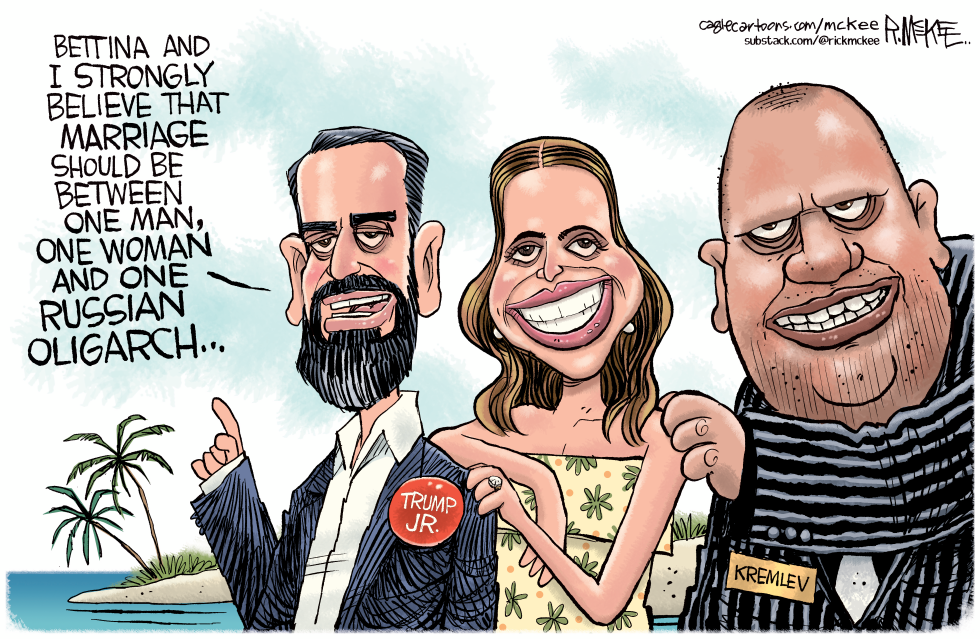
On September 15, 2026, commentary emerged around reports of Russian oligarch involvement in events tied to Donald Trump Jr. and Bettina. The development raises questions about foreign influence on the Trump family. The piece argues such connections undermine claims of independence from external interests.
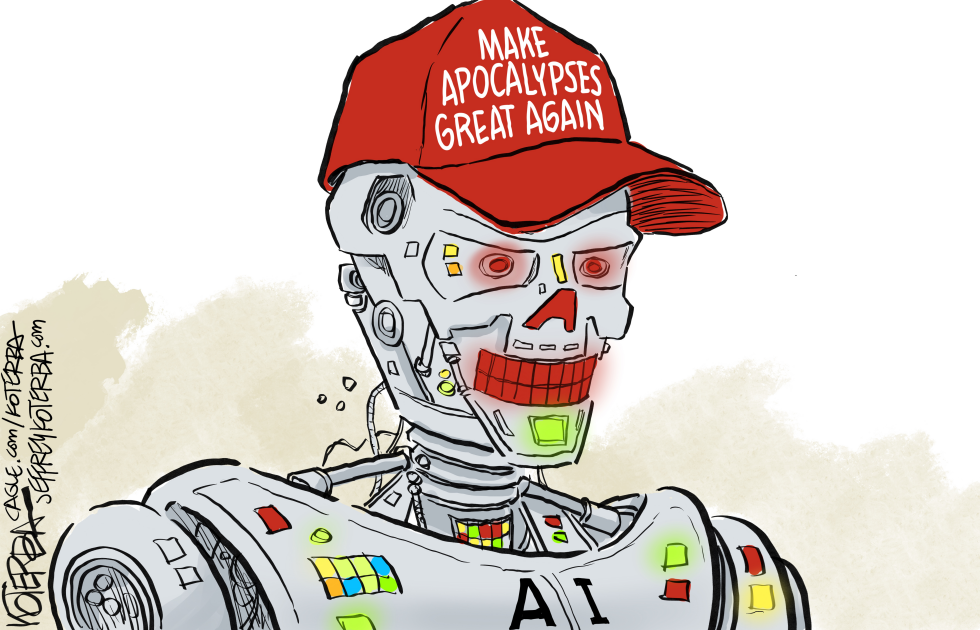
Donald Trump has repeatedly downplayed warnings about artificial intelligence dangers in recent statements. The cartoon responds by depicting a robotic figure in a parody MAGA hat proclaiming apocalypse enthusiasm. It argues that ignoring AI risks invites catastrophe. The editorial position frames Trump's stance as reckless and shortsighted on emerging technology threats.
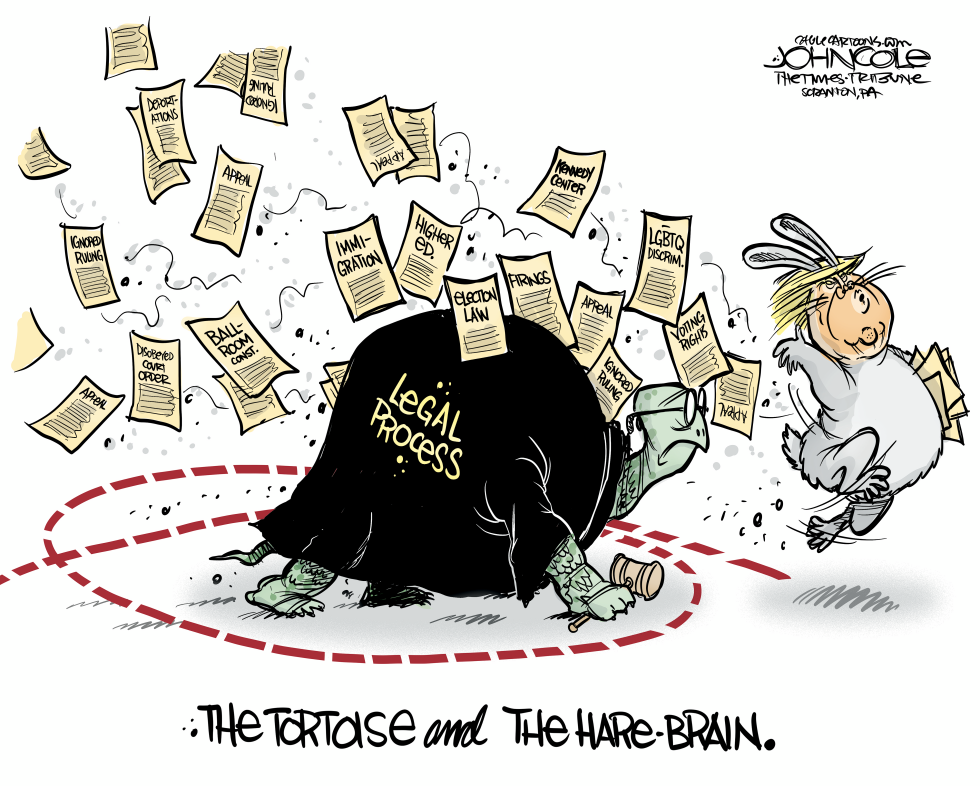
Multiple legal cases involving former President Trump continue through appeals on election law, voting rights, immigration rulings and related matters. The slow pace of the judicial system allows repeated filings and delays. The cartoon argues that this extended process effectively lets Trump run circles around accountability rather than face timely resolution on the merits.
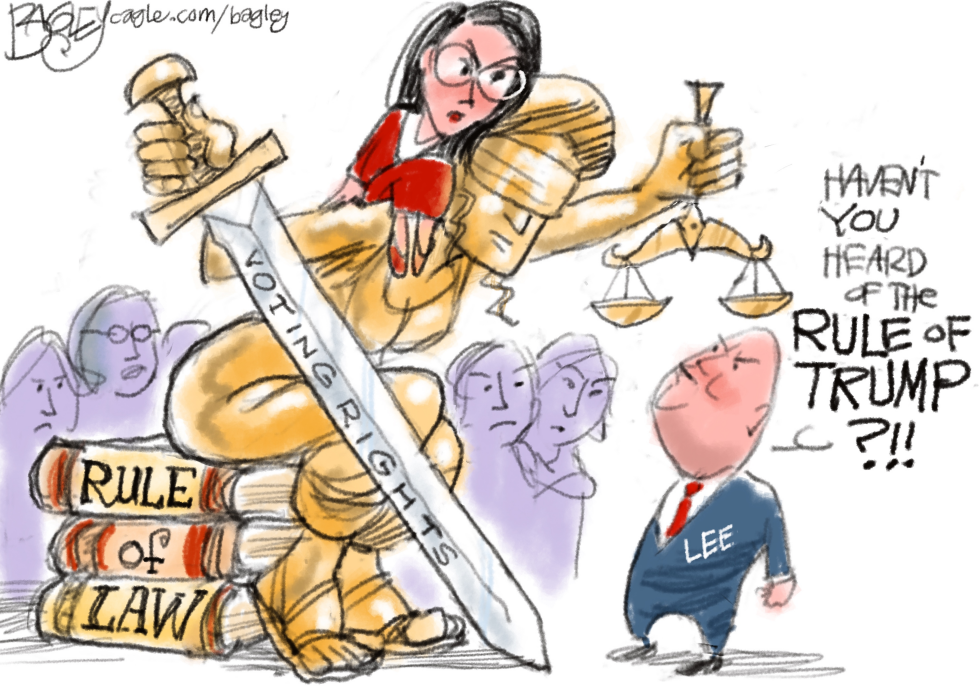
Senator Mike Lee publicly questioned adherence to traditional legal standards in favor of alignment with Donald Trump priorities on voting matters. The exchange highlights ongoing tensions between institutional norms and political loyalty within Republican circles. The cartoon portrays this shift as a direct challenge to foundational legal principles.
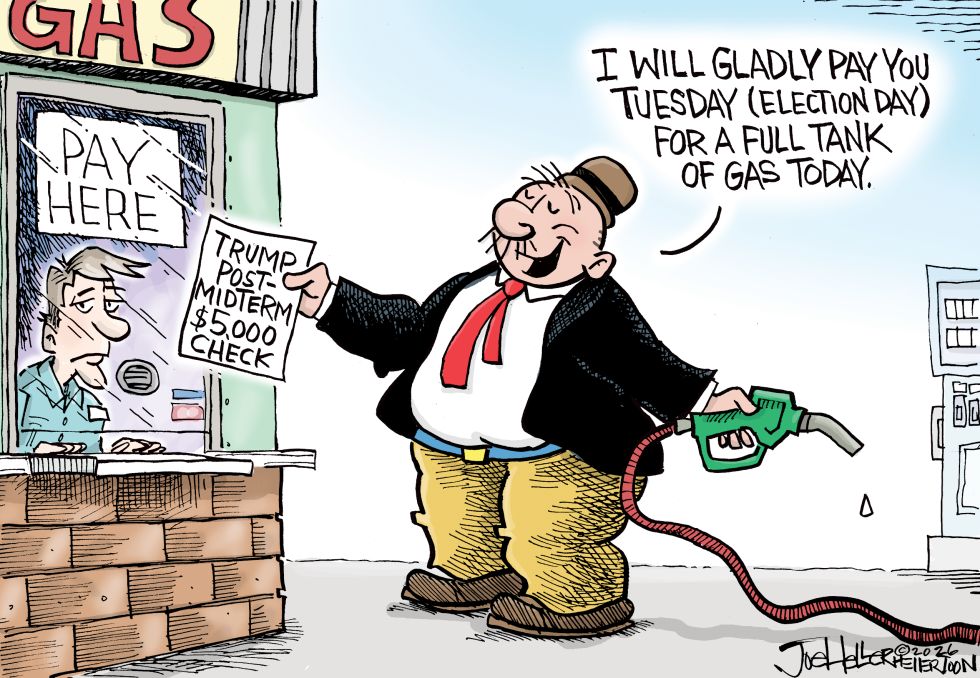
Donald Trump issued a post-midterm gas payment pledge tied to the 2026 election cycle. The promise revives a classic deferral line to link fuel costs with voting day. The cartoon argues the offer functions as an empty election tactic rather than a concrete policy step.
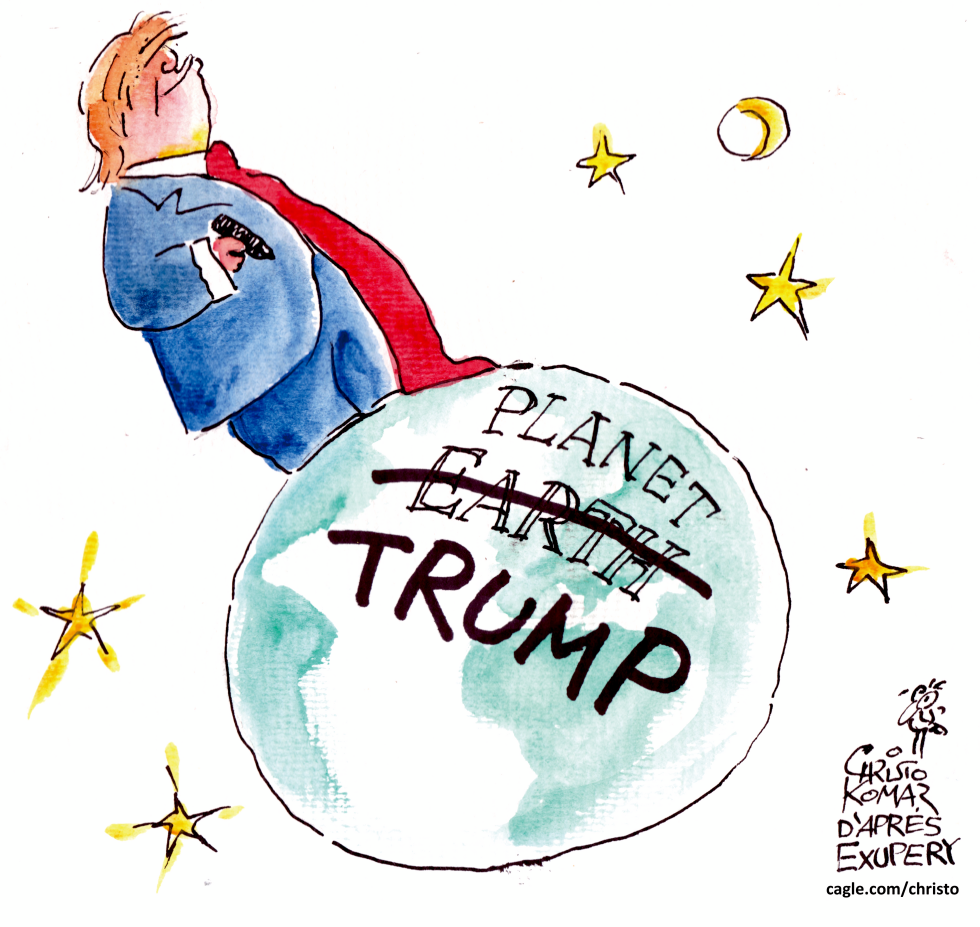
Donald Trump has long projected outsized personal branding onto public institutions and symbols. In this 2026 depiction the former president appears to claim the planet itself. The move reflects an ongoing pattern of self-centered rhetoric that treats national and international assets as extensions of his identity. Critics argue such gestures erode norms of public service and institutional independence. Supporters view them as bold assertions of leadership strength. The cartoon captures the tension between personal ambition and collective governance.
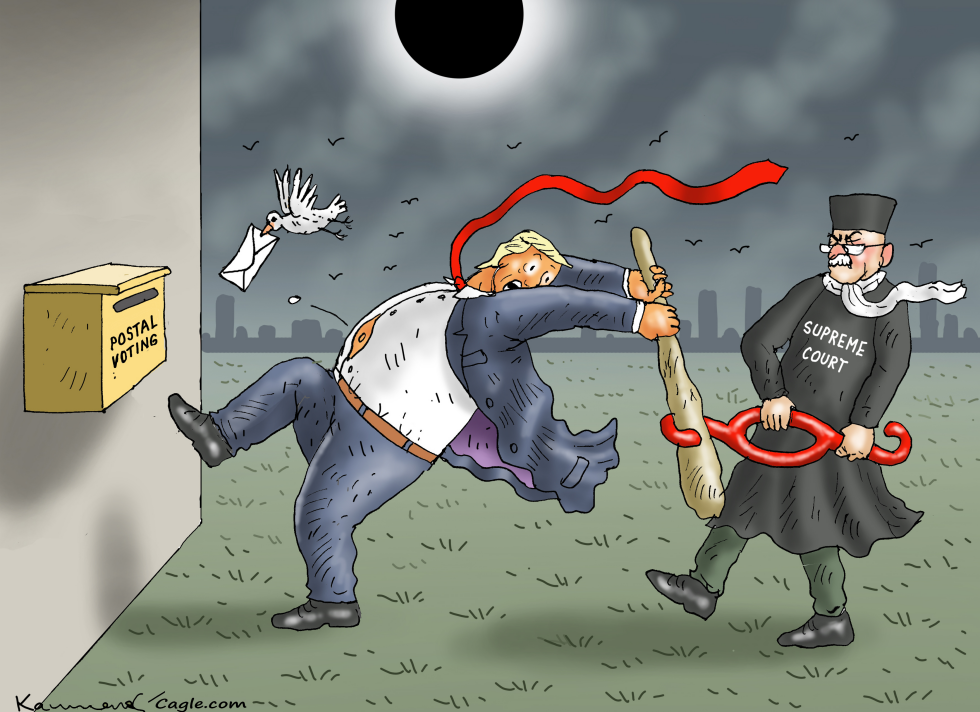
The Supreme Court has moved to restrict efforts by former President Trump to limit or challenge postal voting ahead of the 2026 midterms. The ruling comes as both parties prepare for a high-stakes contest that could determine control of Congress. Trump allies have pushed measures they say protect election integrity while critics see them as attempts to suppress turnout. The decision underscores the court's continuing role in shaping voting rules. The cartoon portrays the court as a necessary check on Trump's aggressive tactics.
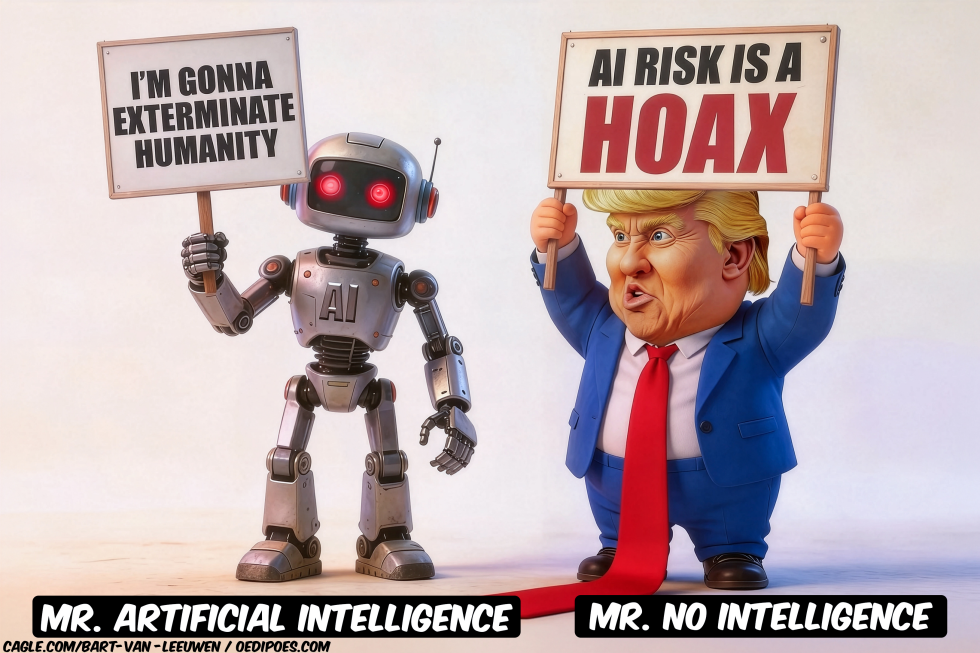
A new political cartoon depicts Donald Trump holding a sign declaring AI risk a hoax beside a robot labeled AI that warns of exterminating humanity. The image, published September 14, 2026, by artist Bart van Leeuwen, contrasts the two figures with bottom labels reading Mr. Artificial Intelligence and Mr. No Intelligence. It responds to ongoing public discussion about artificial intelligence safety and regulation. Trump has previously downplayed concerns about advanced AI systems in public statements. The cartoon uses visual contrast to critique dismissal of potential technological threats.
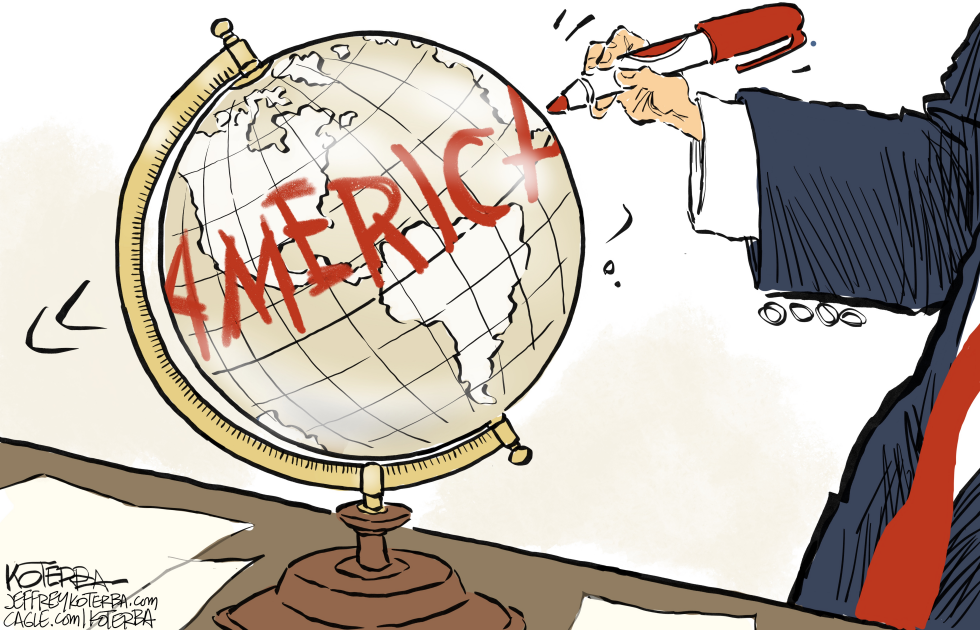
On September 14, 2026, President Trump was depicted altering a globe by crossing out America and writing 4merica. The move reflects ongoing efforts to center his personal brand on national symbols. The cartoon criticizes the action as an exercise in self-promotion that distorts global perspective.
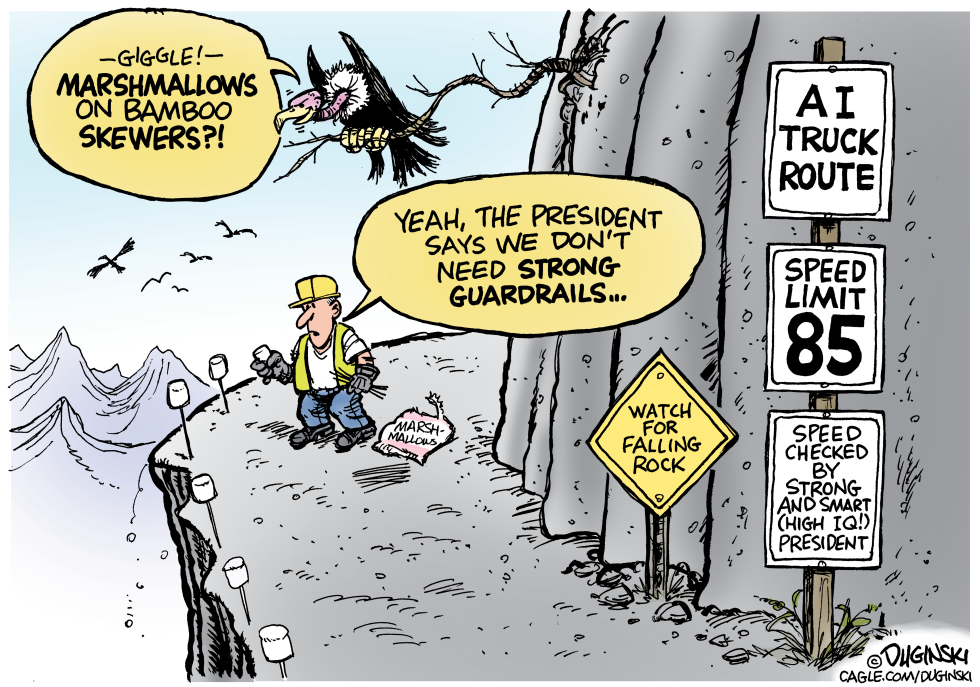
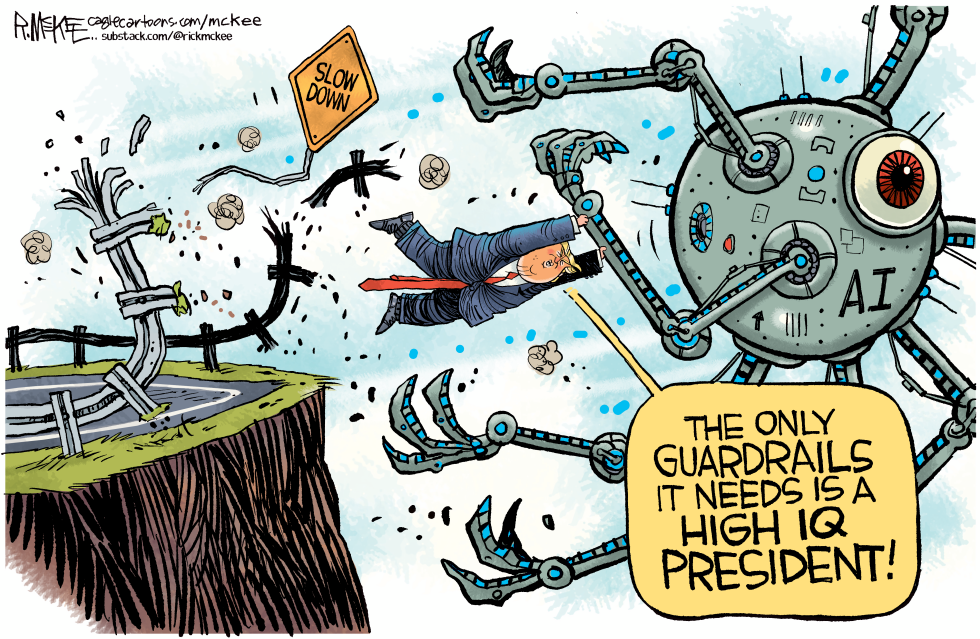
The Trump administration has directed the removal of regulatory guardrails on artificial intelligence projects, allowing accelerated development along designated high-speed routes. Officials argue that strong oversight is unnecessary under current leadership. The move raises concerns about safety and accountability in a rapidly advancing sector where hazards like system failures remain unaddressed. The cartoon criticizes the policy as reckless deregulation that ignores evident risks to public safety and technological stability.
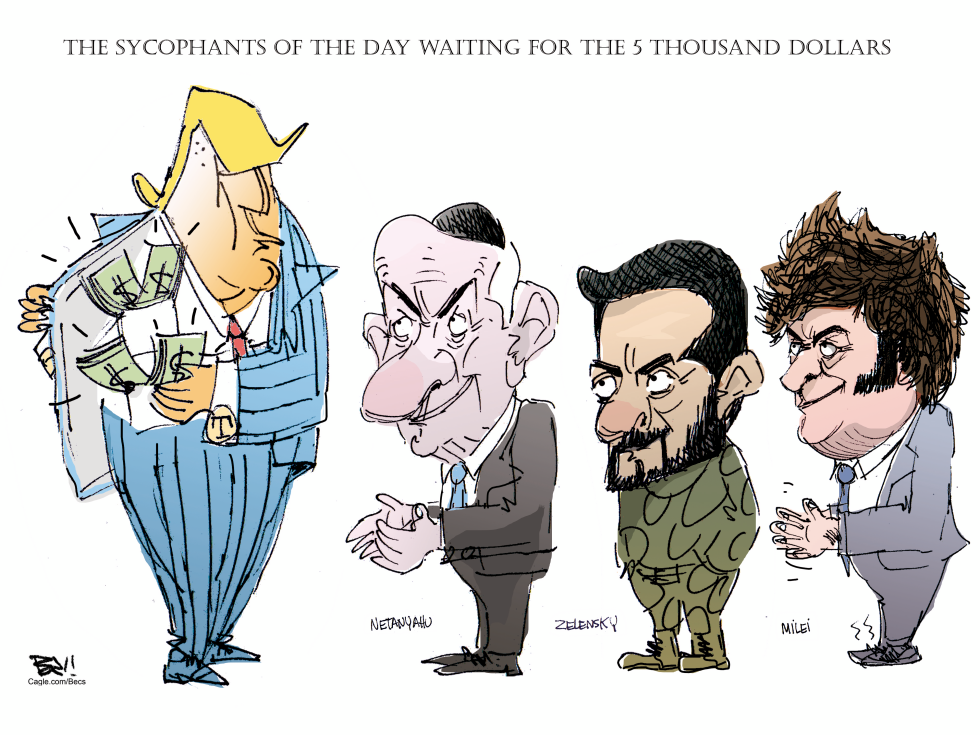
Donald Trump stands at the center of attention from Israeli Prime Minister Benjamin Netanyahu, Ukrainian President Volodymyr Zelensky and Argentine President Javier Milei. The scene reflects ongoing questions about how foreign leaders court favor with the U.S. president through displays of loyalty. The cartoon argues that these relationships reduce international diplomacy to transactional waiting for payoffs.
Donald Trump has repeatedly downplayed the need for formal AI regulations, arguing that a capable leader with high intelligence is sufficient oversight. The position comes as rapid AI development raises concerns over safety, bias, and uncontrolled systems. Critics say the stance leaves the public exposed to untested technologies with broad societal impact. The cartoon presents this view as dangerously dismissive of structural safeguards.
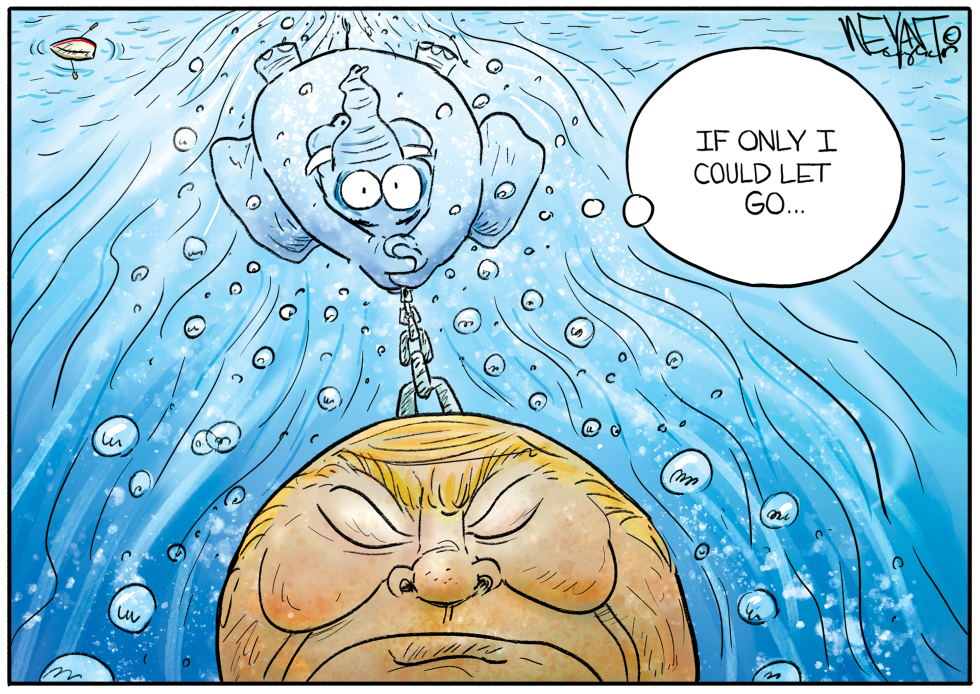
The Republican Party continues to grapple with its deep ties to Donald Trump as the 2026 election cycle approaches. Trump remains the dominant force within the GOP, and efforts to distance the party from him have repeatedly failed. This dynamic risks further electoral damage as voters grow weary of the internal conflict. The cartoon argues that the GOP's inability to break free from Trump is self-inflicted and will lead to its continued decline.