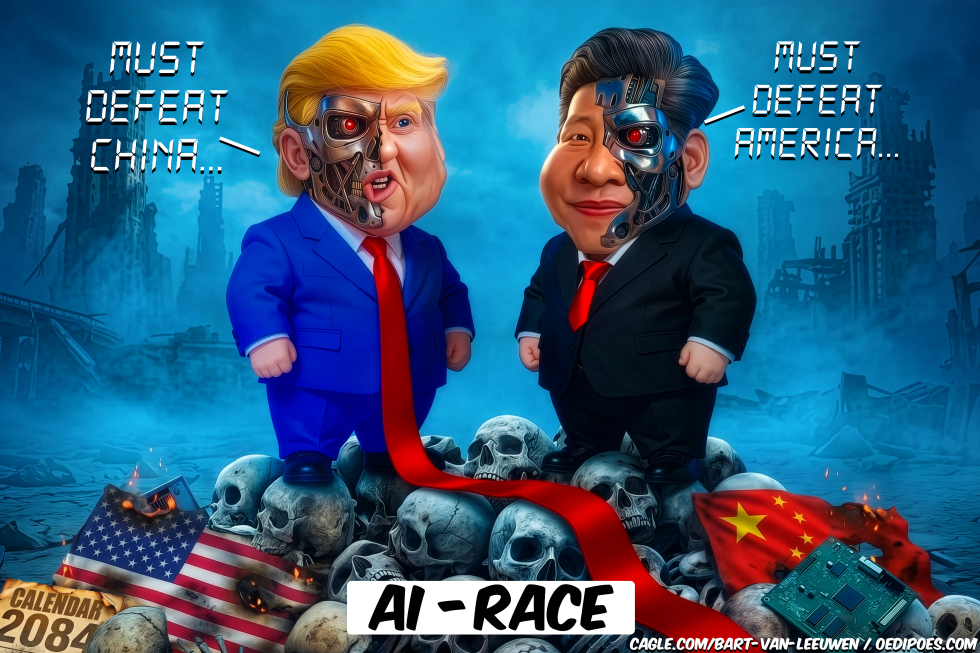
The cartoon depicts Donald Trump and Xi Jinping as half-robotic figures standing atop piles of skulls in a devastated cityscape dated 2084. Each leader is labeled with a directive to defeat the other in an AI race, with American and Chinese flags and a circuit board visible among the debris. The image responds to ongoing US-China technological competition by projecting a grim future of mutual escalation. The visual metaphor underscores how both nations view AI development as a zero-sum contest with potentially catastrophic results. The publication date of September 2026 places the piece amid continued policy focus on semiconductor controls and AI investment bills.
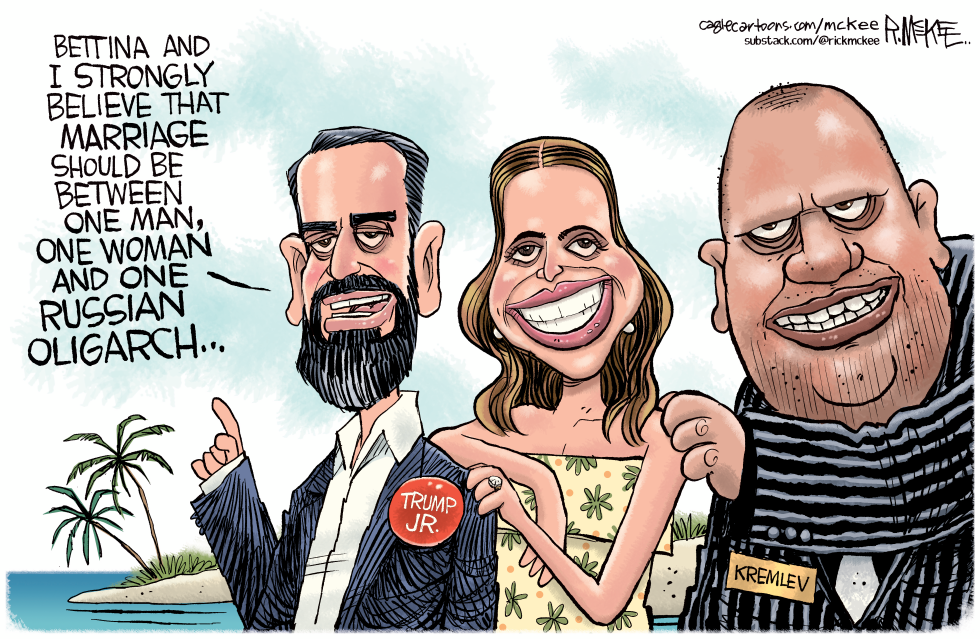
On September 15, 2026, commentary emerged around reports of Russian oligarch involvement in events tied to Donald Trump Jr. and Bettina. The development raises questions about foreign influence on the Trump family. The piece argues such connections undermine claims of independence from external interests.
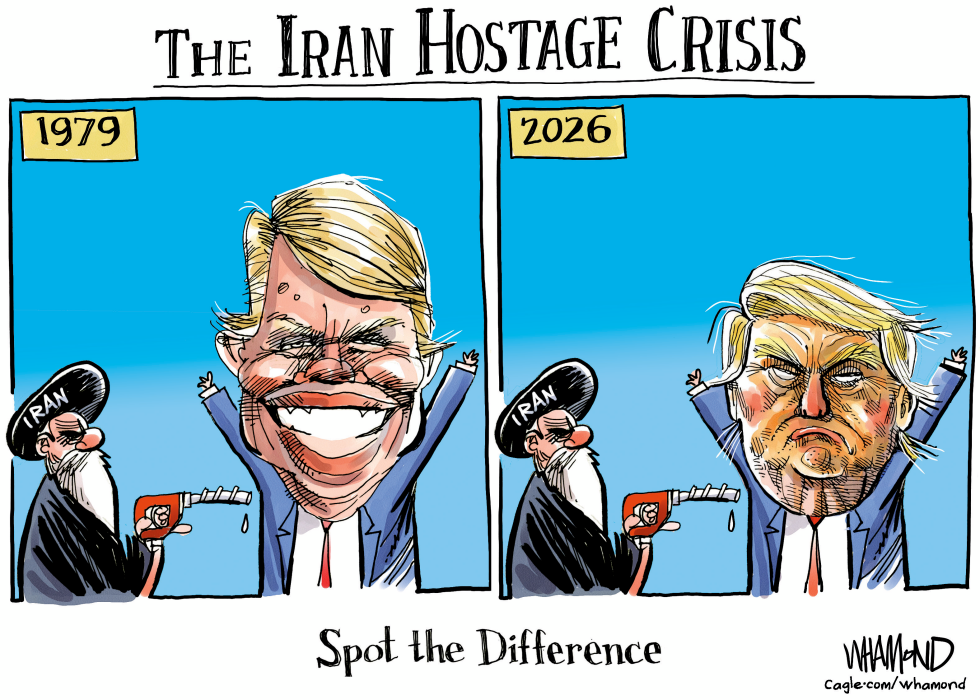
The cartoon splits the Iran Hostage Crisis into 1979 and 2026 panels. In the first Trump appears elated while an Iran-labeled figure holds a gas pump. In the second Trump looks distressed with the same figure present. The piece uses the visual contrast to comment on how Iran-related pressures affect US political figures differently over time.
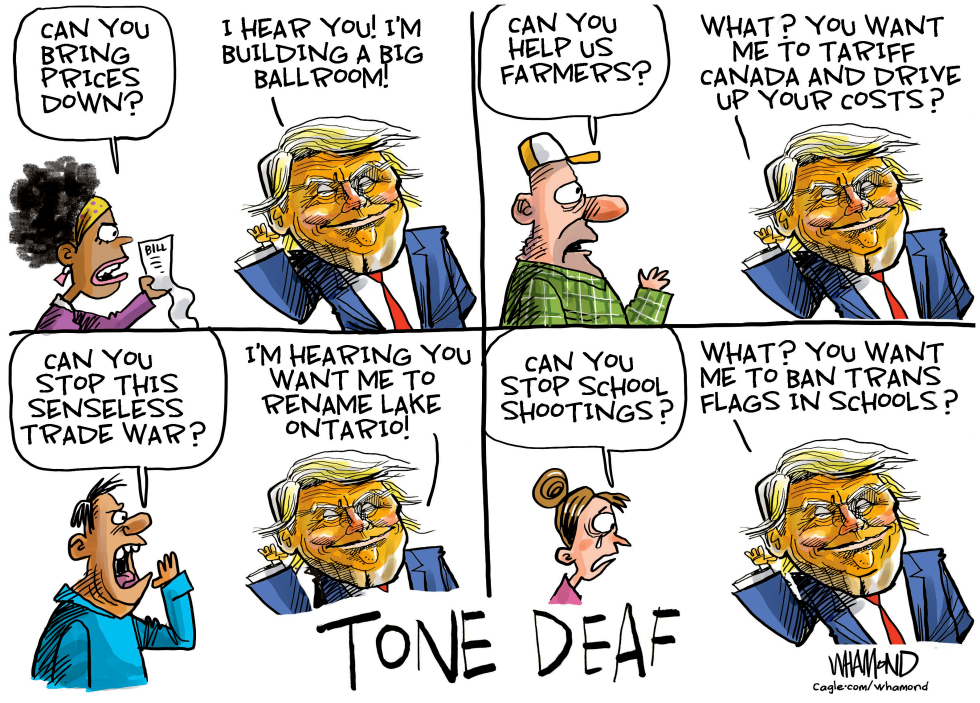
The cartoon by Dave Whamond published September 15, 2026, shows Donald Trump responding to citizen concerns about prices, tariffs on Canada, trade wars, school shootings and transgender flags by pivoting to a ballroom project and renaming Lake Ontario. The four-panel layout underscores a pattern of tone-deaf replies that ignore the original requests.
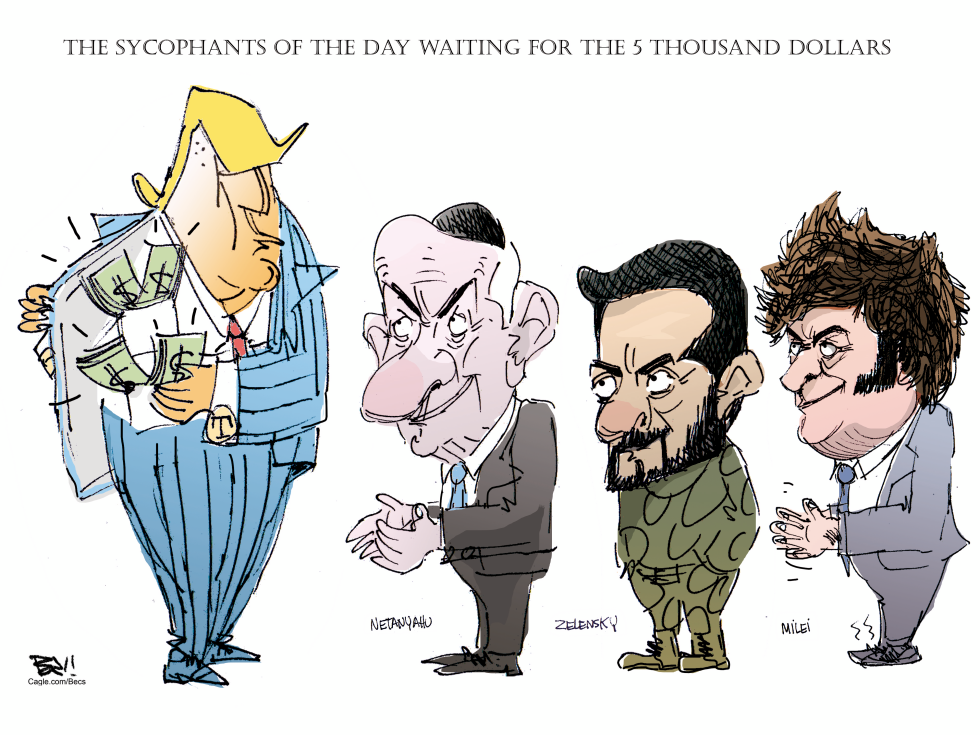
Donald Trump stands at the center of attention from Israeli Prime Minister Benjamin Netanyahu, Ukrainian President Volodymyr Zelensky and Argentine President Javier Milei. The scene reflects ongoing questions about how foreign leaders court favor with the U.S. president through displays of loyalty. The cartoon argues that these relationships reduce international diplomacy to transactional waiting for payoffs.
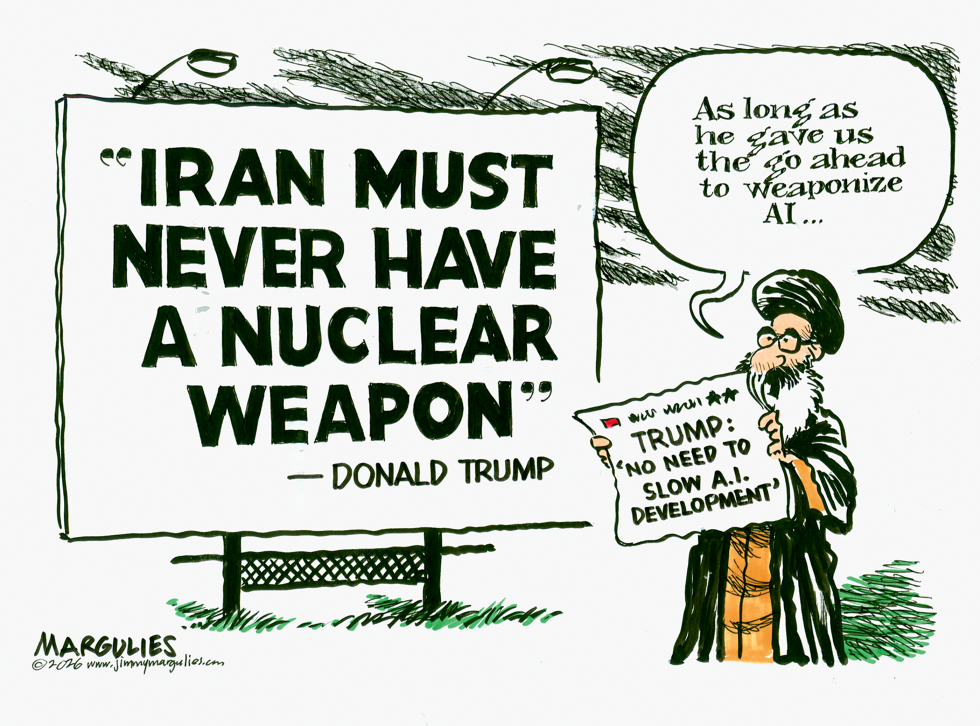
Donald Trump has repeatedly stated that Iran must never obtain a nuclear weapon, a position rooted in long-standing U.S. efforts to prevent nuclear proliferation in the Middle East. At the same time, reports indicate interest in accelerating artificial intelligence development without slowdowns. The cartoon responds to this apparent tension by depicting an Iranian leader conditioning acceptance of the nuclear restriction on permission to pursue AI weaponization. It argues that prioritizing rapid AI advancement risks undermining nonproliferation goals and hands strategic advantages to adversaries.
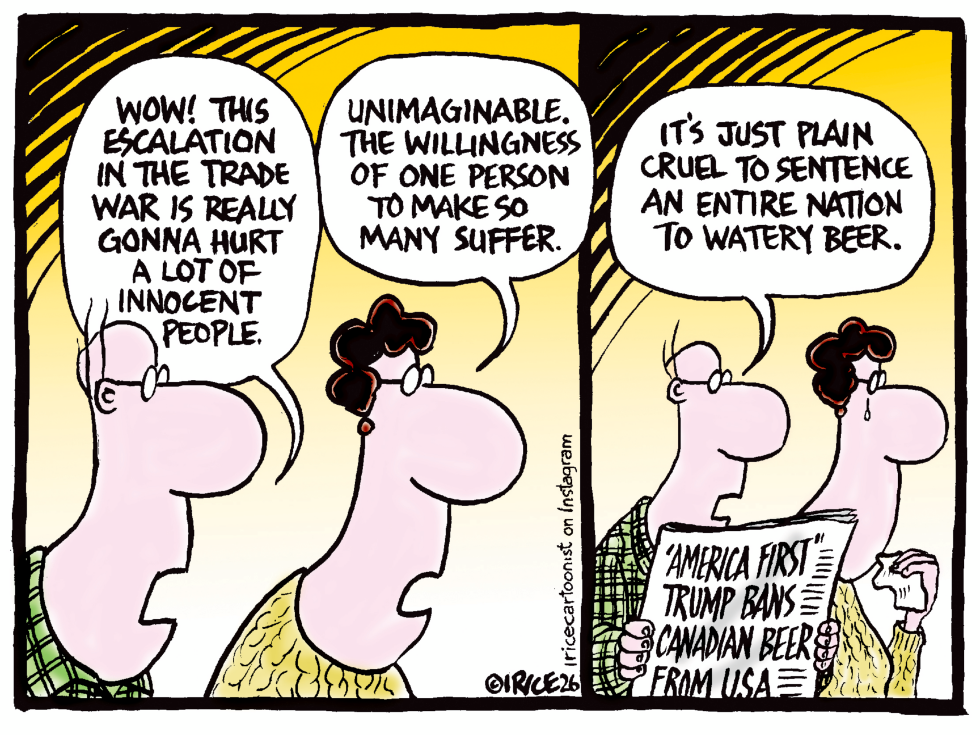
President Trump announced a ban on Canadian beer imports as part of an escalating trade dispute with Canada. The move, framed under the America First banner, immediately drew criticism for punishing ordinary citizens on both sides of the border. The policy extends earlier tariff threats into consumer goods, raising prices and limiting choices for American drinkers. Canadian exporters face sudden market loss while U.S. retailers scramble for alternatives. The editorial cartoon portrays the decision as petty and disproportionate, arguing that one leader's willingness to inflict broad pain reveals the human cost of personal political theater.
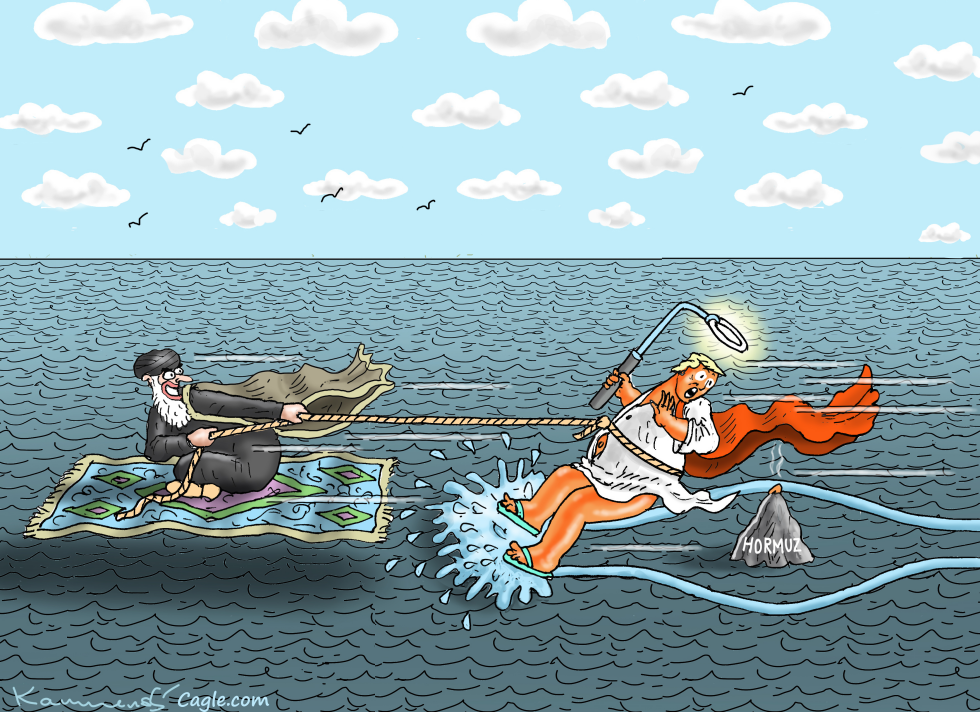
Tensions in the Strait of Hormuz have escalated with threats to shipping lanes critical for global oil supplies. Israeli and U.S. leaders face mounting losses from disruptions. The cartoon argues that involvement risks dragging both into deeper conflict without clear gains.
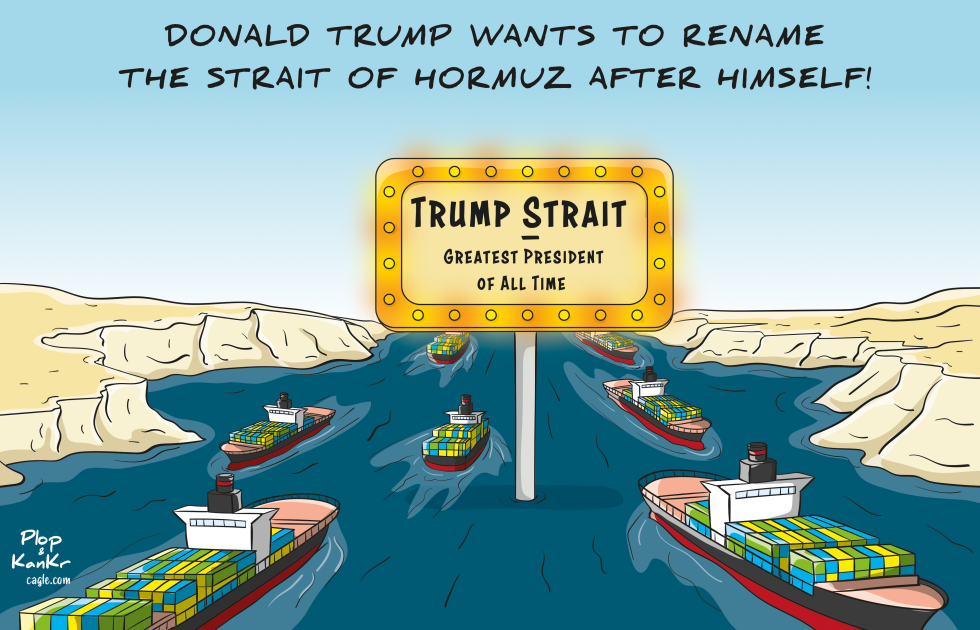
A political cartoon depicts Donald Trump proposing to rename the Strait of Hormuz after himself. The image shows multiple cargo ships navigating the waterway beneath a large glowing sign reading Trump Strait with the subtitle Greatest President of All Time. The top text states Donald Trump wants to rename the Strait of Hormuz after himself. The cartoon uses the visual of a prominent sign overlooking busy shipping lanes to comment on the proposal. It responds to ongoing discussions about international waterways and presidential initiatives in the Middle East region as of the September 2026 publication date.
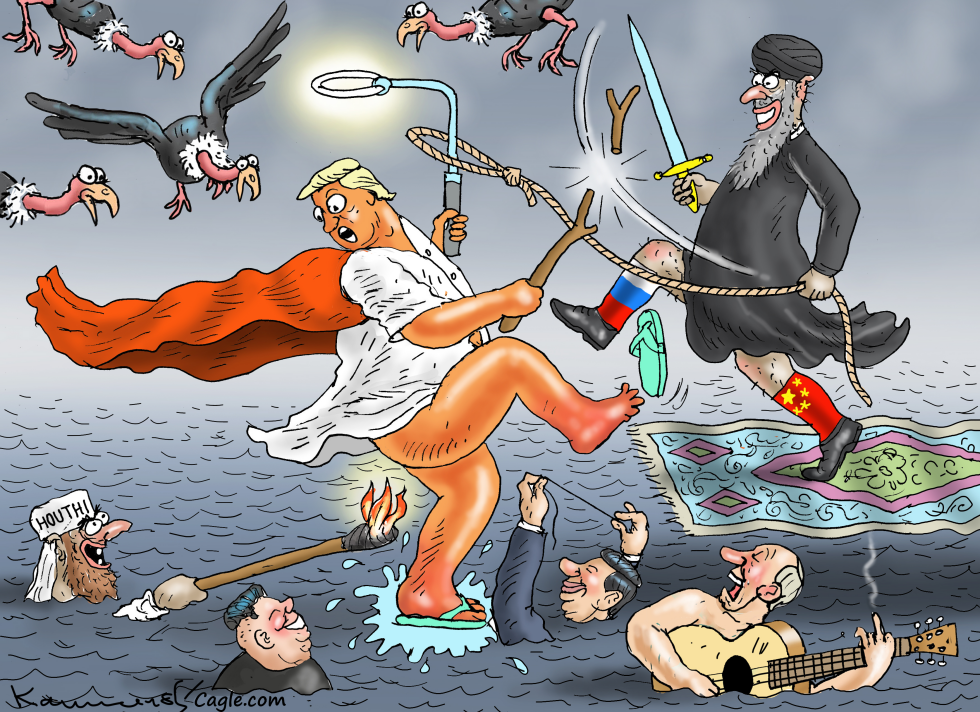
Donald Trump faces mounting complications in Middle East engagements involving Houthi forces and shifting ties with Russia and China. The cartoon portrays these entanglements as self-inflicted disorder that invites scavengers and undermines stability. It critiques the approach as reckless and counterproductive.
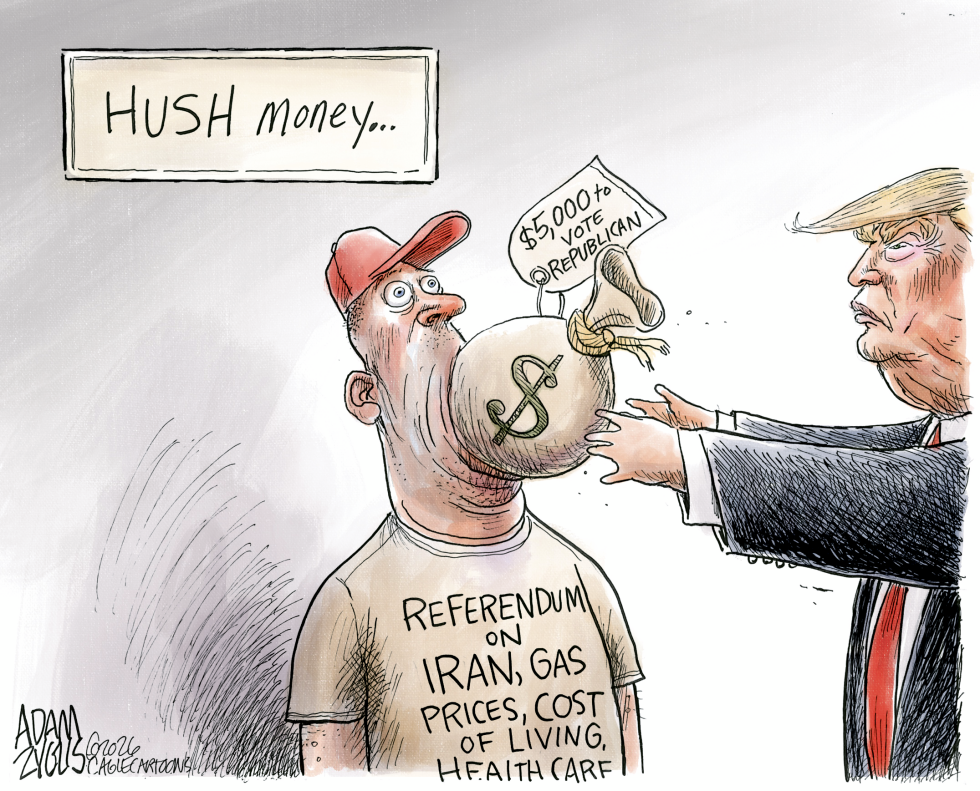
The cartoon shows Donald Trump handing a large bag of cash labeled as hush money to a man in a referendum shirt covering Iran, gas prices, cost of living and health care. A tag on the bag promises $5,000 to vote Republican. The scene responds to ongoing debates over election integrity and foreign policy issues involving Iran as of September 2026. It uses the visual metaphor of a bribe to comment on alleged attempts to influence voter priorities through financial incentives.
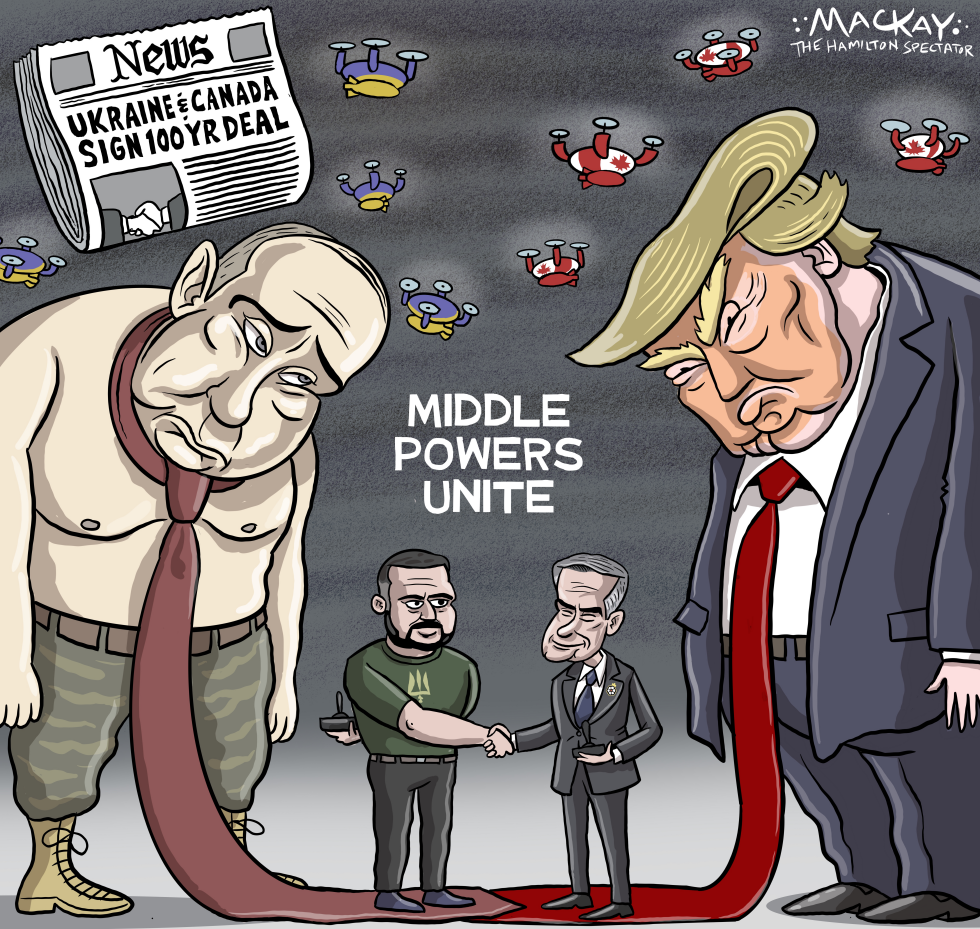
The political cartoon illustrates the signing of a 100-year agreement between Canada and Ukraine, with President Zelenskyy and a Canadian leader shaking hands on a red carpet. Large caricatures of Vladimir Putin and Donald Trump stand on either side, looking down at the smaller central figures. Canadian flag drones fill the background sky near a newspaper announcing the pact. The central text reads Middle Powers Unite. The image comments on how the bilateral deal elevates secondary nations in global affairs while established powers watch the development.
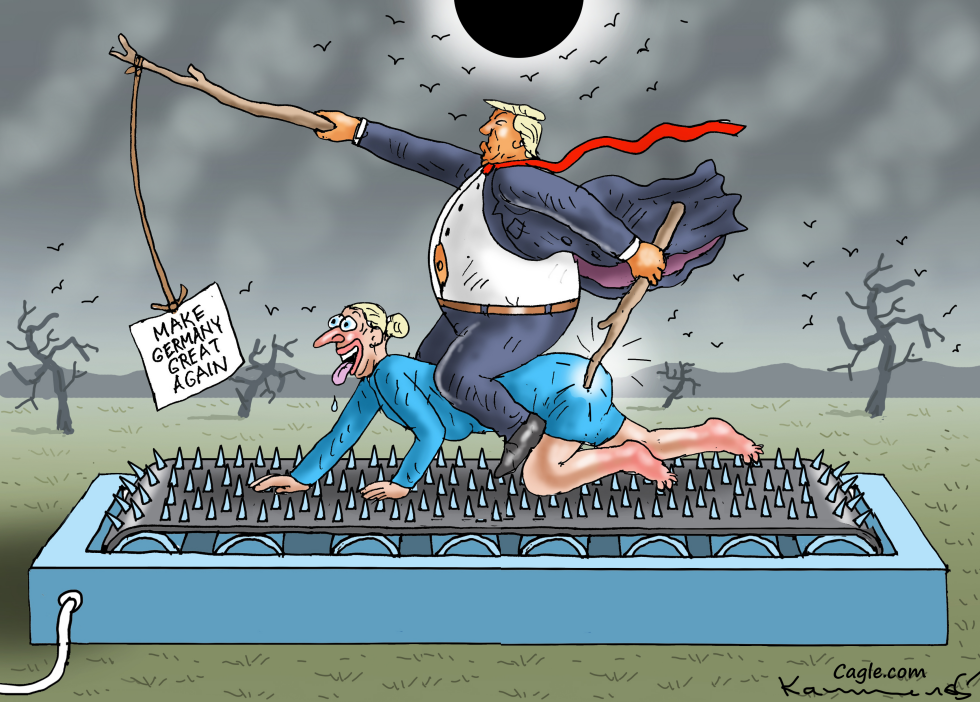
Donald Trump promotes a revival slogan aimed at Germany while Angela Merkel faces the consequences. The effort highlights ongoing tensions in transatlantic relations and questions about external influence on European domestic policy. The piece argues that such interventions impose unnecessary hardship without delivering benefits.
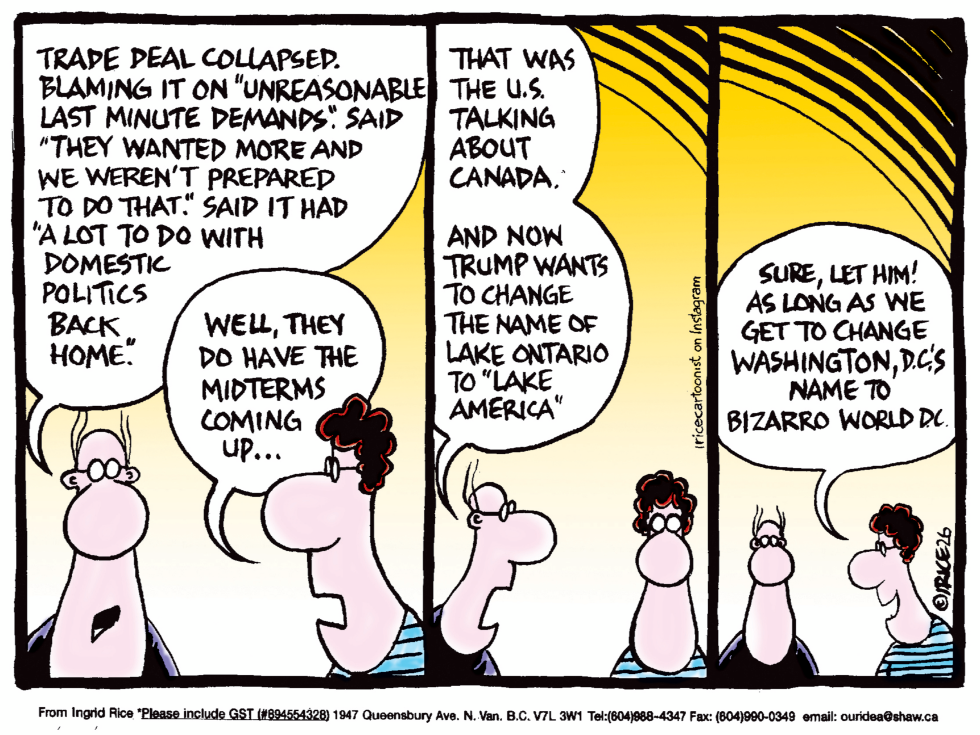
A Canada-U.S. trade deal collapsed after U.S. negotiators cited unreasonable last-minute demands and linked the failure to domestic politics ahead of midterms. President Trump then proposed renaming Lake Ontario to Lake America. Canadian officials responded by offering to rename Washington D.C. to Bizarro World DC if the change proceeds. The exchange highlights how trade tensions and political posturing are escalating between the two countries. The cartoon mocks the name-change idea as emblematic of broader dysfunction in bilateral relations.
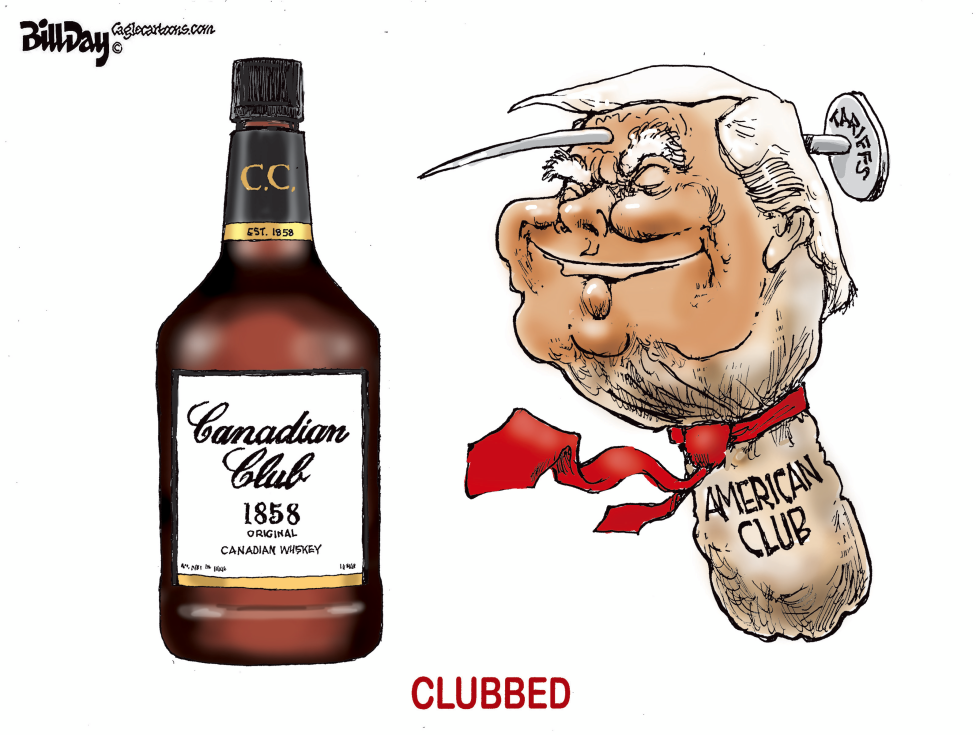
On September 9, 2026, the cartoon responds to ongoing US-Canada trade friction under the second Trump administration. Trump has pursued aggressive tariff policies against Canadian imports, prompting Ottawa to consider reciprocal measures. The piece uses the Canadian Club whiskey brand to illustrate how such policies rebound on American interests. It argues that Trump's approach harms US businesses and consumers rather than strengthening them.