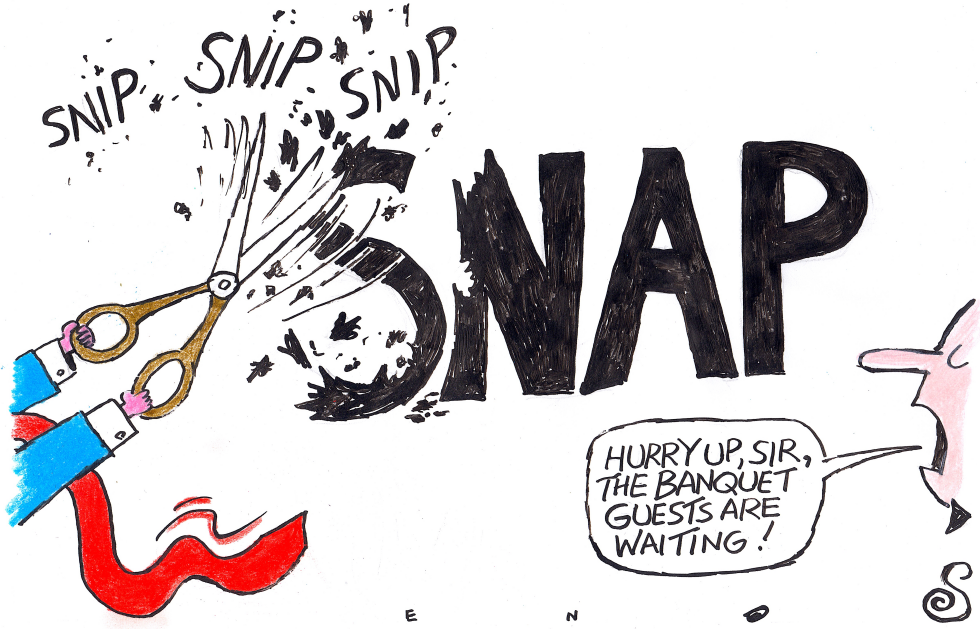
The cartoon depicts a hand wielding scissors to cut the letters of SNAP, the Supplemental Nutrition Assistance Program. A speech bubble urges haste for banquet guests. This visual responds to reports of proposed cuts to food stamps under the Trump administration in late 2025. The contrast highlights perceived priorities between lavish events at Mar-a-Lago and reductions in nutrition assistance for Americans facing hunger. The piece uses the act of cutting to symbolize policy changes affecting low-income households.
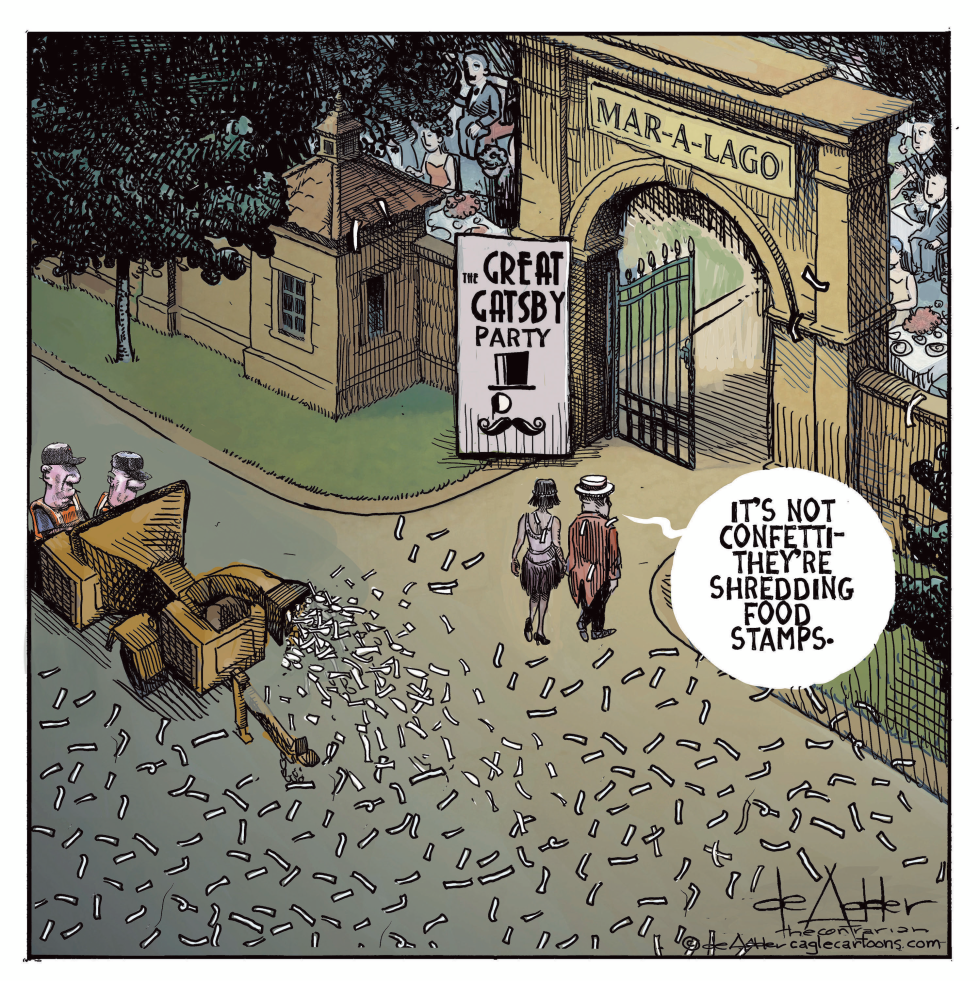
The cartoon by Michael de Adder depicts a Great Gatsby party at Mar-a-Lago where food stamps are shredded instead of confetti. It responds to ongoing debates over SNAP funding and cuts proposed by Republican leaders including Donald Trump. The visual uses the iconic novel's excess to highlight perceived indifference to low-income Americans reliant on nutrition assistance.
The cartoon by John Cole depicts former President Donald Trump pulling a ribbon labeled Big Beautiful Bill that strikes a man wearing a Food Stamp cap and clutching a Food Mart bag. The large orange text SNAP! emphasizes the sudden impact. Published June 8 2025 the work responds to ongoing Republican efforts in Congress to reduce funding for the Supplemental Nutrition Assistance Program as part of broader tax and spending legislation. The visual metaphor illustrates critics' concerns that such cuts will increase hunger among low-income Americans while benefiting other priorities.
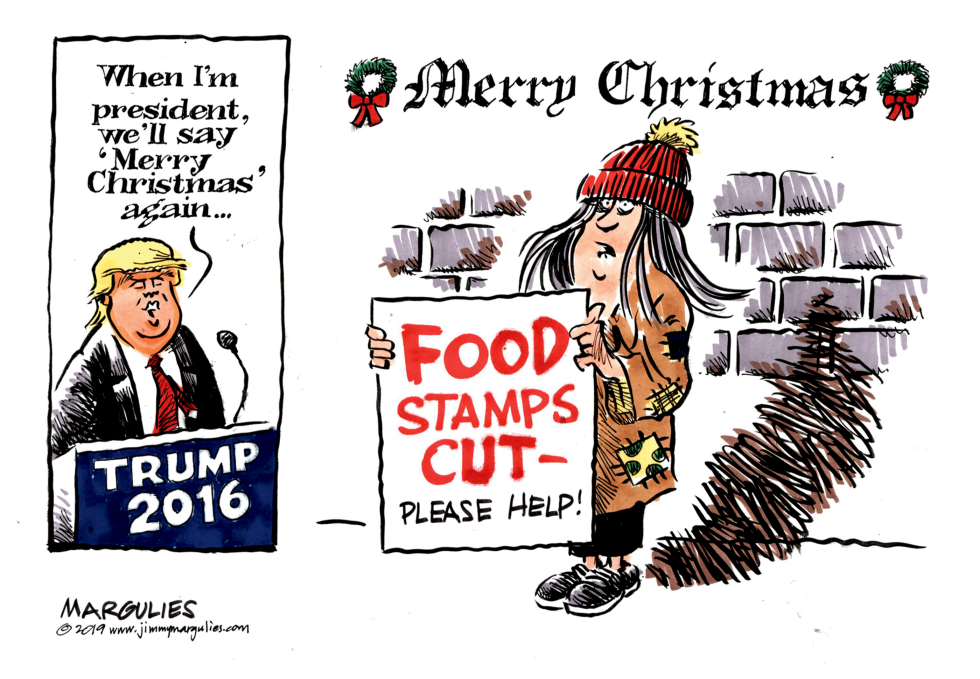
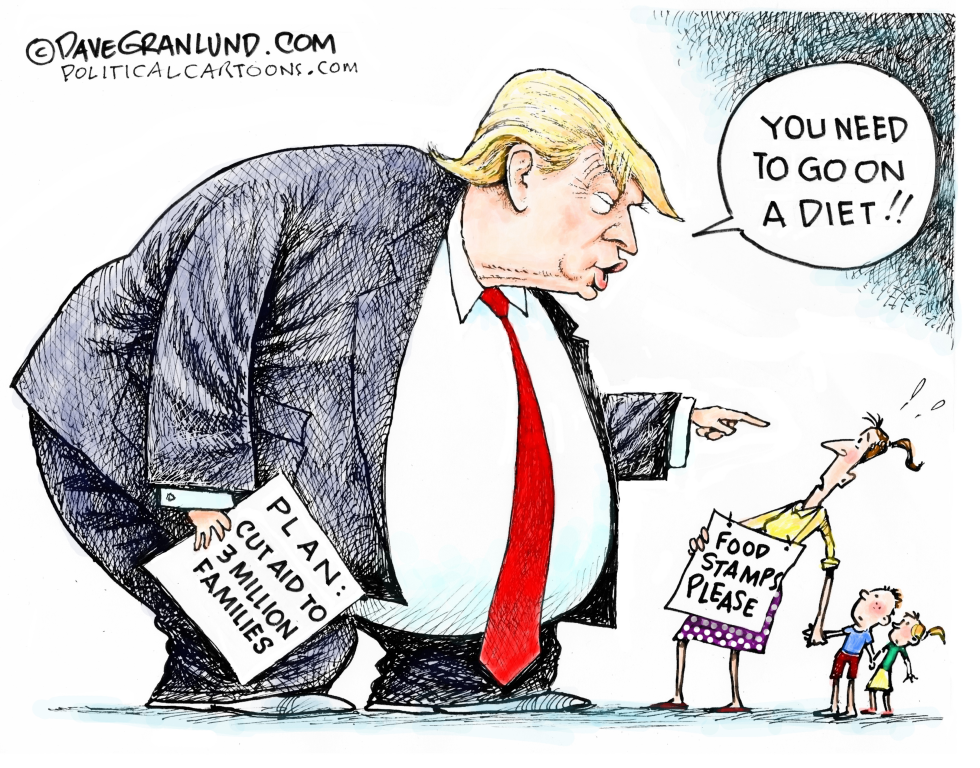
The cartoon shows President Donald Trump holding a sign outlining a plan to cut aid to three million families while directing a mother and her two children holding a food stamps sign to go on a diet. Published in July 2019, the image responds to Trump administration proposals to tighten eligibility and reduce funding for the Supplemental Nutrition Assistance Program. The visual highlights the impact on low-income households with children. It uses the diet remark to underscore the perceived disconnect between policy and recipient needs. The drawing captures ongoing debates over welfare spending during that period.