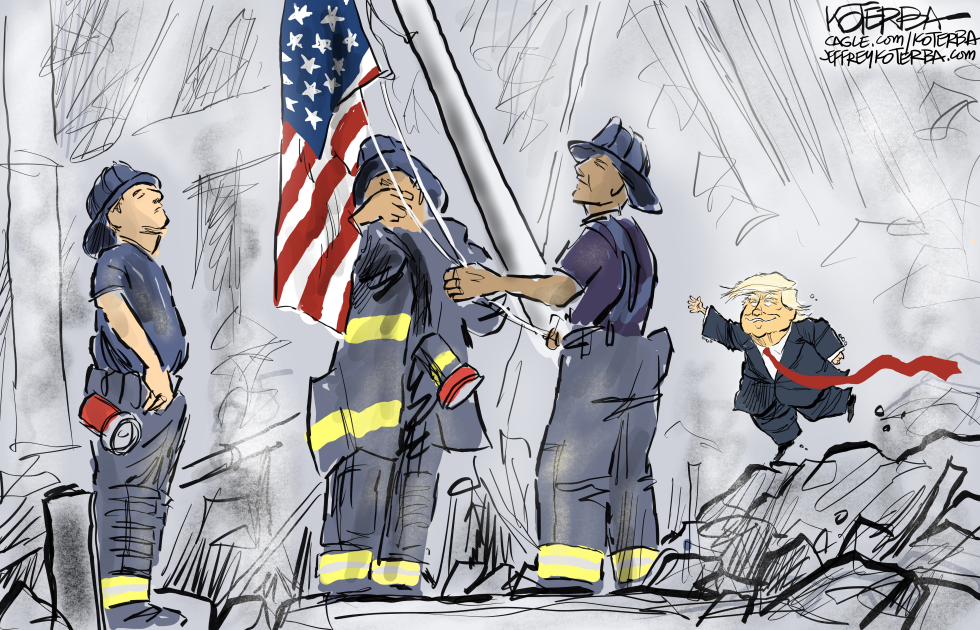
On the eve of the 2026 September 11 anniversary, a cartoon depicts Donald Trump rushing into the iconic firefighter flag-raising scene amid rubble. The image critiques Trump's repeated efforts to associate himself with the 9/11 response despite his limited direct role at the time. The editorial stance highlights perceived opportunism in political figures revisiting national tragedies for personal gain.
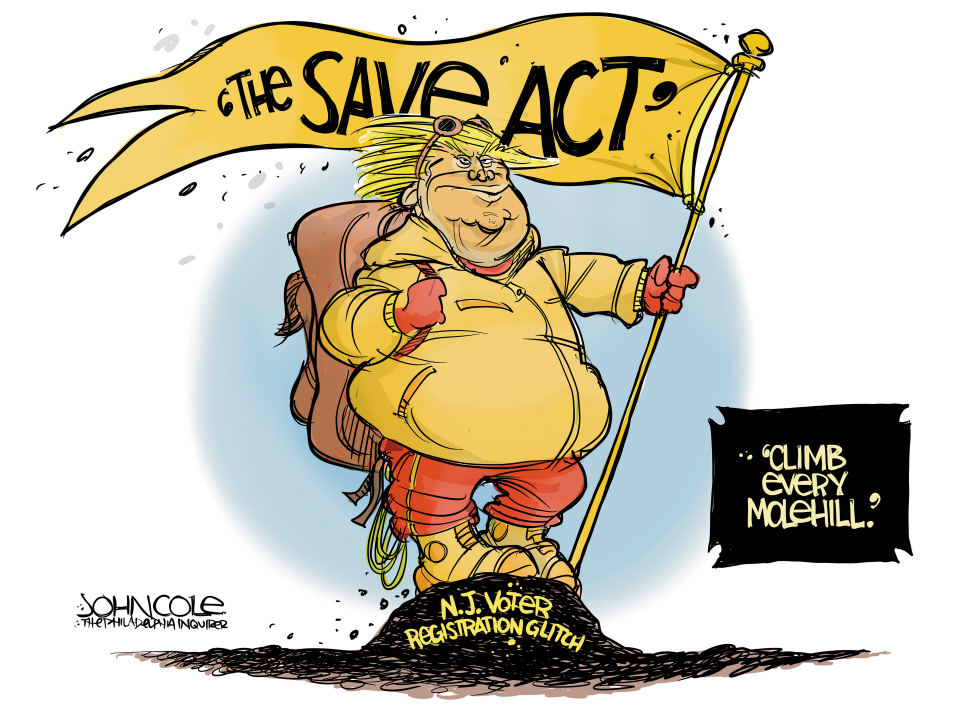
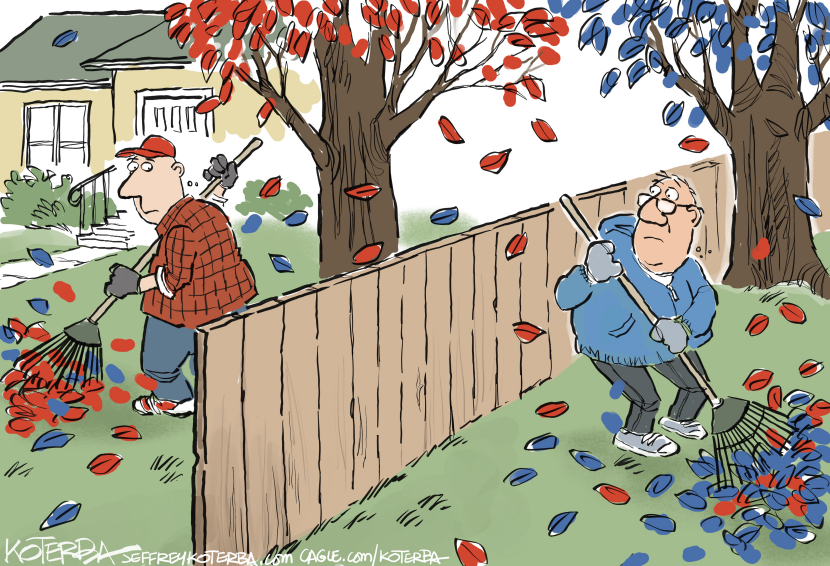
A minor voter registration glitch in New Jersey drew outsized attention from former President Trump and supporters of the SAVE Act in September 2026. The episode highlighted ongoing partisan disputes over election administration and voter ID rules. The cartoon portrays the reaction as an overreaction that turns a small problem into a symbolic crusade, arguing that such emphasis distracts from actual election security needs.
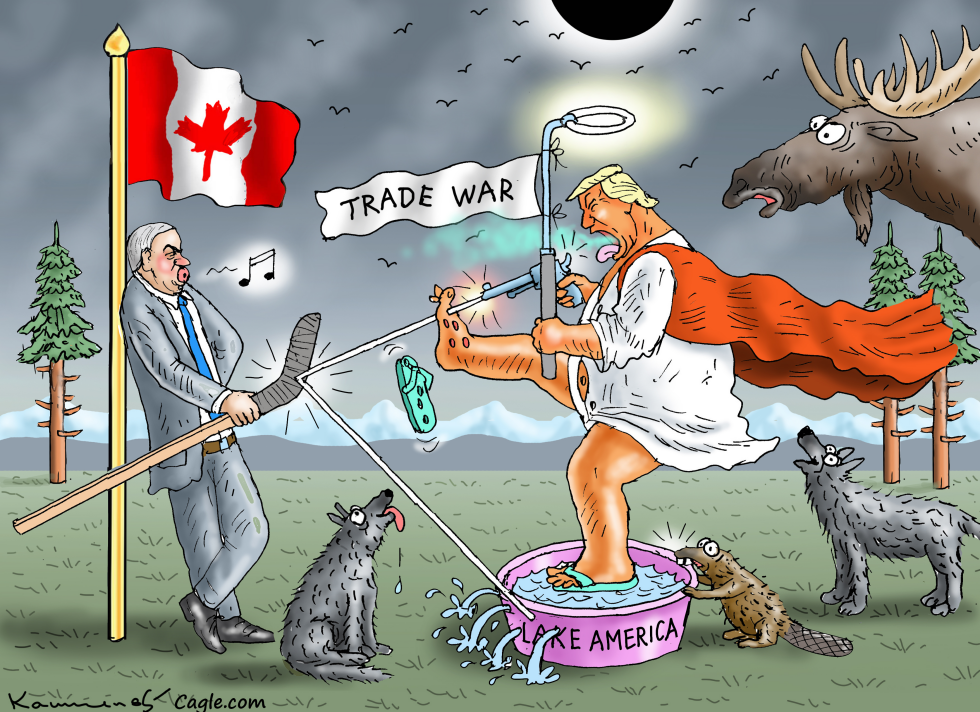
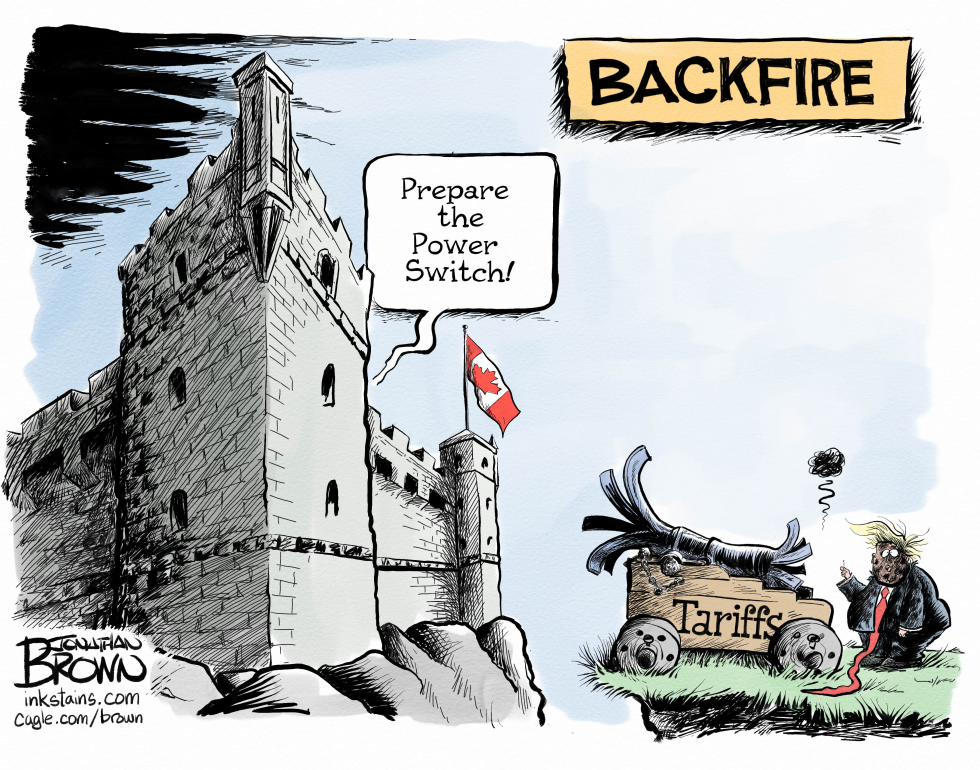
President Trump launched new tariffs on Canadian goods in early September 2026, citing trade imbalances and border issues. The move immediately prompted Canadian countermeasures including duties on US exports. The policy shift disrupts integrated supply chains in autos, energy and agriculture that support millions of jobs on both sides of the border. Markets reacted with volatility as investors weighed the costs of renewed protectionism. The cartoon portrays the tariff campaign as self-inflicted harm that leaves the US exposed to swift Canadian pushback.
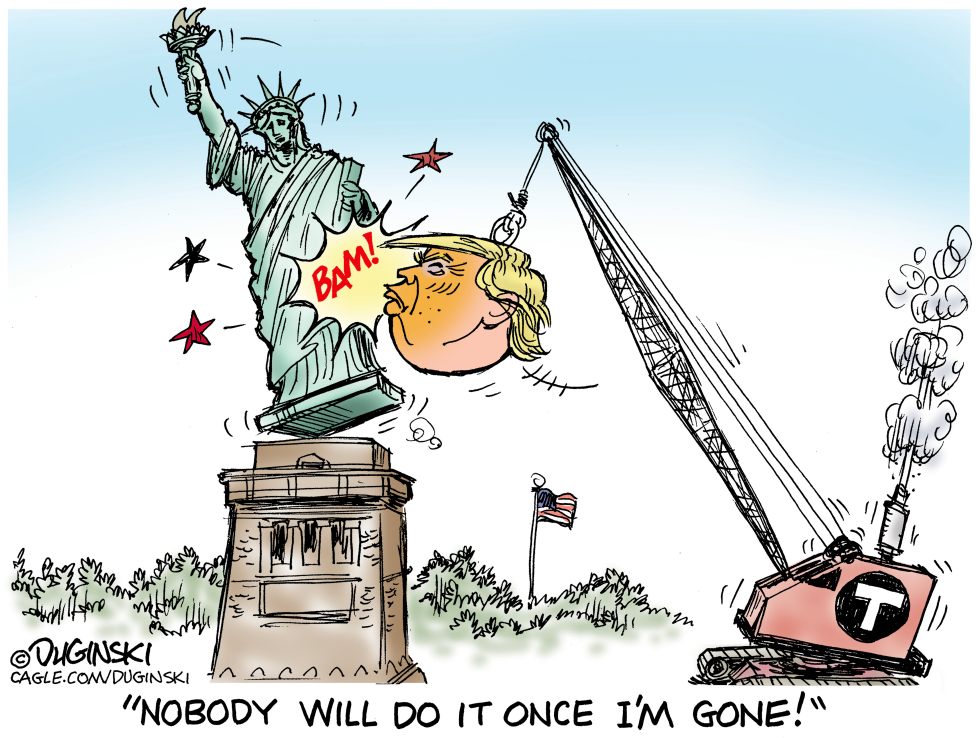
Donald Trump has repeatedly positioned his administration as the primary force reshaping or challenging long-standing U.S. institutions and norms. Critics argue this approach risks permanent erosion of democratic safeguards and public trust. The cartoon presents Trump's own words as an admission that the damage stops only when he leaves office.
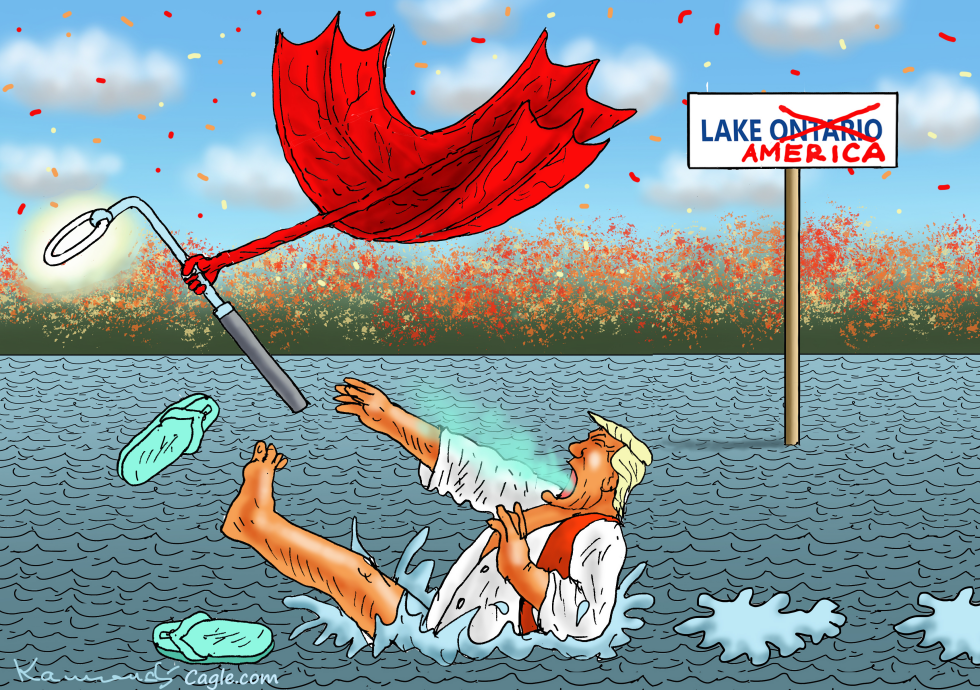
Donald Trump has floated the idea of reclassifying parts of the Great Lakes as exclusively American territory amid ongoing trade and border disputes with Canada. The move has drawn sharp criticism from Canadian officials and environmental groups concerned about resource management. The cartoon portrays the effort as a futile struggle against established geography and international norms.
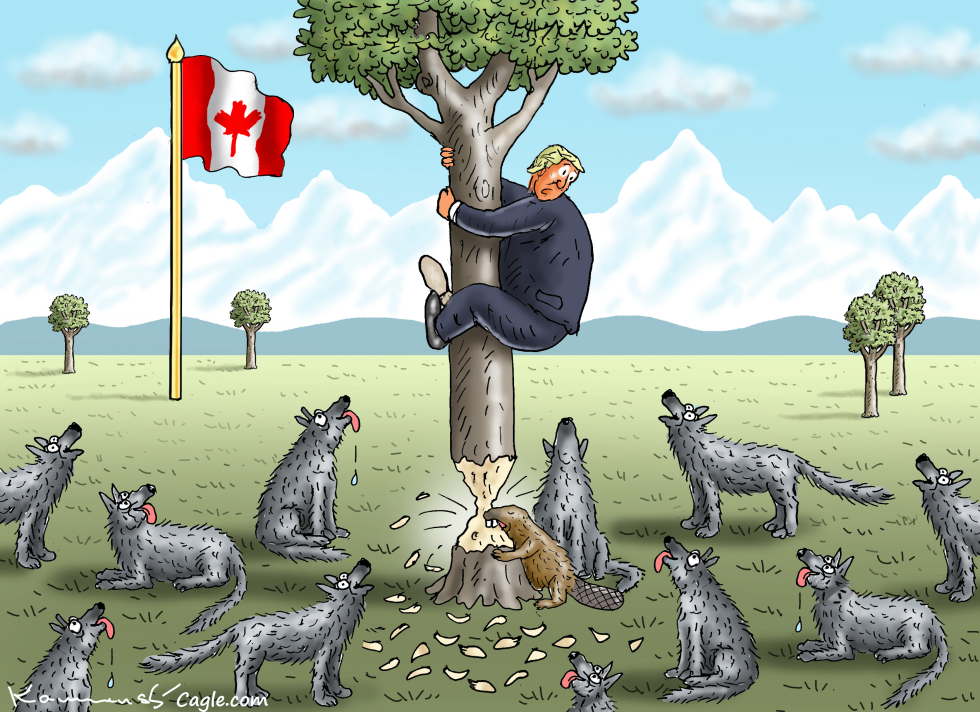
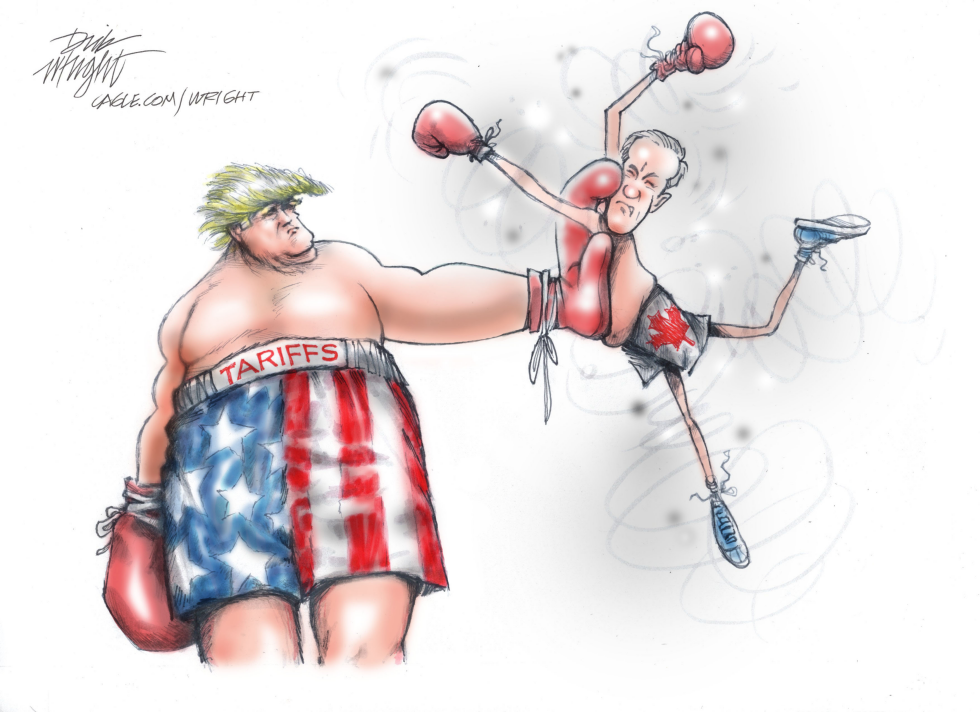
Donald Trump remains entangled in ongoing tensions with Canada over trade and border issues in 2026. The situation highlights persistent friction between the two nations on economic policy. The piece portrays Trump as increasingly isolated by Canadian actions while other actors observe the outcome.
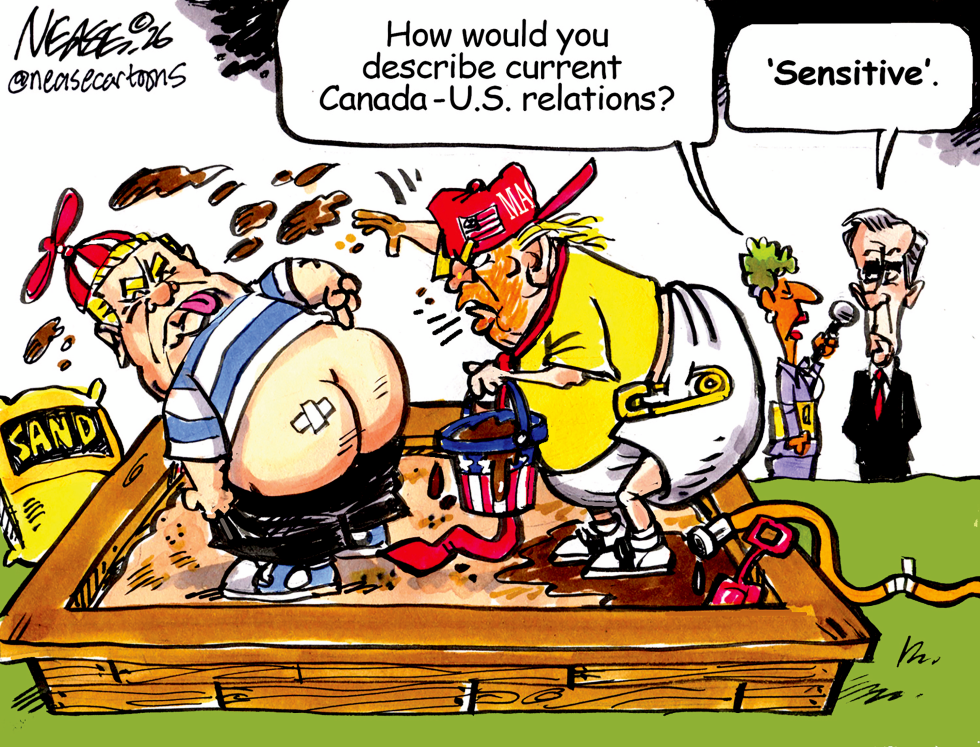
Donald Trump described current Canada-U.S. relations as sensitive during a period of ongoing trade and diplomatic friction between the two nations. The characterization came amid broader tensions over tariffs, border issues, and economic interdependence. The piece portrays the label as understated given the confrontational dynamic between the leaders.
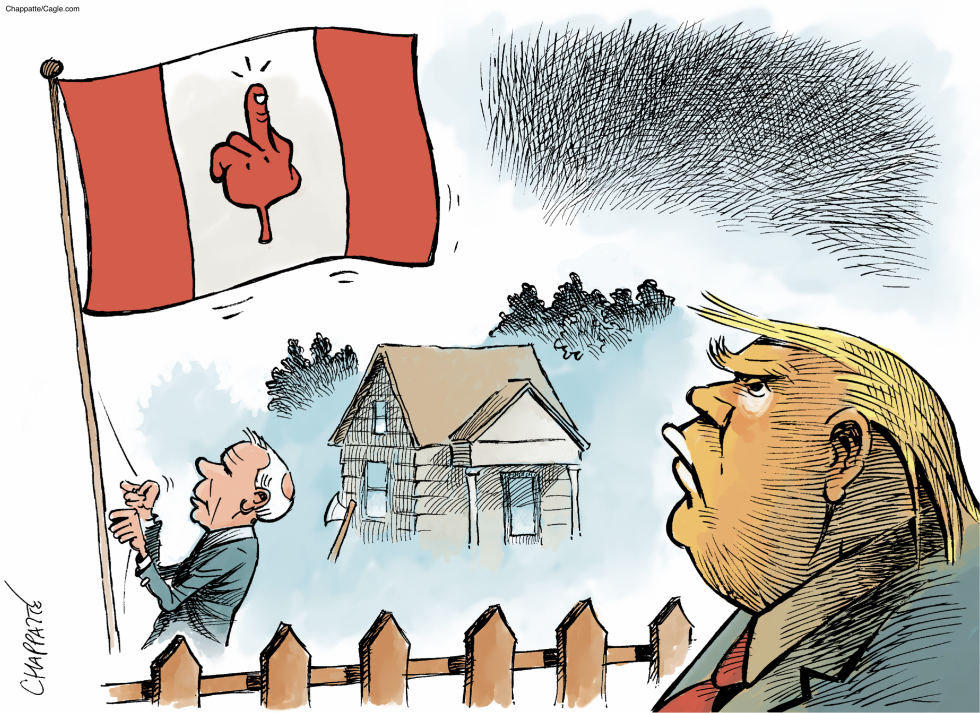
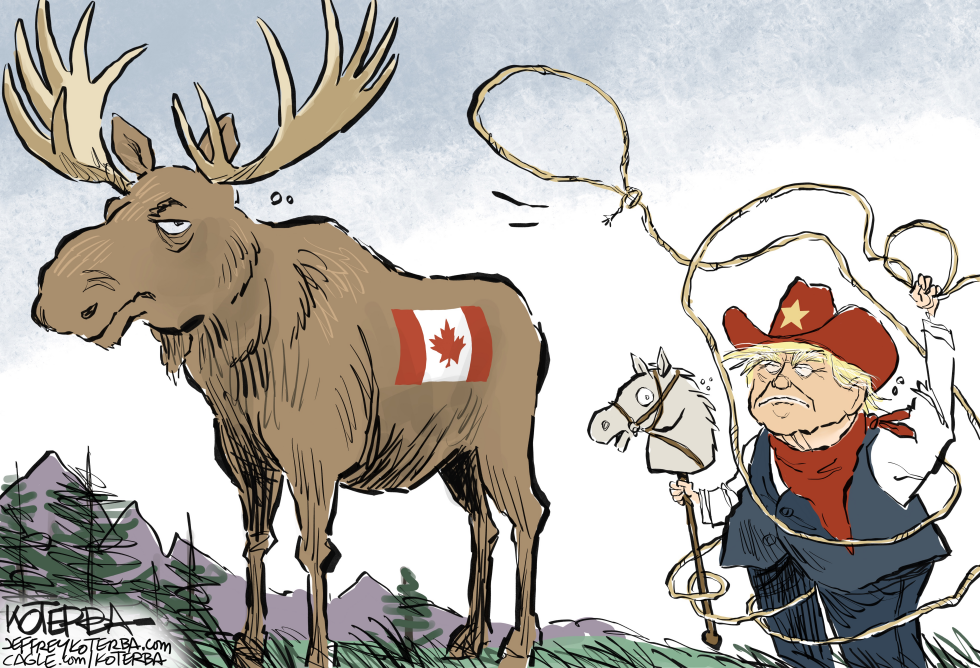
Donald Trump has renewed pressure on Canada over trade and border issues in recent weeks. The moves echo past tariff threats and comments about closer integration. The piece portrays these efforts as clumsy and self-defeating.
The cartoon shows a Canadian castle flying its flag while a cannon labeled Tariffs explodes backward toward a figure resembling Donald Trump. The scene responds to ongoing trade tensions where U.S. tariffs on Canadian goods prompted retaliatory measures. The visual emphasizes the policy rebounding on its originator rather than achieving intended pressure.
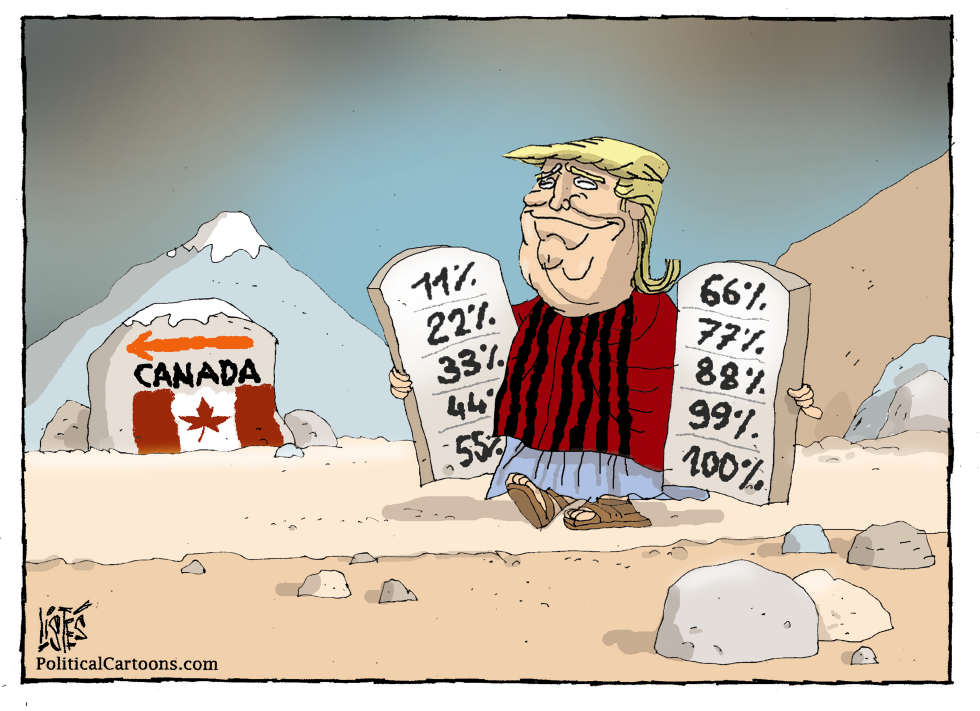
Donald Trump appears in a desert scene holding stone tablets inscribed with rows of percentages while standing near a rock labeled Canada. The image responds to ongoing trade and tariff discussions between the United States and Canada. The editorial position frames the percentages as commandments Trump is delivering in the border region.
President Trump imposed new tariffs targeting Canadian goods in August 2026, escalating bilateral trade friction over lumber, dairy and autos. The measures aim to protect U.S. industries and renegotiate terms. Markets reacted with volatility in both countries. The editorial argues the tariffs represent necessary leverage that weakens Canada's position and forces concessions.
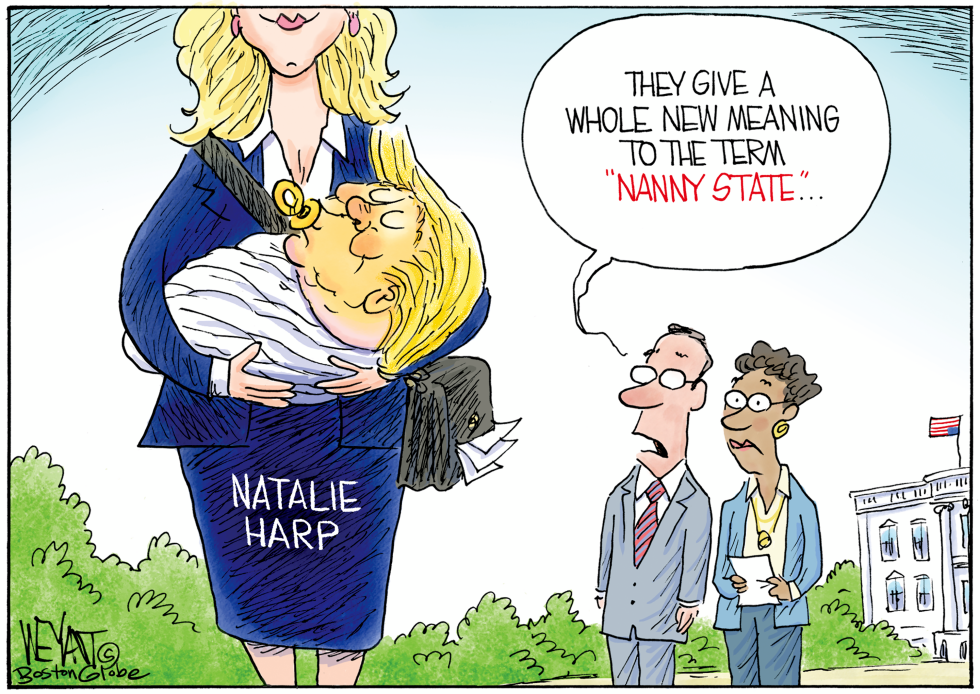
Natalie Harp, a Trump aide, appears in a Boston Globe cartoon holding an infant version of the former president. The image plays on the term nanny state as Harp carries Trump in a carrier. The piece comments on the close personal dynamic between the two figures amid ongoing political developments in 2026.
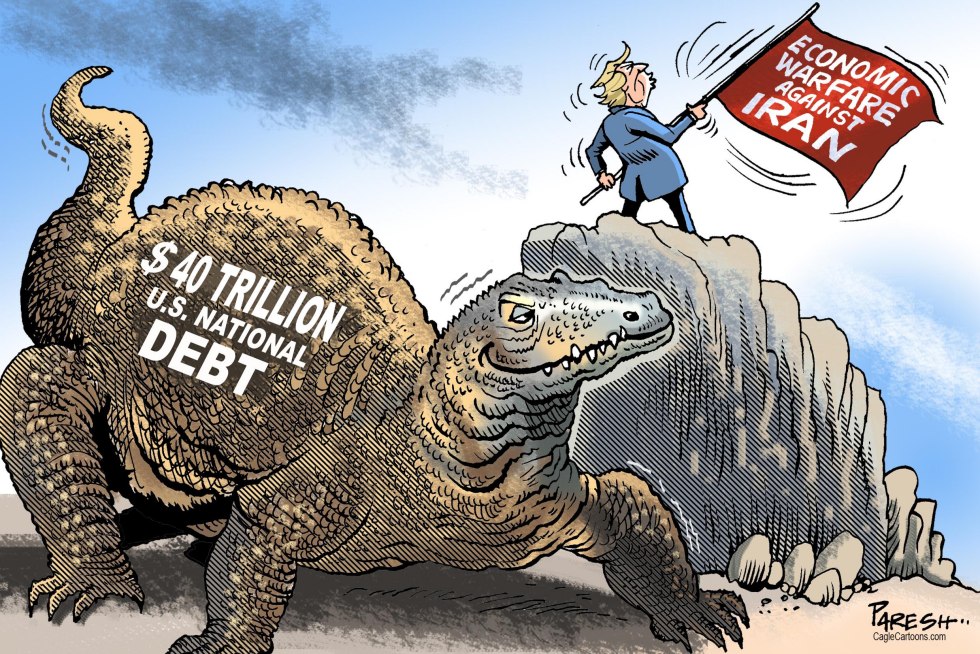
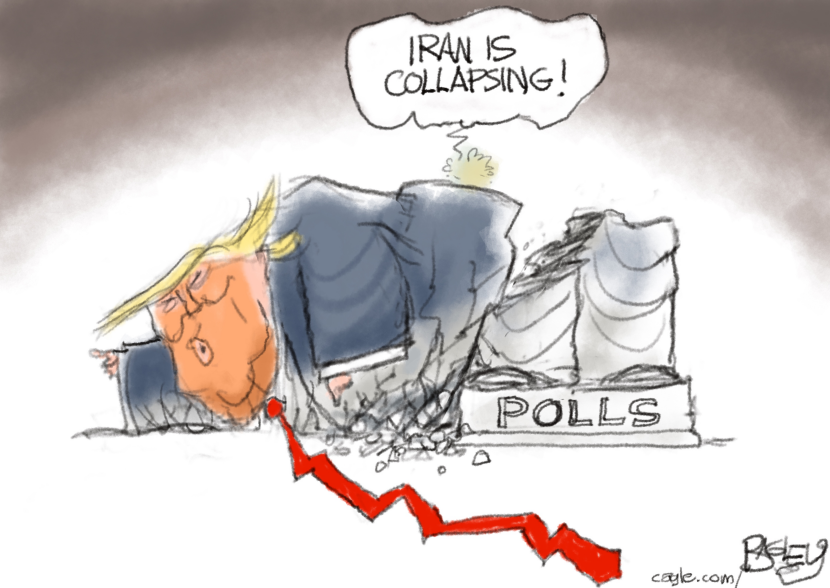
The image depicts Donald Trump standing on a rocky outcrop and waving a red flag reading Economic Warfare Against Iran. Below him a large dinosaur carries the label $40 Trillion U.S. National Debt on its side. The composition places the debt creature in motion near the rock formation. The scene responds to ongoing discussions of U.S. policy toward Iran and the size of federal obligations. The visual places the foreign policy action directly above the debt figure to link the two elements.
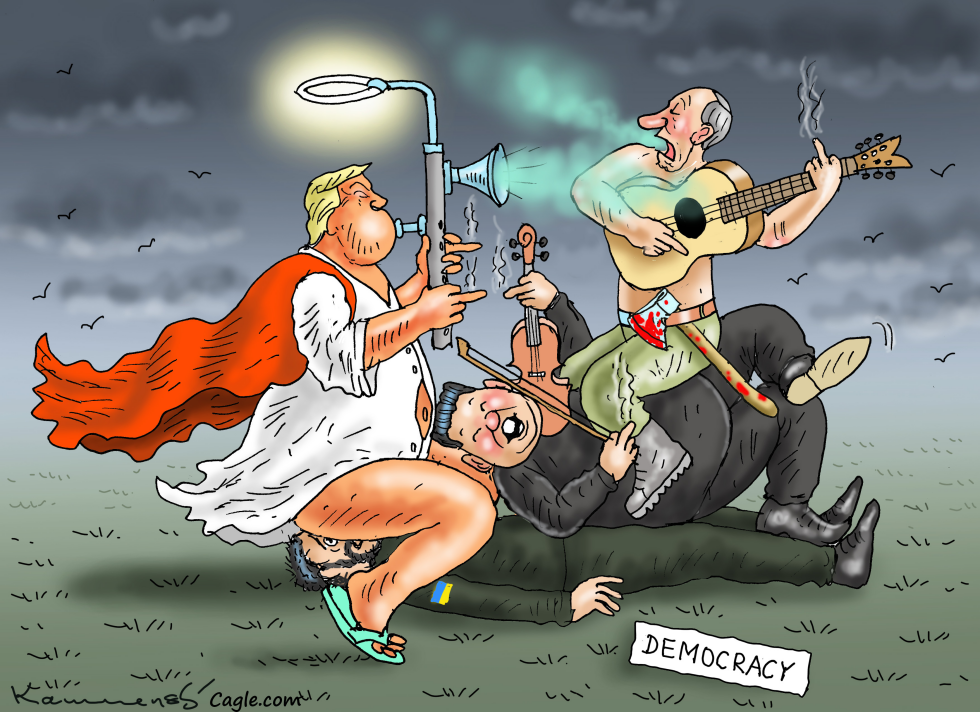
On August 21, 2026, the ongoing Ukraine conflict continued with no resolution in sight as U.S., Russian and Ukrainian leaders remained locked in diplomatic friction. The cartoon responds by depicting the three men as musicians whose finger-pointing and instruments create discord rather than harmony, underscoring the editorial view that personal posturing has overtaken substantive progress toward peace.