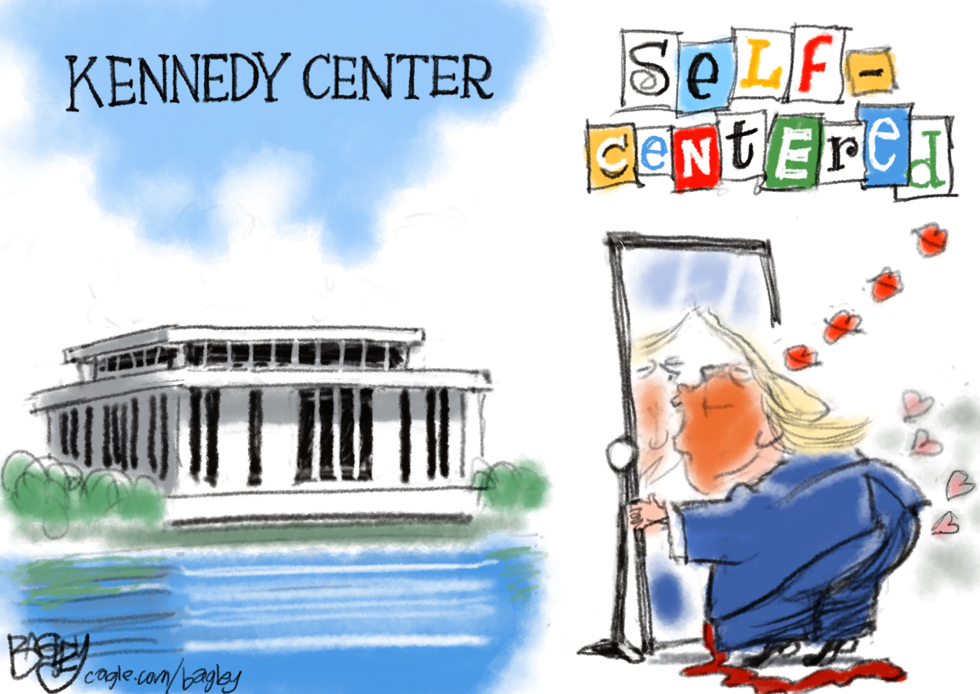
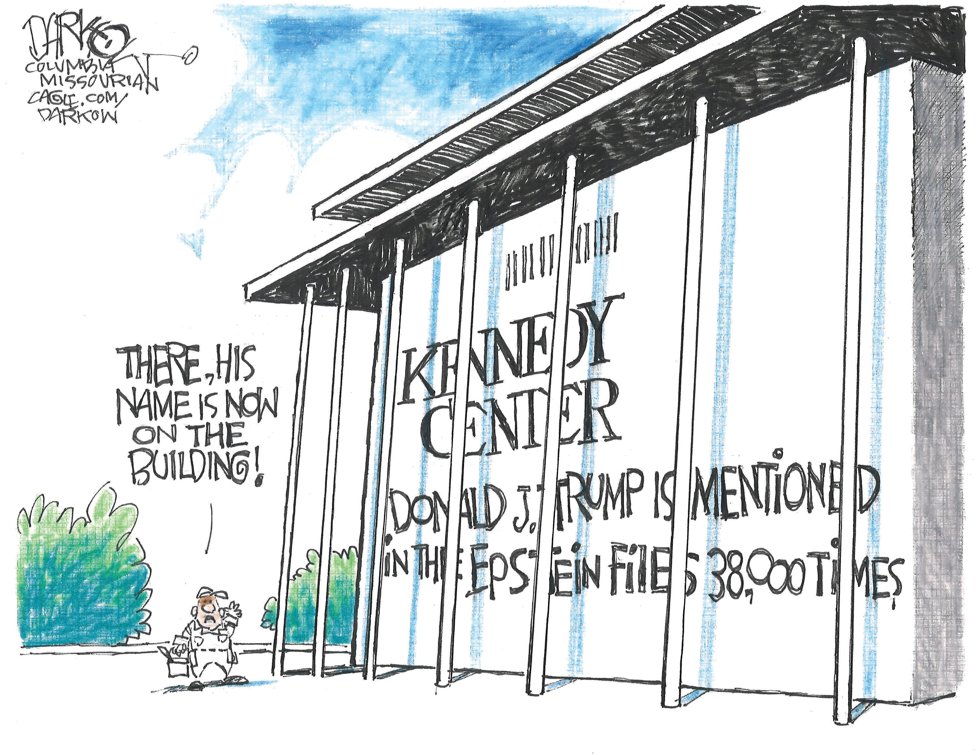
Donald Trump has drawn renewed attention for his personal involvement with the Kennedy Center for the Performing Arts. Critics argue the focus reflects broader patterns of self-promotion rather than institutional stewardship. The cartoon frames this as emblematic of ego overriding public role.
Mark Rutte, serving as NATO secretary general in 2026, placed a call from France to Donald Trump offering a souvenir T-shirt sized triple-XL. The gesture highlights ongoing efforts to manage US-EU relations amid trade disputes and security cooperation. The cartoon portrays the outreach as comically oversized and conciliatory.
President Trump has repeatedly downplayed concerns about artificial intelligence posing existential risks to humanity. Recent statements from the administration emphasize rapid AI development for economic and military advantage without new regulatory safeguards. Critics argue this stance ignores warnings from technology leaders about uncontrolled systems. The cartoon captures the editorial view that such nonchalance could prove reckless as AI capabilities advance unchecked.
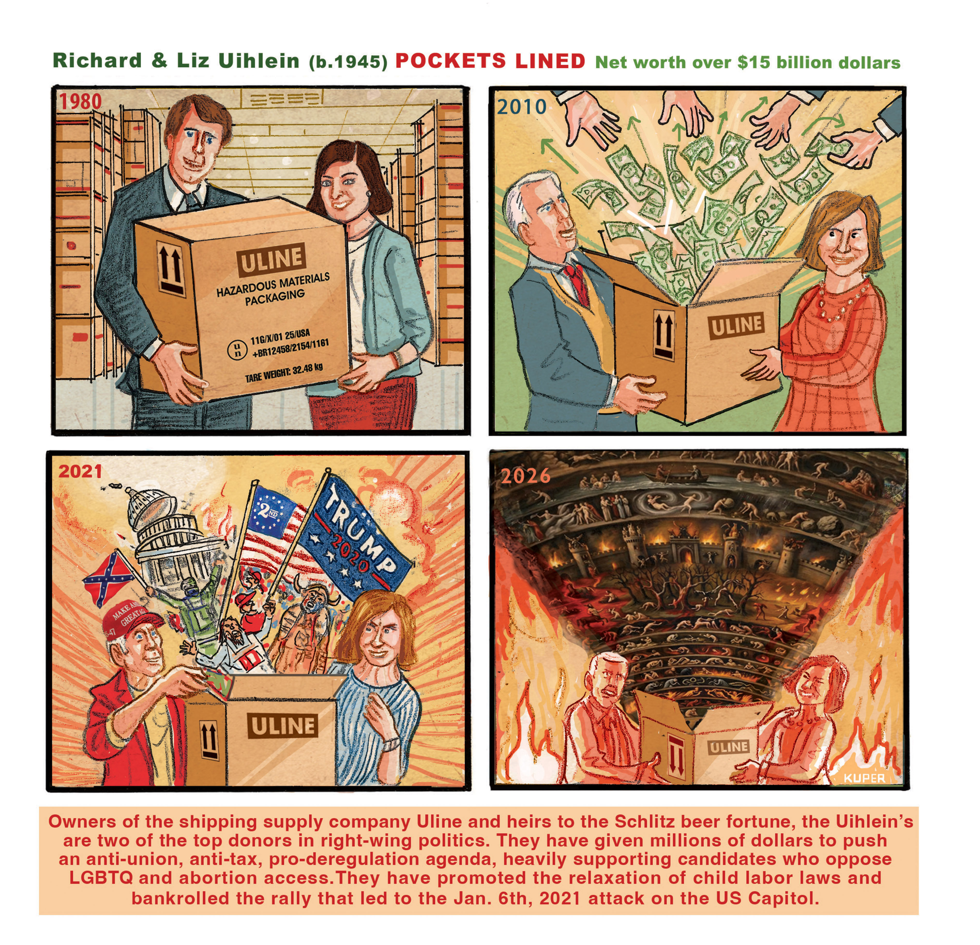
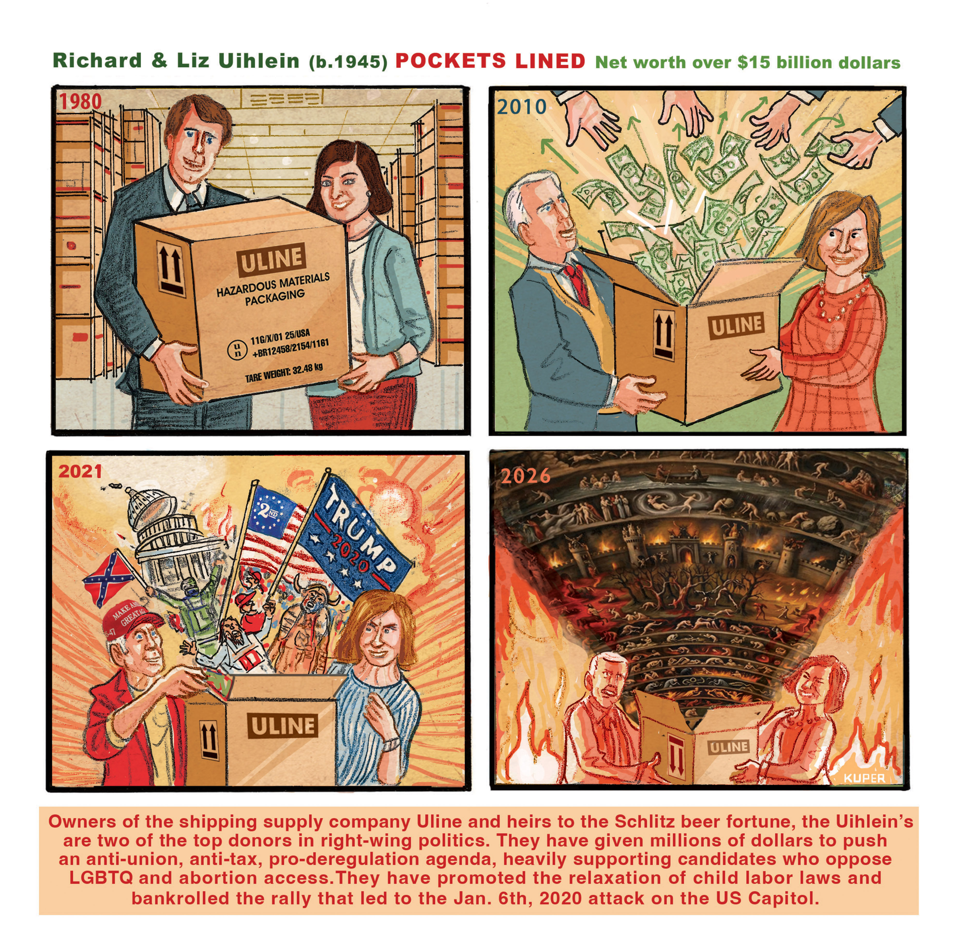
Richard and Liz Uihlein, heirs to the Schlitz beer fortune and owners of Uline shipping supplies, have directed millions into right-wing political causes. Their donations back anti-union, anti-tax and deregulation candidates while opposing LGBTQ rights and abortion access. They also promoted relaxed child labor laws and helped fund the January 6, 2021 Capitol rally. The cartoon frames their rising wealth and influence as fueling political division and institutional damage.
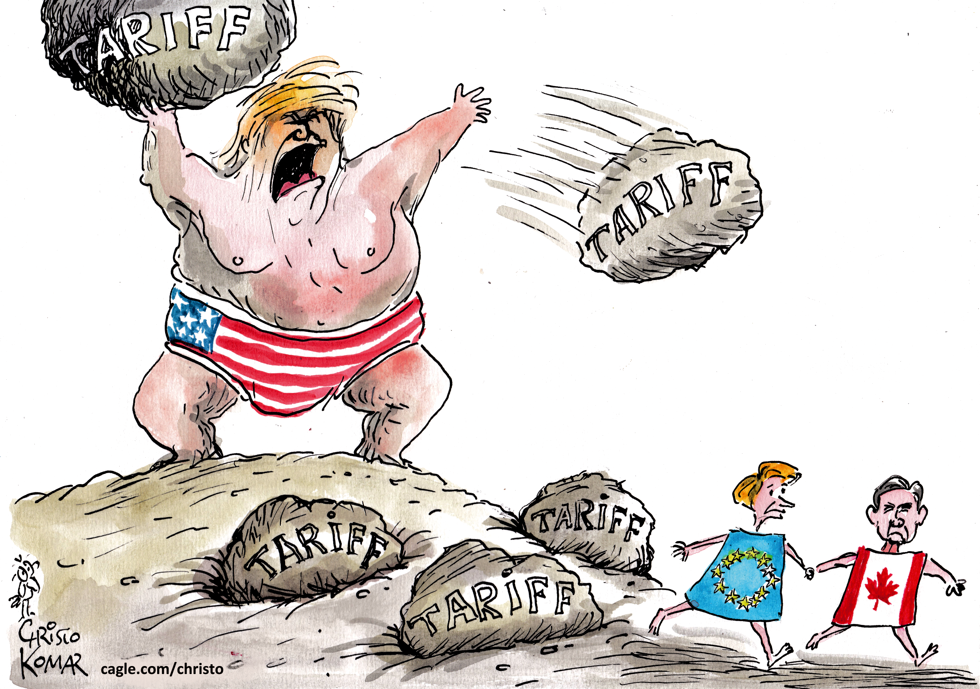
President Trump has escalated trade tensions by targeting tariffs at Canada and the European Union. The moves follow ongoing disputes over trade balances and economic policy. The action risks retaliation and higher costs for American consumers and businesses. The cartoon portrays the tariffs as reckless projectiles launched by an aggressive Trump figure, underscoring the self-inflicted risks and damage to alliances.
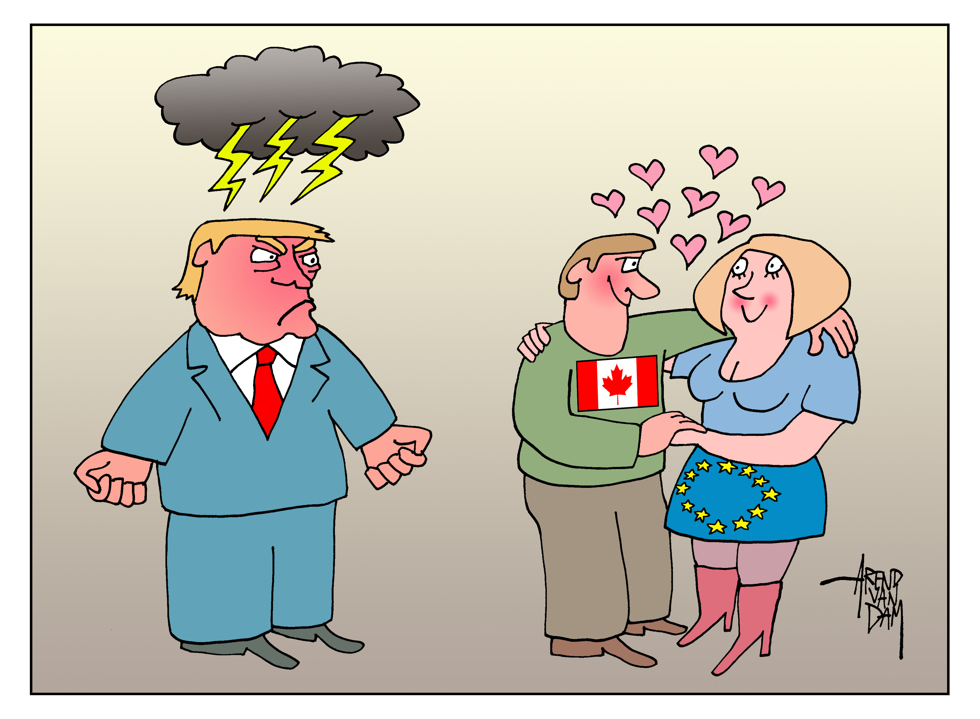
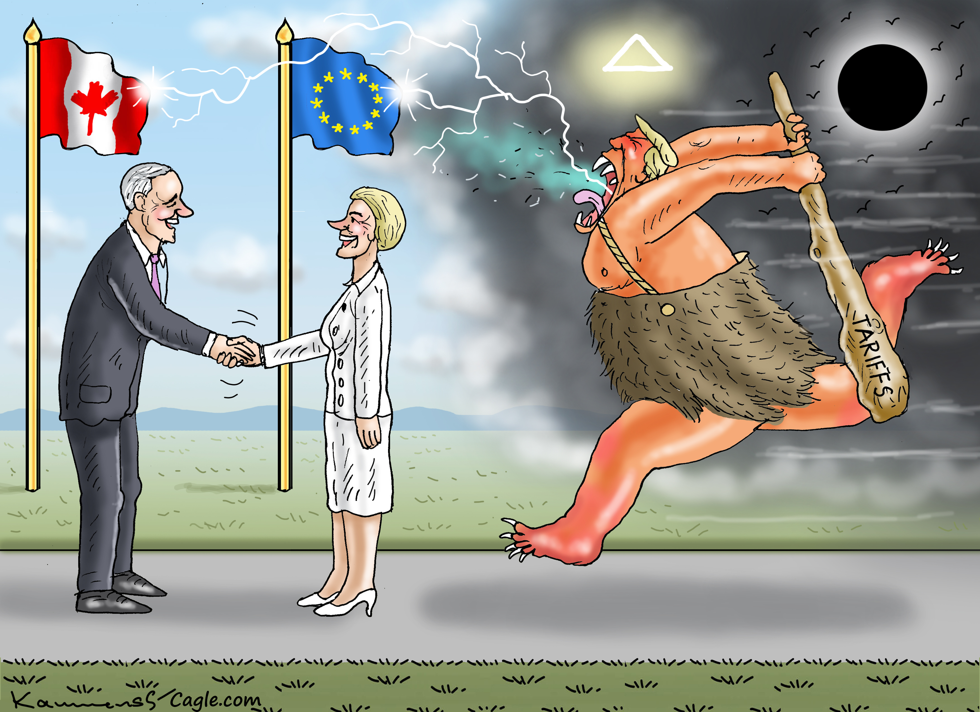
Tensions between the Trump administration and longtime allies Canada and the European Union have prompted closer bilateral cooperation between Ottawa and Brussels. The cartoon captures the contrast between American anger and allied warmth. It argues that Trump's confrontational style is pushing partners together and isolating the United States.
On September 17 2026 Canada and the European Union advanced a strengthened trade framework amid ongoing US tariff pressures. The agreement aims to boost economic cooperation and reduce reliance on American markets. President Trump responded with renewed threats of broad tariffs on allied imports. The move risks escalating trade friction across the Atlantic at a time when global supply chains remain fragile. The cartoon portrays the US stance as a primitive and self-defeating outburst that isolates Washington from its closest partners.
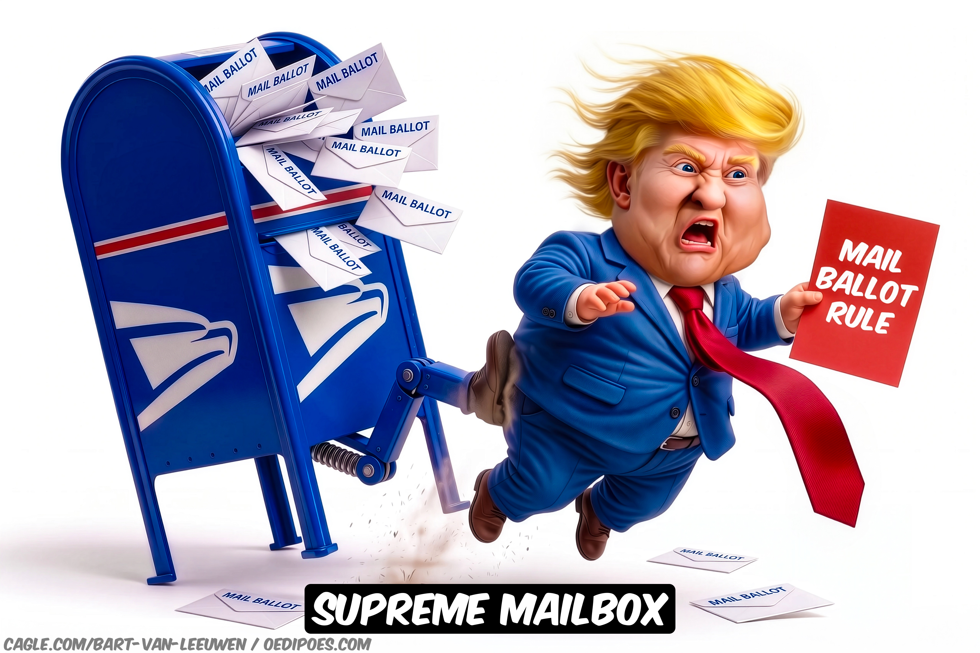
The cartoon shows Donald Trump angrily kicking a USPS mailbox, causing mail ballots to scatter, while clutching a sign labeled MAIL BALLOT RULE. The mailbox is labeled SUPREME MAILBOX at the base. Published on September 16, 2026, the image responds to debates over mail voting procedures and potential Supreme Court involvement in election rules. The visual metaphor illustrates opposition to expanded mail ballot access by depicting physical disruption of the postal system. Trump is caricatured with windblown hair and an open-mouthed expression of rage. Scattered ballots on the ground reinforce the theme of discarded votes. The piece uses the familiar USPS eagle logo and blue mailbox design for immediate recognition.
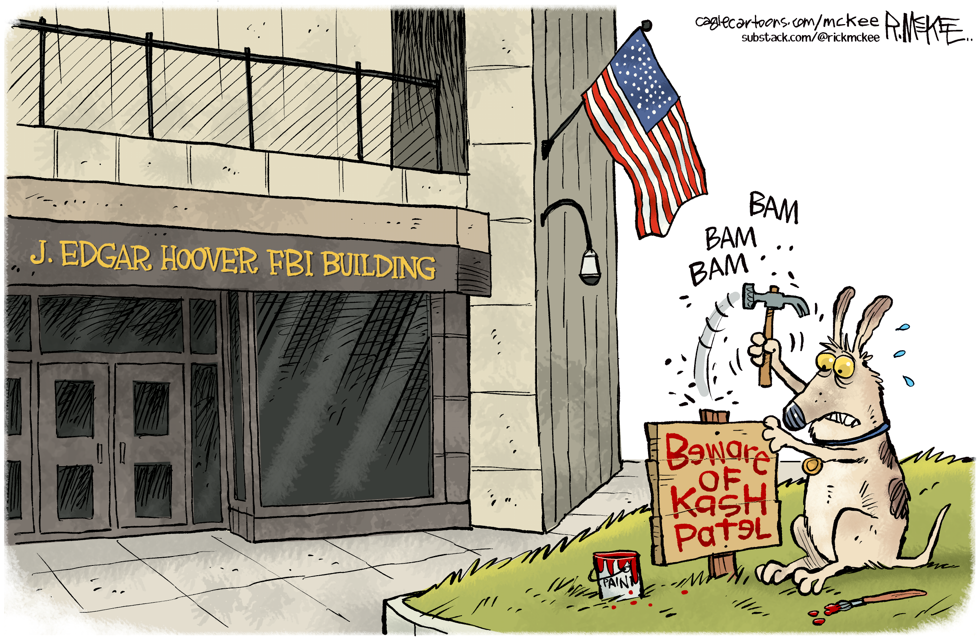
President-elect Trump has selected Kash Patel to lead the FBI, a move that has drawn scrutiny over the nominee's past statements on the bureau and plans for personnel changes. The cartoon portrays the appointment as a threat to the agency's independence, using the J. Edgar Hoover Building as the setting for a direct warning about Patel's influence.
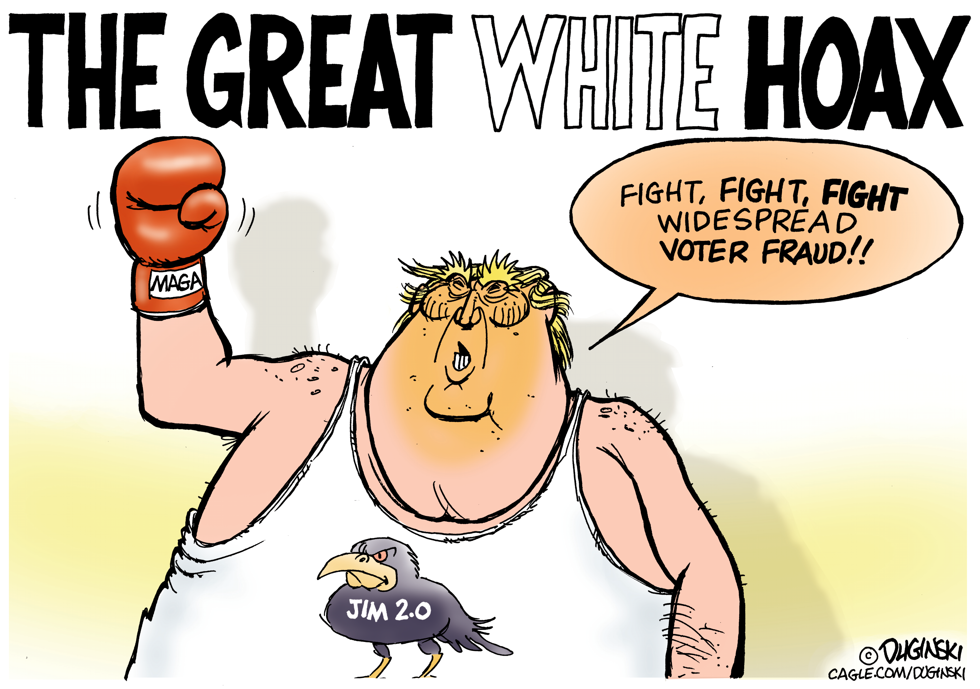
Donald Trump has renewed assertions of widespread voter fraud ahead of upcoming contests. The rhetoric revives familiar challenges to election administration and access rules. Such claims have repeatedly failed to produce evidence in court yet continue to shape public debate and legislative pushes. The cartoon frames the narrative as a deliberate distraction from actual barriers to voting. It positions the fraud talk as cover for renewed restrictions reminiscent of earlier suppression tactics.
The Kennedy Center facade receives new lettering citing Donald J. Trump's 38,000 mentions in Epstein files. The addition follows a painter's declaration that the name now appears on the building. The piece frames the reference as the mechanism granting Trump association with the institution.
Richard and Liz Uihlein, heirs to the Schlitz fortune and owners of Uline, have donated millions to right-wing candidates and causes. Their support helped organize the January 6 rally and advanced anti-union, anti-tax, and anti-LGBTQ policies. The cartoon portrays their growing influence as corrosive to democratic norms.
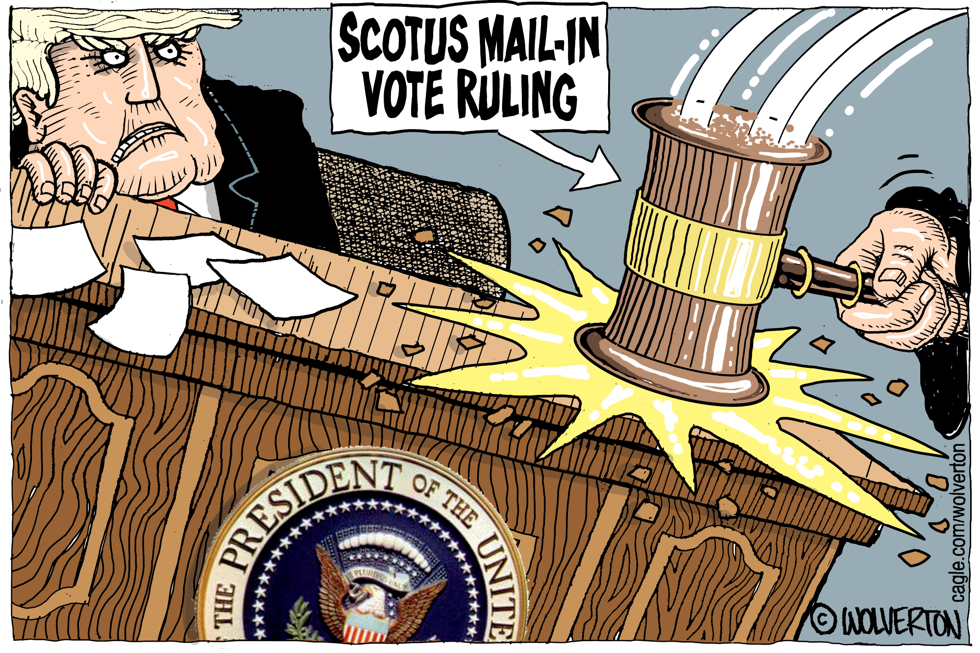
A new Supreme Court ruling on mail-in votes has drawn a sharp reaction from President Donald Trump. The decision appears to restrict certain ballot practices ahead of future elections. In the cartoon, the gavel smashes into the presidential podium where Trump stands, sending papers flying. Trump is depicted with an angry expression, leaning forward as the impact occurs. The image uses the visual of the striking gavel to illustrate the direct effect of the ruling on the administration. The cartoon was published on September 16, 2026, by artist Monte Wolverton.
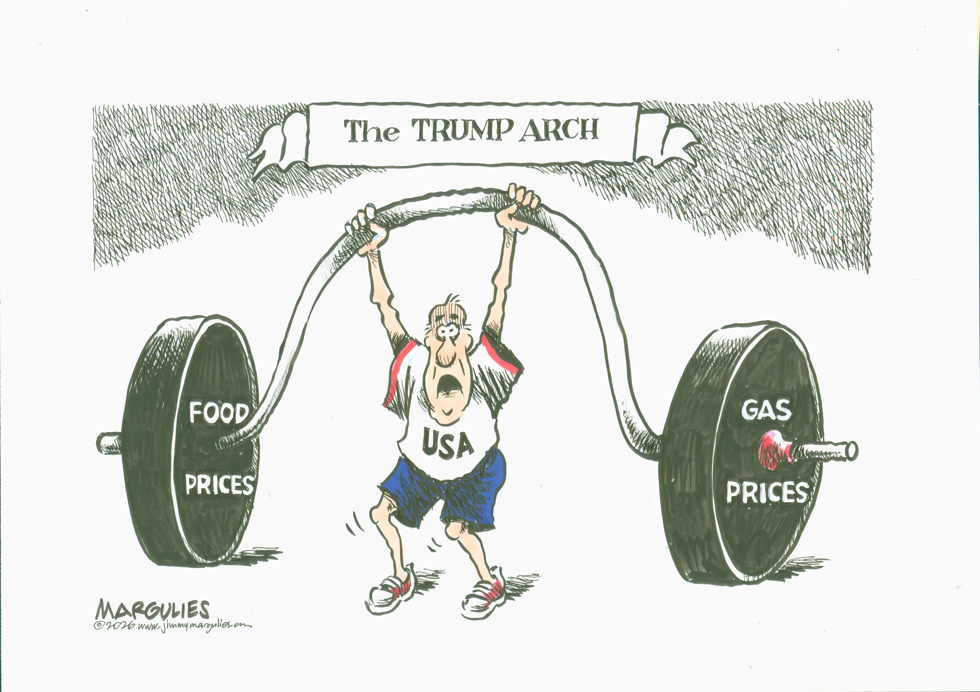
Food and gas prices remain elevated in 2026 under the Trump administration, adding to household costs across the country. The administration's economic approach has not delivered relief on key consumer expenses. Critics argue the policies prioritize other goals over inflation control. The cartoon depicts the USA as overburdened by these dual price burdens. It takes the position that Trump-era governance has left ordinary Americans carrying unsustainable economic weight.
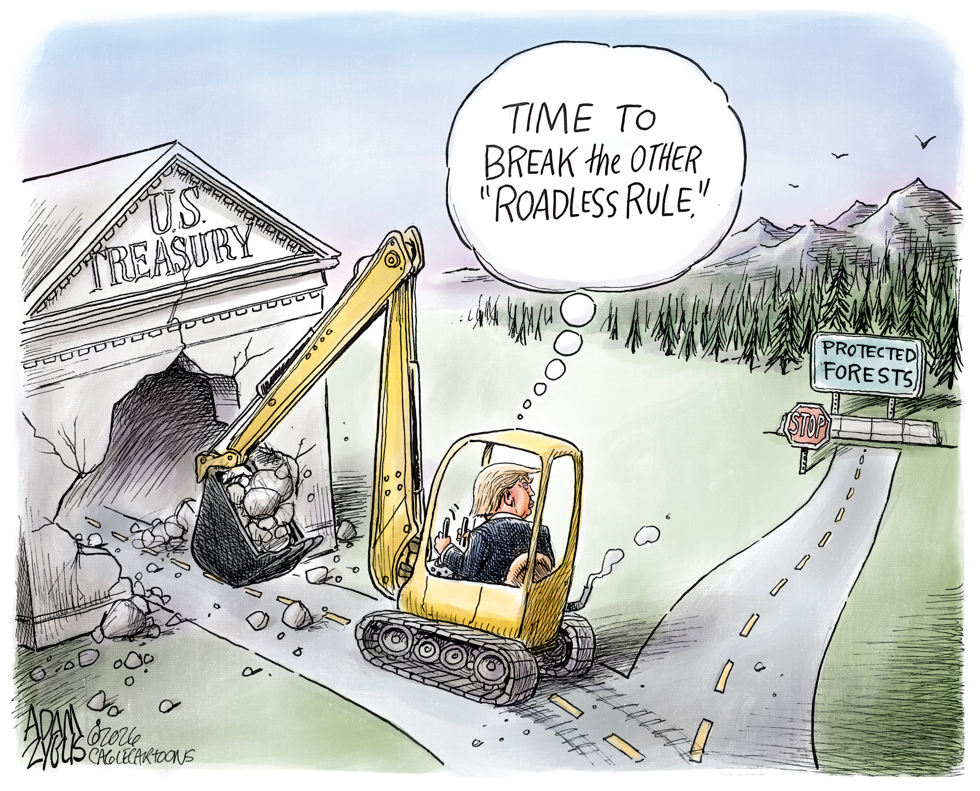
The cartoon shows Donald Trump at the controls of a yellow excavator that has already damaged the U.S. Treasury building. His thought bubble calls for breaking the other Roadless Rule while a sign marks protected forests ahead. The image comments on efforts to open national forests to development by repealing the 2001 Roadless Rule. It links the policy shift to broader questions about federal spending and regulatory priorities. The visual places the Treasury in the path of the machine to suggest fiscal or institutional costs alongside environmental changes.